Inspiration
Phishing is the most common cyber attack to business and people. Phishing emails will prey on human behavior, fostering a sense of urgency or reward to get the user to do something that compromises their information. We are all just fish in the sea, and it's time to stop getting hooked.
What it does
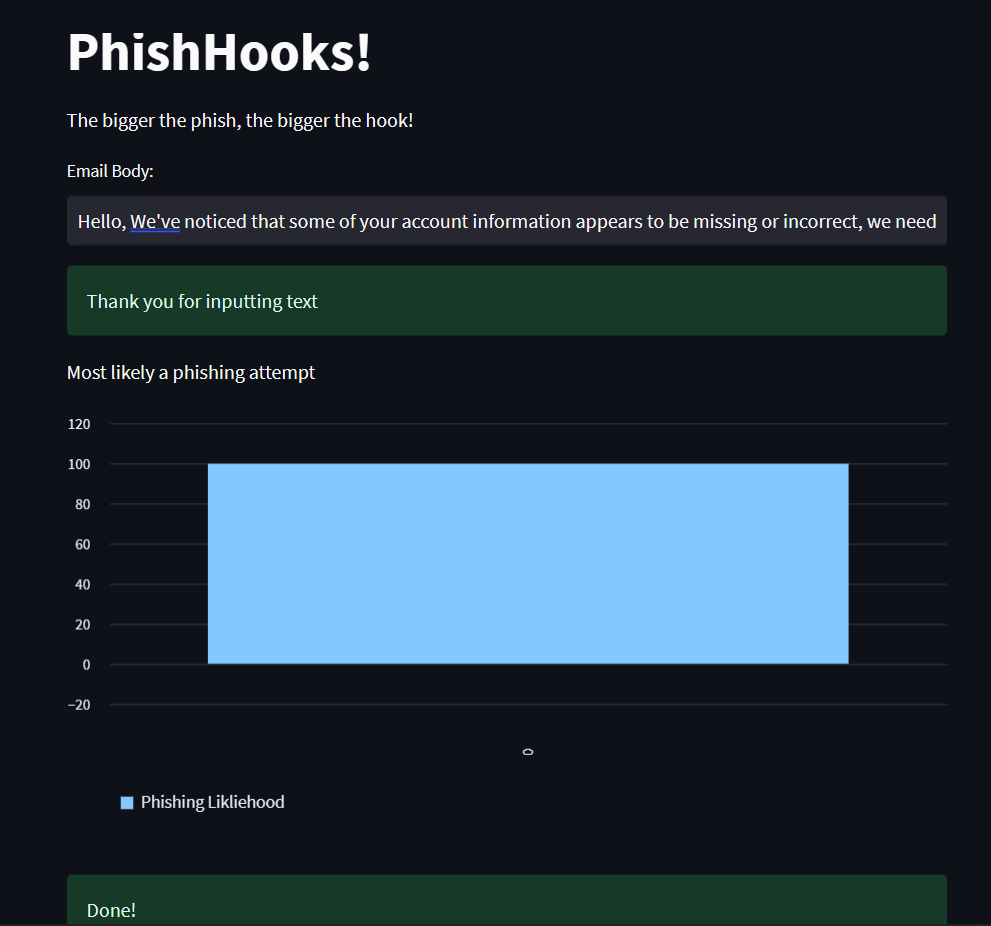
Our Website, PhishHook, checks the email contents itself. Our algorithm using natural language processing, checking for common characteristics: sense of urgency, promise of a reward, grammar, etc. to detect a phishing attempt.
How we built it
We built the front-end using streamlit. For our phishing detection algorithm, we trained a machine-learnning model on several data sets including phishing emails dataset from Berkeley, wordcloud (described unique words often found in phishing emails and the rate at which they appear). We also check of tone, grammar, and keywords.
Challenges we ran into
Everything front-end. Initially, the app was intended to be a chrome extension, but we could not get Gmail API and a python script without running into Google security policies. Next, running a python script on a website was more difficult than we thought, and we learned streamlist basics to do so.
Accomplishments that we're proud of
everything
What we learned
machine-learning, front-end webdev
What's next for PhishHook
move to a gchrome extension, improve algorithm, improve speed of results
contact miidel#8825 for issues.
Built With
- machine-learning
- python
- streamlit


Log in or sign up for Devpost to join the conversation.