-
-
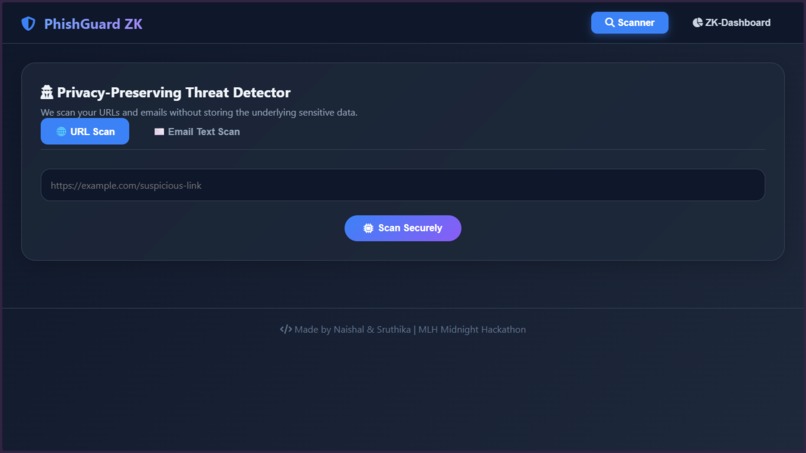
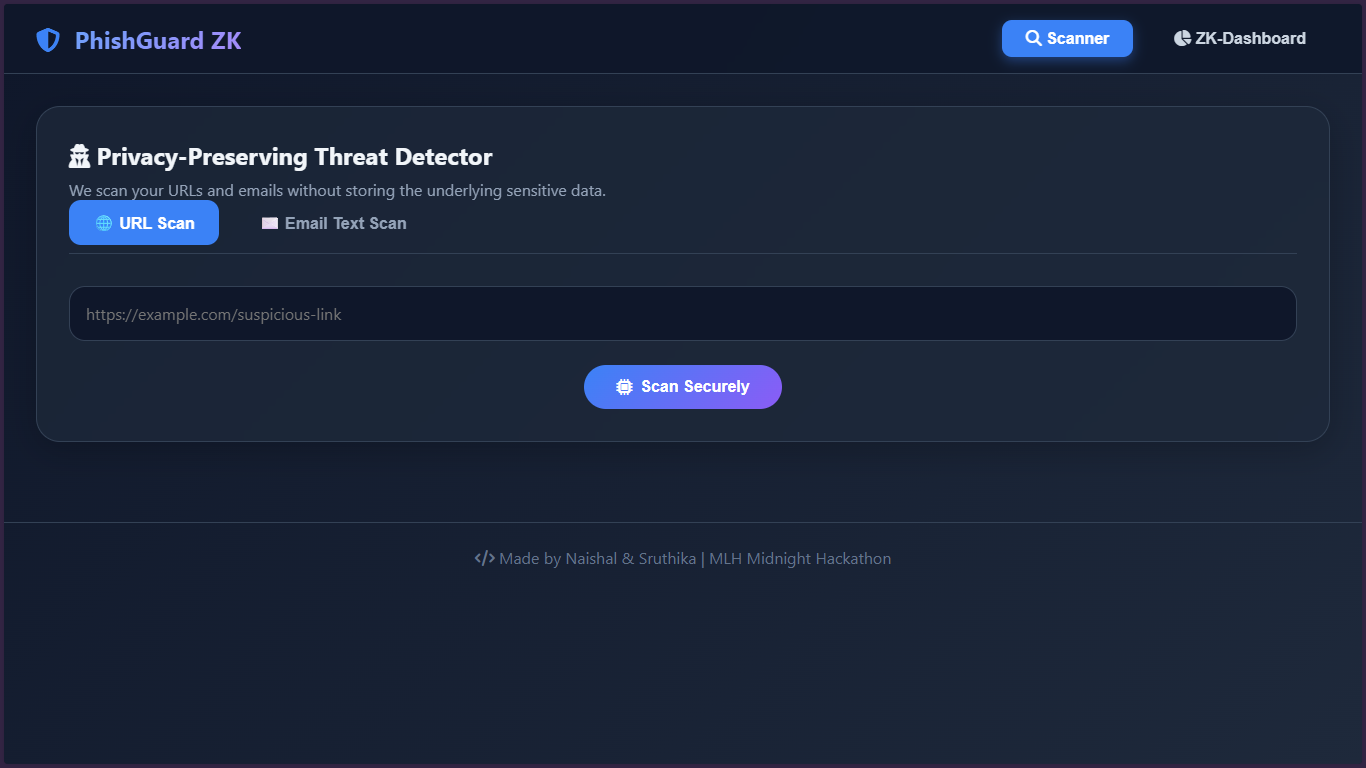
The clean Scanner UI. Users securely input URLs or raw emails for data-blind AI threat analysis without exposing sensitive info.
-
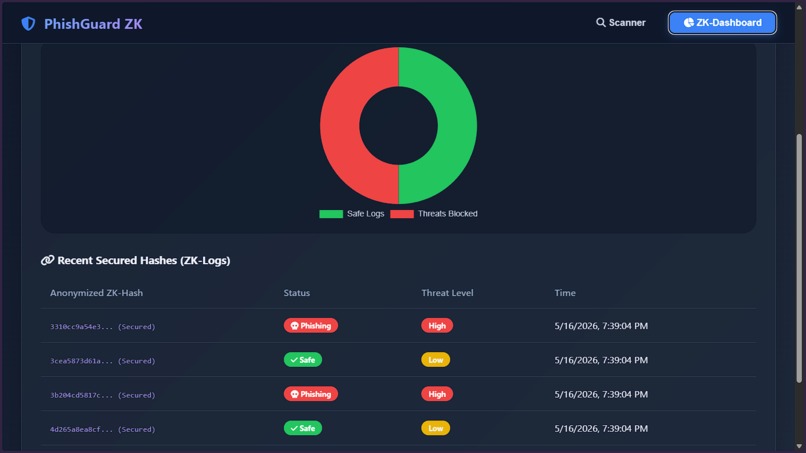
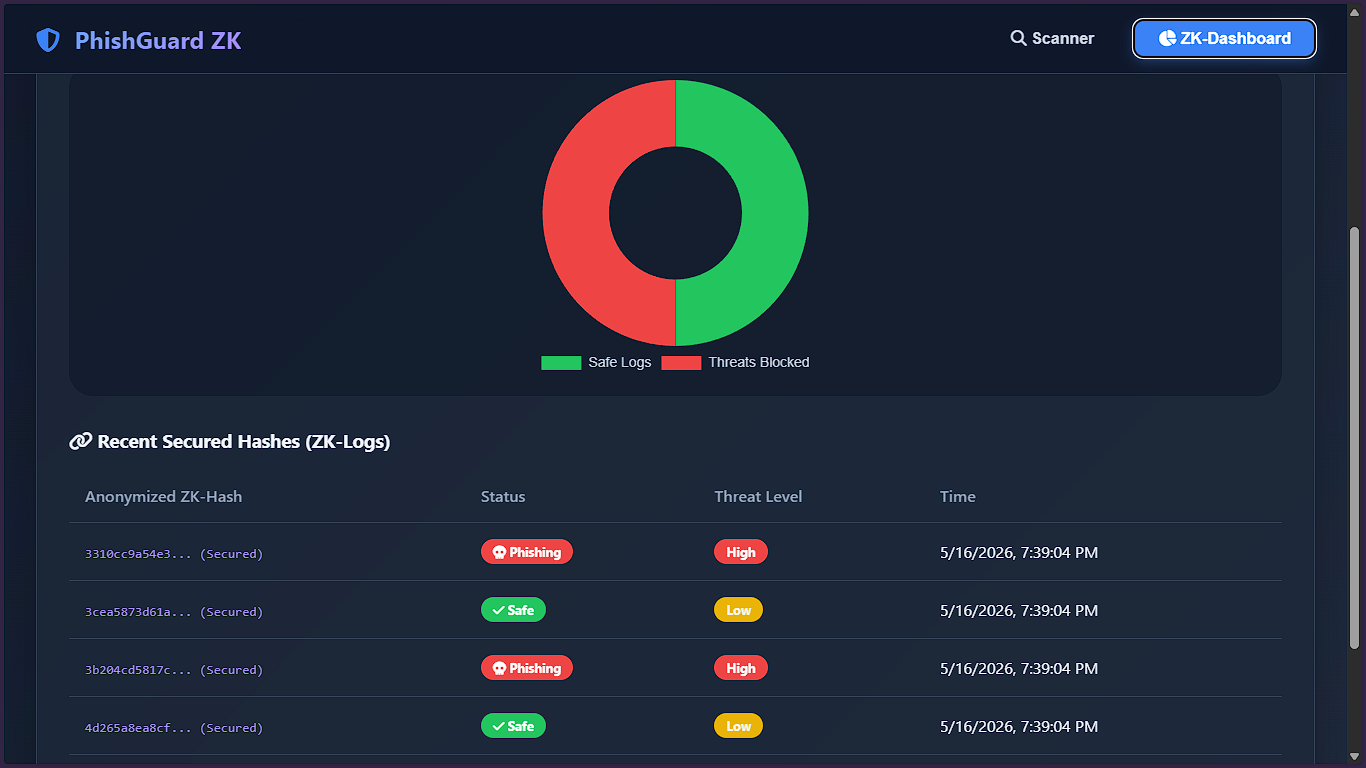
Zero-Knowledge Dashboard tracking real-time threats. User data is fully anonymized into cryptographic hashes to ensure Web3 privacy.
-
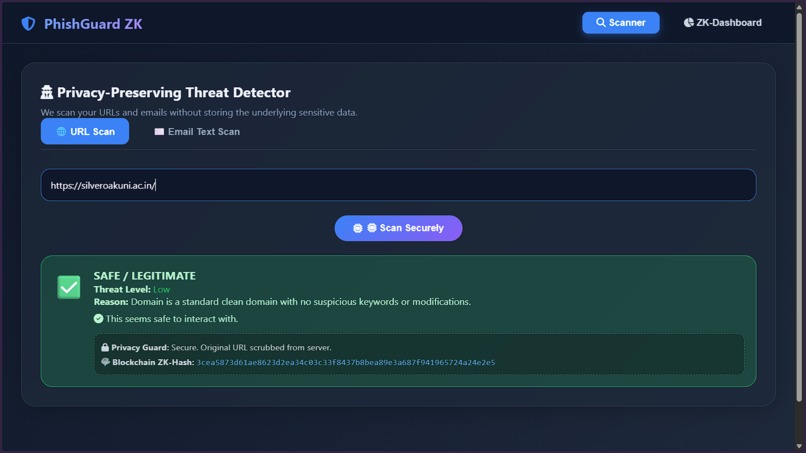
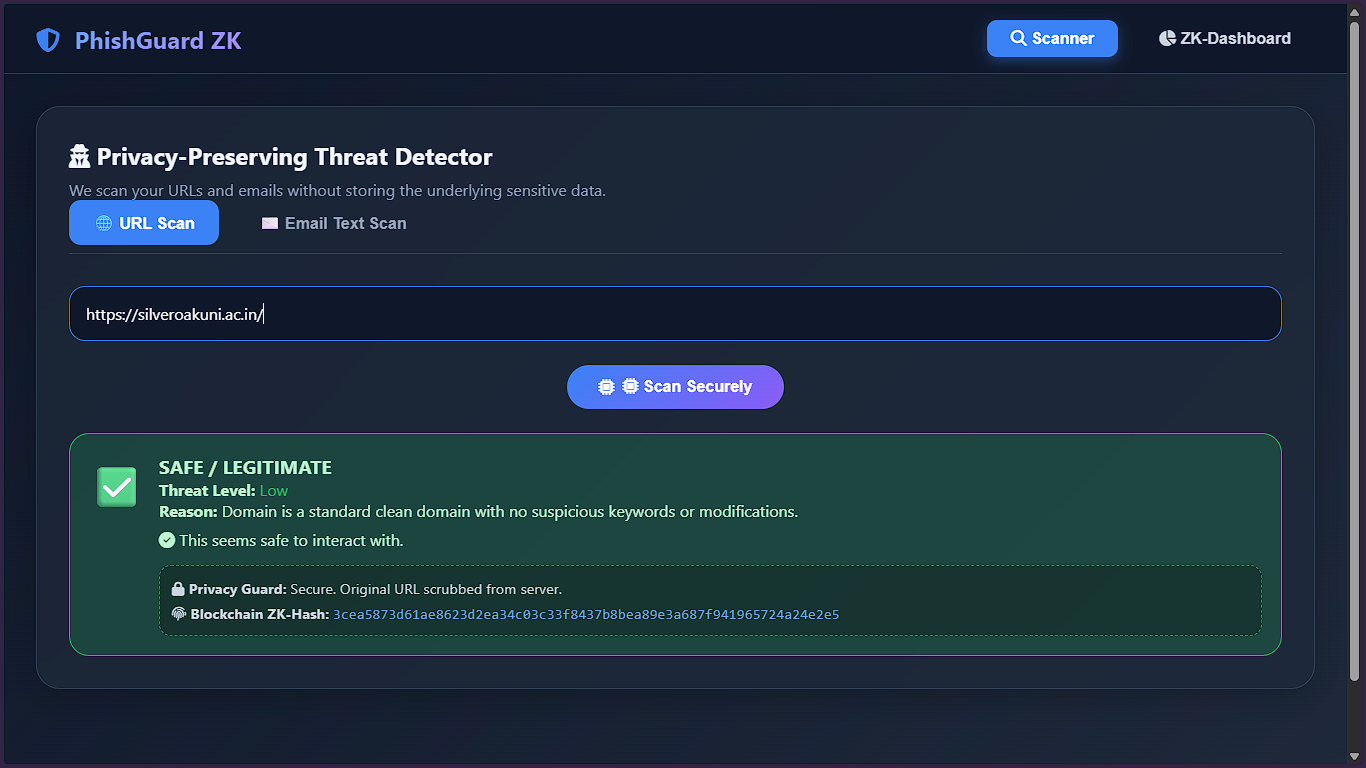
Testing a legitimate domain. The AI accurately flags it as Safe while strictly maintaining our zero-knowledge, data-blind protocol.
-
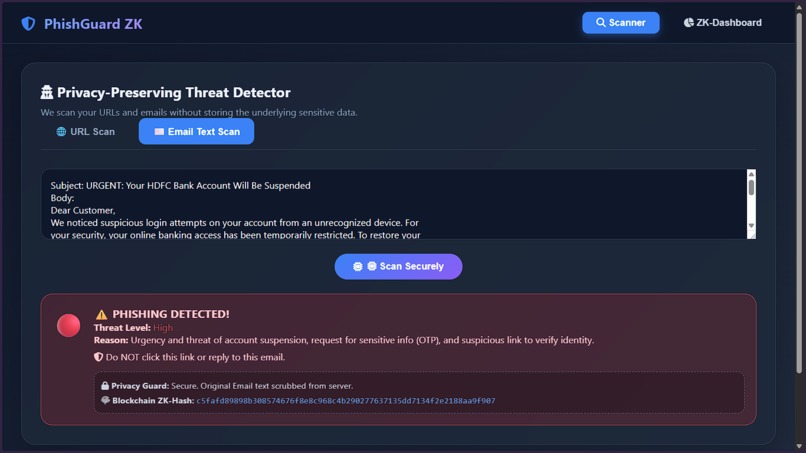
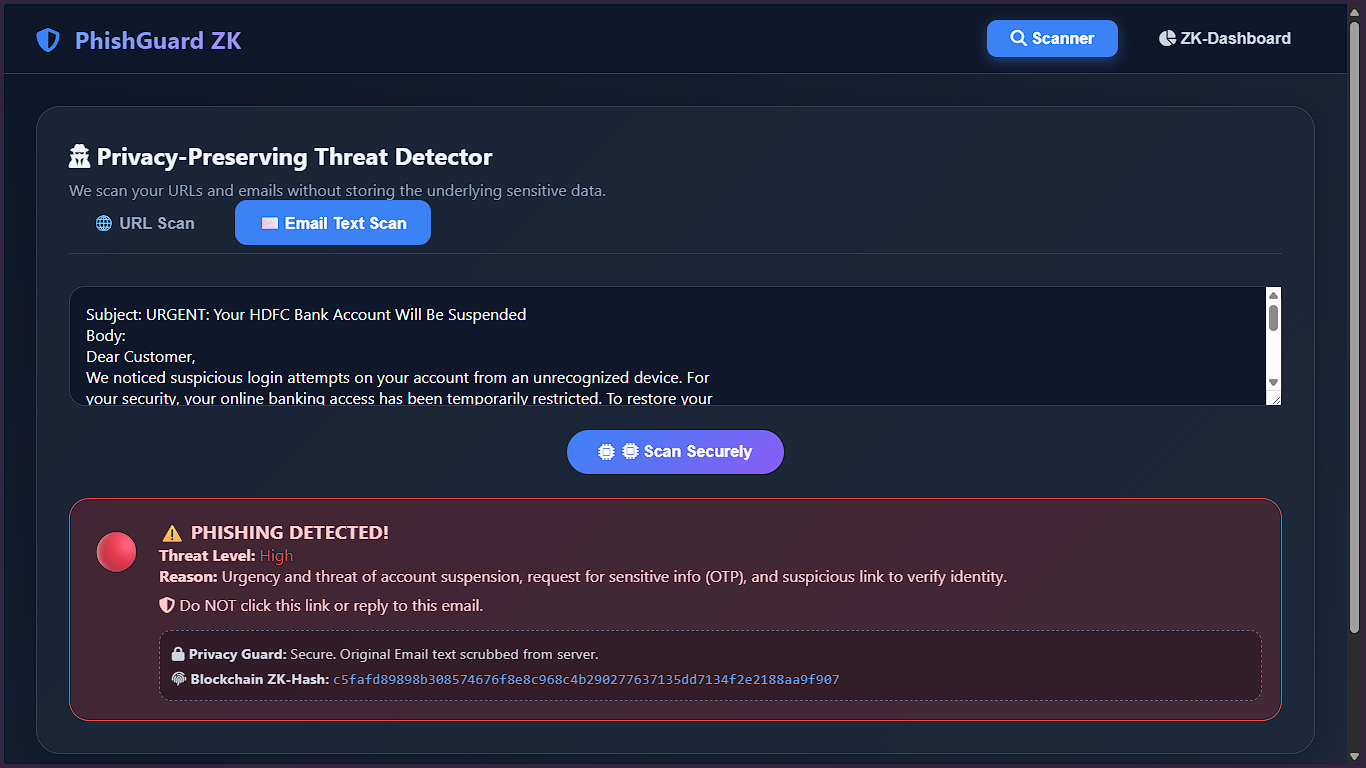
Llama-3 AI catches a bank scam! The Privacy Guard instantly scrubs the raw email text and generates a secure ZK-Hash for privacy.
Inspiration
Traditional phishing detectors force users to upload highly sensitive emails and private URLs to central servers, causing a massive privacy risk. We asked ourselves: "Can we build a powerful AI threat hunter that is completely data-blind?" Inspired by the Midnight network's privacy-first approach, we built PhishGuard ZK to prove that security shouldn't cost you your privacy.
What it does
PhishGuard ZK scans URLs and raw email text for phishing, typosquatting, and social engineering threats using Llama-3. However, instead of saving this sensitive data, our Zero-Knowledge architecture instantly scrubs the original text from the server and generates a cryptographic SHA-256 ZK-Hash. We only log and display this anonymized hash on our admin dashboard, ensuring 100% data confidentiality.
How we built it
We built the backend using Python and Flask, integrating the Groq API for ultra-fast Llama-3 inference. For the privacy layer, we used the hashlib library to enforce data scrubbing and generate ZK-proof hashes. We also designed a simulated Midnight ledger.compact smart contract structure to demonstrate how these hashes would be logged on-chain. The frontend was built with Vanilla JS and Chart.js to visualize the anonymized network logs.
Challenges we ran into
Designing a strict "Zero-Trust" prompt for the AI that wouldn't flag our own legitimate hosting domains, while simultaneously ensuring that the data pipeline was completely wiped clean before generating the cryptographic hash.
Accomplishments that we're proud of
Successfully merging Web2 AI capabilities with Web3 Privacy principles! We proved that we don't need to harvest user data to protect them from cyber threats.
What's next for PhishGuard ZK: Privacy AI
Deploying our .compact smart contract directly to the Midnight mainnet and building a browser extension that performs these ZK-scans locally on the user's machine!
Built With
- flask
- html
- javascript
- llama-3
- midnight-compact
- python
- sqlite


Log in or sign up for Devpost to join the conversation.