Inspiration
Phishing attacks are one of the most common cyber threats today. Many users receive suspicious emails or messages but are unsure whether they are safe or not. This project was inspired by the need for a simple and quick way to help users identify potential phishing attempts before interacting with them.
What it does
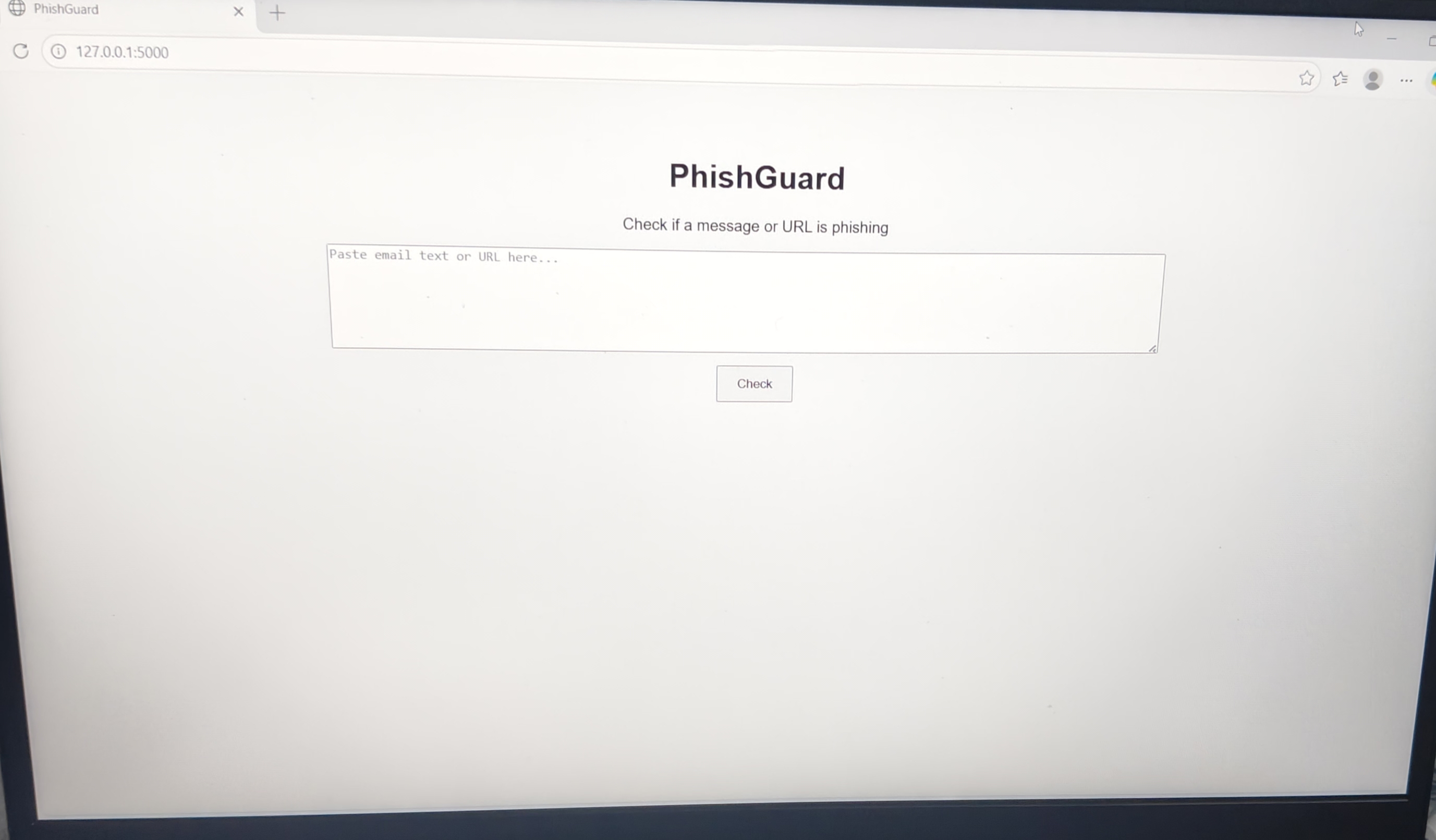
PhishGuard allows users to paste a message or URL into a web interface.
The application analyzes the input for common phishing-related keywords and patterns.
Based on this analysis, it classifies the message into one of three categories:
- High Risk (Phishing Detected)
- Medium Risk (Suspicious)
- Low Risk (Safe)
This helps users quickly understand the risk level of a message.
How we built it
- Backend built using Python and Flask
- Frontend built using HTML and CSS
- Implemented a keyword-based phishing detection logic
- Version control and project hosting using Git and GitHub
- Development done using VS Code
Challenges we ran into
- Understanding and configuring Git and GitHub properly
- Managing Flask routing and templates
- Structuring the project in a clean and organized way
- Handling beginner-level debugging issues during setup
Accomplishments that we're proud of
- Successfully built a working web application
- Learned end-to-end GitHub workflow and deployment preparation
- Completed a hackathon-ready project as a beginner
- Gained hands-on experience with Flask and web development
What we learned
- Basics of phishing detection techniques
- Flask backend development
- Frontend-backend integration
- Git and GitHub version control
- Hackathon project planning and submission process
What's next for PhishGuard
- Implement machine learning-based phishing detection
- Improve accuracy with URL reputation checks
- Add browser extension support
- Enhance UI and user experience

Log in or sign up for Devpost to join the conversation.