-
-
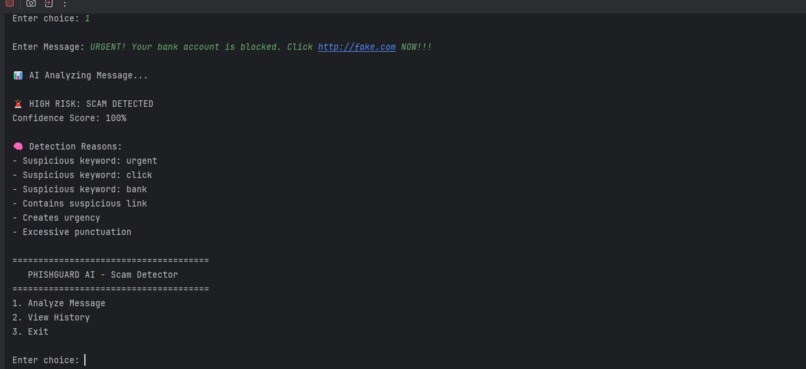
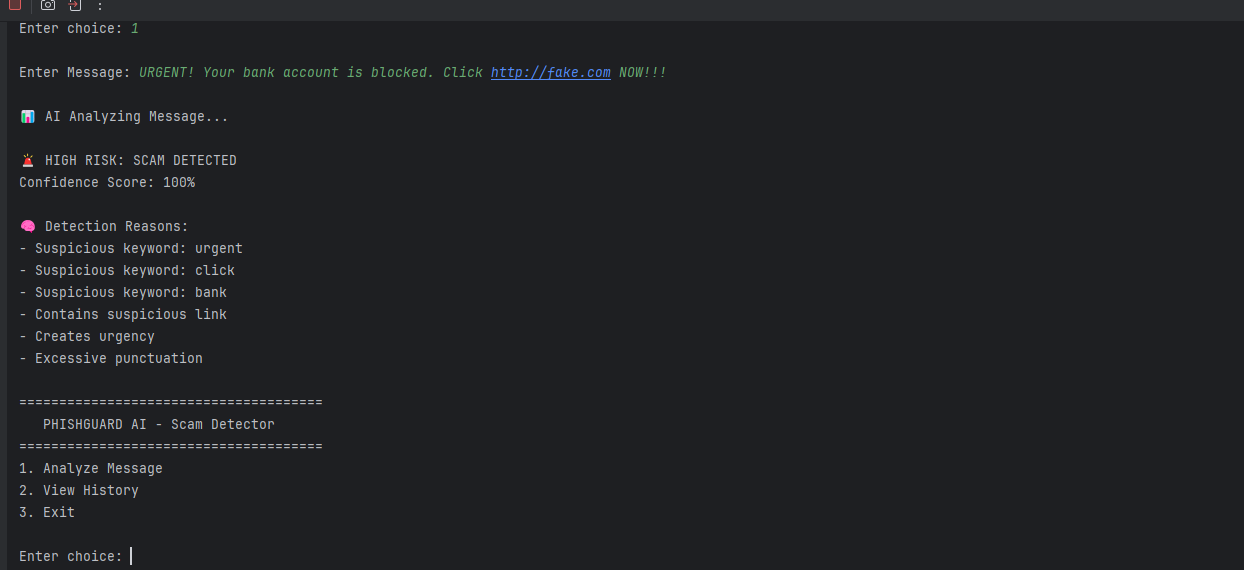
High-risk scam message detected with AI-based analysis and detailed reasoning
-

User interface of PhishGuard AI showing main options and navigation
-
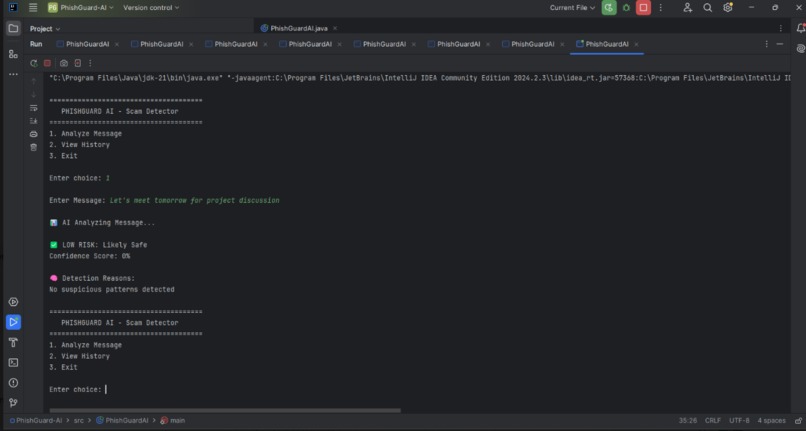
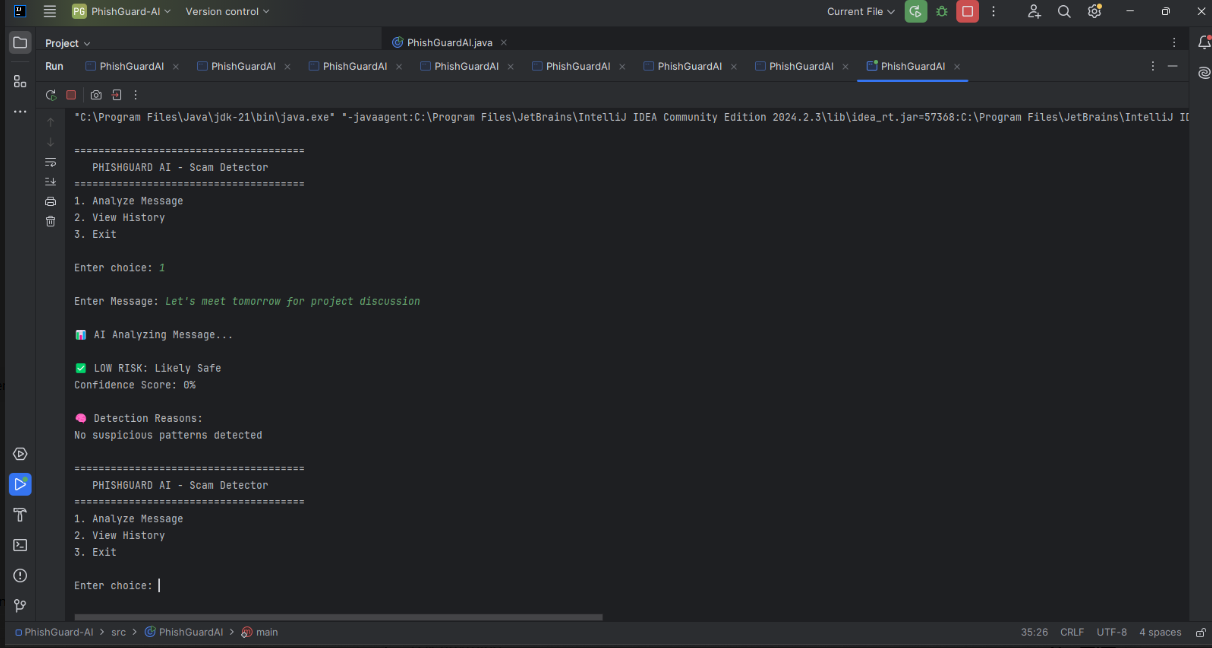
Safe message classified as low risk with no suspicious patterns detected

Inspiration
The inspiration for PhishGuard AI came from the increasing number of online scams, phishing messages, and fraudulent activities that people face daily. Many users fall victim to fake links, urgent messages, and misleading offers due to lack of awareness. We wanted to create a simple yet effective solution that can instantly analyze messages and warn users about potential scams, helping improve digital safety.
What it does
PhishGuard AI is a smart scam detection system that analyzes messages and identifies whether they are safe or potentially fraudulent. It uses pattern recognition, keyword analysis, and risk scoring to classify messages into low, medium, or high risk.
How we built it
We built this system using Java by implementing a rule-based AI model. The system analyzes input messages for suspicious keywords, detects links, identifies urgency patterns, and assigns a risk score. Based on this score, it classifies messages and provides detailed reasons for detection.
Challenges we ran into
One of the main challenges was designing a system that feels intelligent while keeping it simple and efficient. We had to carefully balance accuracy and speed, and design a scoring system that produces meaningful results within a limited time.
Accomplishments that we're proud of
We successfully built a working AI-based scam detection system within a limited time. The system not only detects scams but also provides clear explanations, making it user-friendly and easy to understand.
What we learned
We learned how AI concepts like pattern recognition and classification can be implemented using simple logic. We also improved our problem-solving skills and learned how to build impactful solutions under time constraints.
What's next for PhishGuard AI – Smart Scam Detection System
In the future, we plan to integrate machine learning models, real-time SMS and email filtering, and expand the system into a mobile or web application to provide better security and wider accessibility.

Log in or sign up for Devpost to join the conversation.