-
-
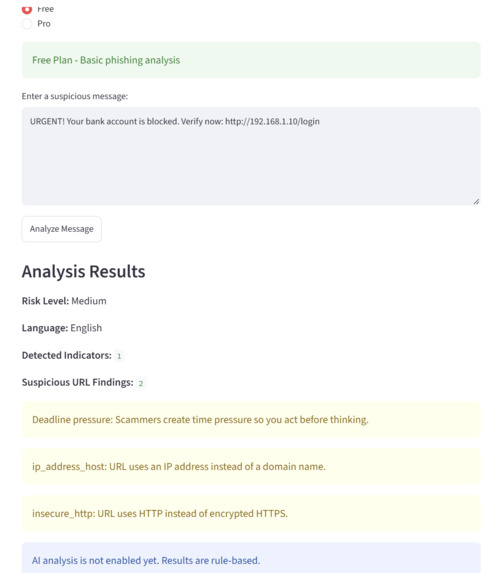
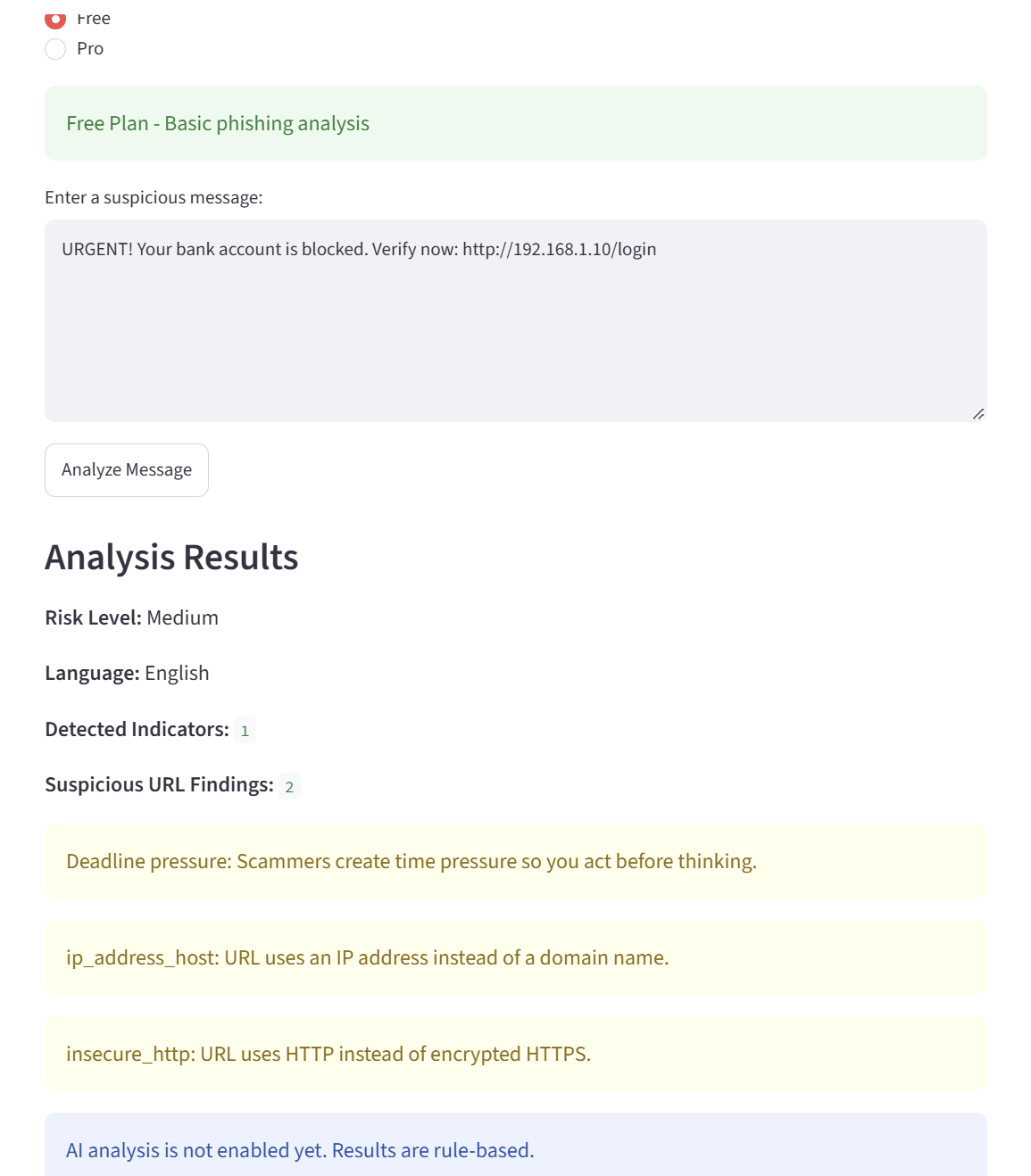
PhishGuard AI – Phishing Detection and Risk Analysis Results
Inspiration
Phishing attacks are a common cybersecurity threat. I wanted to build a simple, accessible tool that helps people recognize suspicious emails, SMS messages, and potentially dangerous links before becoming victims of scams.
What it does
PhishGuard AI analyzes suspicious messages and identifies potential phishing indicators, including urgency, suspicious URLs, IP-based links, and insecure HTTP connections. It provides a risk assessment and explains the detected warning signs.
How I built it
I developed the project using Python and Streamlit. The application combines message analysis, rule-based phishing detection, URL inspection, and a web interface. The source code is hosted on GitHub, and the application is deployed using Streamlit Community Cloud.
Challenges
One of the main challenges was connecting the application's Python modules correctly during cloud deployment. I resolved the import issue and successfully deployed and tested the application.
Accomplishments
I built a working phishing detection prototype, created automated tests, and published a live web application that users can try directly.
What I learned
This project helped me improve my Python development, cybersecurity analysis, GitHub workflow, debugging, testing, and cloud deployment skills.
What's next
I plan to integrate an AI model for more advanced message analysis, improve detection accuracy, expand multilingual support, and develop additional security features.
Current status: The working prototype uses rule-based detection. AI-powered analysis and paid features are planned for future development.


Log in or sign up for Devpost to join the conversation.