-
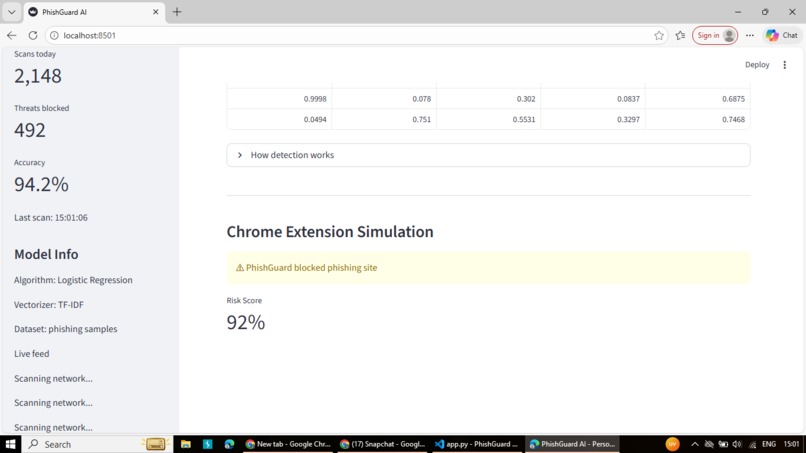
Results are shown
-
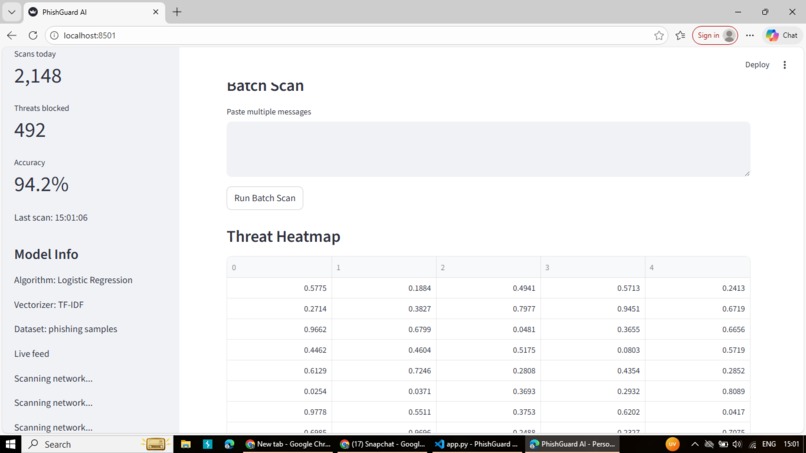
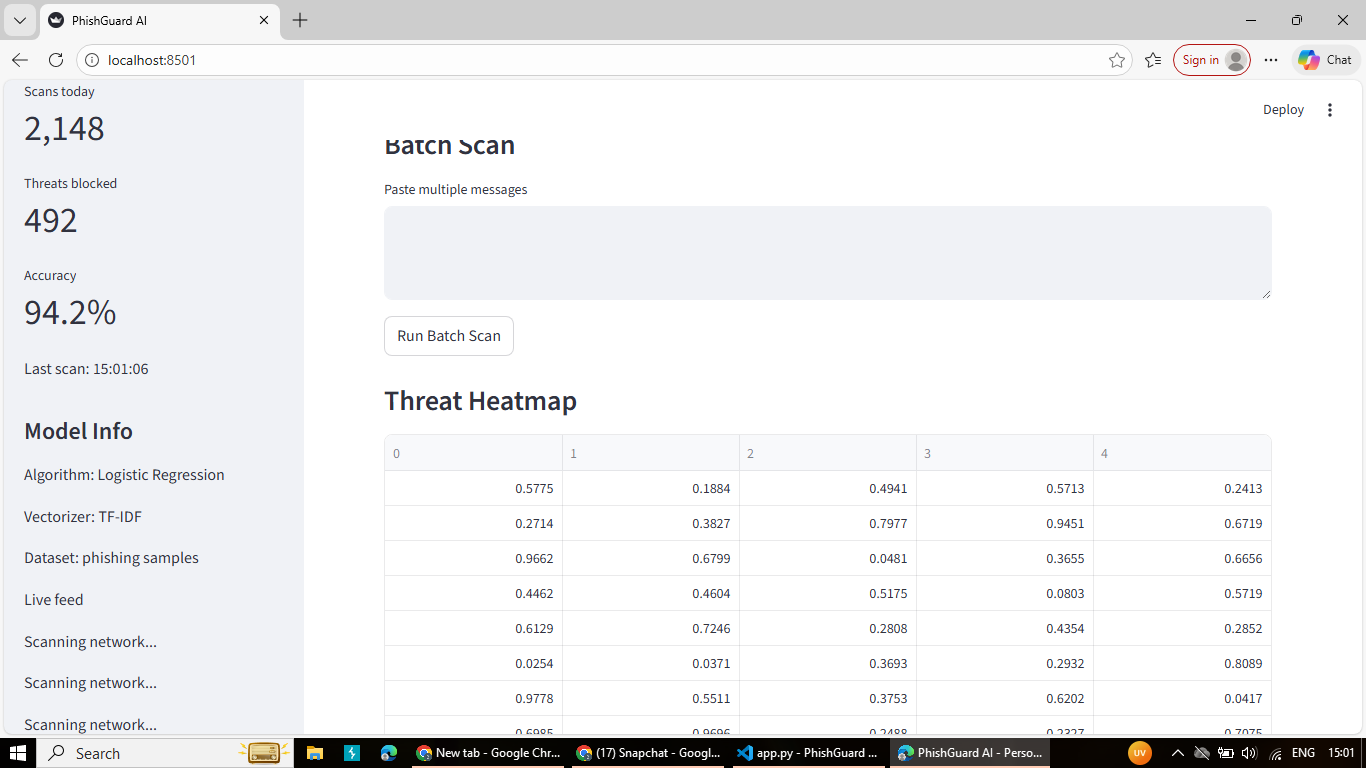
The heatmap
-
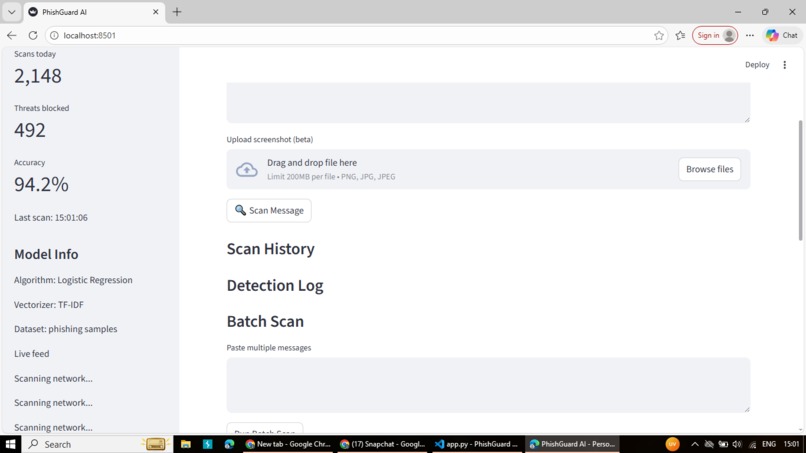
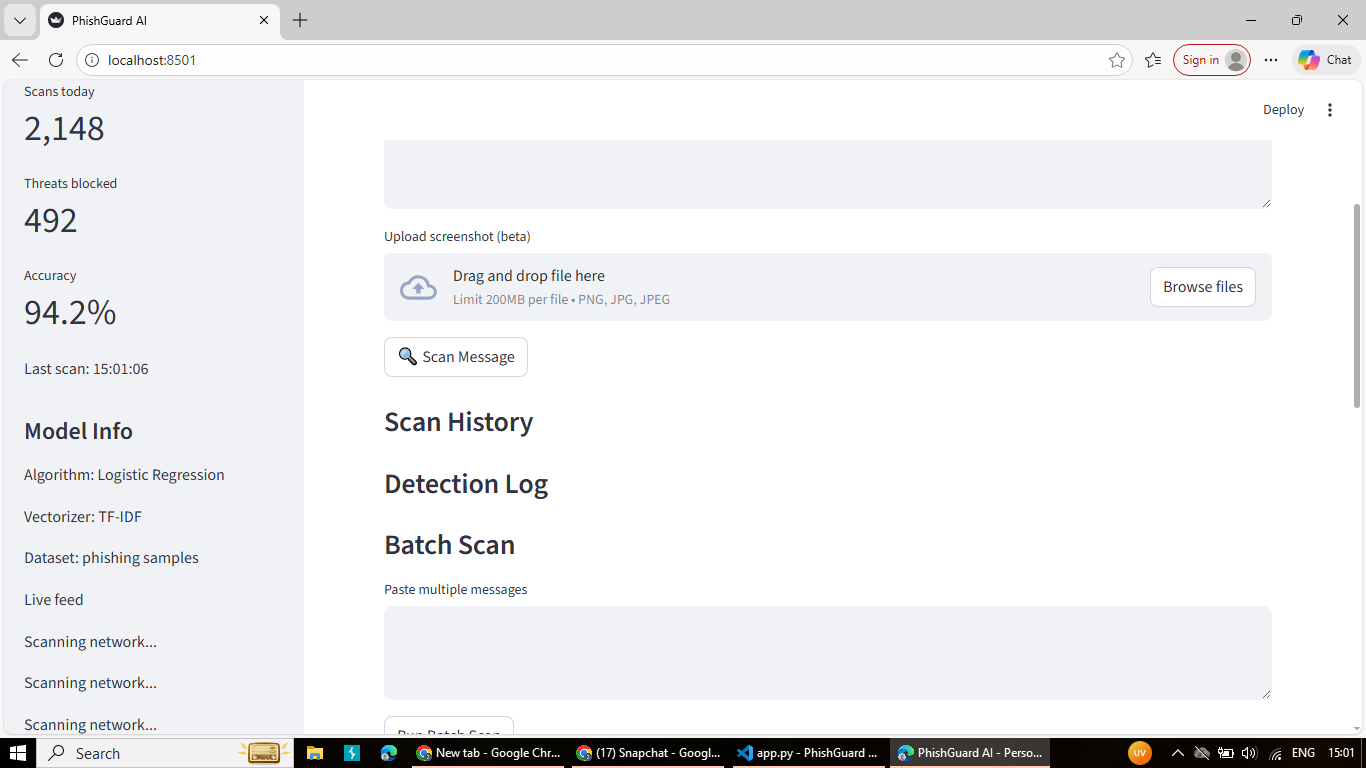
Also can paste files
-
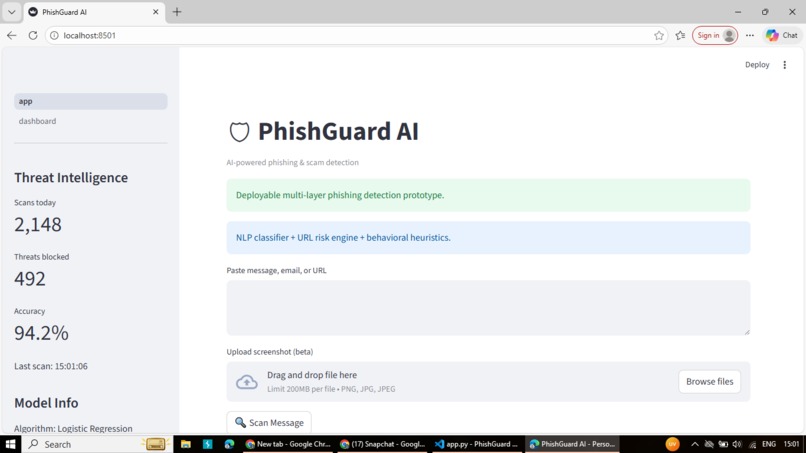
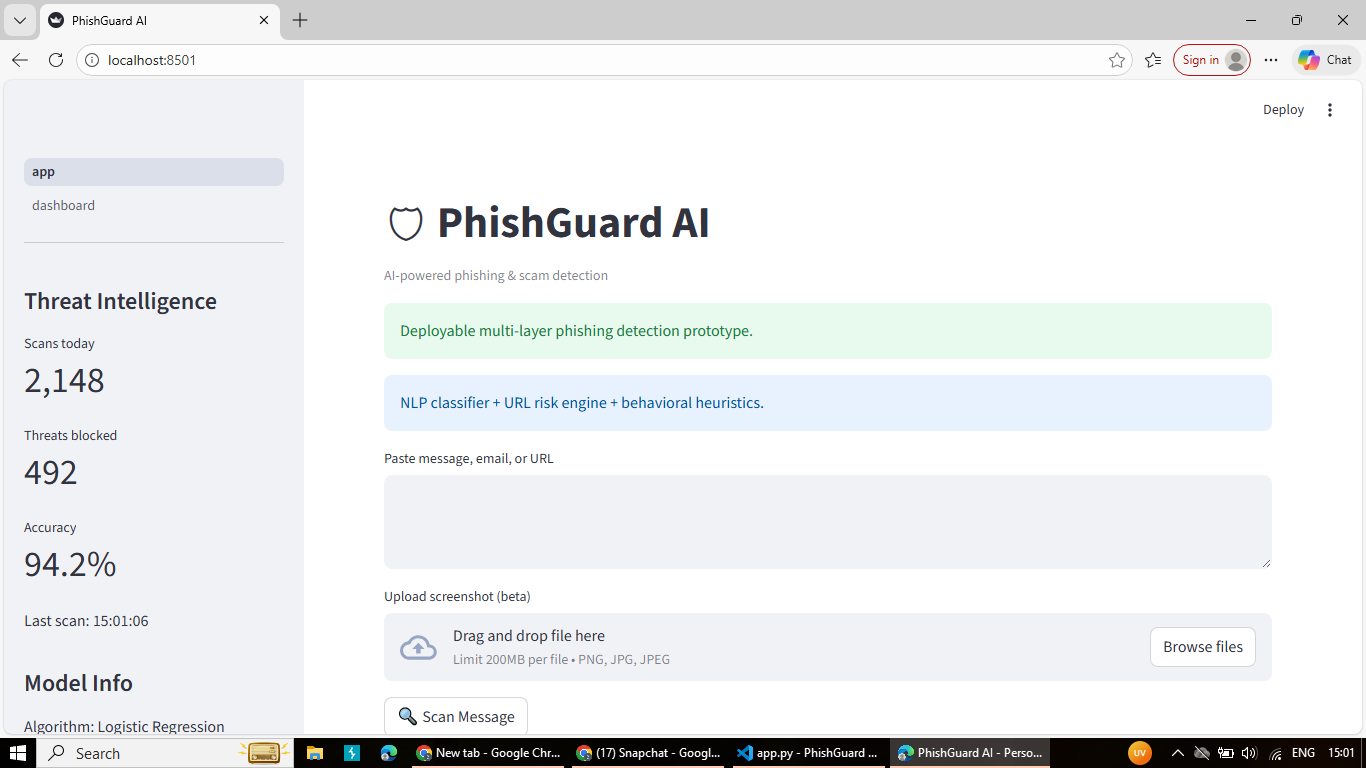
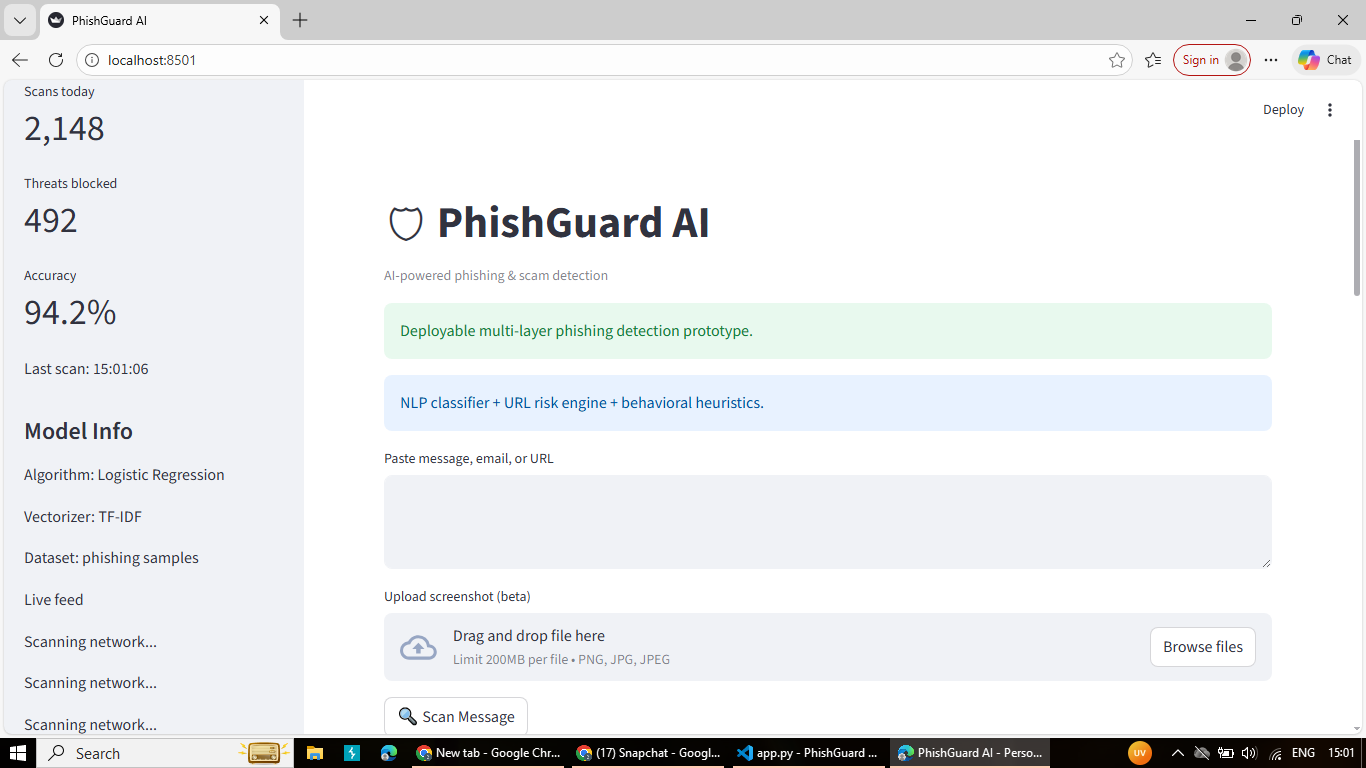
Dashboard and Front page
-
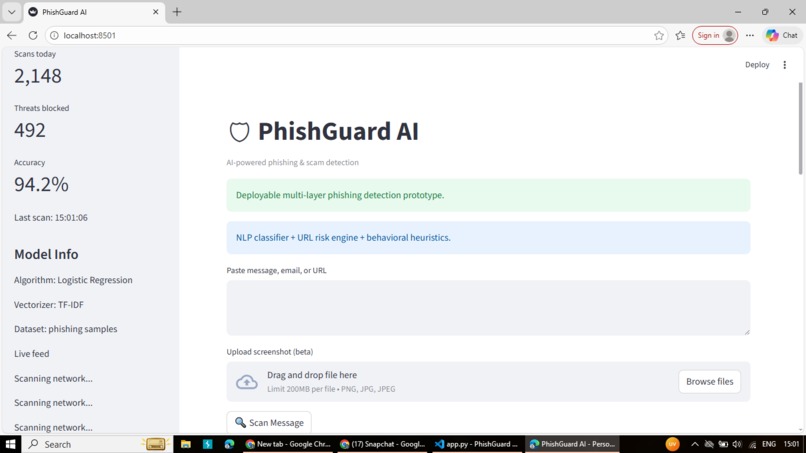
The text box for pasting any url, text and all
Inspiration
Inspiration
Phishing attacks and online scams are increasing rapidly, especially targeting students, elderly users, and online banking users. Many people cannot easily identify fake messages, malicious links, or impersonation attempts until it is too late. We wanted to build a real-time tool that can instantly warn users before they click a dangerous link or share sensitive information.
What it does
PhishGuard AI is a real-time phishing detection system that analyzes text messages, emails, and URLs to identify potential scams. Users can paste a message or link, and the system generates a risk score, threat level, and explanation. It highlights suspicious words, detects social engineering patterns, and analyzes URL structures to determine if content is likely malicious.
The system also includes:
- Batch scanning for multiple messages
- Threat analytics dashboard
- Detection logs and reports
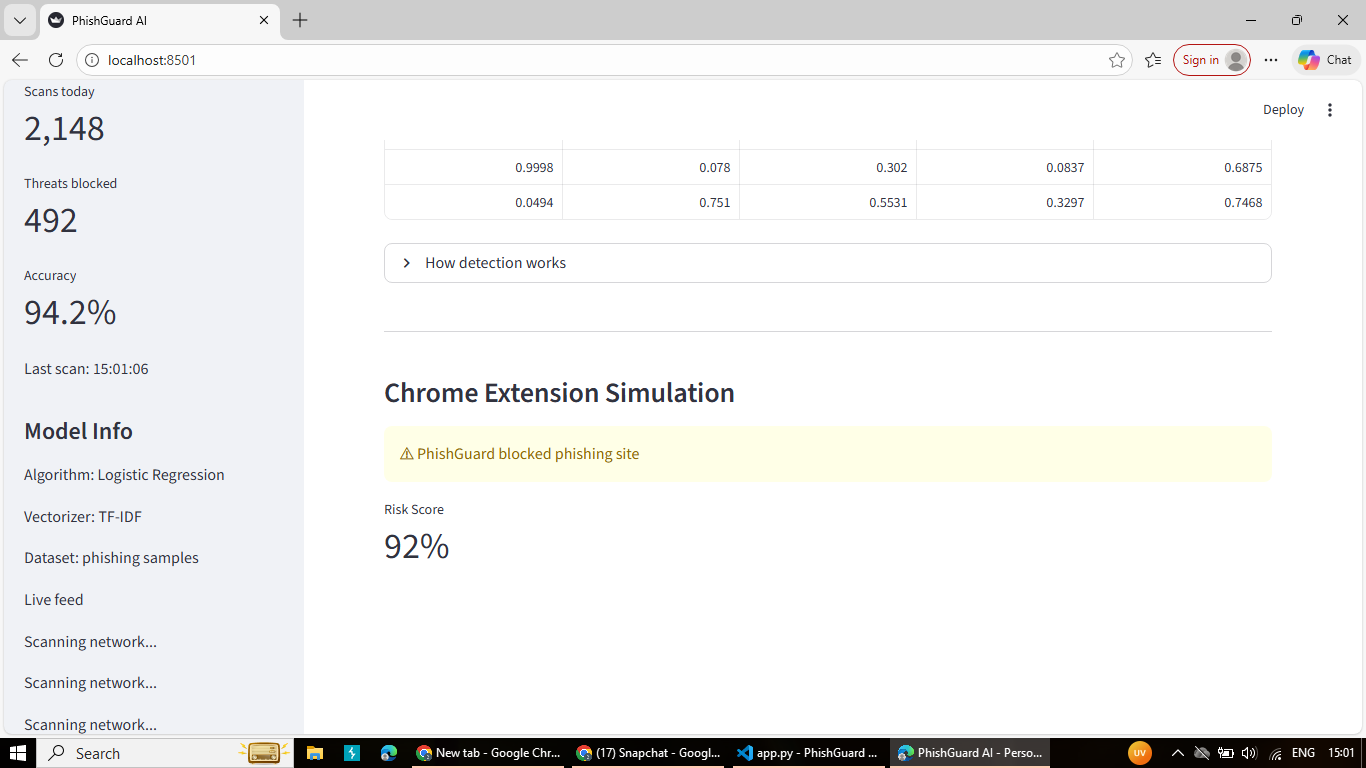
- Chrome extension prototype simulation
How we built it
We built the system using Python and Streamlit for rapid prototyping and deployment. A machine learning classifier trained on phishing patterns works alongside a heuristic detection engine and URL risk analyzer. The final risk score combines these layers to provide an accurate and explainable result.
Challenges we ran into
The main challenge was building a multi-layer detection system within limited hackathon time while ensuring it remained stable and demo-ready. Balancing machine learning accuracy with real-time performance and usability was also a key challenge.
What we learned
We learned how to design a deployable cybersecurity tool under time constraints, integrate machine learning with rule-based systems, and build a clear, user-friendly interface for security applications.
Future scope
Future versions will include:
- Transformer-based phishing detection models
- Real browser extension deployment
- API integration for fintech and security platforms
- Messaging app and email integration
- Enterprise-level dashboard and analytics
Built With
- logistic
- numpy
- pandas
- plotly
- python
- regression
- scikit-learn
- streamlit
- tf-idf
- vectorizer

Log in or sign up for Devpost to join the conversation.