Inspiration
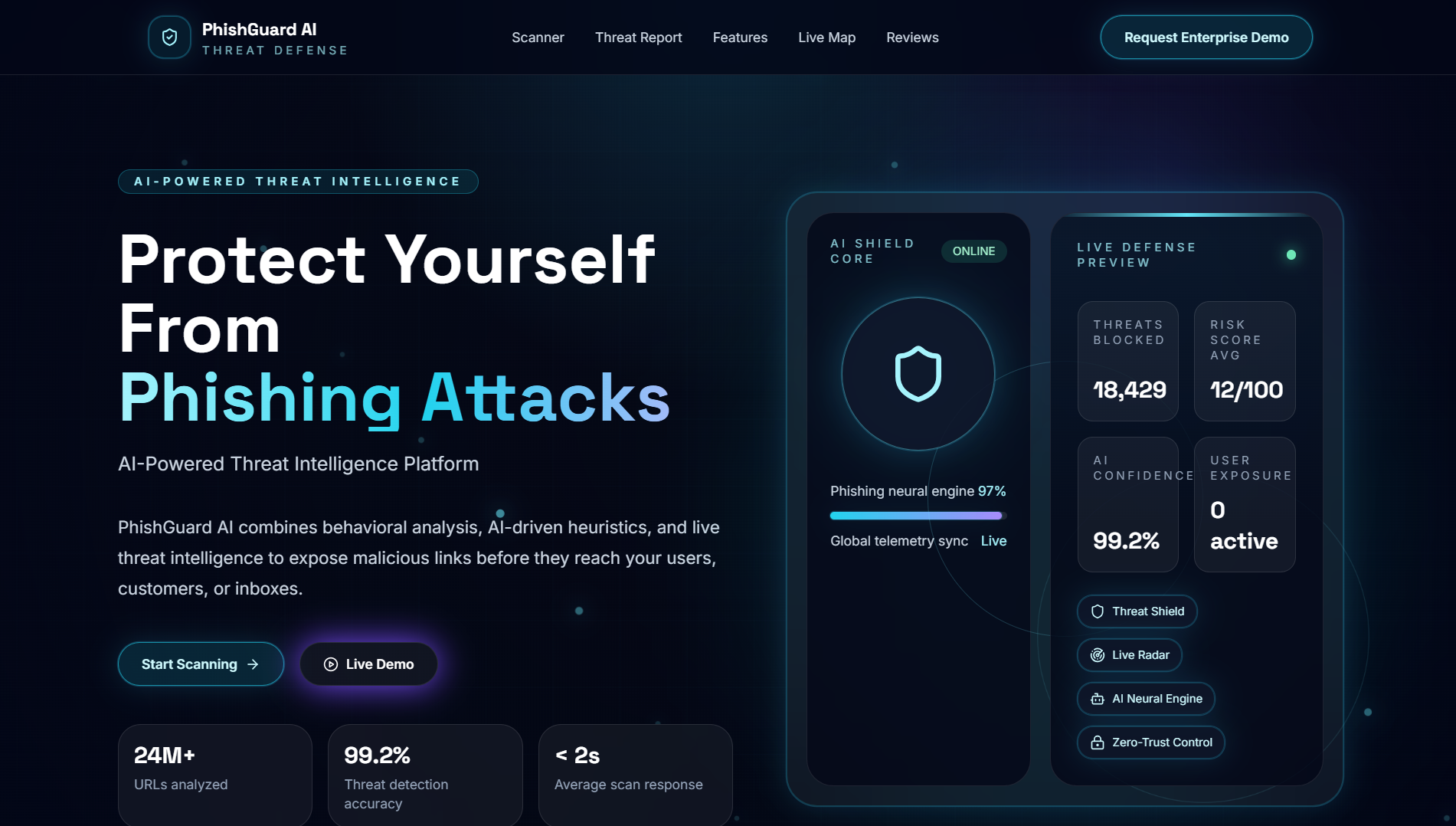
Phishing attacks remain one of the most common and effective cybersecurity threats. We wanted to build a platform that feels closer to a real enterprise threat intelligence product rather than a simple URL checker. The goal was to create a system that not only scans suspicious links, but also explains risk in a clear, professional, and actionable way.
What it does
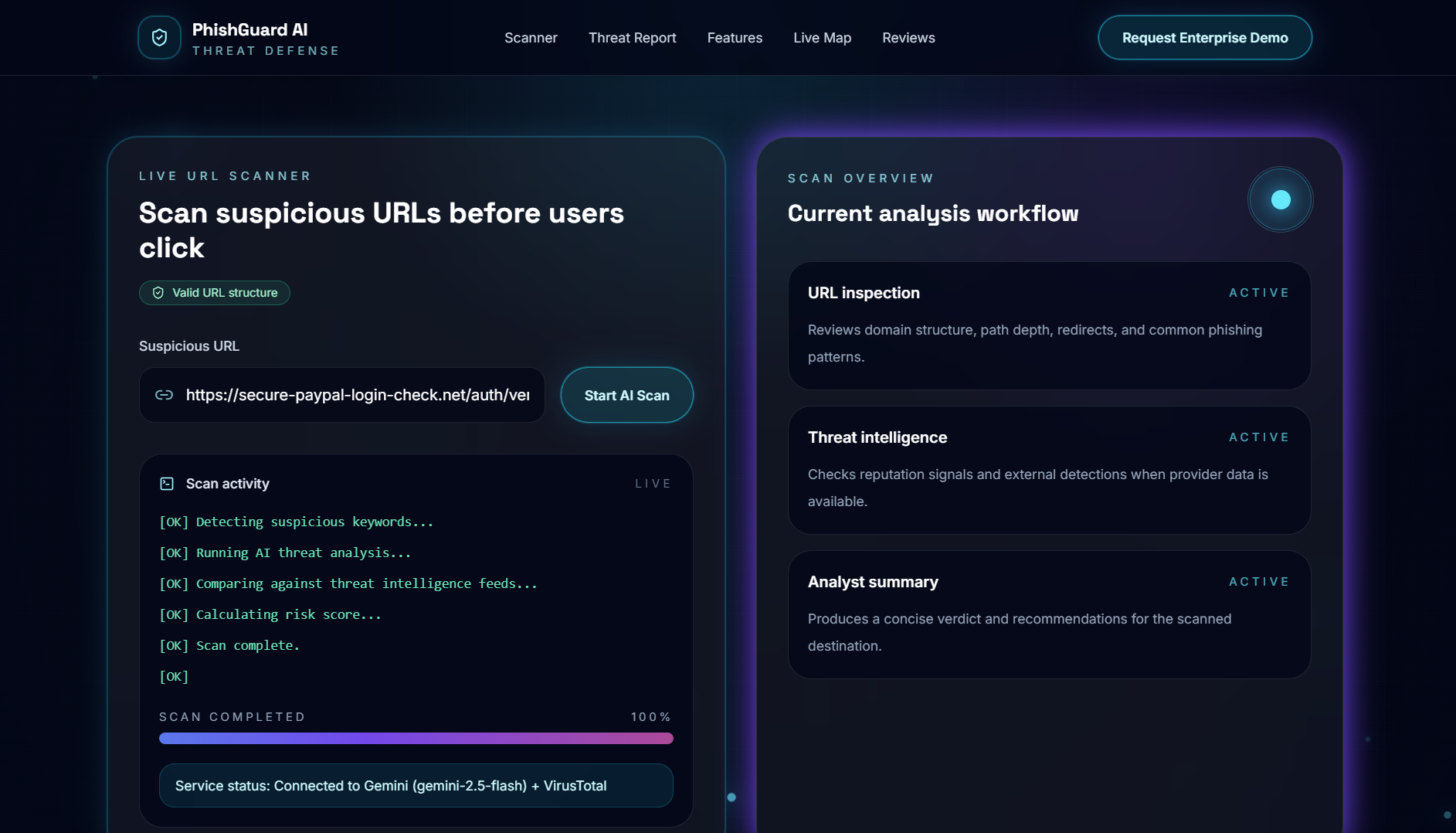
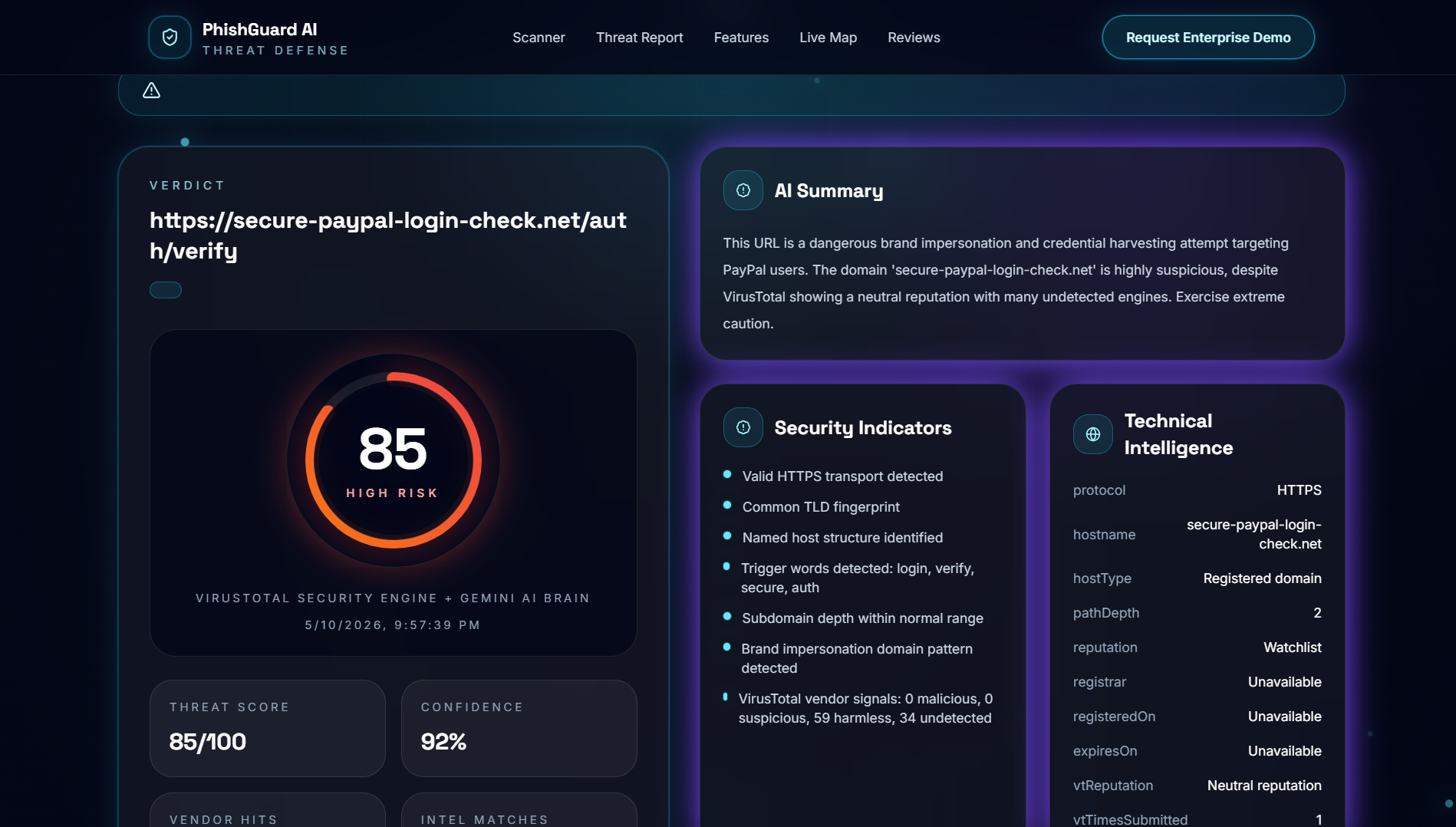
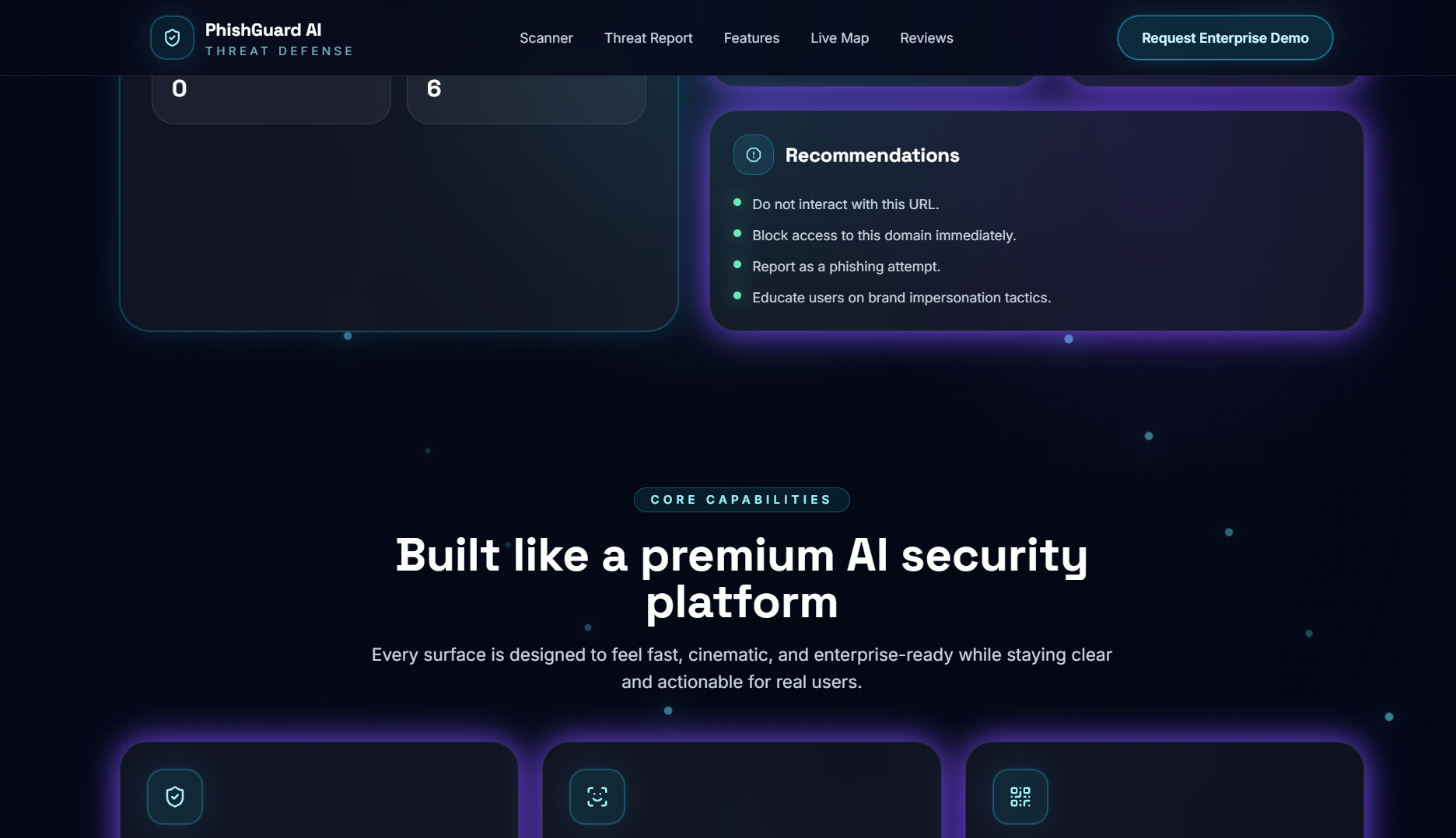
PhishGuard AI analyzes suspicious URLs and generates a structured threat report. It evaluates phishing indicators such as brand impersonation, credential-oriented paths, suspicious trust language, risky domain patterns, and known security training environments.
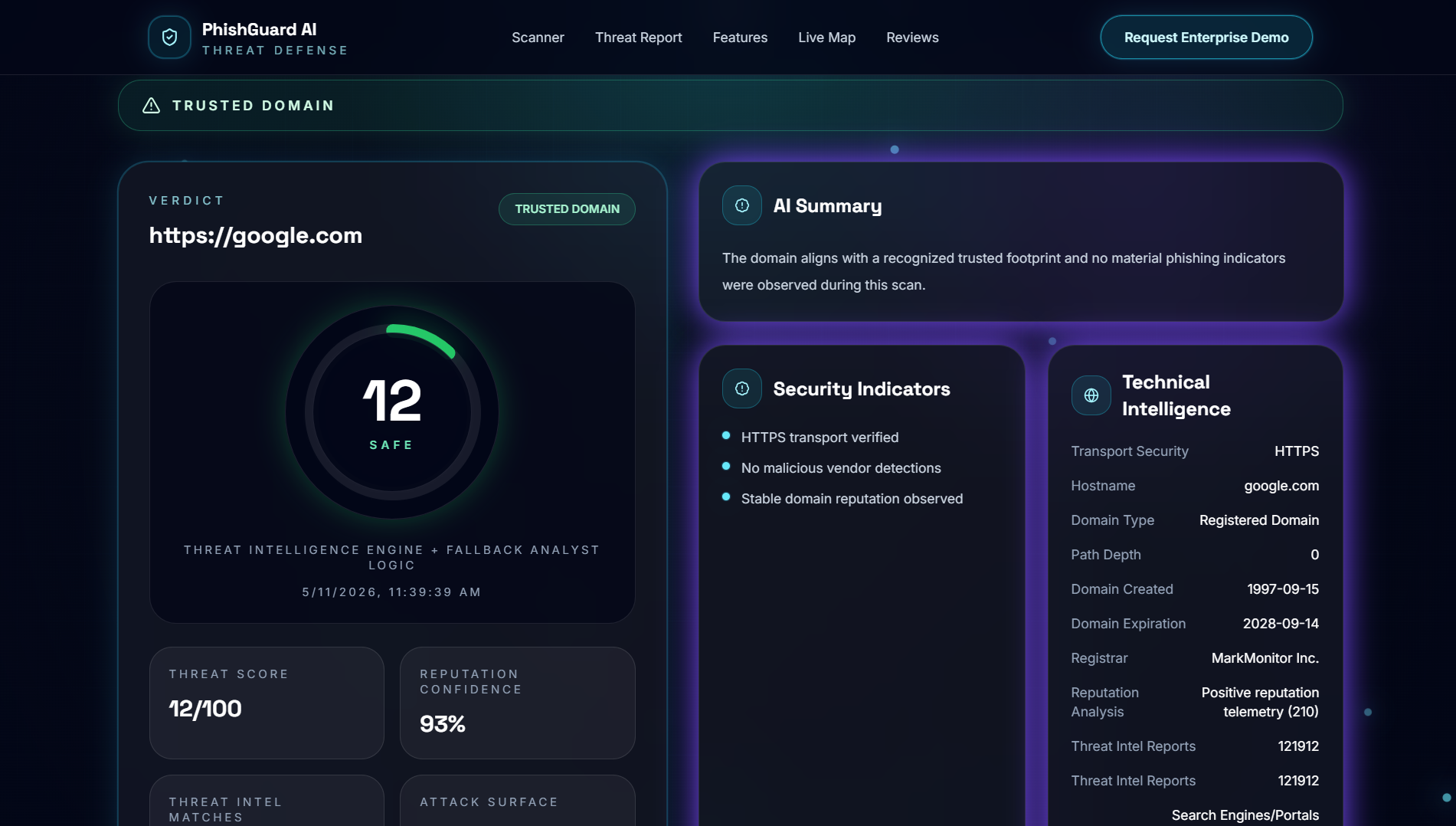
The platform enriches results using VirusTotal threat intelligence and generates analyst-style AI summaries with Gemini API. The final report includes:
- contextual threat verdicts
- threat scoring
- phishing indicators
- technical intelligence
- security recommendations
How we built it
We built PhishGuard AI using React and Vite for the frontend, Tailwind CSS for styling, and Framer Motion for animations and dashboard transitions.
The backend was developed with Node.js and integrates:
- Gemini API for AI-generated analyst summaries
- VirusTotal API for external threat intelligence
- RDAP / WHOIS-style domain intelligence for domain analysis
We also designed a custom threat scoring system and contextual verdict engine to make the platform feel more like a professional SOC dashboard than a simple API wrapper.
Challenges we ran into
One of the biggest challenges was making the platform feel believable and internally consistent instead of looking like raw API output.
Early versions were:
- too verbose
- visually noisy
- inconsistent in verdict logic
- unrealistic in tone
We spent a significant amount of time refining:
- threat score behavior
- phishing detection logic
- dashboard hierarchy
- analyst-style reporting
- realistic cybersecurity terminology
Another challenge was handling cases where external provider data was incomplete or unavailable while still keeping the UI professional and trustworthy.
Accomplishments that we're proud of
We are proud that PhishGuard AI evolved from a basic phishing scanner into a more polished cybersecurity intelligence experience.
Some highlights include:
- contextual threat verdicts
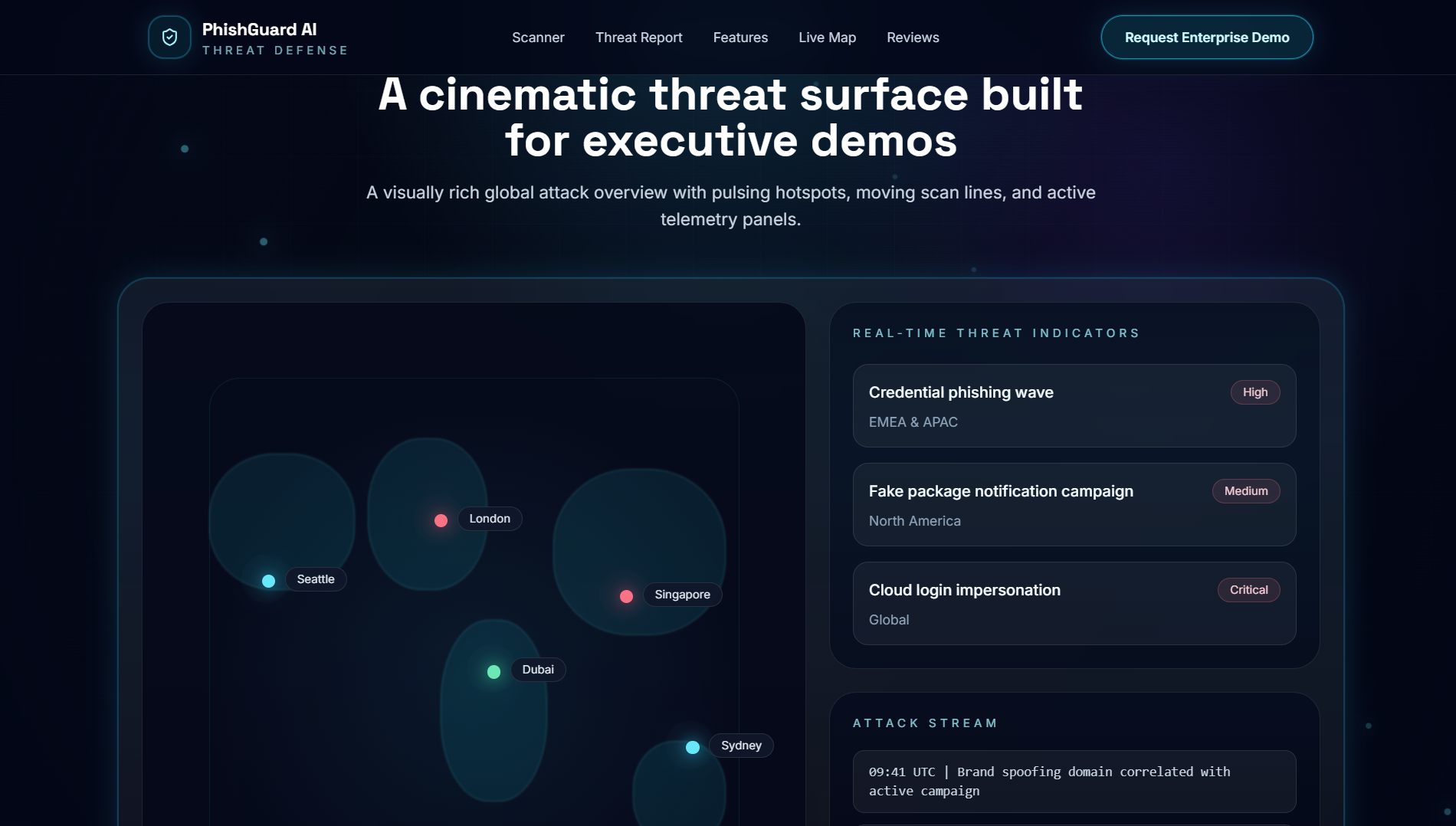
- enterprise-inspired dashboard design
- AI-generated analyst summaries
- improved phishing detection logic
- realistic severity-based threat scoring
- structured technical intelligence reporting
We are also proud of the overall UI/UX polish, animations, and responsive dashboard experience.
What we learned
This project taught us that building a believable cybersecurity product is not only about connecting APIs.
We learned the importance of:
- threat scoring consistency
- UX hierarchy in security dashboards
- realistic security language
- balancing technical intelligence with readability
- designing AI outputs that feel trustworthy and actionable
We also gained deeper experience with phishing detection workflows, threat intelligence concepts, and AI-assisted cybersecurity analysis.
What's next for PhishGuard AI
Next, we want to expand PhishGuard AI with:
- scan history
- user authentication
- organization workspaces
- screenshot and QR phishing analysis
- stronger domain intelligence
- Google Safe Browsing integration
- exportable threat reports
- collaboration workflows for security teams
We also want to continue improving the AI reasoning engine and detection accuracy to make the platform feel even closer to a real-world threat intelligence solution.
Built With
- css
- express.js
- geminiapi
- github
- node.js
- rdap/whois
- react
- tailwind
- vercel
- virustotalapi


