-
-
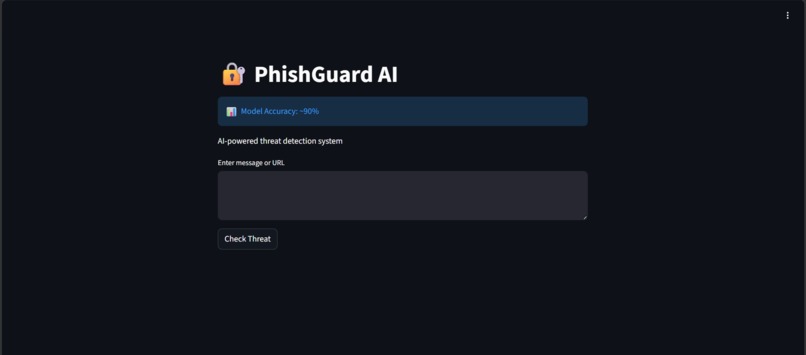
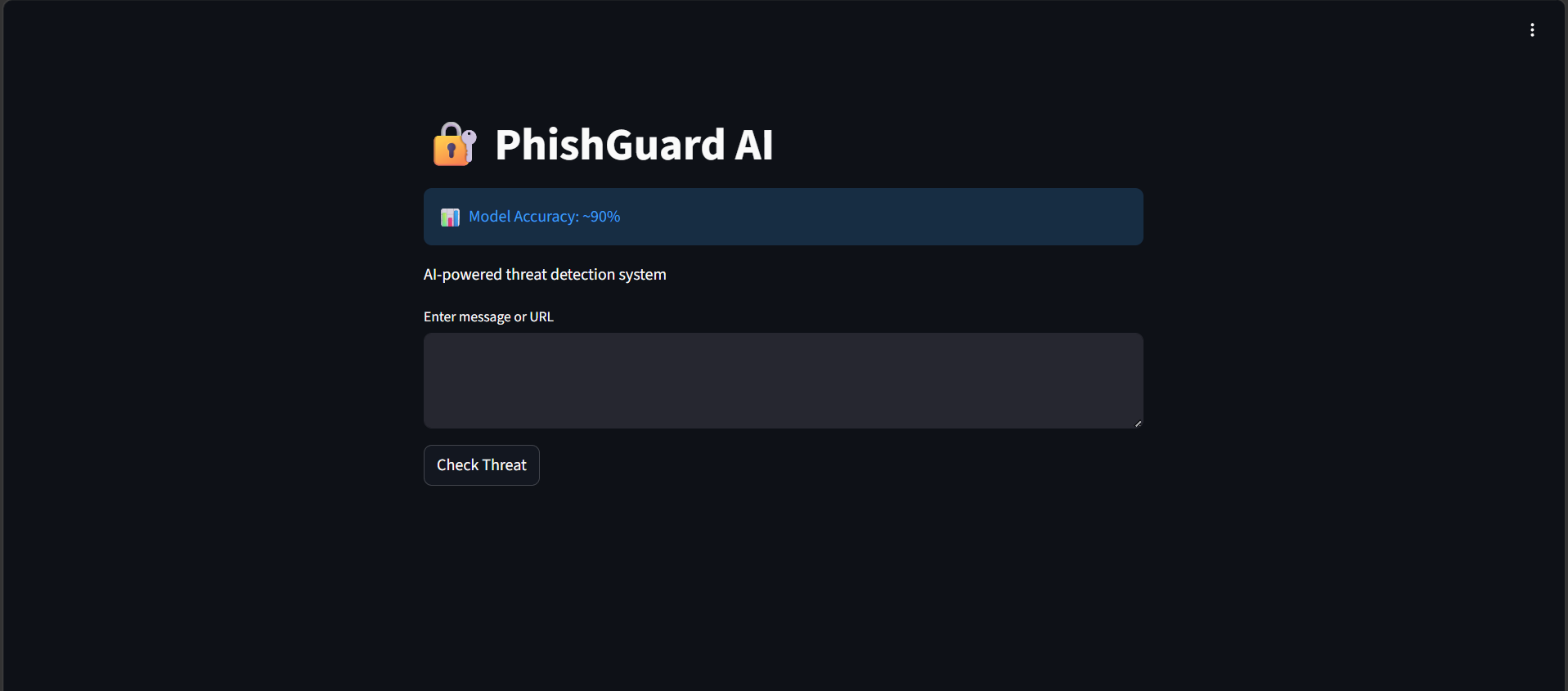
User interface where input text or URL is entered for threat analysis.
-
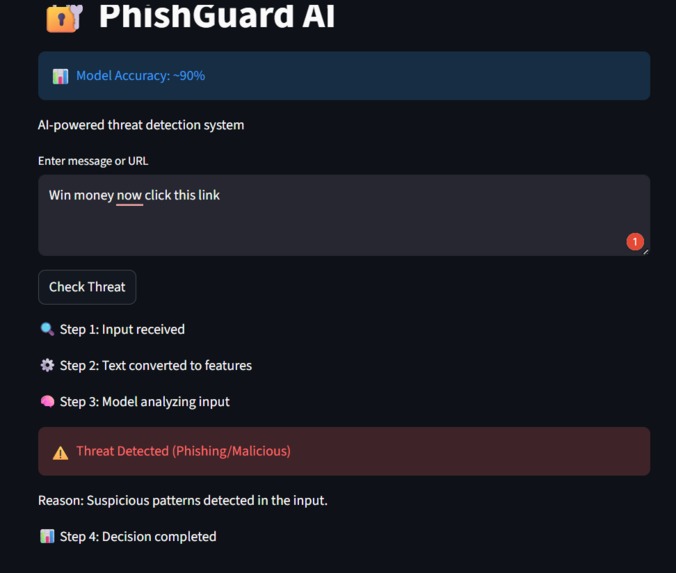
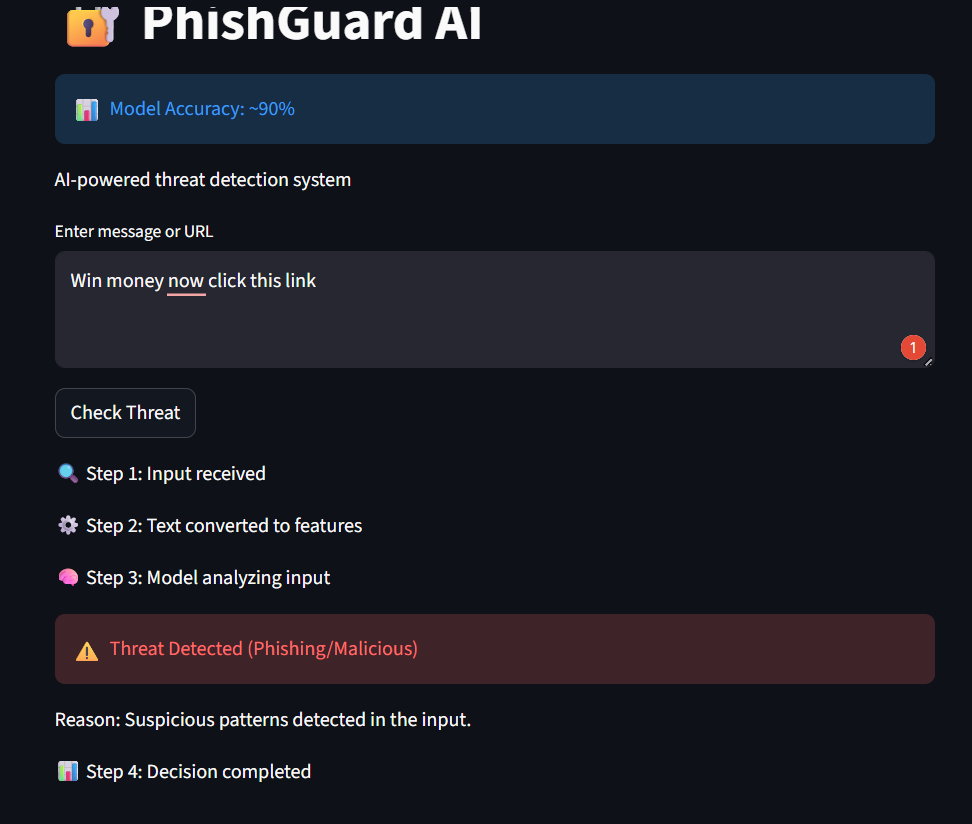
System detecting a phishing message with step-by-step AI decision process.
-
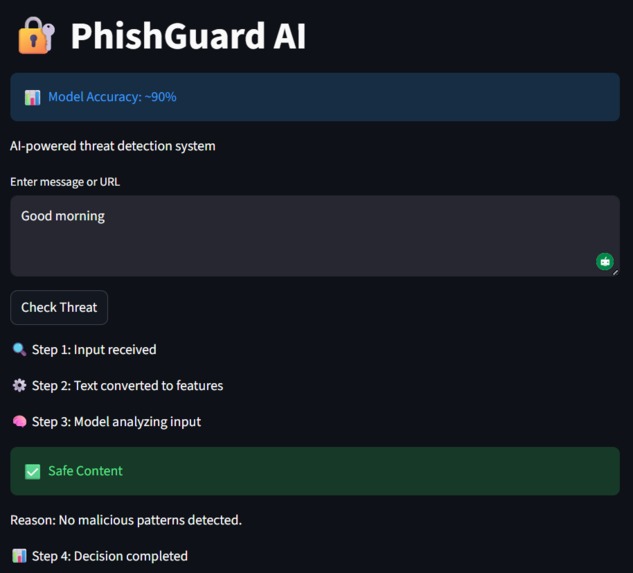
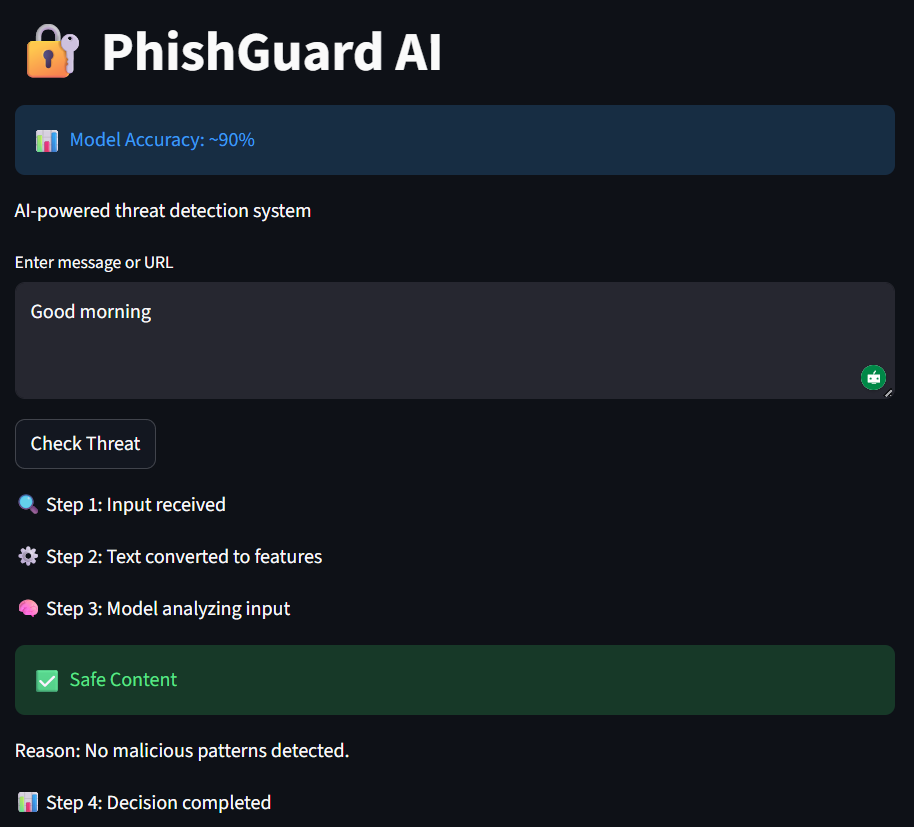
Example of safe content correctly classified by the model
-
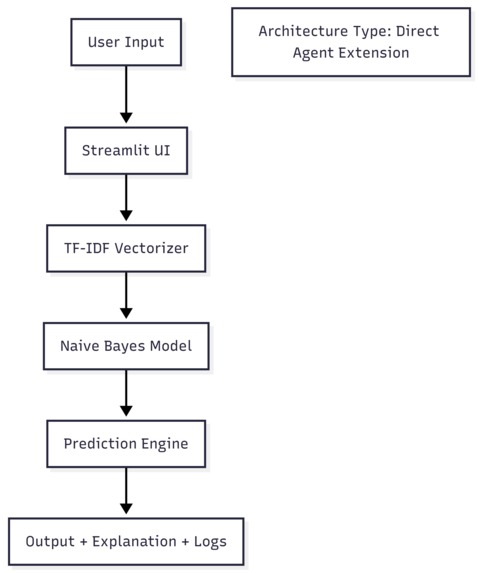
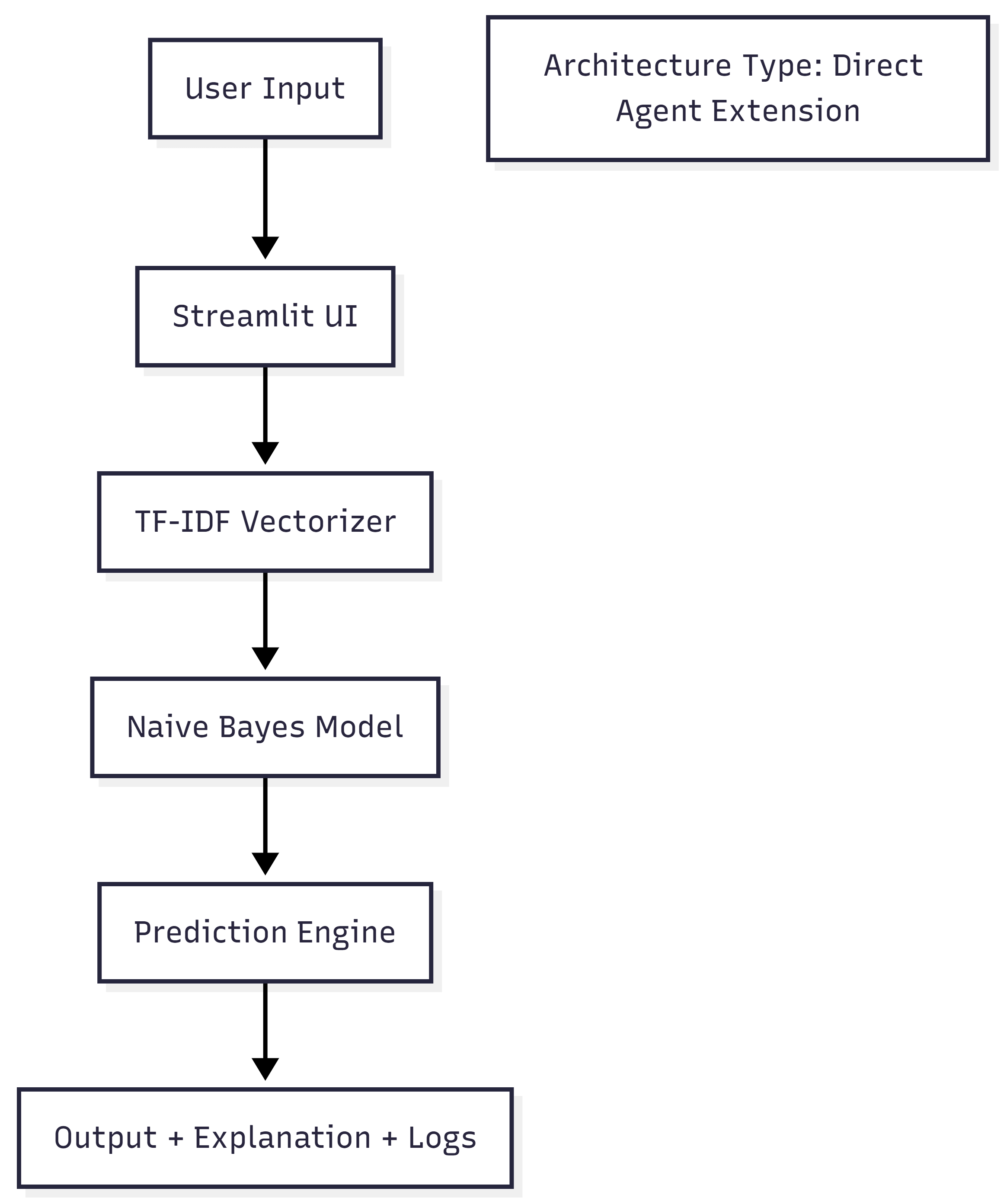
System architecture showing the pipeline from input to prediction and output.
Inspiration
Phishing attacks are one of the most common cybersecurity threats today, often targeting everyday users who may not recognize malicious messages or links. We were inspired to create a simple, accessible solution that leverages AI to help users quickly identify and avoid such threats in real time.
What it does
PhishGuard AI is an intelligent threat detection system that analyzes user-input text or URLs and classifies them as safe or malicious. It provides instant feedback along with a transparent, step-by-step decision process, helping users understand why a message is flagged.
How we built it
We developed PhishGuard AI using Python and machine learning techniques.
Text input is transformed into numerical features using TF-IDF vectorization A Naive Bayes classifier is trained to detect phishing patterns A Streamlit-based UI enables real-time interaction The system also displays step-by-step execution logs, simulating an agent-like decision process
Challenges we ran into
Handling noisy and unstructured text data Reducing false positives while maintaining high detection accuracy Debugging model serialization and loading issues (pickle errors) Ensuring smooth integration between the ML model and the UI
What we learned
How to build and deploy end-to-end machine learning systems The importance of preprocessing and feature engineering Designing user-friendly AI interfaces Debugging real-world ML deployment issues
What's next
Improve accuracy using advanced models (e.g., deep learning / NLP transformers) Integrate with browsers and email clients for real-time protection Expand and diversify the dataset for better generalization Add explainable AI features for deeper insights
Built With
- naive
- numpy
- pandas
- python
- scikit-learn
- streamlit
- tf-idf
