-
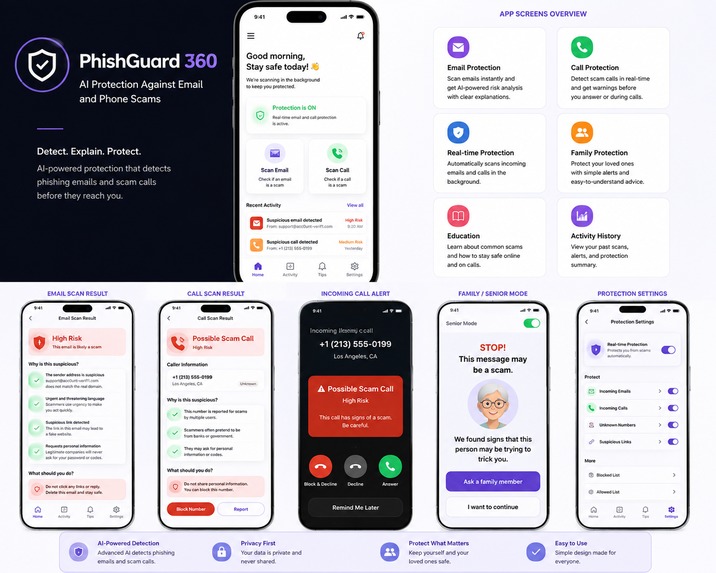
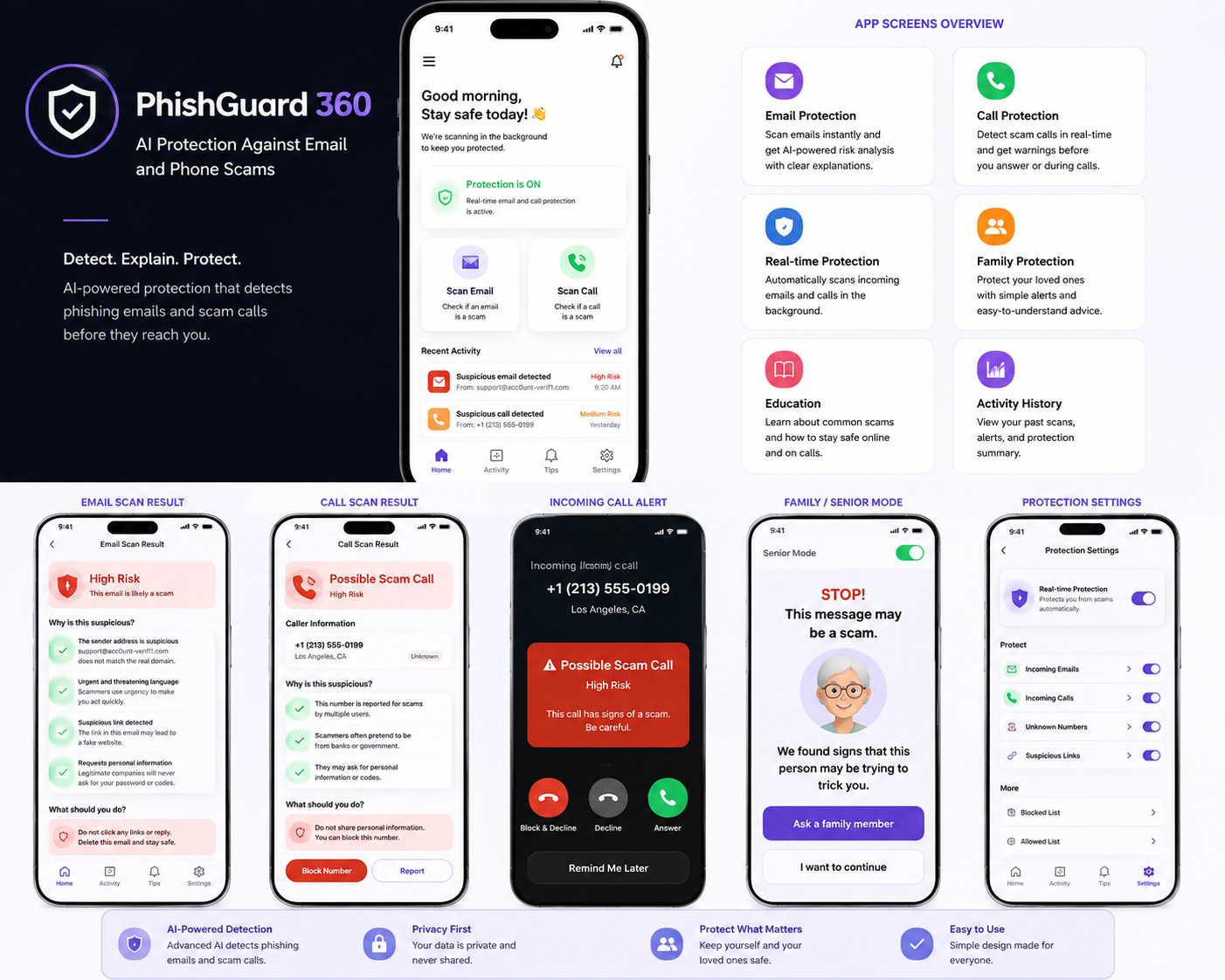
PhishGuard 360 AI-powered protection that detects phishing emails and scam calls, explains the risks in simple language.
This project was inspired by my own experiences. Like many people, I regularly receive phishing emails and suspicious phone calls. More importantly, some of my immediate family members have been targeted by scams. One of my younger sisters was recently affected by a scam, and it made me realise how easily anyone can become a victim.
As I begin my career in cybersecurity, I wanted to create something that could help protect people before they are tricked into sharing personal information or losing money. While there are already apps that identify spam calls or flag suspicious emails, I started asking myself: What if we could stop these scams before they ever reached the user? This is especially important for older adults, who are often targeted by cybercriminals because they may be less familiar with modern scam techniques.
What It Does
PhishGuard 360 is an AI-powered cybersecurity solution designed to detect and prevent phishing emails and scam phone calls.
The system analyses incoming emails and phone call information for signs of fraud, such as:
Suspicious sender addresses or phone numbers Urgent or threatening language Requests for passwords, banking details, or verification codes Links to fake or malicious websites Common social engineering tactics used by scammers
Instead of simply sending suspicious messages to a spam folder, the long-term vision is for the system to prevent high-risk scams from reaching users altogether, while explaining in simple language why the communication is considered dangerous.
How I Built It
The project combines cybersecurity principles with artificial intelligence to analyse potential phishing attempts and scam calls. It is designed to provide users with clear, easy-to-understand explanations rather than technical security jargon.
The goal is to create a solution that is accessible to everyone, regardless of their technical knowledge, with a particular focus on protecting older adults and other vulnerable users.
Challenges I Faced
One of the biggest challenges was designing a system that balances security with usability. Blocking every suspicious email or phone call could also block legitimate communications, so reducing false positives is an important consideration.
Another challenge was thinking beyond existing spam filters. Rather than simply detecting scams after they arrive, I wanted to explore the possibility of preventing malicious communications from reaching users in the first place.
What I Learned
Building this project helped me understand that cybersecurity is not just about technology—it's about protecting people. Many successful cyberattacks rely on human trust rather than technical vulnerabilities.
I also learned more about phishing, vishing (voice phishing), social engineering, AI-assisted threat detection, and the importance of designing security tools that are easy for everyone to understand and use.
What's Next
The long-term vision for PhishGuard 360 is to develop it into a solution that can integrate directly with email providers and mobile devices to identify, explain, and where possible, block phishing emails and scam calls before they reach users.
Future features could include:
Real-time AI threat detection Scam call transcription and analysis Multi-language support Accessibility features for older adults Integration with mobile operating systems and email providers Personalised security education based on detected threats
Ultimately, my goal is to help make digital communication safer and reduce the number of people who fall victim to phishing and scam attacks.
Built With
- ai
- amazon-web-services
- api
- apis
- cloud
- css
- cybersecurity
- deployment
- detection
- engineering
- html
- information
- javascript
- machine
- openai
- phishing
- processing
- python
- scam
- security
- sqlite
- technologies
- threat
- virustotal

Log in or sign up for Devpost to join the conversation.