-
-
PhishDefender — Real-Time AI Phishing Detection
-
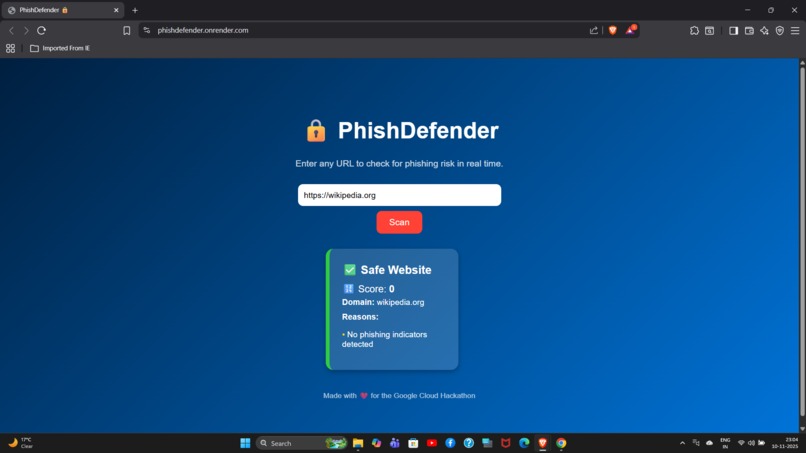
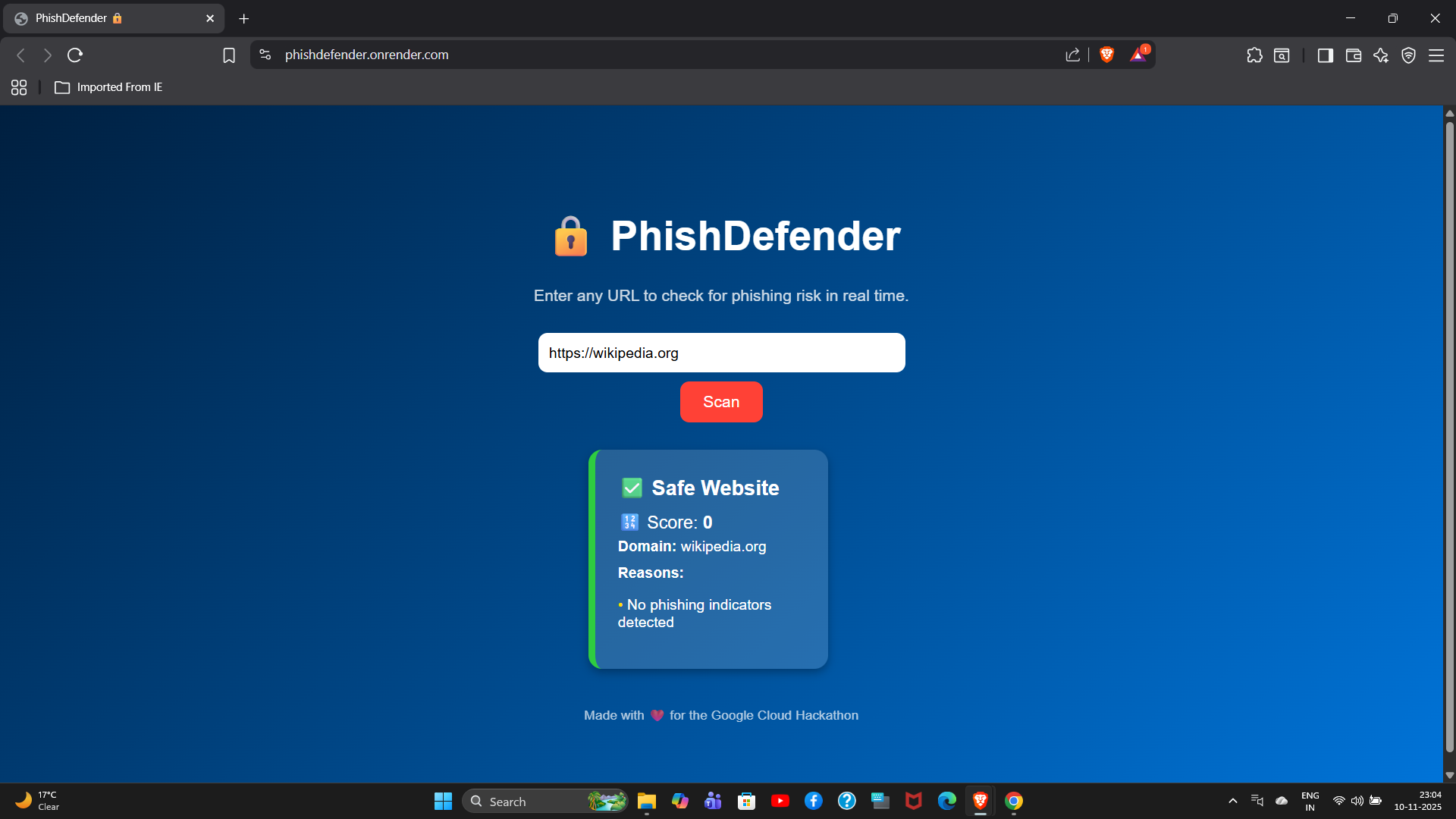
Phishing Not Detected
-
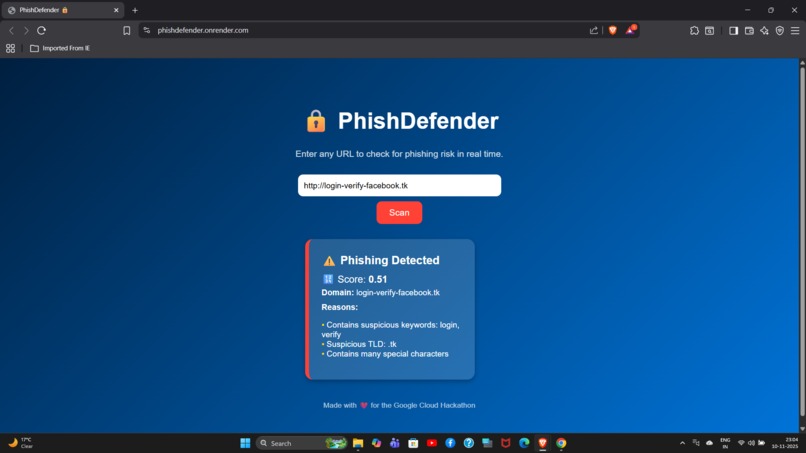
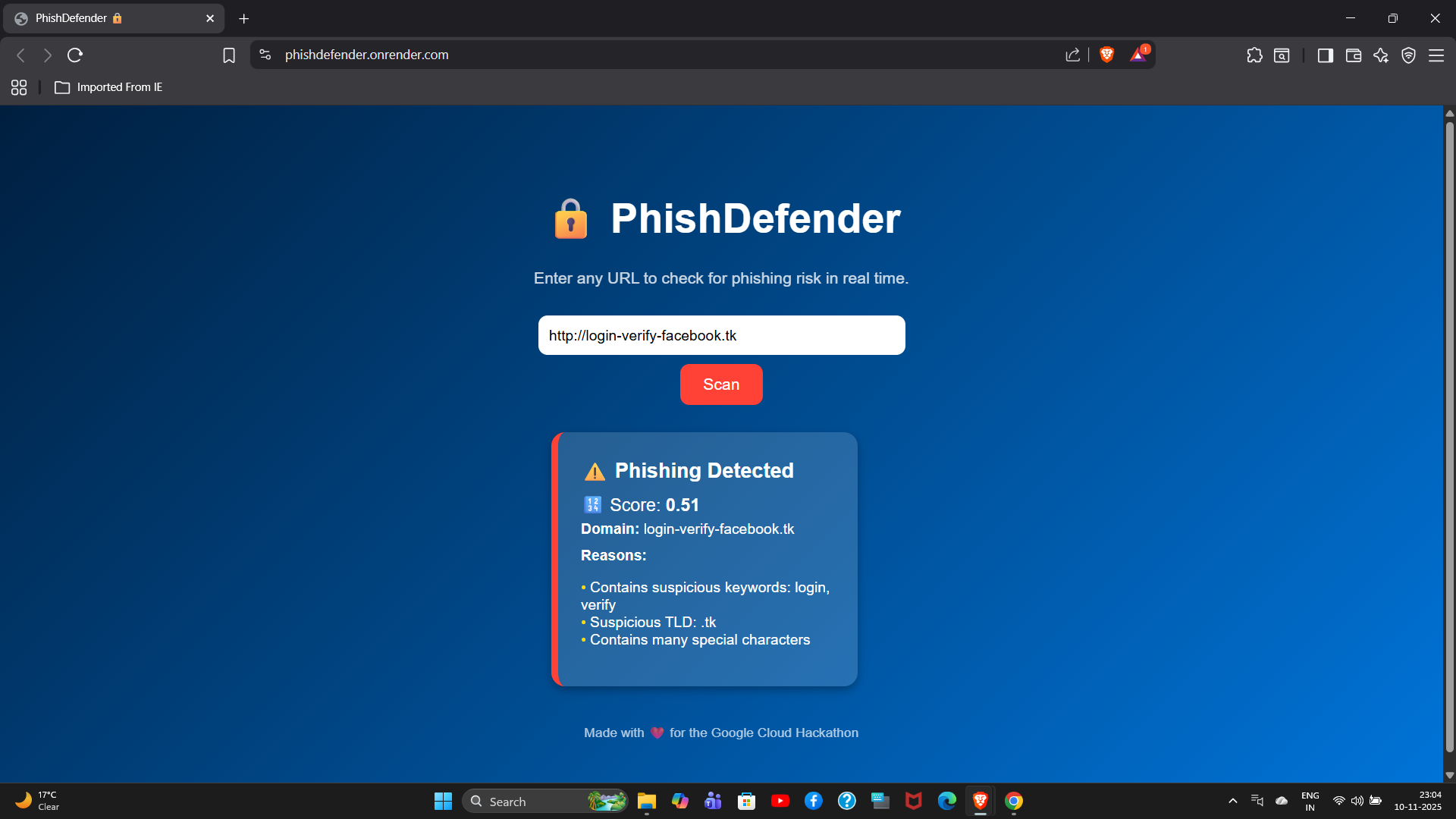
Phishing Detected
-
Inspiration
Phishing remains the leading cause of cyberattacks worldwide, with over 90% of breaches starting from malicious links. Most small teams and independent developers can’t afford enterprise-level protection. We wanted to build a lightweight, affordable, and serverless security solution that scales automatically, stays cost-efficient, and explains its decisions. That idea became PhishDefender — a real-time phishing detection system built entirely on Google Cloud Run.
What it does
PhishDefender detects phishing URLs and suspicious emails using a combination of machine learning and heuristic analysis. Users can paste any link or call the REST API to instantly get: A phishing probability score A classification (safe / suspicious / phishing) A clear explanation of why the decision was made All scans are logged in Firestore, and the dashboard shows results in real time
How we built it
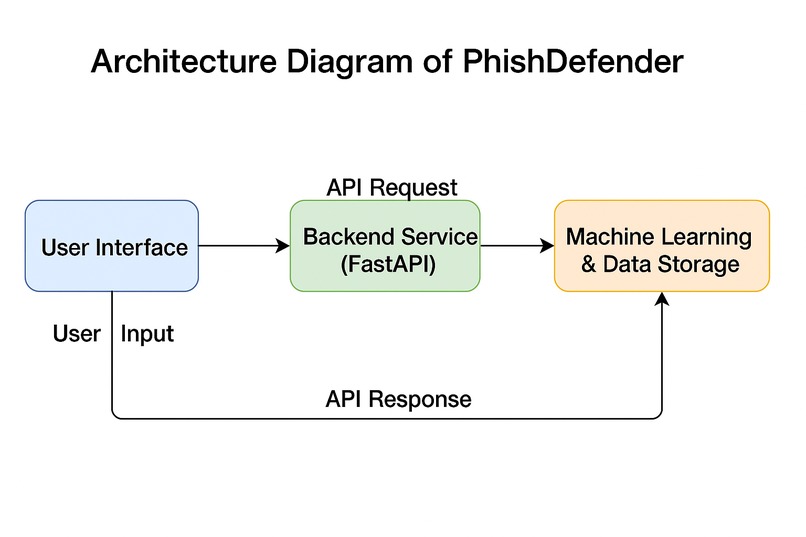
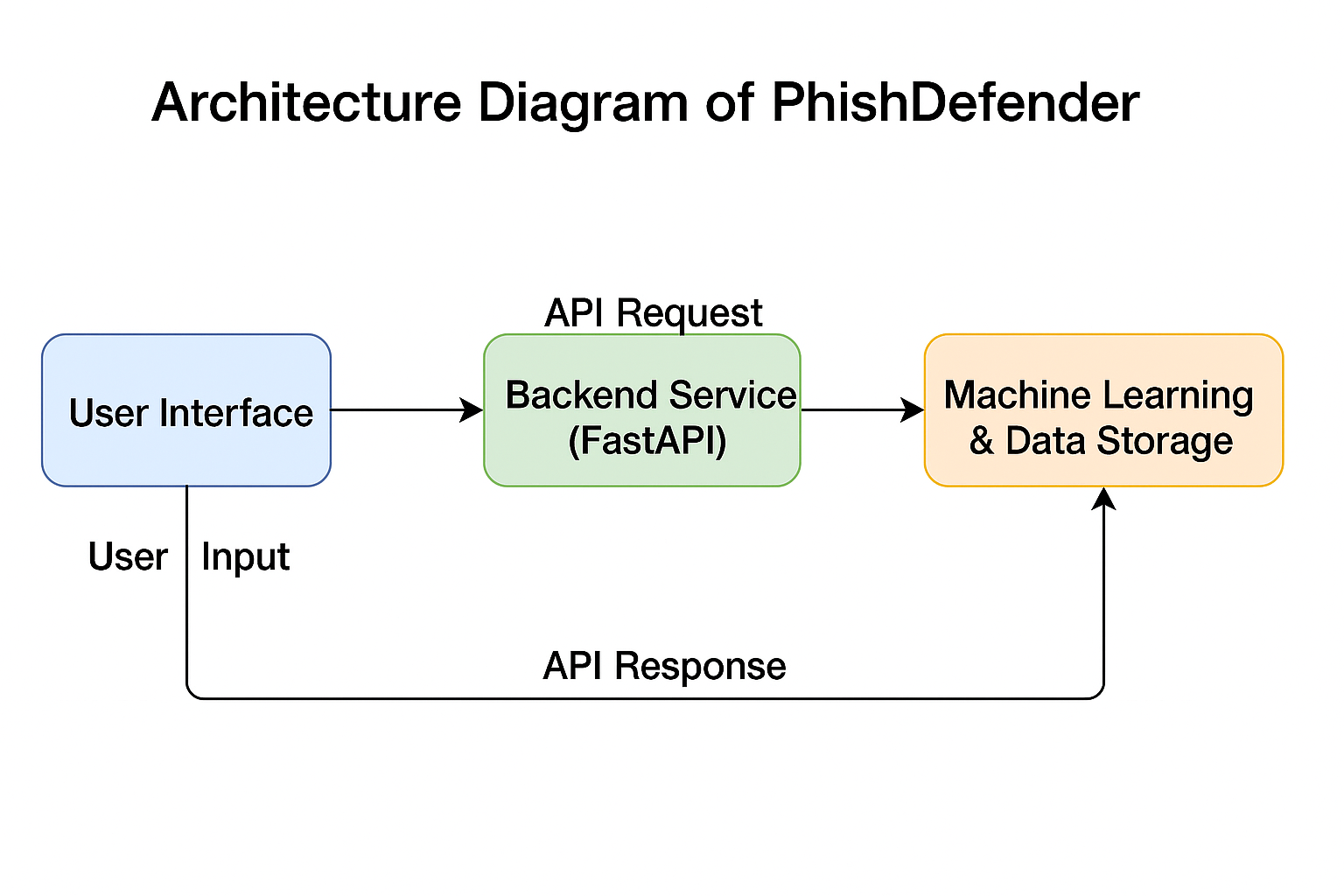
Backend: FastAPI (Python) containerized and deployed on Google Cloud Run Model: Lightweight scikit-learn logistic regression trained on open phishing datasets Storage: Cloud Storage for model artifacts Database: Firestore for scan logs and analytics Frontend: Simple React + Tailwind dashboard for scanning CI/CD: GitHub Actions + Cloud Build for automated deployments Monitoring: Cloud Logging and Monitoring dashboards
Challenges we ran into
Managing cold start latency for the ML model inside Cloud Run containers Balancing heuristic and ML scoring to maintain both accuracy and speed Configuring Firestore IAM roles securely for serverless access Working around billing and deployment limits while testing Ensuring explainable AI outputs that make sense to non-technical users
Accomplishments that we're proud of
Built a real-time, explainable phishing detection API from scratch Deployed and tested it successfully on Google Cloud Run Integrated Firestore logging and a responsive React dashboard Designed a CI/CD pipeline for one-click deployment Produced a professional demo video and documentation under tight time constraints
What we learned
How to architect serverless AI applications using Cloud Run and Firestore The importance of explainability in AI-based cybersecurity tools Setting up GitHub Actions and Cloud Build for continuous deployment Best practices for container optimization and request handling in Cloud Run
What's next for PhishDefender — Real-Time AI Phishing Detection on Cloud Run
Add a Chrome Extension for one-click phishing detection in browsers Integrate Vertex AI or Gemini API for deeper NLP-based analysis of emails Build a real-time analytics dashboard using BigQuery and Data Studio Launch a public developer API for third-party security integrations Expand into a multi-language, multi-platform phishing intelligence service
Built With
- cloud-logging
- cloud-monitoring
- docker
- draw.io
- excalidraw
- fastapi
- github-actions
- google-cloud
- google-cloud-build
- google-cloud-firestore
- google-cloud-run
- gunicorn
- python
- python-whois
- react
- requests
- scikit-learn
- tailwindcss
- tldextract
- uvicorn


Log in or sign up for Devpost to join the conversation.