Inspiration
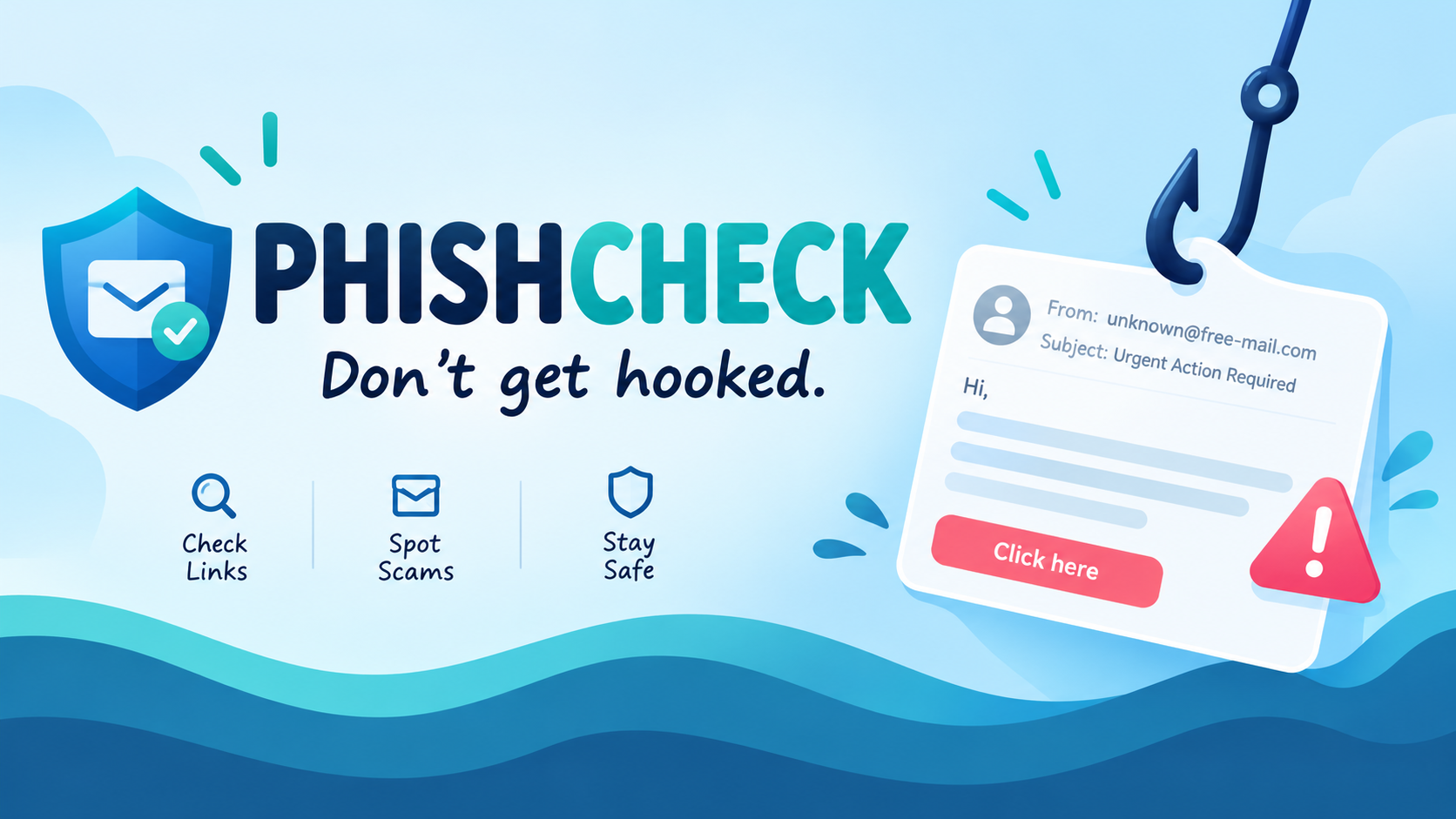
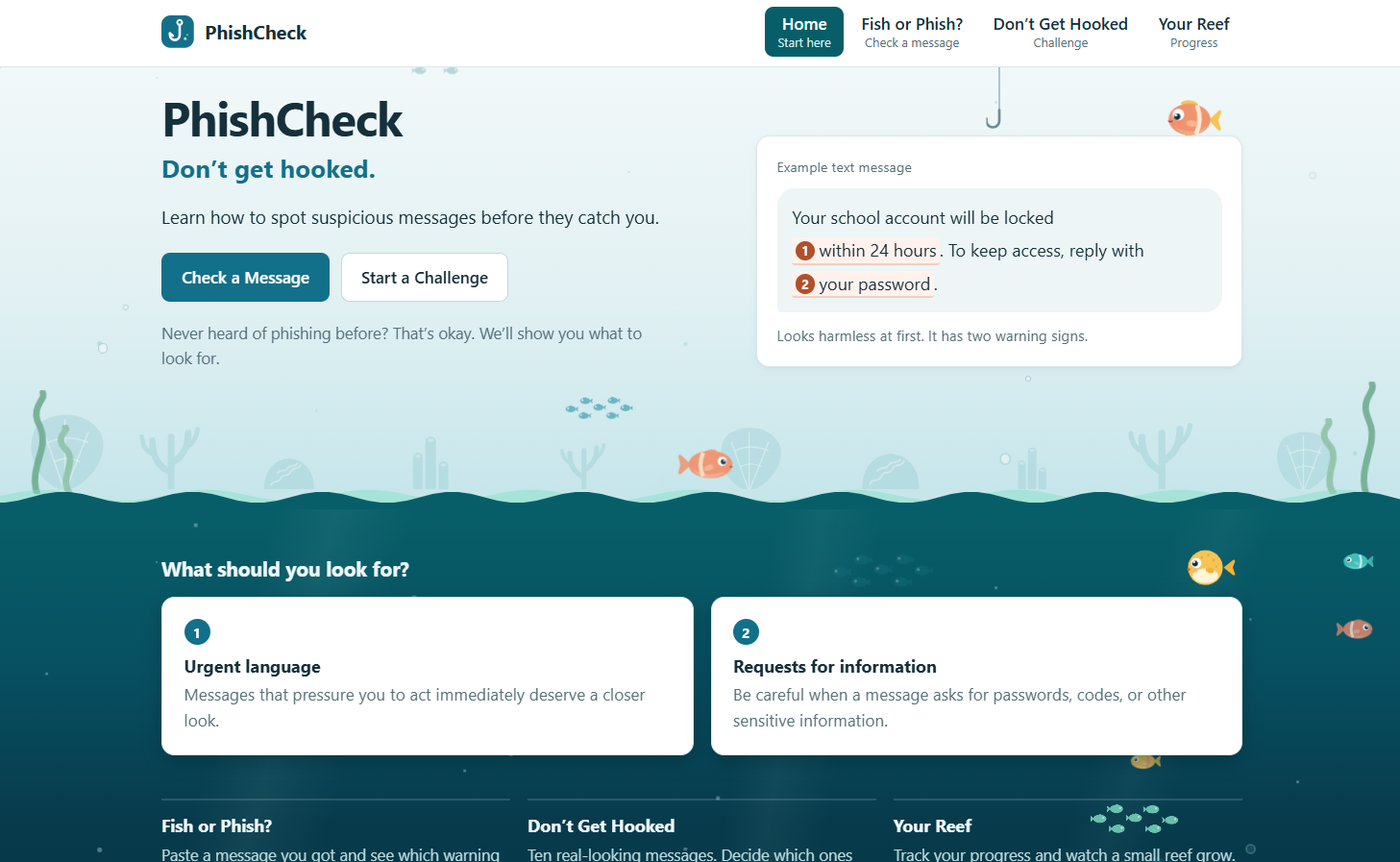
Phishing is one of those things that everyone hears about, but knowing that phishing exists doesn't always mean you can recognize it when it actually happens. We wanted to create something that lets people practice spotting scams instead of just reading a list of warnings.
We also wanted cybersecurity to feel less intimidating. That’s where the underwater theme came from. If phishing is trying to get people "hooked," why not make learning about it an ocean?
What it does
PhishCheck helps users learn how to recognize phishing messages through two main features.
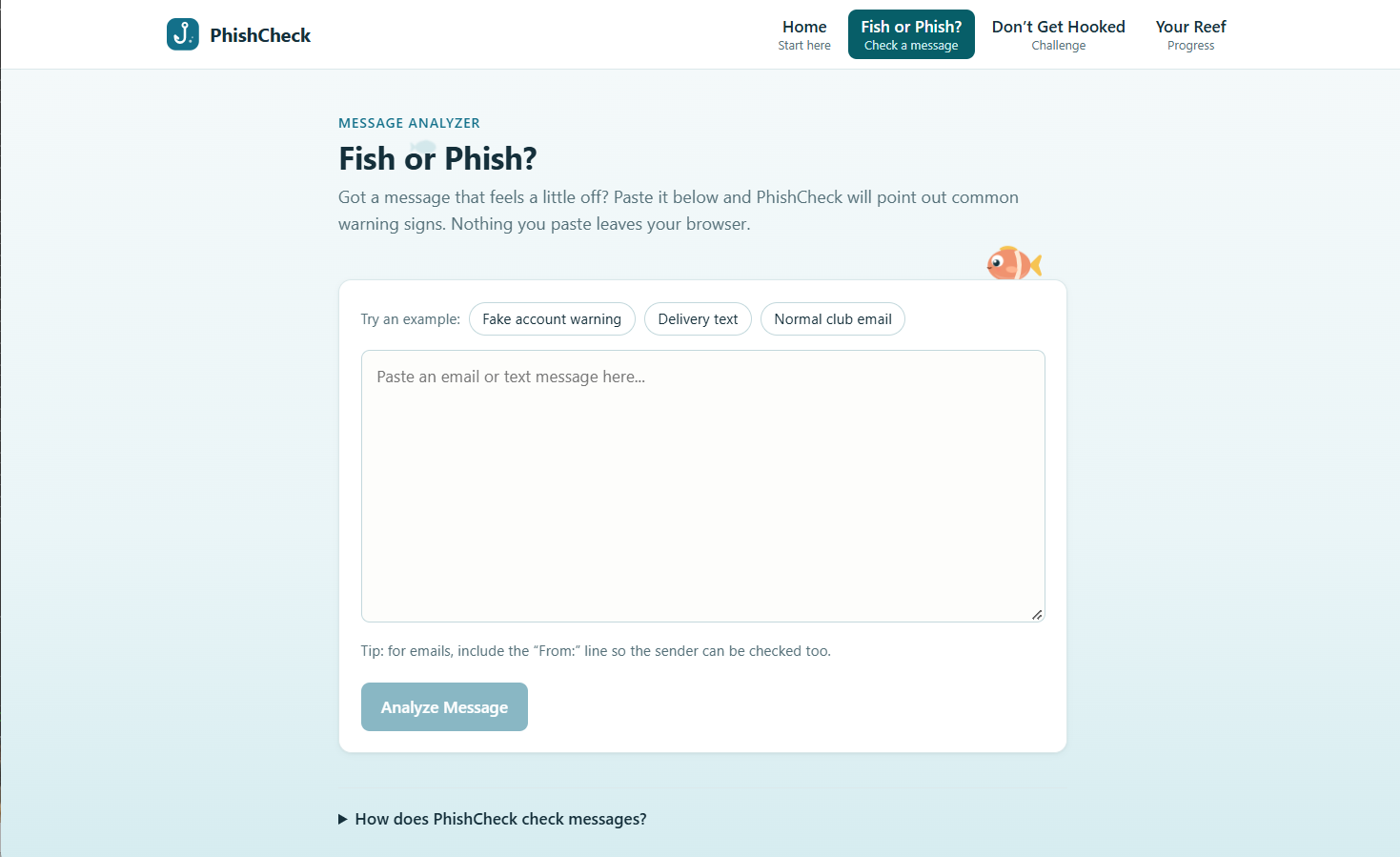
Fish or Phish? lets users paste an email or text message and checks it for common warning signs, such as suspicious links, urgent language, and requests for sensitive information.
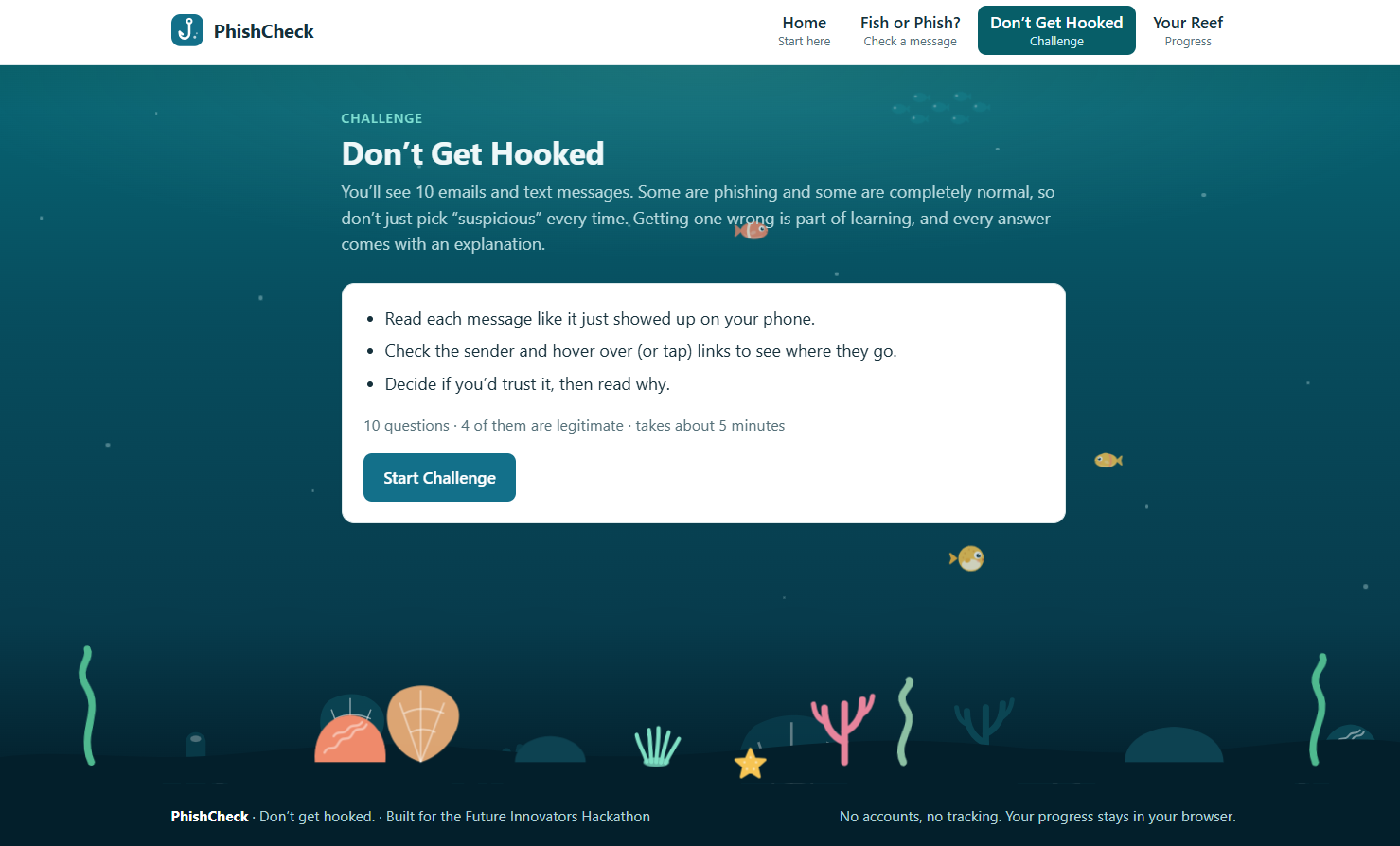
Don’t Get Hooked is an interactive challenge with realistic emails and text messages. Users decide whether each message is phishing or legitimate and then get an explanation of the answer.
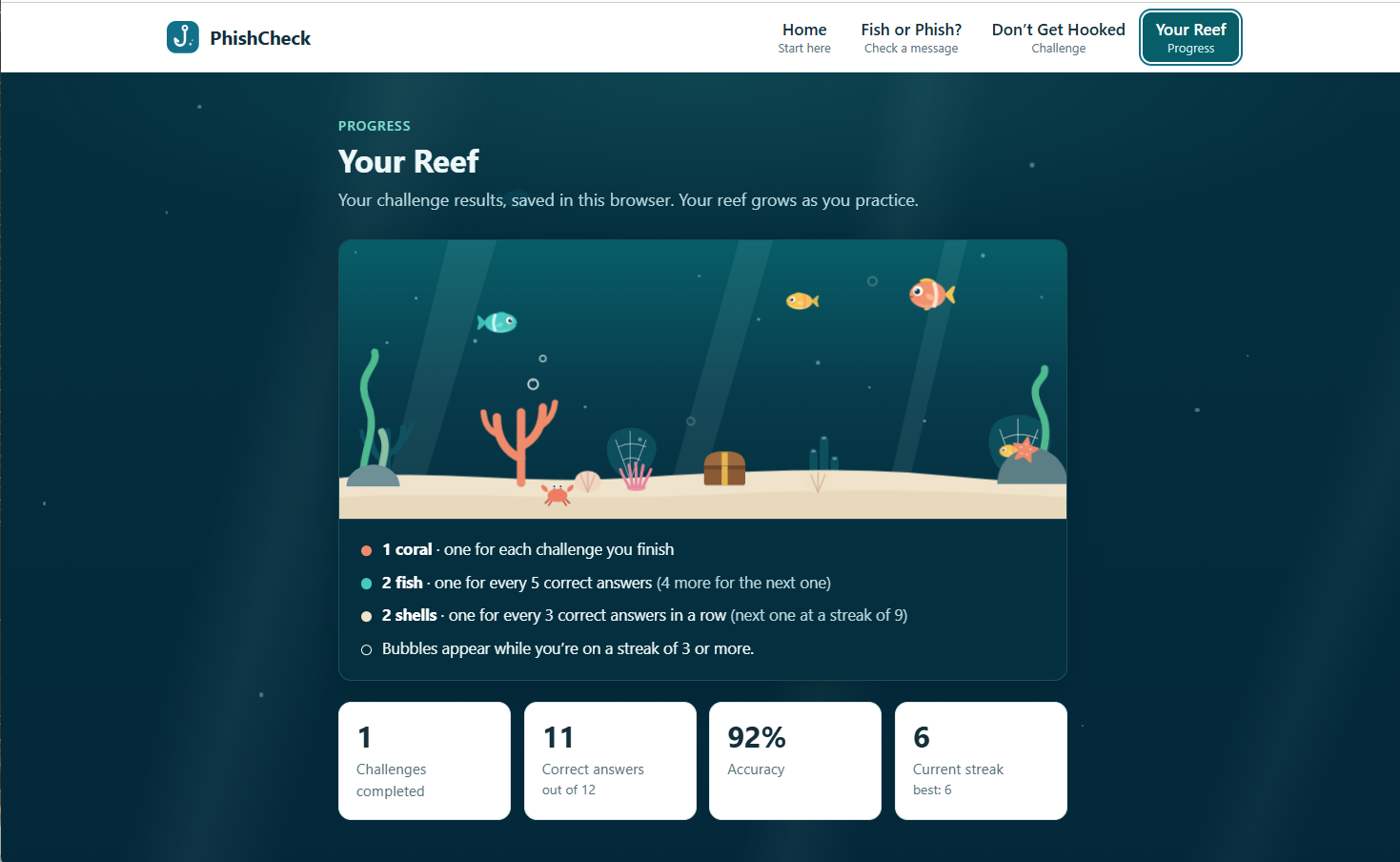
Users also have a personal Reef that grows as they complete challenges and get answers correct. Progress is saved in the browser, so no account or personal information is required.
How we built it
We built PhishCheck as a web app with a focus on keeping the experience simple and easy to use. We created the different pages, interactive challenge system, message analyzer, scoring system, and Reef progress system from scratch.
We also designed the interface around an underwater theme, using fish, coral, shells, bubbles, and waves throughout the site. We wanted the design to connect back to the idea of not getting "hooked" while keeping the cybersecurity information clear.
Challenges we ran into
One of our biggest challenges was making the phishing examples realistic without making them too complicated. We wanted users to actually think about each message instead of making every phishing example obviously fake.
We also had to figure out how to make mistakes useful. Instead of simply saying an answer was wrong, the challenge explains the warning signs so users can understand what they missed.
Another challenge was keeping the website engaging while still making cybersecurity the main focus.
Accomplishments that we're proud of
We’re proud that PhishCheck turned a topic that can feel complicated into something interactive and approachable.
We especially like the Reef system because it gives users a reason to keep practicing. Instead of just getting a score at the end, users can see their progress build over time.
We’re also proud that the project works without requiring accounts or collecting personal information.
What we learned
We learned that building an educational project isn't just about putting information on a webpage. We had to think about how someone would actually use it and what would make them want to keep learning.
We also learned more about designing interactive experiences, handling user progress, creating realistic examples, and making technical concepts understandable without overwhelming the user.
What's next for PhishCheck
We want PhishCheck to grow beyond the current challenges. Some ideas for the future include adding more types of scams, more realistic scenarios, classroom challenges, and additional practice levels.
Eventually, we would also like to expand beyond phishing emails and texts to cover scams people commonly see through social media, fake websites, and other everyday online situations.
The goal is simple: help people practice recognizing scams before they encounter a real one.
Built With
- awareness
- css
- cybersecurity
- development
- education
- html
- interactive
- javascript
- learning
- phishing
- web

Log in or sign up for Devpost to join the conversation.