-
-
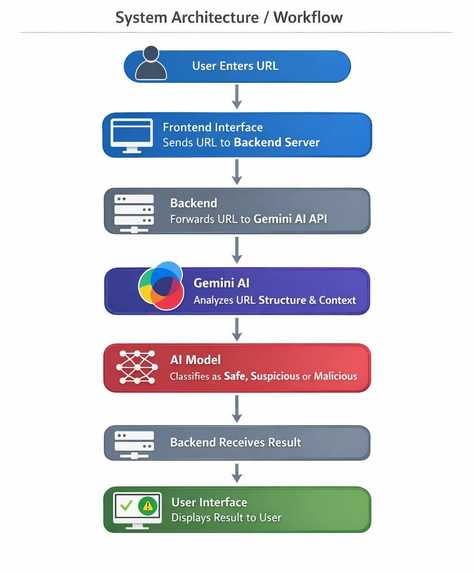
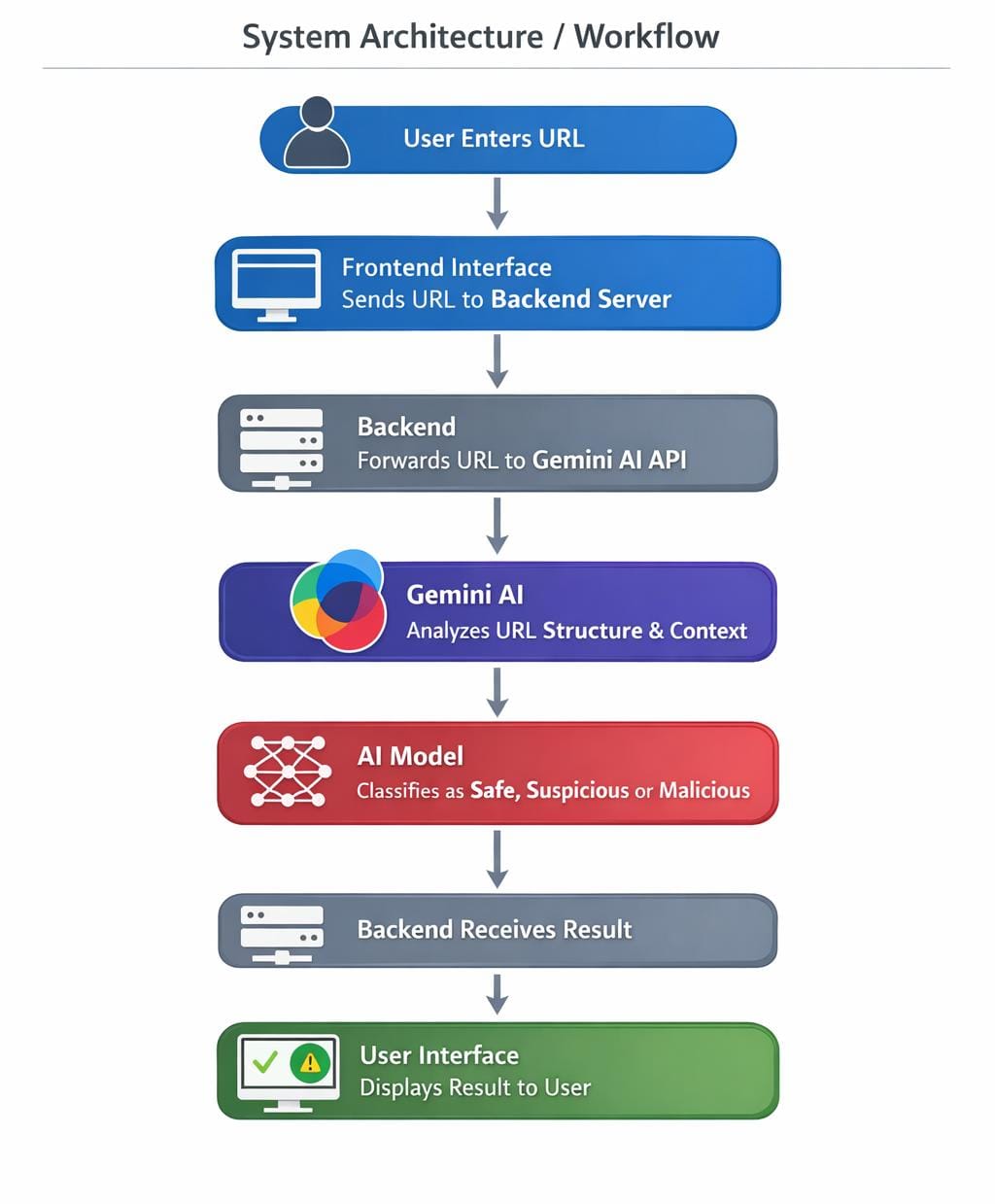
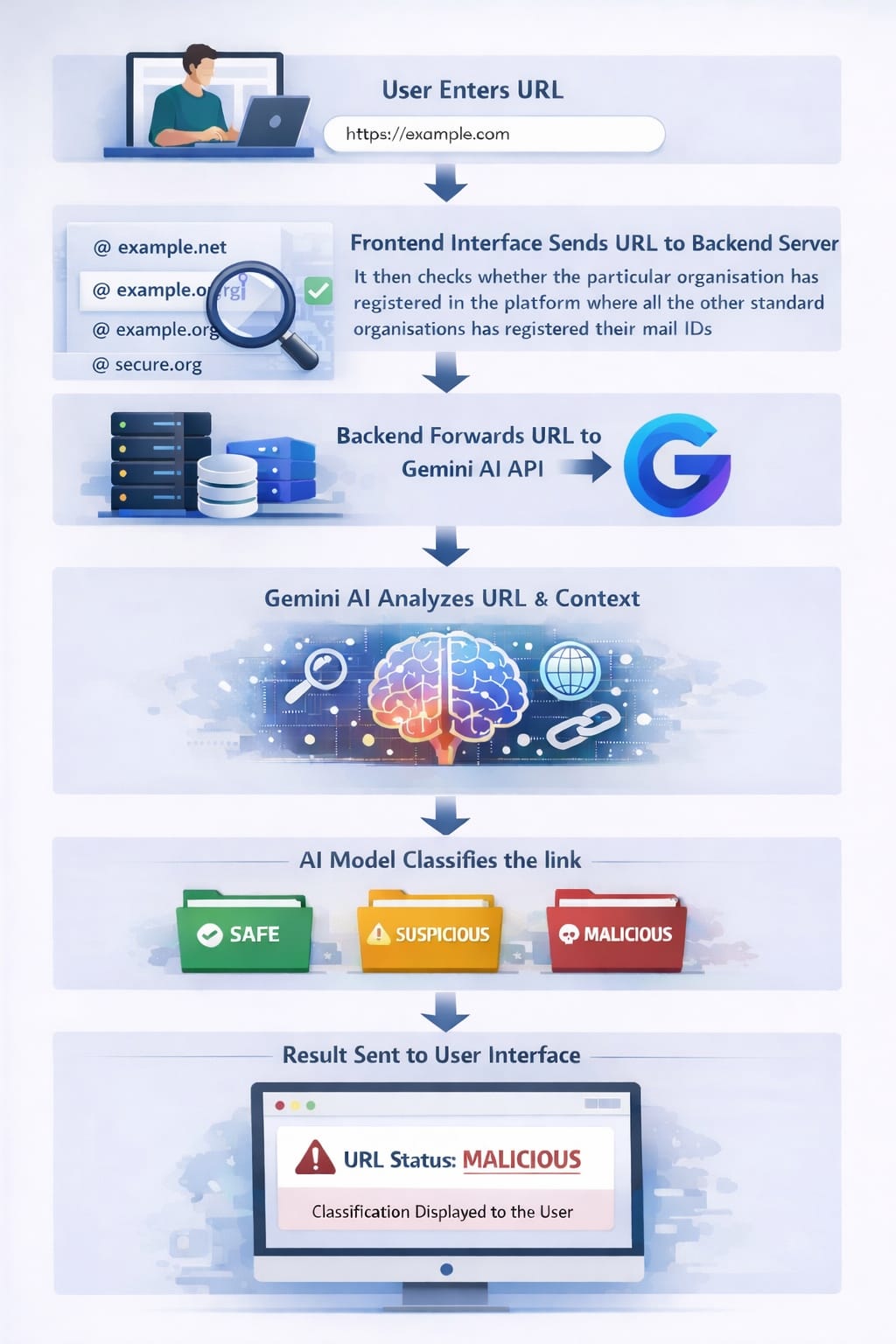
System flow Architecture.
-
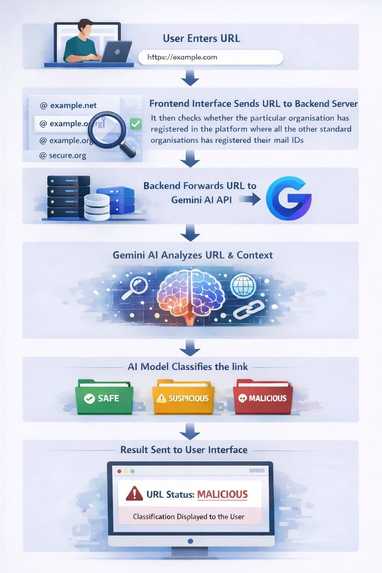
Mind Map of the working of the model
-
Thumbnail Of Our Project
Inspiration
This is a fake email and link detection app.It helps users to verify before acting. I led to an inspiration to do this from my own college, because we as students we used to get many emails and links that used to show fake scholarships and internship promises.Many of my classmates have lost their money in these attacks. So , we decided to create an application that detects these kind of fake mails and links.
What it does
The Fake Email & Link Detection App is a security-focused digital solution developed to safeguard users from the growing threats of phishing attacks, online scams, fraud, and misinformation that commonly occur through emails, messages, and web links.
In today’s digital world, cybercriminals often disguise fake messages as legitimate ones from trusted organizations, making it difficult for users to identify what is real and what is harmful. This app acts as a protective layer between the user and such malicious content.
How we built it
A. System Architecture
The software implementation follows a client-server architecture consisting of three primary components: Frontend (User Interface Layer) Backend (Processing and AI Layer) Database and Verification Layer
B. Frontend Implementation (User Interface) The frontend is developed as a web or mobile application that allows users to: 1.Paste an email content or URL into an input field 2.Click a “Verify” button 3.View the trust score and detailed explanation Technologies Used: Web Application: HTML, CSS, JavaScript, React.js Mobile Application (Optional): Flutter or React Native
C. Backend Implementation: Technologies Used: Programming Language: Python Framework: Flask or Django (for API development) Machine Learning Libraries: TensorFlow / Scikit-learn
Key Functional Modules:
AI-Based Phishing Detection Module The system uses a trained machine learning model to classify input as: Legitimate Suspicious Fake A supervised learning model (e.g., Logistic Regression, Random Forest, or Deep Learning Model) is trained using a dataset of real and phishing emails/links.
Rule-Based Analysis Module Along with AI, predefined rules are applied, such as: 1.Checking for misspelled domains (e.g., g00gle.com instead of google.com) 2.Detecting hidden redirects. 3.Identifying mismatched sender names and email addresses.
Verification Module with Official Database The backend checks the submitted link or email against a verified database that contains: 1.Official domains of banks, universities, and government sites 2.Registered official email addresses
D. Database Implementation A secure database is used to store:
- Verified official links and domains
- Reported phishing URLs
- User feedback and trust ratings
Technologies Used: Database: MySQL or MongoDB Tables include: 1.Verified_Organizations (organization name, official domain, email pattern). 2.Reported_Links (user-reported phishing URLs). 3.User_Feedback (ratings, comments, reports).
E. Community Feedback System Users can: Report suspicious links. Confirm safe links. Provide comments.
Challenges we ran into
Some challenges that we ran into are : 1 . Balancing accuracy and response time during analysis . 2 . Simplifying technical results into easy to understand user explanations.
- Differentiating between genuine and well crafted fake emails .
Accomplishments that we're proud of
At its core, the application analyzes emails, text messages, and URLs using a combination of AI-based intelligence and rule-based detection techniques. The AI component studies patterns, language usage, sender behavior, and historical scam data to recognize suspicious characteristics. At the same time, rule-based checks look for known warning signs such as spoofed or look-alike domains, shortened or masked URLs,misleading sender names, and urgent or threatening messages that pressure users into acting quickly, such as “Your account will be blocked” .
One of the key strengths of the app is its content verification system. When a message claims to be from a bank, government office, university, or well-known company, the app cross-checks the sender’s details, domain name, and links against a verified database of officially registered sources. This database contains trusted domains and contact details of genuine institutions, helping the app distinguish real communications from fake ones that imitate official organizations.
In addition to automated detection, the app also incorporates community reporting features. Users can report suspicious emails or links they encounter. These reports are reviewed and added to the system, allowing the detection engine to continuously learn and improve. Over time, this collective input increases accuracy and helps protect other users from newly emerging scam techniques. To ensure transparency and user understanding, the app does not simply label content as “safe” or “fake.”
What we learned
1.How Gemini AI can analyze intent and context, not just keywords. 2.Integrating AI APIs with applications using a backend approach. 3.To Design a user-friendly security solution with clear warnings and explanations. 4.Importance of cybersecurity awareness, especially for students and common users. 5.Working as a team to convert a real-life problem into a technical solution.
What's next for TrueGuard
The next step for TrueGuard is to develop further to improve its accuracy and improve its authenticity. To make it more scalable that it can reach normal people and can benefit. And to make it more user friendly and easy to use for ordinary people.

Log in or sign up for Devpost to join the conversation.