-
-

Phish Net Logo
-
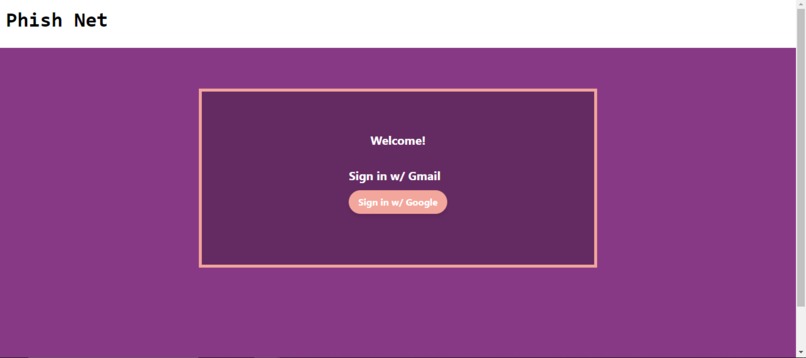
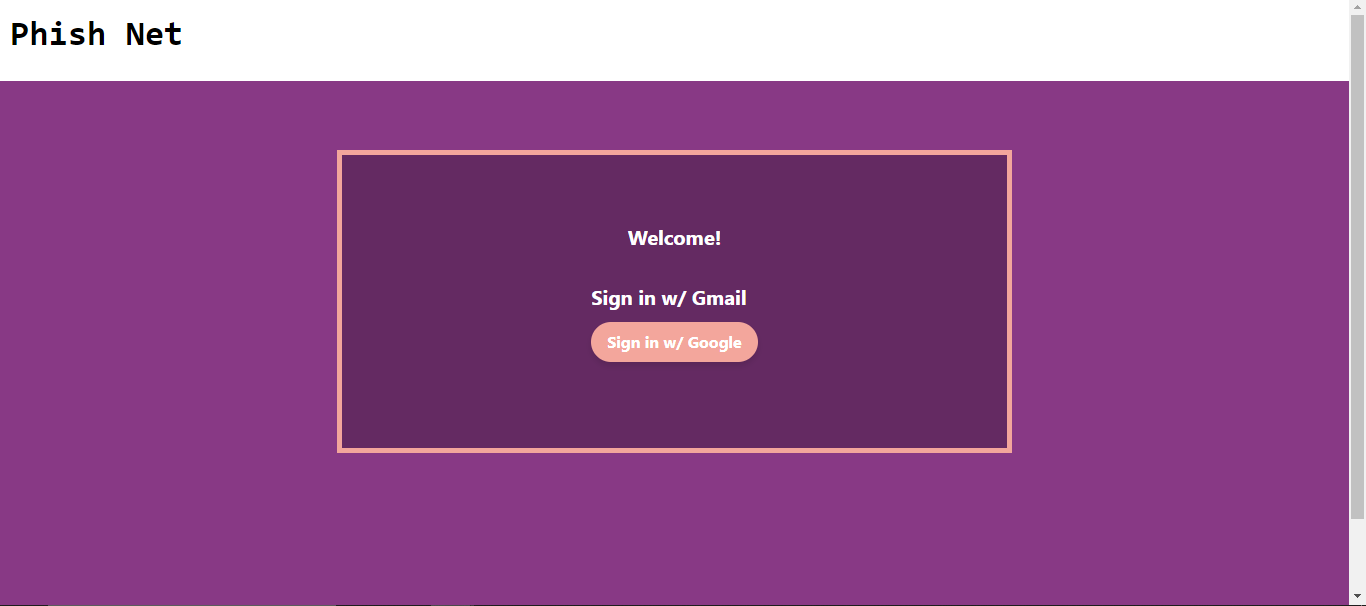
Landing Page

Inspiration
Phishing and scamming attempts are very prevalent and they can be very difficult to spot despite knowing what to look for. They can be especially harmful against those who struggle more with technology. We seek to mitigate this issue.
What it does
Users can check their emails for warning signs of potential phishing scams by logging into their gmail account and having their emails scanned by our application.
How we built it
The frontend client was completed using React.js where we were able to request Oauth access tokens for the user's Gmail account. The backend server was completed using Flask and Python where we used IPQualityScore API and OpenAI’s API to evaluate user’s emails and to determine the likelihood of an email being a potential phishing attempt.
Challenges we ran into
Some challenges we faced include the implementation of Google’s OAuth authentication system, the use (or lack thereof) of NVIDIA drivers and filesystem management on VMs for testing large language models, and API integration of IPQualityScore and OpenAI.
Accomplishments that we're proud of
We are proud of being able to authenticate user’s using Google’s OAuth authentication service as well as being able to then transform user’s emails from google into a miniature email client that we then used to score emails based on warning signs for potential phishing. We as well implemented an intuitive system of scanning emails for signs of phishing attempts using a combination of IPQualityScore and OpenAI to analyze given emails.
What we learned
We learned to utilize Google OAuth authentication despite many React.js libraries’ outdated OAuth implementations as well as fraud detection techniques such as checking email addresses, URL links, and language used in the emails.
What's next for Phish Net
We will focus on moving to a local large language model. This means investing in cloud computing services where we can host open source large language models like Llama2.

Log in or sign up for Devpost to join the conversation.