-
-
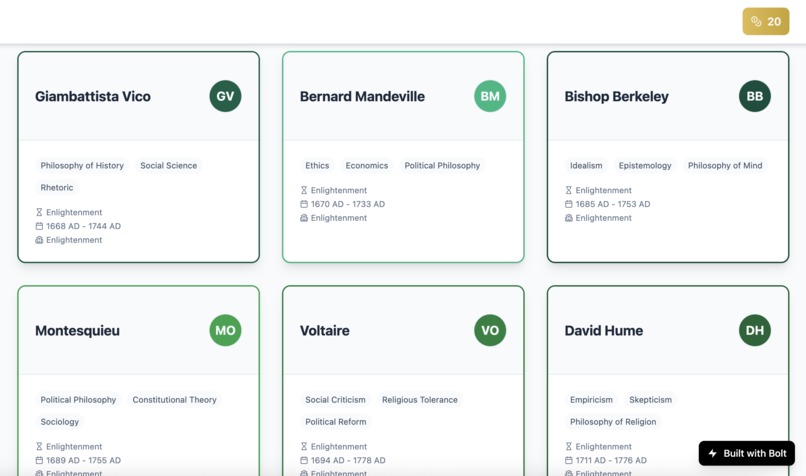
Browse Philosophers
-
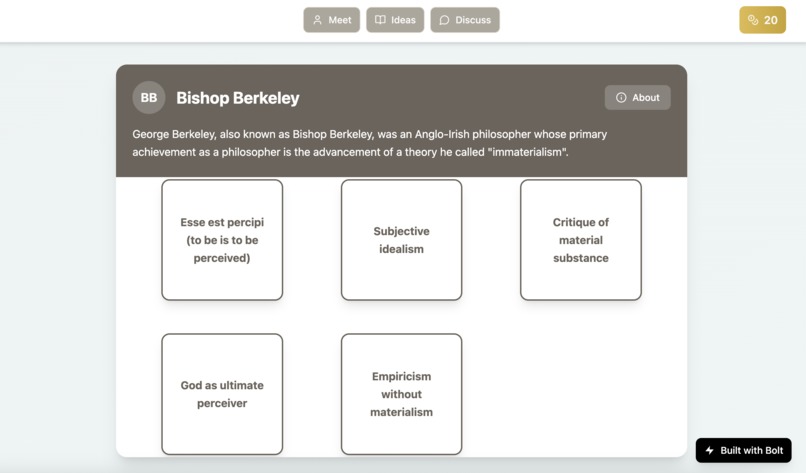
Philosopher Details
-
-
-
-


Inspiration
I'm really interested in how AI can make us smarter. You hear a lot of talk about how AI is going to make humans dumb and useless, and while that may be true is some ways, that narrative misses the potential that AI has to make us better. Just like the internet made information a lot more accessible for a lot of people, AI will drastically change how we consume, process, and assimilate not just information but knowledge. I had a few knowledge areas in mind (and I can't wait to get to them next) but I picked Philosophy because
- It's something I find really fascinating personally
- It's a broad area and has lots of room for exploration
- In some ways the history of philosophy represents the evolution of human thought so what could be more appropriate at this time when we're potentially on the cusp of another leap.
On a personal note, I studied computer science and was a developer once. I have since transitioned to product and marketing roles in tech and hadn't written any code in around 10 years. I'd been DYING to try vibe coding and this hackathon was just the nudge I needed. I was a little skeptical at first but I'm completely blown away by how easy-to-use, sophisticated and robust Bolt is.
What it does
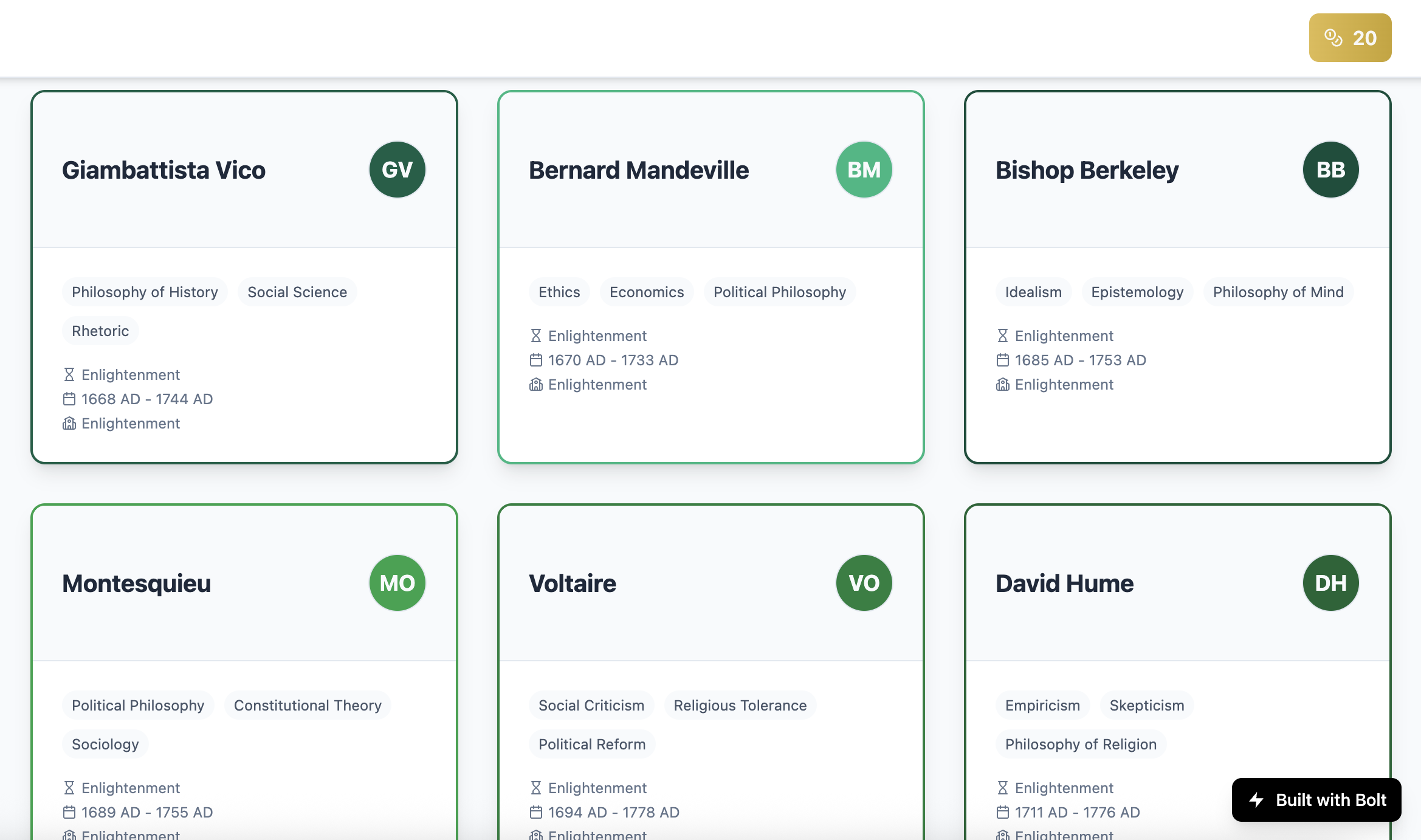
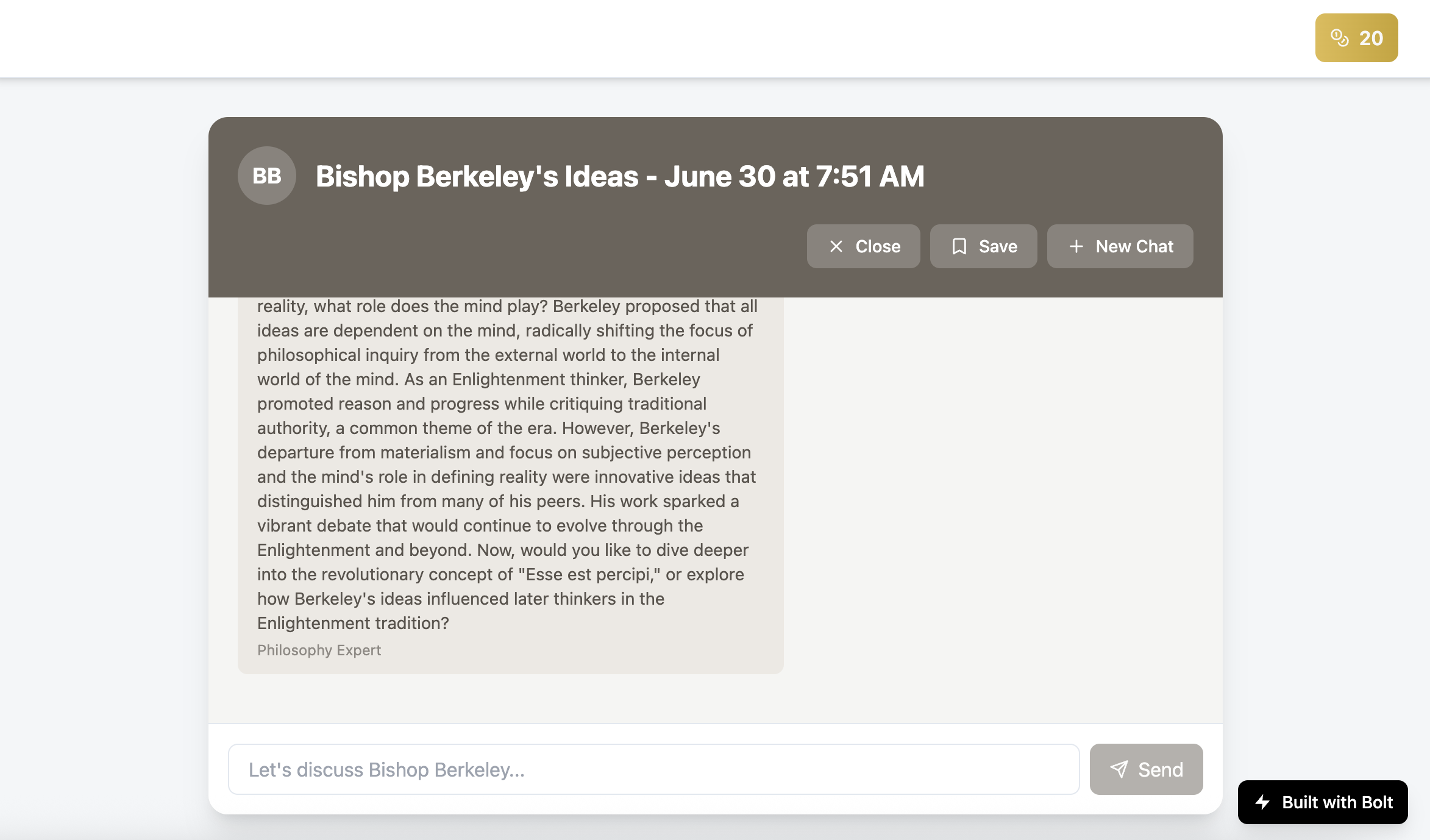
philosophrAI engages users to learn about philosophy by introducing them to some its brightest minds and its most fundamental concepts. The system currently has 110 philosophers from the pre-socratic era to contemporary times. Users learn by engaging in conversations with an AI system. There are 3 primary modes of learning :
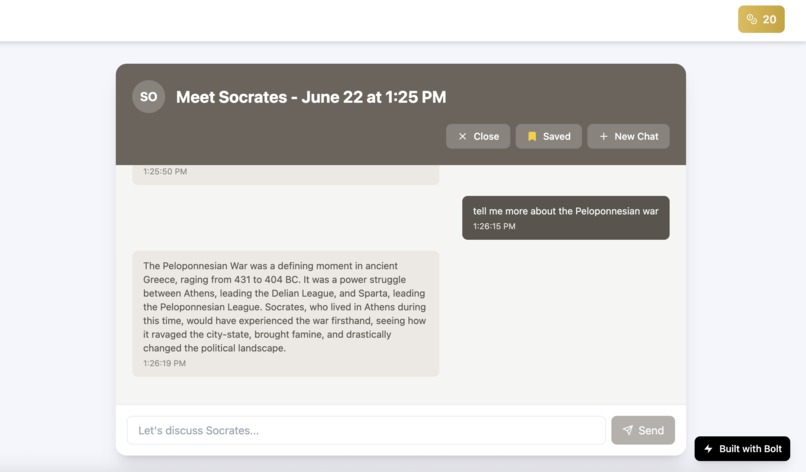
- Learning about a philosopher's personal life and the times they lived in. This mode helps personalize a great historical figure and gives the users context for the environment that shaped their thinking.
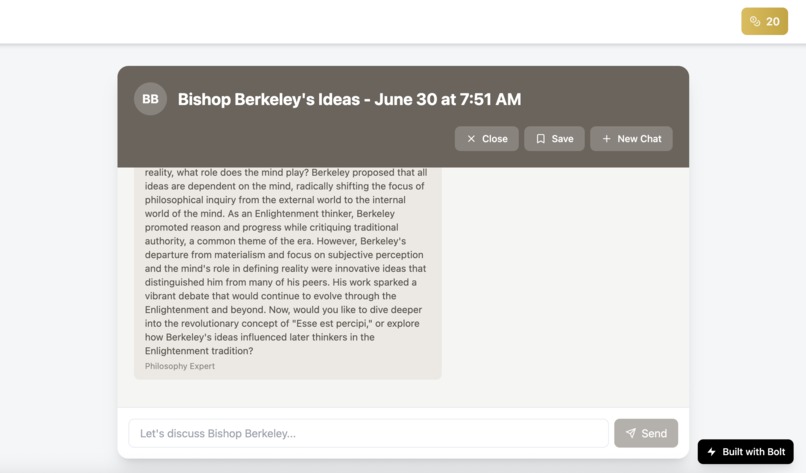
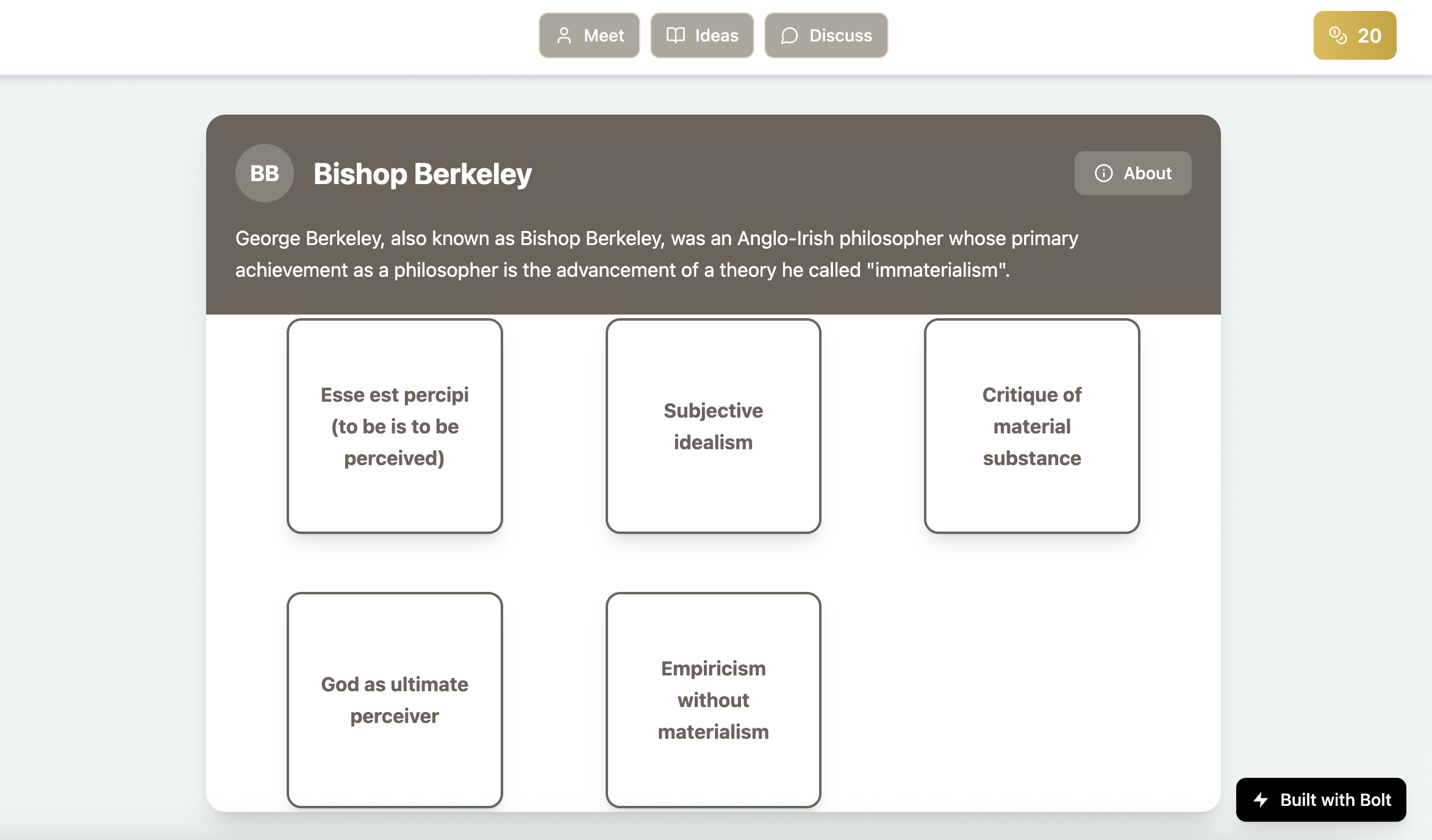
- Learning about the ideas and concepts a philosopher introduced, developed, or explored. This mode focuses on the more technical aspects of philosophy.
- Discussing any aspect of the philosopher's work or life. This type of conversation encourages socratic debate and exploration.
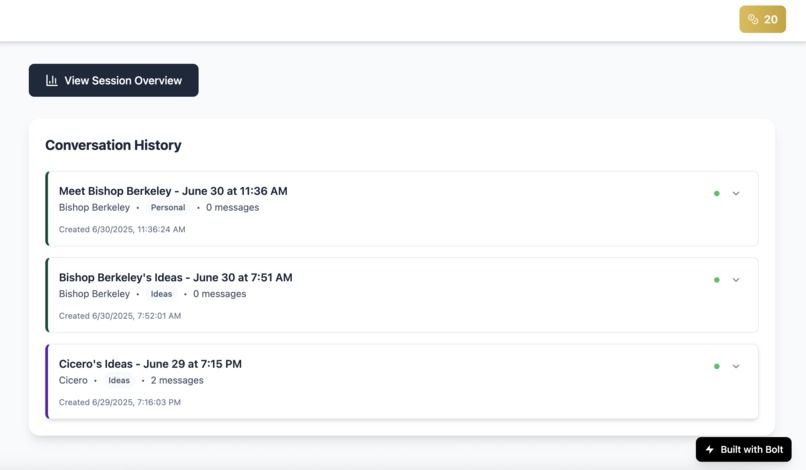
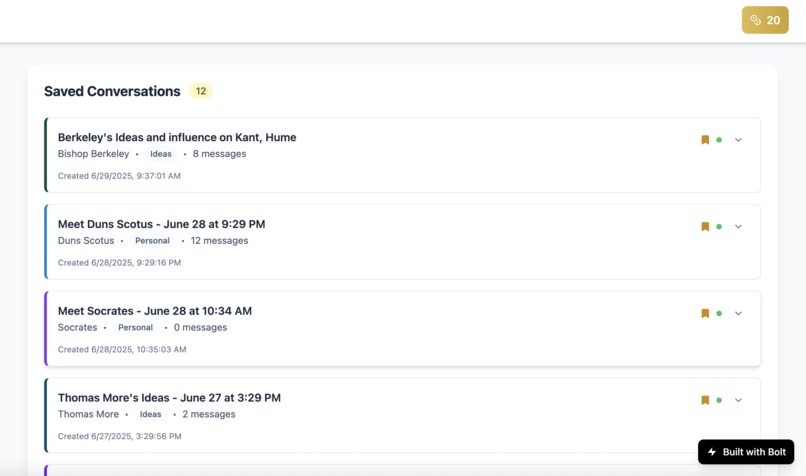
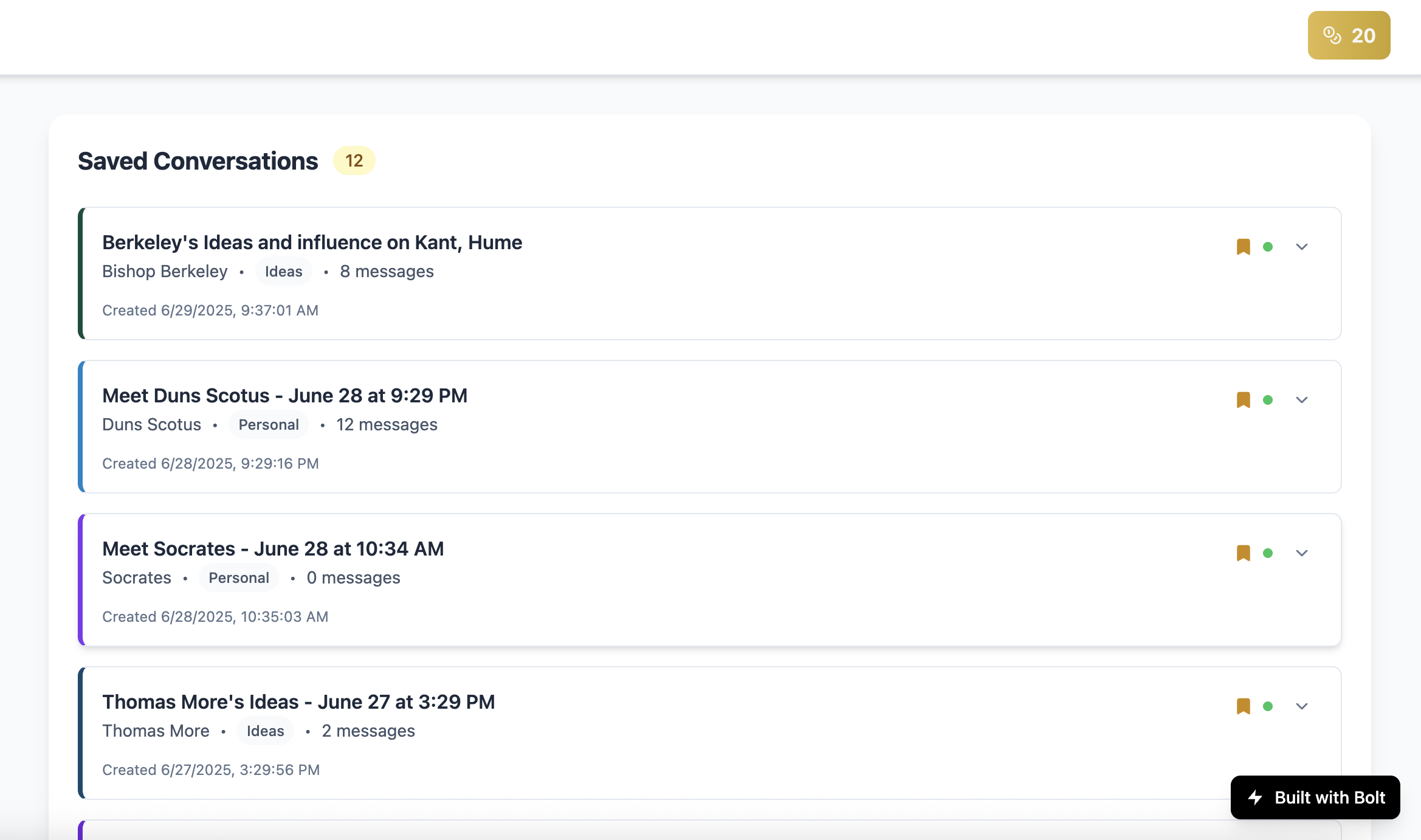
The system keep track of every conversation a user has and uses this information to inform future learning. Users have the ability to maintain a library of conversations they found most insightful and to resume them at any time.
How we built it
I used Claude to define project requirements and build a detailed implementation plan. I used Bolt to execute the parts of the implementation plan that were relevant for the scope of the hackathon. No other tools, besides those integrated through Bolt were used to develop the project.
Challenges we ran into
I only ran into 1 real challenge during the course of development. When I initially started working on the project, I would plan for every Bolt implementation run to focus on a very specific aspect of the project. I would typically review the files being updated on every checkin in GitHub to make sure that what was being updated was inline with what I expected. A few days into the implementation process, I was blown away by how easy everything felt and how in-sync Bolt's implementation seemed with my expectations. I got a little euphoric and carried away, and spent about a day implementing a big chunk of some really complicated features. During this time, I didn't exercise my usual caution of reviewing file updates in the repo or testing the app between updates. Also, I hadn't really structured the project properly at this time so most of the code was in a few big files. I realized the next day that some very core functionality (the different chat types) had completely disappeared during the course of the past day.
That was my first experience of Bolt doing something I didn't expect it to do. Looking back I realized that there were many times before this that Bolt had done things I hadn't asked it to do. It had just so happened that those changes were requirements or improvements to my explicit instructions. You want a system like Bolt to be intuitive and try to understand what the user needs to be done, even if they're not explicitly saying it. But this behavior can also result in changes you don't want if you're not paying attention.
Accomplishments that we're proud of
I was a little skeptical about what I would be able to accomplish, not having written any code in a very long time. I'm REALLY proud of having built a fully functioning product that is very close to what I would imagine the early stages of my full vision to look like, in a little over 2 weeks.
What we learned
The reality of vibe coding is more exciting and promising than the hype. I'm really excited that the experience of working with Bolt feels more like engineering than magic, and I mean that in the best way possible. There are still a lot of magical moments but what is being built is what you would expect a really competent engineering team to build. I fully expected the final implementation to have a lot of black boxed components and glue code. But that's not the case at all. The system gives you really great feedback about what is being built and how. That is critical for a platform like Bolt to be used to develop complex and production-ready products.
What's next for philosophrAI
LOTS!!! My one regret is that I didn't start working on the project early enough but I plan to continue working on it beyond the hackathon to achieve my full vision. The last couple of weeks of experience with Bolt are just the confidence boost I needed. What's next for philosophrAI?
- Public discussions : the ability for users to share their insights
- Dedicated, proprietary AI model for philosophical knowledge
- Offline learning through exportable audio memos
- More sophisticated learning management

Log in or sign up for Devpost to join the conversation.