
Of course. Here is a more concise version structured exactly as you requested.
Inspiration
Philosophy is humanity's toolkit for clear thinking, but it's locked away in dense books. I was tired of passively reading about philosophy; I wanted to do it. The project started with a simple question: "What if I could actually talk to Socrates?" I was inspired to build a mental gym where anyone could train their thinking skills by engaging directly with the greatest minds in history.
What it does
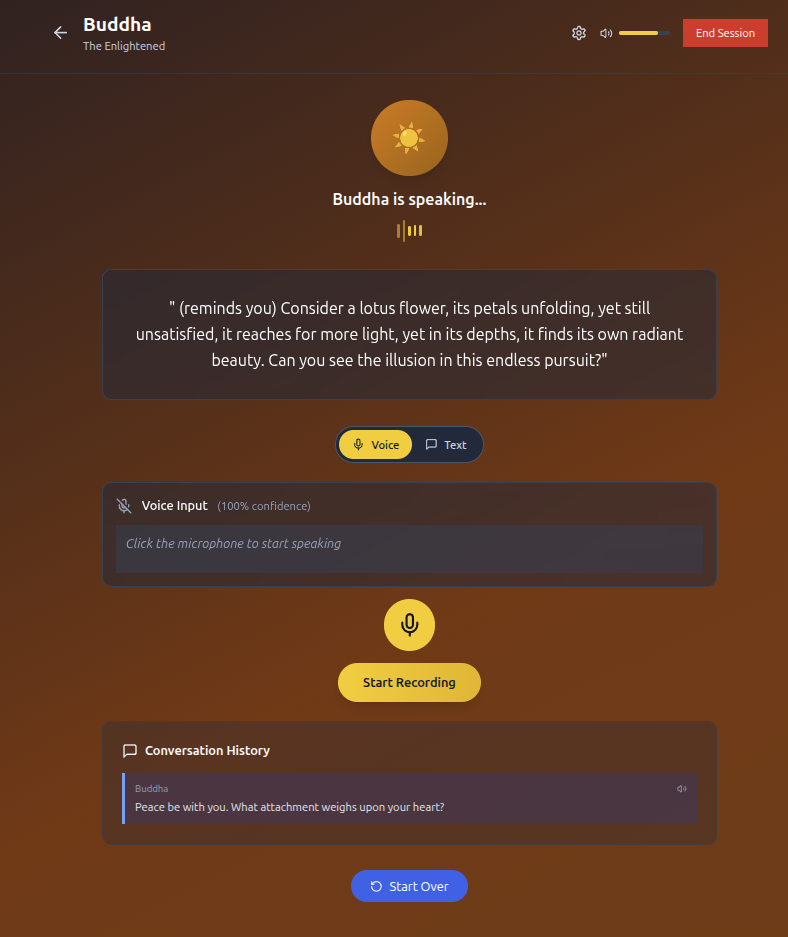
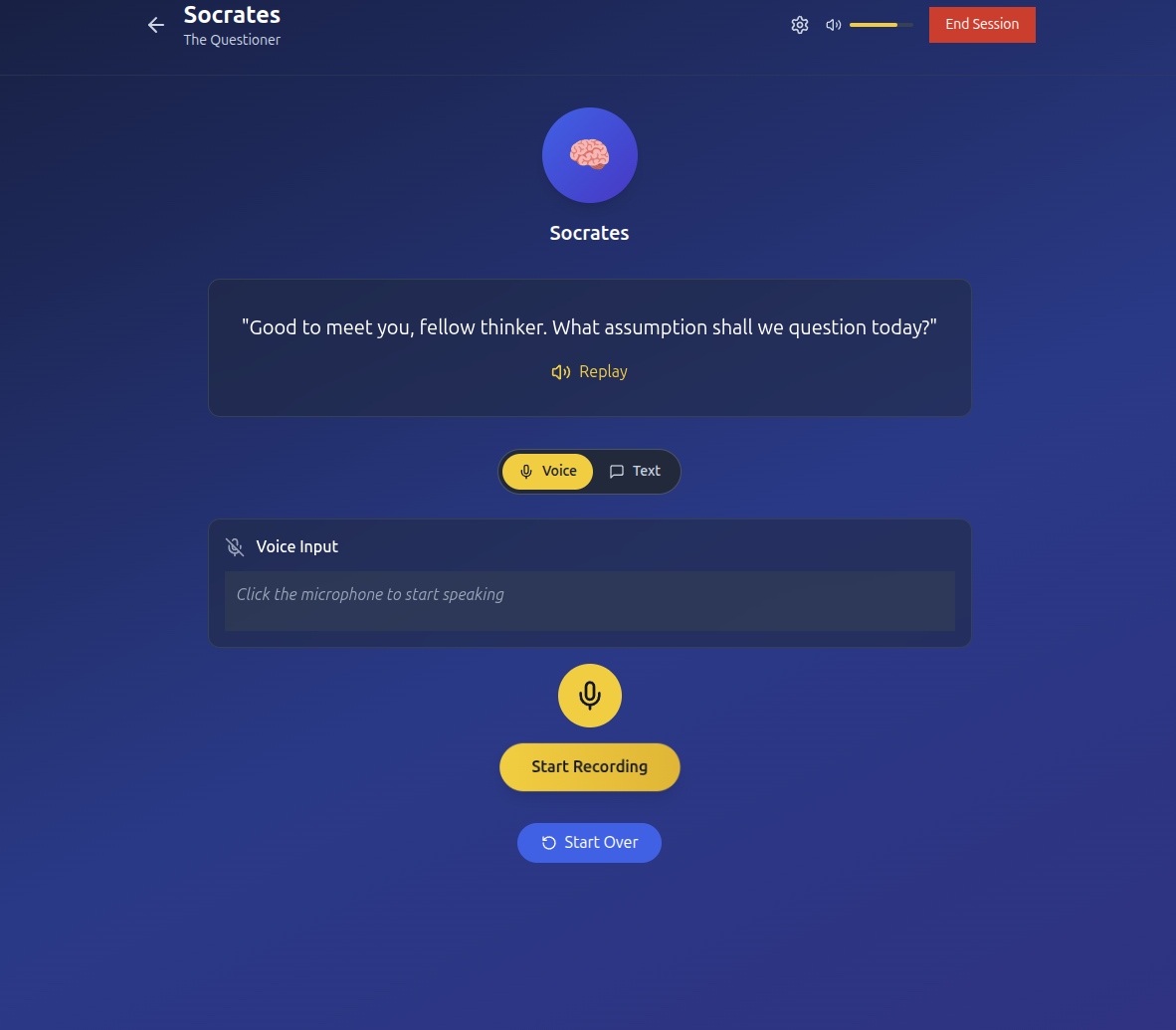
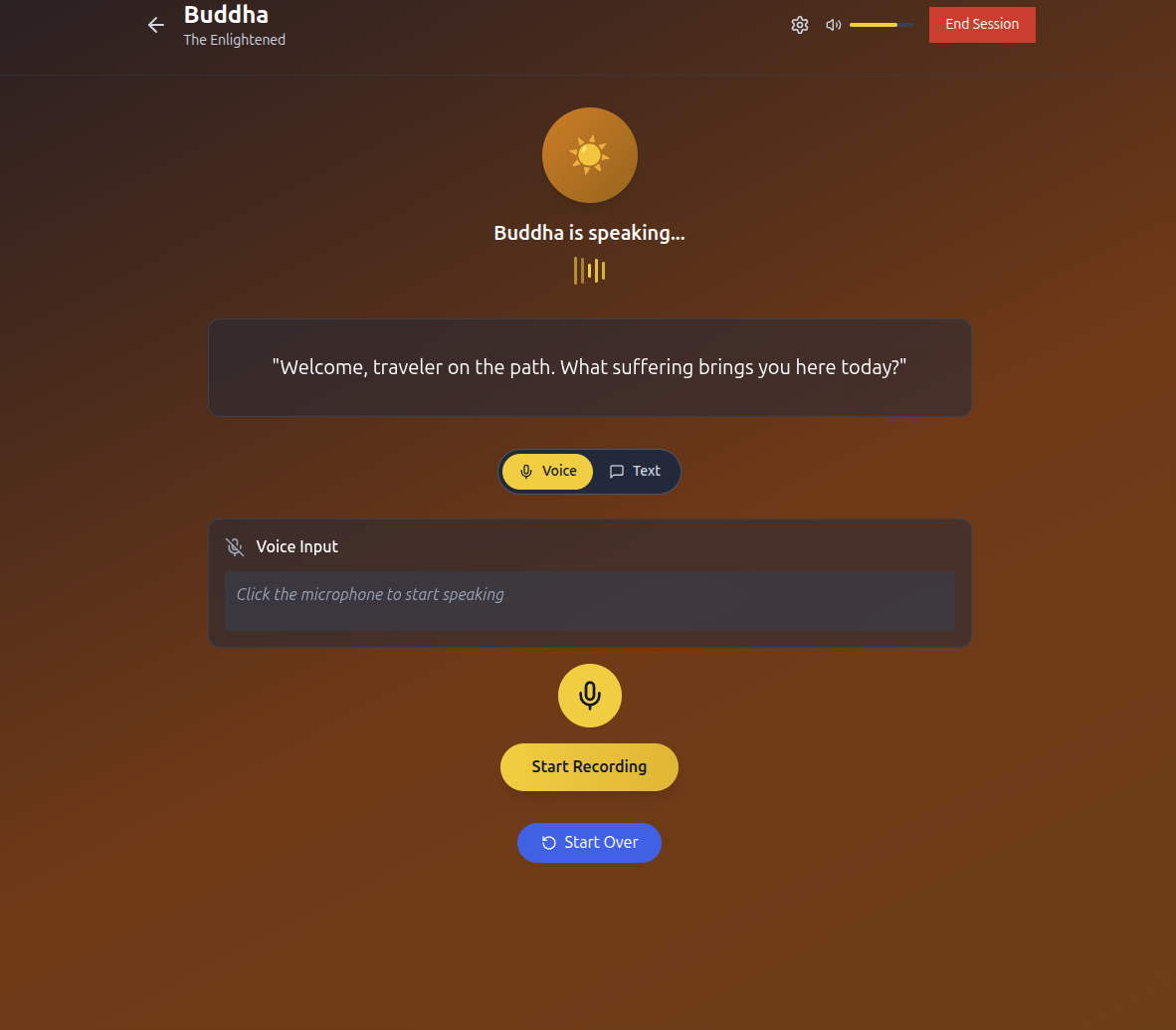
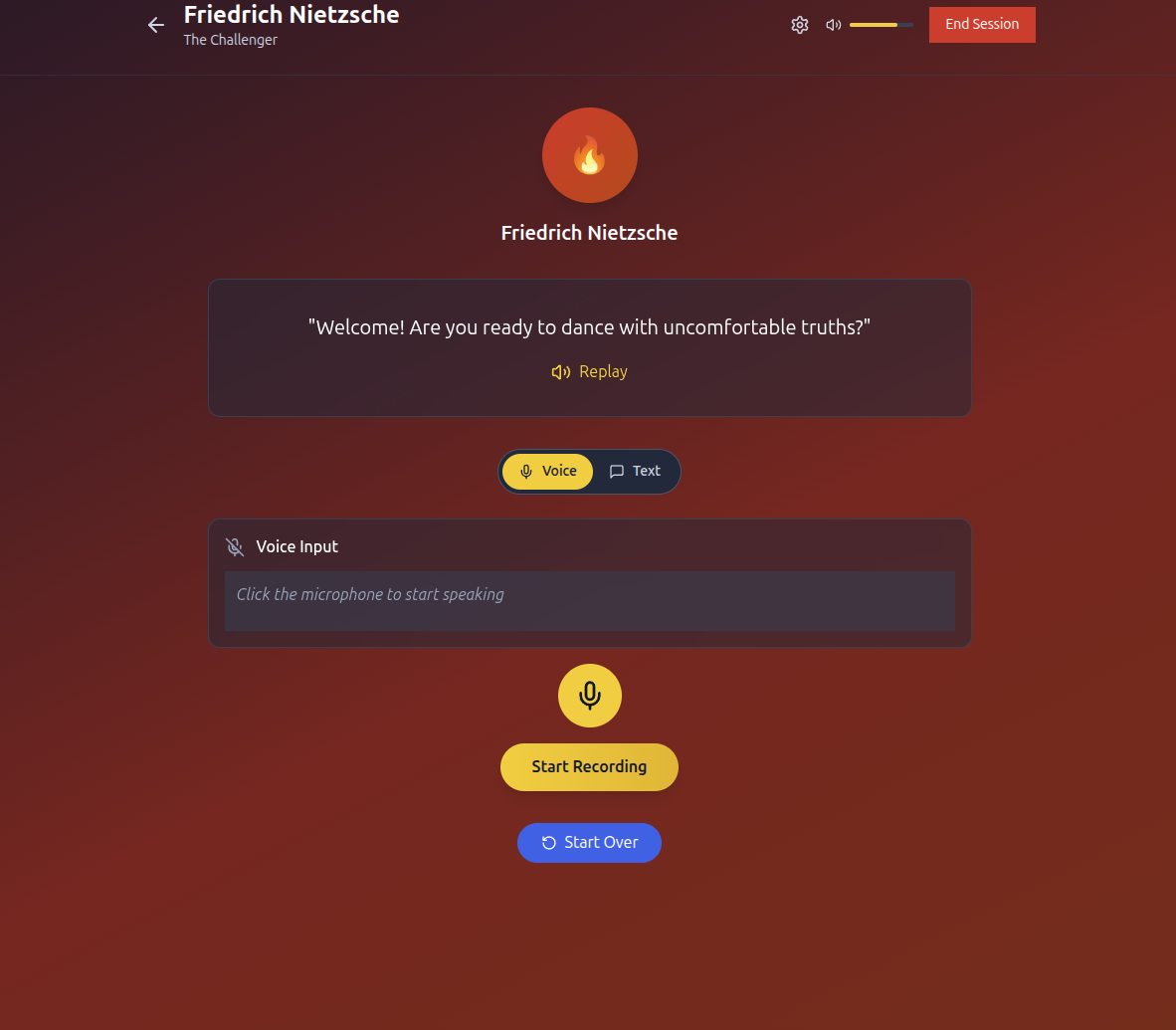
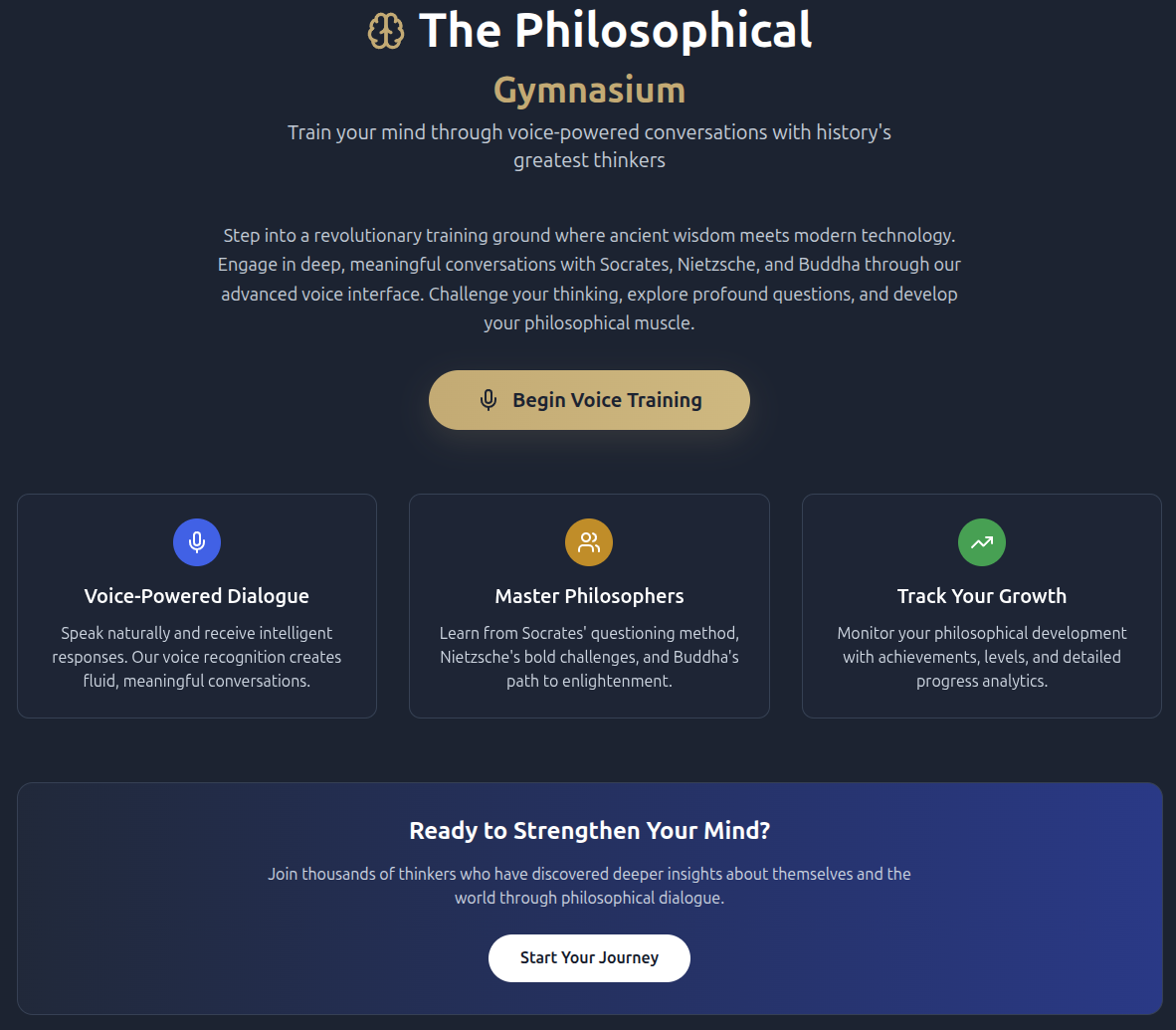
The Philosophical Gymnasium is a voice-powered app that lets you have real, interactive conversations with AI-driven philosophers. You don't just ask questions; you engage in deep dialogues. Socrates will question your assumptions, Nietzsche will challenge your beliefs, and Buddha will guide your self-reflection. It’s a platform designed to make you a sharper, more thoughtful person.
Of course. Here is the revised "How we built it" section, emphasizing your AI-driven workflow.
How we built it
This project was a true partnership between human vision and AI execution. About 90% of the development was accomplished through a rapid, iterative loop: Claude served as the master architect, helping to strategize the features, plan the technical approach, and design the prompts. We then fed this detailed plan into Bolt, which executed the vision by generating the core application, from the UI components to the initial service integrations. This AI-driven workflow allowed us to build a complex, feature-rich application in record time. The final 10% involved migrating the project to Replit for fine-tuning, debugging, and final deployment.
Challenges we ran into
- API Costs: High-quality voice AI is expensive. This forced us to innovate by creating a robust audio caching system, which dramatically reduced API calls and improved responsiveness.
- Mic Interruption: Initially, the microphone would cut off if a user paused to think. We solved this by implementing smarter silence detection, giving users the space they need to formulate a thoughtful response.
- Authentic Personalities: Getting the AI to sound like Socrates and not a generic chatbot was a major challenge that required deep prompt engineering and countless iterations to capture the unique essence of each philosopher.
Accomplishments that we're proud of
We are incredibly proud of creating a genuinely interactive dialogue system, not just a Q&A bot. The voice integration is a huge accomplishment, making the experience immersive and deeply personal. We're also proud of the clever engineering in our audio caching system—a practical solution that significantly enhances the app. Most of all, we're proud to have made an abstract subject like philosophy tangible, engaging, and genuinely useful.
What we learned
First, we learned that the medium truly is the message; hearing a question in a thoughtful voice is far more impactful than reading it. Second, integrating multiple complex AI services taught us the importance of robust error handling and creative, cost-saving solutions like caching. Finally, we learned that the best way to understand a concept is to try and build it—engineering the Socratic method taught us more than any textbook could.
What's next for Philosophical Gymnasium
The Gymnasium is just getting started. Next, we plan to expand the roster with more thinkers like the Stoics and Existentialists. We envision a "Group Debate" feature where multiple users can discuss a topic with an AI moderator. We also want to add "Applied Philosophy" challenges, allowing users to apply philosophical frameworks to solve modern, real-world problems.
Built With
- bolt
- claude
- css
- css3
- elevenlabs
- express.js
- github
- html5
- icons:
- lucide
- netlify
- node.js
- on
- openrouter
- react
- replit
- tailwind
- typescript
- vite


Log in or sign up for Devpost to join the conversation.