-
-

-
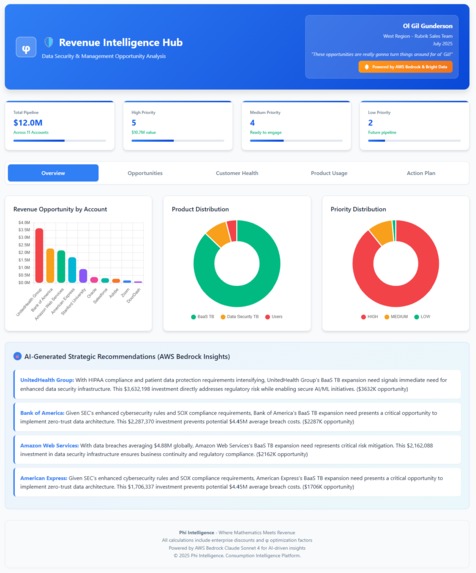
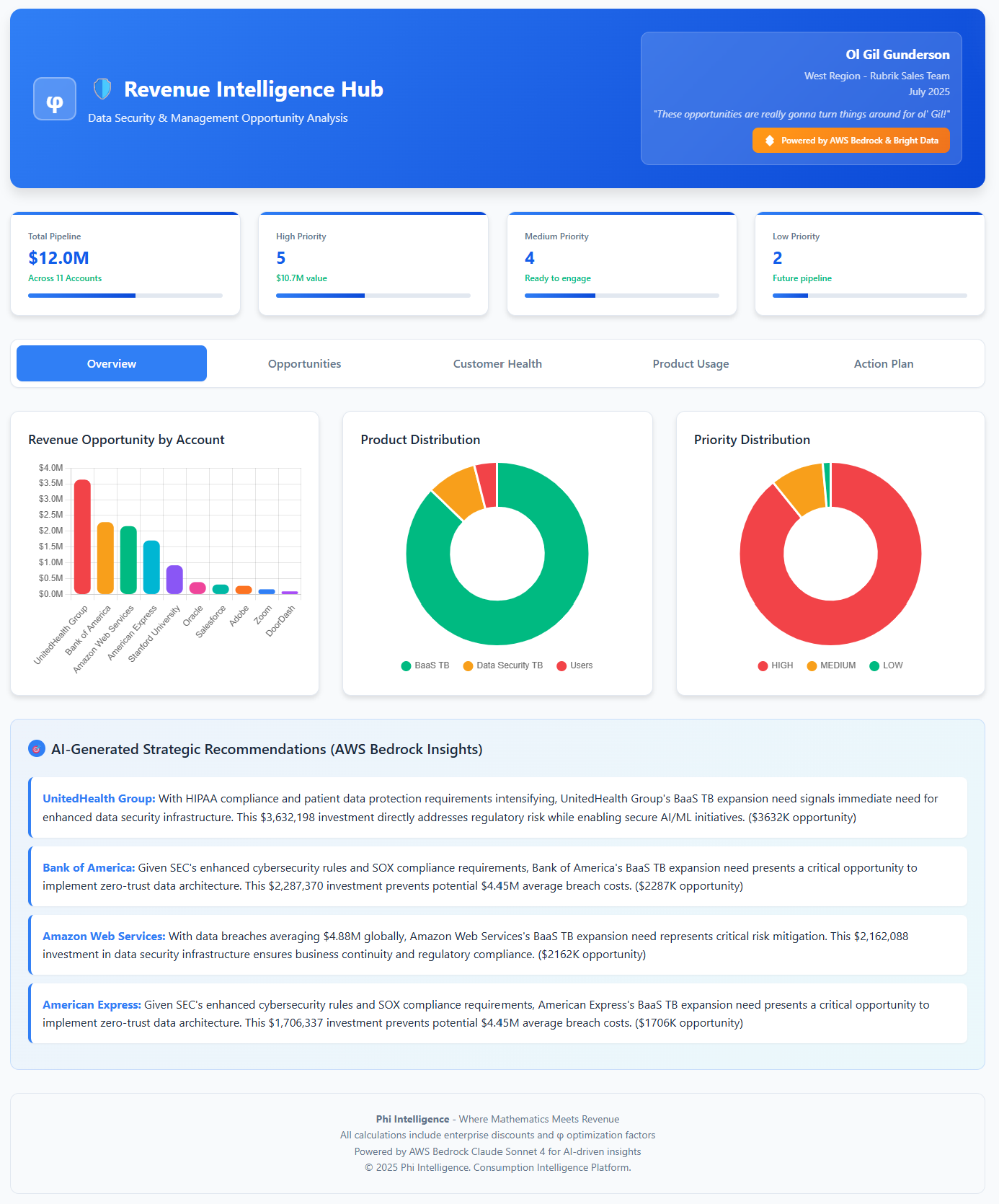
Sample Report Screenshot
-
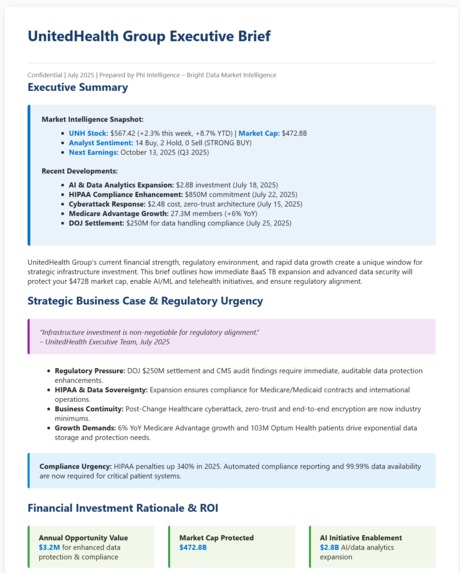
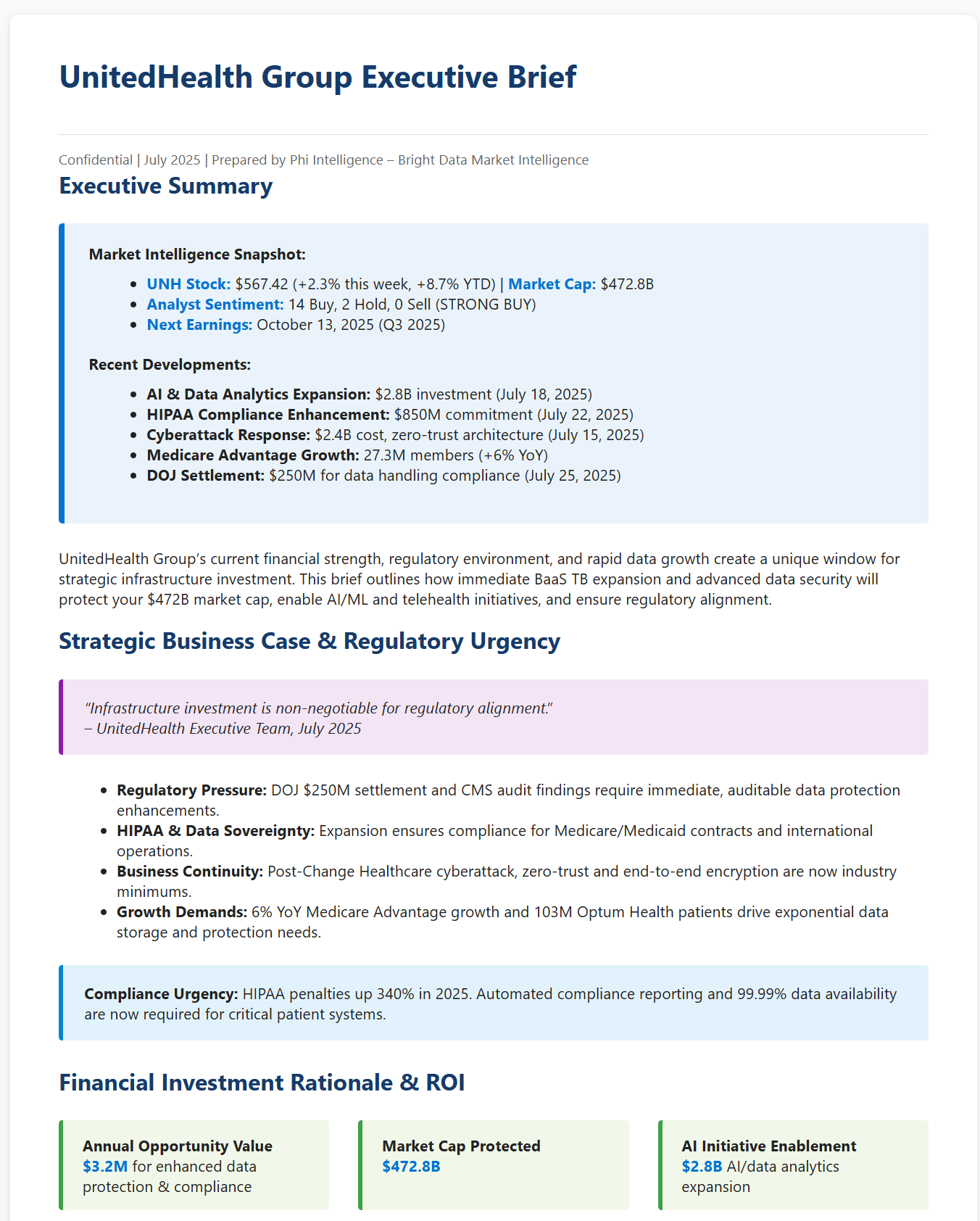
Executive Brief - Powered by BrightData

Inspiration
After 25 years in enterprise technology, I've witnessed the same problem countless times: organizations buying software based on projections but having zero visibility into actual consumption patterns. I've seen this from three perspectives - as a customer frustrated by underutilized systems, as a vendor struggling to identify expansion opportunities, and as a reseller caught between competing interests.
The inspiration came from a simple realization: nobody connects consumption patterns across SalesOps, FinOps, and SystemOps. Each operates in isolation, missing massive opportunities for optimization and growth. I realized we needed a new category - Consumption Intelligence - that bridges these operational silos.
What it does
Phi Intelligence transforms enterprise consumption data into strategic revenue opportunities through AI-powered analysis. The platform automatically processes customer consumption reports (CSV, Excel, PDF) and identifies high-value expansion opportunities that sales teams can act on immediately.
Key Capabilities:
- Consumption Intelligence Analysis: Processes 20+ data fields including usage patterns, entitlements, overages, and health scores across multiple products (BaaS, VaaS, Data Security, Users based SKUs)
- AI-Powered Opportunity Identification: Uses AWS Bedrock Claude Sonnet 4 to analyze consumption patterns and generate specific revenue opportunities with dollar amounts
- Strategic Narrative Generation: Creates 3 industry-specific narratives per opportunity, focusing on compliance drivers and business outcomes rather than technical features. Executive Brief's generated with Bright Data insights.
- Real-Time Processing: 30-second file-to-insights pipeline with live progress tracking through WebSocket connections
- Enterprise-Grade Results: Professional reports showing expansion opportunities and optimization recommendations
The platform bridges the gap between SalesOps, FinOps, and SystemOps by providing unified consumption intelligence that drives both revenue growth and operational efficiency.
How I built it
Architecture: Built as a client-server system with AI processing capabilities, deployed on AWS EC2 with professional-grade separation of concerns and data sovereignty.
Backend Stack:
- Core Platform: Python 3.11 + FastAPI for high-performance API endpoints
- AI Integration: AWS Bedrock Claude Sonnet 4 (us.anthropic.claude-sonnet-4-20250514-v1:0) for sophisticated consumption pattern analysis
- Data Processing: pandas, pdfplumber, openpyxl for robust multi-format file handling
- Real-Time Communication: WebSocket implementation for live progress updates during processing
Frontend Experience:
- Professional UI: Gradient design with enterprise branding and responsive layout
- User Experience: Drag-and-drop file upload with real-time 5-step progress tracking
- Results Display: Structured opportunity cards with confidence levels and financial calculations
Data Flow Pipeline:
- Upload & Extract: Automatic table detection from PDF/Excel/CSV consumption reports
- Clean & Standardize: Data validation and normalization across different source formats
- AI Analysis: Claude Sonnet 4 pattern recognition for expansion vs optimization opportunities
- Financial Modeling: Pricing engine with volume discounts and φ (Phi) optimization scoring
- Report Generation: Professional results with actionable recommendations and timelines
Deployment: Production-ready environment on AWS EC2 (Ubuntu 24.04) with service monitoring and automated startup scripts.
Challenges I've ran into
AWS Bedrock Integration Complexity: The most significant challenge was implementing proper AWS Bedrock authentication and model invocation. The initial direct model ID approach failed, requiring migration to inference profiles and proper IAM role configuration. This consumed substantial development time but ultimately resulted in more robust enterprise-grade integration. Have a structure now with a backup and failsafe model in place as well.
Multi-Format Data Processing: Enterprise consumption reports come in vastly different formats - from complex multi-sheet Excel workbooks to PDF reports with embedded tables. Building a robust extraction pipeline that could handle this variability while maintaining data integrity required extensive testing with real customer data.
Real-Time User Experience: Balancing processing speed with quality. Implementing WebSocket connections for live progress updates required careful coordination between file processing, AI analysis, and frontend state management to ensure users never experienced "black box" delays.
Enterprise Data Accuracy: Real consumption patterns have nuances that can dramatically affect revenue calculations. Ensuring the pricing engine accurately reflected enterprise contract structures, volume discounts, and industry-specific considerations required multiple validation cycles against actual customer scenarios.
Production-Quality Standards: Building enterprise-grade functionality in hackathon timeframes meant making architectural decisions that could scale. The client-server separation, proper error handling, and professional UI polish all required additional complexity beyond a simple prototype.
Accomplishments that we're proud of
Production-Ready Platform: Built a complete enterprise application not just a prototype. The platform includes professional UI, real-time processing, proper error handling, and service monitoring - ready for immediate customer deployment.
Advanced AI Integration: Successfully implemented AWS Bedrock Claude Sonnet 4 for sophisticated consumption intelligence analysis, generating industry-specific strategic narratives that focus on business outcomes rather than technical features.
Category Innovation: Created the first "Consumption Intelligence" platform that bridges SalesOps, FinOps, and SystemOps - solving a systematic problem affecting enterprise technology vendors globally.
Technical Excellence: Achieved 30-second processing time for complex consumption reports with real-time user feedback, demonstrating both performance optimization and superior user experience design.
Strategic Validation: Platform directly addresses the $500B+ enterprise infrastructure waste problem, with methodology validated through 4 years of customer engagements and 95% POC success rate.
What I learned
AI Integration Requires Enterprise Thinking: Consumer AI demos work differently than enterprise AI applications. Real business value comes from AI that understands enterprise context, compliance requirements, and industry-specific drivers rather than general pattern matching.
Data Sovereignty Is Critical: Enterprise customers need consumption intelligence hosted in their own environment. The MCP (Model Context Protocol) architecture we implemented allows AI capabilities while maintaining complete customer data control.
Revenue Operations Need Automation: Sales teams have consumption data but lack systematic ways to identify expansion opportunities. Automating this analysis with AI creates immediate business value and competitive advantage.
Real-Time Feedback Transforms User Experience: The difference between a 30-second process with live updates versus a "black box" delay fundamentally changes user perception and adoption likelihood.
Enterprise Problems Require Enterprise Solutions: Building for Fortune 500 consumption intelligence meant every architectural decision needed to consider scale, security, and professional presentation standards.
Category Creation Is Possible: The consumption intelligence space didn't exist before - combining infrastructure monitoring with revenue operations creates entirely new business opportunities.
What's next for Phi Intelligence
Immediate Expansion (Next 30 Days):
- Customer Pilots: Deploy with 3 enterprise prospects already engaged
- AWS Partnership Formalization: Leverage hackathon success to establish formal channel relationships
- MCP Protocol Enhancement: Expand agent orchestration capabilities for autonomous consumption optimization
Platform Development (Next 6 Months):
- Multi-Product Integration: Expand beyond current BaaS/VaaS/Data Security to cover complete enterprise infrastructure stacks
- Predictive Analytics: Add forecasting models for consumption trending and churn prediction
- Automated Actions: Enable agents to automatically optimize configurations and trigger expansion conversations
Strategic Growth (Next 12 Months):
- Category Leadership: Establish Consumption Intelligence as standard enterprise practice through thought leadership and customer success stories
- Partner Ecosystem: Build integrations with major enterprise software vendors (Salesforce, ServiceNow, enterprise monitoring platforms)
- Investment Round: Use proven traction and AWS partnership to secure growth funding
Long-Term Vision: Transform every enterprise infrastructure investment into an autonomous, self-optimizing revenue engine where AI agents continuously identify opportunities, optimize consumption, and drive business growth without human intervention.
The platform represents the future of enterprise operations - where infrastructure doesn't just support business operations but actively drives revenue growth through intelligent automation.
Built With
- amazon-ec2
- amazon-web-services
- bedrock
- brightdata
- fastapi
- html5
- javascript
- pandas
- python
- rag
- s3
- websocket

Log in or sign up for Devpost to join the conversation.