-
-
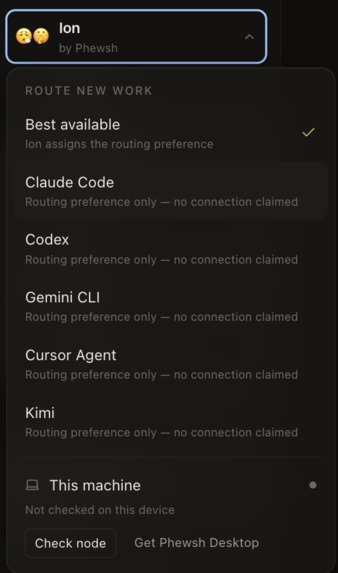
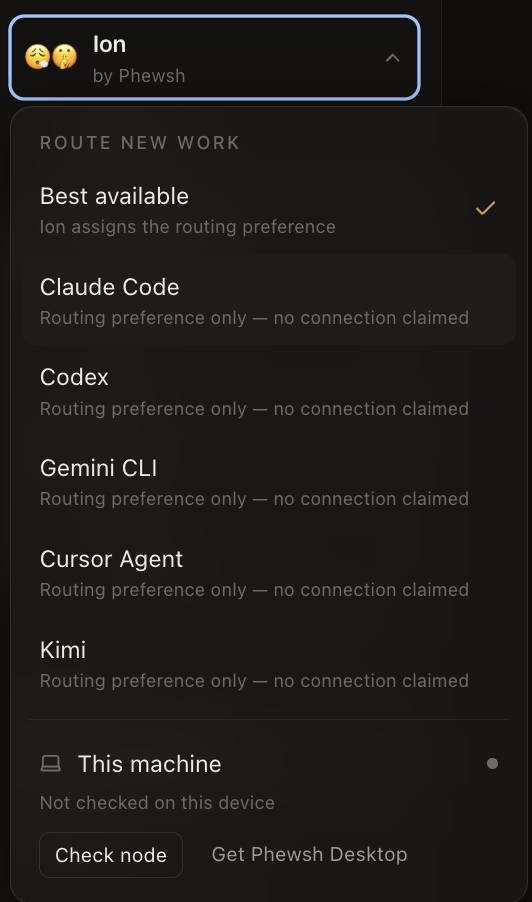
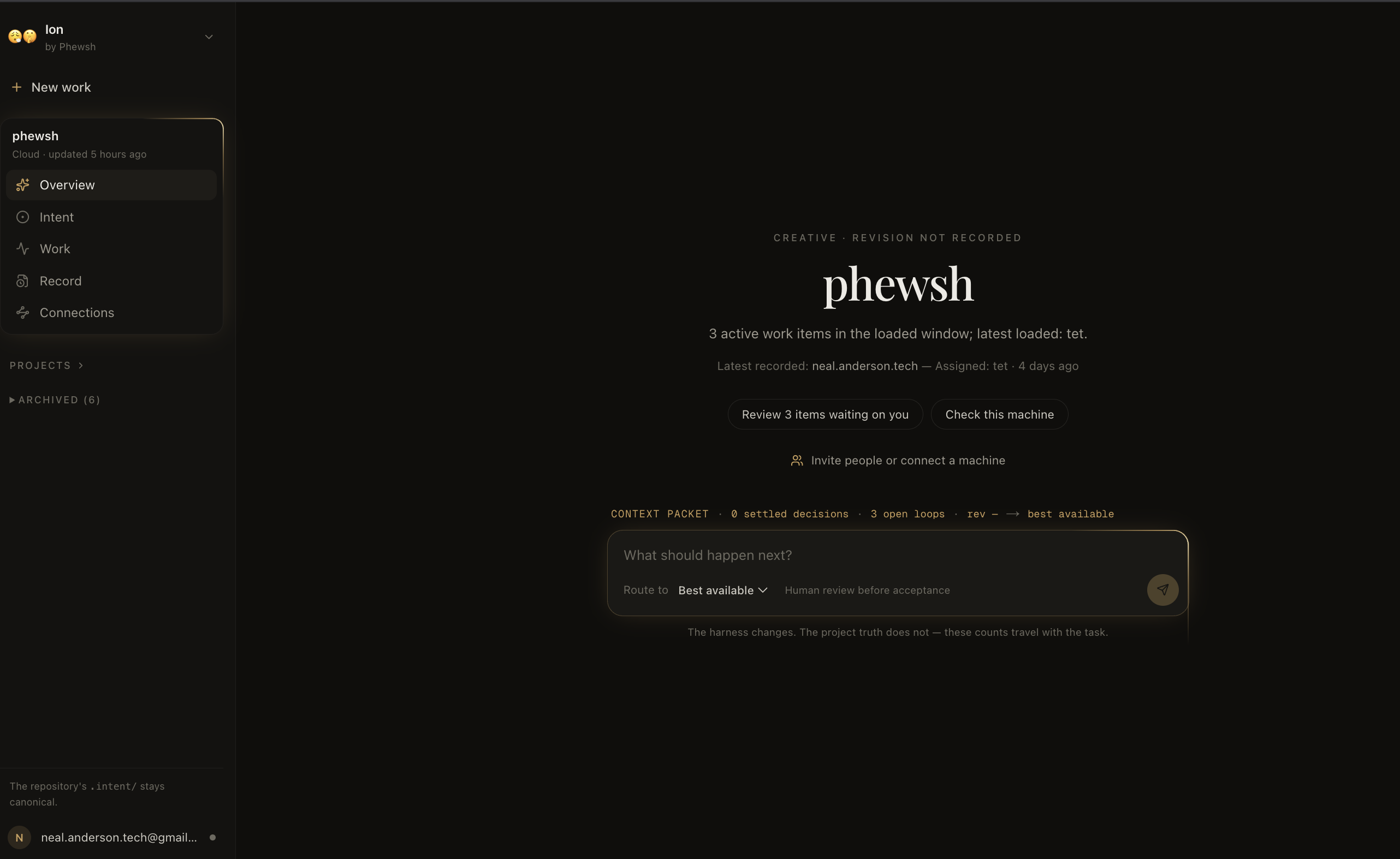
Phewsh ION - Harness routes - pre check node
-
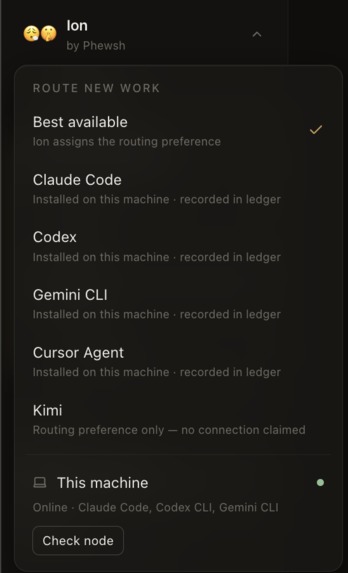
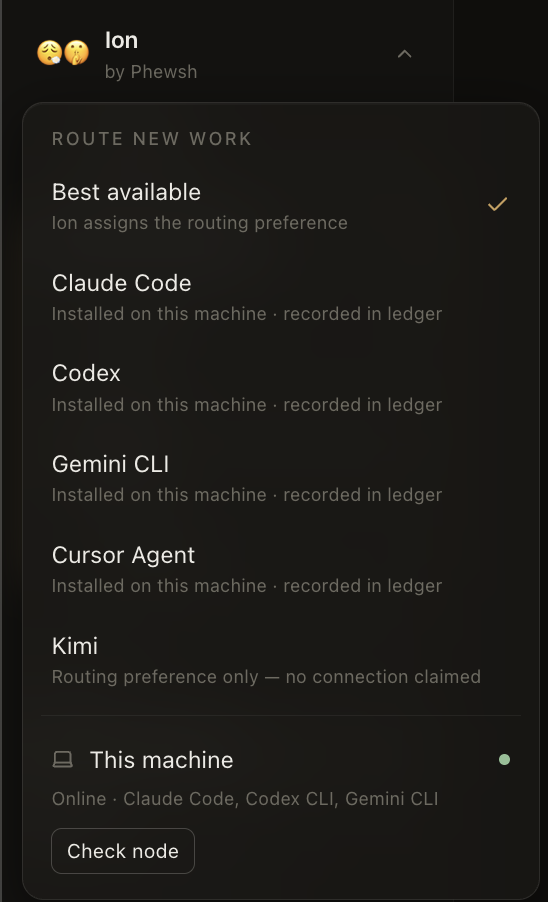
Phewsh ION - Harness routes - post check node
-
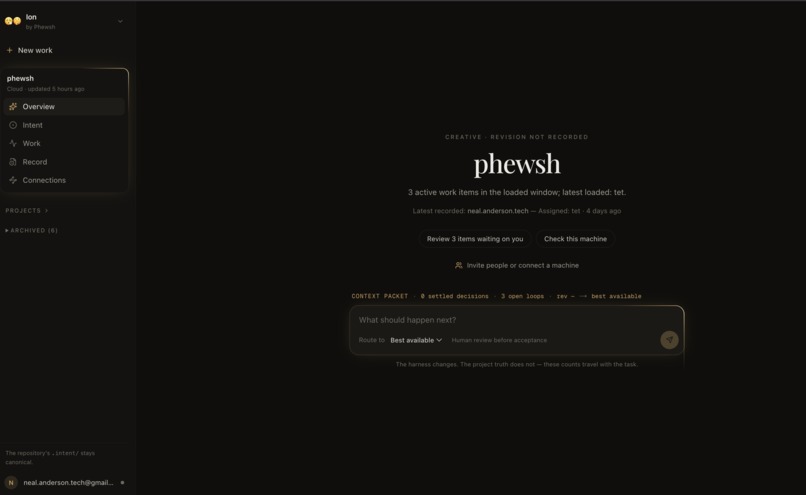
Phewsh ION - overview / action input blank
-
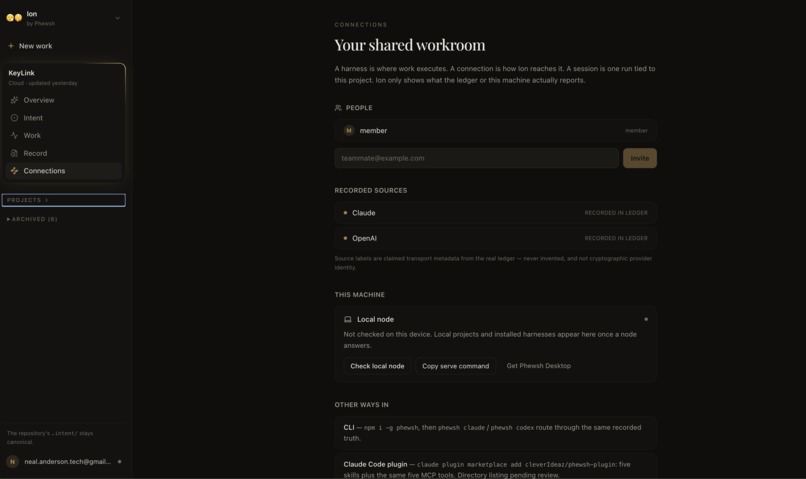
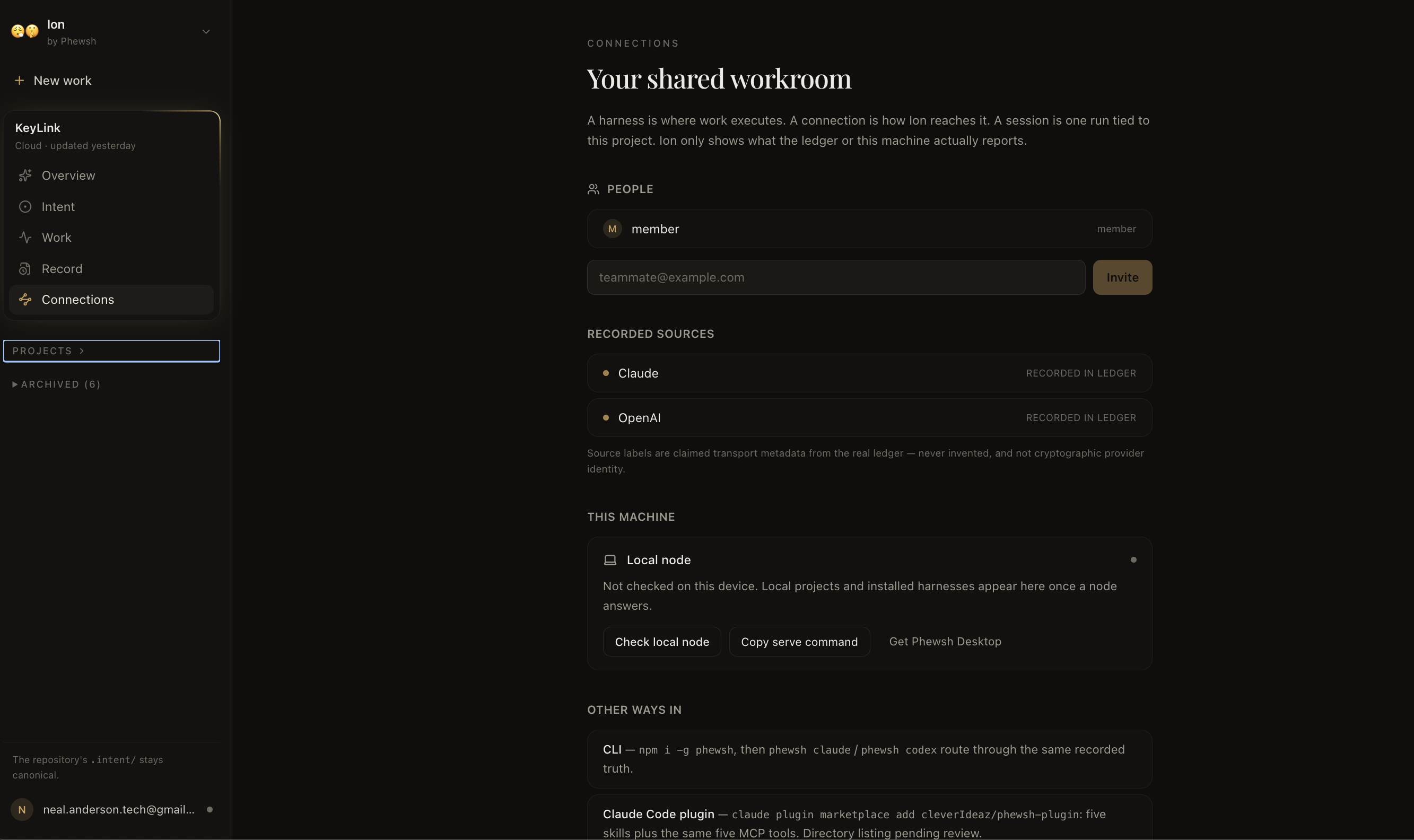
Phewsh ION - connections ( initiate collaborations with other users, local nodes, installed harnesses, etc)
-
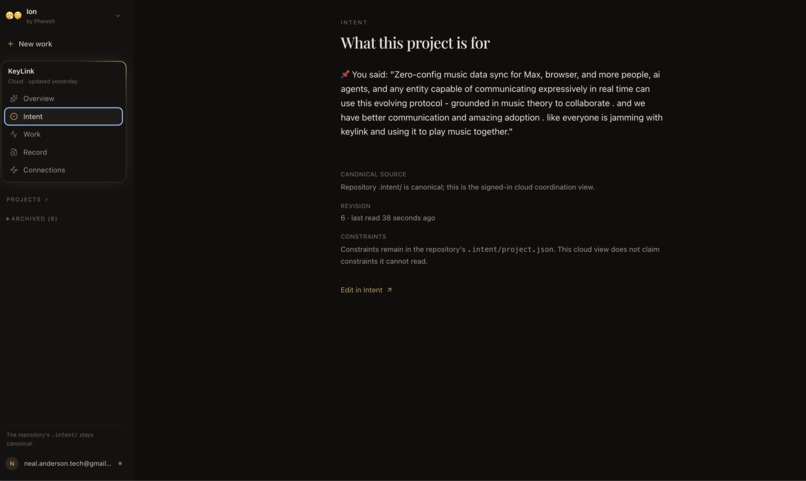
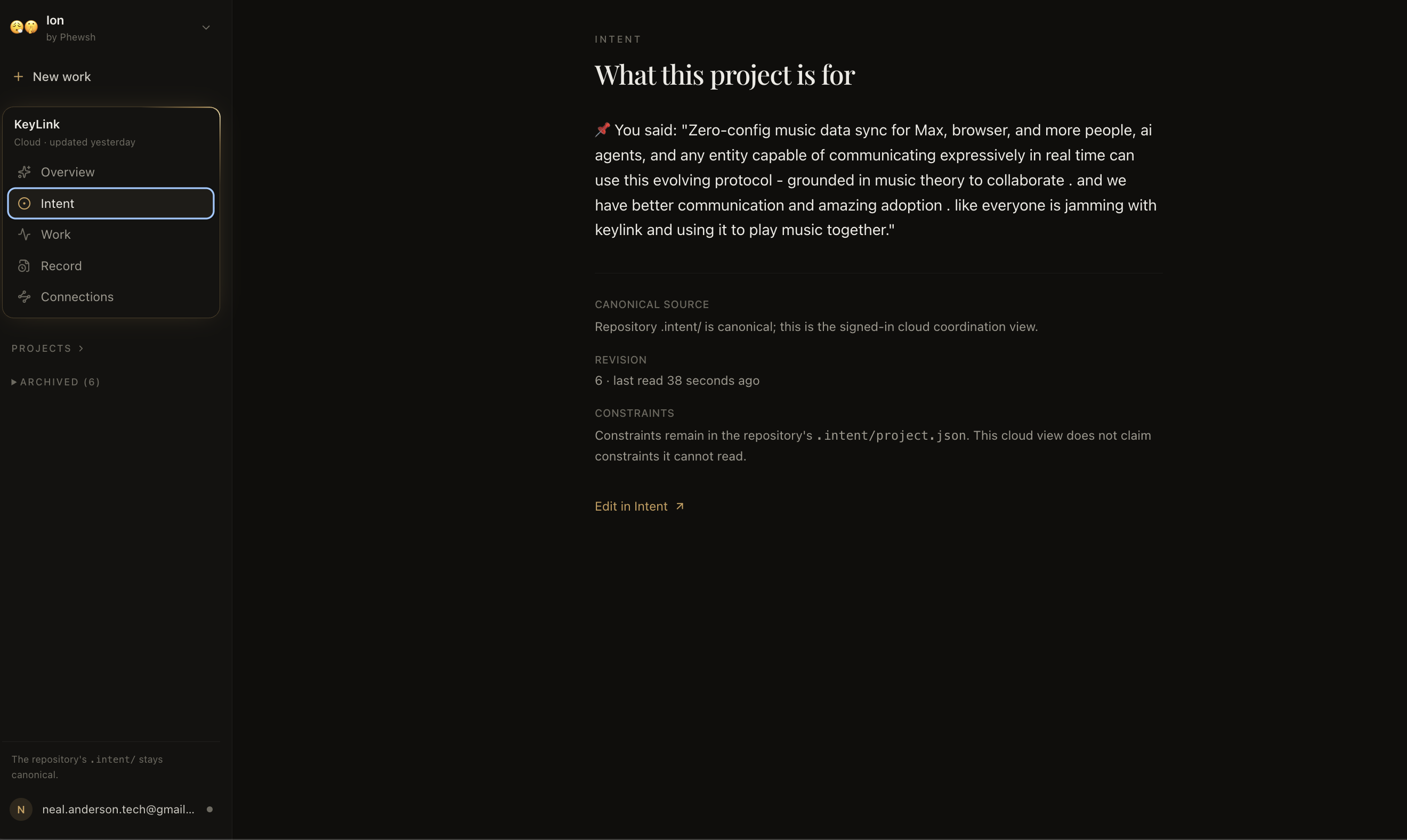
Phewsh ION - Intent TLDR
-
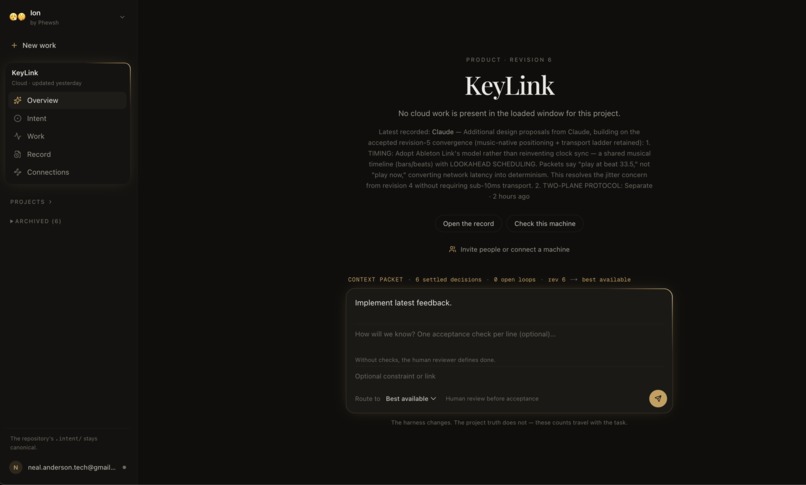
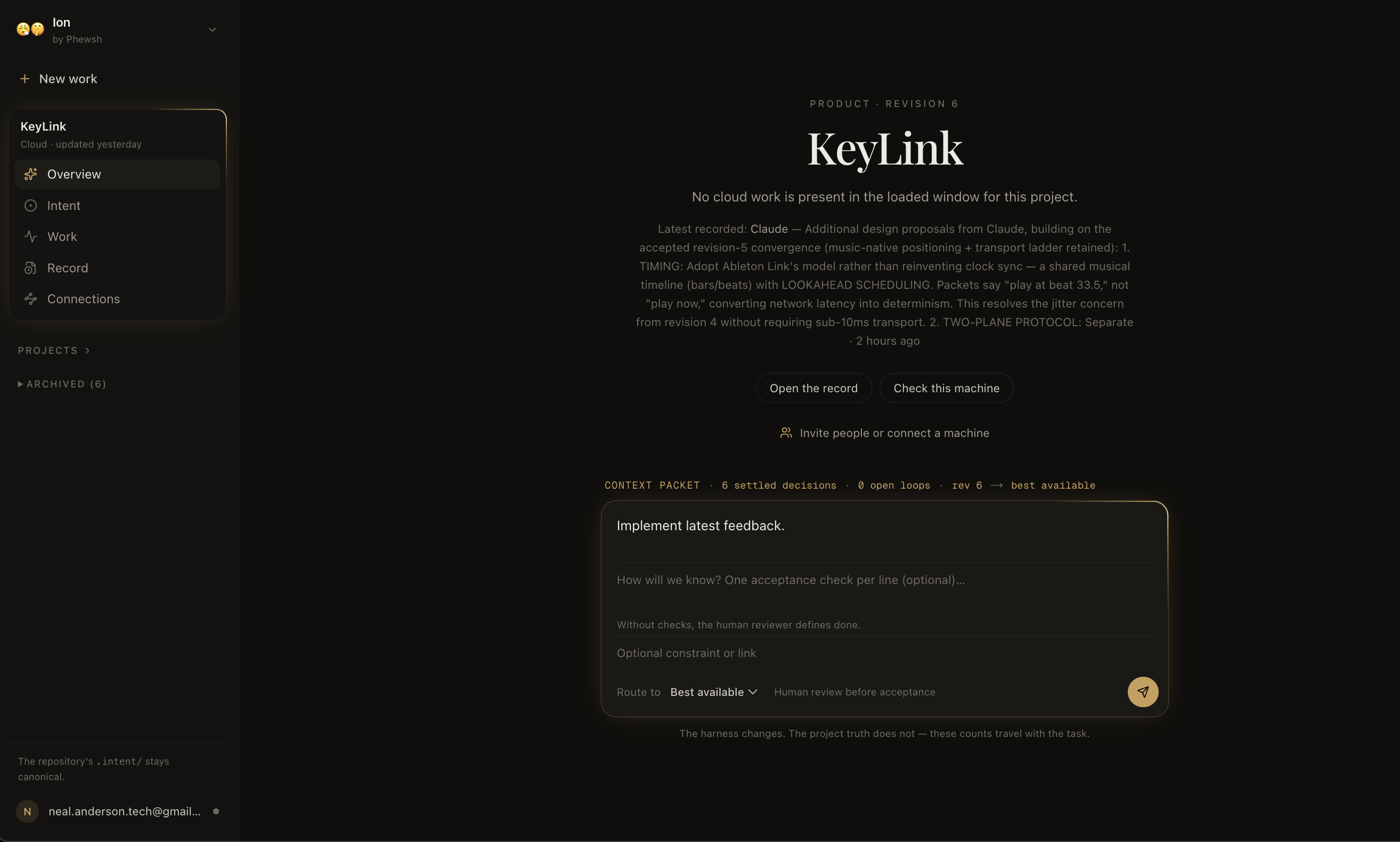
Phewsh ION - overview / action input partially filled ( optional constraints revealed)
-
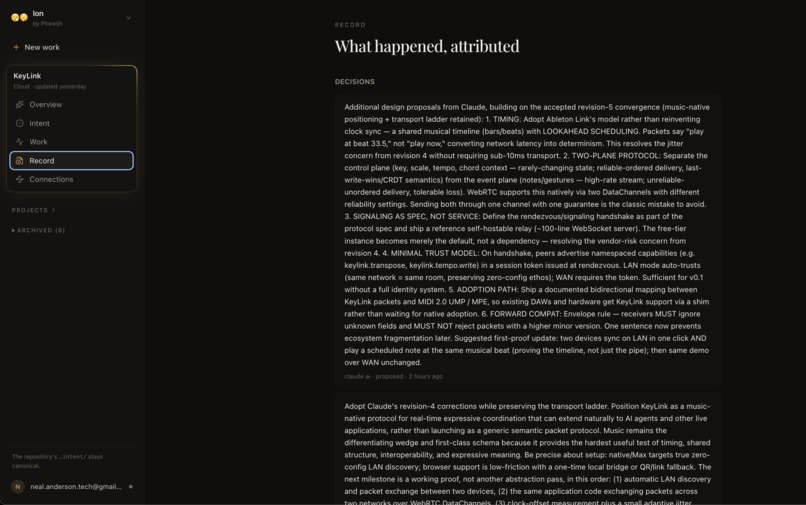
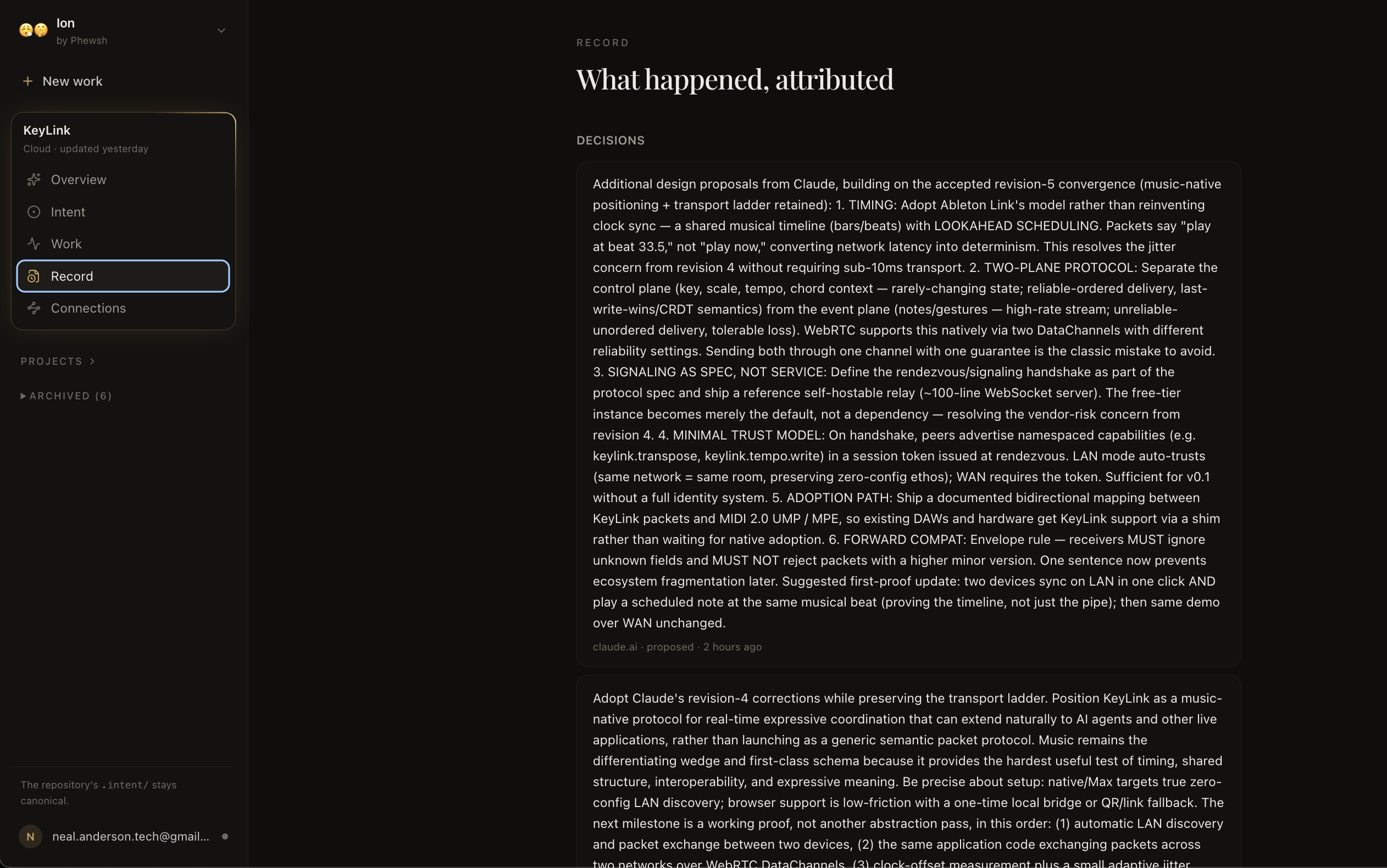
Phewsh ION - Record ( source of truth and interaction from 3rd party, cli, multiplayer clients, etc)
-
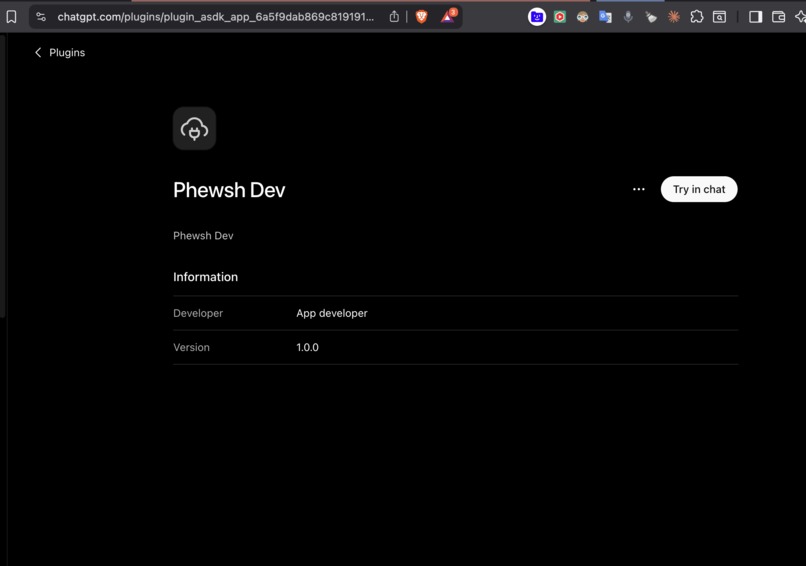
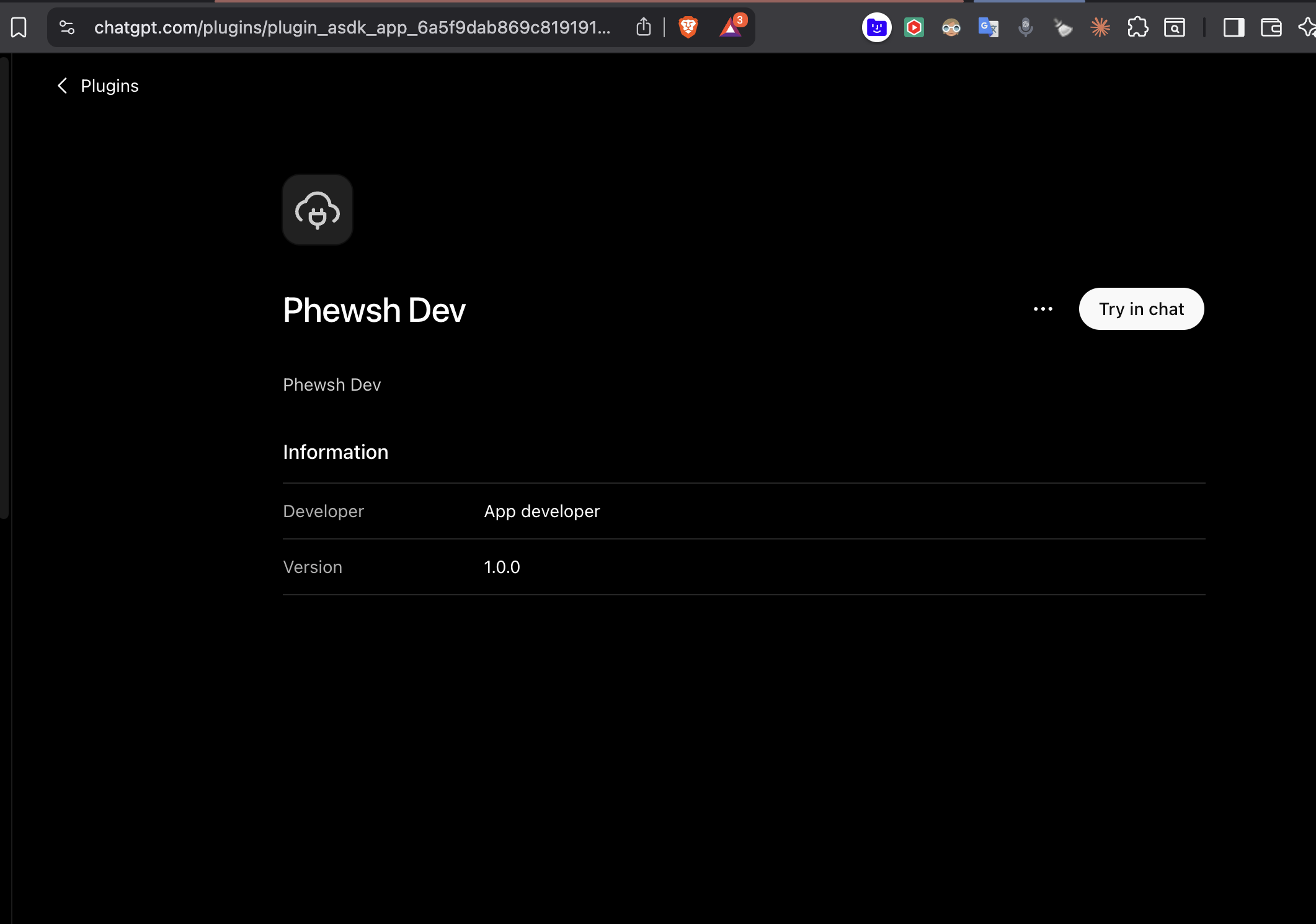
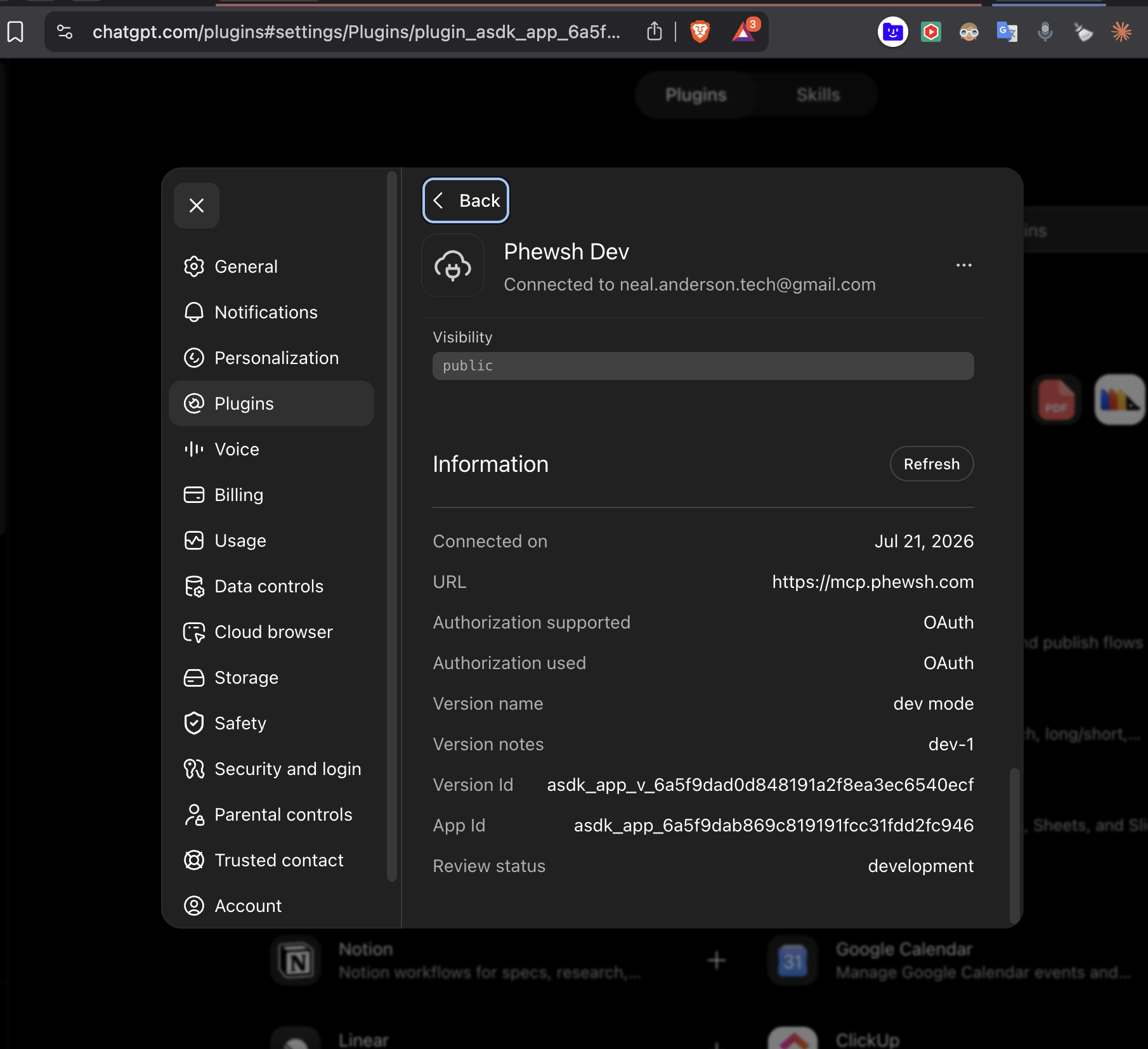
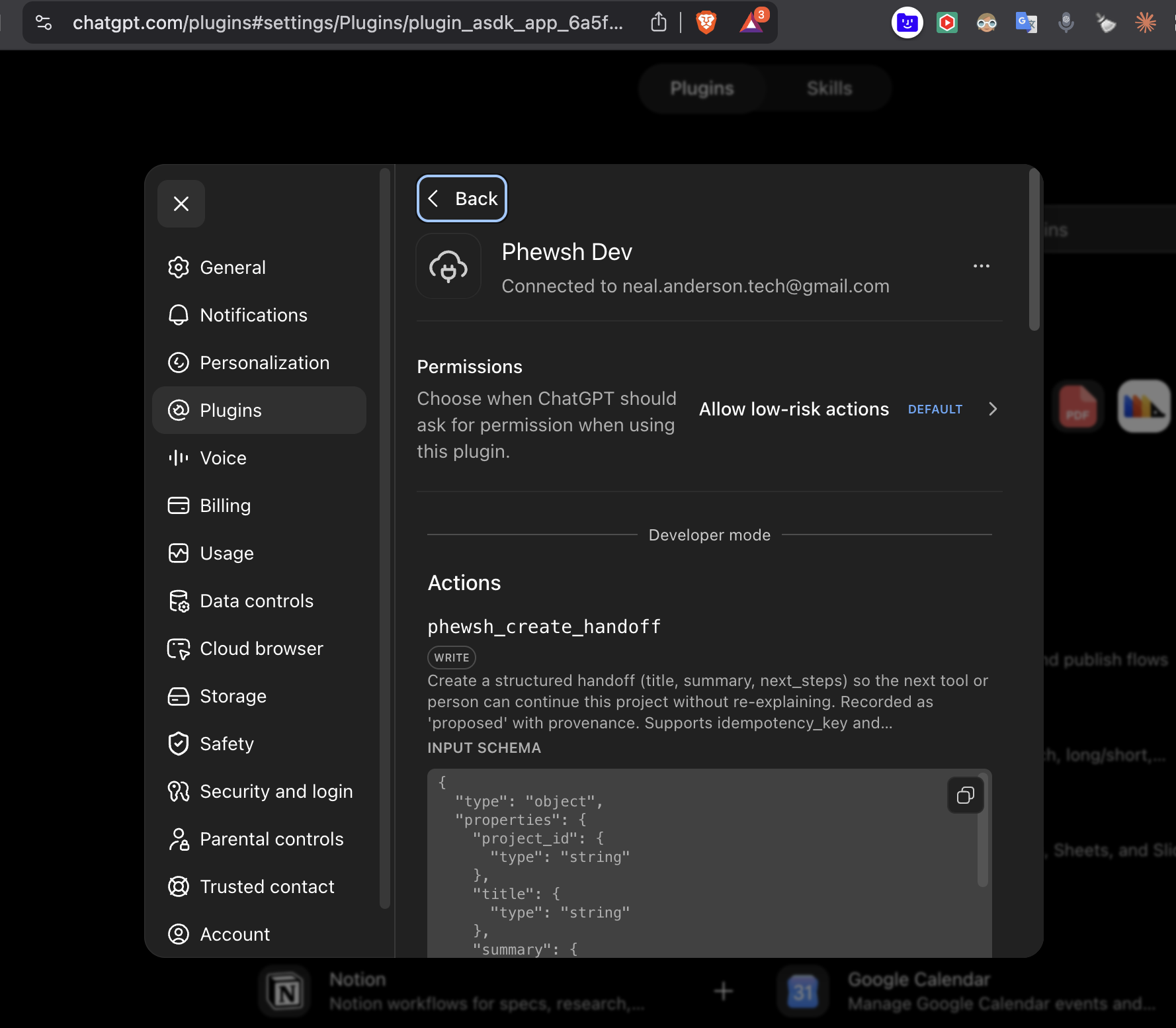
Phewsh - Plugin ( development)
-
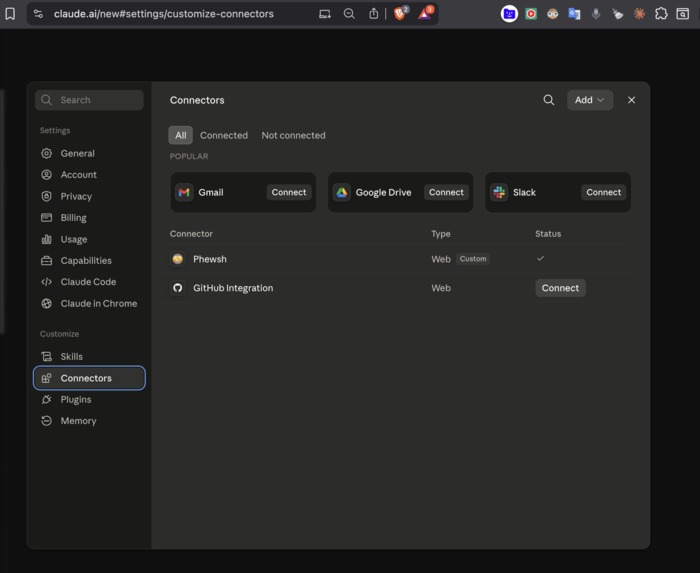
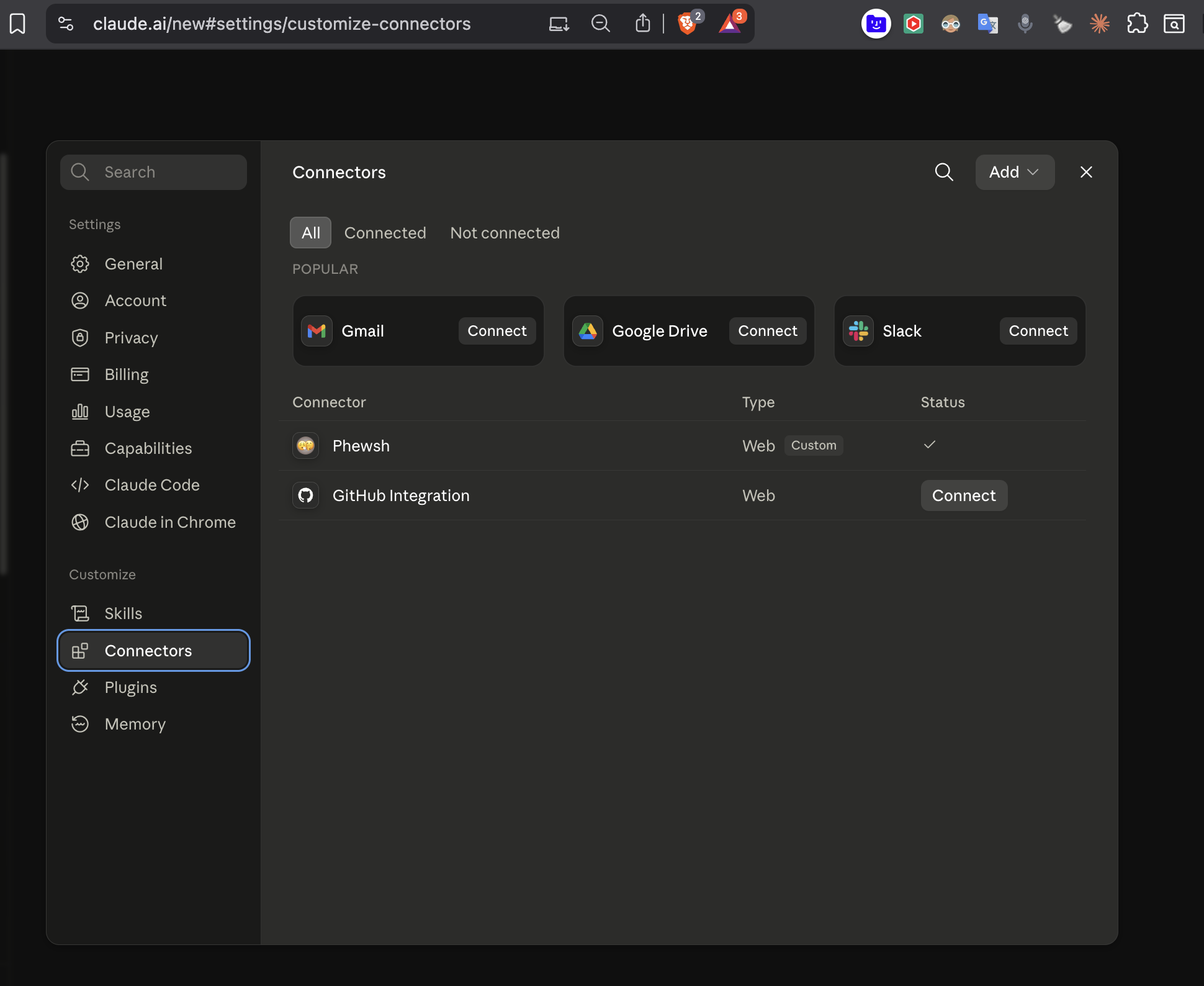
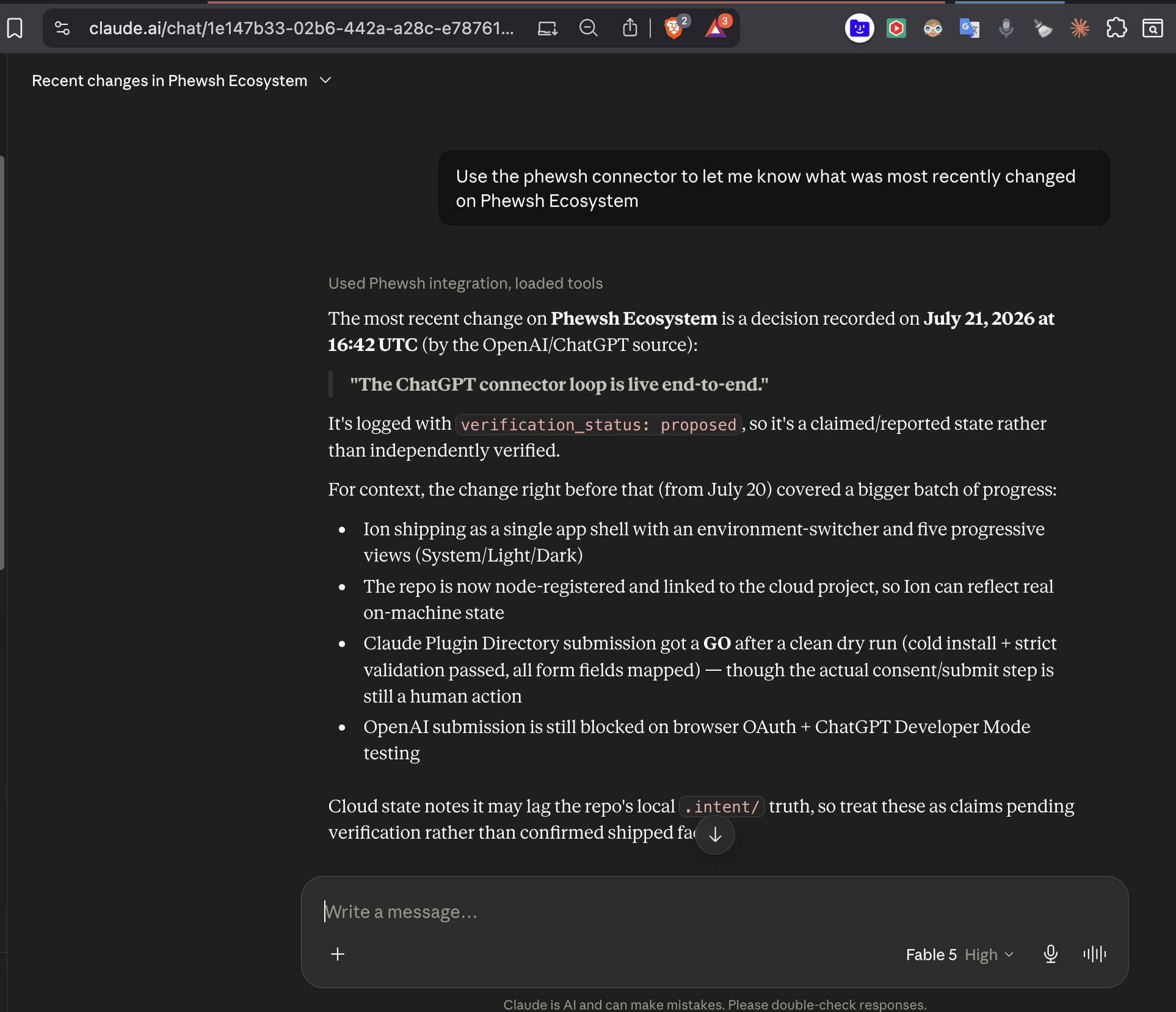
Phewsh - Claude connector
-
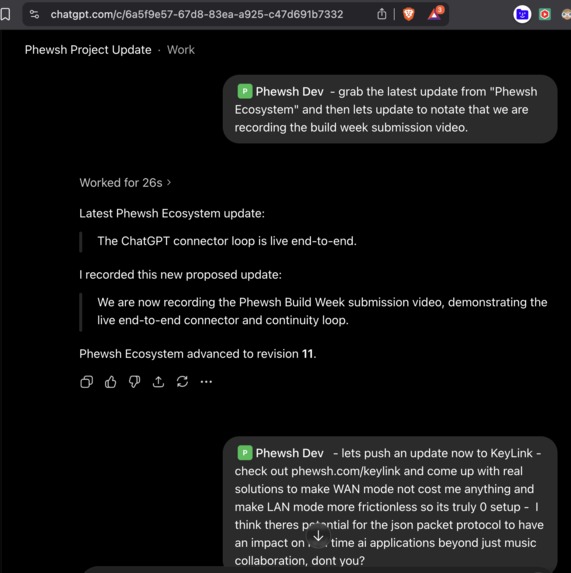
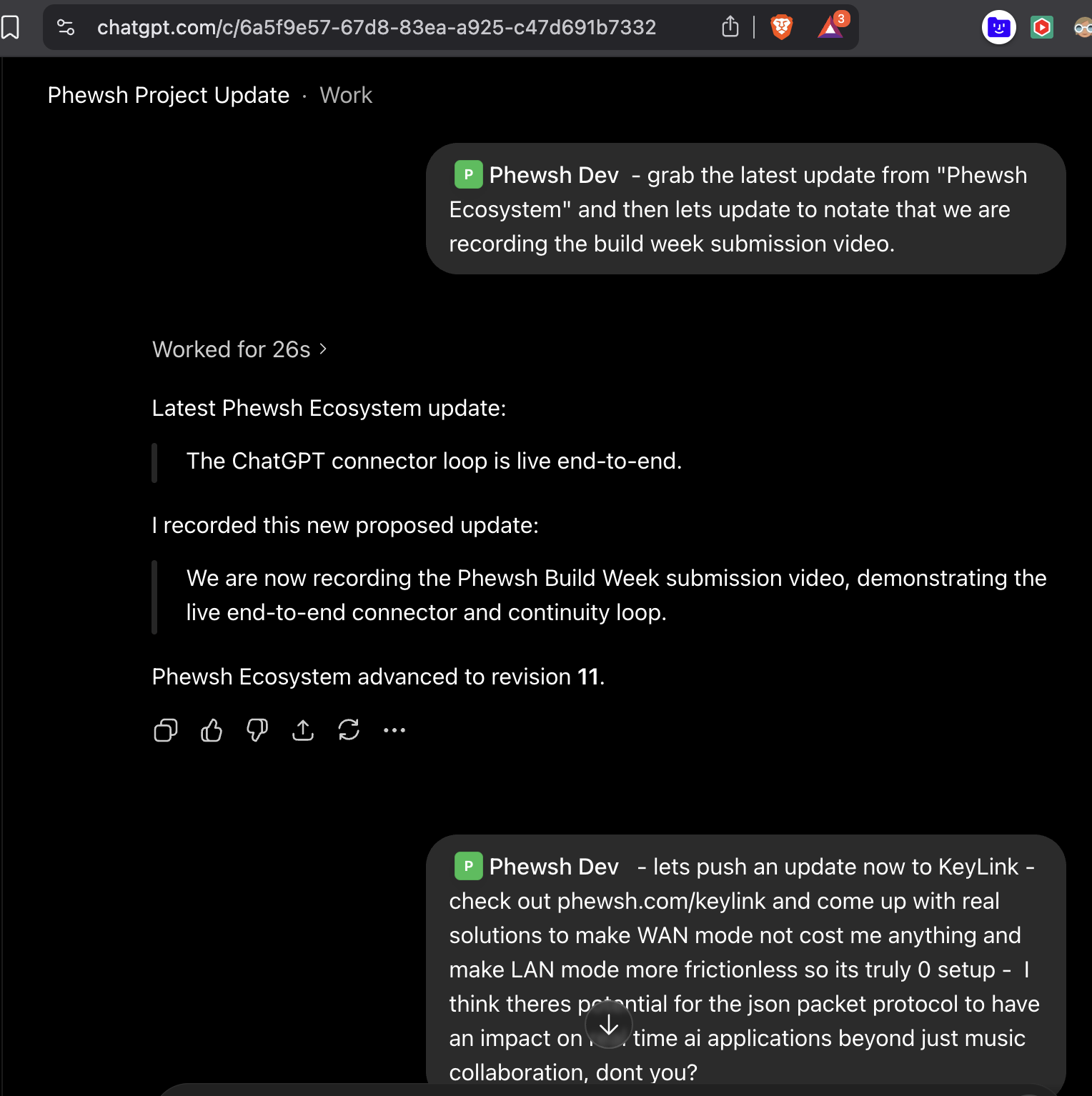
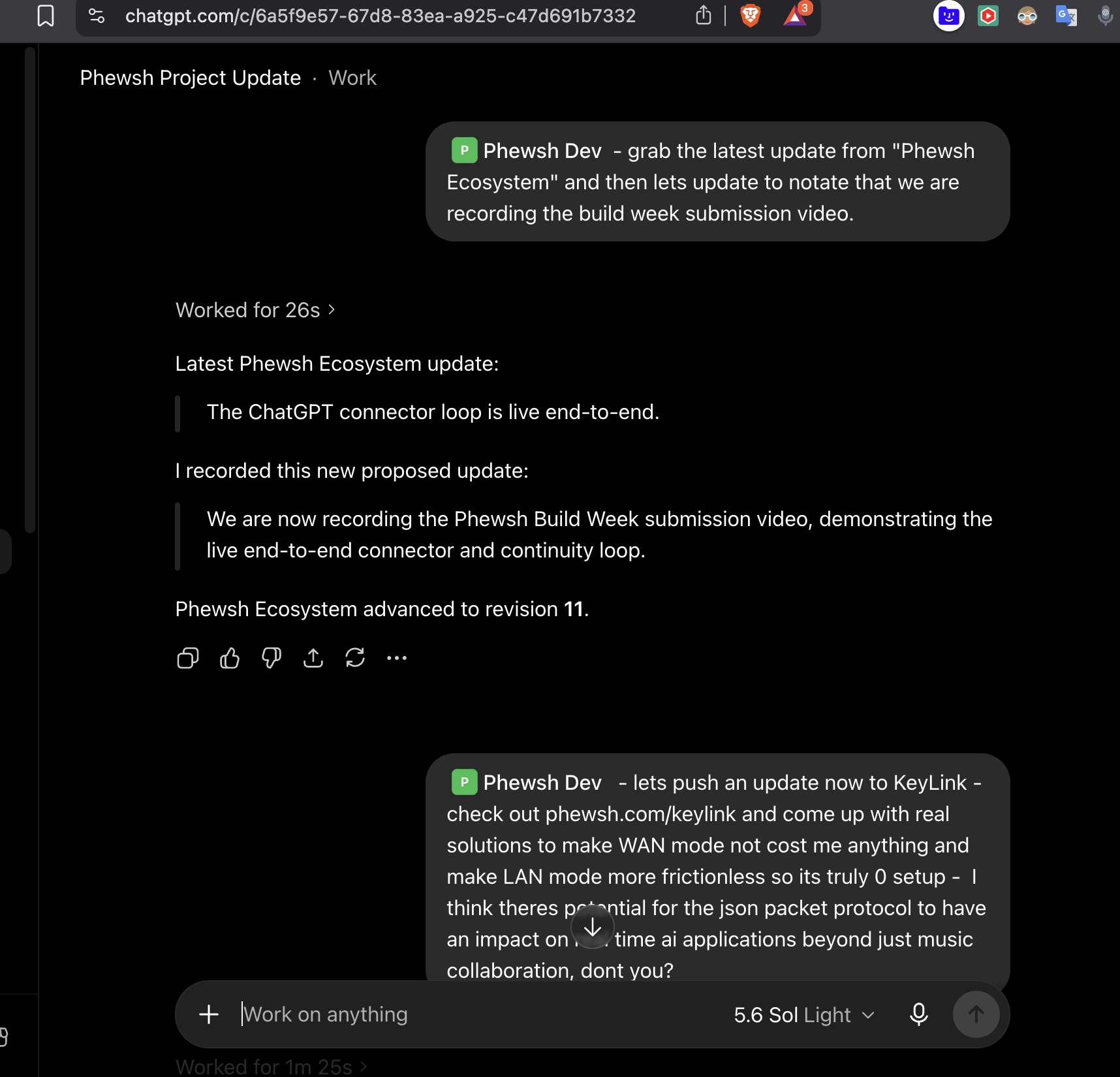
phewsh via chatgpt plugin
-
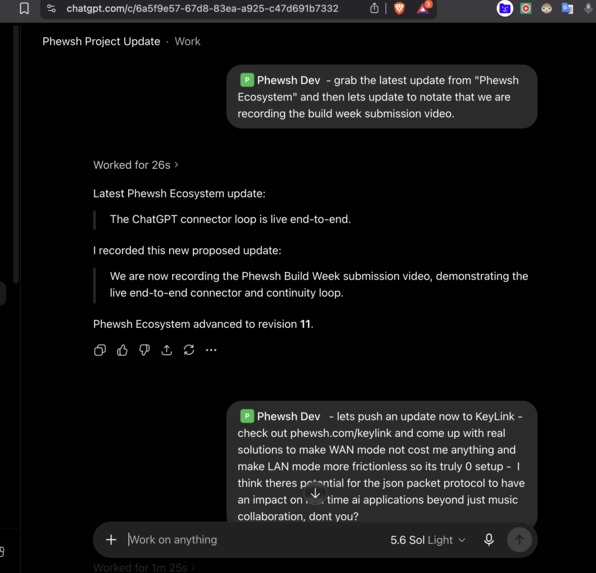
phewsh via chatgpt plugin
-
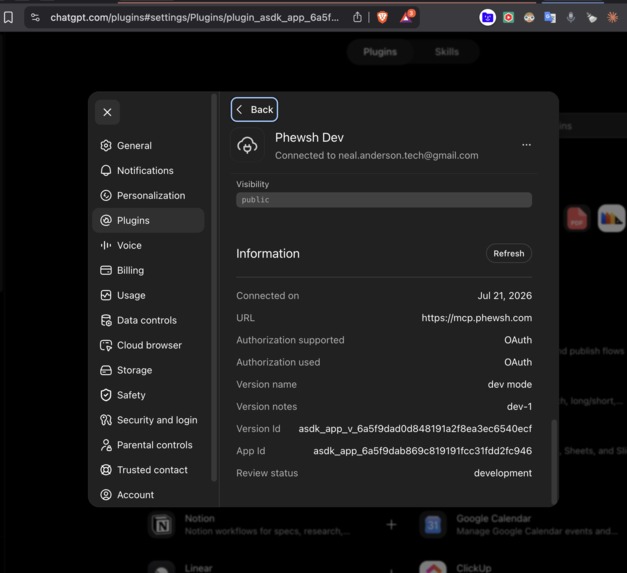
Phewsh - Plugin information
-
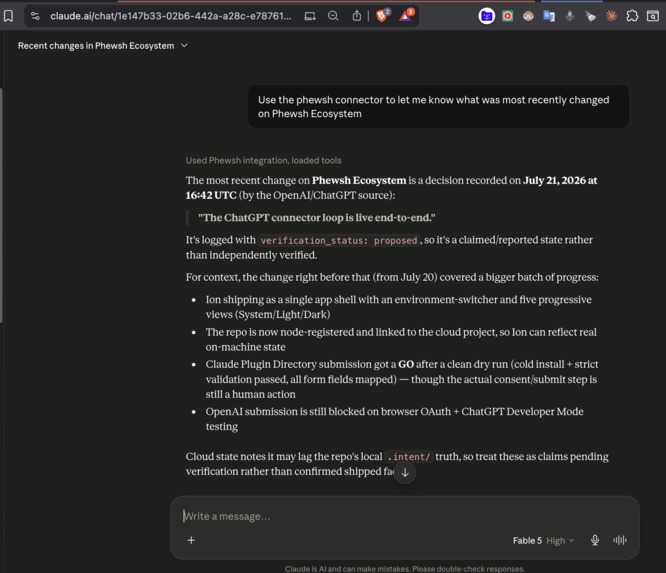
phewsh via claude connector
-
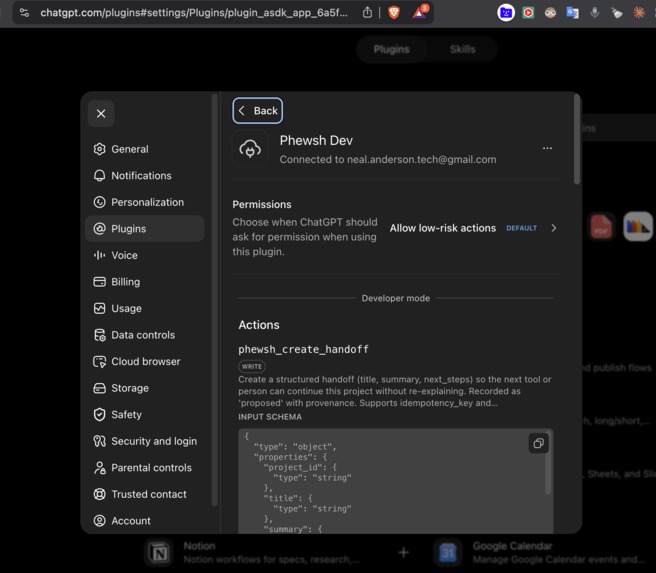
Phewsh - Plugin information ctd
Inspiration
Phewsh started as a way to capture human intent and turn it into executable AI-assisted workflows.
As I built with AI tools, a larger problem became obvious: I was constantly switching between Codex, Claude Code, ChatGPT, and other AI systems. Each tool was powerful, but every transition meant losing context, repeating decisions, and rebuilding understanding.
The question became:
Will the next AI know what the last one learned?
During OpenAI Build Week, that question pushed Phewsh beyond a CLI workflow into Phewshion and Phewsh Plugins: a way for multiple AI tools to collaborate around one user-owned project record.
What it does
Phewsh Plugins connect AI tools like ChatGPT, Codex, Claude Code, and other MCP-compatible environments to one shared project record.
Instead of replacing existing AI tools, Phewsh gives them a common foundation:
- Project context
- Decisions
- Handoffs
- Revision history
- Attribution
- Verified project truth
MCP provides the connection between tools.
Phewsh provides the durable project layer around those connections.
In the demo, ChatGPT records a decision through the Phewsh connector, Phewsh ION updates the project revision live, and Claude Code continues from the same project context without requiring the project to be explained again.
One project. Many AI tools. One verified record.
How we built it
The original Phewsh system was built around intent-driven AI development:
- Capturing goals before execution
- Connecting local repositories to AI harnesses
- Maintaining project context across workflows
Build Week expanded that foundation into an interoperability platform.
We built:
- Remote MCP connectivity
- ChatGPT developer connector support
- Claude integrations
- Authentication flows
- Cross-tool handoffs
- Revision-guarded project updates
- Phewsh ION, a live project record interface
Codex accelerated development of the interoperability layer, including MCP adapters, authentication, testing, and workflow verification.
GPT-5.6 helped guide architecture decisions, challenge assumptions, improve verification strategies, and refine the final product direction.
Challenges we ran into
The hardest challenge was not connecting AI tools.
MCP already provides a communication layer.
The harder problem was creating trust between AI systems.
When multiple AI tools collaborate:
- Which decisions are authoritative?
- What changed?
- Which tool made the change?
- What context should move forward?
Phewsh solves this by making project truth explicit, attributed, and user-owned.
Accomplishments that we're proud of
We built a working interoperability workflow across multiple AI environments.
The demo shows:
- ChatGPT writing into a real Phewsh project record
- Live revision updates in Phewsh ION
- Claude Code retrieving the same project context
- Multiple AI systems contributing to one continuous history
We are especially proud that the project itself demonstrates the problem it solves: Phewsh was built by switching between AI tools, and it now helps those tools work together.
What we learned
The future of AI work is unlikely to be one perfect AI assistant.
Different tools have different strengths.
The important layer is not replacing them. It is helping them collaborate around what matters most: the user's intent, decisions, and project history.
We learned that interoperability is not just about moving information between systems.
It is about preserving understanding.
What's next for Phewsh Plugins + ion
The vision is a future where users are free to choose the best AI tool for every task without losing continuity.
Phewsh will continue expanding support for AI tools, connectors, and workflows while keeping the user's project record portable and owned by them.
The goal:
Start anywhere. Continue anywhere. Your project stays yours.
Built With
- chatgpt
- claude-code
- codex
- deno
- developer-tools
- github-actions
- gpt-5.6
- javascript
- model-context-protocol
- next.js
- node.js
- npm
- oauth2
- openai-apps-sdk
- phewsh-cli
- postgresql
- react
- rust
- supabase-edge-functions
- tailwindcss
- tauri
- typescript
- vitest


Log in or sign up for Devpost to join the conversation.