-
-
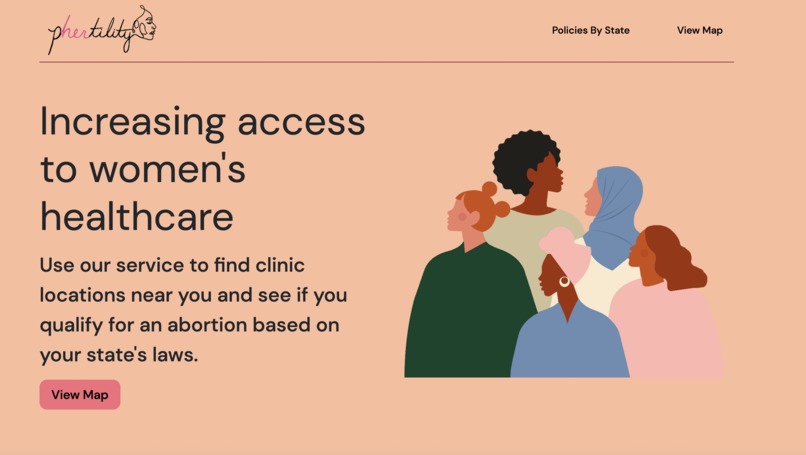
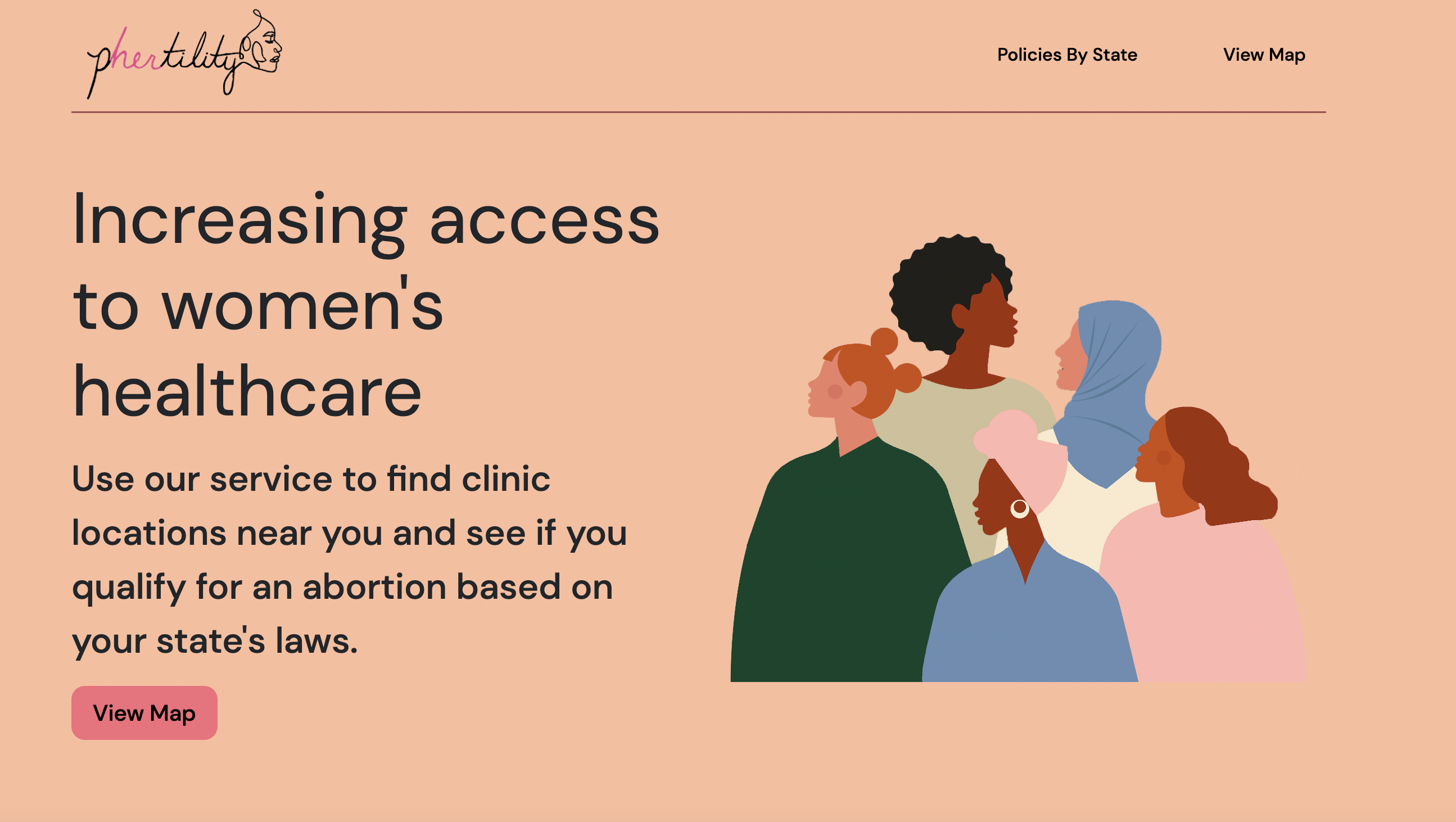
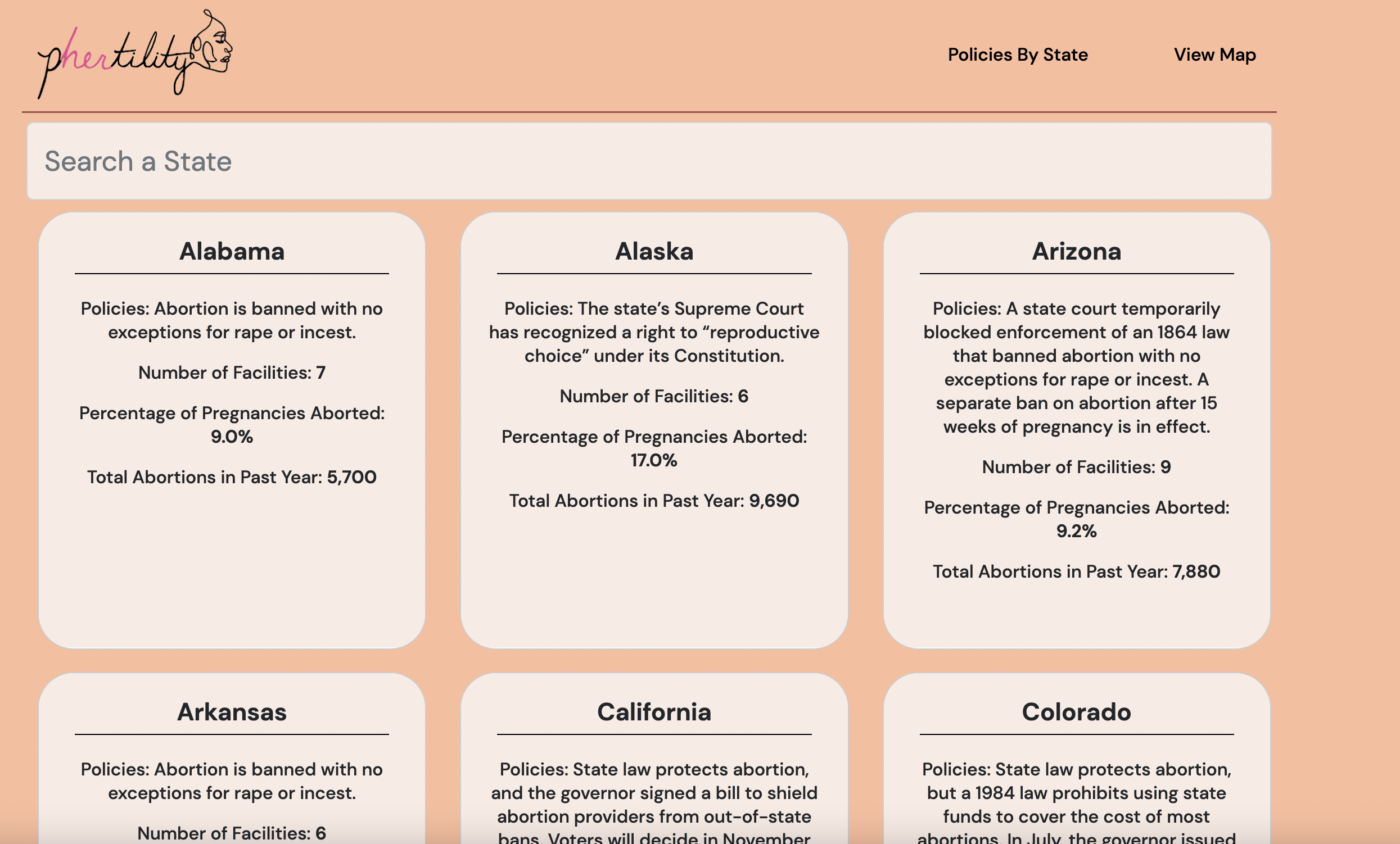
Our Home Page
-
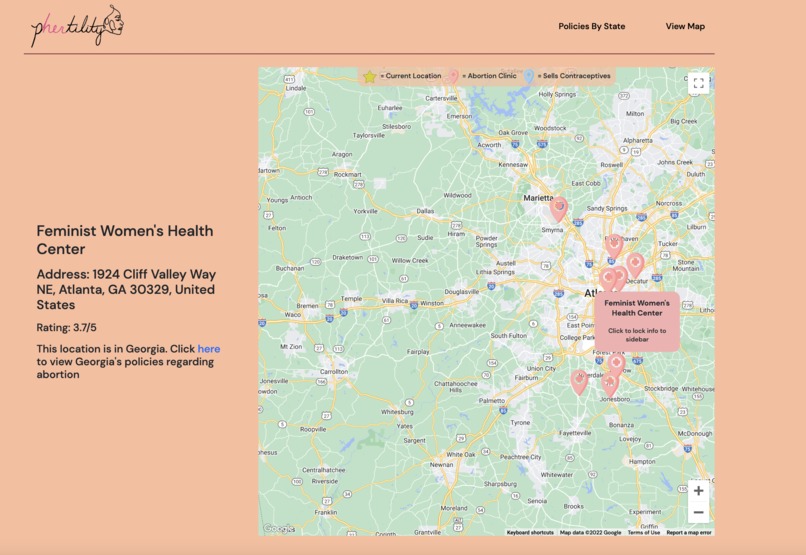
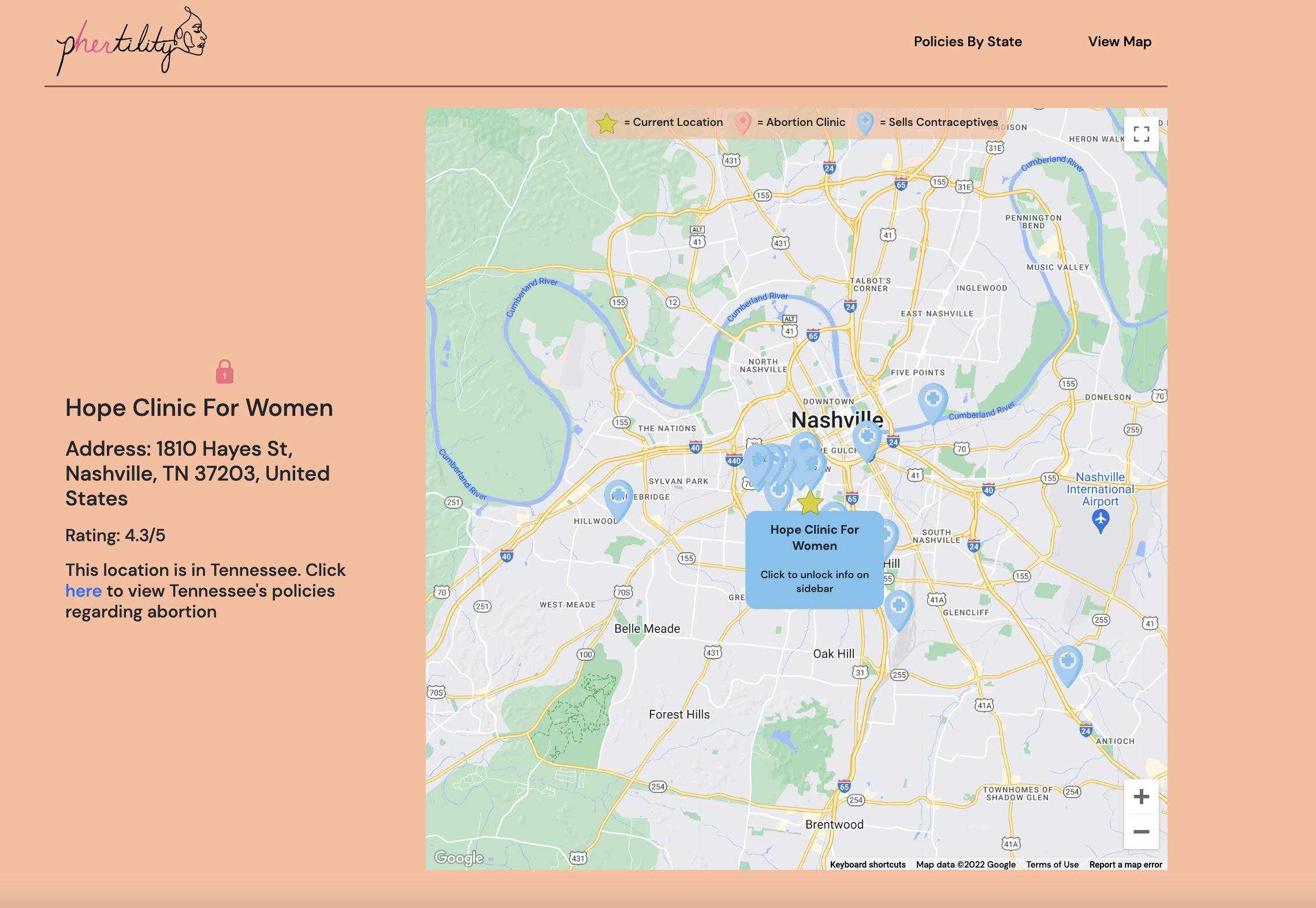
Nearest Abortion Clinics to Your Current Location
-
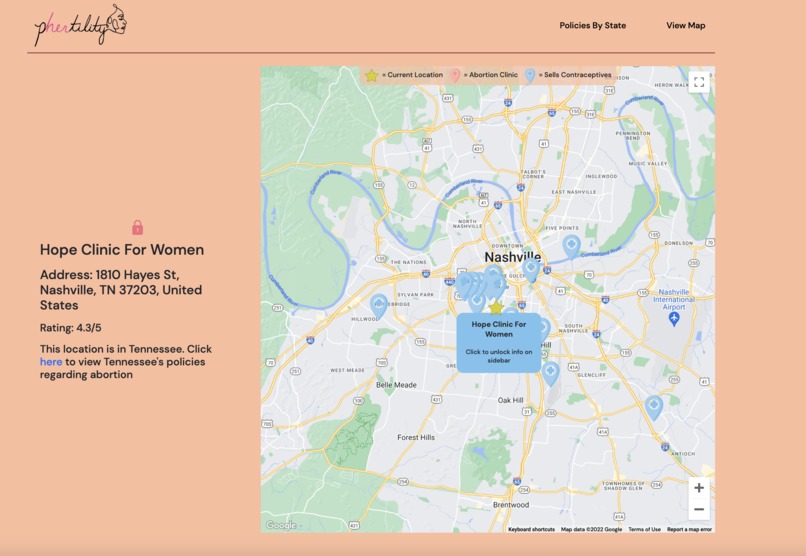
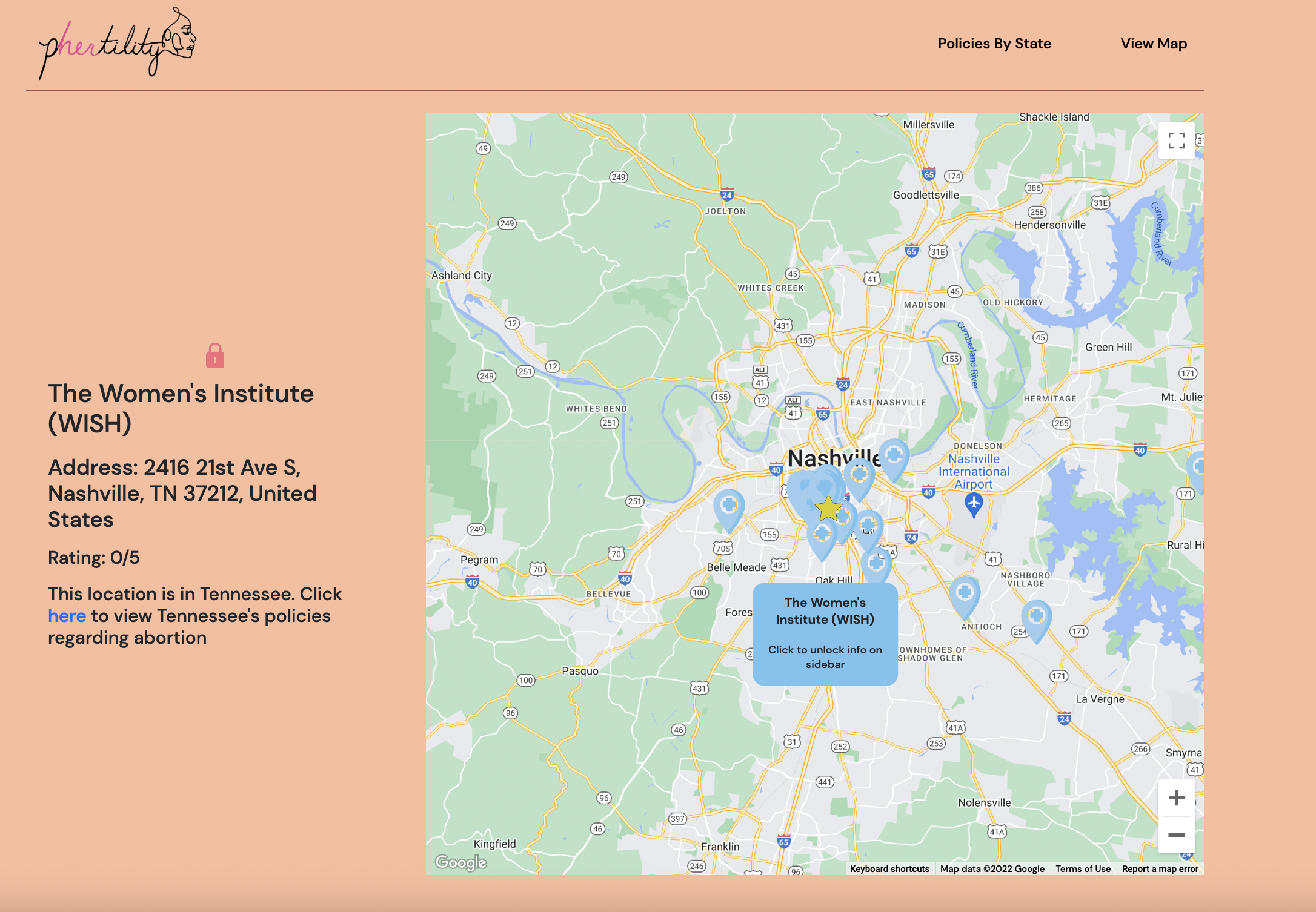
Nearest Birth Control Services to Your Current Location
-
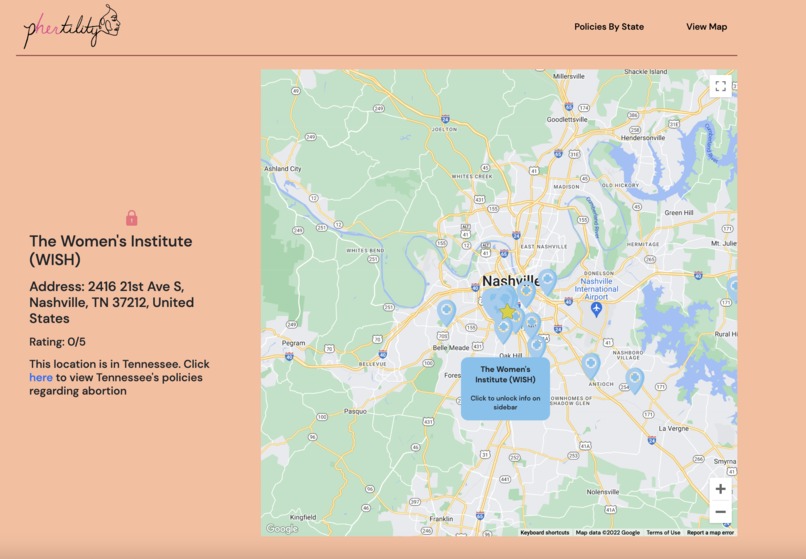
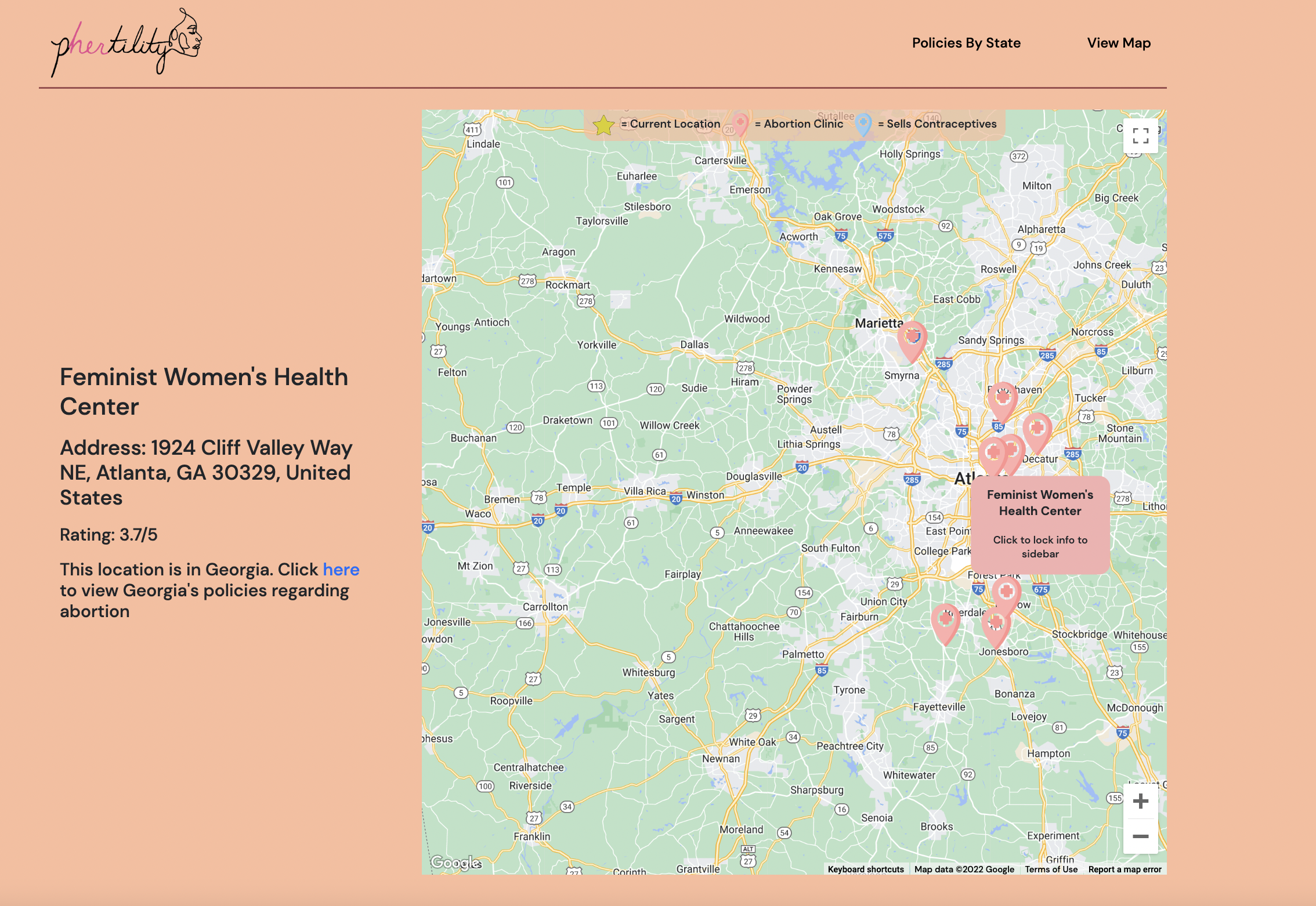
Lock Clinic Info on Screen
-
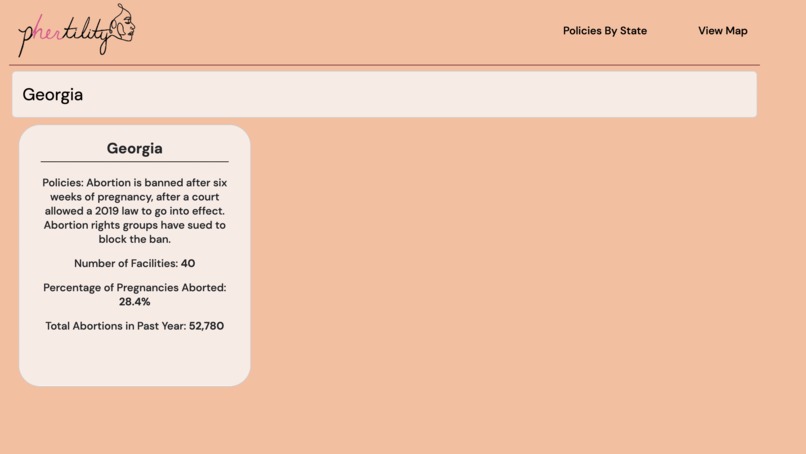
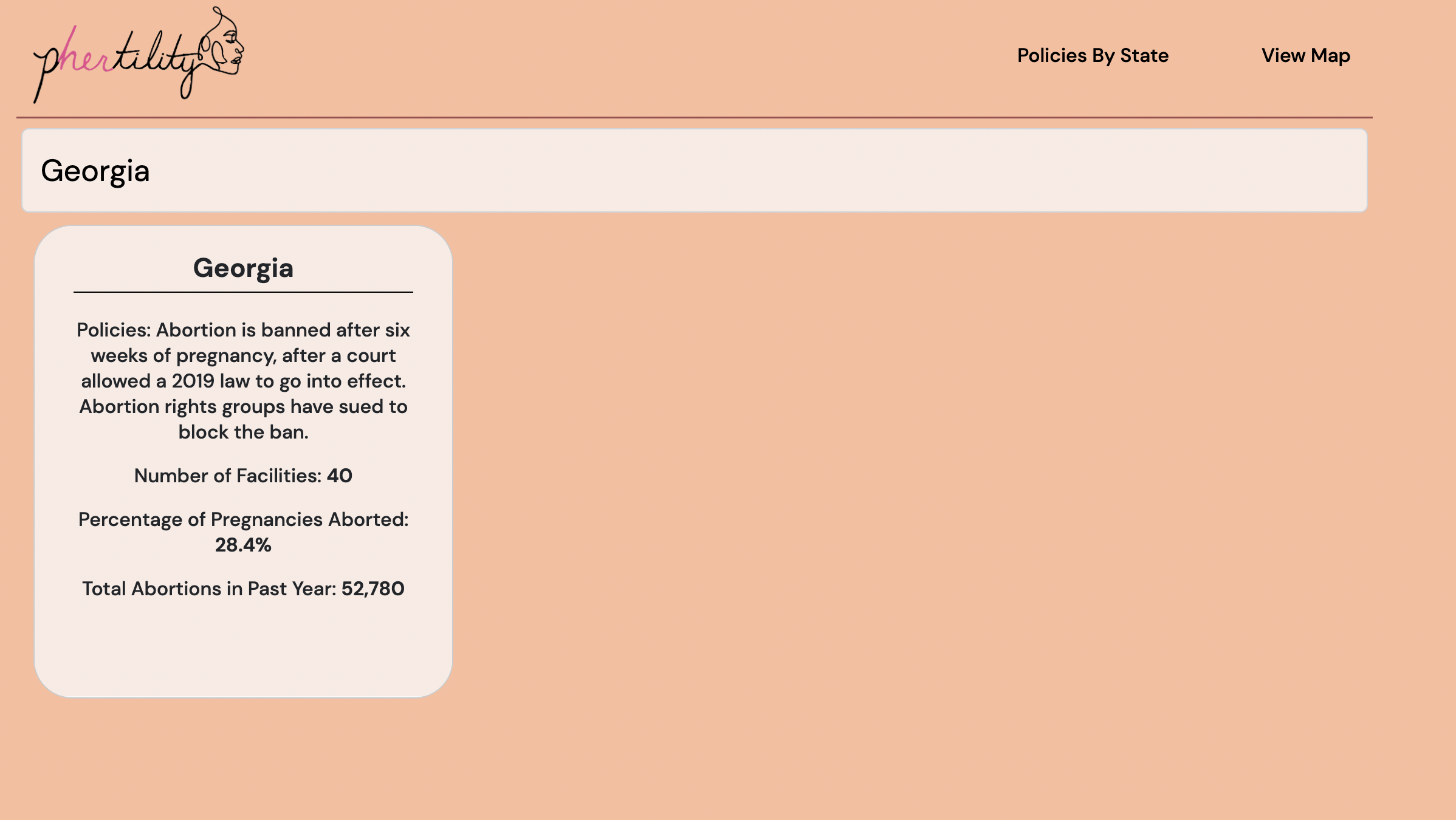
Get Directed Right to State Policy Page From Map
-
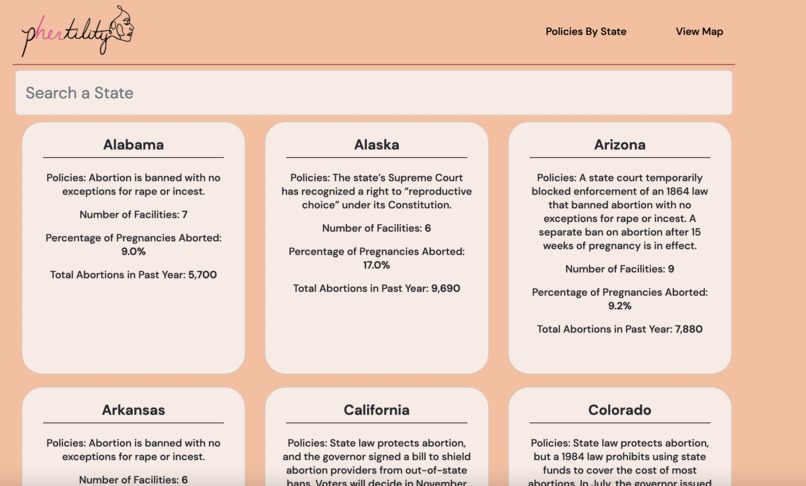
Search up Abortion Policies in Different States
Inspiration
We came together as a team because all of us wanted to make a project that had a demonstrable positive impact on the people around us. We had a lot of ideas that were rejected because we either didn't have any real investment in the idea or there simply weren't resources that we could find to make it plausible. As we looked for more inspiration, we came across articles talking about the adverse and even fatal impacts that the Roe vs Wade overturn had, and the resultant gross misinformation about abortion policies and wide disparities among state laws. We finally had an idea that we thought was worth doing a project on, and Phertility was born.
What it does
We built Phertility so that women who have limited access to abortion clinics and birth control services have all the resources they need to be supported and stay informed about the situation. Phertility has two main features. First, it shows you all the closest abortion clinics and birth control services (within a 1,000 mile radius) to you using your current geolocation data and the Google Maps and Google Places API. The user's current location is represented using a star on the map, and the map displays birth control services with custom blue markers and abortion clinics with custom pink markers. When a user hovers over the clinic, they are given information about the name, address, and rating of the clinic, which they can then lock on their screen by clicking the location marker. Additionally, they can be directed right to the state policy page based on the state of the abortion clinic. The abortion policies and statistics of all fifty states can be looked up on the website. These abortion policies are continually changing, so they are updated by a Python script that scrapes the relevant data and stores it in Firebase.
How we built it
Phertility was built using a React frontend and a Node.js backend. We also used Python as a means to get all the relevant data regarding abortion policies and stored it in a Firestore database in the backend to be accessed later. To get the map, clinics, and location data we used the Google Maps Platform, specifically the Places API and Maps API.
Challenges we ran into
As with any project, we ran into quite a few challenges while making Phertility. Some of them were simple mistakes (like when we accidentally merged two branches which led to a lot of confusion), while others required us to completely re-evaluate how we were going to implement certain features. For instance, we initially found quite a few APIs that could give us data on abortion policies but soon realized that a lot of these APIs had restricted access to only researchers or required us to request access in advance. We got around this by instead scraping all the data we required from the web using Selenium.
Accomplishments that we're proud of
Three out of the four members on our team have never been to a hackathon before so we're very happy with what we accomplished in a short span of time. That being said, I think we're all extremely proud of how the website looks. A lot of love and effort was put into all the design elements of the site, from the custom map pins to our hand-drawn logo displayed on the top left.
What's next for Phertility
There were a ton of other features that we had in mind, but didn't have enough time to implement. Some new features we plan to implement is a sorting feature to only display clinics that take a user's insurance, providing directions to the clinics, and sending notifications to users when abortion policies have changed. We've barely scratched the surface of what we can achieve with Phertility.


Log in or sign up for Devpost to join the conversation.