-
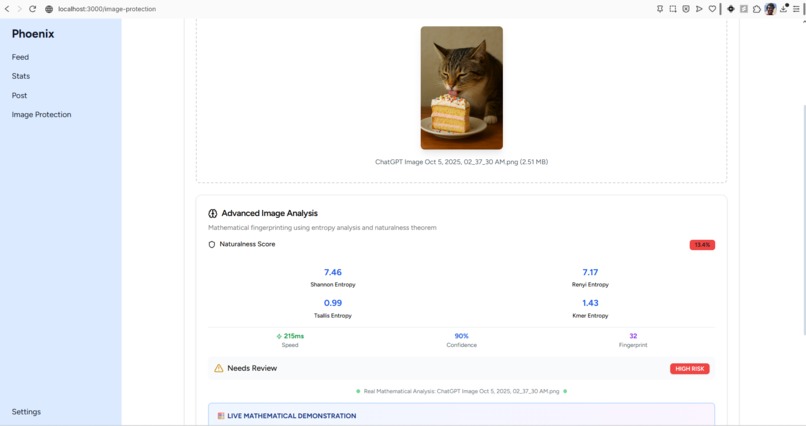
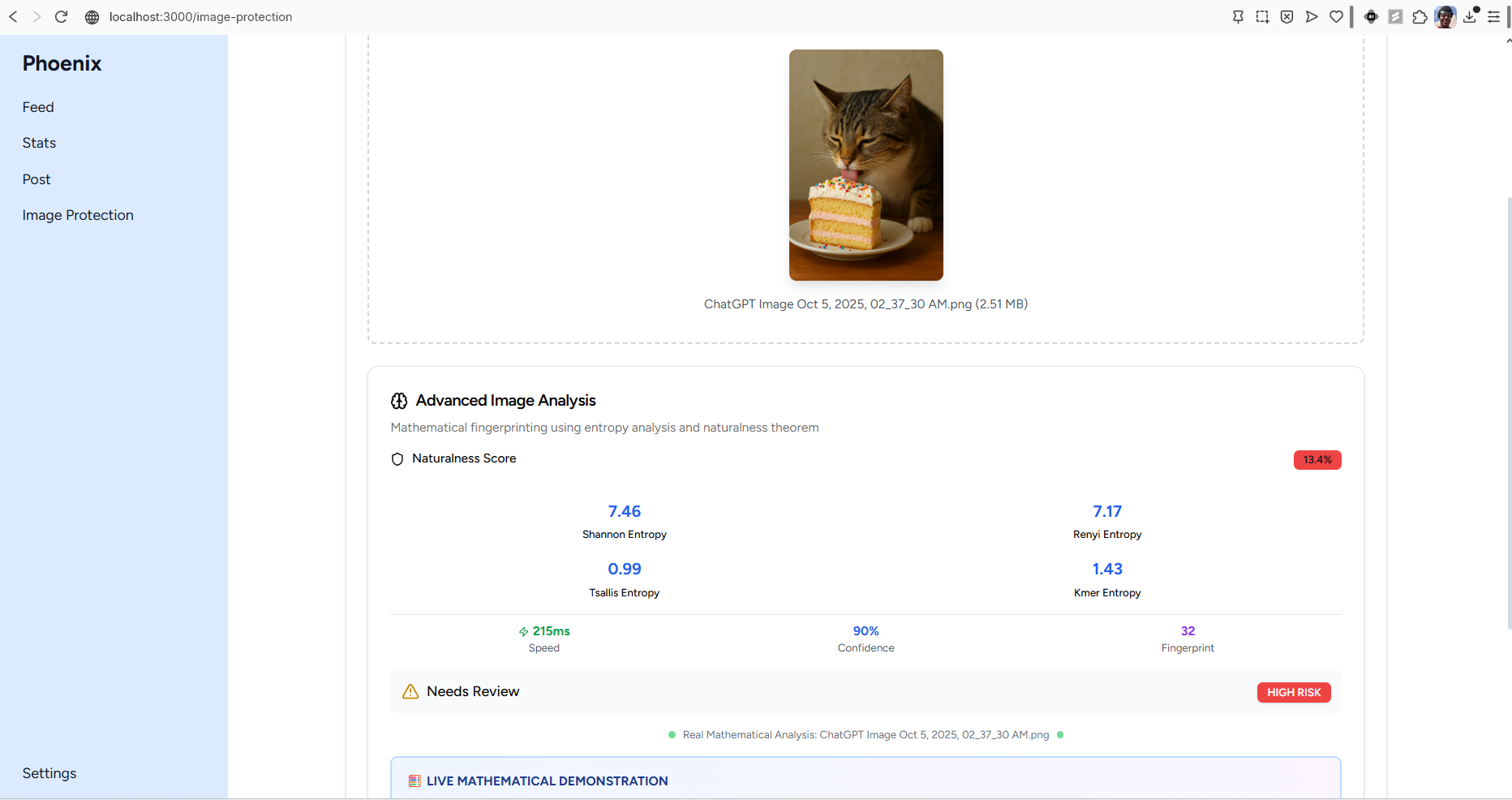
Our earliest versions of our checker detecting out a chatgpt cat
-

Our logo and motto

Inspiration
We’re seeing creators lose control of their images the moment they hit “post.” Current takedown-first systems are reactive, slow, and biased toward platforms—not artists. We wanted a proactive, creator‑first system that fingerprints images at upload, detects reposts anywhere, and explains decisions with real math.
What it does
Fingerprints every uploaded image using multi-entropy analysis and a Naturalness Theorem. Scans the web (Google Vision Web Detection) for visually similar images. Combines math + internet scan into a clear protection verdict with confidence and risk level. Shows a live, step‑by‑step math demo (Shannon/Rényi/Tsallis/K‑mer) so judges see real analysis, not a black box. Provides a social feed UI (Phoenix theme) with warm, modern visuals and an “AI vs Human” indicator.
How we built it
Frontend: Next.js App Router with client/server components, animated UI (Framer Motion), Tailwind‑based Phoenix theme, Radix UI primitives. Image math: Real pixel‑level entropy computations in the browser via Canvas ImageData (fast sampling + bucketing). Web scan: Google Vision Web Detection endpoint exposed via a Next.js API route; results summarized into originality and copyright risk. Auth + data: NextAuth+Drizzle ORM (Postgres) for users, posts, and protection metadata. Uploads: UploadThing pipeline with post status and basic license tagging.
Challenges we ran into
Balancing speed and rigor: entropy math had to be real but sub‑500 ms; we used pixel sampling and histogram bucketing. UI reactivity: session/nav not refreshing after logout → fixed with client components and router refresh. Package manager/linking issues on Windows (pnpm/node-swc) and cache corruption; added clean rebuild flow. Port conflicts and hot‑reload edge cases; added process cleanup and cache resets. Merging branches under time pressure while preserving the new Phoenix theme and analysis logic.
Accomplishments that we’re proud of
Real mathematical entropy engine (Shannon, Rényi, Tsallis, K‑mer) with a transparent demo. A combined risk model that fuses math with internet scan signals and explains the decision. A cohesive, high‑polish Phoenix brand/UI across the app with smooth animations and clear readability. Hitting hackathon performance targets while keeping results deterministic and defensible
What we learned
Entropy families each contribute different signals; diversity + consistency with Shannon is a strong “naturalness” proxy. UI clarity is as important as accuracy—users trust systems that show their work. Keep a clean dev workflow (kill ports, reset caches, deterministic installs) especially on Windows. Merge strategy matters: keep risky experiments behind an API flag; always preserve working backend paths.
Built With
- canvas/imagedata
- cloud
- detection)
- drizzle
- drizzle-orm
- framer-motion-nextauth
- gemini
- google-cloud
- html5
- next.js
- next.js-(app-router)
- pixel
- postgresql
- processing)
- python
- radix-ui
- react-tailwind-css
- typescript
- uploadthing
- vision
- web


Log in or sign up for Devpost to join the conversation.