-
-
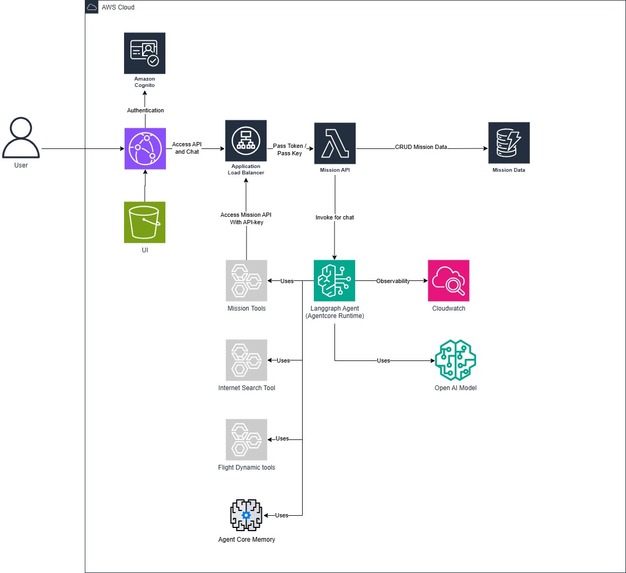
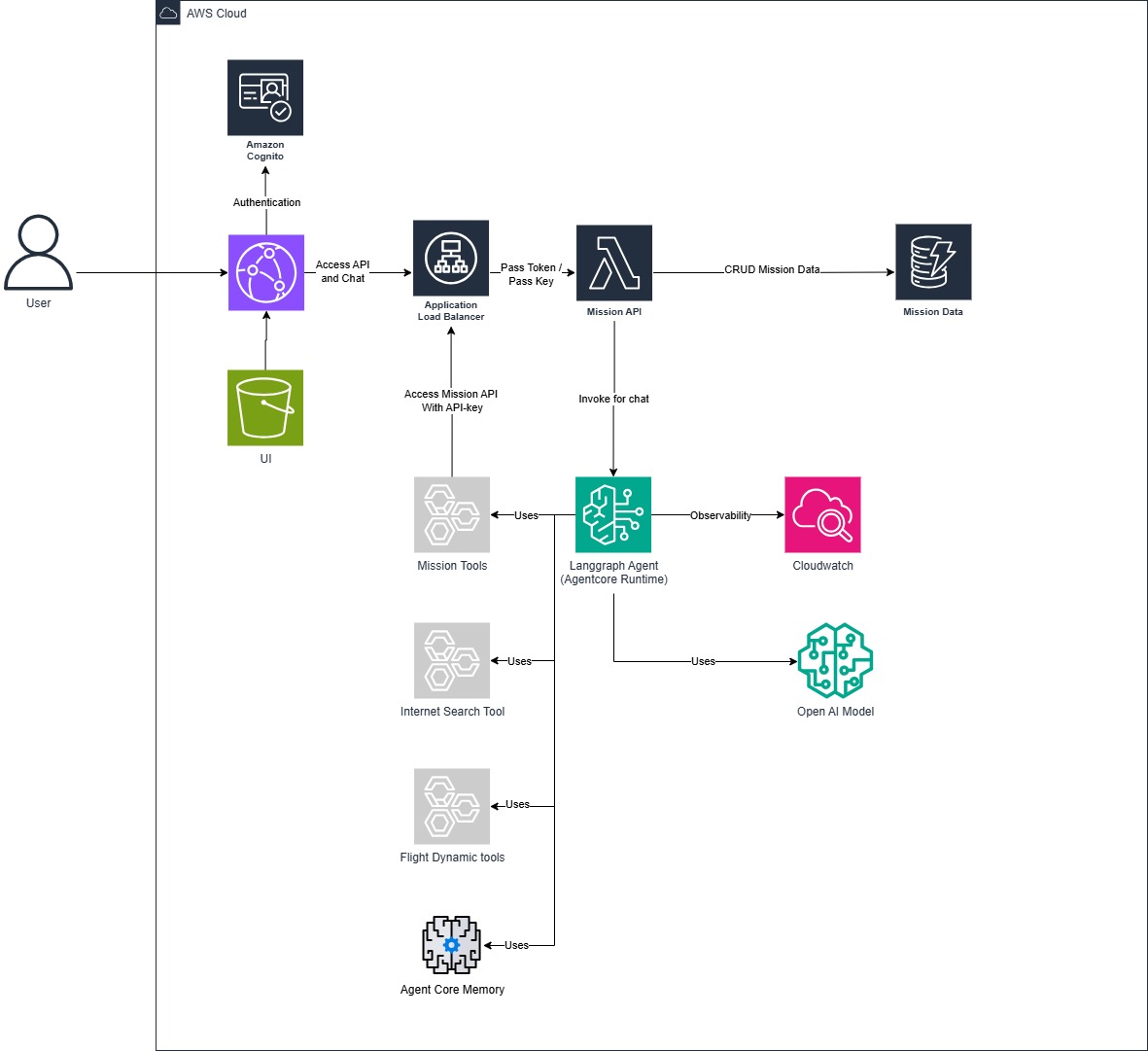
Architecture Diagram
Phase0: AI-Powered Space Mission Design
Inspiration
Having worked in the space industry for years, we've witnessed firsthand the critical bottlenecks in early mission design:
Slow, expert-dependent process - Mission design requires deep expertise that's scarce and expensive
Reinventing the wheel - Every project starts from scratch, repeating the same fundamental analyses
Quality requirements gap - New space companies struggle to write proper requirements, leading to operational failures.
With recent AI breakthroughs, solving these mission design challenges finally seemed within reach. This hackathon gave us the opportunity to build something that could transform how space missions are conceived and designed.
What it does
Phase0 is like Vercel V0 for space missions - an AI agent that guides users through the complete mission design process, acting as an expert in orbital dynamics, optics, power systems, and project budgets.
Space Mission Design translates high-level objectives into complete, feasible space system architectures. It defines spacecraft design, orbital parameters, payload configuration, ground operations, and launch strategy while balancing cost, schedule, performance, and risk constraints.
Our solution democratizes this expertise, making professional-grade mission design accessible to researchers, startups, and organizations without deep aerospace knowledge.
Key Capabilities:
Intelligent Requirements Generation - Transform simple mission descriptions into comprehensive technical requirements
Automated Design Solutions - Generate multiple spacecraft configurations with real components and validated performance
Mission Visualization - Interactive orbital mechanics simulation with satellite constellations and ground stations
Expert Validation - AI-powered requirement validation and design optimization
How we built it
Three Core Components:
- SMAD-Based Data Model Built on Space Mission Analysis and Design (SMAD) methodology from our industry experience, creating structured boundaries for the design process.
- LangGraph AI Agent Implemented with analyze → use tools → decide workflow, equipped with:
- Web search tools for latest spacecraft components and pricing
- Flight dynamics libraries for trusted orbital calculations
- Data model integration ensuring schema compliance
- Validation engines for requirement coherence
- React Application Modern interface allowing structured interaction with designs, real-time editing, and agent guidance for result refinement.
AWS Serverless Architecture
- Cognito authentication with JWT validation
- Lambda functions for AI agent processing
- DynamoDB for mission data storage
- S3 + CloudFront for static hosting
- Application Load Balancer for API routing
Challenges we ran into
Integration complexity - Combining the AI agent, SMAD model, and engineering calculation libraries required multiple architectural iterations.
SMAD model refinement - Capturing all key mission design elements and their relationships took several iterations to get right.
Engineering tool integration - Incorporating flight dynamics libraries and optical physics calculations while maintaining accuracy.
Agent coherence - Preventing the AI from producing inconsistent or invalid results required careful prompt engineering and validation layers.
Security Implementation - Working with different components and to add in security at each level was painful
Accomplishments that we're proud of
End-to-end concept validation - We proved AI agents can effectively use complex engineering tools to produce accurate, valuable results that save weeks of manual work.
Novel AI requirement validation - Developed a unique approach to validating mission requirements using AI reasoning.
Real engineering accuracy - The AI successfully performs orbital mechanics calculations, optical physics modeling, and component selection with meaningful precision.
Complete mission lifecycle - From concept description to validated design solutions with 3D visualization in minutes instead of weeks.
What we learned
AI tool utilization exceeded expectations - The agent demonstrated remarkable ability to determine appropriate calculations for flight dynamics and optical physics, generating genuinely useful results.
AWS ecosystem power - The serverless tools, especially around observability and scaling, handled the heavy lifting beautifully.
AI development acceleration - We extensively used AI assistants (Amazon Q, Claude) during development. The entire application was essentially written by AI, demonstrating the transformative potential of these tools.
Accuracy vs. speed tradeoff - Current tools may not have perfect precision, but the approach clearly has promise. More toolset development could dramatically increase AI agent value.
What's next for Phase0
Near-term improvements:
- Expert validation with Space Mission Analysis and Design professionals
- Enhanced interactive visualization with target area selection and ground station optimization
- Expanded mission data model for comprehensive design parameters
- Advanced Mission Analysis toolset with orbital mechanics, power budgeting, and cost functions
Long-term vision:
- Integration with real spacecraft component databases
- Mission risk assessment and reliability modeling
- Automated regulatory compliance checking
- Collaborative mission design workflows
- Integration with launch vehicle selection and mission operations planning
Phase0 transforms satellite mission planning from an expert-only, weeks-long process into an accessible, minutes-long AI-guided experience - democratizing space mission design for the next generation of space innovators.
Built With
- agent-core
- amazon-dynamodb
- amazon-q-developer
- amazon-web-services
- bedrock
- claude
- cloudwatch
- cognito
- lambda
- leaflet.js
- node.js
- openai
- react

Log in or sign up for Devpost to join the conversation.