-
-
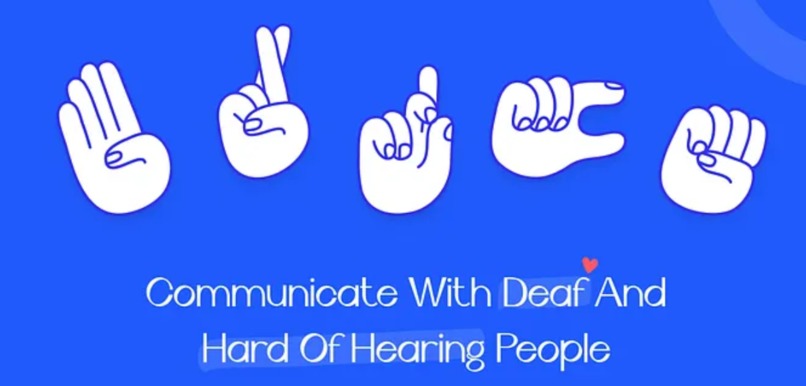
Sign Language
-
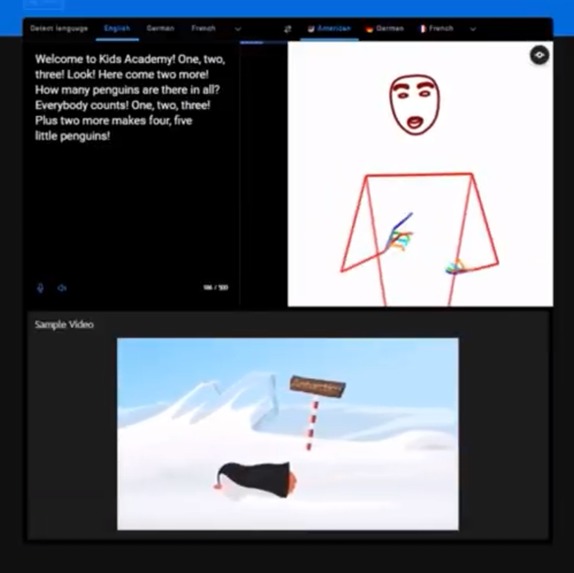
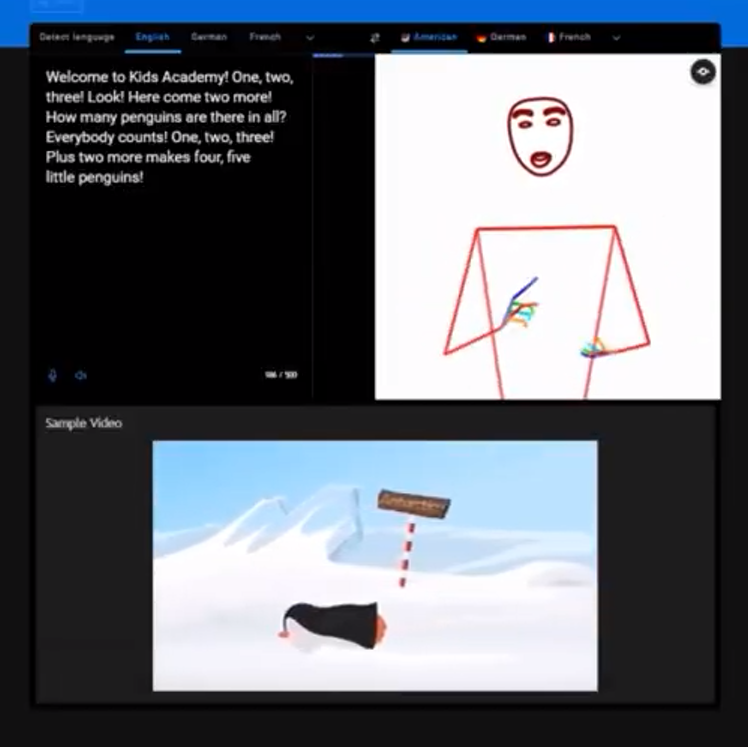
The deaf community can access sign language translations by uploading videos.
-
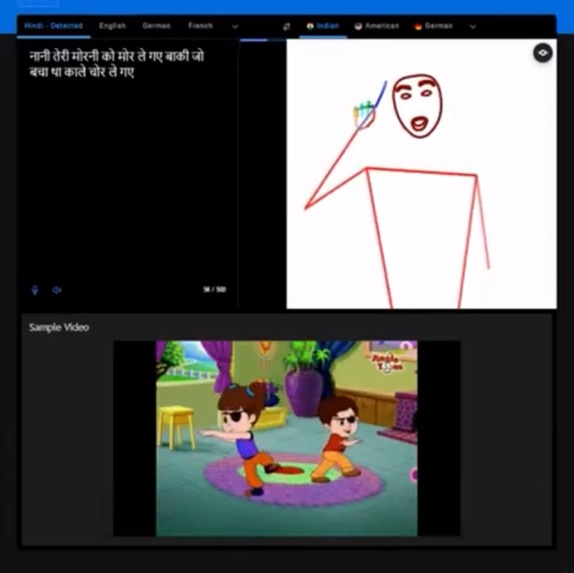
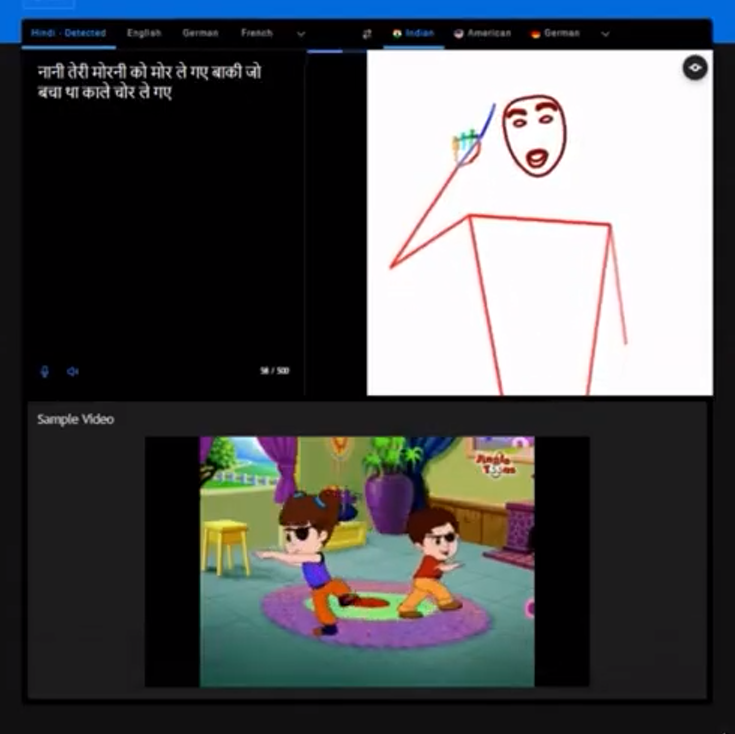
Sign language can be viewed in different regional variations, e.g., Hindi as shown in the picture.
-
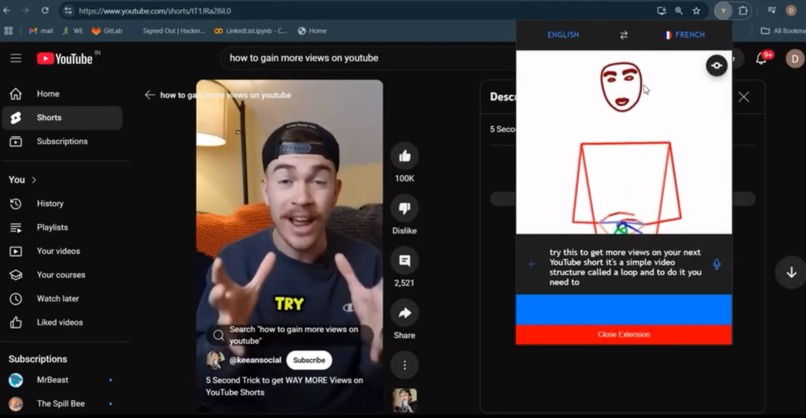
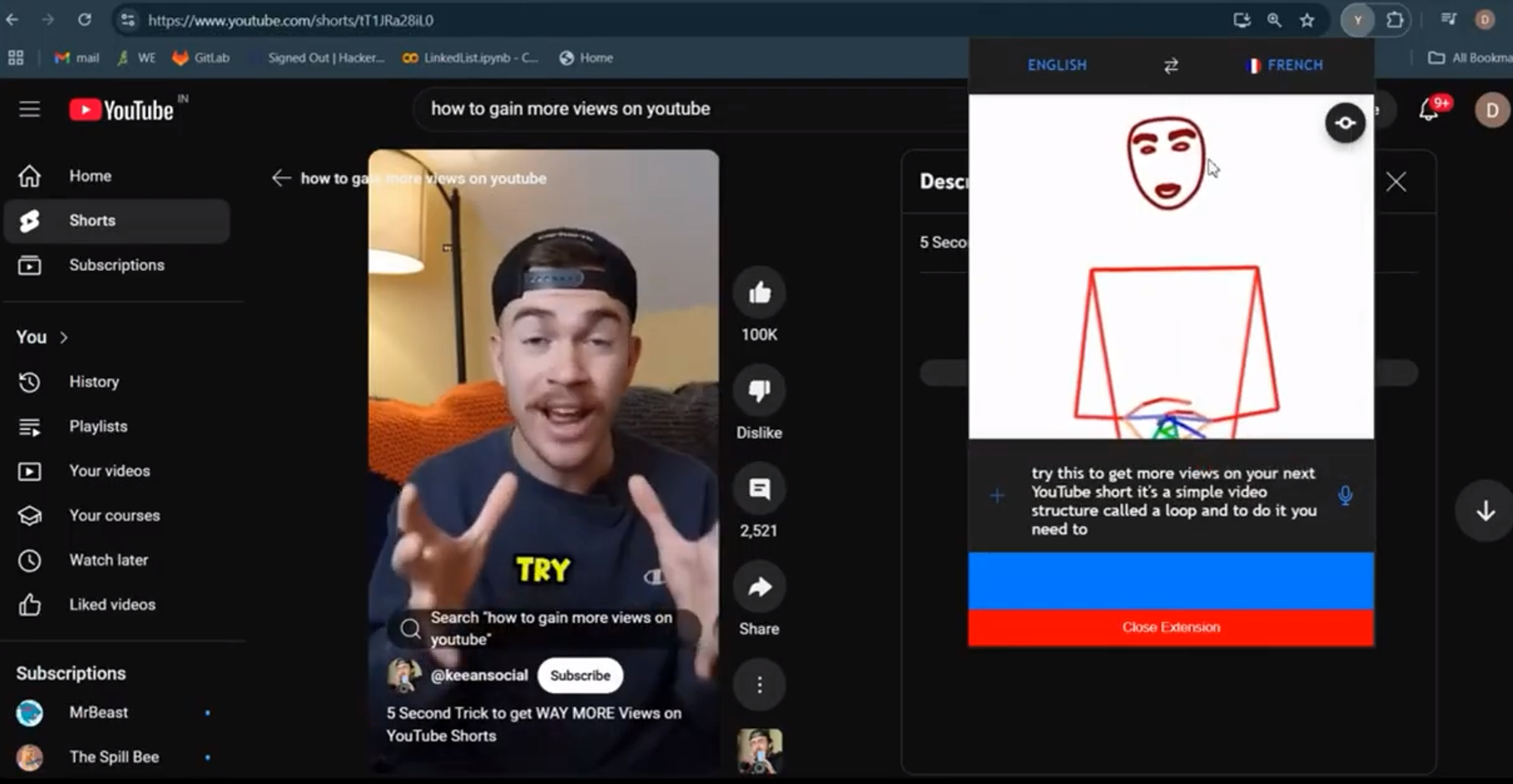
The extension feature can be used for any YouTube video.
Project Story: Swmaad – AI-Powered Sign Language Accessibility
Inspiration
The idea for Swmaad was inspired by the accessibility challenges faced by the deaf community. Captions alone fail to convey expressions, grammar, and cultural nuances essential for sign language communication. Additionally, sign languages vary by region—India alone has multiple sign languages for Hindi, Marathi, and Telugu. Recognizing this gap, we aimed to create a seamless solution that translates spoken content into sign language, making digital content more inclusive.
What It Does
Swmaad is an AI-driven web app and browser extension that translates any spoken language into the user’s preferred sign language using AI avatars or pre-recorded videos.
- Speech-to-Sign Translation: Converts speech into text and maps it to sign language gestures.
- Multilingual Support: Supports 43+ spoken languages and 66+ sign languages.
- Real-Time Sign Language Overlay: Works with YouTube and other video platforms for seamless translation.
- Web-Based Video Translation: Allows users to upload videos and receive sign language translations.
How We Built It
- Speech Recognition: Used OpenAI’s Whisper for multilingual speech-to-text conversion.
- Sign Language Mapping: Implemented a dictionary-based approach and SignWriting-based machine translation.
- AI Avatars & Pre-Recorded Videos: Integrated AI-generated sign avatars and existing sign language recordings.
- Cross-Platform Development: Built a browser extension for YouTube and a web platform for broader accessibility.
Challenges We Ran Into
- Sign Language Variability: Each region has unique sign languages, requiring extensive dataset training.
- Grammar & Expression Accuracy: Sign language has distinct grammar from spoken languages, making direct translation difficult.
- Real-Time Processing: Maintaining smooth and low-latency translation was technically challenging.
Accomplishments That We're Proud Of
- Successfully built a tool that enables the deaf community to access online video content in sign language.
- Implemented real-time sign language overlays with AI avatars.
- Overcame the challenge of multilingual speech-to-sign translation.
- Created a scalable solution that works across platforms and can be expanded globally.
What We Learned
- Accessibility requires more than just subtitles—expressions and cultural context are crucial.
- AI-driven solutions need continuous training and community feedback for accuracy.
- Collaborating with the deaf community is essential for building an effective and user-friendly product.
What's Next for Swmaad
- More Sign Language Support: Expanding to include additional regional sign languages.
- Improved AI Accuracy: Enhancing sign language fluency and expressions in AI avatars.
- Mobile App Development: Extending accessibility to mobile users.
- Integration with Streaming Services: Bringing real-time sign language translation to platforms like Netflix and Prime Video.
- Community Engagement: Partnering with organizations supporting deaf education and accessibility.
Built With
Swmaad was built using a combination of cutting-edge technologies across various domains.
Technical Execution
- Frontend: HTML, CSS, JavaScript, React, Next.js, TypeScript
- Backend: Node.js, Express, Flask, WebRTC, Socket.io
- Database: MongoDB, Firebase
- AI/ML: TensorFlow, PyTorch, Keras, Scikit-learn, Hugging Face Transformers, Mediapipe, OpenCV, spaCy
- Cloud Services: Firebase, MLflow, AWS
- Authentication: Firebase
- Visualization: Matplotlib
- DevOps: Docker, GitHub Actions
- Libraries and Frameworks: TensorFlow, PyTorch, Keras, OpenCV, scikit-learn, Mediapipe
- Algorithms: CNN, RNN, Gesture Recognition Algorithms
Swmaad is a step toward breaking communication barriers and making digital content accessible to everyone! 🚀
Built With
- advanced-cnn
- along-with-webrtc-and-socket.io-for-real-time-communication.-the-database-is-managed-using-mongodb-and-firebase-to-store-and-process-large-volumes-of-user-data-efficiently.-for-ai/ml-capabilities
- and-aws-enhance-scalability-and-performance.-firebase-is-also-used-for-authentication
- and-flask
- and-gesture-recognition-algorithms-power-the-ai-driven-sign-language-translation
- and-spacy-to-enable-accurate-sign-language-detection-and-translation.-cloud-services-like-firebase
- and-typescript-for-a-smooth-and-responsive-user-experience.-the-backend-leverages-node.js
- aws-authentication:-firebase-visualization:-matplotlib-devops:-docker
- css
- ensuring-secure-user-access.-to-visualize-data-and-analytics
- express.js
- firebase-ai/ml:-tensorflow
- flask
- frontend:-html
- gesture
- github-actions-libraries-&-frameworks:-tensorflow
- hugging-face-transformers
- javascript
- keras
- matplotlib-is-implemented.-the-project-follows-devops-best-practices-with-docker-and-github-actions-for-streamlined-deployment.-additionally
- mediapipe
- mediapipe-algorithms:-cnn
- mlflow
- next.js
- opencv
- pytorch
- react
- recognition
- rnn
- scikit-learn
- socket.io-database:-mongodb
- spacy-cloud-services:-firebase
- typescript-backend:-node.js
- we-utilize-tensorflow
- webrtc


Log in or sign up for Devpost to join the conversation.