-
-
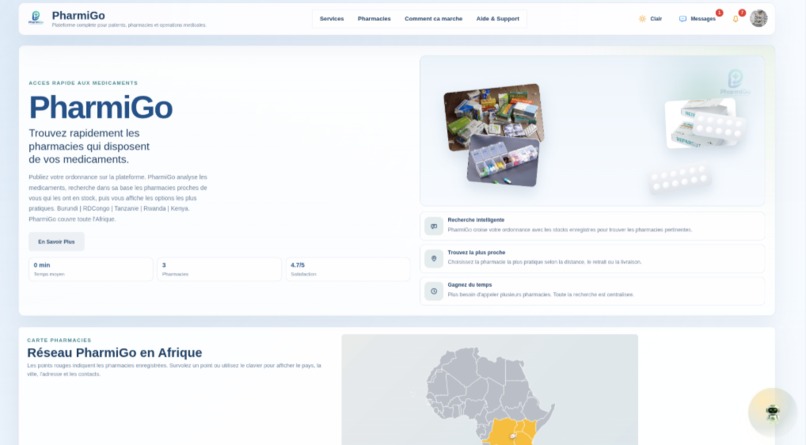
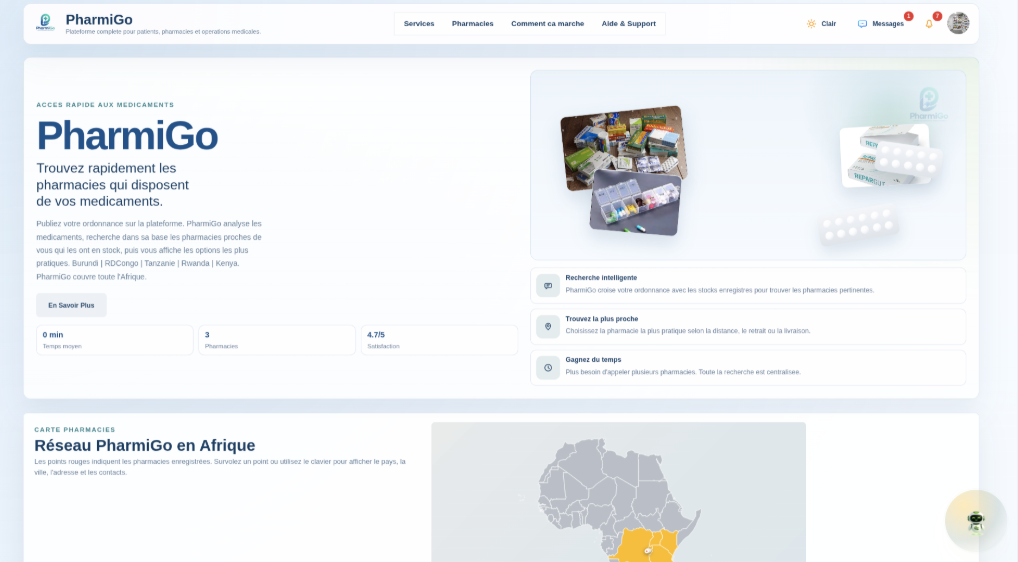
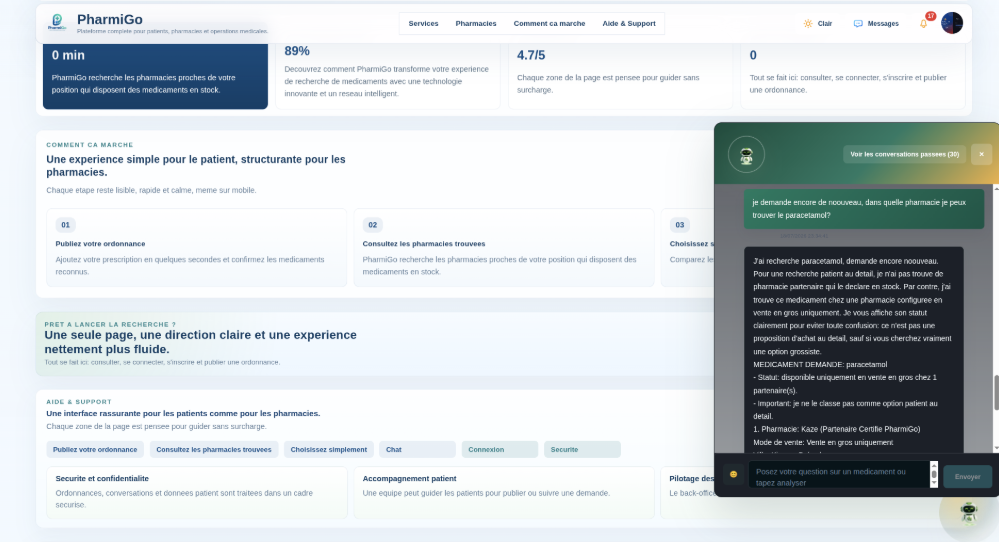
Home Page
-
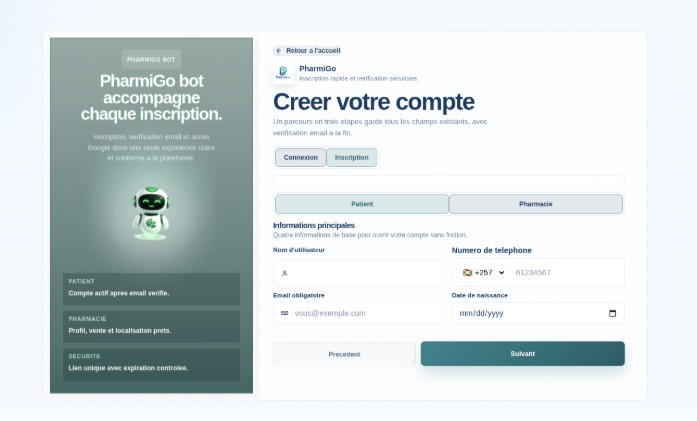
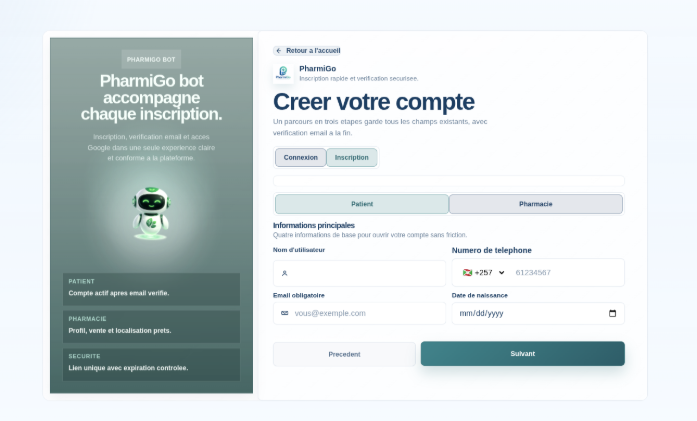
SignUp
-
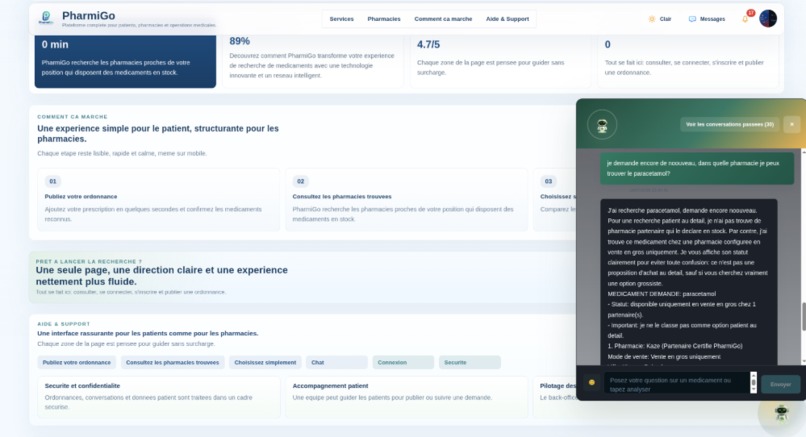
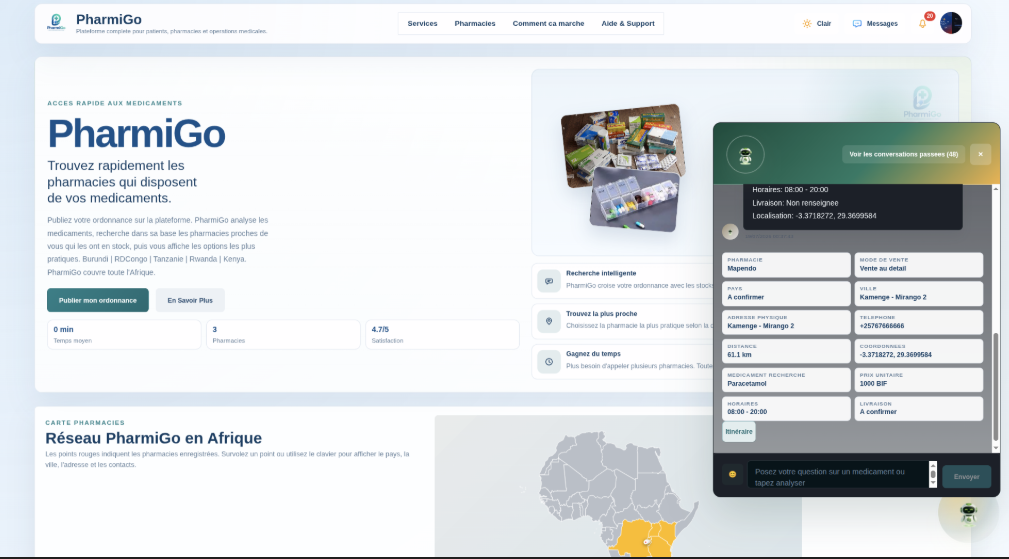
AI conversation
-
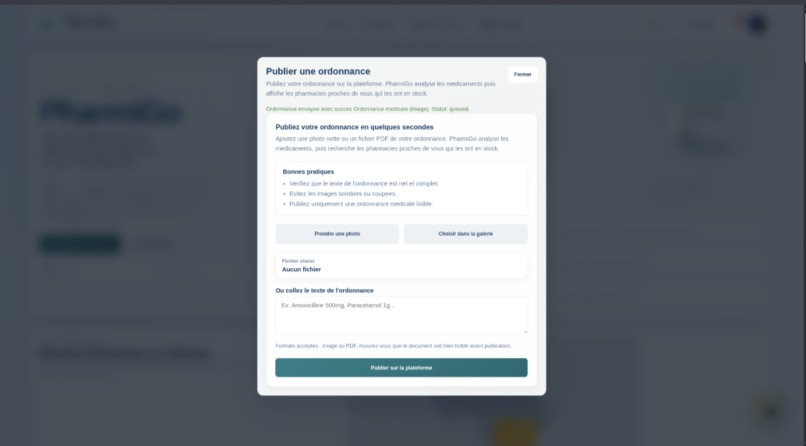
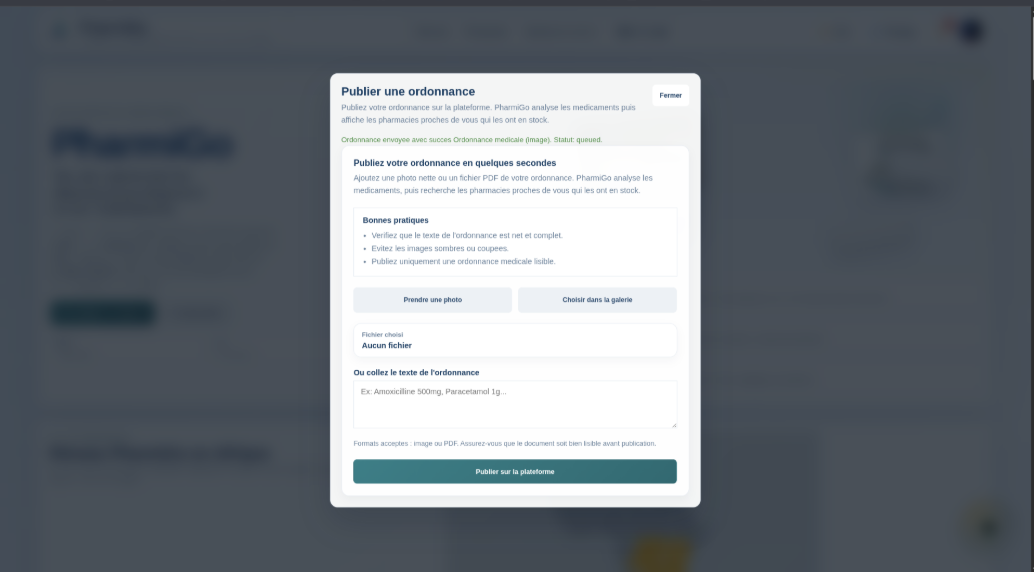
Prescription upload form
-
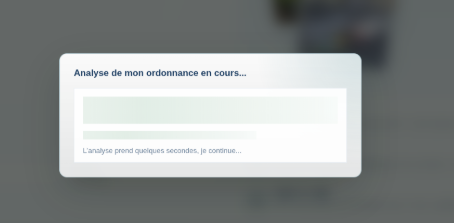
Prescription analyzing
-
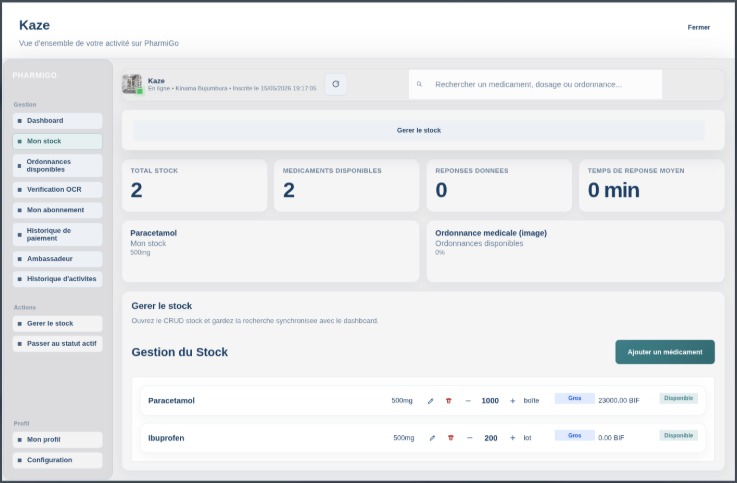
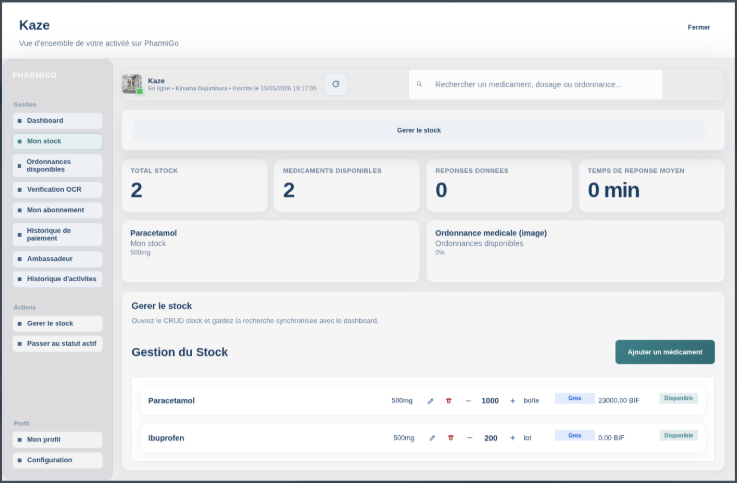
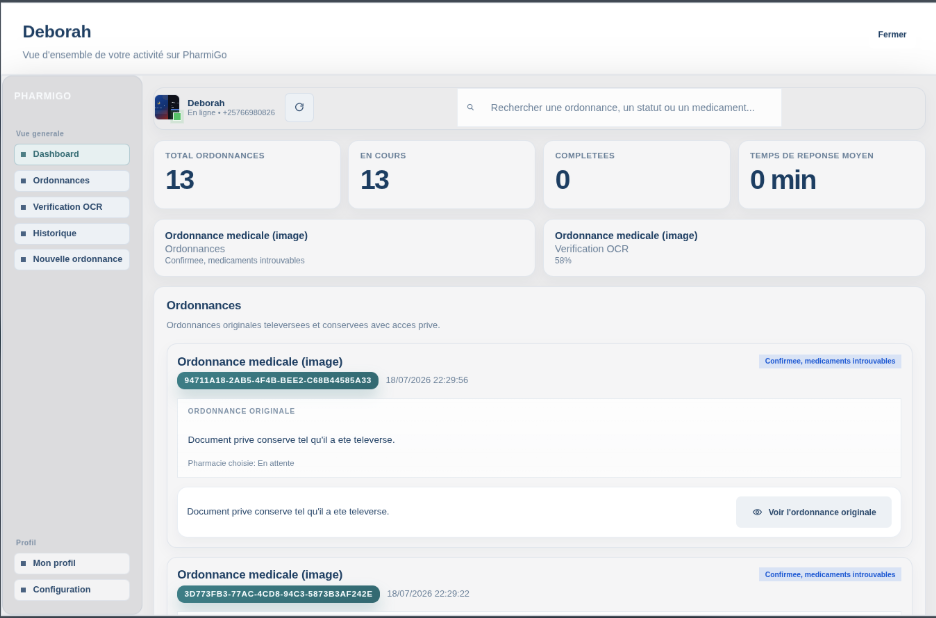
Pharmacy Dashboard
-
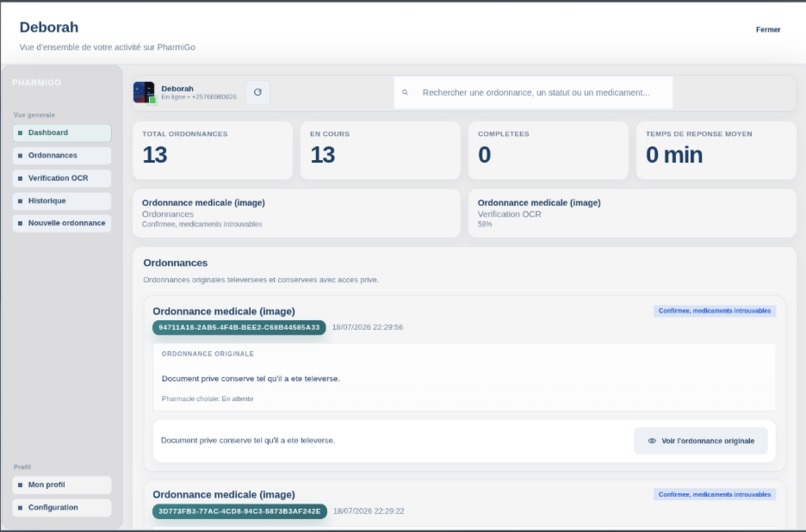
Patient Dashboard
-
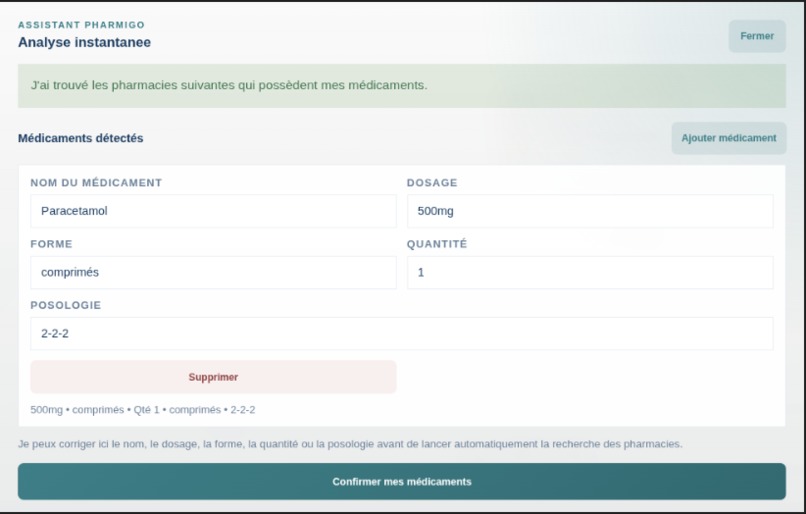
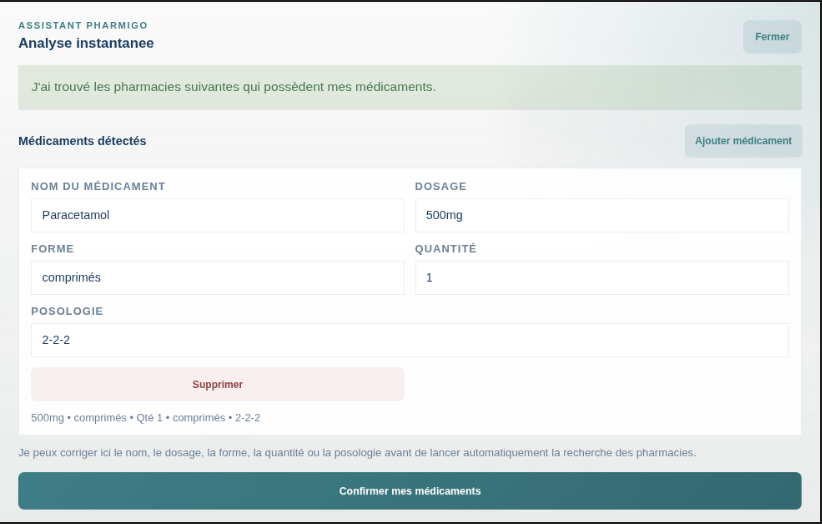
Alysing result to confirm before displaying pharmacies
-
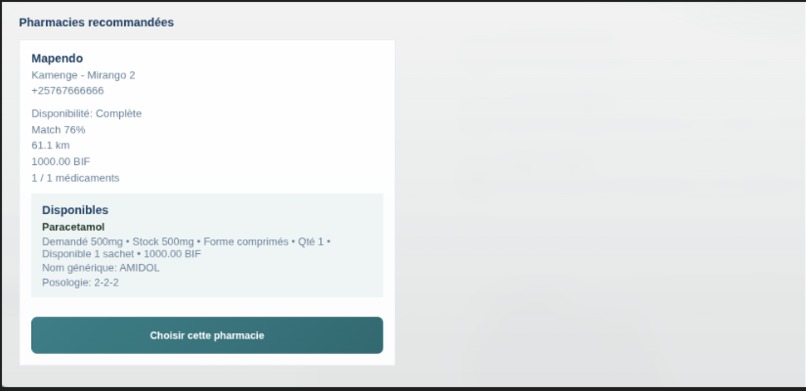
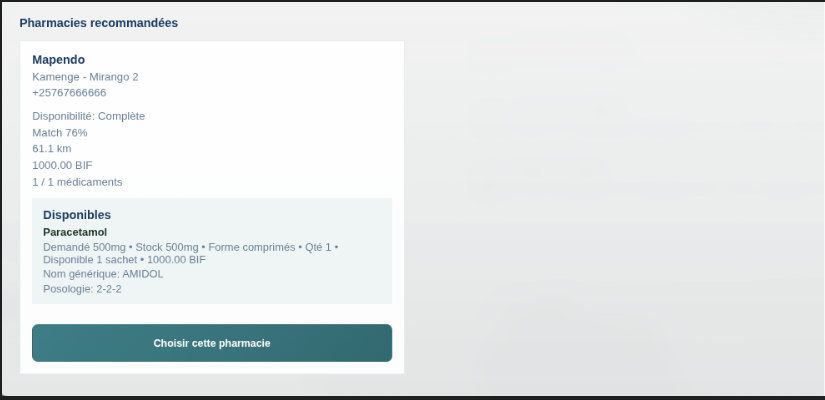
Pharmacies displaying after medicines confirmation
-
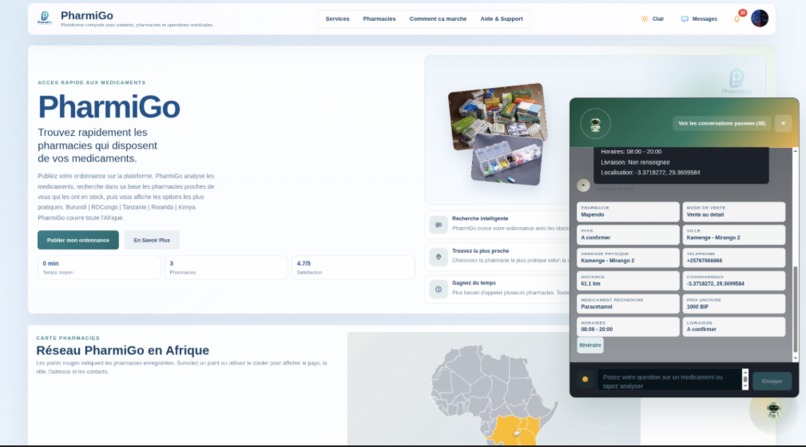
From AI chat, this is the result for medecines research
-
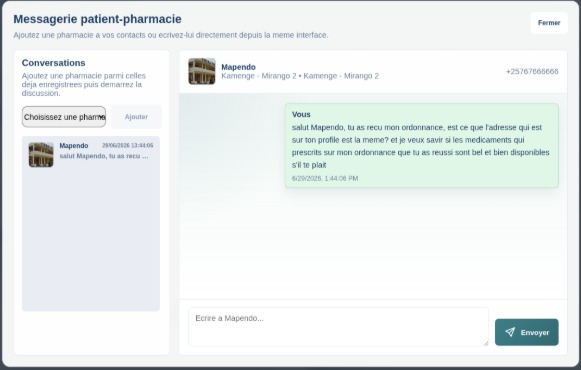
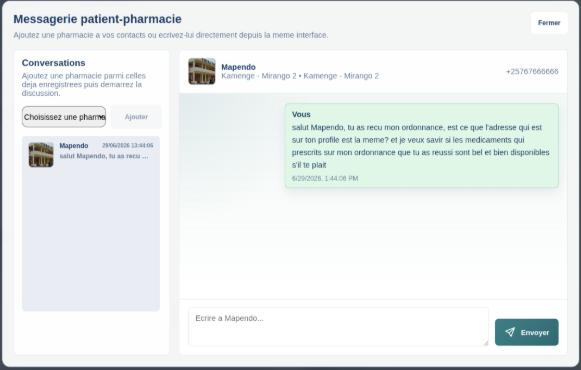
Pharmacy can chat with patient or with an other pharmacy
-
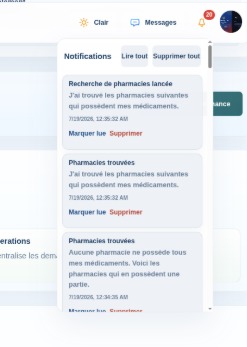
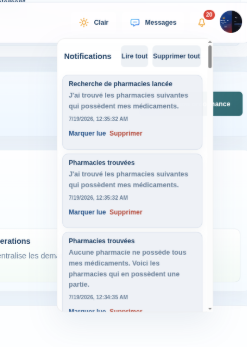
Notification Realy time
-
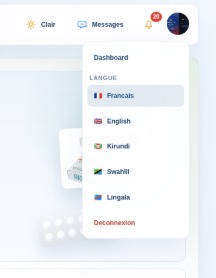
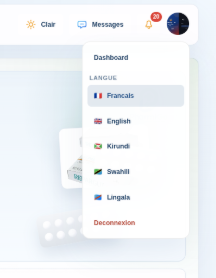
Multilanguage platform
-
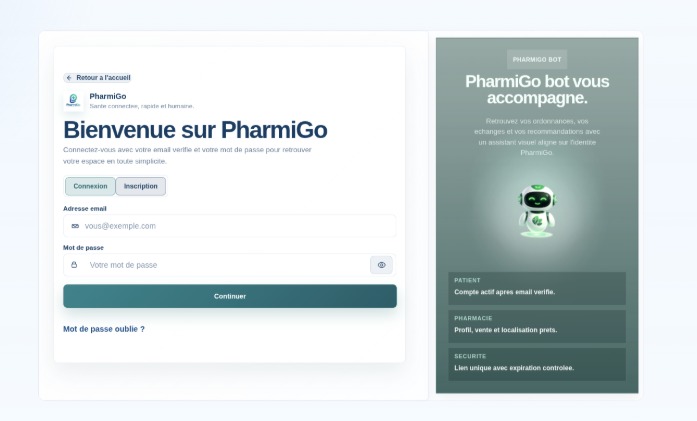
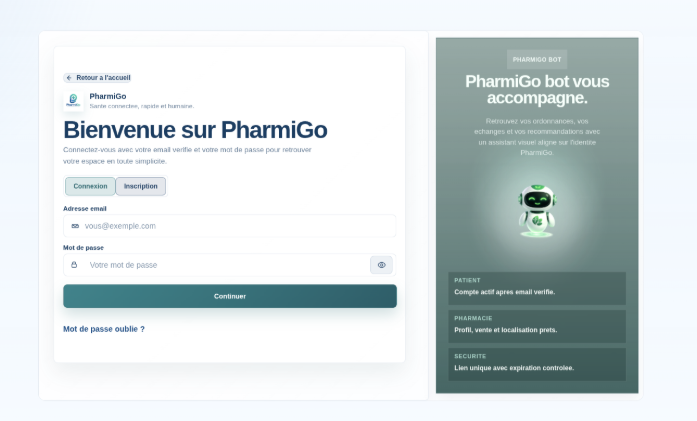
Login Page
PharmiGo
Because a patient should devote their energy to healing, not to searching for their medication
PharmiGo - Before taking two steps, check PharmiGo first.
The story that gave birth to PharmiGo
The idea for PharmiGo was not born in a classroom, during a brainstorming session, or as the result of a market study. It was born from a personal experience, during a day that I will probably never forget.
On March 7, 2026, at around 8:00 a.m., I accompanied my wife to a health center in Bujumbura. For several days, she had been suffering from severe ear pain. After examining her, the healthcare professional prescribed a medication: DISOWAX. We then returned home, hoping that I would quickly find the medication so that she could begin her treatment without delay. I thought it would only take me a few minutes.
I was wrong.
At around 10:00 a.m., I began visiting the pharmacies in our neighborhood, Kinama.
The first pharmacy did not have the medication. Neither did the second. Then a third. Then a fourth. Each time, the answer was practically the same:
“Sorry, we do not have it. Perhaps you should try another pharmacy.”
I then went to the neighboring district of Kamenge.
Still nothing. I then went as far as Kigobe. Still nothing.
The hours passed.
I walked, took motorcycle taxis, spent money on transportation, and lost valuable time, while my wife remained at home in pain, waiting for a treatment that she genuinely needed.
At that point, I no longer even knew where to look. I had no way of knowing whether the medication was available somewhere in the city or whether I was simply wasting my time.
At around 3:00 p.m., after nearly five hours of searching, my phone finally rang.
It was a pharmacist friend. A few hours earlier, I had sent him a photo of the prescription so that he could share it in a WhatsApp group bringing together several pharmacists in Bujumbura.
A pharmacy had just responded.
It did have DISOWAX in stock. It was located on 14th Avenue, in the Kamenge district. I immediately took a motorcycle taxi to get there. A few minutes later, I was finally holding the medication in my hands.
I was relieved.
But as I returned home, one question kept coming back to me:
Why had I been forced to spend nearly five hours searching for a medication that had been available from the beginning? It was at that moment that I understood that the real problem was not what I had initially believed.
The problem was not the lack of pharmacies. The problem was not the lack of medications either. The real problem was the lack of information.
The medication existed. A pharmacy had it in stock. But there was no simple way for a patient to know where it was available.
This experience also helped me understand another serious consequence of this lack of information.
When a patient cannot quickly find the medication they have been prescribed, they may eventually give up searching after several hours of effort.
Some patients then postpone their treatment. Others buy a different medication, believing that it will produce the same effect. Still others seek advice from friends or relatives or decide to self-medicate. Self-medication can lead to the use of inappropriate treatments, delay recovery, cause medical complications, and, in some cases, put lives at risk. I then understood that solving the problem of access to information about medication availability also meant contributing to the fight against self-medication.
That day, I made a decision.
I no longer wanted a patient who was already weakened by illness to be forced to travel across an entire city simply to find out where to buy their treatment.
Because a sick person already has one battle to fight against their illness. They should not have to fight a second battle against the lack of information.
That was the day PharmiGo was born.
How PharmiGo addresses this problem
PharmiGo allows patients to know where to find the medications they need before they even leave their homes. Through geolocation, stock information updated by partner pharmacies, and artificial intelligence, the platform can notably:
- analyze a medical prescription;
- automatically recognize prescribed medications;
- search for the nearest pharmacies that actually have those medications available;
- display medication prices when that information is available;
- provide the pharmacies’ full addresses;
- provide their telephone numbers;
- suggest a route to the selected pharmacy.
Therefore, instead of visiting five or ten pharmacies without any guarantee of finding the required treatment, the patient can immediately know where to go.
They save time. They save money. They avoid unnecessary travel. They preserve their energy. Most importantly, they can begin their treatment much more quickly. By reducing the time required to find a medication, PharmiGo also helps limit the risks associated with self-medication. When a patient quickly finds the medication they have been prescribed, they are less likely to replace their treatment with another product recommended by a relative or purchased without medical advice.
PharmiGo’s objective is therefore not only to save time.
The platform also aims to improve access to healthcare, encourage adherence to medical prescriptions, and contribute to the safer use of medications.
Why artificial intelligence is essential
Artificial intelligence enables PharmiGo to go far beyond being a simple pharmacy directory. In particular, it helps the platform to:
- automatically analyze handwritten or printed prescriptions;
- identify prescribed medications;
- correct typing errors in searches;
- recognize the brand names and generic names of medications;
- understand searches expressed in natural language;
- assist patients in several languages;
- recommend the nearest pharmacies based on the patient’s location and the actual availability of medications.
These features make the search process faster, more reliable, and much more accessible, including for users who do not know the exact spelling or full name of the medication they are looking for. Artificial intelligence therefore helps simplify the patient’s journey, from reading the prescription to identifying the pharmacy where the treatment is available.
Why I created PharmiGo
I did not create PharmiGo as a simple academic exercise. I did not create it solely for the purpose of developing a new business. I created it because I personally experienced this problem. I experienced the fatigue, uncertainty, unnecessary expenses, and helplessness that a person can feel when searching for medication for a sick loved one without knowing where to find it.
I am convinced that thousands of families still experience the same situation every day.
If PharmiGo can prevent even one person from spending five hours searching for a medication when it is already available somewhere, the platform will already have accomplished an essential part of its mission.
But my ambition is greater.
I want PharmiGo to become a reliable, accessible, and useful solution for all patients who need to quickly locate prescribed medications.
Where does PharmiGo stand today?
Today, PharmiGo is fully functional and continues to evolve. The platform notably includes:
- intelligent prescription analysis;
- medication search;
- geolocation of patients and pharmacies;
- management of partner pharmacies;
- consultation of medication availability;
- several features powered by artificial intelligence.
The next objective is to gradually connect pharmacies across Burundi so that patients can benefit from reliable information that is regularly updated and, eventually, available in real time. This gradual connection of pharmacies will make it possible to build a digital network capable of improving the flow of information between pharmaceutical establishments and patients.
Why participate in the OpenAI hackathon?
The OpenAI hackathon represents a tremendous opportunity to further improve PharmiGo through artificial intelligence technologies. My objective is notably to strengthen:
- intelligent prescription analysis;
- recognition of prescribed medications;
- natural language understanding;
- correction of inaccurate searches;
- multilingual assistance;
- the relevance of recommendations;
- the overall patient experience.
OpenAI technologies can enable PharmiGo to better understand the needs expressed by patients, even when their requests are incomplete, misspelled, or formulated in different languages. They can also help make prescription analysis more accurate and the assistance provided to patients more natural, simpler, and more accessible.
Beyond the competition, my goal is to make PharmiGo a solution capable of helping thousands of people in Burundi and, eventually, millions of other patients across Africa.
Our mission
“A patient should not have to spend their energy searching for medication. All their energy should be devoted to healing. By facilitating access to prescribed medications, we also contribute to reducing self-medication and improving access to healthcare.”
It is this conviction that gave birth to PharmiGo. And it is this same conviction that continues to guide every feature I develop today.
PharmiGo does not only help patients find their medications.
The platform helps them begin their treatment more quickly, avoid unnecessary travel, reduce transportation expenses, limit the risks of self-medication, and devote their energy to what truly matters: their recovery.
PharmiGo – Before you travel, check PharmiGo first.
Built With
- css
- django
- dockerfile
- drf
- html
- javascript
- python
- react-native

Log in or sign up for Devpost to join the conversation.