Inspiration
PharmAsist Software was inspired by my 14 years of experience working as a pharmacist. During that time, I repeatedly encountered operational challenges: ordering medicines from suppliers, locating products quickly, recording out-of-stock items, monitoring expiration dates, reconciling receiving records, and understanding the pharmacy’s overall business performance. I wanted to build a system that could connect these fragmented workflows, reduce repetitive work, and help pharmacists make safer and more informed decisions.
What it does
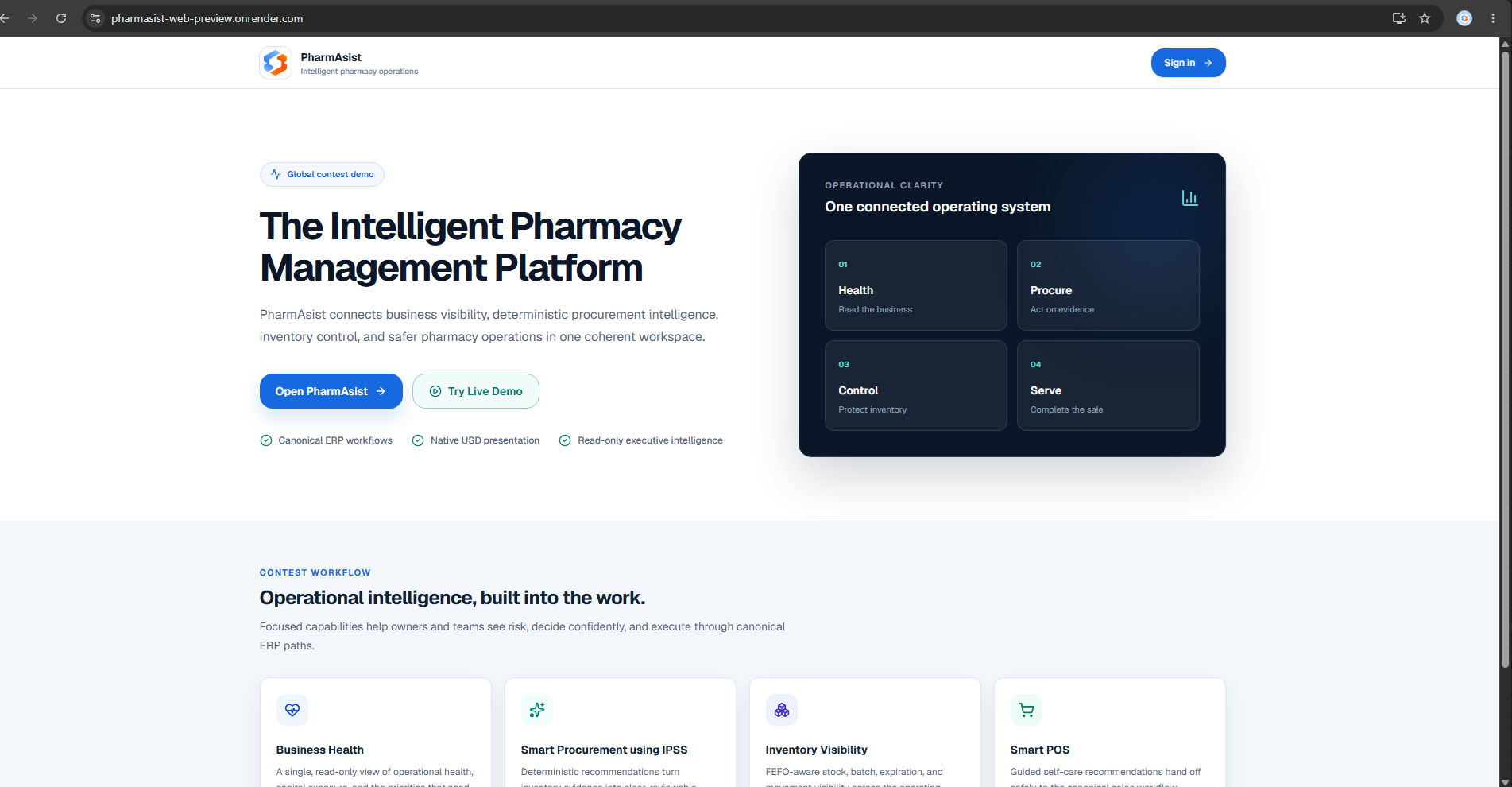
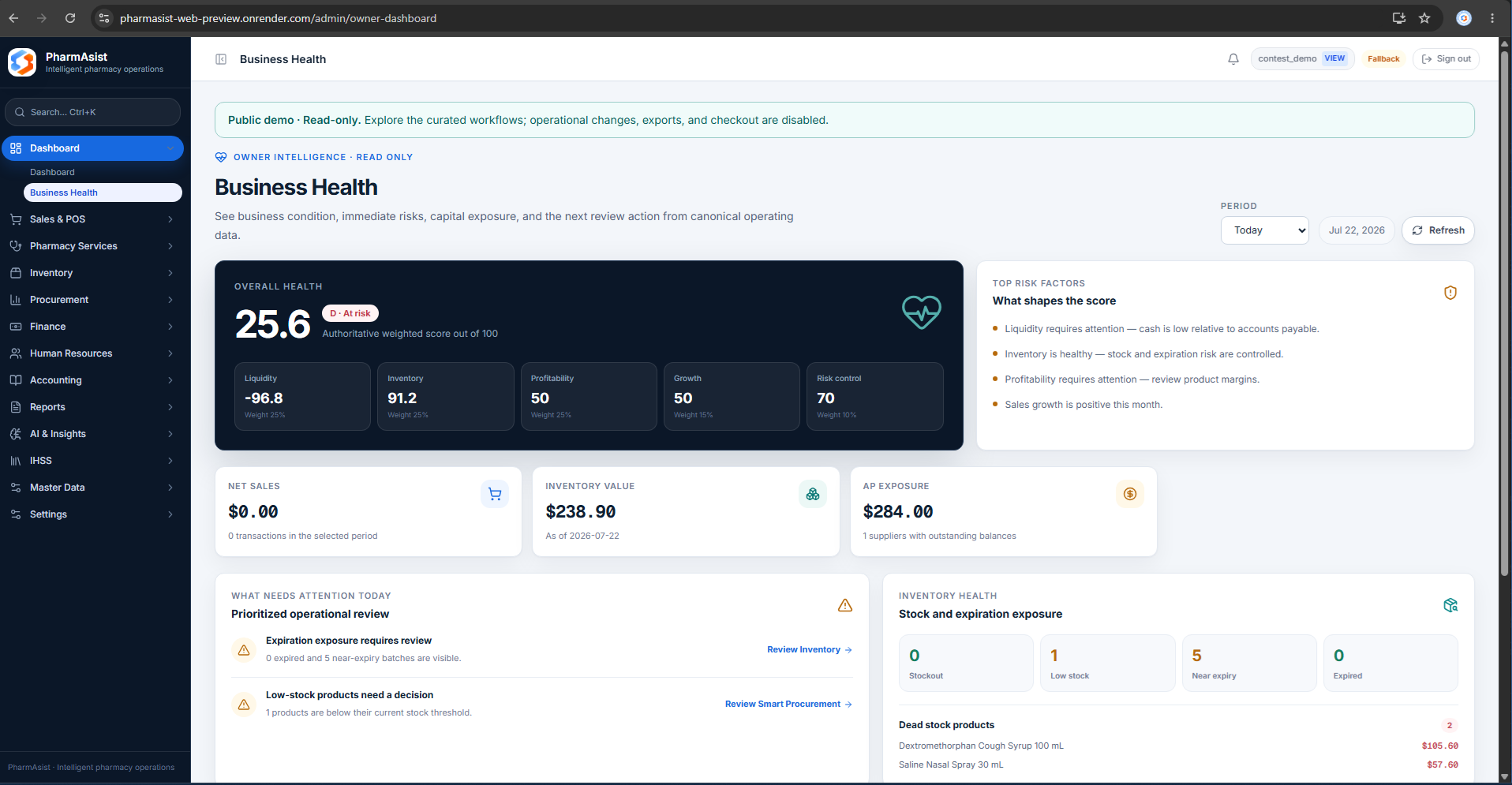
PharmAsist is an intelligent pharmacy operations platform connecting:
- Business health and operational dashboards
- Inventory, batches, expiration dates, and stock movement
- Deterministic procurement planning and supplier recommendations
- Purchase orders, goods receiving, returns, and supplier payables
- POS, sales history, customers, prescriptions, and receipts
- Finance, accounting, expenses, journals, and reporting
- Human resources, attendance, and payroll
- Pharmacy knowledge and clinical-safety decision support Farmasist is the explanatory AI layer. It helps users understand information and recommendations but never executes transactions or replaces pharmacist judgment. The public contest environment is intentionally read-only. Visitors can explore curated workflows, while mutations, exports, payments, downloads, and checkout remain blocked.
How we built it
Codex and GPT‑5.6 supported architecture review, implementation, security analysis, testing, CI troubleshooting, and deployment verification. Codex identified risks involving restored data, unrelated payroll and payable records, authentication tokens, cookie security, and distributed rate limiting. It also helped validate deterministic fictional data, idempotent seeding, authorization boundaries, and public-demo mutation protection. Honestly, I used also Claude Code to fix some bug and architecture.
Challenges we ran into
The greatest challenge was creating a realistic public demo without weakening security or modifying unrelated restored data. We had to ensure that demo data remained deterministic and idempotent, financial journals stayed balanced, unknown records were untouched, public users could perform curated reads but no mutations, and authentication remained secure across the complete deployment.
Accomplishments that we're proud of
We created a coherent pharmacy operations demo covering major business and clinical-support domains while maintaining strict public-access controls. The project includes automated backend, PostgreSQL, frontend, dependency, identity, and security validation. Its representative fictional dataset can be seeded repeatedly without duplicating core records.
What we learned
We learned that a strong application is not only defined by visible features. Data isolation, migration safety, repeatable seeding, authorization, dependency security, and deployment verification are equally important. We also learned that Codex is most valuable as an engineering collaborator that can challenge assumptions, identify edge cases, and help verify the complete system.
What's next for PharmAsist
Next, we plan to expand the interactive decision-support workflows, deepen procurement and clinical intelligence, introduce dedicated real-world pilot infrastructure, and prepare the platform for regulated pharmacy integrations. And then i will use this software for real using in the my own Pharmacy
Built With
- claude
- code
- docker
- github-actions
- gpt-5.6
- laravel
- next.js
- openai-codex
- php
- postgresql
- render
- tailwind
- typescript

Log in or sign up for Devpost to join the conversation.