-
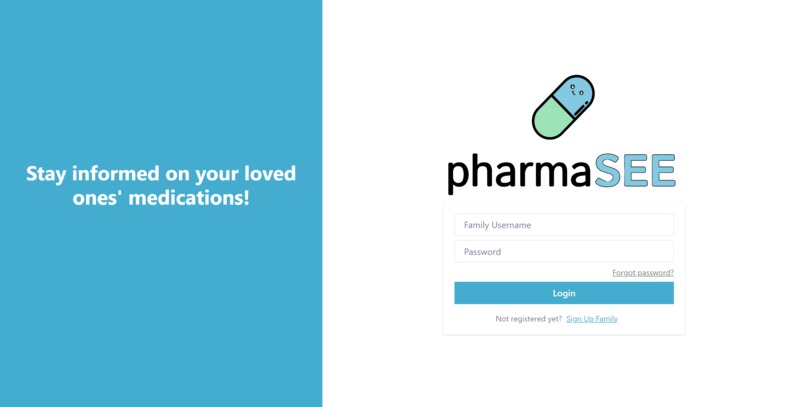
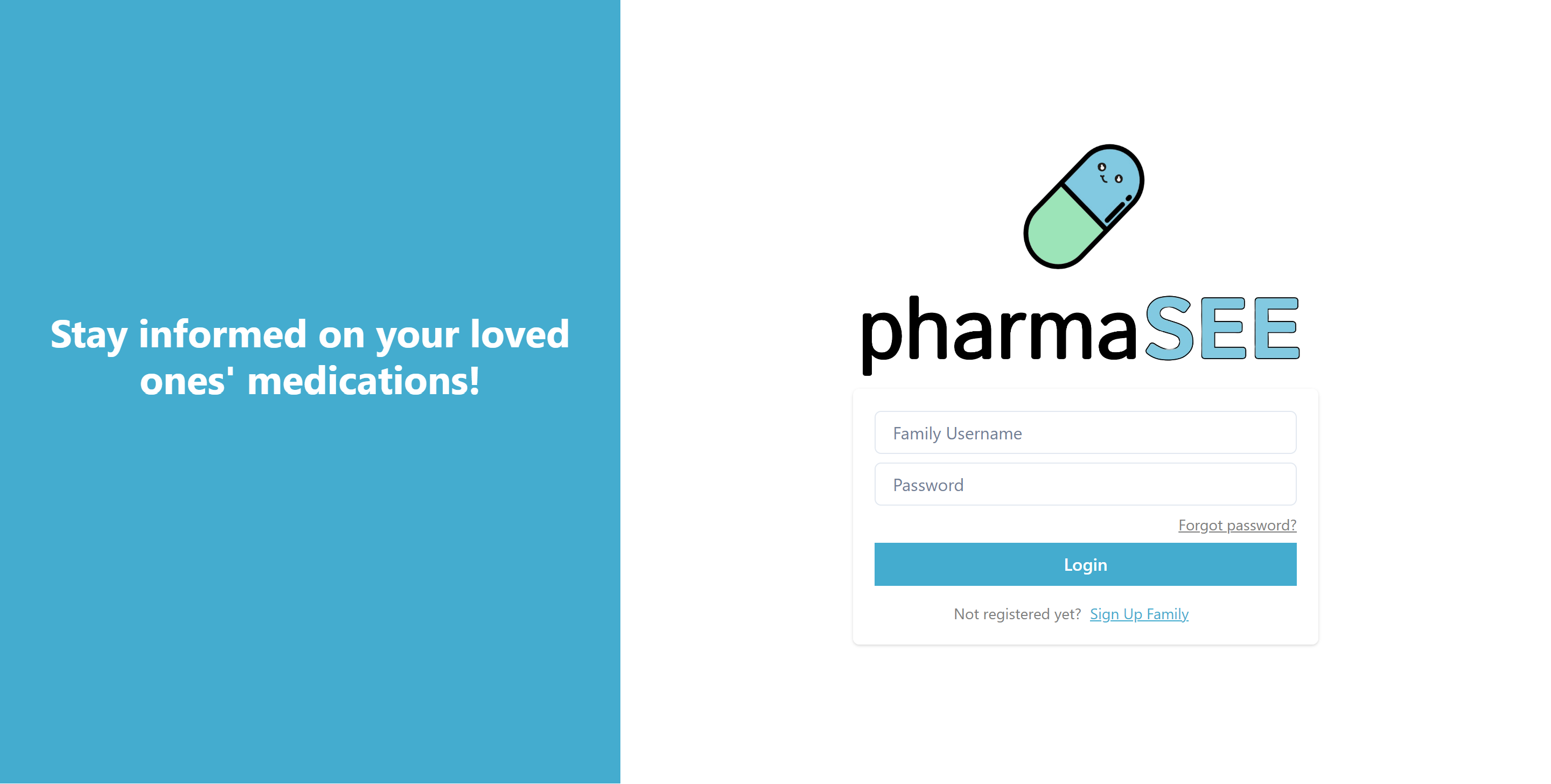
Login Page
-
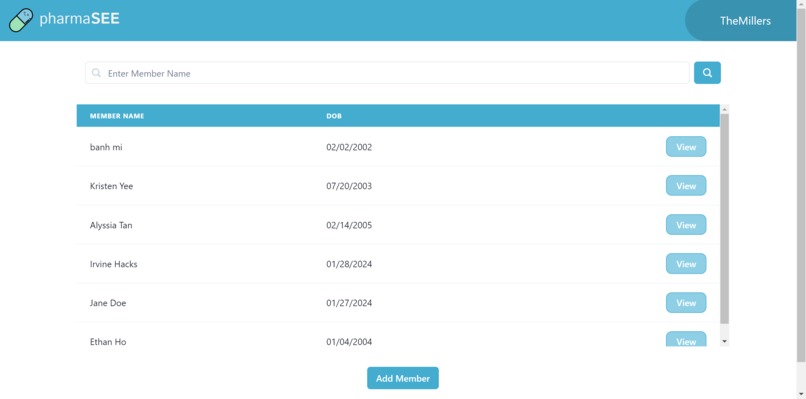
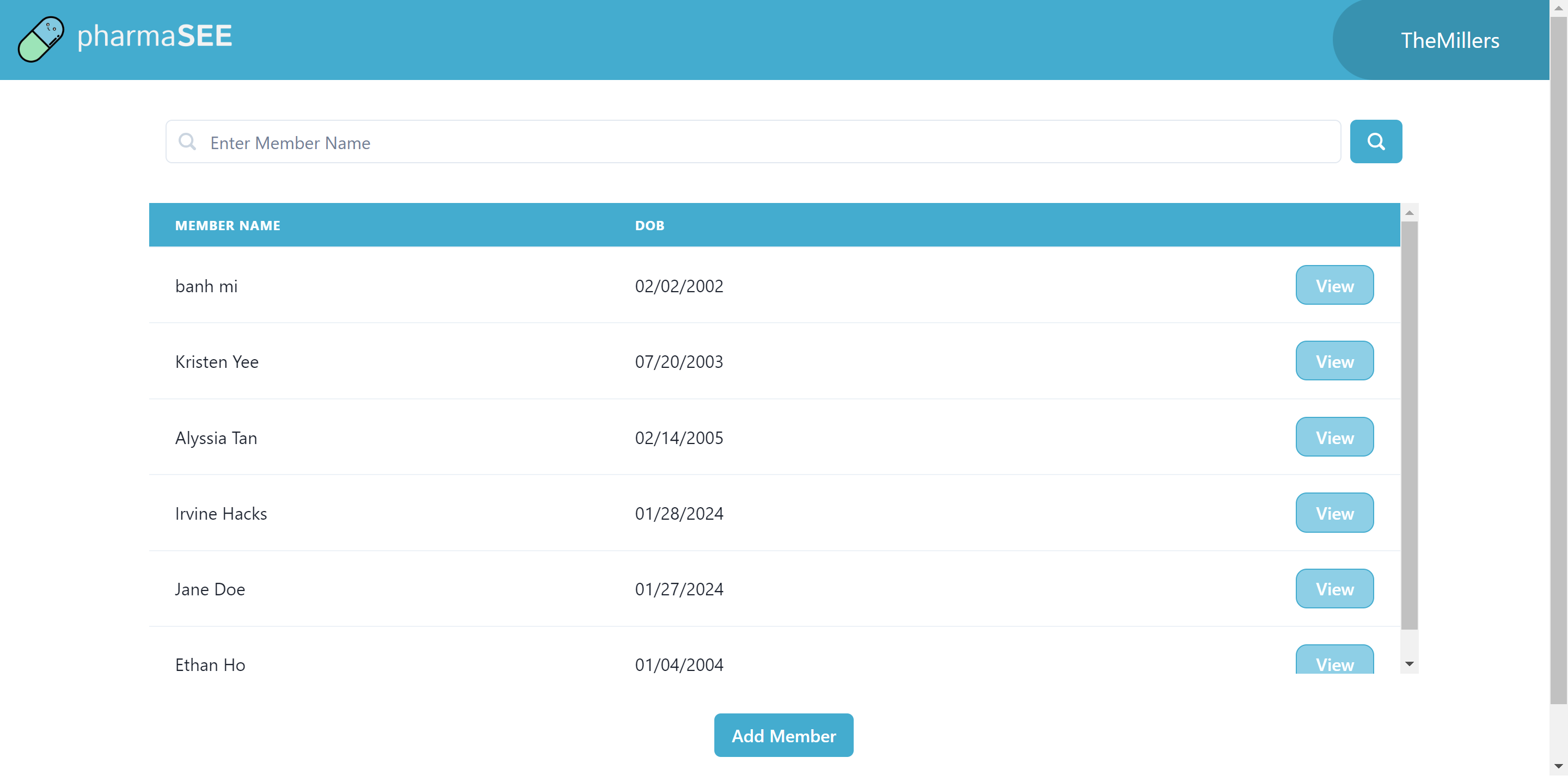
Group Dashboard
-
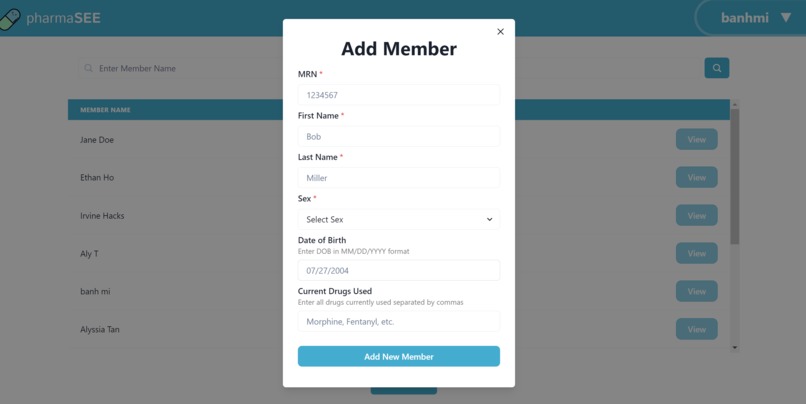
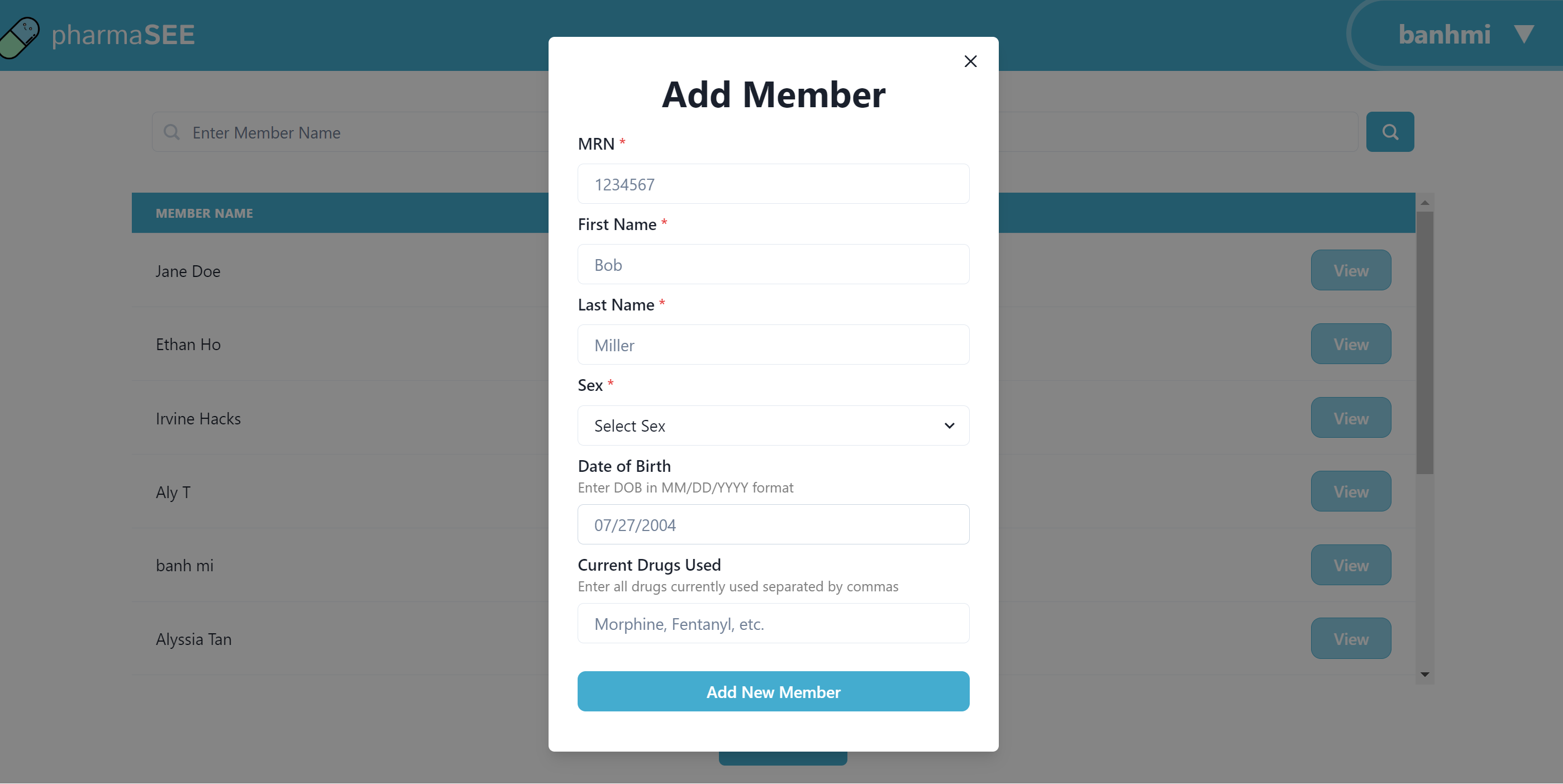
Add new group member
-
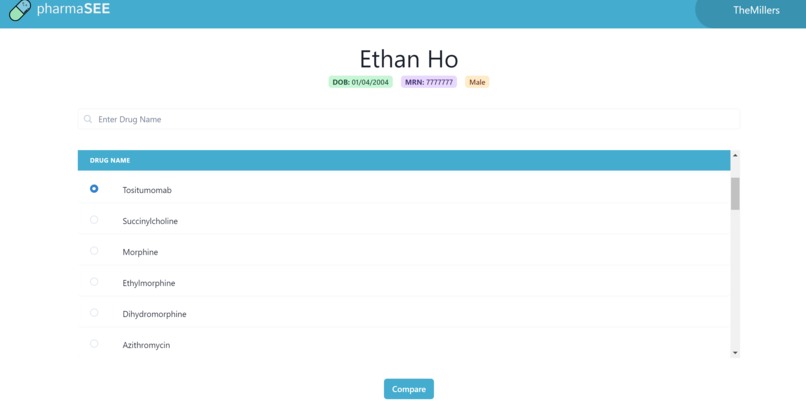
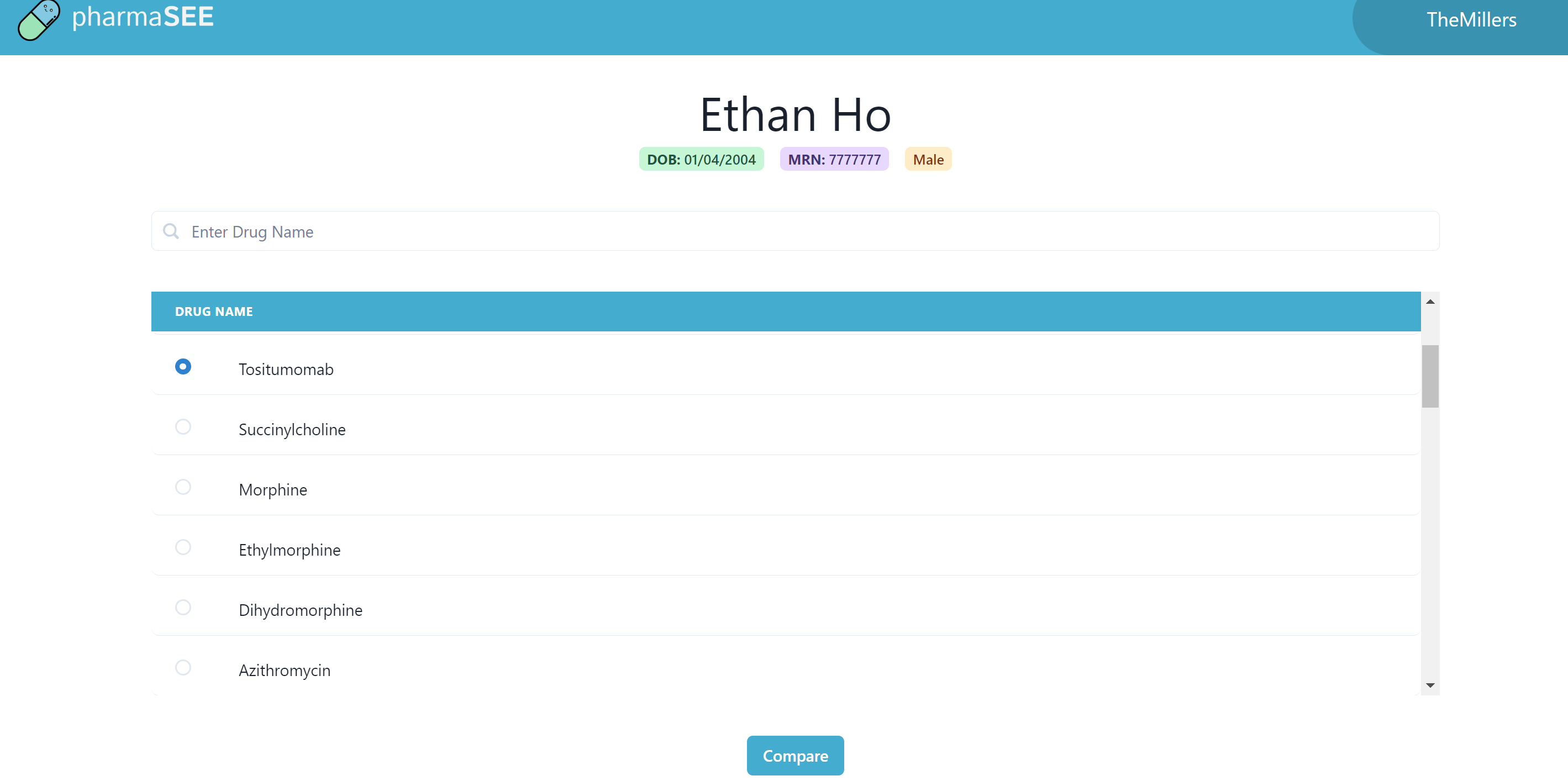
Comparing drugs in specific member's drug list with medication of choice
-
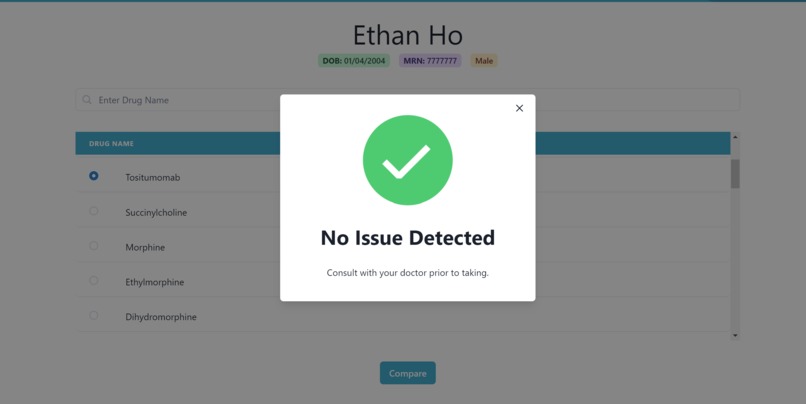
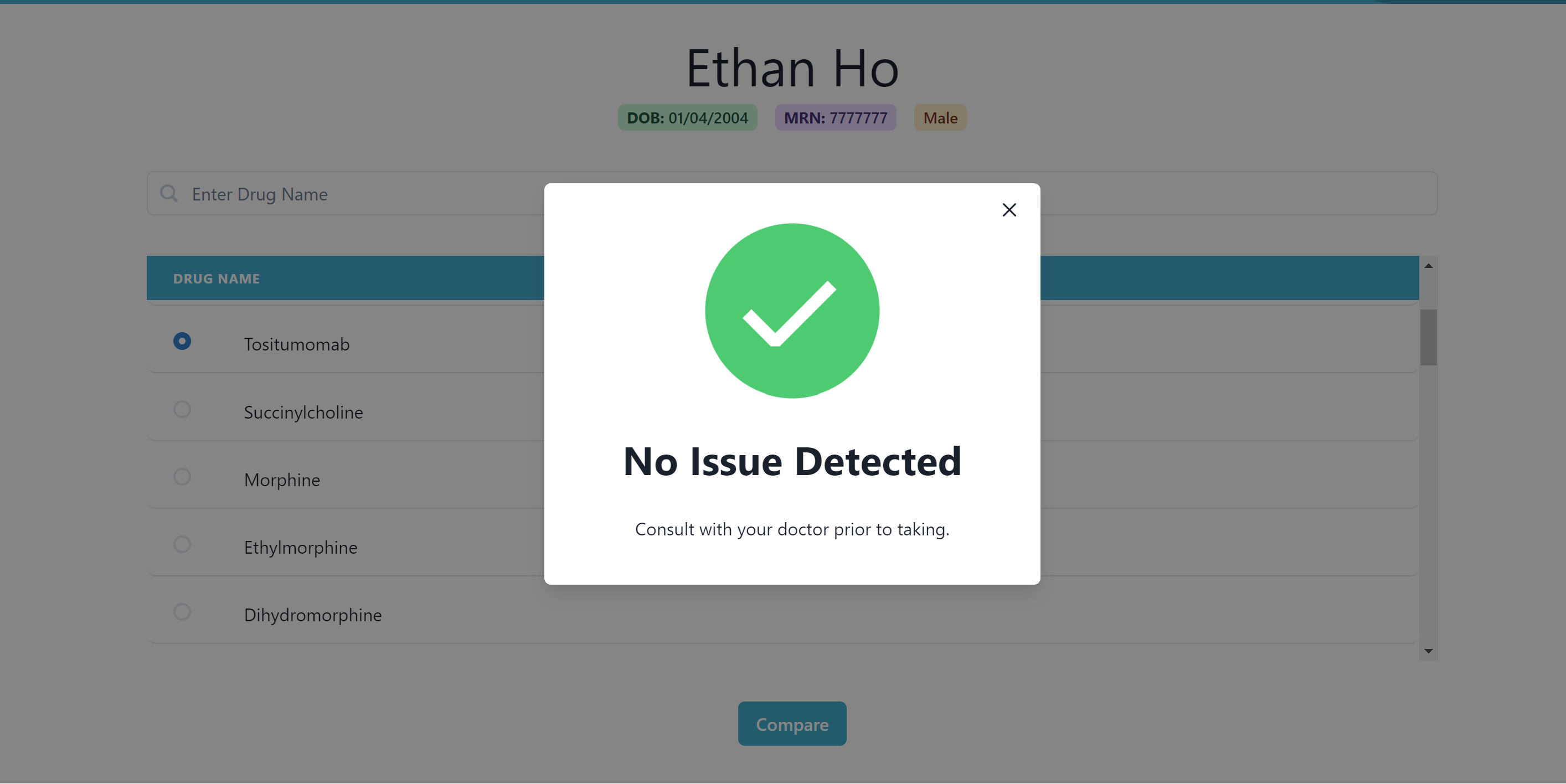
Modal indicating no negative drug-drug interaction detected
-
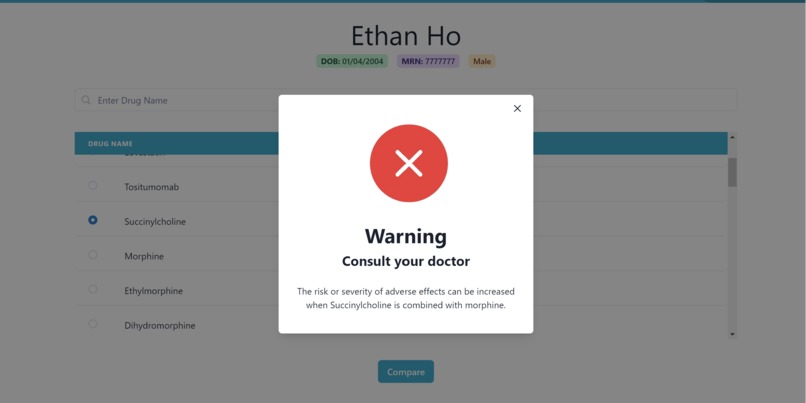
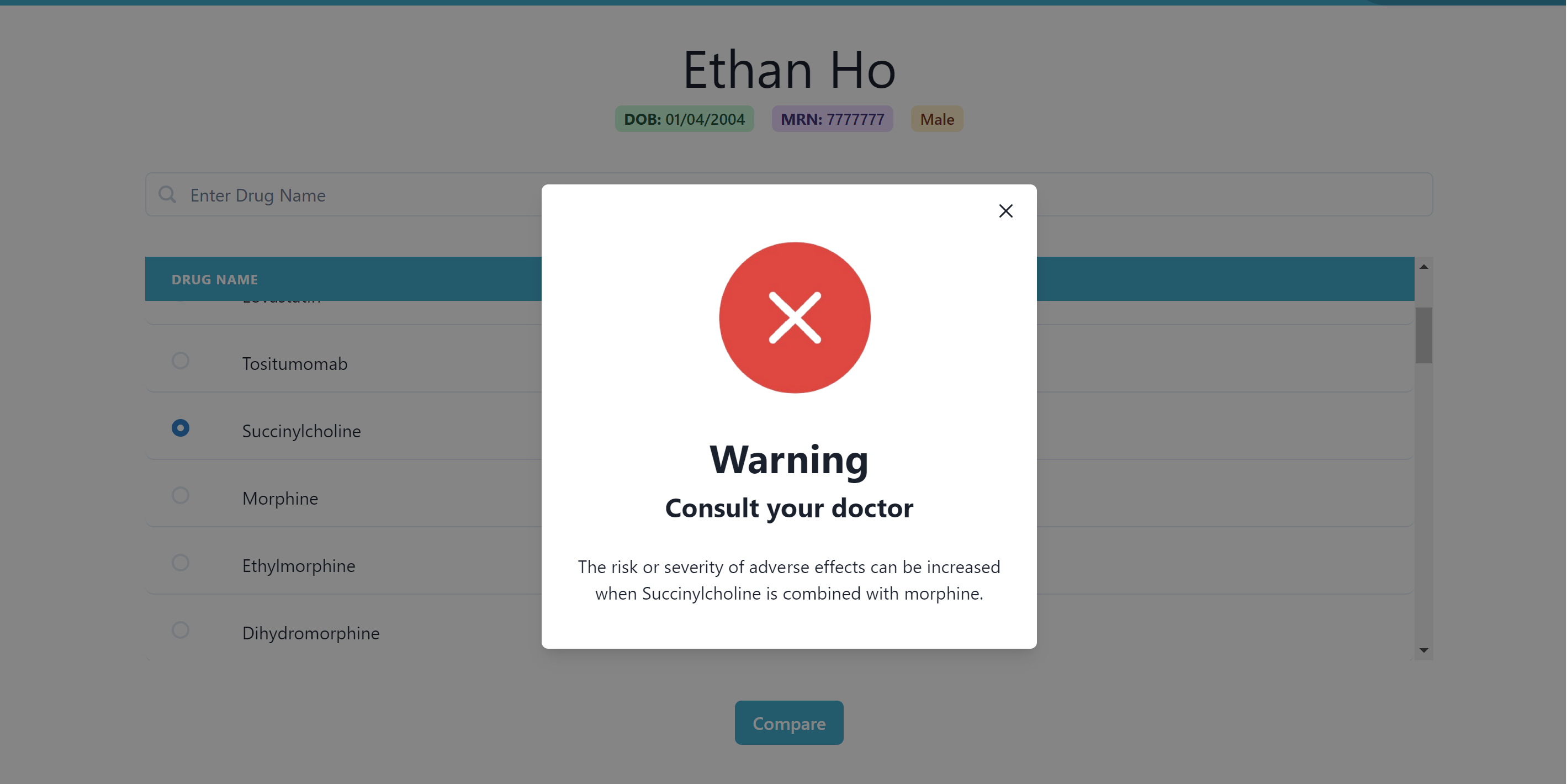
Modal indicating negative drug-drug interaction detected
-

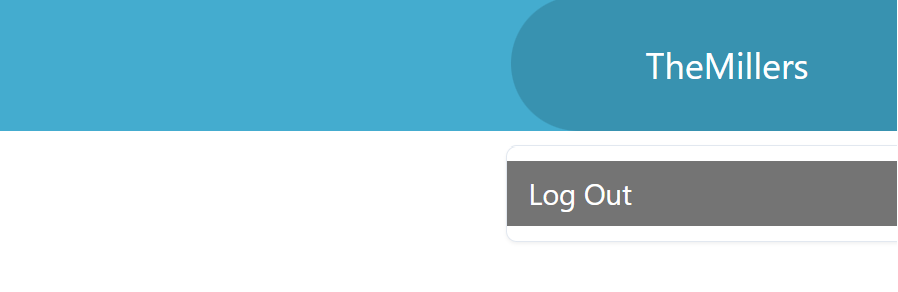
Log out button (accessible through clicking on the group name)
Inspiration
The inspiration for pharmaSEE stemmed from the numerous challenges in the medical landscape and our own personal experiences. Following an extensive ideation process, marked with constant refinement and updates, our team zeroed in on the Medication problem category within the patient safety field. We found that a staggering 44% of errors or problematic situations in healthcare are linked to medications, prompting us to tackle this critical issue head-on. Within the vast number of medication-related challenges, pharmaSEE focuses on simplifying the fundamental question: Is this over-the-counter drug safe to interact with, given your current medications/drug list?
What it does
pharmaSEE streamlines and simplifies the process of medication management. Through our web application, caregivers (or the users) will now have access to a one-stop hub where they can effortlessly organize and monitor medications for their loved ones. With just a few clicks, caregivers can create personalized groups, add members, and access a comprehensive drug database.
Once the caregiver selects a member of their group, they can search for a particular drug and pharamSEE will cross-check the selected medications within the group, instantly identifying potential dangerous drug interactions.
How we built it
Built using React, Node.js, Chakra-UI, ExpressJS, MongoDB, and AWS Postgresql instances, pharmaSEE provides a real-time drug interaction analysis through meticulous cross-referencing, fostering a more informed healthcare experience.
Challenges we ran into
The first challenge that we encountered was acquiring data for drug-drug interactions -- DrugBank, the most comprehensive database, only provided API keys for commercial use, and their keys cost upwards of $600 per month. Additionally the API owned by the US federal government was terminated approximately two weeks prior to the hackathon, and there were few other free databases that contained the drug-drug interactions we were searching for. Through some digging, we were able to find some smaller databases containing interactions, and we aggregated those to create our current database.
The second challenge we faced was finalizing our project idea; while our initial idea was similar to our current product, it was originally targeted towards healthcare professionals instead of towards caregivers. After our discussions with the mentors from the Patient Safety Technology Challenge, we discovered that Epic already has this feature integrated into their medical technology, though it is only visible from the healthcare provider’s side. As a result, we ended up pivoting our product to target family caregivers while still making use of the product we had developed so far.
Accomplishments that we're proud of
We're proud of finishing this product within the allotted time, especially because we were worried about extensive scope creep; we're proud of how well we collaborated in order to connect the front and backend, and ensure that all the data is successfully fetched from the databases to display to the user.
What we learned
One of the lessons we learned from this project was that there’s great value in researching your tech stack to ensure it meets your needs. We decided to use Chakra-UI for our tables and components because it was a library we were all familiar with. However, we often ran into challenges when attempting to modify the CSS of built-in components, realizing that Chakra-UI is not as customizable as we had hoped.
As we progressed through the ideation process, it felt like we were navigating a complex maze, with each turn revealing new possibilities and considerations. As the clock kept ticking down with less than a day left, we thought that the project's scope might have gotten too large, however we are proud to say that we were able to complete our project’s core features and even have a little bit of time to implement some of our discussed nice-to-have features!
What's next for pharmaSEE
In the future, pharmaSEE still has a lot of room to grow. Our current ideas include being a part of multiple personalized groups, a drawer for managing a member’s current medication/drug list, and going cross-platform.
Built With
- amazon-web-services
- chakra
- drugbank
- express.js
- mongodb
- mongodb-atlas
- node.js
- postgresql
- react


Log in or sign up for Devpost to join the conversation.