-
-
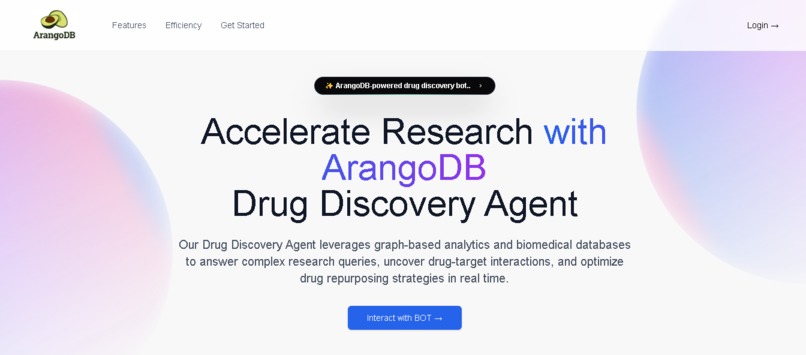
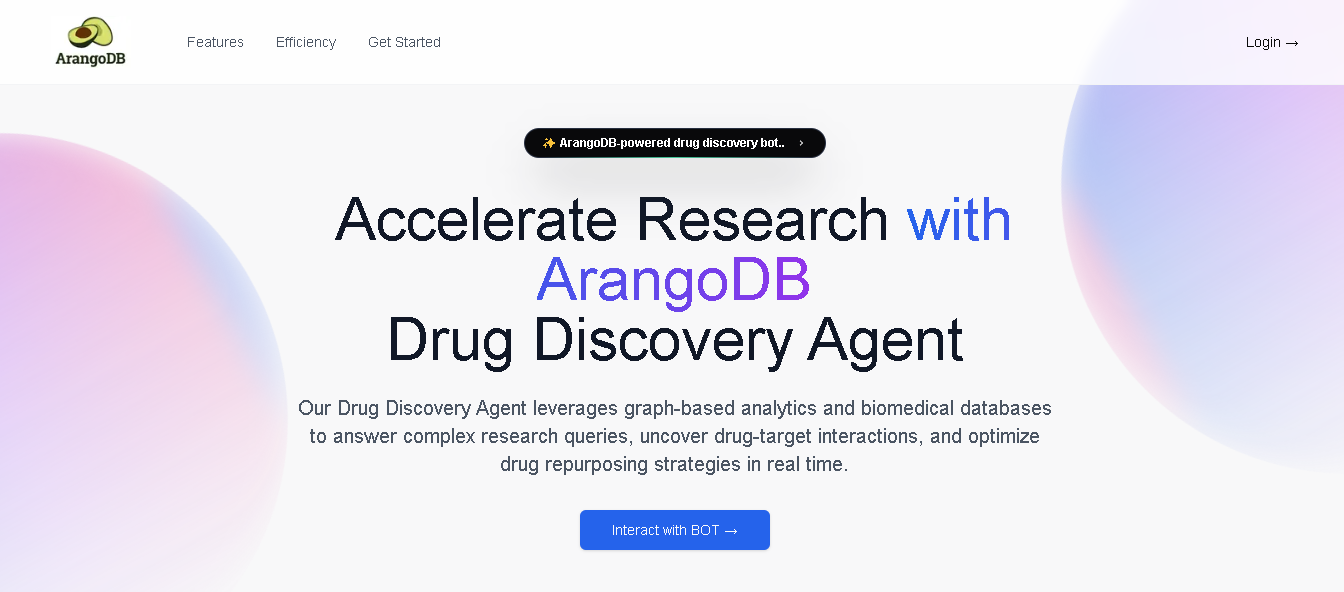
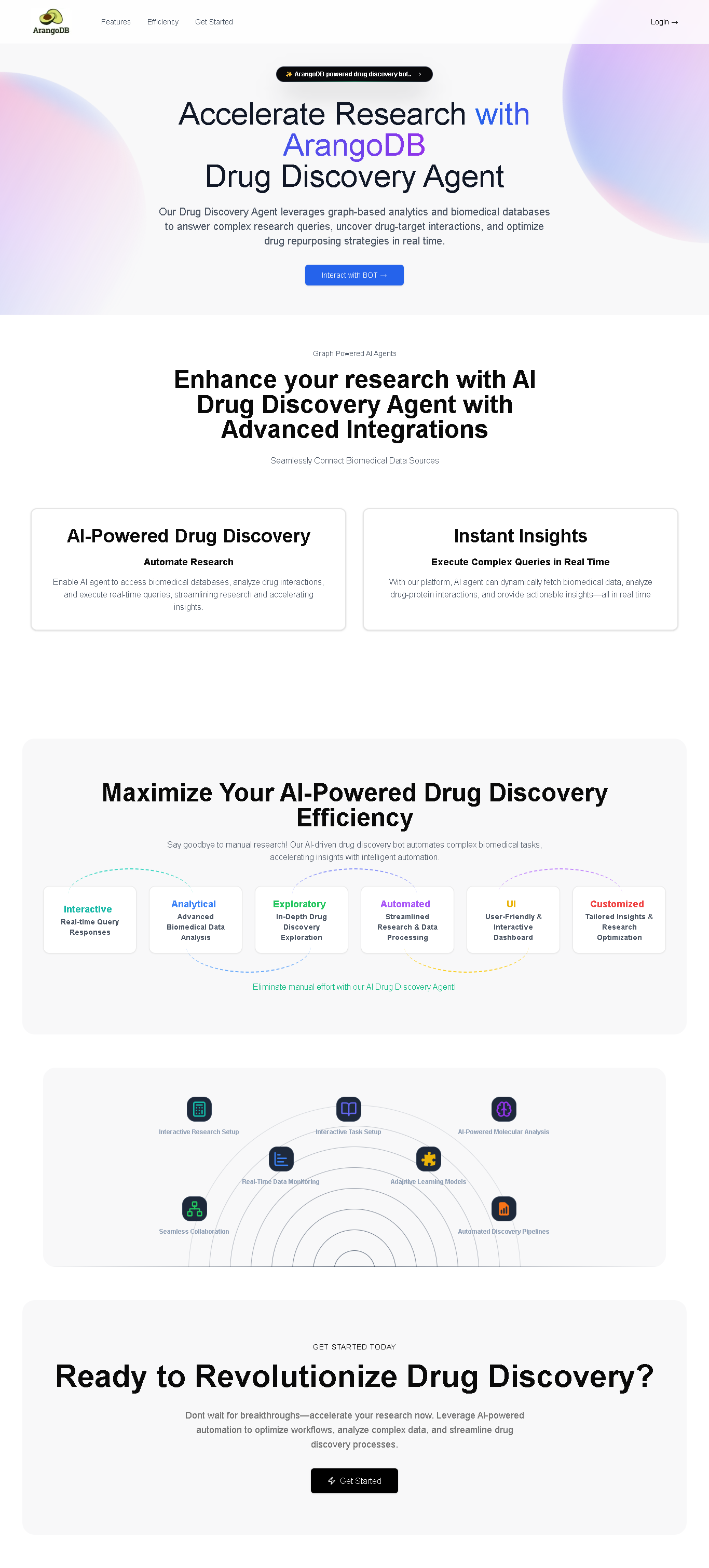
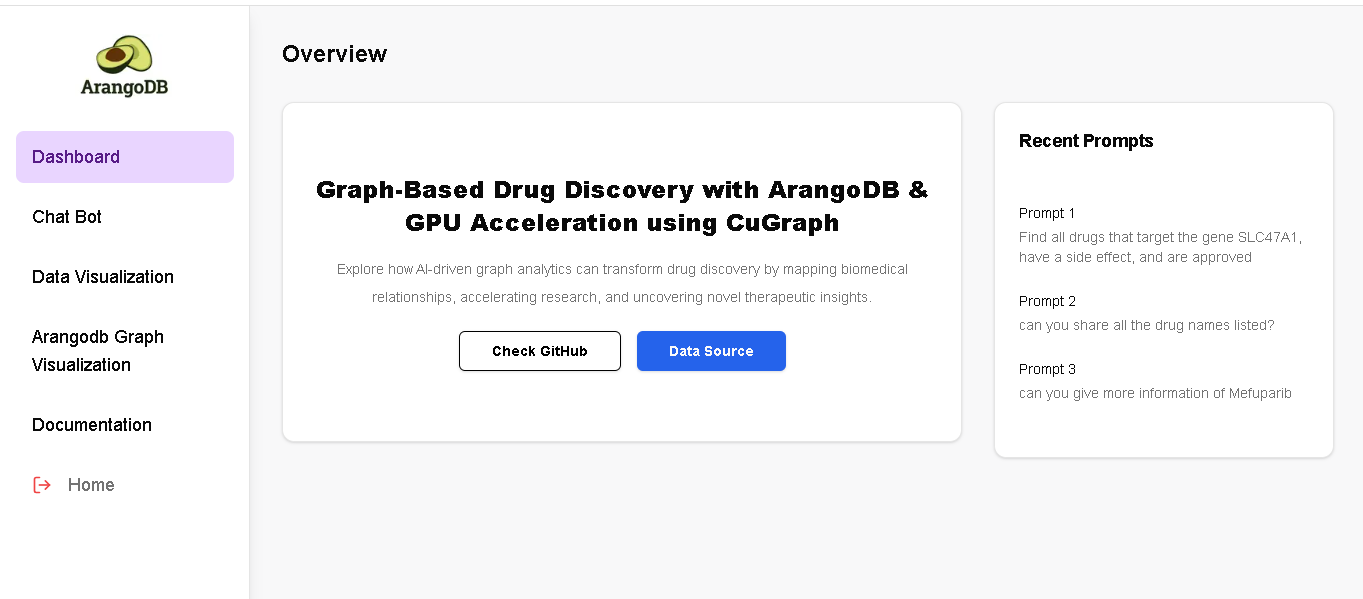
Home UI
-
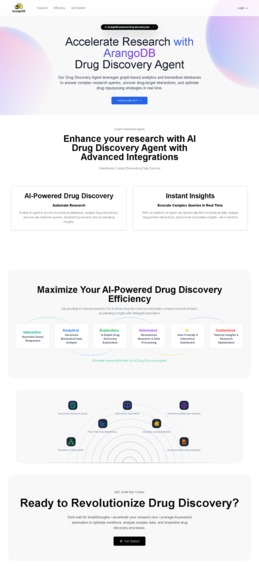
Home UI
-
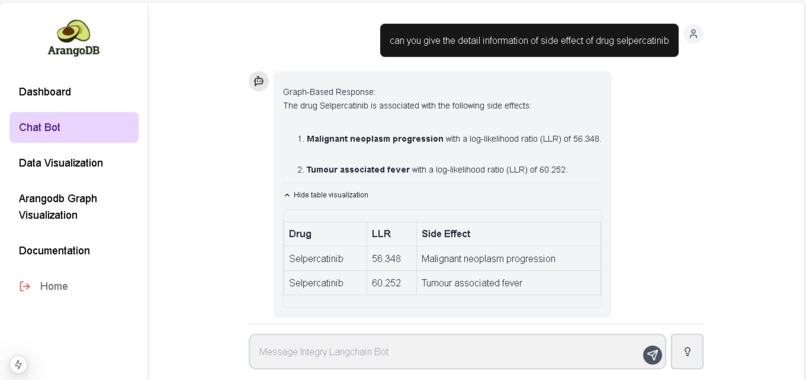
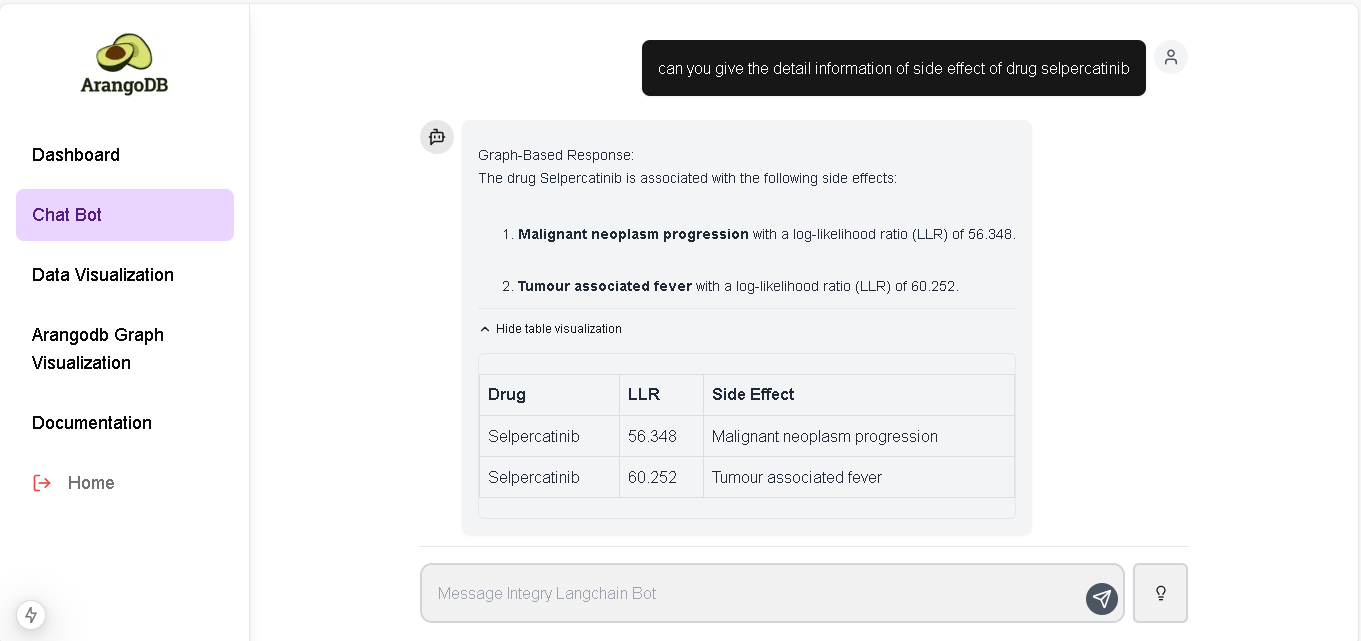
Chat with Agent
-
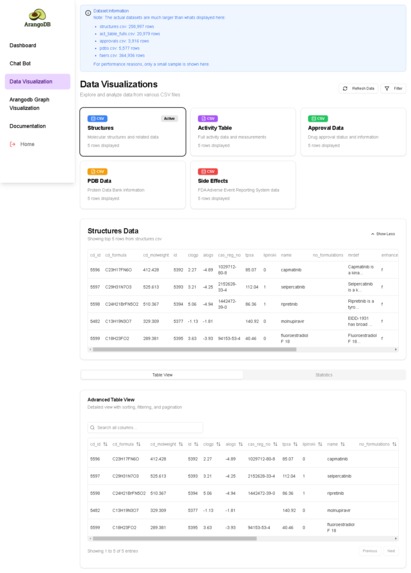
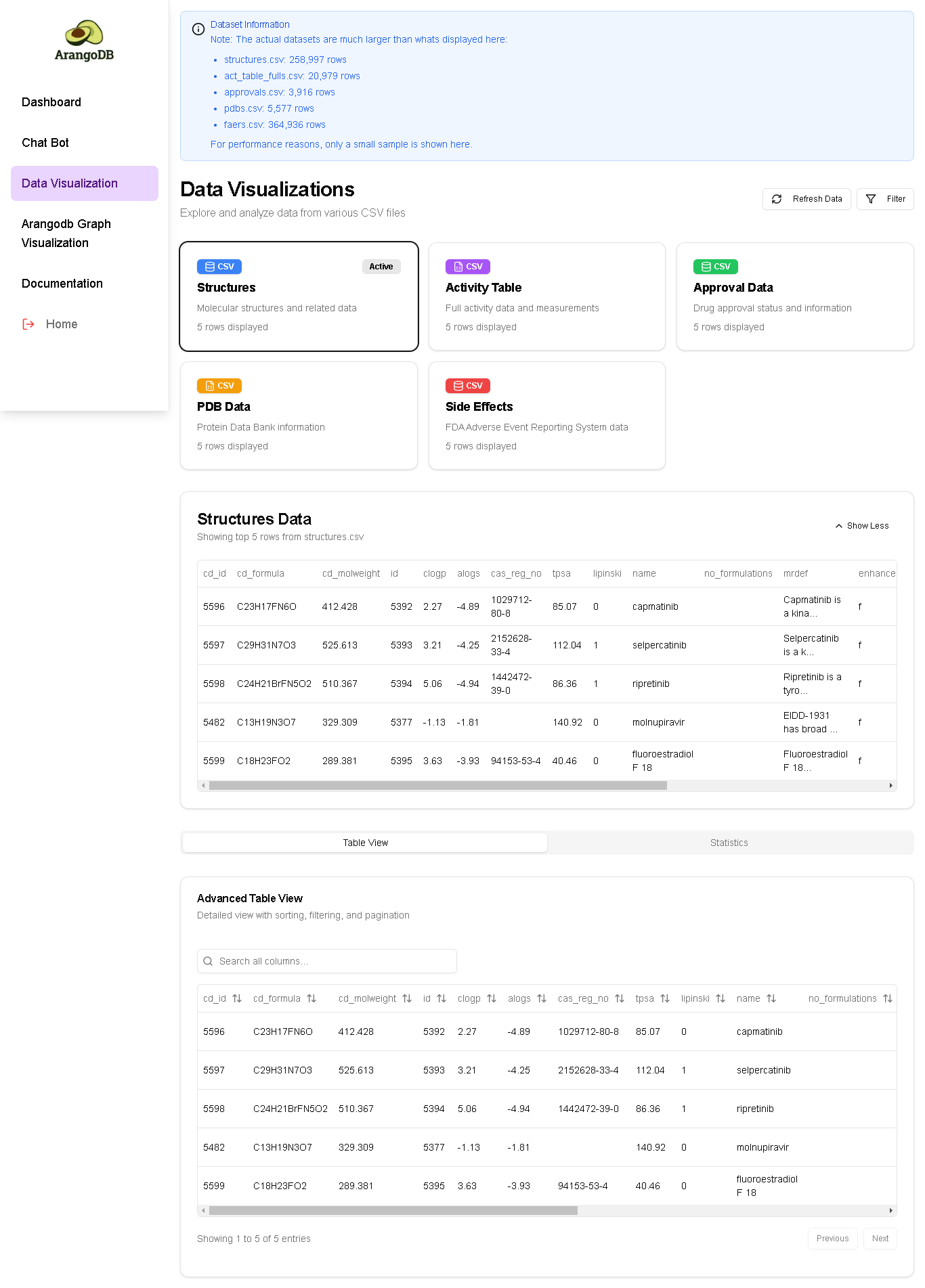
Visualizing Data
-
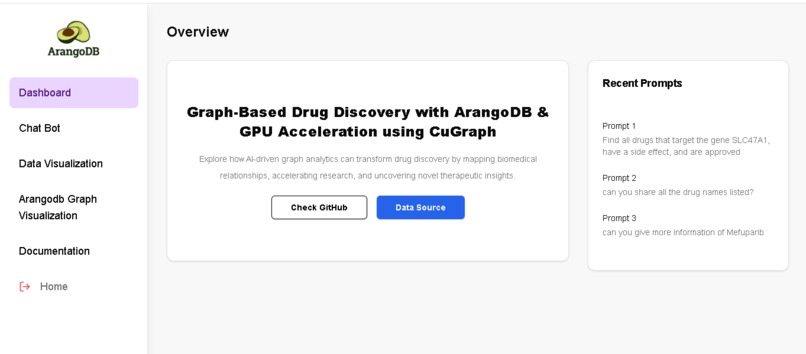
Dashboard
-
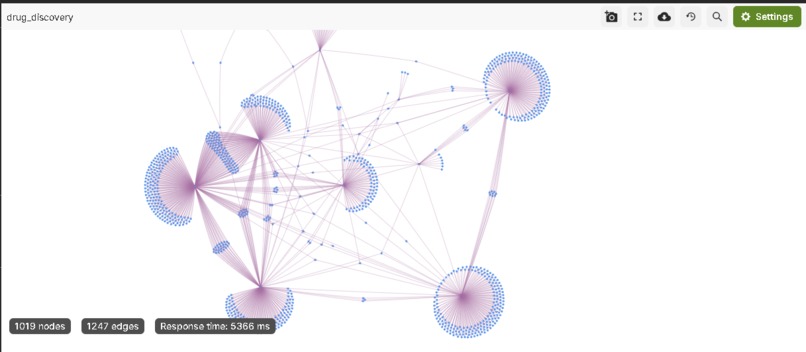
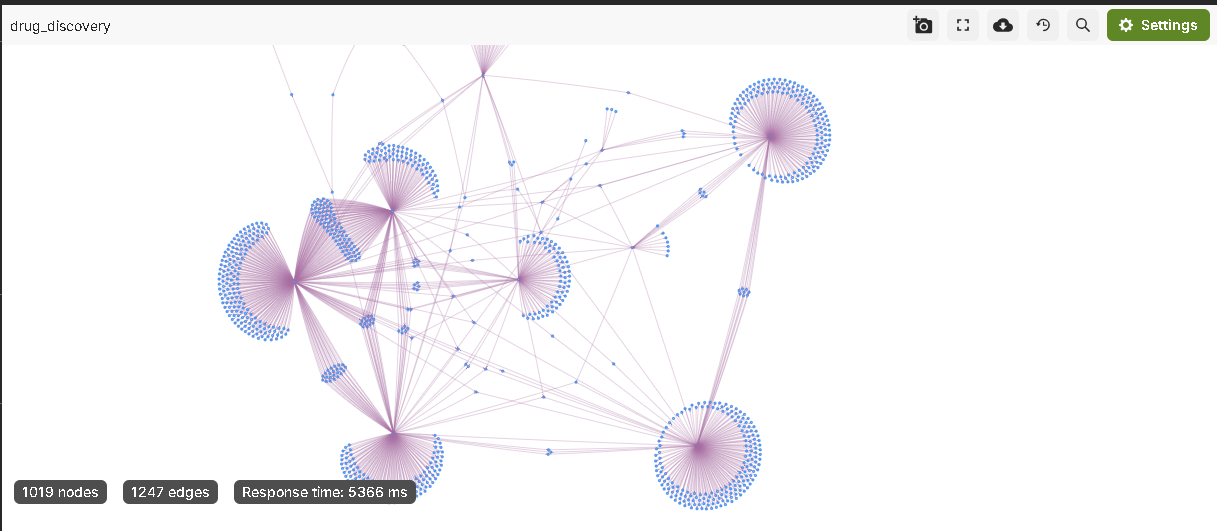
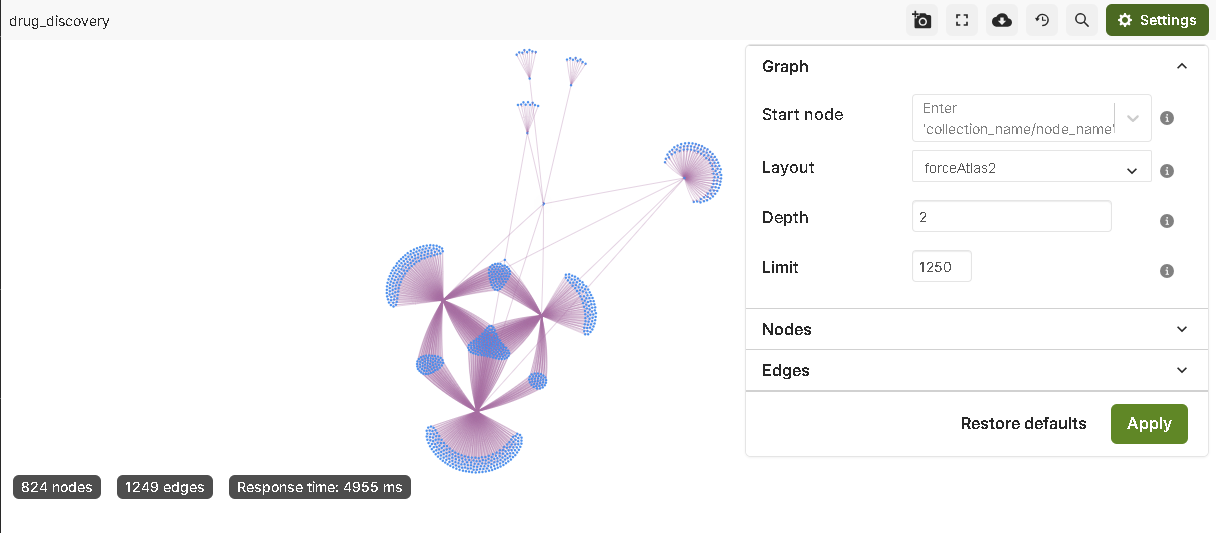
ArangoDB Graph
-
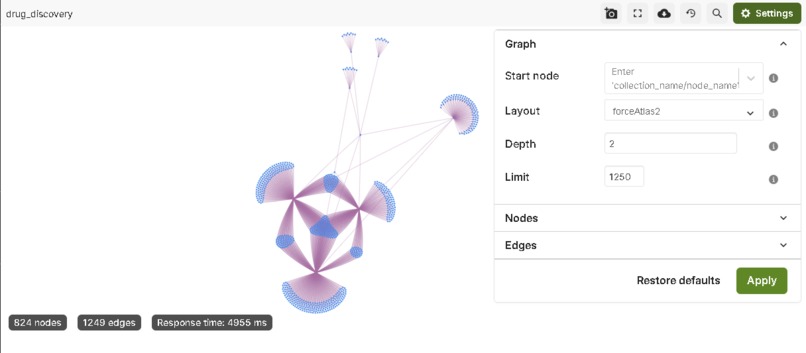
ArangoDB Graph
-
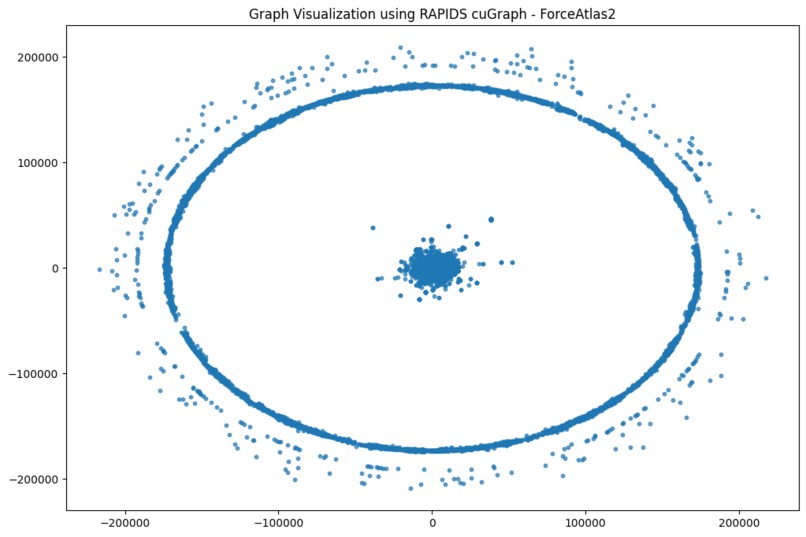
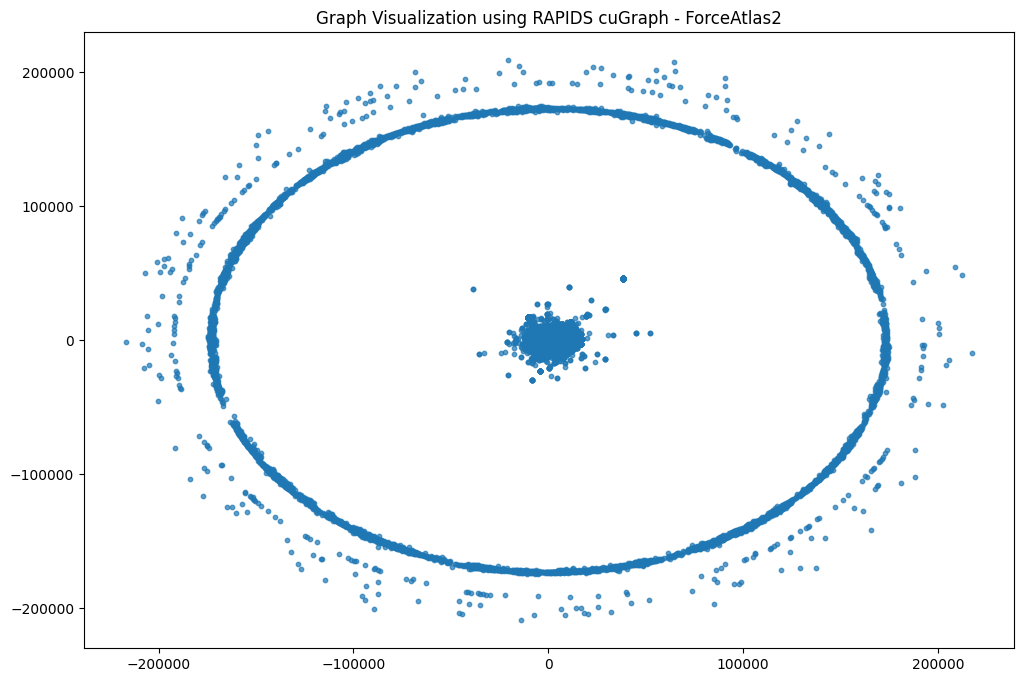
Graph Visualization using RAPIDS cuGraph - ForceAtlas2
Inspiration
Drug discovery is slow, expensive, and inefficient. Major challenges include:
- High Costs → Developing a single drug costs ~$1.1 billion on average.
- Long Timelines → It takes 10–15 years to bring a drug from research to market.
- High Failure Rates → Over 90% of drug candidates fail in clinical trials.
- Data Complexity → Drug interactions, side effects, and biological pathways form a vast, interconnected system that is difficult to analyze using traditional methods.
What it does
PharmaGraph AI is an AI-powered drug discovery platform that accelerates research by leveraging:
- Graph Representation → Captures relationships between drugs, proteins, diseases, and side effects for deeper insights.
- Automated Querying → AI agents (AQL + cuGraph) simplify and accelerate data exploration.
- GPU-Accelerated Analysis → Uses cuGraph for fast, large-scale computations.
- Smart Data Filtering → Focuses on highly relevant connections, reducing noise and redundancy.
- Scalable & Adaptive → Leverages ArangoDB, NetworkX, and cuGraph for efficient and scalable drug discovery.
How we built it
- Implemented AI-powered graph-based analytics using ArangoDB, NetworkX, and cuGraph.
- Developed three AI agents:
- text_to_aql_to_text
- text_to_cugraph_algorithm_to_text
- text_to_table
- Integrated natural language processing (NLP) with Langchain to interpret and execute hybrid queries.
- Processed and optimized large datasets with over 24960 nodes and 395379 edges in ArangoDB.
- Used publicly available drugs data from DrugCentral.
- Ensured proper data preprocessing, traversal, and visualization using cuGraph.
- Built an interactive UI for visualization and chatbot-based interactions.
- Deployed the application on Heroku (Live Demo).
Challenges we ran into
- Handling Large Datasets → Required efficient preprocessing and optimized database queries.
- Graph Query Optimization → Ensured fast traversal and data retrieval using cuGraph and AQL.
- Natural Query Execution → Developed AI agents to execute hybrid queries for graph traversal and data analysis.
- Visualization Complexity → Built a user-friendly interface for intuitive exploration of drug relationships.
Accomplishments that we're proud of
- Successfully built a scalable AI-powered drug discovery platform.
- Integrated multiple AI agents for efficient graph query execution.
- Processed and visualized massive pharmaceutical datasets.
- Developed an interactive UI that enhances usability and accessibility.
- Deployed a fully functional web application for real-world usage.
What we learned
- Advanced graph-based drug discovery techniques using cuGraph and ArangoDB.
- Optimized AI-driven query execution for large-scale datasets.
- Enhanced natural language processing capabilities for structured query generation.
- Improved scalability and deployment strategies for AI applications.
What's next for PharmaGraph AI
- Expanding dataset integration to include real-time pharmaceutical research data.
- Enhancing AI models for more accurate drug-target interaction predictions.
- Developing advanced visualization tools for deeper data insights.
- Optimizing GPU performance for faster query execution and analysis.
- Exploring potential collaborations with pharmaceutical research institutions.
PharmaGraph AI transforms big pharmaceutical data into actionable insights, helping researchers discover new drugs faster and cheaper.


Log in or sign up for Devpost to join the conversation.