-
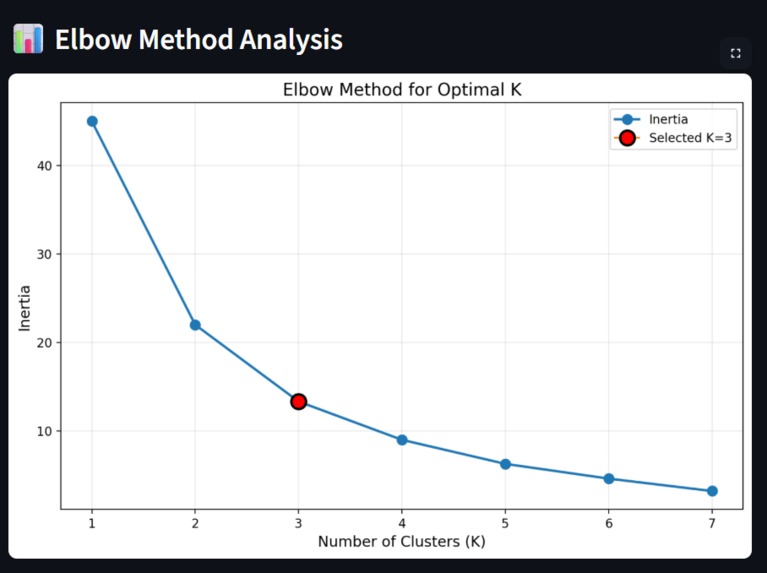
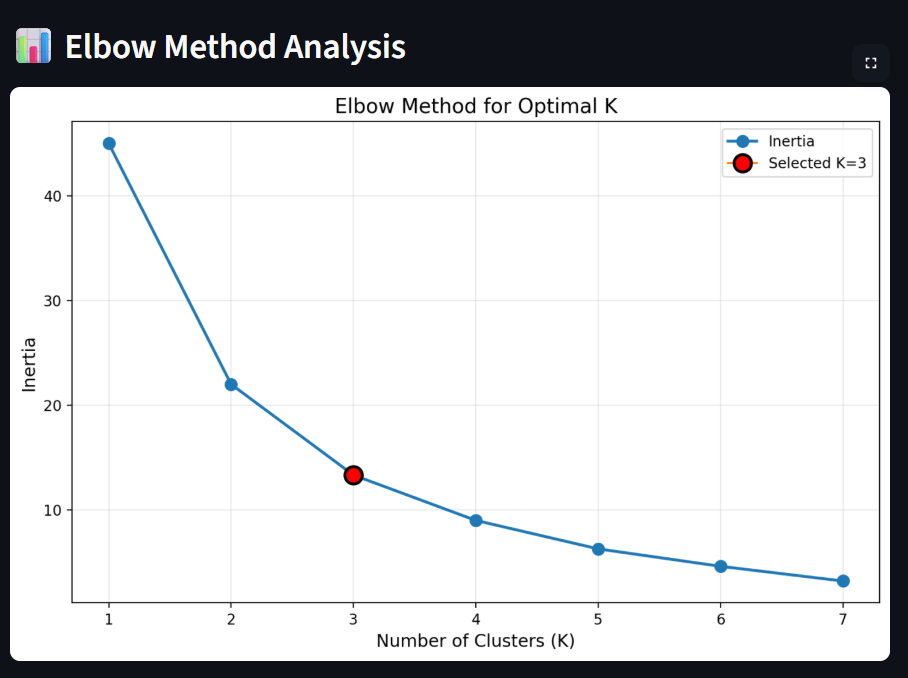
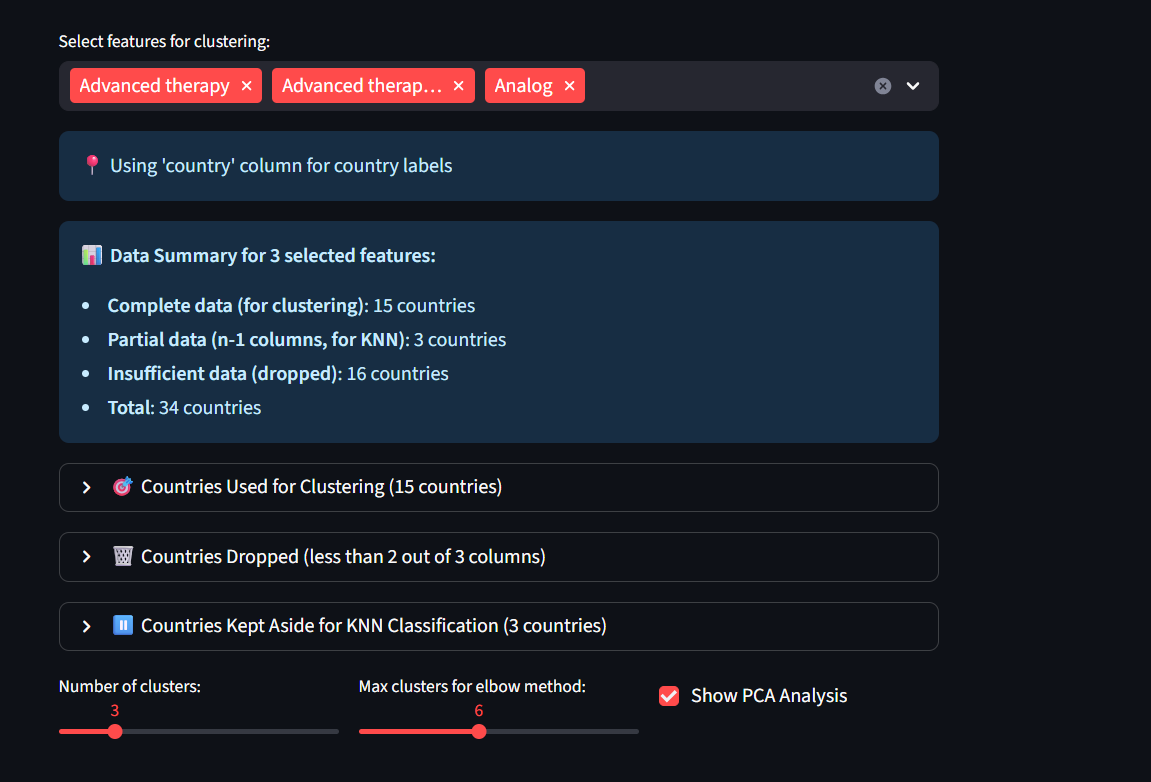
Determining the K-Value using Elbow-Method
-
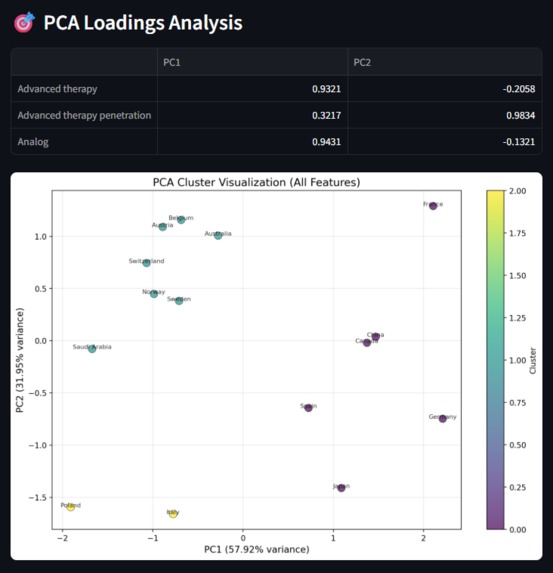
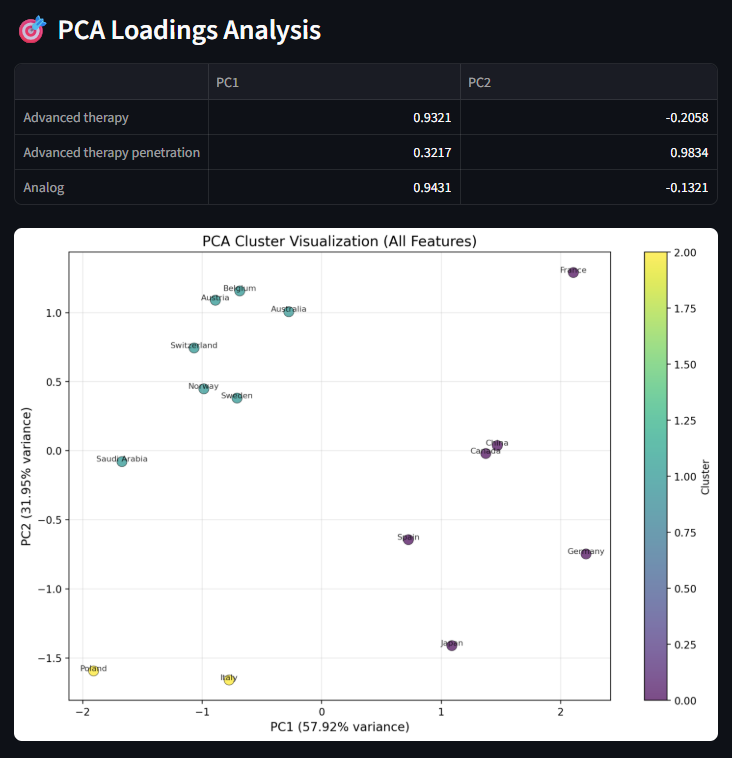
Clusters formed using data uploaded
-
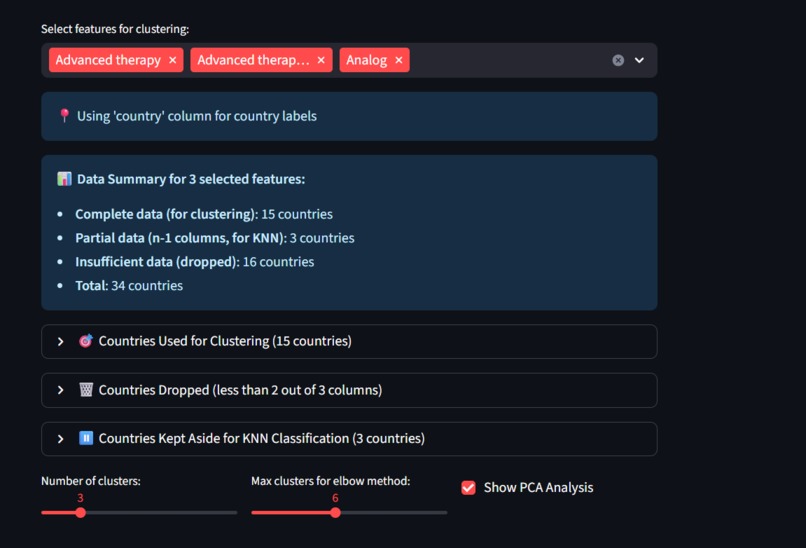
Choosing the metrics available in the dataset
Inspiration
Pharma market perception data exists in abundance, but it is scattered across unstructured and inconsistent sources such as social media, web platforms, and public health organizations. Most existing approaches rely on anecdotal insights or surface-level sentiment, making objective comparison across products and regions difficult. Pharmaception was inspired by the need to bring structure, comparability, and statistical rigor to this fragmented data landscape. Main motivation was the fact that we interned at a Pharma Company - MSD.
What it does
Pharmaception aggregates unstructured perception data related to pharmaceutical products from social media, web sources, and public platforms such as WHO, CDC, UNAIDS, etc. It normalizes this data into a unified analytical format, estimates missing or sparse signals using statistical methods, and clusters pharma products and markets based on multidimensional perception metrics. The result is structured, comparable insight into how drugs are perceived across regions and stakeholders.
How we built it
We designed an end-to-end analytical pipeline:
- Data ingestion from heterogeneous unstructured sources
- Data normalization through unpivoting into a common schema
- Feature extraction to derive perception-related metrics
- Regression, interpolation, and extrapolation to handle missing or sparse data
- Clustering to segment products and markets based on perception patterns
- The system emphasizes statistical methods and reproducibility over black-box modeling.
Challenges we ran into
The biggest challenge was dealing with data sparsity and inconsistency across sources and regions. Different platforms provide uneven coverage, varying signal strength, and noisy inputs. Designing a normalization strategy that preserved meaningful variation while enabling fair comparison required careful feature selection and validation. Furthermore, the formats for the available data is varied across sources.
Accomplishments that we're proud of
- Successfully transforming highly unstructured perception data into a unified analytical framework
- Demonstrating that meaningful market segmentation is possible even with incomplete-skewed data
- Building a solution that goes beyond sentiment analysis to enable structured comparison and clustering
- Maintaining a clear, defensible analytical approach suitable for real-world decision-making
What we learned
We learned that perception analysis is less about complex models and more about data preparation, normalization, and statistical discipline. Handling missing data intelligently is critical when working with real-world, unbalanced datasets. We also learned how adaptable a generalized analytical pipeline can be across domains.
What's next for Pharmaception
Future work includes expanding data sources, incorporating temporal trend analysis, improving stakeholder-level segmentation, and integrating explainability to clearly identify drivers behind perception clusters. Detecting data and formatting into a singular form using an LLM is our next goal. With further refinement, Pharmaception can evolve into a scalable market intelligence tool for pharma strategy and risk assessment.
