-
-

Thumbnail
-
Project Architecture

Hackathon Submission Draft: PharmaOps Agent
1. About the project
Inspiration
Pharmaceutical sales reps are the bridge between life-saving medical innovations and the doctors who prescribe them. However, we realized that reps spend an exorbitant amount of time—often 30 to 60 minutes per meeting—just preparing. They have to dig through CRMs, search PubMed for clinical trials, cross-reference competitive intelligence, and manually verify that their talking points comply with strict pharmaceutical regulations (like UCPMP). We were inspired to build PharmaOps Agent to give reps their time back, turning a 45-minute manual chore into a 30-second automated workflow.
How I built it
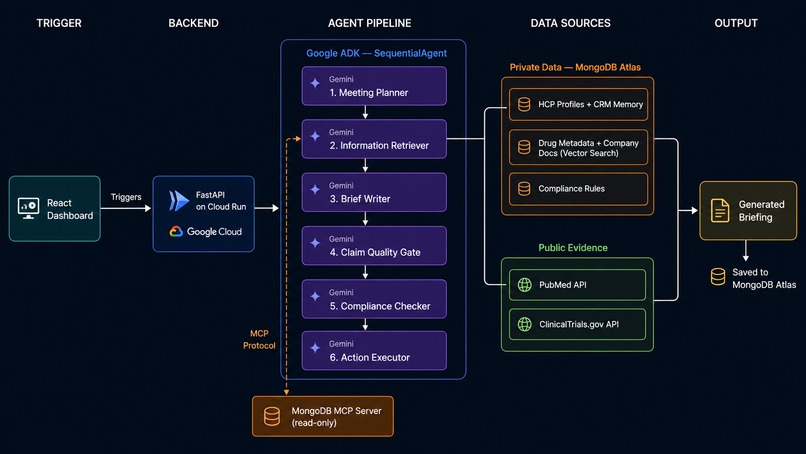
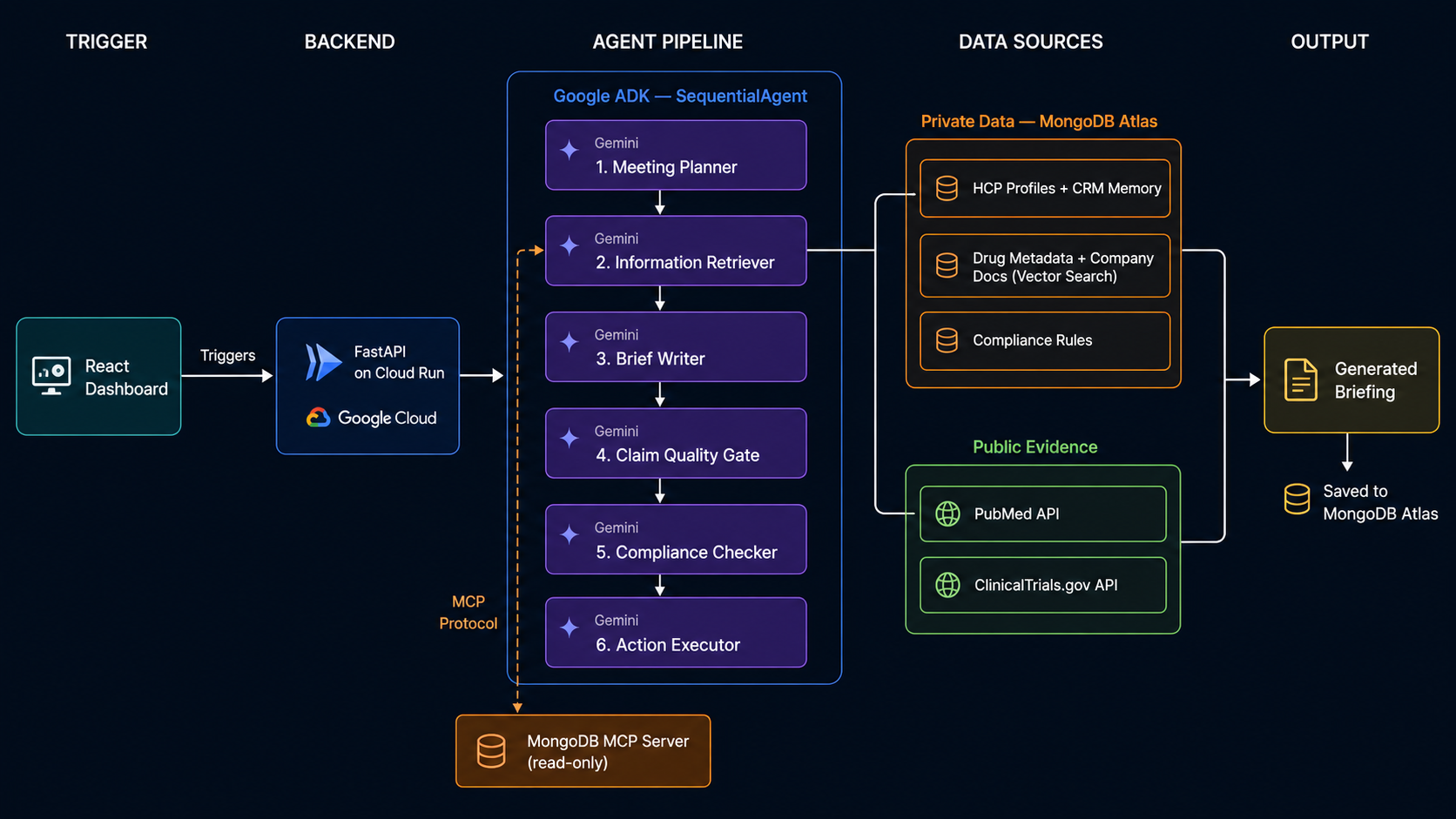
PharmaOps is powered by a multi-agent pipeline orchestrated with the Google Agent Development Kit (ADK) using a SequentialAgent pattern. When a rep schedules a meeting, the workflow activates:
- Context Gathering: The agent pulls the doctor's profile and CRM history.
- Retrieval-Augmented Generation (RAG): It uses MongoDB Atlas Vector Search to find relevant internal documents and competitive intelligence, accessed securely via the official MongoDB MCP server.
- Live Evidence: It queries the PubMed and ClinicalTrials.gov APIs for the latest medical evidence.
- Brief Drafting & Compliance: A Gemini-powered agent drafts the meeting briefing, anticipates objections, and passes the draft through a rigorous compliance checker to ensure all claims meet promotional rules before saving it back to the database.
The system features a React dashboard for the frontend and a FastAPI backend, seamlessly containerized and deployed on Google Cloud Run.
Challenges I ran into
One of the biggest hurdles was ensuring the AI didn't hallucinate medical claims or violate pharmaceutical compliance rules. To solve this, we implemented a dual-layer approach: a deterministic claim quality gate followed by a specialized Gemini Compliance Checker agent. Integrating the new Model Context Protocol (MCP) for MongoDB also required careful orchestration to ensure the agent only had read access to the specific vectorized data it needed without exposing the entire database.
What we learned
We learned the immense power of agentic workflows when combined with robust, domain-specific tooling. By composing multiple specialized agents (Planner, Retriever, Writer, Compliance Checker) rather than relying on a single monolithic prompt, we achieved far higher accuracy and reliability. We also gained deep experience deploying containerized multi-agent systems to Google Cloud Run for scalable, serverless execution.


Log in or sign up for Devpost to join the conversation.