Inspiration
Phantom limb pain affects many amputees around the world. Even after a limb is gone, the brain may still perceive that it exists. This mismatch between the physical body and the brain’s internal body map can lead to persistent discomfort or pain. Current rehabilitation methods often rely on repetitive exercises or clinical tools, which may feel mechanical or emotionally distant from the user’s everyday experience. We wanted to explore how interaction design and sensory feedback could help users reconnect with their bodies in a more intuitive way. PhantomSense was inspired by the concept of neural plasticity. The brain is capable of adapting and reorganizing itself when it receives consistent sensory and motor feedback. Our goal was to design a system that helps users gradually retrain their brain’s body map through interactive feedback.
What it does
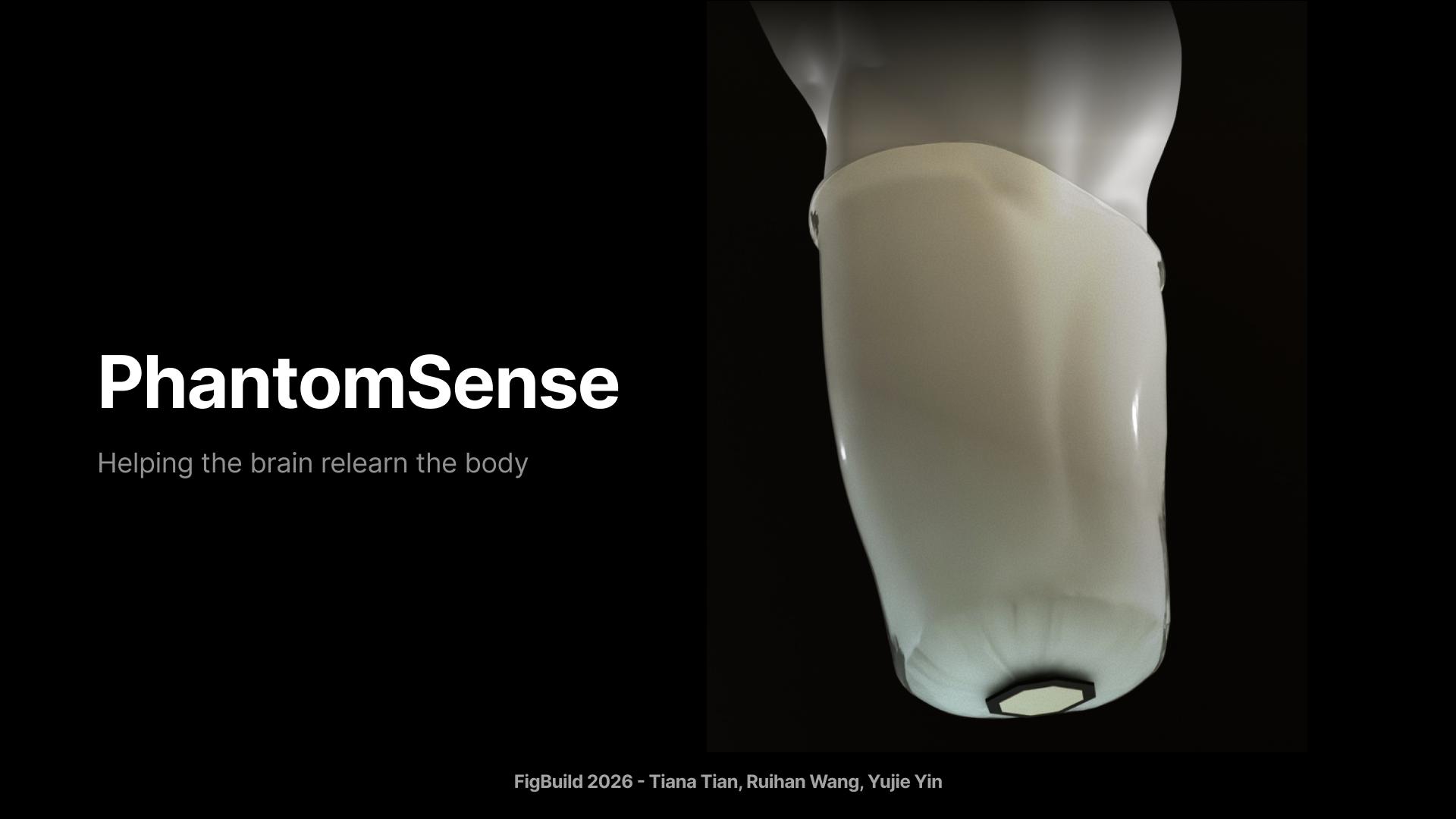
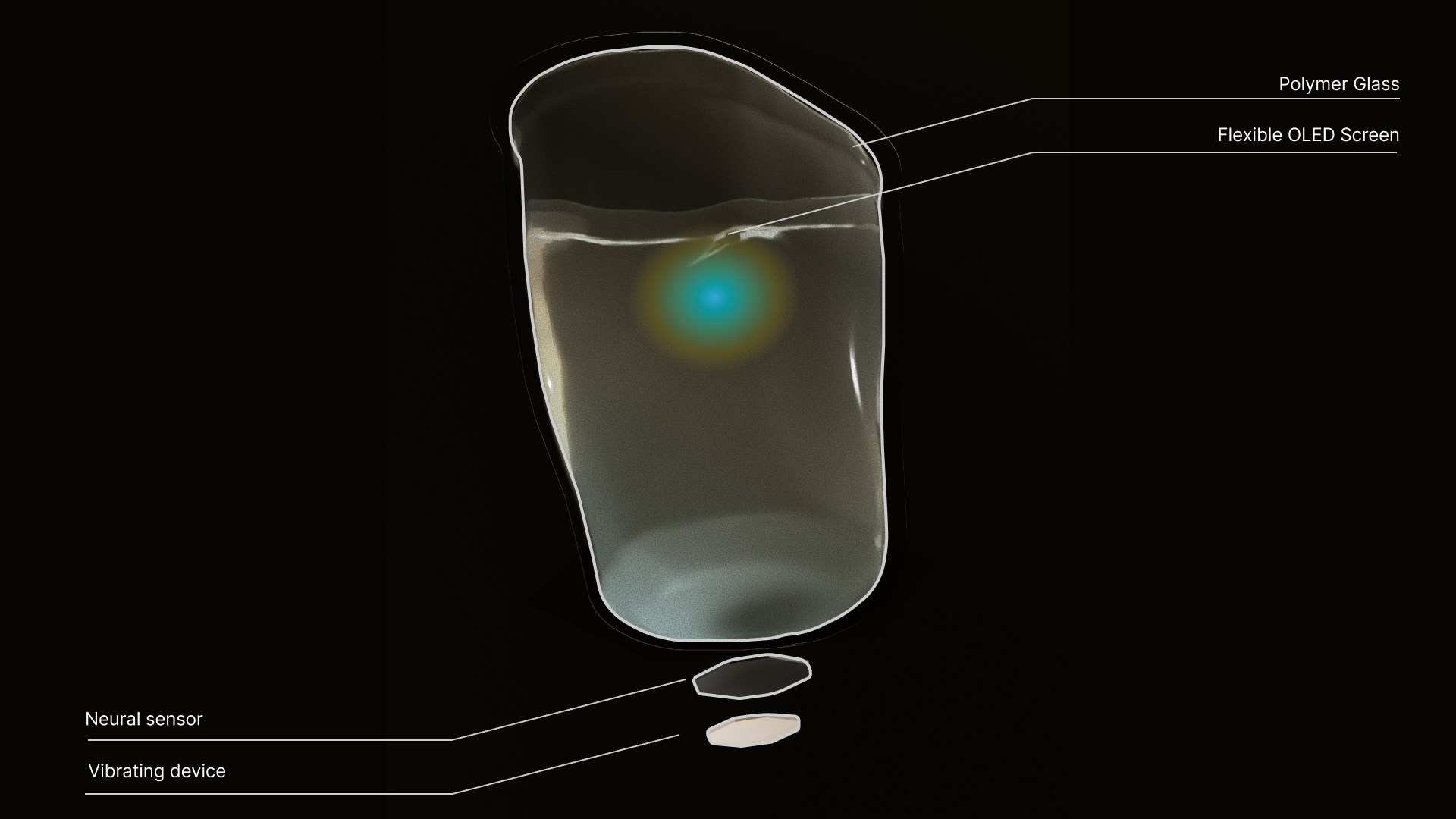
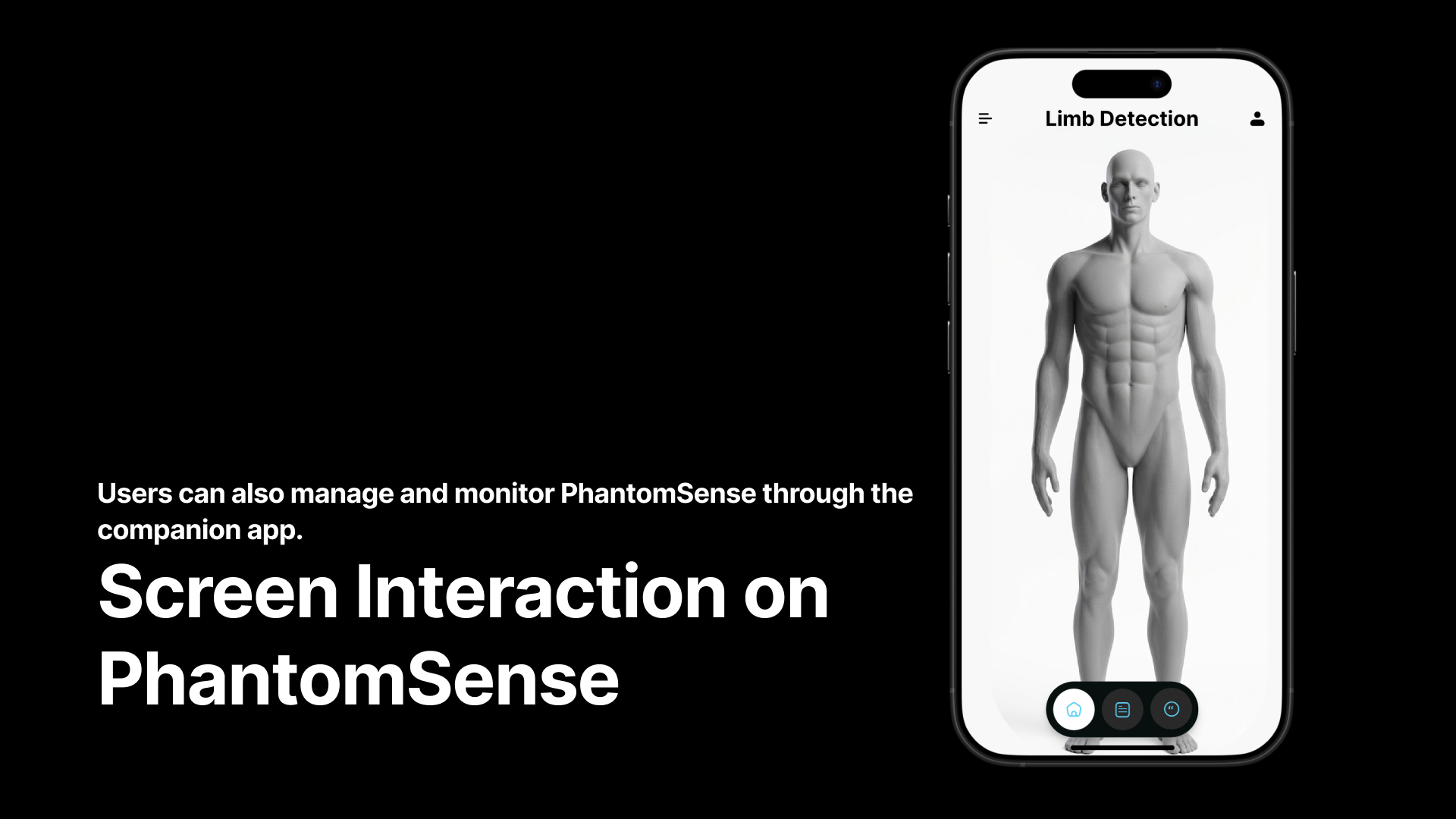
PhantomSense is a wearable rehabilitation system designed to support people experiencing phantom limb pain. The device detects muscle signals near the amputated limb using a sensing patch. When users attempt to move their phantom limb, the system captures these signals and translates them into visual and haptic feedback. A transparent display worn on the residual limb provides visual responses that react to the user’s muscle signals. At the same time, the wearable patch can generate vibration to create tactile feedback. Through repeated interaction between movement intention, visual feedback, and tactile feedback, PhantomSense helps train the brain to rebuild its internal body map, potentially reducing phantom limb pain over time. Users can also connect to a companion mobile app to monitor training activity, muscle signal patterns, recovery progress, and pain trends.
How we built it
We designed PhantomSense as a system combining wearable sensing hardware and a digital interface. The hardware concept includes a muscle sensing patch that detects muscle activation signals around the amputated area. These signals represent the user’s movement intention.A transparent circular display provides visual feedback that responds to these signals in real time. Instead of a traditional screen interface, the display presents simple dynamic visual elements that react directly to muscle activity. We also designed a companion mobile application where users can review their training data, track rehabilitation progress, and synchronize with the device.
Challenges we ran into
One challenge was translating complex neurological concepts, such as body map reconstruction and neural plasticity, into a clear interaction design. Another challenge was designing feedback that felt meaningful rather than overwhelming. The visual and tactile responses needed to be noticeable enough to guide training but simple enough to avoid cognitive overload. We also needed to imagine how a transparent circular display could present visual feedback in a way that feels natural and integrated with the body.
Accomplishments that we're proud of
One accomplishment we are proud of is creating a design that bridges neuroscience concepts and interaction design. PhantomSense demonstrates how movement intention, sensory feedback, and visual interaction can work together to support rehabilitation. We are also proud of designing a system that allows users to better understand their own recovery process through data visualization and feedback from the companion app.
What we learned
Through this project, we learned how interaction design can play a role in supporting healthcare and rehabilitation. We also gained a deeper understanding of neural plasticity and how sensory feedback can influence the brain’s ability to reorganize its body map. Most importantly, we learned that designing for health technologies requires balancing functionality with empathy for the user’s physical and emotional experience.
What's next for PhantomSense
Future directions could include experimenting with different feedback patterns, conducting user testing with amputees and rehabilitation specialists, and exploring how to integrate with existing rehabilitation practices and clinical therapy programs.


Log in or sign up for Devpost to join the conversation.