-
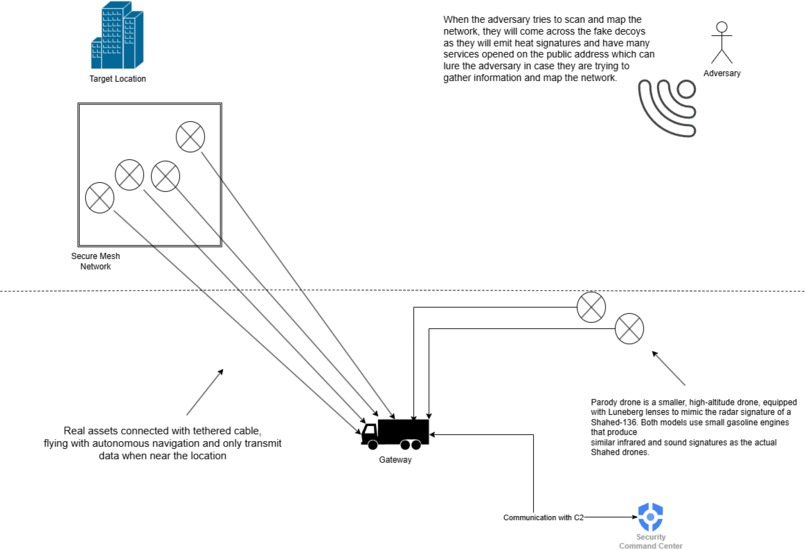
High-level project working
-
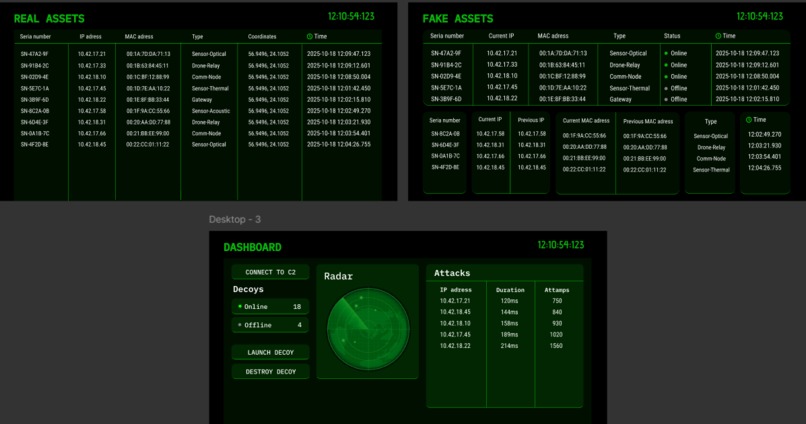
Dashboard visualization
Inspiration
In modern defence, visibility equals vulnerability.
Across Europe, drones, field sensors, and mobile command systems are becoming increasingly exposed to digital reconnaissance.
Adversaries now use AI-driven mapping tools to identify and fingerprint these assets in minutes and once they’re found, they can be jammed, spoofed, or destroyed.
We were inspired by one simple question:
“What if our defence systems could hide themselves, the same way soldiers use camouflage on the battlefield?”
That question led to Phantom Signal, a project designed to bring digital camouflage and adaptive deception into the world of modern defence.
What it does
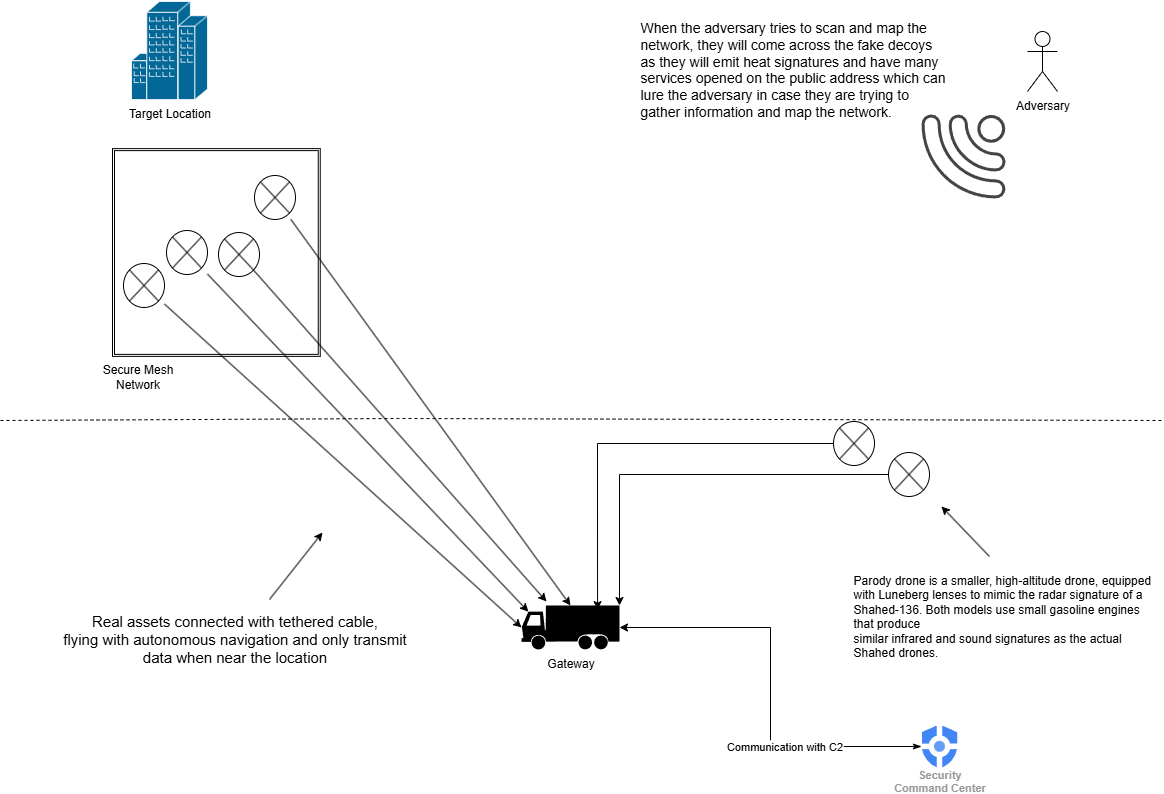
Phantom Signal is an adaptive cyber deception mesh that hides real defence assets such as drones, IoT sensors, and command nodes by constantly changing their digital identities and deploying believable decoys.
It introduces three core capabilities:
Stealthy Communication
Uses fiber-optic or low-detectability optical links to minimize radio chatter and prevent adversaries from tracking communications.Autonomy by Default
Drones and sensors operate independently, only connecting to the Command Center (C2) when necessary, reducing discoverability.AI-Generated Decoys
Deploys digital twins that look and behave like real assets, feeding attackers realistic but useless data.
Every time an attacker scans, the network landscape changes , creating confusion and wasting their time.
In short: Phantom Signal makes defence networks move like ghosts - unpredictable, resilient and invisible.
How we built it
During the 72-hour hackathon, we followed a structured development plan:
Day 1 - Problem Validation & Scenario Design**
Researched EU defence cybersecurity reports and incidents (Ukraine conflict, airport cyberattacks, Eastern Flank drone reconnaissance).
Defined three mission scenarios: border patrol, airport protection, and field surveillance (ISR).
Outlined attacker reconnaissance tactics for simulation.
Day 2 - Architecture Design & Conceptual Simulation
Designed a layered architecture combining:
- Autonomous navigation layer for silent flight
- Deception control module to spawn believable decoy signals
- Secure mesh logic for encrypted, identity-shifting communication
Built a system flow and network topology diagram to visualize how real assets and decoys interact.
Developed a conceptual simulation storyboard describing step-by-step what happens during:
- An enemy reconnaissance attempt
- A successful deception
- A safe mission data return
Outlined pseudo-metrics (e.g., attacker dwell time, false discovery rate, communication silence ratio) that could be measured in a future prototype.
Day 3 - Figma UI & Mission Visualization
If the link doesn't work please copy this directly https://www.figma.com/design/g3WzGFLaEsPkXNJh6vHOa3/phantom-Signal?node-id=0-1&p=f
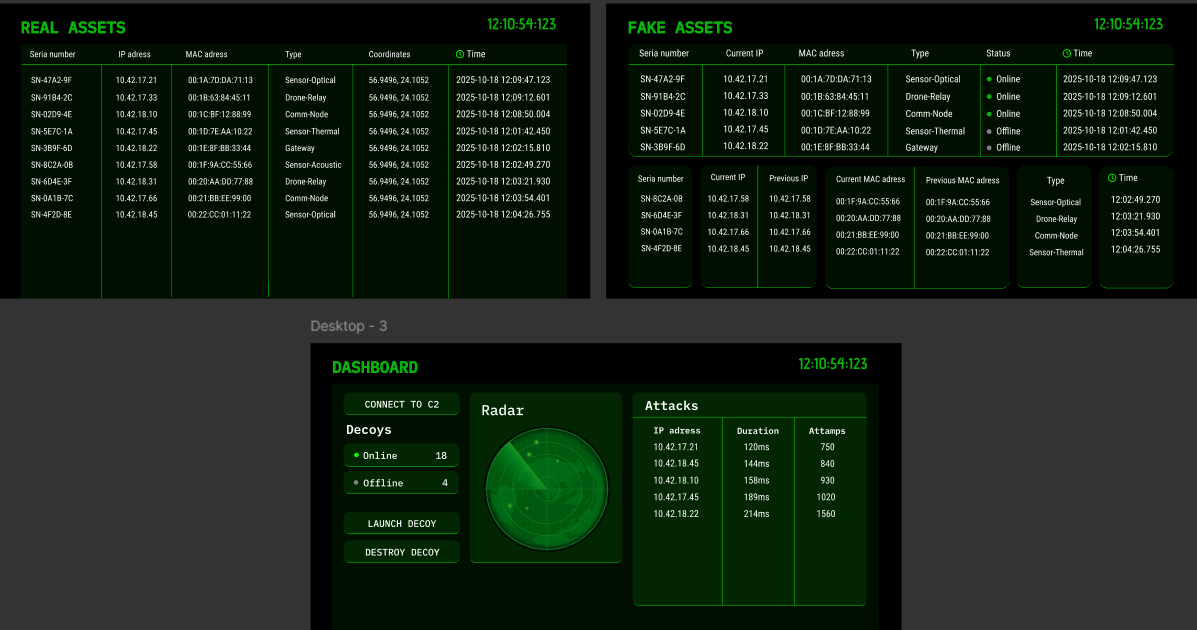
Designed a Figma-based Command Dashboard UI, showcasing:
- Real-time status of nodes (real vs decoy)
- Attacker engagement and confusion levels
- Mission health overview and deception triggers
Created animated visuals and mock telemetry screens to represent dynamic fingerprint mutation and decoy deployment.
Crafted the visual story for judges, showing how Phantom Signal would look and behave in a real battlefield context.
Finalized presentation materials and integrated mentor feedback on drone autonomy, fibre-optic communication, and jamming resilience.
Finalized a clear architecture diagram, threat model, and presentation narrative for the jury.
Challenges we ran into
Realism without hardware:
We needed to make a believable defence-grade solution without any physical systems, so we focused on simulation accuracy and logical flow instead.Designing adaptive deception:
It was tricky to model how fake drones could “talk” convincingly without revealing real data.Balancing stealth and communication:
Too much silence breaks coordination, too much chatter reveals your position - we had to find that equilibrium.Simplifying deep tech:
The hardest challenge was communicating complex cyber-deception logic to non-technical audiences in simple, visual terms.
Accomplishments that we're proud of
Defined a new cyber-stealth architecture integrating optical drones, autonomous routing, and adaptive deception.
Created a functional UI prototype in Figma showing real-time attacker diversion.
Completed a competitive and research landscape analysis, confirming Phantom Signal’s uniqueness.
Designed a step-by-step operational workflow, from mission start to data recovery.
Built a five-phase development roadmap for post-hackathon implementation.
Crafted a strong, real-world narrative tying cybersecurity innovation to defence resilience.
What we learned
Cyber deception isn’t about stopping attacks - it’s about wasting attacker time effectively.
Autonomous systems must be silent, not just smart. Reducing communication noise is as vital as encryption.
Human storytelling matters. Translating deep-tech defence ideas into relatable, real-world problems helps bridge understanding.
Defence innovation is multidisciplinary. Cybersecurity, AI and physical autonomy now overlap more than ever.
What's next for Phantom Signal
Our journey doesn’t end here, it’s just beginning.
Partner with optical/fibre drone manufacturers to run small-scale pilot tests.
Integrate AI-based adaptive deception logic that learns attacker behaviour over time.
Collaborate with EU Defence Innovation & NATO DIANA for simulation testing.
Develop a real-time visualization dashboard showing attacker engagement and deception metrics.
Create ethical and operational deployment guidelines to ensure responsible military use.
Ultimately, we aim for Phantom Signal to evolve into a European cyber stealth framework - one that turns visibility into invisibility, chaos into control and enemy reconnaissance into valuable intelligence.
Phantom Signal: Making nodes disappear from the attack map.
Built With
- tyuu


Log in or sign up for Devpost to join the conversation.