-

PHANTOM-Introduction
-
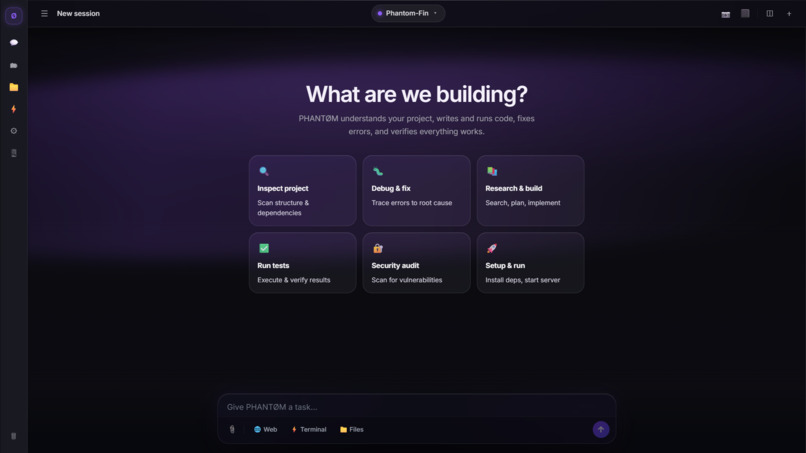
PHANTOM-UI

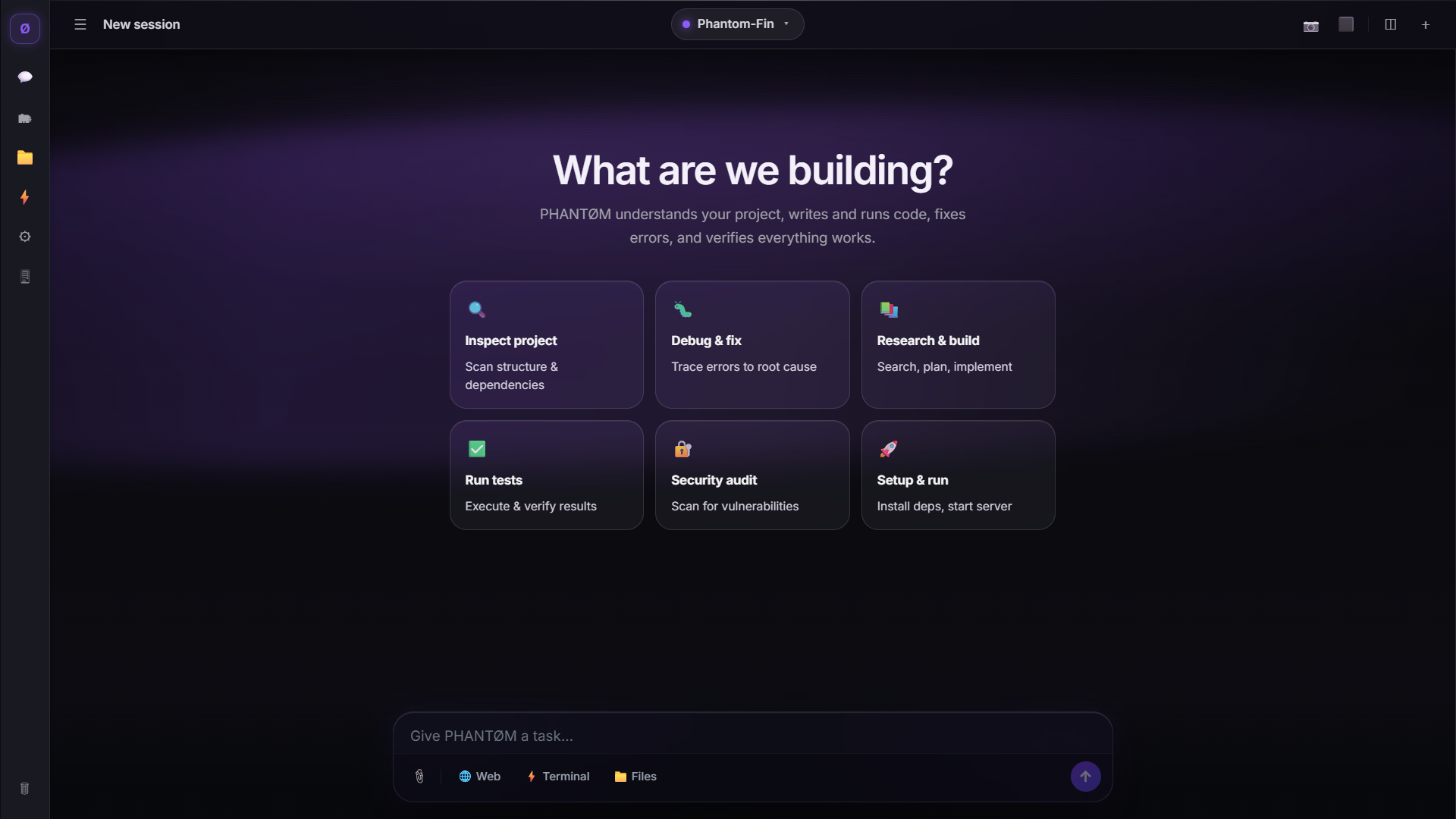
Inspiration# PHANTØM AI — Building Beyond My Past
Inspiration
My interest in artificial intelligence began with curiosity. I was fascinated by how AI could reason, solve problems, and write code. Eventually, I wanted to build something beyond a conventional chatbot—an AI that could connect inference with real software operations, interact with computers, develop applications, manage processes, and turn instructions into action. That ambition became PHANTØM AI, an Inference Software Control Model (ISCM).
But the story behind PHANTØM goes much deeper than technology.
The trauma I experienced affected my image, damaged my reputation, changed how I presented myself, and deeply impacted my confidence. It brought additional difficulties into my life, leaving me determined to rebuild myself and show the world who I truly was. I couldn't change what had happened, but I could choose what I wanted to build next. I wanted my work to reflect my abilities and give people a chance to see beyond my past.
Separately, I struggled with insomnia. When sleep wouldn't come, I often found myself awake while the rest of the world was quiet. I wanted those hours to count, so I turned to coding. PHANTØM became more than a technical ambition; it became something meaningful I could work toward while rebuilding my belief in myself.
What it does
PHANTØM is my attempt to connect AI inference with practical software operations, bridging the gap between understanding an instruction and carrying it out through authorized tools.
My vision for PHANTØM includes:
- Reasoning and problem-solving: Analyzing objectives, breaking down complex tasks, and developing practical solutions.
- Coding and development: Generating and debugging code, analyzing projects, modifying files, and building applications.
- Desktop and process control: Opening applications, inspecting running processes, closing programs, and force-stopping selected tasks when authorized.
- Terminal execution: Running supported commands, interpreting outputs, and investigating system errors.
- Local hosting: Launching development servers, inspecting ports, diagnosing conflicts, and checking service availability.
- Cybersecurity assistance: Investigating suspicious processes, analyzing system activity, and supporting defensive security operations.
- Cloud infrastructure: Integrating with Render to manage supported services, deployments, configurations, and operational reports.
- Execution verification: Checking results, diagnosing failures, and reporting whether operations succeeded.
{Through Inference model API}
My goal is to build an AI that does more than explain what someone should do. I want PHANTØM to help perform technical tasks, inspect the outcomes, and provide meaningful results.
How I built it
I built PHANTØM using a JavaScript and Node.js foundation, with an Express backend, a separate frontend, and AI model API integrations.
I developed the project iteratively, working on the interface, connecting the backend, configuring model providers, troubleshooting connectivity issues, and debugging existing code. I designed the architecture around the idea of connecting AI inference with tools that can perform real operations.
My long-term ISCM concept is to make PHANTØM capable of understanding a task, determining the necessary actions, executing them through authorized tools, inspecting the results, and reporting what happened.
Challenges I ran into
My journey was far from easy. I encountered broken backends, API limitations, unsupported model configurations, connectivity failures, and bugs that sometimes took hours to understand. As I was a freelancer.
Some nights stretched to 3 AM, with caffeine beside me, sweat on my face, and error messages filling my screen. Sometimes, I spent two straight hours fighting a single bug—changing code, testing it, watching it fail, and trying again. Those sessions were exhausting, but I kept learning because I wanted to understand what was going wrong and make my project work.
Then I was grounded, and my laptop was taken away. I still had unfinished work, ideas to implement, and bugs to fix, but I suddenly lost access to my main development device.
My 1 TB HDD became my saviour. Whenever I found another computer I could use, I plugged in my drive and continued working. After each session, I immediately removed my project copies and personal files, signed out of my accounts, and made sure I hadn't left my information behind. I had to adapt to unfamiliar computers while keeping my work accessible and my data private.
Despite these obstacles, I continued looking for ways to make progress. I learned to work with the resources I had rather than wait for ideal circumstances.
Accomplishments that I'm proud of
I'm proud that I turned my idea into an actual software project and established a foundation I can continue developing. I'm proud of the time I invested in its JavaScript and Node.js architecture, the integrations I worked through, and the technical problems I learned to troubleshoot.
I'm especially proud that I kept returning to PHANTØM even when working on it became difficult. Losing access to my laptop could have stopped my progress completely, but I found another way to continue through my HDD and the computers I could access.
Every bug I resolved taught me something new. Every improvement brought my project closer to my vision.
For me, this accomplishment is not just about the code. It's about what I learned, what I managed to build, and how I adapted when circumstances made the process harder.
What I learned
Building PHANTØM taught me that developing AI software involves much more than connecting a model to a chat interface.
I gained practical experience with backend development, APIs, frontend integration, debugging, application architecture, and the relationship between AI-generated decisions and real tool execution. I learned to investigate errors instead of blindly replacing code, preserve existing functionality, and verify whether a solution actually works.
I also learned to distinguish between a feature I envision and one I've successfully implemented and tested. Reliable software requires working integrations, appropriate permissions, careful testing, and effective error handling.
Beyond technology, I learned to adapt when circumstances changed. When my laptop was unavailable, I found another way to access my project. I began this journey wanting to prove who I was to the world, but along the way, I also began rebuilding that belief in myself.
What's next for PHANTØM
My next goal is to develop PHANTØM into a more capable Inference Software Control Model (ISCM) that connects AI inference with reliable, verifiable software operations.
I want to strengthen its reasoning and coding workflows, expand authorized desktop and process control, improve local hosting and port management, and develop more robust defensive cybersecurity integrations.
I also want to expand Render integration so PHANTØM can manage supported services, inspect deployments, analyze available logs and metrics, diagnose failures, and generate detailed operational reports.
Another priority is execution verification. I want PHANTØM to report not just what it attempted, but whether an action actually succeeded. Security, permissions, credential protection, and transparent error reporting will remain essential as I expand its capabilities.
My long-term vision is to build a system that can transform complex technical instructions into practical outcomes while remaining transparent about its actions and limitations.
This journey is still ongoing. I cannot rewrite my past, but I can build what comes next.
PHANTØM AI — An Inference Software Control Model (ISCM).
Created and developed by Viraj Tippu.S..

Log in or sign up for Devpost to join the conversation.