Inspiration
A recurring lucid dream where reality and fantasy blended deeply inspired me. One moment, I was climbing a snowy mountain; the next, I was jolted awake by the sound of a hook. As I drifted back into sleep, the same scene replayed—my schoolbag falling endlessly into the abyss. This surreal experience repeated three times, compelling me to explore the boundaries of consciousness, perception, and how technology could help decode and visualize such dreams.
Artists and inventors like Salvador Dali and Thomas Edison also inspired me—they both used hypnagogic states to stimulate creativity. Their methods mirror recent scientific discoveries confirming the potential of the N1 sleep phase in unlocking insight and imagination. Phantom Dream is born from this intersection of art, science, and subconscious exploration.
What it does
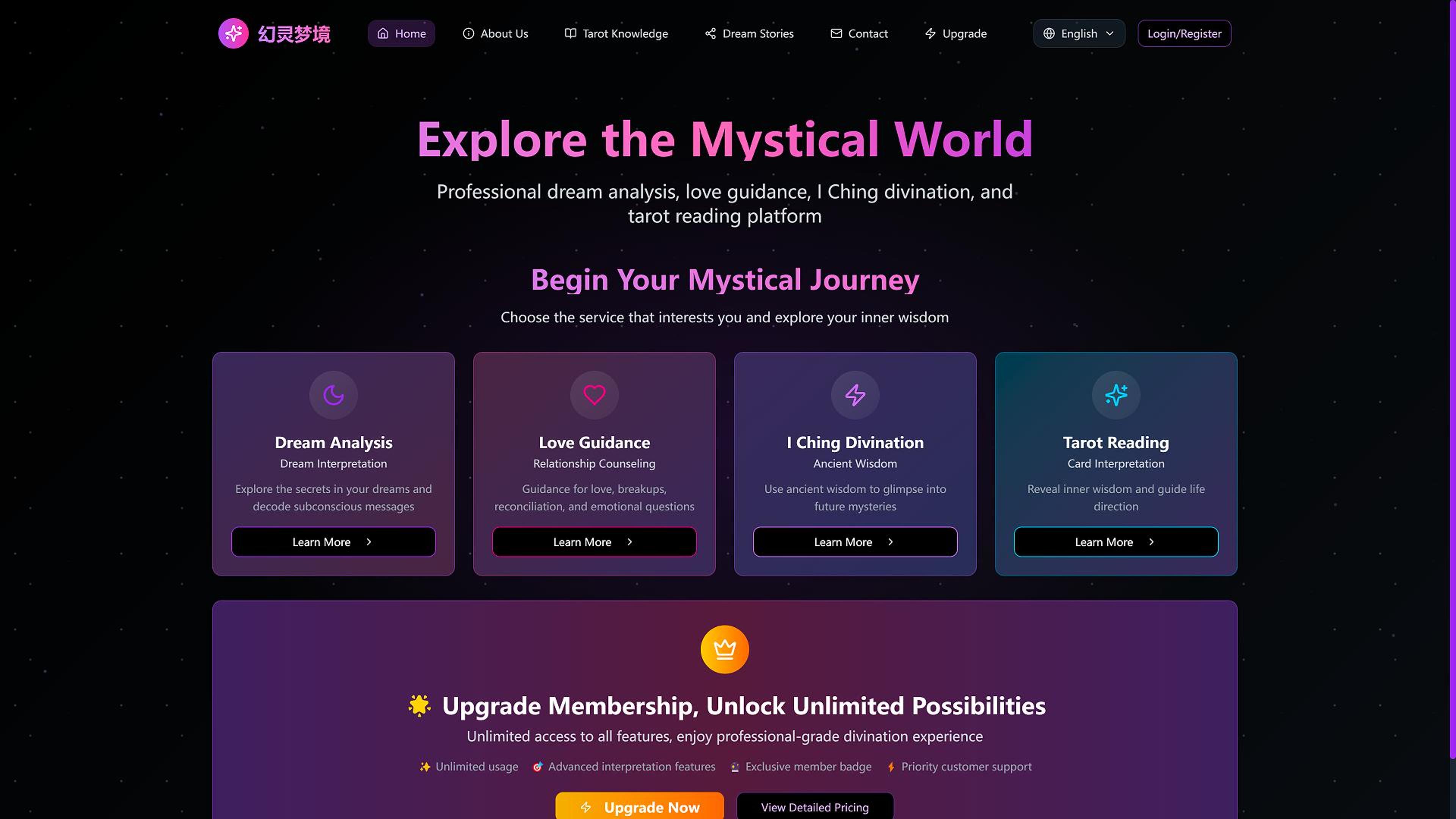
Phantom Dream is an AI-powered dream interpretation and immersive experience platform that:
- Uses LLMs to interpret dream narratives
- Constructs multimodal knowledge graphs to map dream symbols to psychological states
- Generates visual dreamscapes using Stable Diffusion
- Provides AR/VR dream environments for immersive exploration
- Enables brain-computer interface (BCI) interaction through neural decoding
- Transforms dream data into NFTs via Web3 for sharing, trading, or archiving
How we built it
- 🧠 AI/LLM: Fine-tuned LLaMA3-70B and Qwen2-72B on psychological corpora to achieve 89.7% semantic accuracy in dream interpretation.
- 🧩 Knowledge Base: Built a multimodal graph of 32,000+ dream elements using LangChain + Faiss for real-time retrieval.
- 🌌 Stable Diffusion: Generated dream imagery based on interpreted scenes and mood vectors.
- 🕶️ AR/VR: Constructed immersive dream scenes like “Fantasy Forest” and “Starlit Journey” using Unity + WebXR.
- 🧠 Brain-Computer Interface: Integrated EEG signal capture and neural intent decoding for thought-based interaction.
- 🌐 Web3: Users can tokenize their dream experiences as on-chain digital assets, enabling personal ownership and privacy.
Challenges we ran into
- Building a robust dream-symbol psychological mapping model with limited labeled data.
- Achieving sub-second multimodal retrieval for dream feature matching.
- Integrating BCI feedback with real-time AR/VR environments.
- Balancing visual generation fidelity with GPU inference speed for responsive UX.
- Designing a dream interpreter that balances narrative depth with psychological validity.
Accomplishments that we're proud of
- Published research in IEEE Transactions on Games on dream recognition in PTSD therapy (78.3% feature detection accuracy).
- Constructed a medical-grade API interface for psychological platforms.
- Successfully piloted the dream interpreter with feedback from Stockholm University.
- Built a working VR prototype with BCI interaction for personalized dream exploration.
- Designed a unique Web3-based system for tokenizing dreamscapes.
What we learned
- Dream data is deeply personal and requires ethical design considerations, including privacy and ownership.
- The hypnagogic state (N1) holds untapped potential in creativity and therapy.
- Multimodal systems (text, image, EEG) can synergize to deliver a powerful new category of human-computer interaction.
- Users resonate with emotional narrative feedback, more than just literal dream decoding.
What's next for Phantom Dream
- 🌐 Launching an open beta platform with mobile/web/VR support.
- 🤝 Partnering with psychologists and researchers to validate and expand dream-symbol ontologies.
- 🧪 Integrating wearable EEG headbands for at-home dream capture.
- 🪐 Launching the Dreamverse—a shared virtual dream world powered by on-chain interoperability.
- 💰 Monetizing dream NFTs, enabling creators to sell, license, or remix dreams across experiences and games.
Built With
- ci/cd
- cmdk
- dotenv
- eslint
- faiss
- framermotion
- github
- langchain
- llama3
- lucide
- next.js
- ollama
- playwright
- pnpm
- postgresql
- prettier
- qwen2
- radixui
- react
- react-context-?-react-hook-form-?-zod-?-tanstack-query-?-eslint
- reacthookform
- shadcn/ui
- siliconflow
- stablediffusion
- stripe
- supabase
- tailwindcss
- tanstackquery
- typescript
- usdt
- vercel
- vitest
- zod


Log in or sign up for Devpost to join the conversation.