-
-
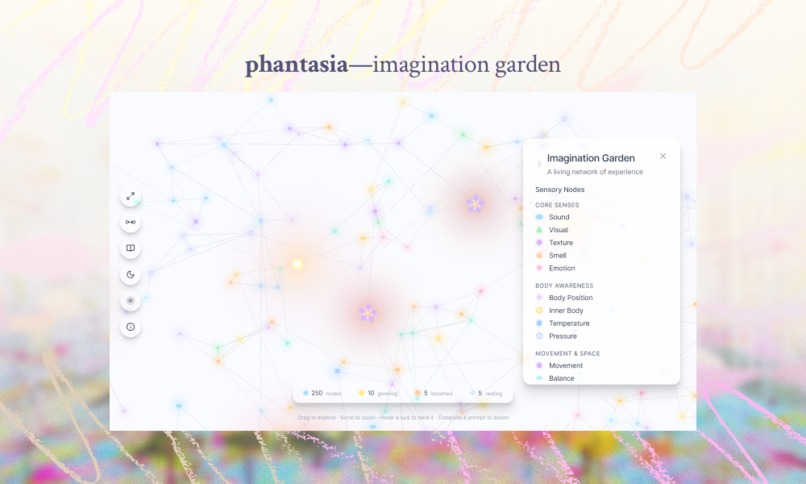
phantasia, the imagination garden
-
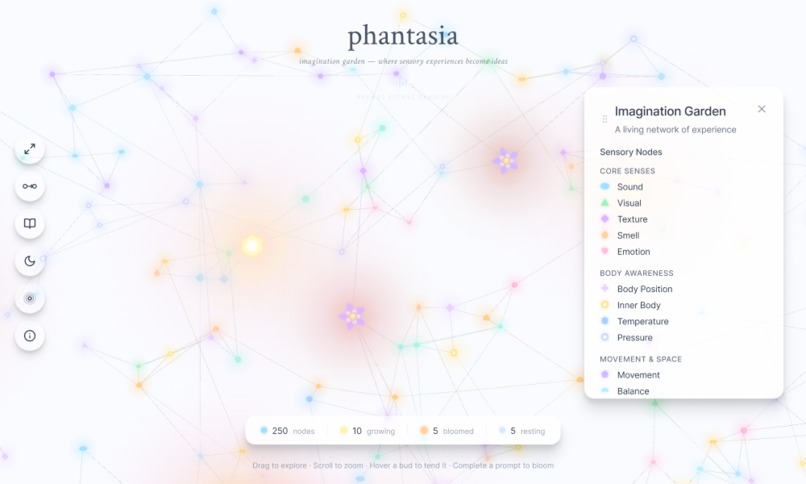
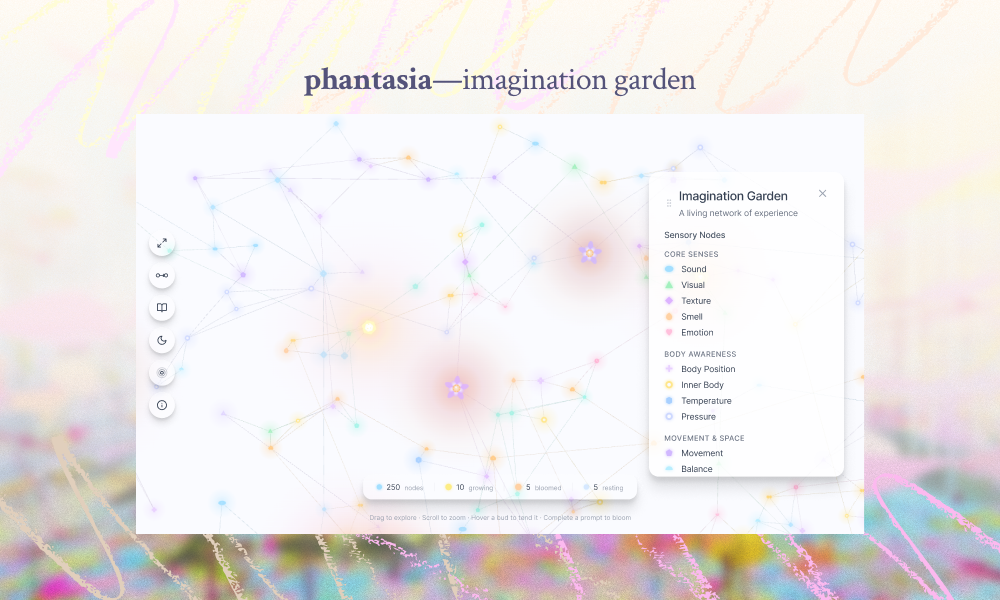
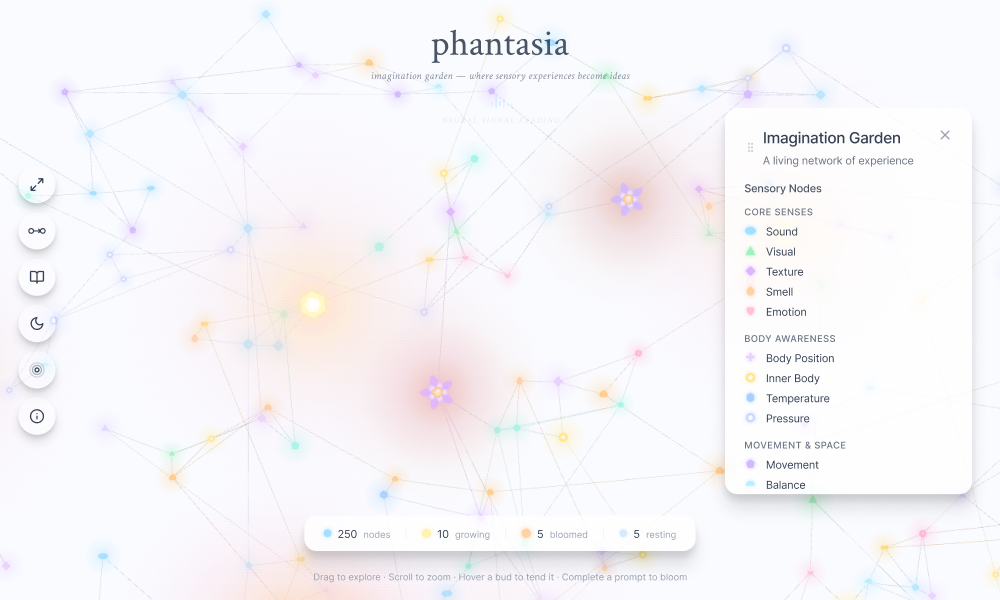
the imagination garden, a living network of sensorial experience
-
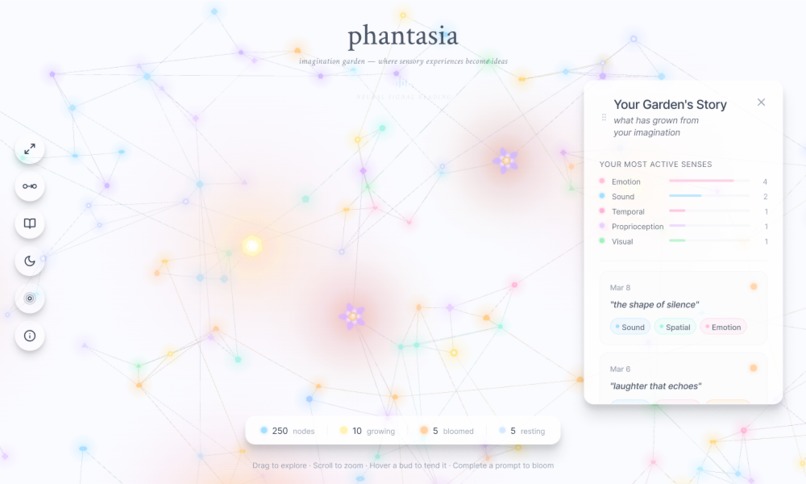
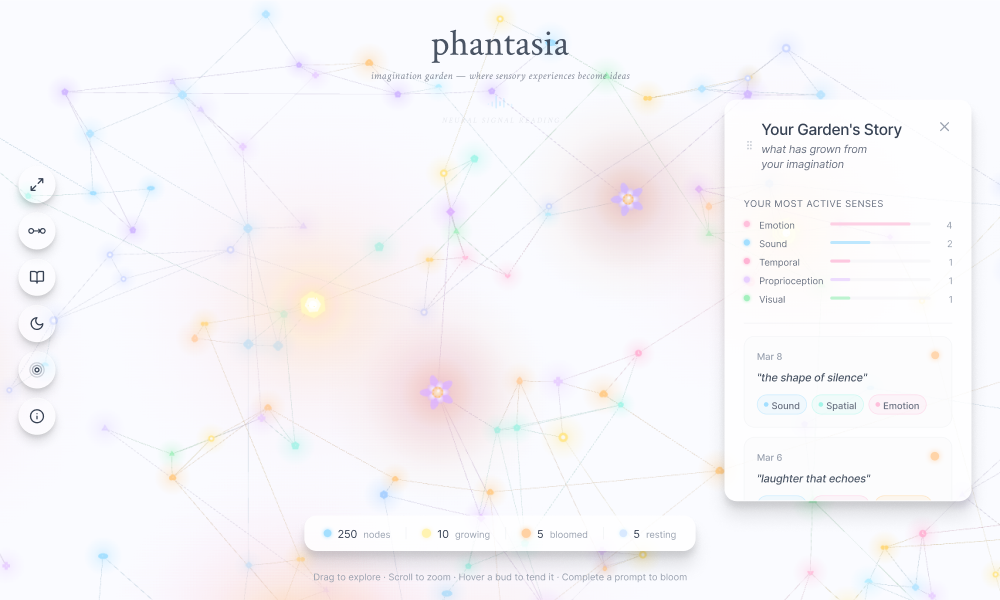
your garden's story, what has grown from your imagination
-
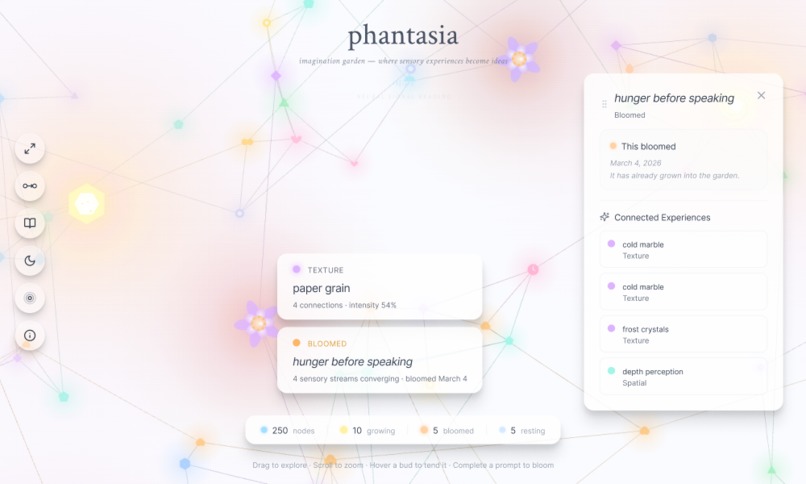
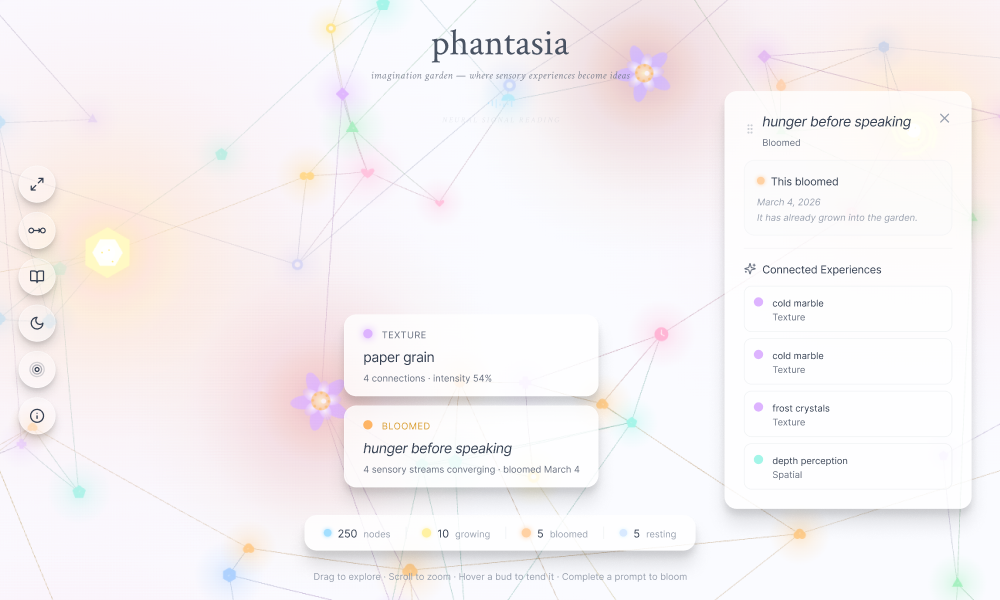
bloomed bud of connected experiences
-
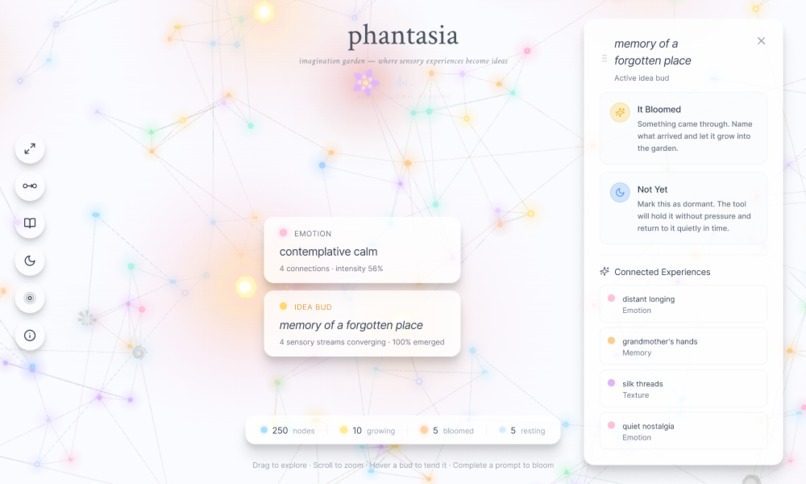
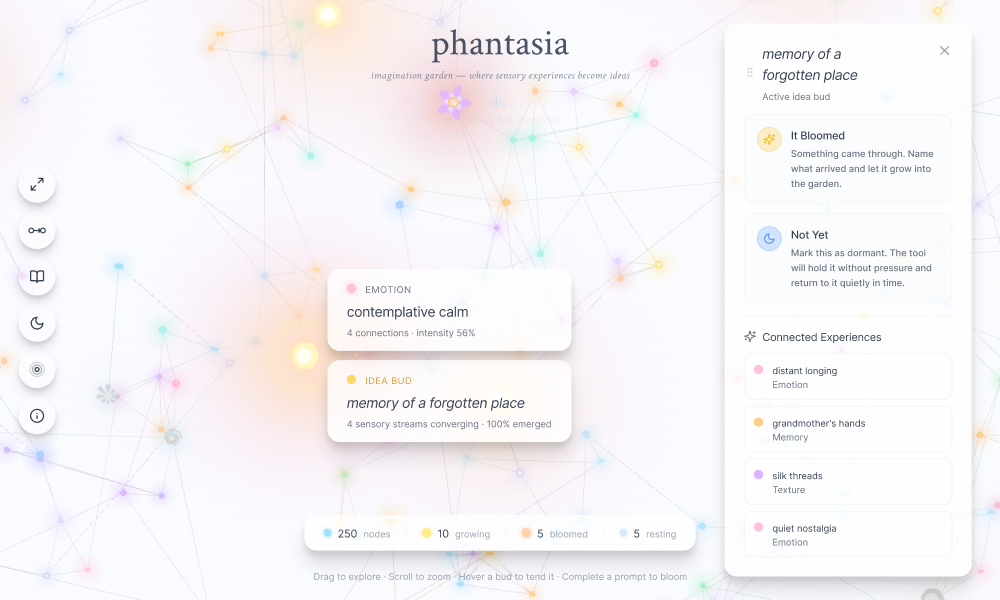
active idea bud of connected experiences
-
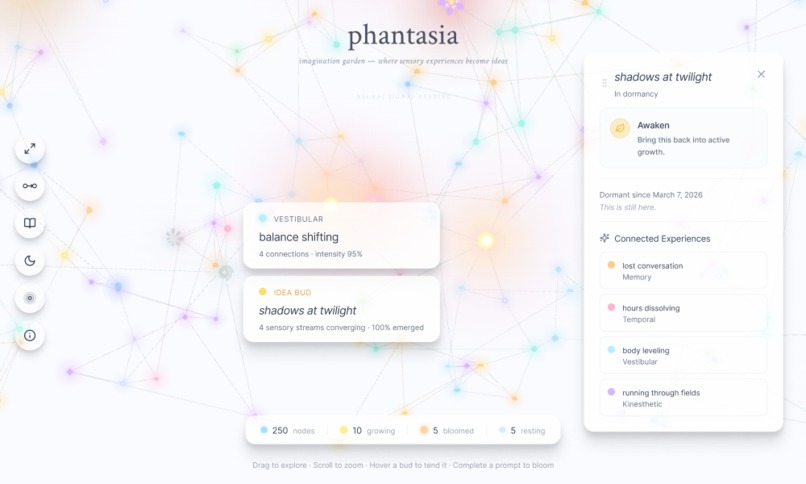
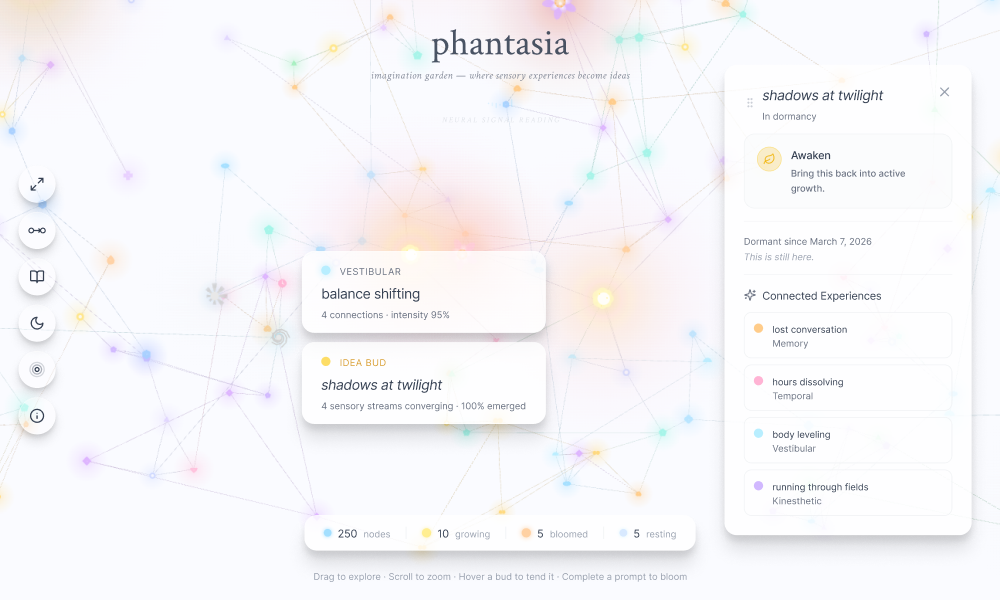
dormant bud that is held in time
Inspiration
Phantasia’s inspiration came from our own experience as designers in the age of AI. With the rise of AI technology, our own creative discernment and sense of imagination has become as important as ever. After researching the use of senses in the imaginative landscape and finding the apple-phantasia scale, our team wondered if we could create a tool that strengthens our imaginative capabilities.
What it does
Phantasia is a living sensory map created to explore and expand one’s inner imaginative world. By capturing and connecting meaningful sensory experiences from everyday life, such as sounds, textures, smells, and visual moments, it encourages users to reflect on how these experiences shape their perceptions and ideas. Through this process, Phantasia helps exercise the “muscle” of imagination, prompting users to build new connections between sensations. It also invites users to move beyond their own familiar sensory experiences with prompts that expand how they imagine, growing and evolving their garden of imagination.
How we built it
Phantasia was built through firstly, extensive research on imaginative landscapes and the benefits of a healthy imaginative practice. Phantasia was then built using a framework we created based off the research and iterated with Claude and FigmaMake.
Challenges we ran into
Ironically, imagining such a speculative future and tool, not grounded in anything that is currently possible, based on what living experiences we have available to us was extremely difficult. The visual representation of the tracking and these senses was part of that challenge.
Accomplishments that we're proud of
Learning Figma Make as a new tool has been an exciting part of the process, especially because it pushed us to experiment with new ways of designing and prototyping. As we explored the capabilities of this tool, we were able to move from early ideas and rough concepts to more interactive and polished designs. This tool makes it easier to visualize how our ideas would actually look like.
What we learned
We learned quickly how to balance dreamy and grand technical questions with ethical ones as well. Designing for imagination meant designing for the full range of what people sense and imagine. We learned how to embed safeguards into the interactions themselves to tend to the users with care.
What's next for phantasia
Phantasia could track how sensory experiences change across seasons, locations, or time of day. For example, users might see how winter sounds or summer colors influence their imagination differently.
Built With
- figma
- figma-make
- figma-slides
- midjourney


Log in or sign up for Devpost to join the conversation.