-
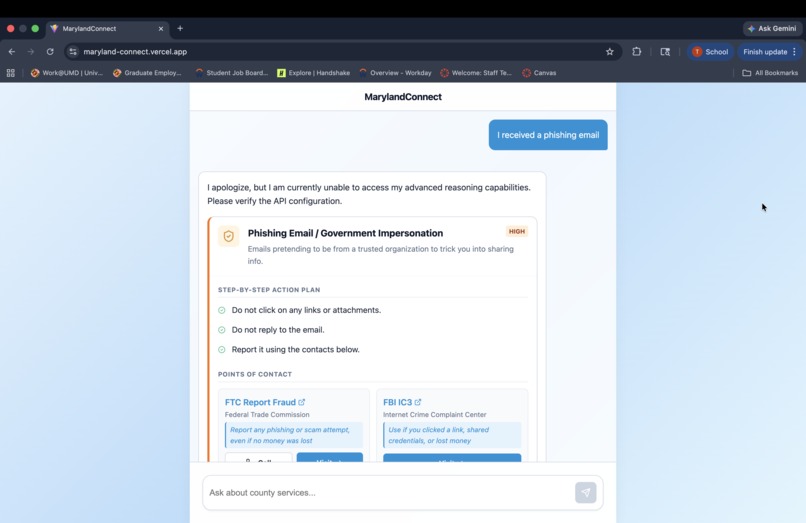
Cyber
-
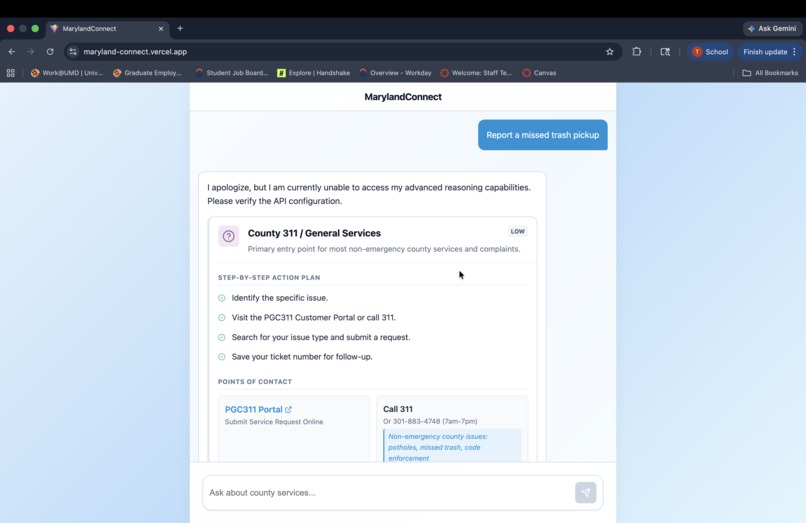
Civic
-
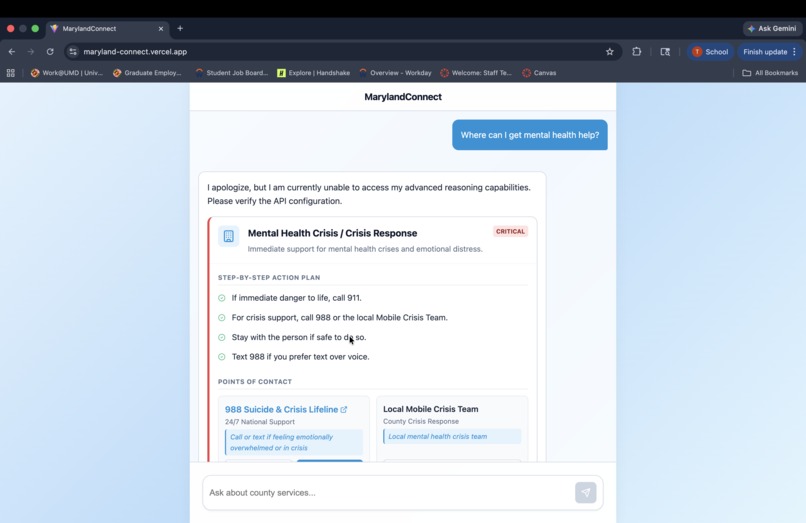
Health
-
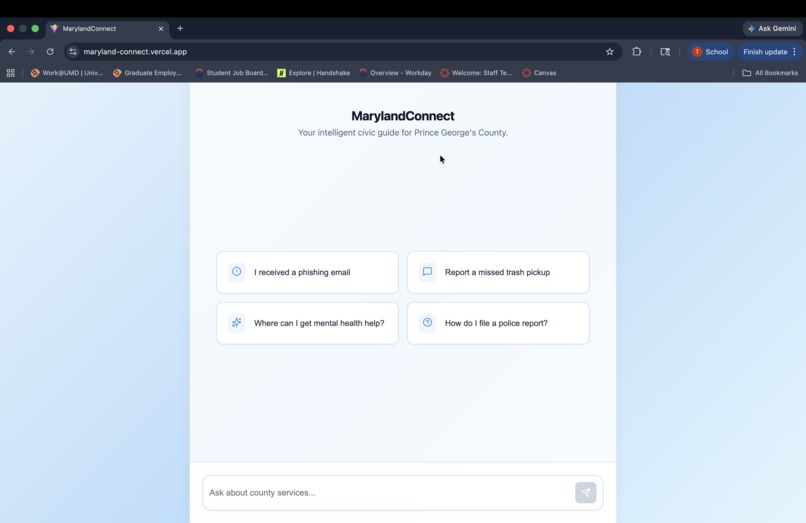
Homepage
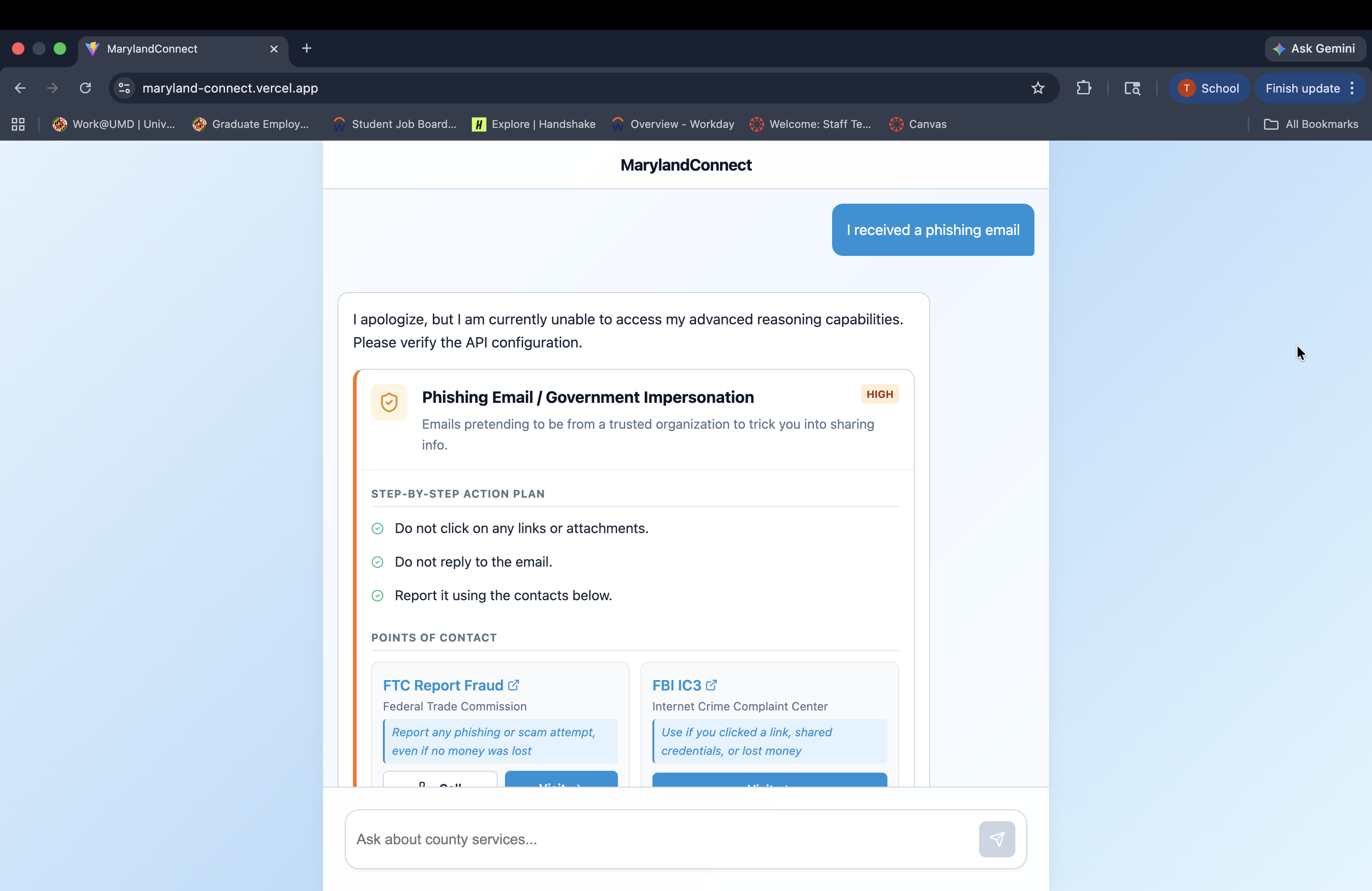
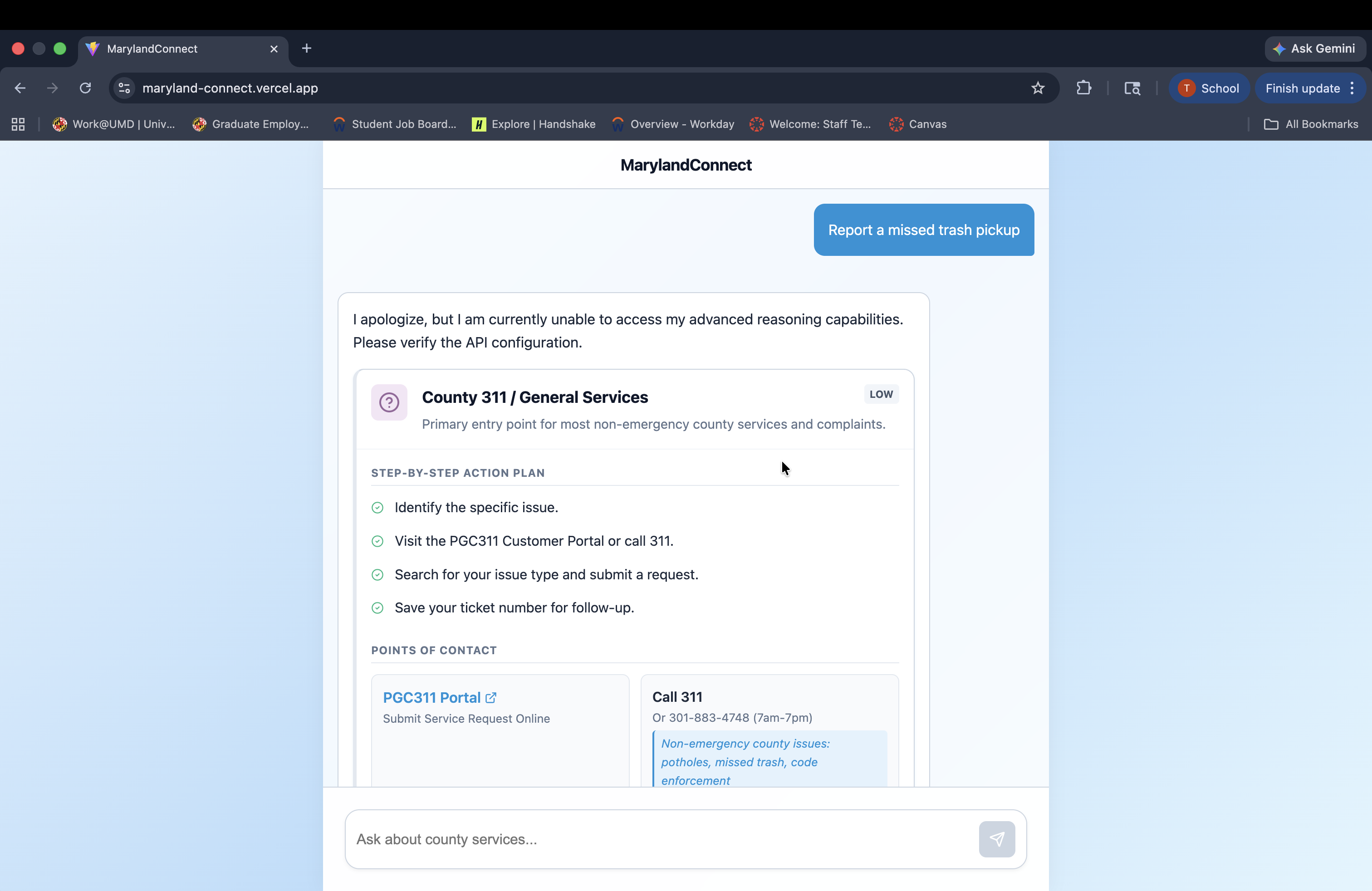
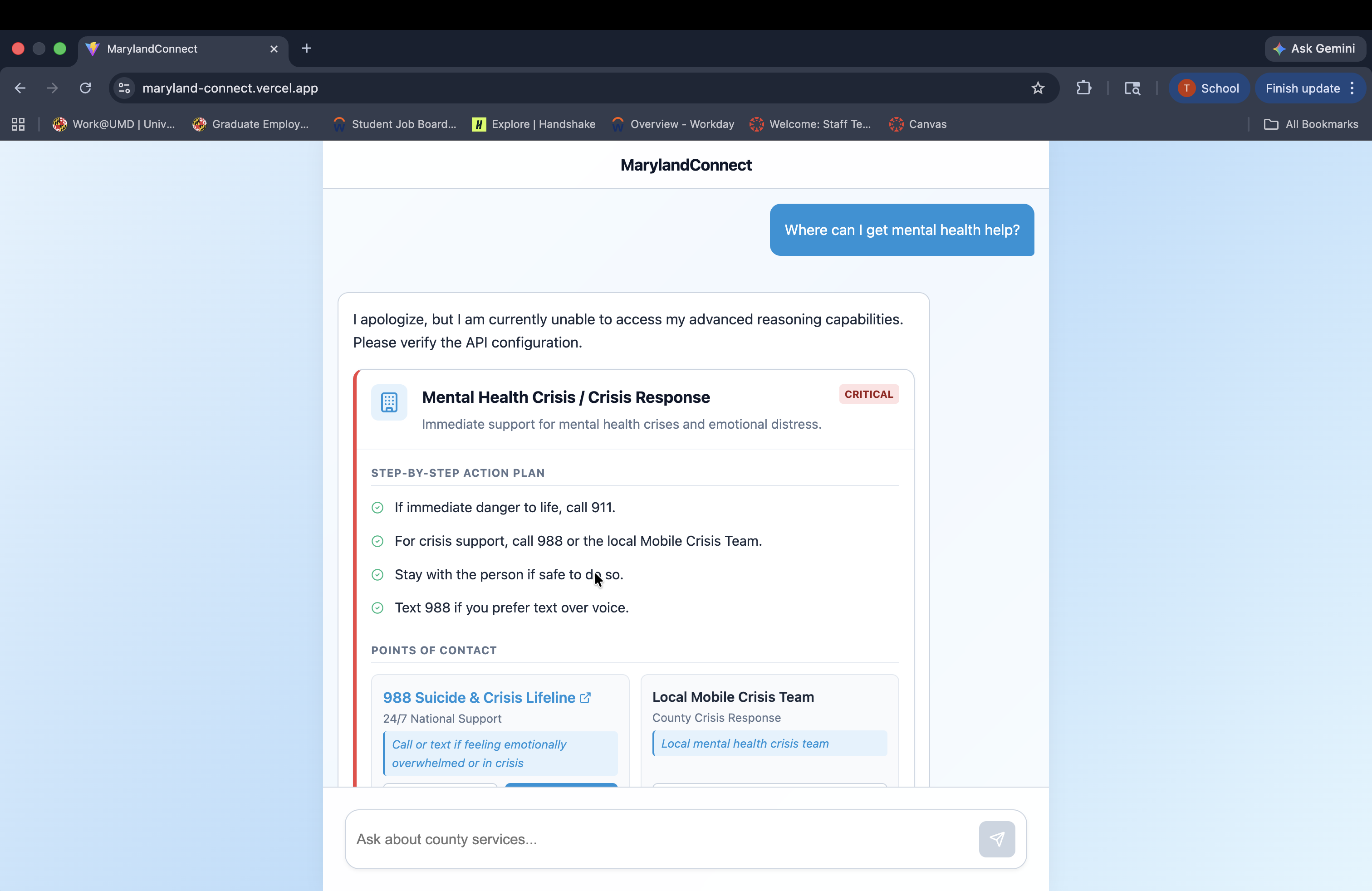
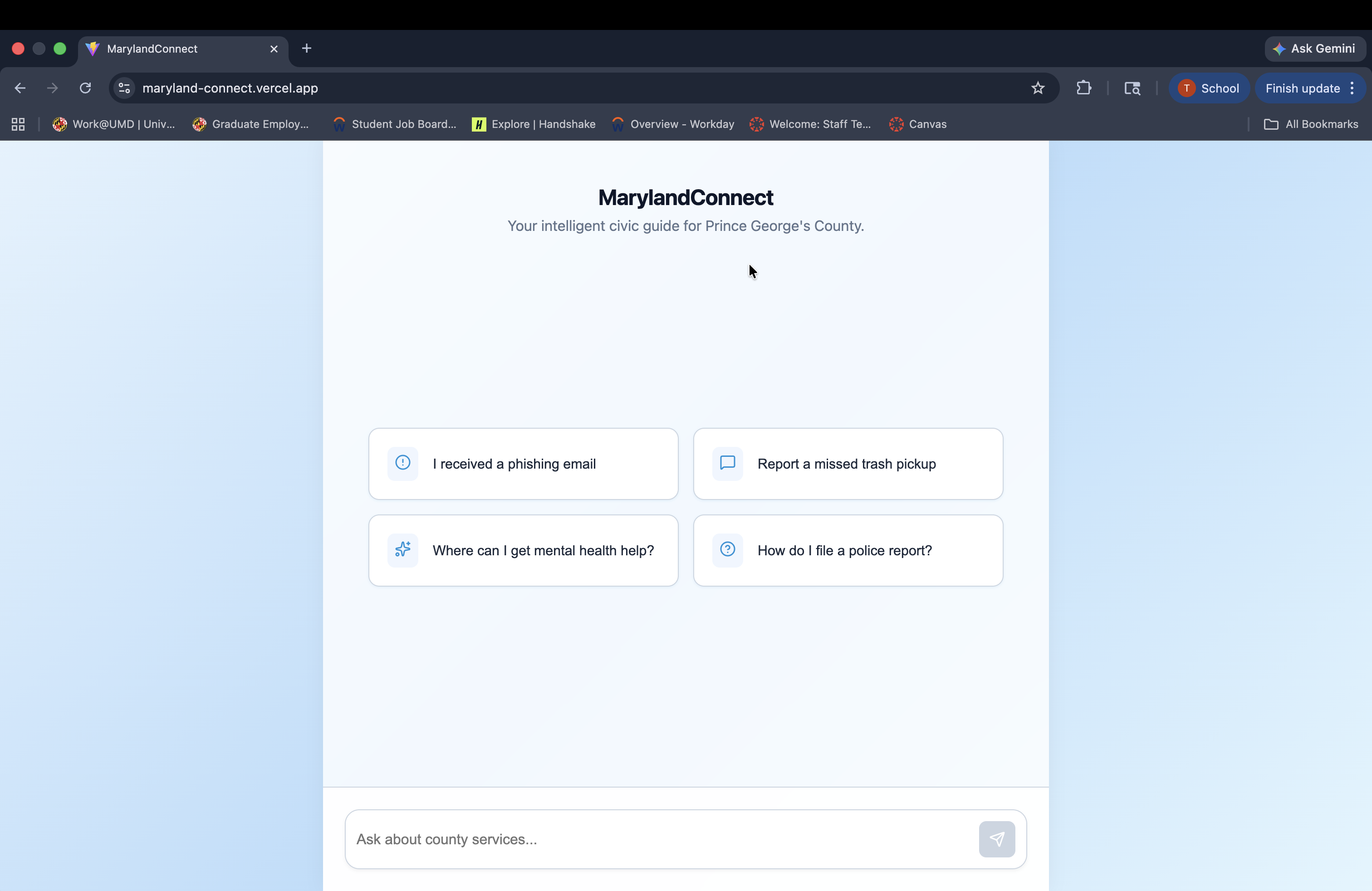
Inspiration People don’t know where to go for help beyond 911 and 311. Information exists, but it’s scattered across different websites and departments. We wanted to simplify this into one place where residents can quickly get clear, actionable guidance.
What it does MarylandConnect is an AI assistant where users describe their issue in plain English and instantly get the right department, contact information, and step-by-step actions. It covers civic issues, health support, emergencies, and cybersecurity cases.
How we built it We built a React + Vite frontend and used AI agents powered by Claude Code and Google Antigravity. The system takes user input, classifies the issue, and returns structured outputs (department, contacts, steps) using a custom JSON dataset and APIs like OpenAI and Perplexity.
Challenges One of the main challenges was building the dataset from scratch, ensuring it was accurate, structured, and covered multiple domains. We also had to ensure the system consistently returned reliable, non-hallucinated outputs.
Accomplishments We built a complete end-to-end system that provides actionable outputs instead of generic responses. We also implemented a strong cybersecurity flow and designed the system to scale for real-world use.
What we learned We learned that prompt design is critical for consistency, structured outputs are more useful than raw text, strong guardrails are necessary, and building AI systems is more about architecture than just model choice.
What’s next for MarylandConnect We plan to expand the cybersecurity side by improving scam detection and providing recovery guidance. We also aim to add a cyber incident reporting feature, integrate with government systems, and enable direct reporting and tracking for users.

Log in or sign up for Devpost to join the conversation.