-
-

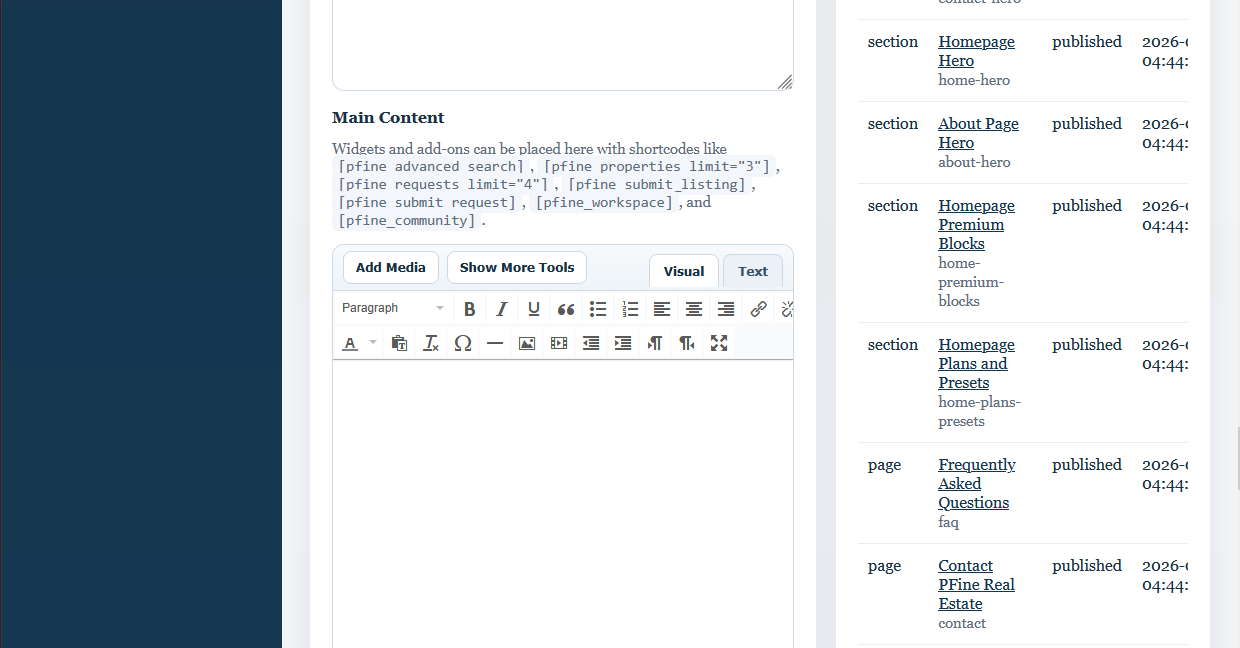
Homepage
-

Create an account
-
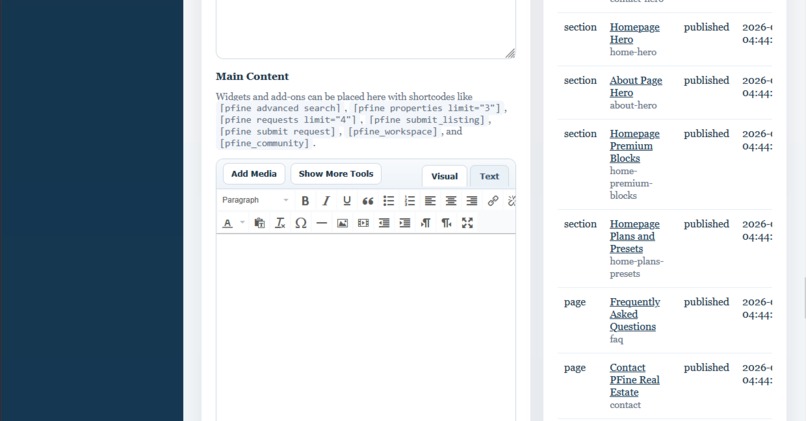
Create a blog post form
-

Homepage latest posts cards
-
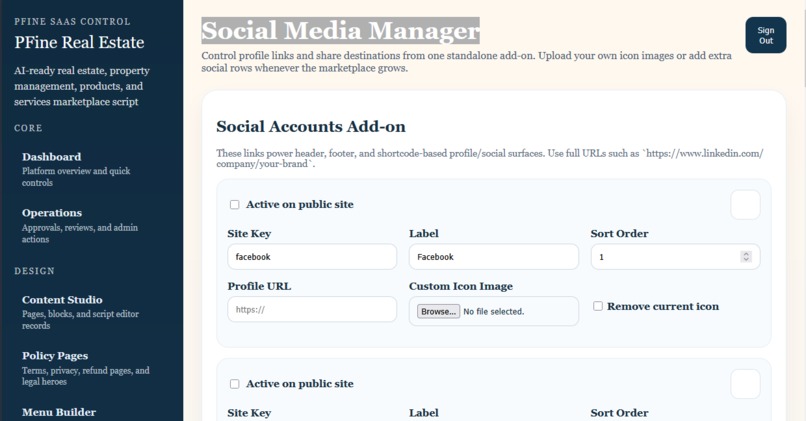
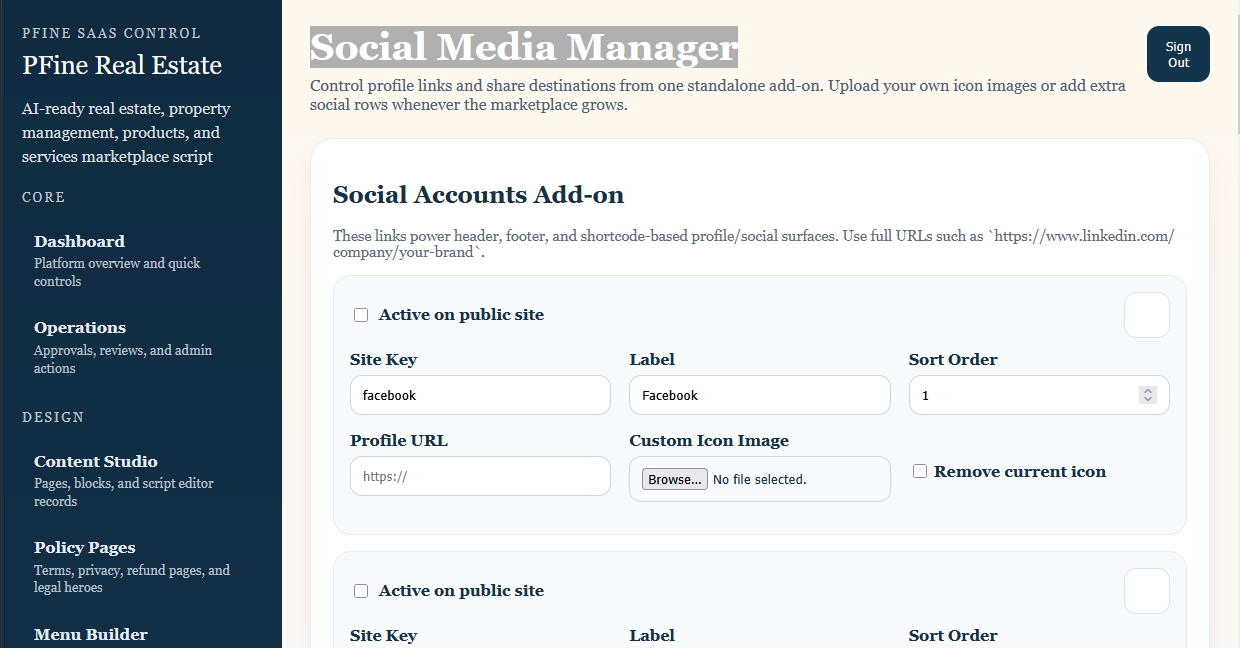
Social media accounts manager page
-

Property page
-
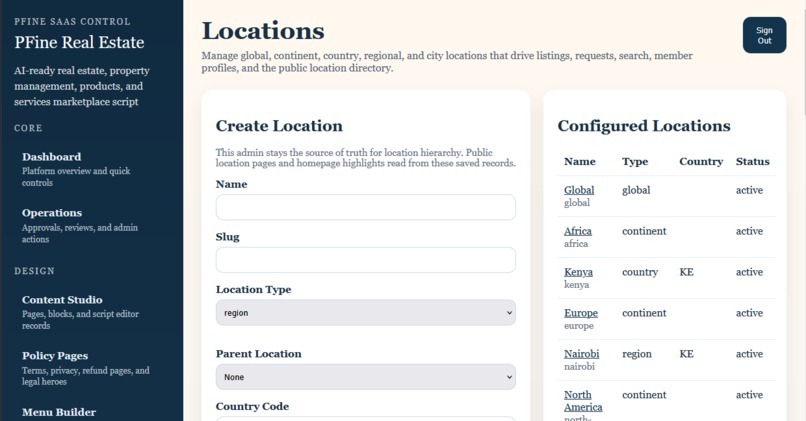
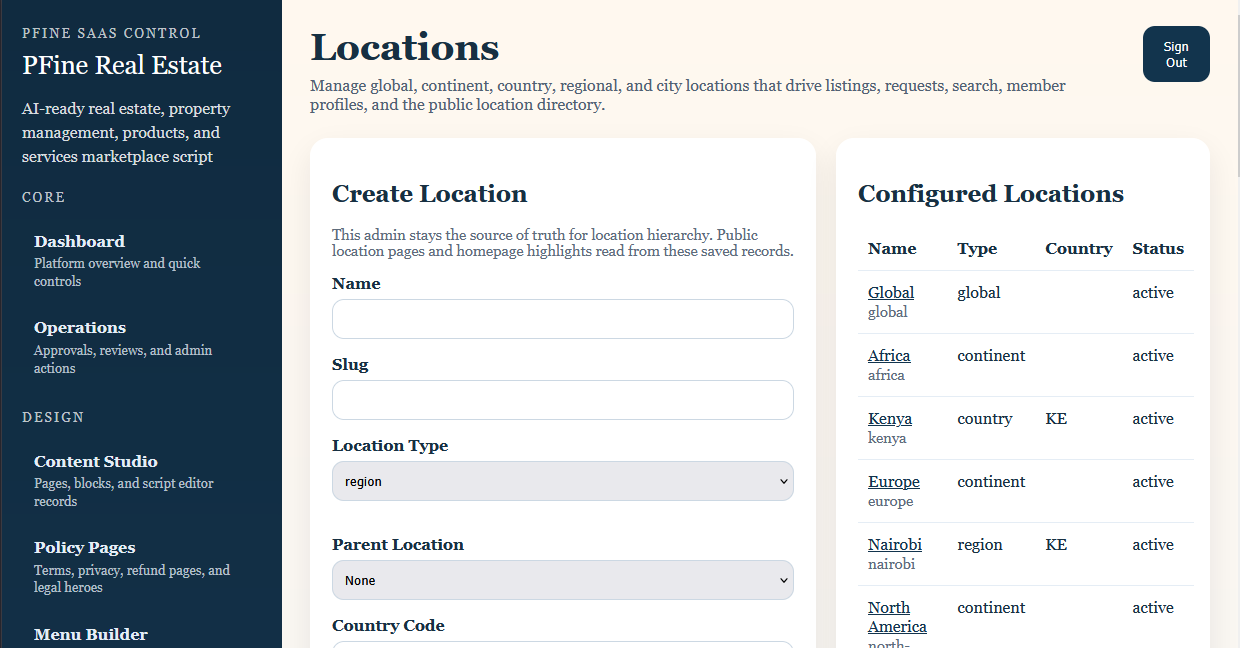
Add a property location
-

Manage profile page
-
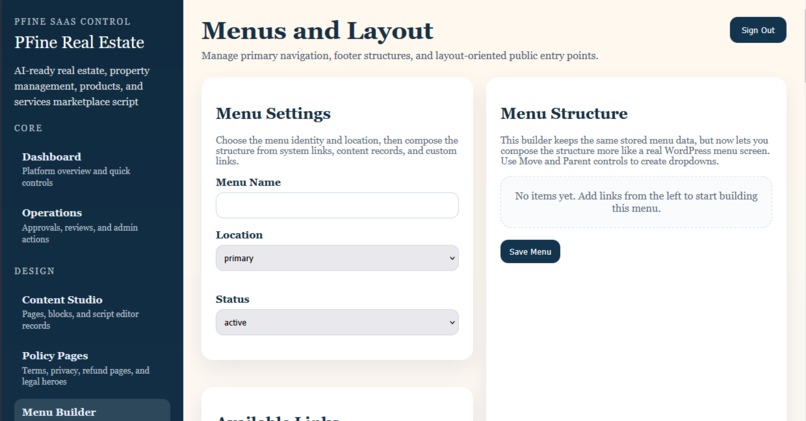
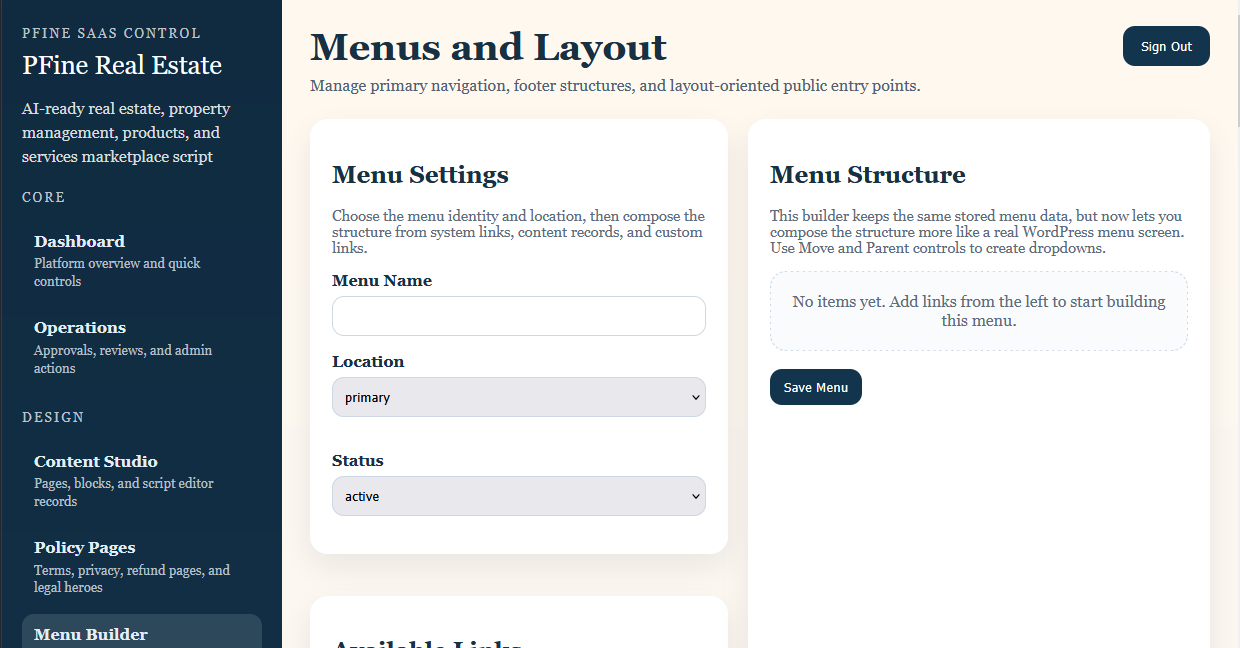
Add or manage menus page
-

User sign in page
-
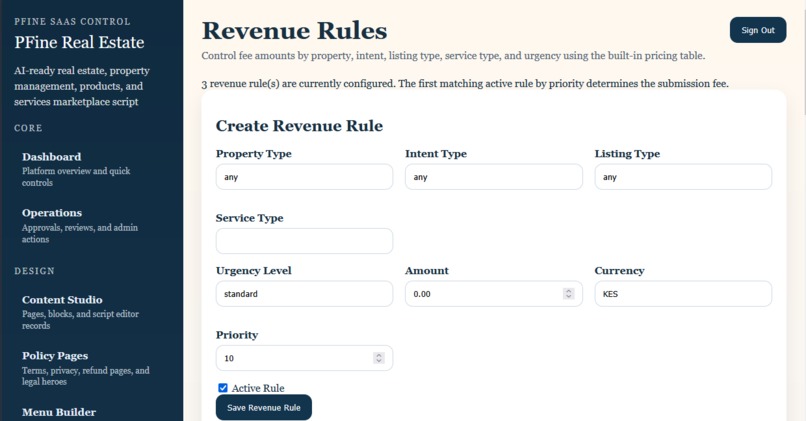
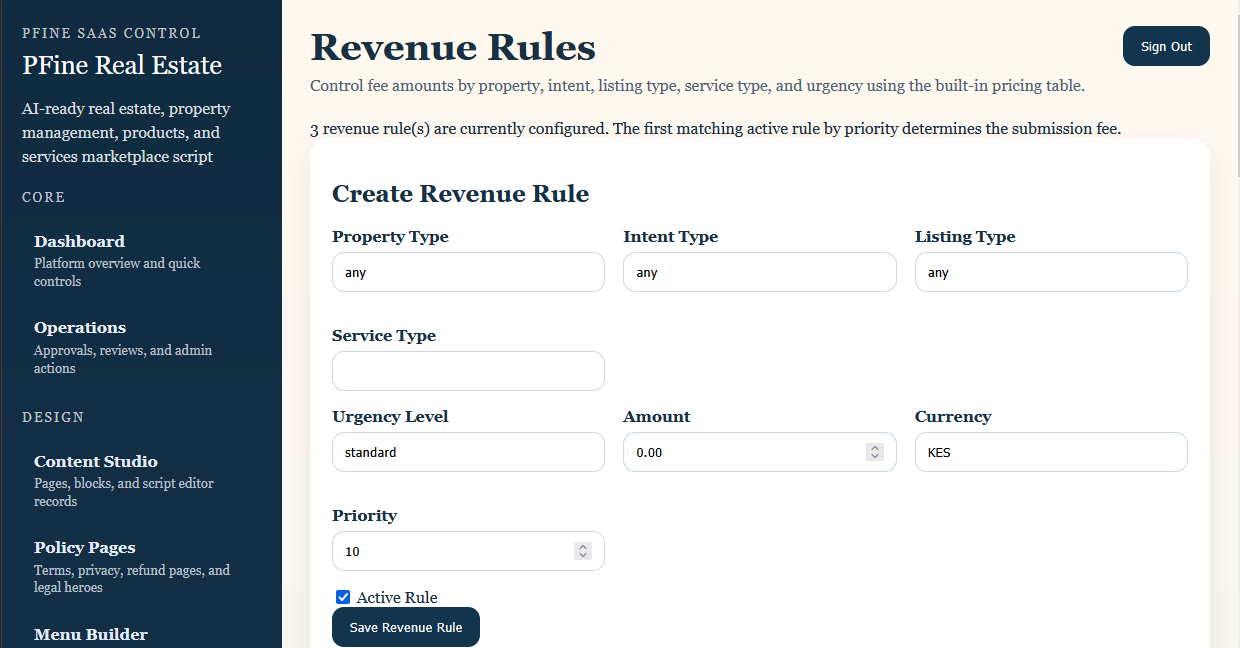
Setup revenue rules page
-
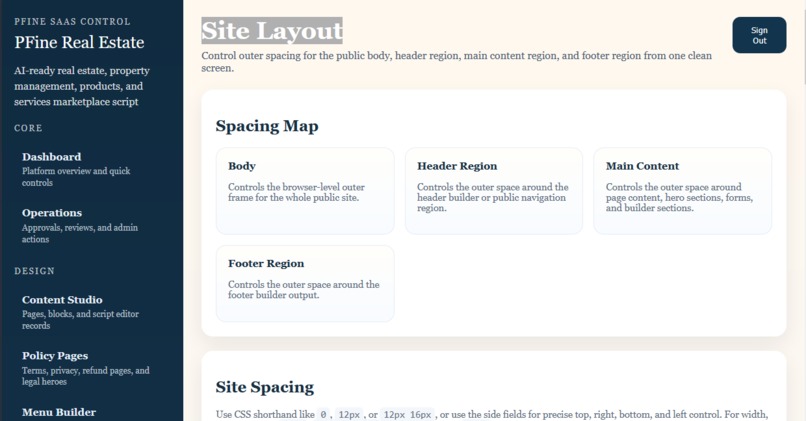
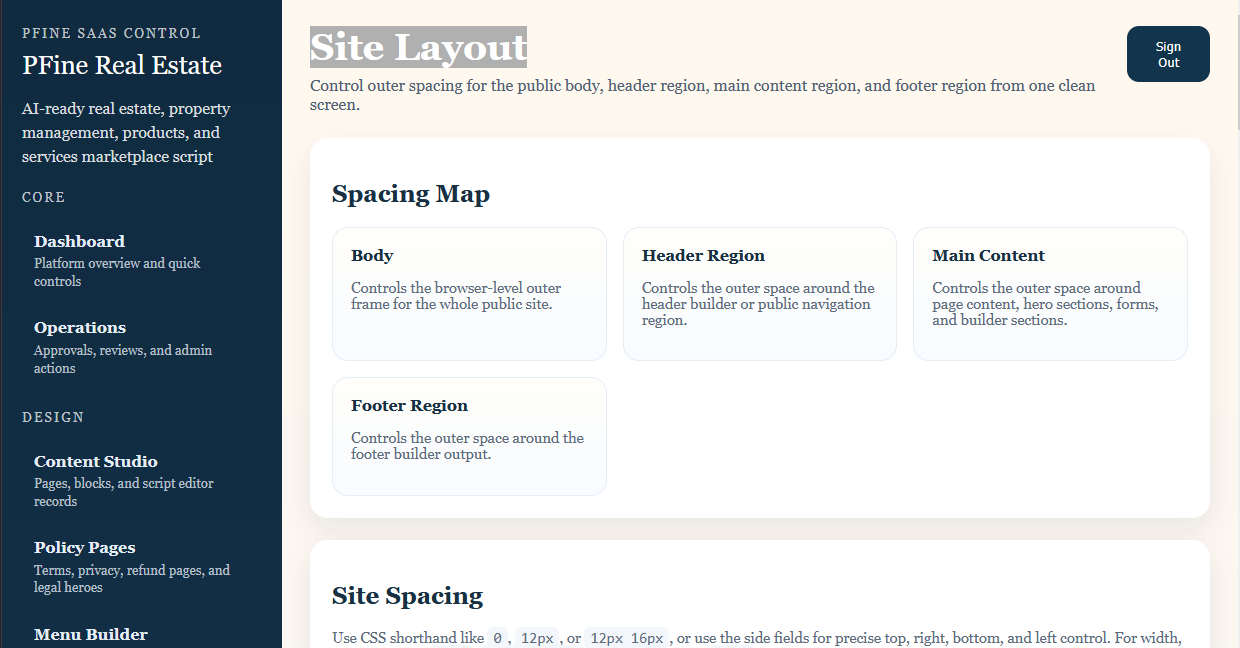
Manage site layout page
-
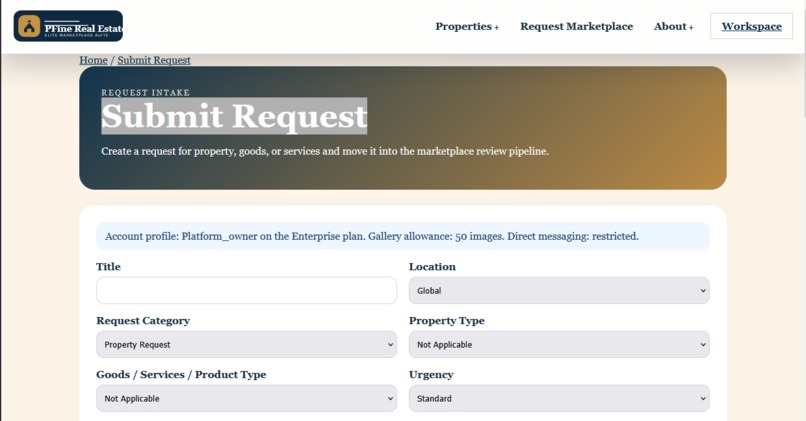
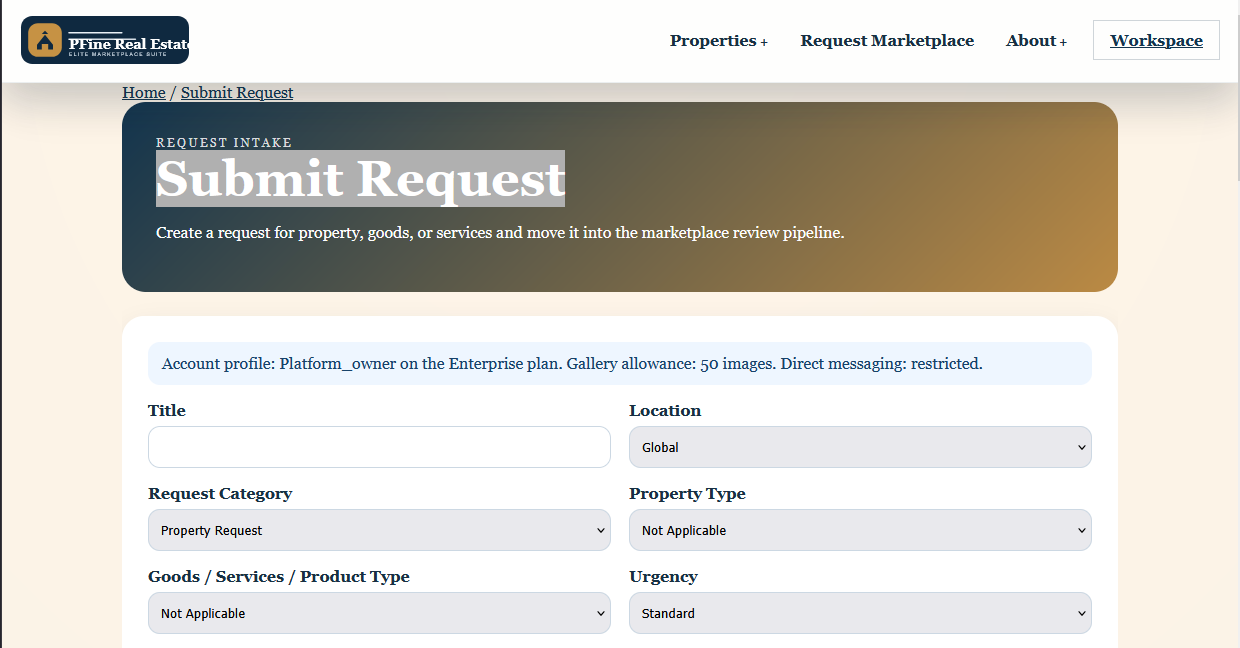
User submit request page
-

Submit Listing page
-
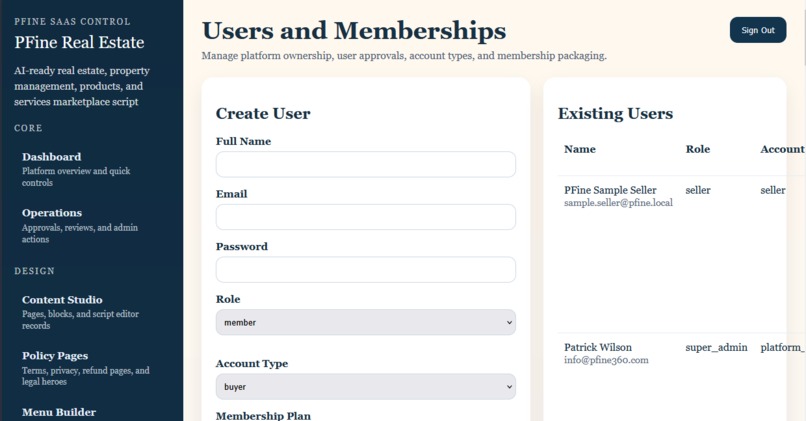
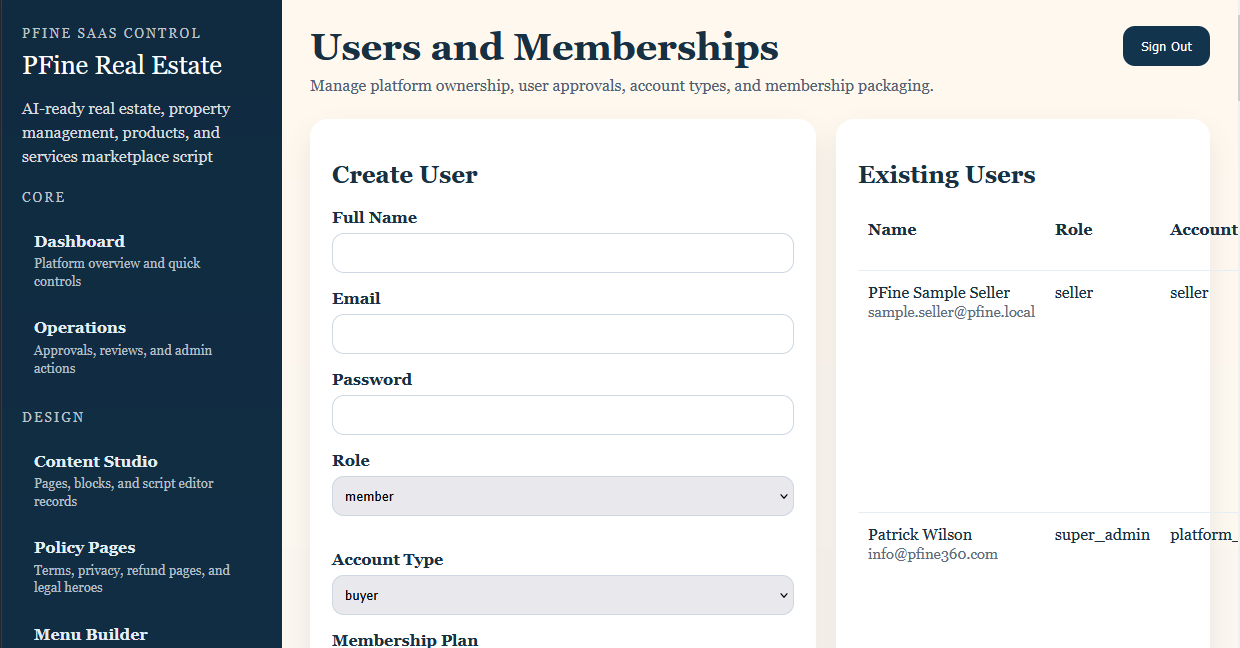
Manage users and membership page







Inspiration
The real estate market is often defined by transactions, but at its core, it is about people trying to find a place to call home, manage assets, or scale an enterprise. For many independent agents, growing agencies, and property corporations, the existing choices are frustrating: either remain locked into restrictive, heavy third-party platforms or pay exorbitant software fees. Driven by a desire to democratize advanced property tech despite strict financial shortages, I set out as a solo developer to build an independent, AI-native standalone script from the ground up—giving everyone from individual sellers to large housing cooperatives an elite, fully customizable commercial platform without the enterprise-level cost barriers.
What it does
Pfine Real Estate Management System is a lightweight, standalone PHP marketplace script engineered to manage properties, products, and industry-related services without relying on third-party platform dependencies.
Multi-Tier Marketplace Engine: It serves an expansive audience—including individual buyers/sellers, agencies, property managers, corporations, and housing cooperatives—by handling rentals, direct listings, and specialized real estate services.
Unified Payment Ecosystem: Features native, out-of-the-box integrations for critical local and international financial rails, including M-Pesa, PayPal, and direct bank transfers, making global and localized monetization seamless.
AI-Ready Architecture: Designed with a dedicated AI provider abstraction layer, the platform powers intelligent listing assistants, and smart property recommendations.
Built-In Visibility: It bakes professional technical SEO, keyphrase optimization, and structured metadata directly into the core routing engine, ensuring every listing ranks natively on search engines from day one.
How I built it
To ensure maximum speed, portability, and absolute structural independence, I built the platform completely as a lightweight, modular PHP application.
Solo Development Stack: Leveraged advanced AI programming models (Codex) to accelerate engineering velocity, acting as an intelligent sounding board to write clean, optimized code efficiently as a single creator.
Bespoke Core & Routing: Implemented a secure standalone PHP bootstrap architecture, featuring a custom public entry point (public/index.php), explicit /admin structures, and a lightweight routing layer built for rapid deployment.
Clean Data Architecture: Established a highly optimized, portable standalone relational database schema from day one, entirely free from the overhead and bloat of generic content management systems.
Engineered Abstractions: Integrated modular abstraction layers for financial gateways, AI providers, and theme customization, ensuring developers can switch payment processors or AI models without modifying core business logic.
How AI Helped Me (My Coding Co-Pilot)
Building an enterprise-ready marketplace script completely from scratch as a solo developer with limited capital is a massive architectural hurdle. You don't just write code; you have to act as the lead architect, the security auditor, and the QA team all at once. This is where advanced AI models like ChatGPT and Codex became an absolute game-changer for my workflow.
Instead of treating the AI as an automated copy-paste tool, I leveraged it as an elite, high-velocity engineering partner. When designing the standalone PHP bootstrap architecture, the AI acted as a vital sounding board—helping me map out a custom routing engine, organize clean folder hierarchies like PFINE_REALESTATE_ROOT, and strip out the common bloat found in generic content management systems.
When I hit brick walls—like resolving fatal path errors during setup execution or securing data validation rules—the AI didn't just spot the bugs; it helped me reason through why they happened and how to build resilient fallbacks. It accelerated my development velocity by generating clean code patterns for the pluggable AI provider layers and financial integration matrices, allowing me to focus my energy on high-level architecture. Without this collaborative synergy, building a platform this robust in such a tight timeframe simply wouldn't have been possible for a single developer.
Challenges I ran into
Operating with limited financial resources as a solo developer meant that time and architectural precision were my only leverage. Building fundamental web routing, payment webhooks, installer protocols, and security layers completely from scratch required meticulous planning to avoid technical debt. My biggest challenge was establishing an architectural foundation that remains exceptionally lightweight and focused in its initial phase, while ensuring it is robust enough to eventually ingest large amounts of unstructured data and handle multi-currency payment states safely without relying on expensive infrastructure.
Accomplishments that I am proud of
I successfully achieved total platform independence by creating a fast, ultra-lean PHP bootstrap environment that completely eliminates framework overhead. I am incredibly proud of designing and completing a fully functional financial matrix—integrating M-Pesa, PayPal, and bank transfers natively—completely solo. Engineering a highly scalable foundation that successfully balances deep architectural abstractions with a minimal footprint is a massive milestone for independent real estate tech.
What I learned
This project reinforced that financial constraints and solo development breed true innovation. Relying on AI assistance like Codex taught me how to maximize development velocity while maintaining strict control over code quality. I learned that isolating core business logic through abstraction layers makes an application infinitely more resilient to changing technology, such as evolving payment APIs or AI endpoints. Most importantly, I validated that establishing a highly focused, scaffolded initial architecture is the most stable and efficient way to build enterprise-grade software meant for global distribution
What's next for Pfine Real Estate Management System
The immediate roadmap transitions Pfine from a foundational scaffold into a fully operational commercial distribution package. Upcoming phases include deploying a local, wizard-driven web installer that handles secure database configuration and applies the core schema. I will then build out the complete authentication, role-management, and media-handling sub-systems. Finally, I will launch advanced AI adapters for deep listing enrichment, alongside integrated pricing, subscription, and ad-boosting modules to deliver a fully monetizable, white-label marketplace script ready for deployment.

Log in or sign up for Devpost to join the conversation.