-
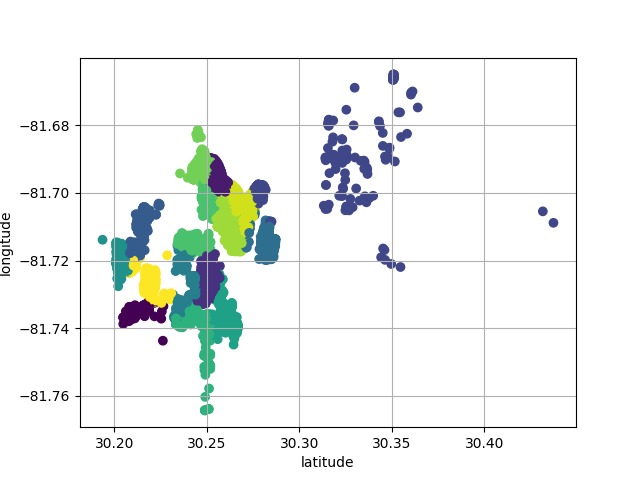
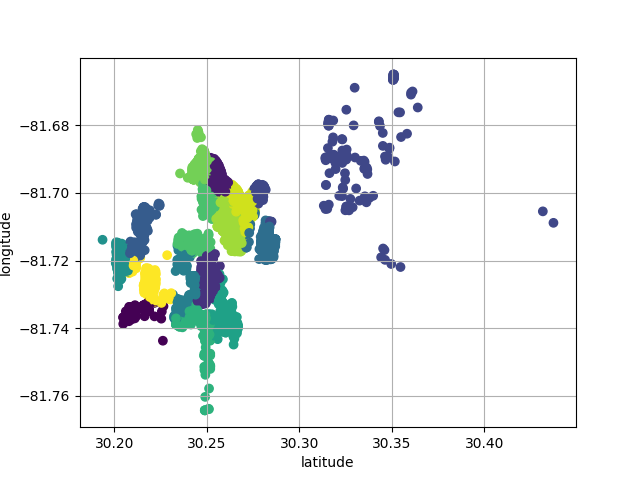
All the clusters that were created
-
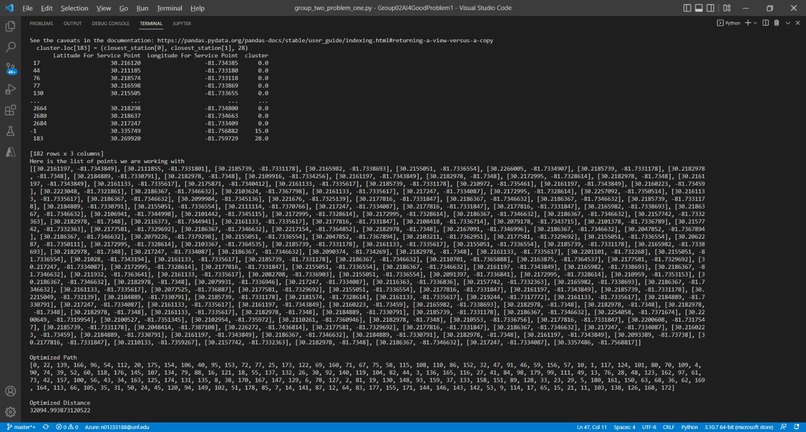
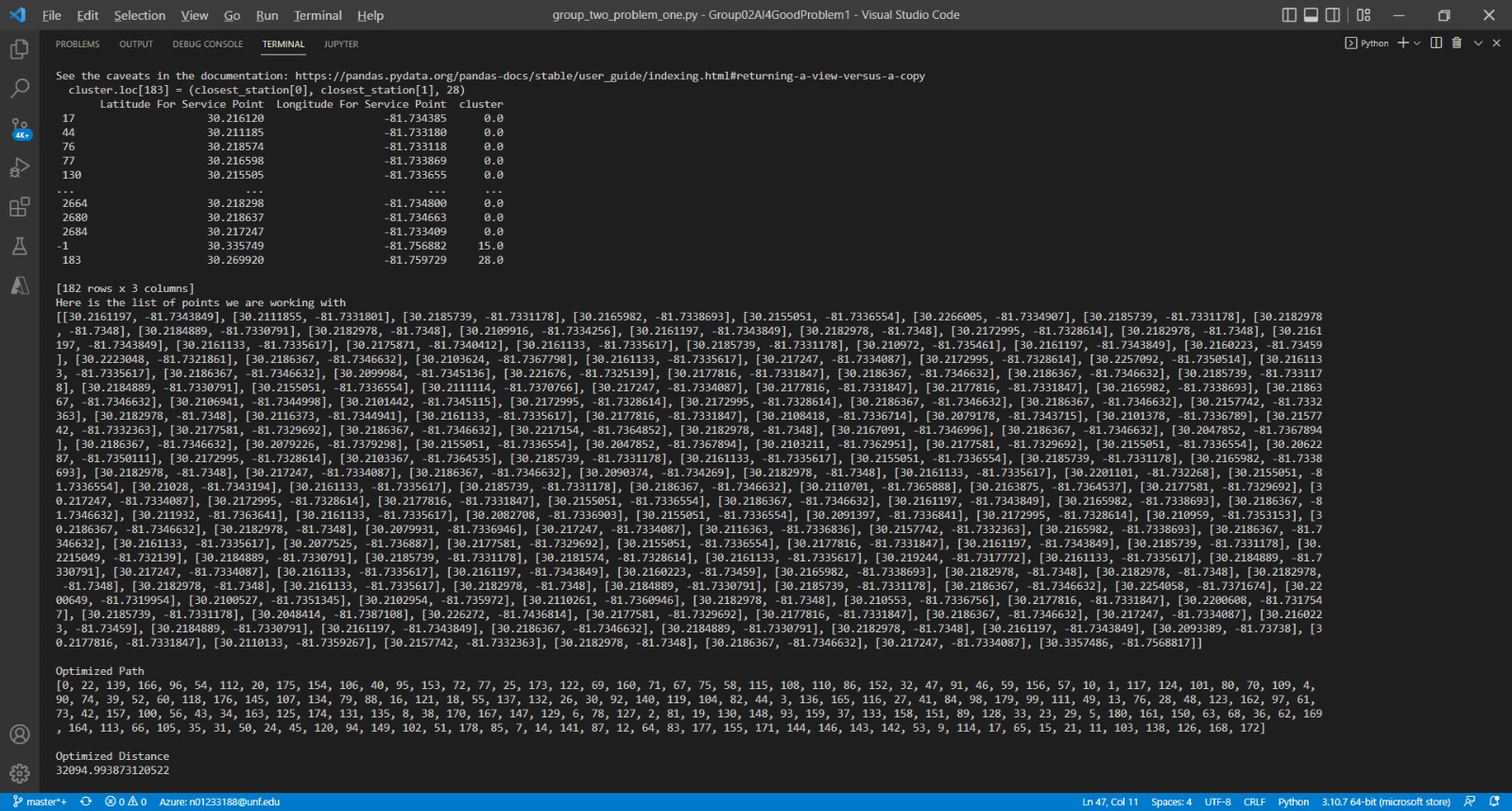
The output of the optimization function
Inspiration
It was a requirement for the hackathon to choose one of the problems, and this problem looked to be an interesting challenge to do.
What it does
This project finds the optimal routes for JEA's fleet of 15 trucks to visit all the stops they have to make, while minimizing time spent on the road (and their carbon footprint).
How we built it
We built it using Python and Microsoft Azure ML Workspace. We needed to implement the KMeans clustering algorithm in order to divide all the data points to reach maximum efficiency between all the trucks, and we needed to make use of Pandas and Numpy to work with the .csv file that held all our data
Challenges we ran into
The biggest challenge we ran into was being not able to isolate individual points within a cluster to find the distances between them.
What we learned
We learned how to work with the Azure portal and a number of things about Python.
What's next for PF
This method can be optimized for road distance (it shouldn't make too much of a difference in the optimal order) by applying information provided by a Map API, but there was not enough time for that.
This method can also be updated to account for how much actual time trucks will be on the road for, and separate each truck's journey into two separate trips, but that was another thing that there was no time for.


Log in or sign up for Devpost to join the conversation.