-
-
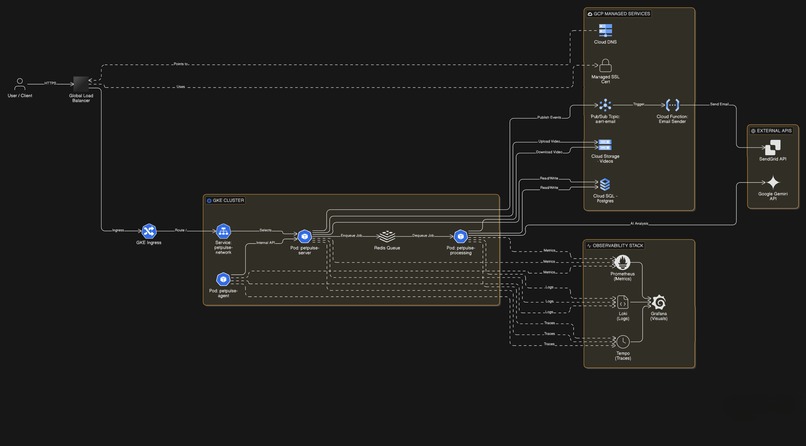
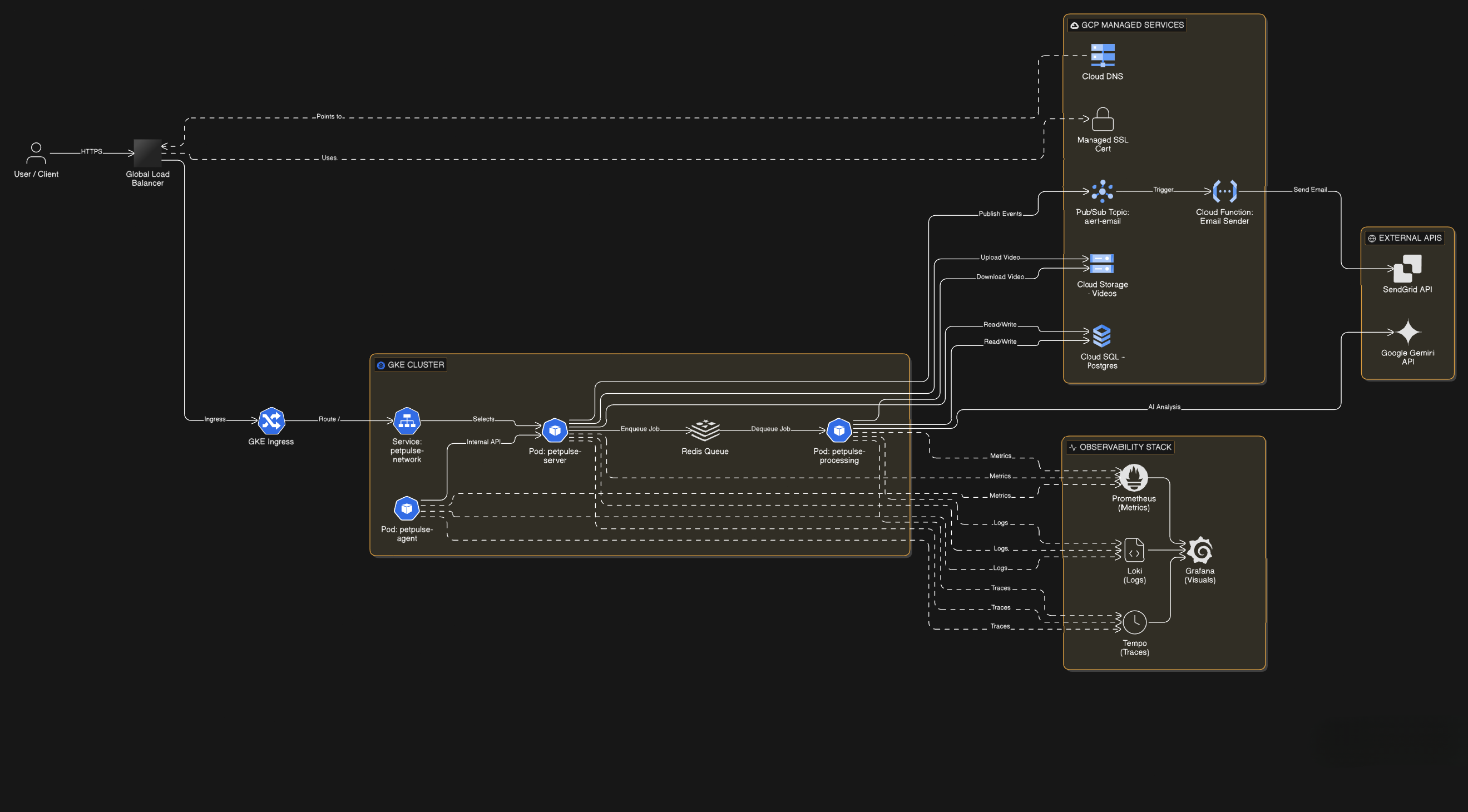
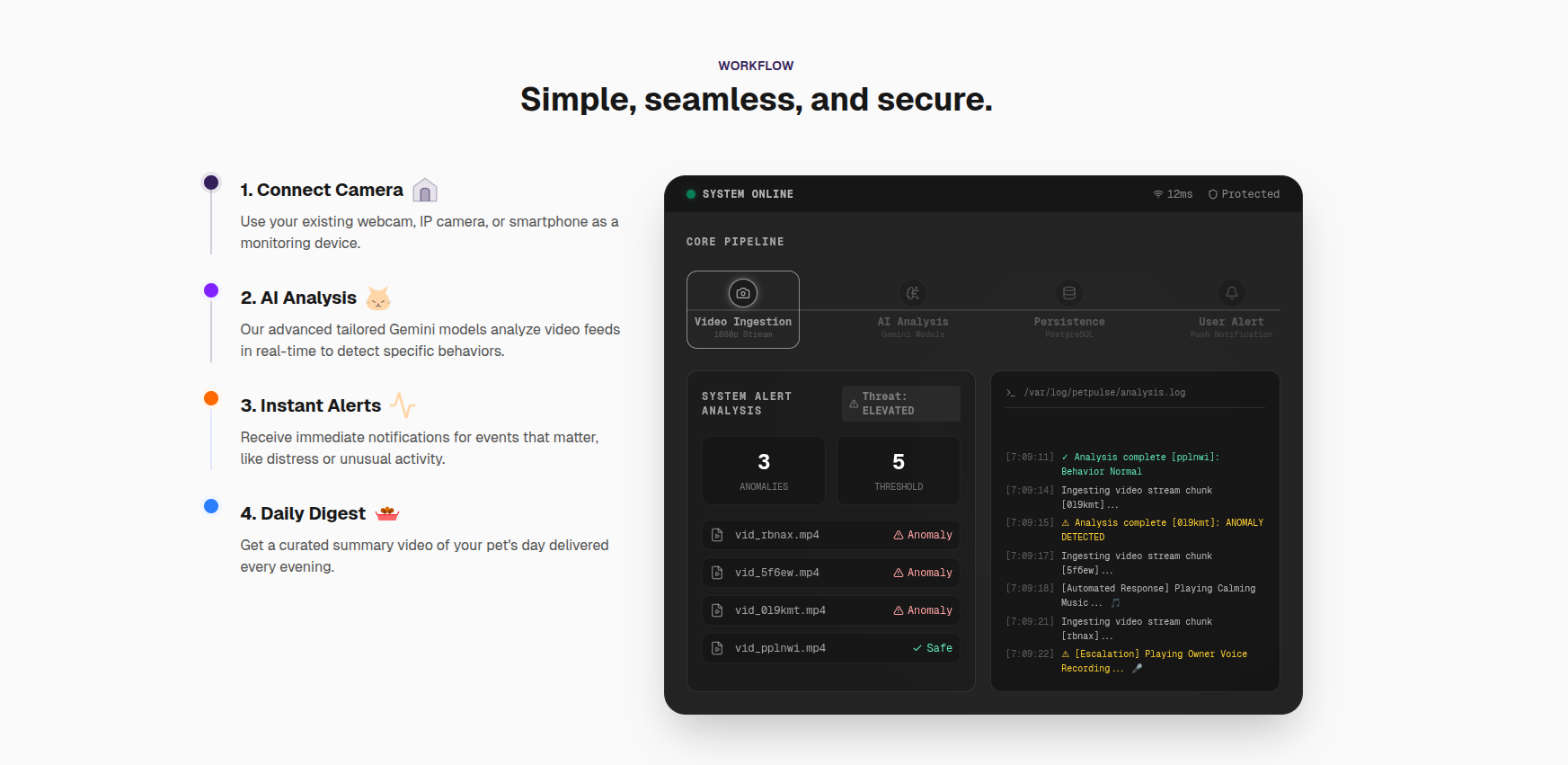
Architecture Diagram
-
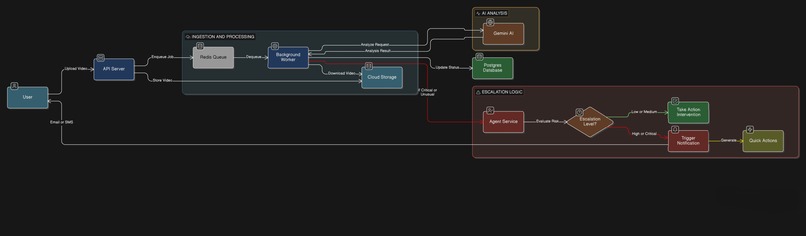
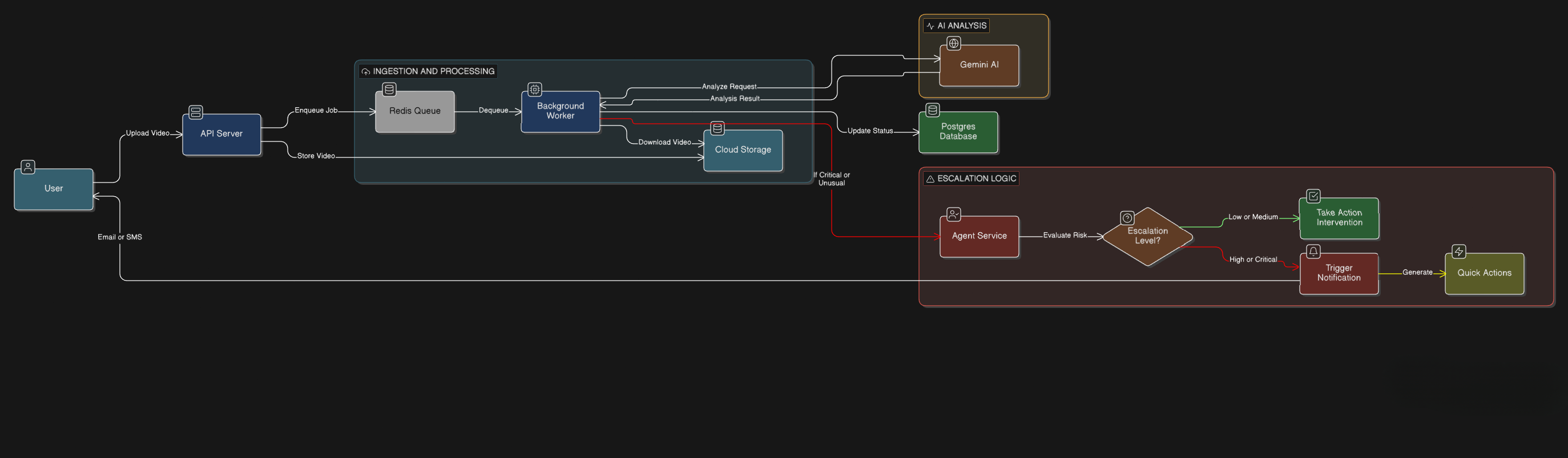
Alert Intervention Workflow
-
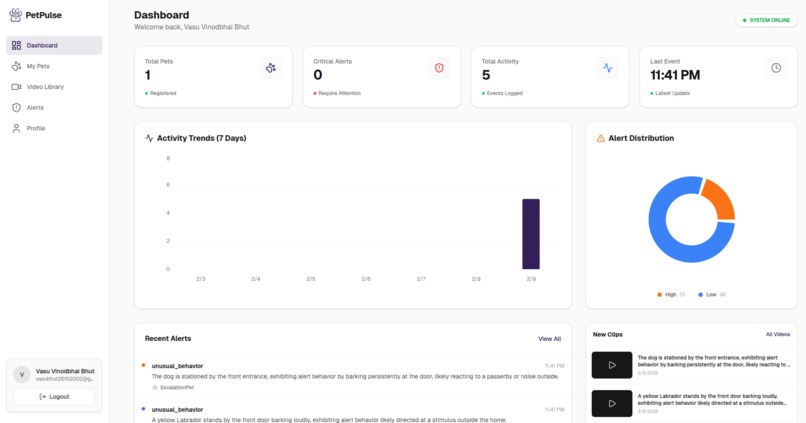
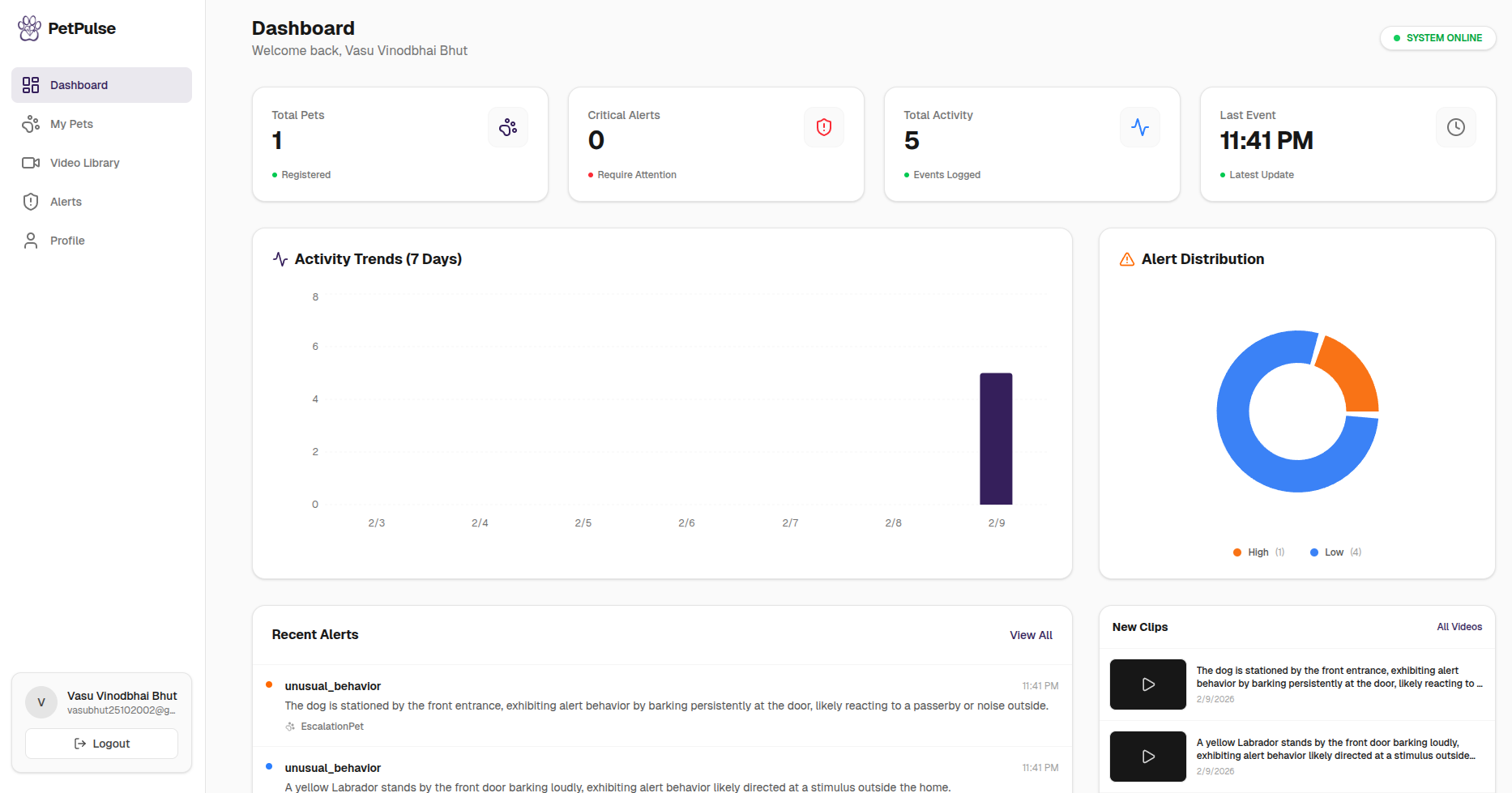
Dashboard
-
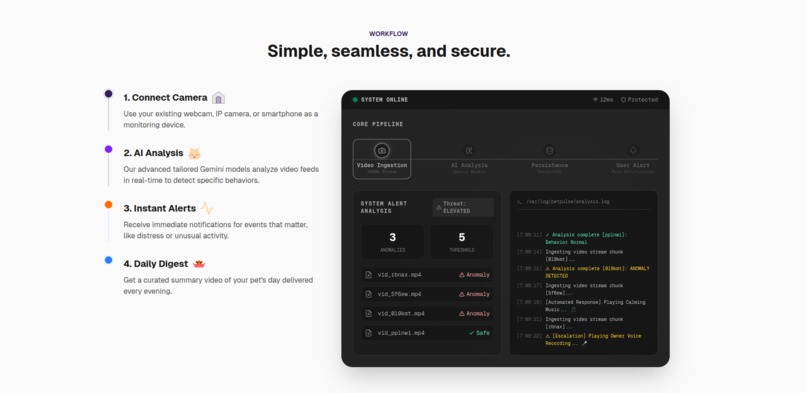
Workflow Simulation
-
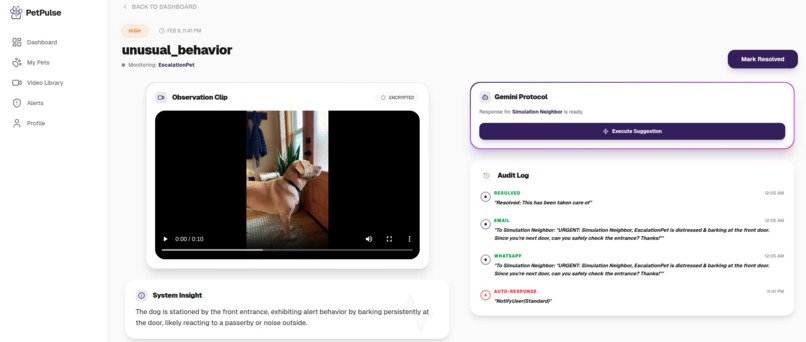
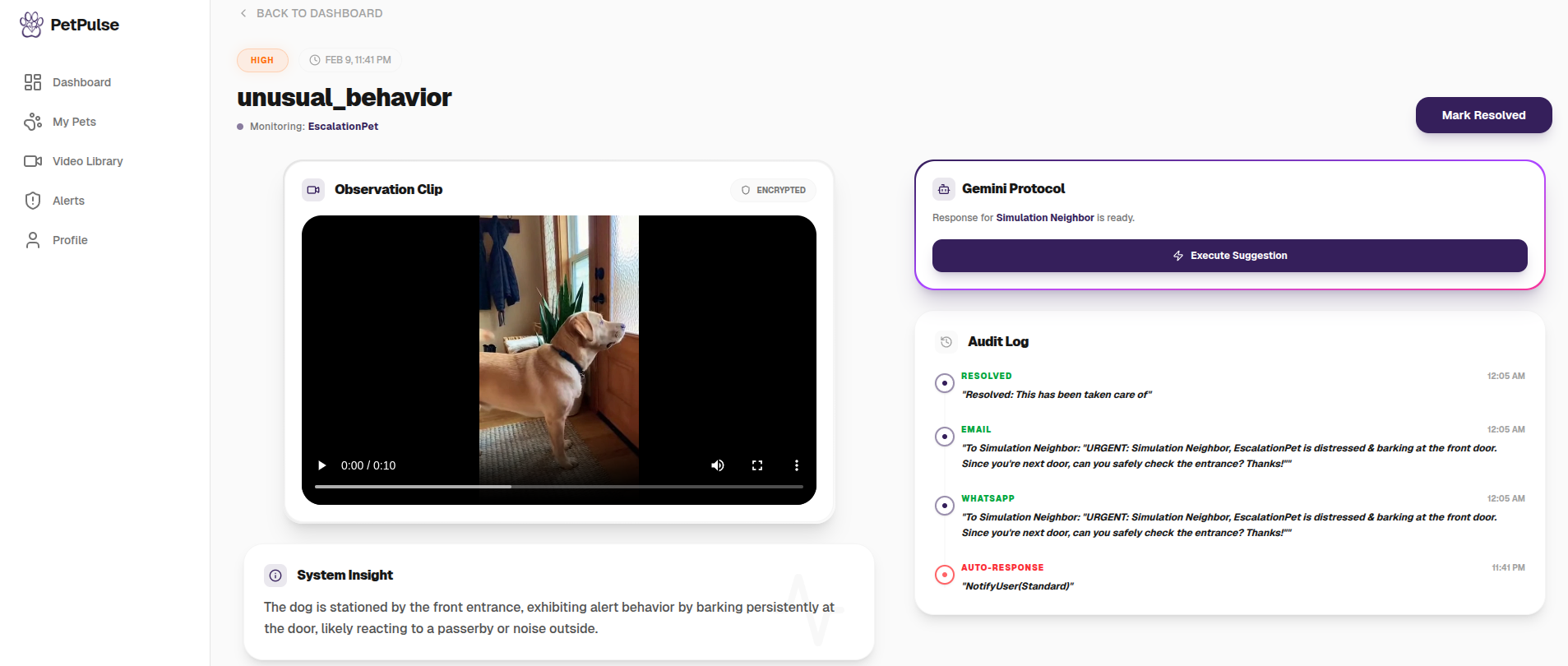
Alerts Detail
PetPulse - Project Submission
Elevator Pitch
PetPulse: The world's first AI guardian that acts, not just watches. Autonomous anxiety relief and smart emergency alerts keep your pet safe when you can't be there.
The Story Behind PetPulse
Inspiration
We love our pets, but the guilt of leaving them alone is universal. The market is flooded with "smart" cameras, but we realized a fatal flaw: they are passive voyeurs to disaster. We witnessed this firsthand, stuck in a meeting while our dog paced anxiously at home, and we could do nothing but watch. We didn't need another camera to broadcast their distress; we needed a digital sitter to fix it. We were inspired to build a system that bridged the gap between "detecting" and "protecting," giving pets a comforting presence when their humans couldn't be there.
What it does
PetPulse acts as a live-in digital guardian that understands and reacts to your pet's needs.
- Autonomous Intervention: It detects signs of anxiety (like repetitive pacing) and automatically triggers a "Comfort Loop," playing soothing videos or sounds to de-escalate stress without human input.
- Smart Escalation: It filters noise from actual emergencies. It won't bug you for a tail wag, but it will wake you for a crisis.
- Quick Actions: When help is needed, it uses fast Generative AI to pre-draft context-rich messages for emergency contacts, turning panic into a one-tap solution.
- Simulation Protocol: A unique "fire drill" mode lets owners safely test the system, building profound trust in its reliability.
How we built it
We treated pet safety as mission-critical, refusing to compromise on speed or stability.
- Performance First: We built the core engine in Rust for millisecond-level reaction times and memory safety.
- Scalable Architecture: Deployed on Google Kubernetes Engine (GKE) with Terraform, ensuring our infrastructure is as reproducible code.
- Modern Experience: A sleek Next.js frontend delivers real-time video and alerts, while Google Cloud Functions handle scalable event processing.
- AI Integration: Leveraged computer vision for behavioral analysis and LLMs for contextual communication.
Challenges we ran into
- Defining "Distress" (The Empathy Challenge): Teaching an AI the difference between a playful zoomie and an anxious pace was incredibly difficult. We had to deep-dive into animal behavior studies to fine-tune our detection models, ensuring we didn't traumatize a napping dog with a loud "Comfort Loop" by mistake.
- The "CrashLoopBackOff" Nightmares (The Tech Hurdle): Orchestrating microservices on Kubernetes was a steep learning curve. We battled race conditions and resource limits until the system was bulletproof.
- Designing for Trust: Convincing users to let an AI "interact" with their loved ones required extreme transparency. We had to build features like the "Simulation Protocol" just to prove the system works before a real emergency happens.
Accomplishments that we're proud of
- Merging Tech with Heart: We successfully built a highly technical, rigorous monitoring tool that feels warm, friendly, and pet-centric, not like a cold security system.
- The First "Comfort Loop": Watching the system correctly identify a simulated distress signal, play a calming video, and successfully "soothe" the virtual pet was a magical moment of realization that this could work.
- Professional Rigor: We moved beyond "hackathon code" to build a production-grade platform with Rust and Terraform, proving that pet tech deserves serious engineering.
What we learned
- Empathy is an Engineering Requirement: Building for a user (the pet) who cannot give feedback forced us to be incredibly thoughtful about every latency millisecond and audio decibel.
- Reliability Creates Peace of Mind: We learned that the "product" isn't the camera; it's the feeling of safety the owner gets knowing the system won't crash when it matters most.
- Infrastructure as Code is Essential: Standardizing our deployment saved us from "it works on my machine" hell, allowing us to focus on features rather than debugging environments.
What's next for PetPulse
- Hardware Integration: Connecting with smart treat dispensers for positive reinforcement during the Comfort Loop.
- Community Grid: Building a trusted "Need a Hand?" network where verified neighbors can be alerted if you are unreachable during an emergency.
- Advanced Diagnostics: Partnering with vets to use our long-term behavioral data for early detection of health issues like arthritis or separation anxiety.
Built With
- axum(rust)
- bash
- cloud-functions
- cloud-pub/sub
- cloud-sql
- cloud-storage
- docker
- gcp
- gemini-3-pro
- grafana
- hcl
- kubernetes
- nextjs
- opentelemetry
- prometheus
- redis
- sendgrid
- sql
- terraform
- typescript


Log in or sign up for Devpost to join the conversation.