-
-
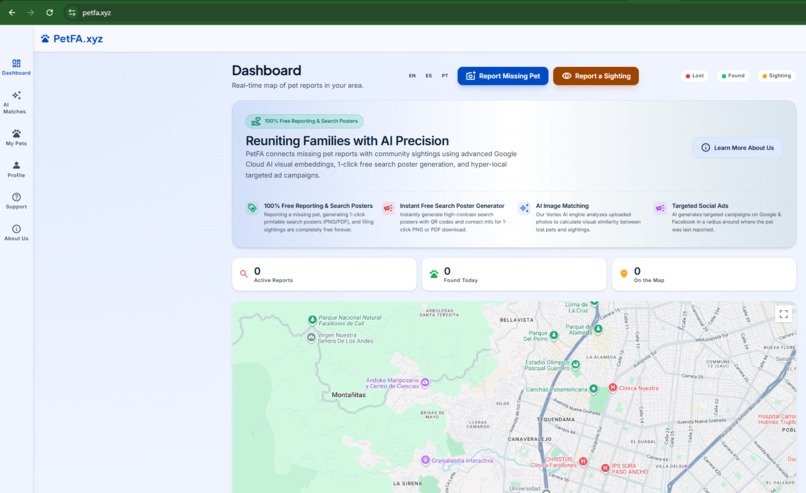
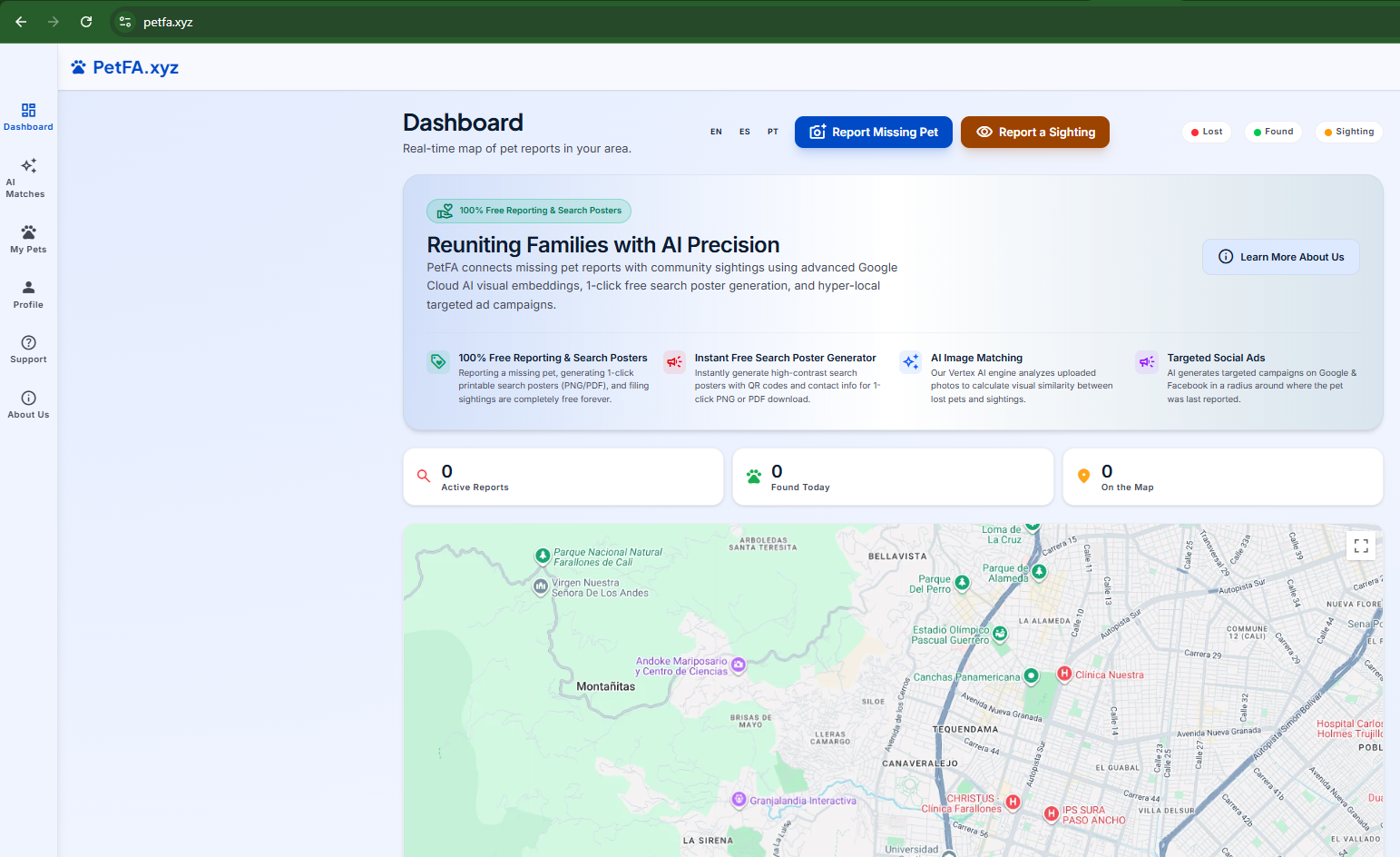
homepage
-
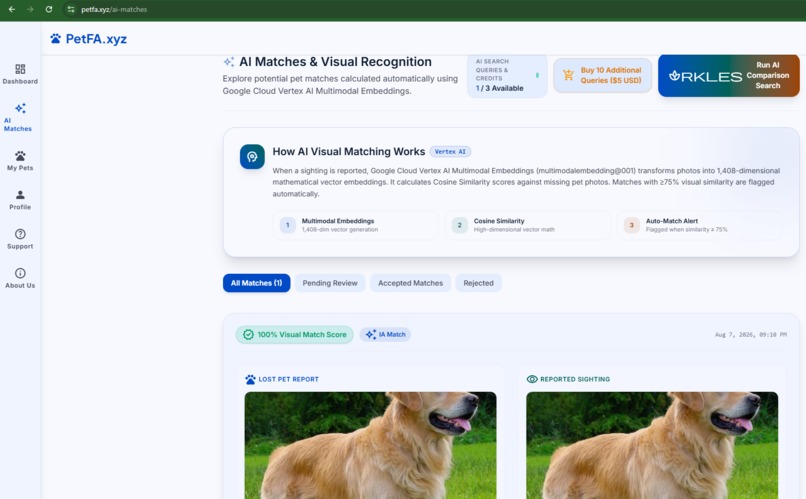
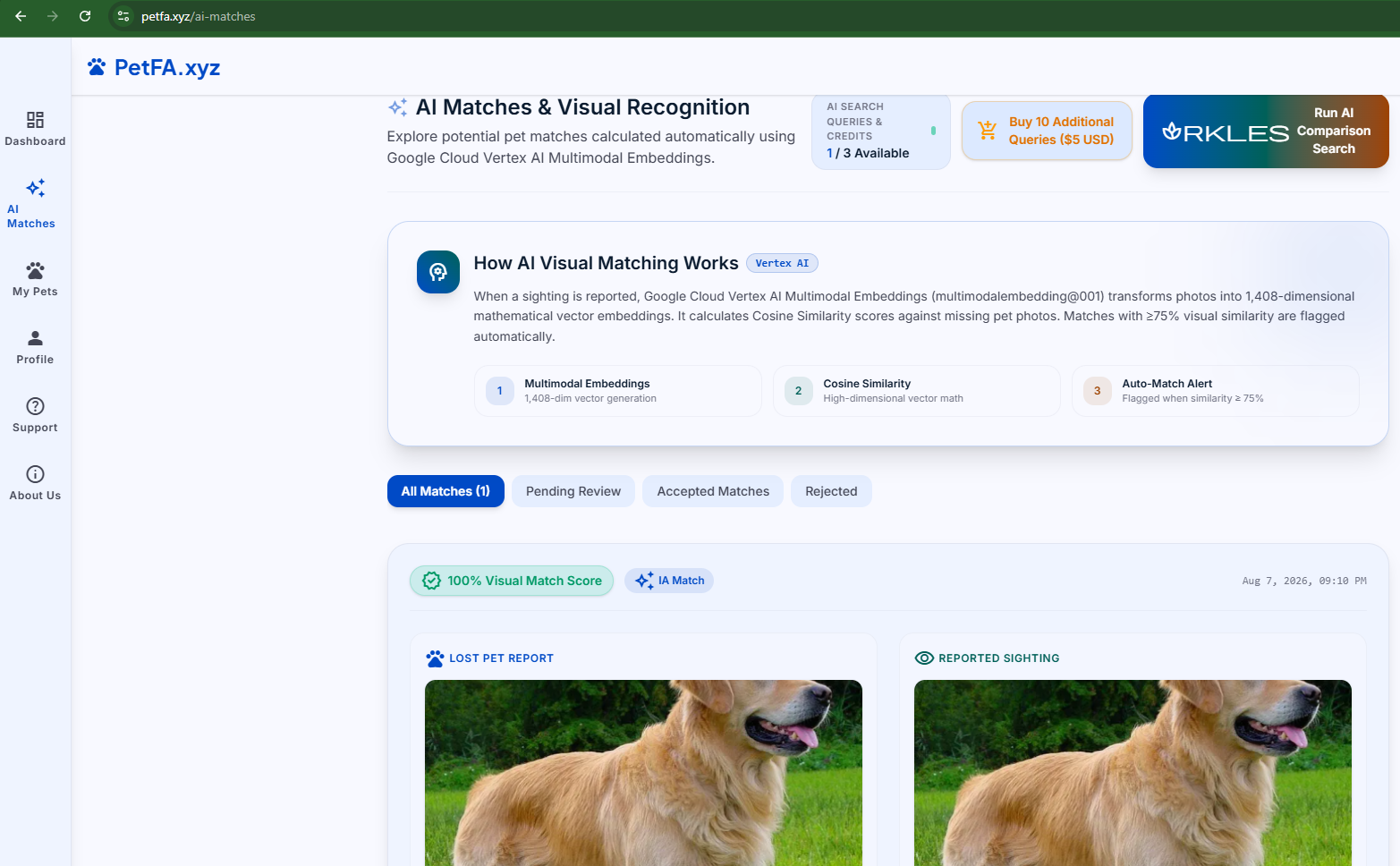
ia comparisson tool
Inspiration
The idea for PetFA (Pet Family Assistance) came from a deeply personal experience. Years ago, my ex-girlfriend’s Golden Retriever suddenly went missing. Anyone who has lost a pet knows the overwhelming panic that follows. We spent days walking endlessly through neighborhoods, knocking on doors, asking neighbors, spamming social media groups, and printing paper flyers. The turning point came not from a poster, but from community collaboration: a neighbor reported seeing a roaming Golden Retriever near a local park. That single sighting tip reunited us with him. That experience stayed with me. I realized that while communities want to help, the manual process of searching, printing flyers, and matching sightings is fragmented, exhausting, and slow. I vowed to build a solution using Artificial Intelligence—a platform where a single community sighting report could instantly be matched against lost pet records using AI Computer Vision. That is why Sighting Reports with AI Vision Matching is the heart of PetFA.
What it does
PetFA (Pet Family Assistance) is an AI-powered emergency recovery platform designed to reunite lost pets with their families by combining community sighting reports with multimodal computer vision.
How we built it
PetFA was built as a full-stack, serverless monorepo utilizing modern web technologies and Google Cloud infrastructure using Gemini and Antigravity:
- The initial concept and visual elements for the website were built using Stitch, which allowed me to streamline the design process and focus on developing the idea.
- Frontend Framework: Built with Angular 17+ using standalone components, Angular Signals for state management, central reactive internationalization (i18n), and custom responsive CSS.
- Backend Serverless Runtime: Powered by Firebase Cloud Functions (v2) running on Node 20.
- AI Computer Vision Engine: Integrated Google Cloud Vertex AI (multimodalembedding@001 via @google-cloud/aiplatform) to generate vector embeddings from GCS URIs, URLs, or Base64 payloads and execute cosine similarity algorithms.
- Conversational AI Assistant: Implemented Google Cloud Vertex AI Gemini API (@google-cloud/vertexai) with a dynamic multi-model fallback hierarchy (gemini-3.6-flash ➔ gemini-2.5-flash ➔ gemini-1.5-flash-002) and strict system prompt guardrails.
- Database & File Storage: Cloud Firestore for real-time listing storage and vector indexes; Cloud Storage for Firebase (GCS) for storing high-res pet photos and generated poster files.
- Auth & Automated CI/CD: Integrated Firebase Authentication (Google Sign-In + Email/Password) and automated deployment via GitHub Actions workflows.
Challenges we ran into
One of the main challenges was the Firebase and Vertex issue, since I had not worked with these services previously, luckily it was very intuitive.
Accomplishments that we're proud of
To build a scalable solution in record time, using best practices and 100% artificial intelligence to build all the source code.
What we learned
I learned how to integrate Google's artificial intelligence services, as well as how to use Google Antigravity.
What's next for PetFa
Acquire users and take it to the next level to generate value and an impact on society
Built With
- firebase
- gemini
- google-antigravity
- google-cloud
- stitch
- typescript
- vertex

Log in or sign up for Devpost to join the conversation.