-
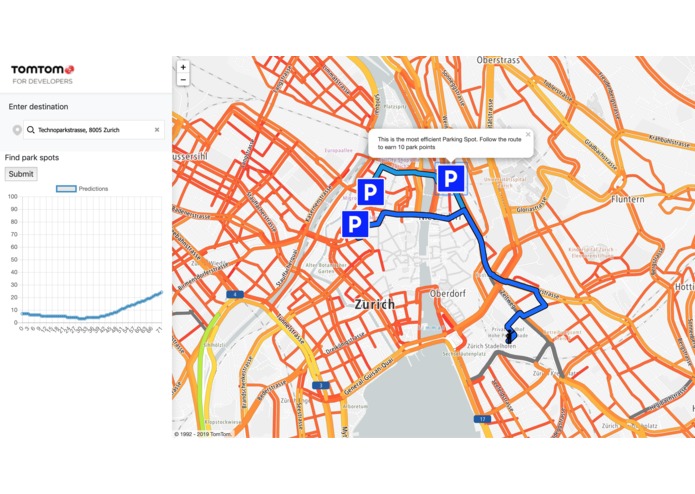
Web-App
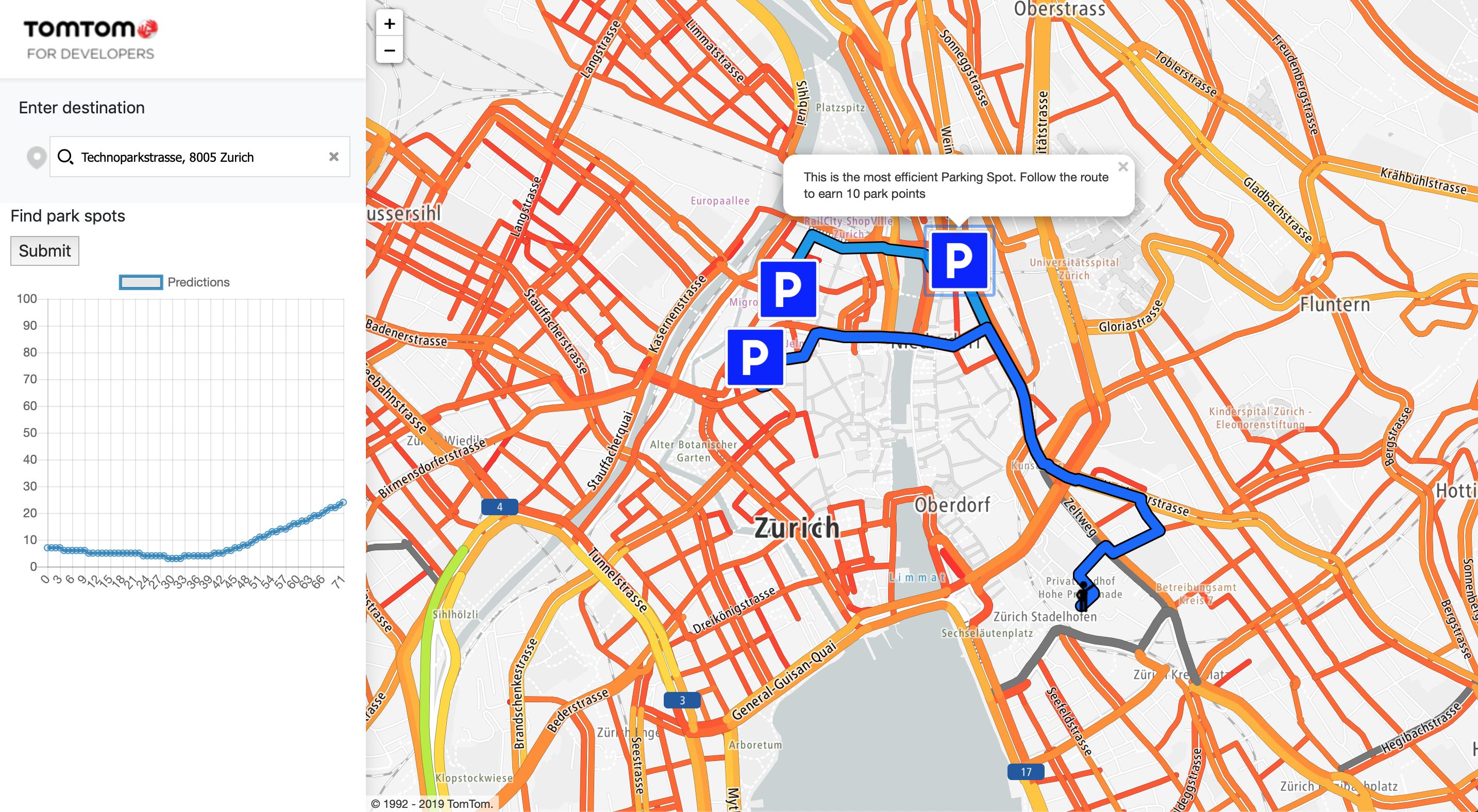
Inspiration
What it does
It uses trained time-series tensorflow models to predict real-time free parking spaces in the city of Zurich.
How I built it
We used tensorflow and keras to train time-series dependent data to predict multiple points in the future. We used the Tom Tom API to load maps and connected the backend-frontend using node.js and json!
Challenges I ran into
Connection of Front-end and Back-end. All the teams are proficient in Deep learning, NLP and computer vision but not so much with web development. There were some out-of-serive parking spots (0s in the data for a long time) we had to manually remove them to avoid dataset bias.
Accomplishments that I'm proud of
The models trained have very high accuracy and can predict up to 72 points in the future (around next ~12 hours) for all parking locations (Currently only 4 models)
What I learned
LSTMs models (just 4 layers) are pretty good at learning time-series data.
What's next for iPark
Adding a Parking wallet where a person can gain parking points by choosing the most sustainble parking option. He/She can collect and redeem these points for some parking space.


Log in or sign up for Devpost to join the conversation.