-
-
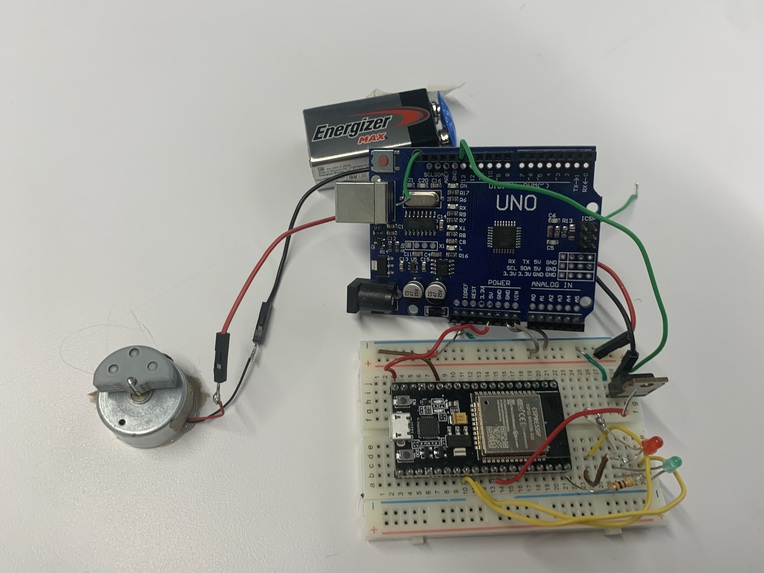
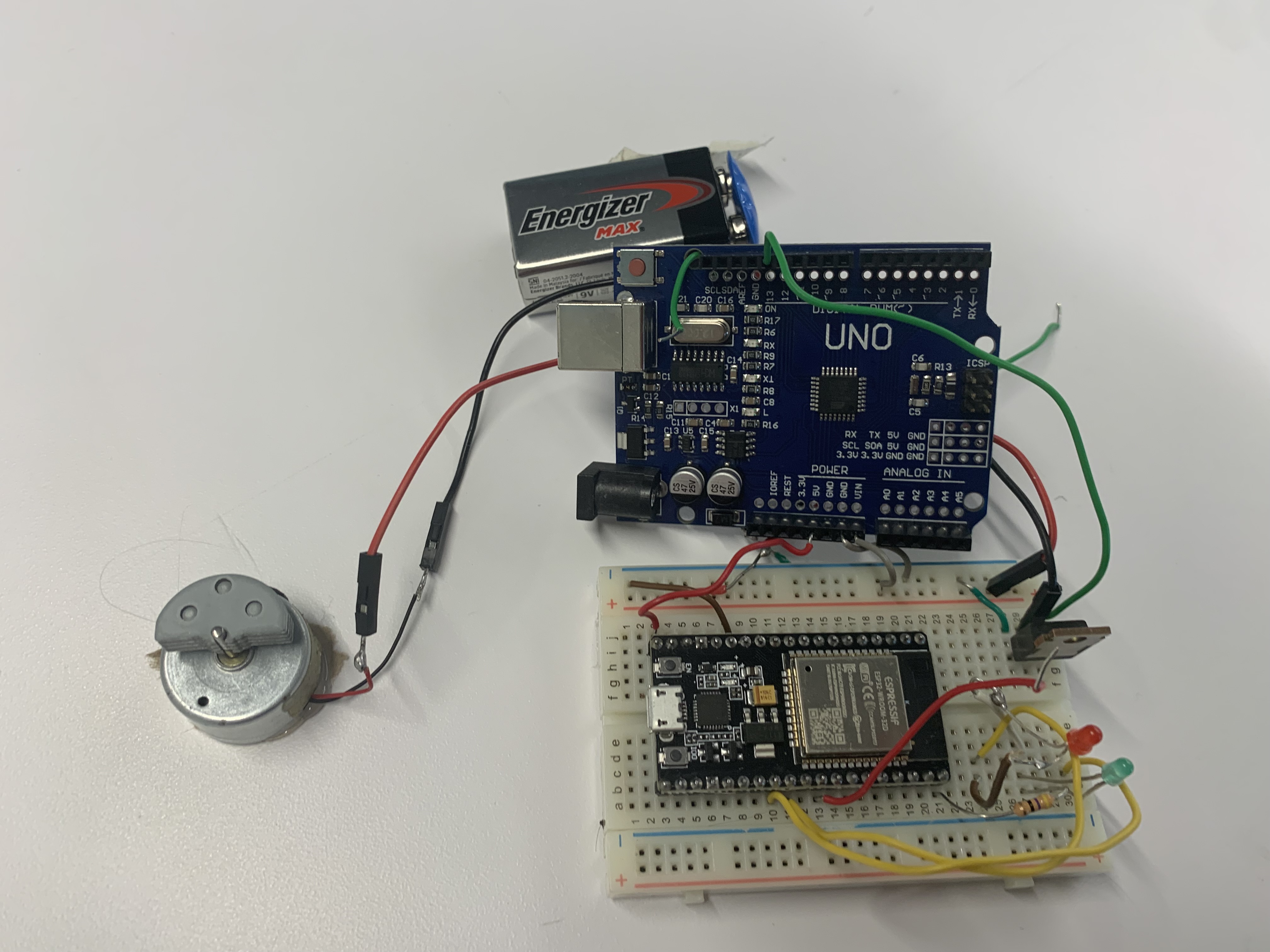
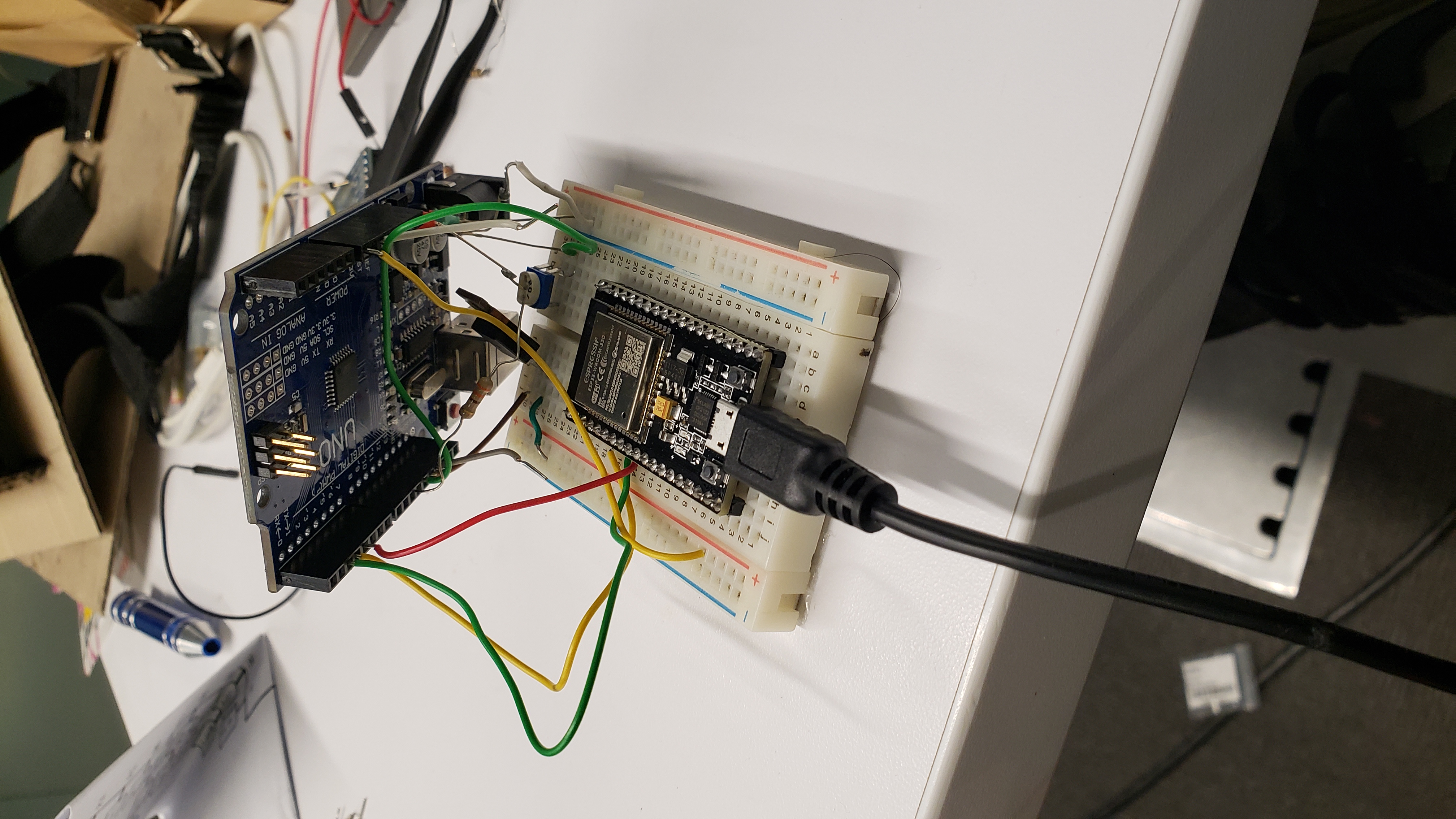
Hardware setup with all components: battery (top), vibration generator (left), Arduino (below battery), breadboard with ESP32 and circuitry.
-
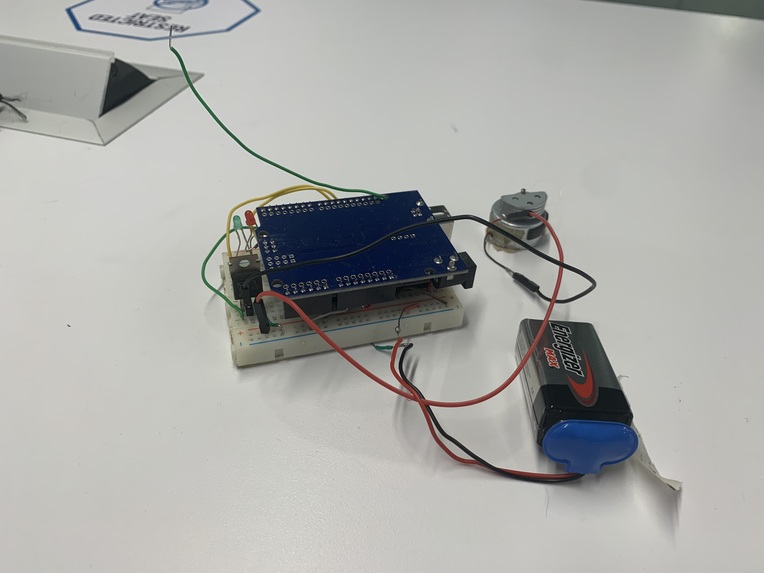
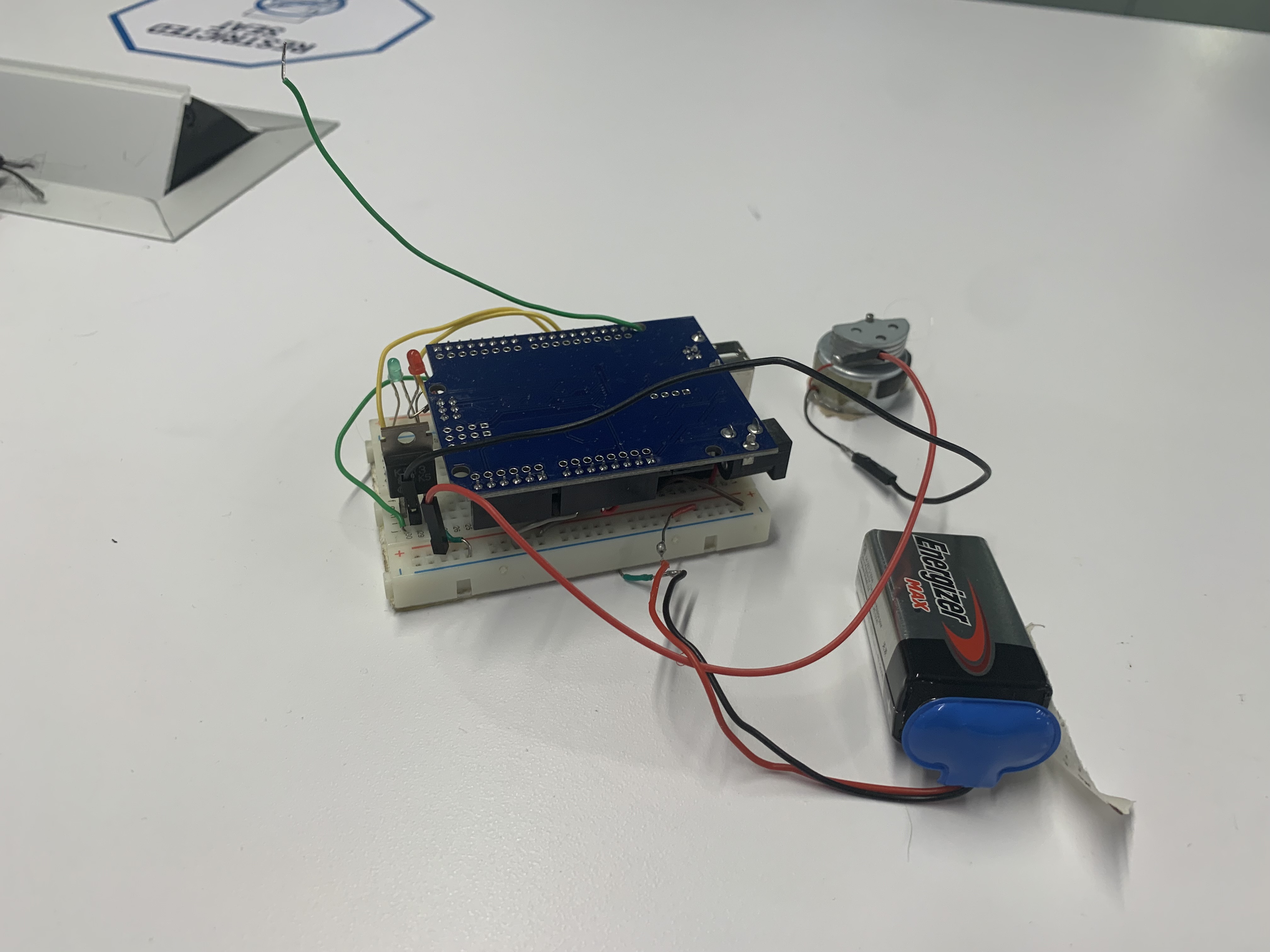
Hardware module oriented the way it is placed inside cardboard prototype
-
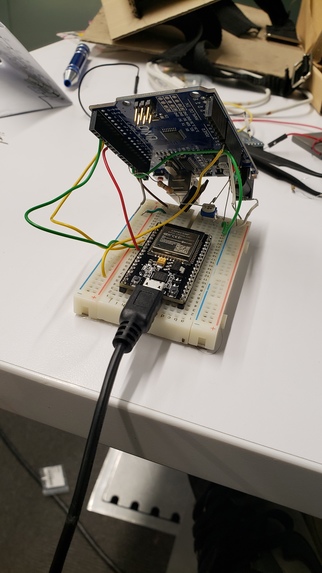
Hardware setup during a hardware debug cycle, with the ESP32 connected to a laptop so the loaded software can be changed during debugging.
-
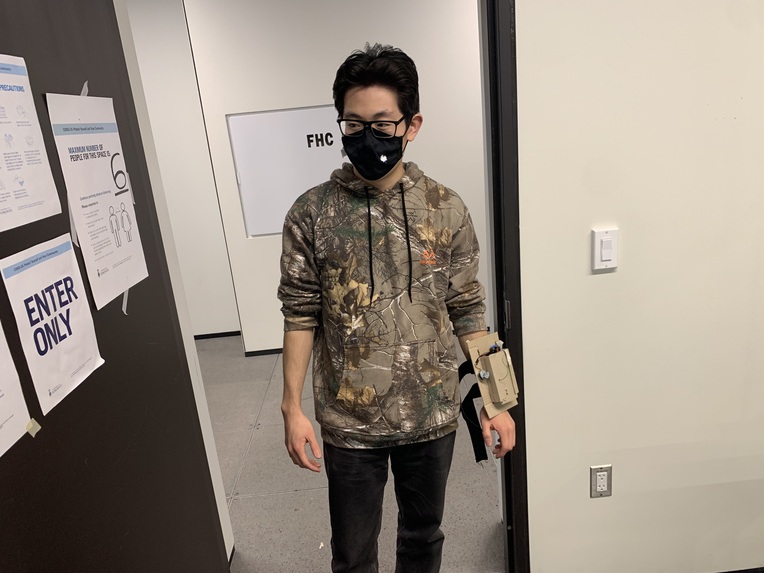
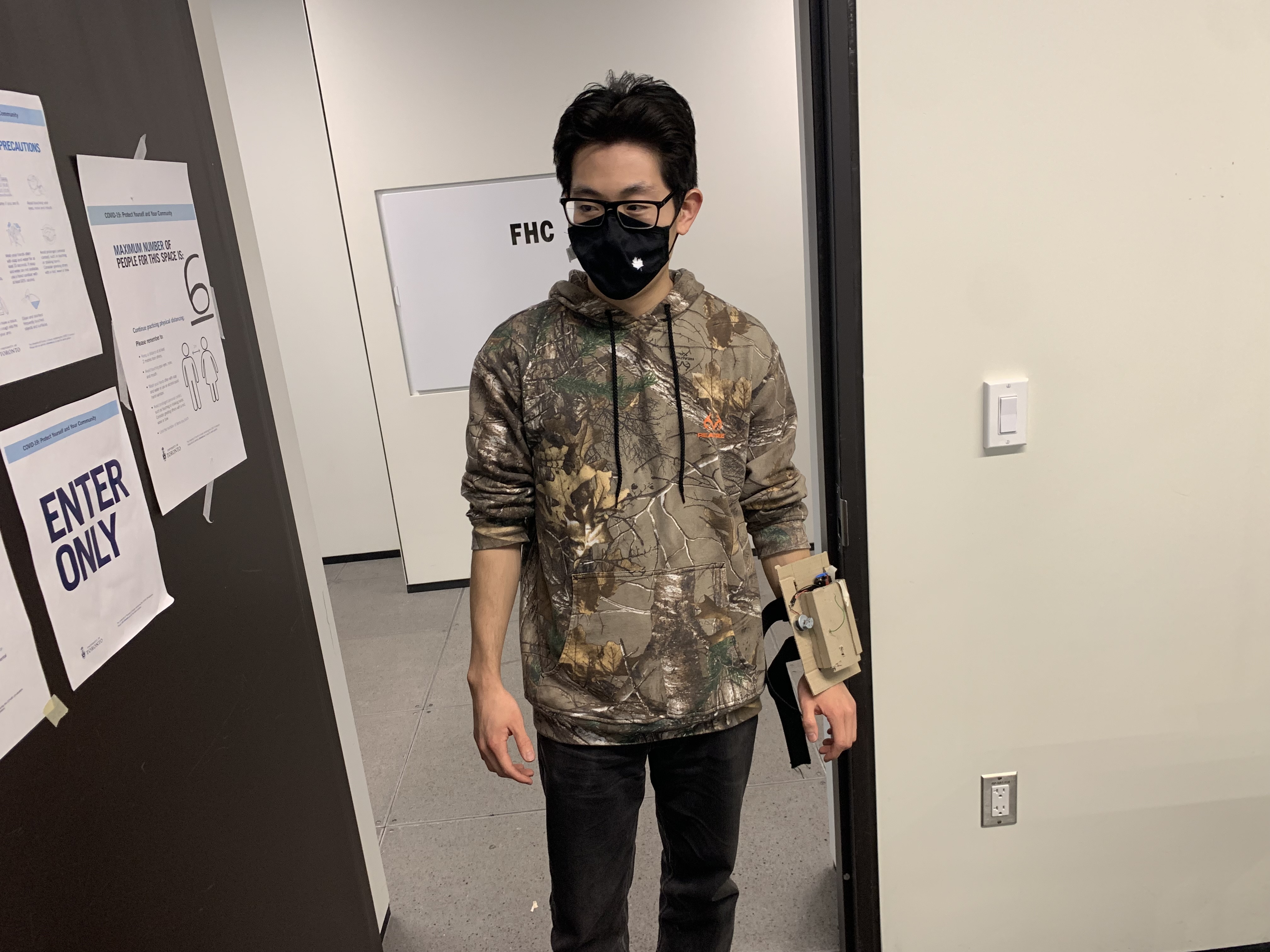
Prototyping Specialist Justin wearing Peter Tingle, showcasing that prototype is secure enough for wearer to make their arm vertical.
-
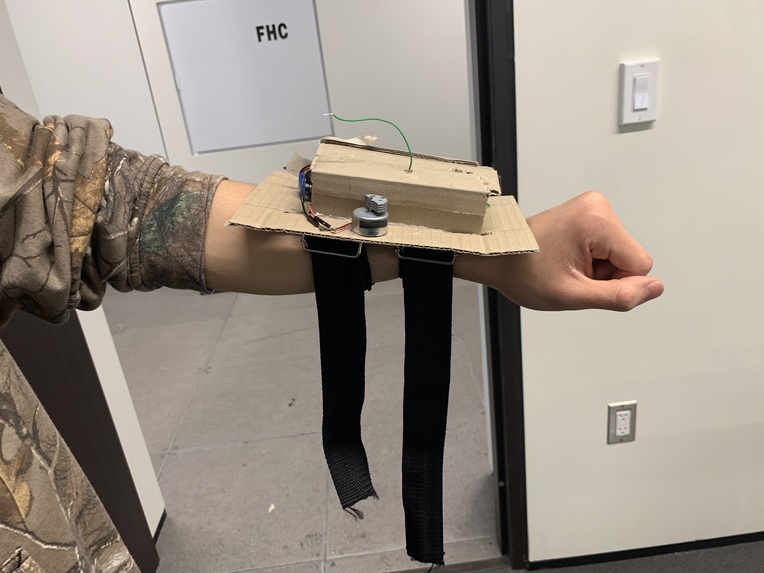
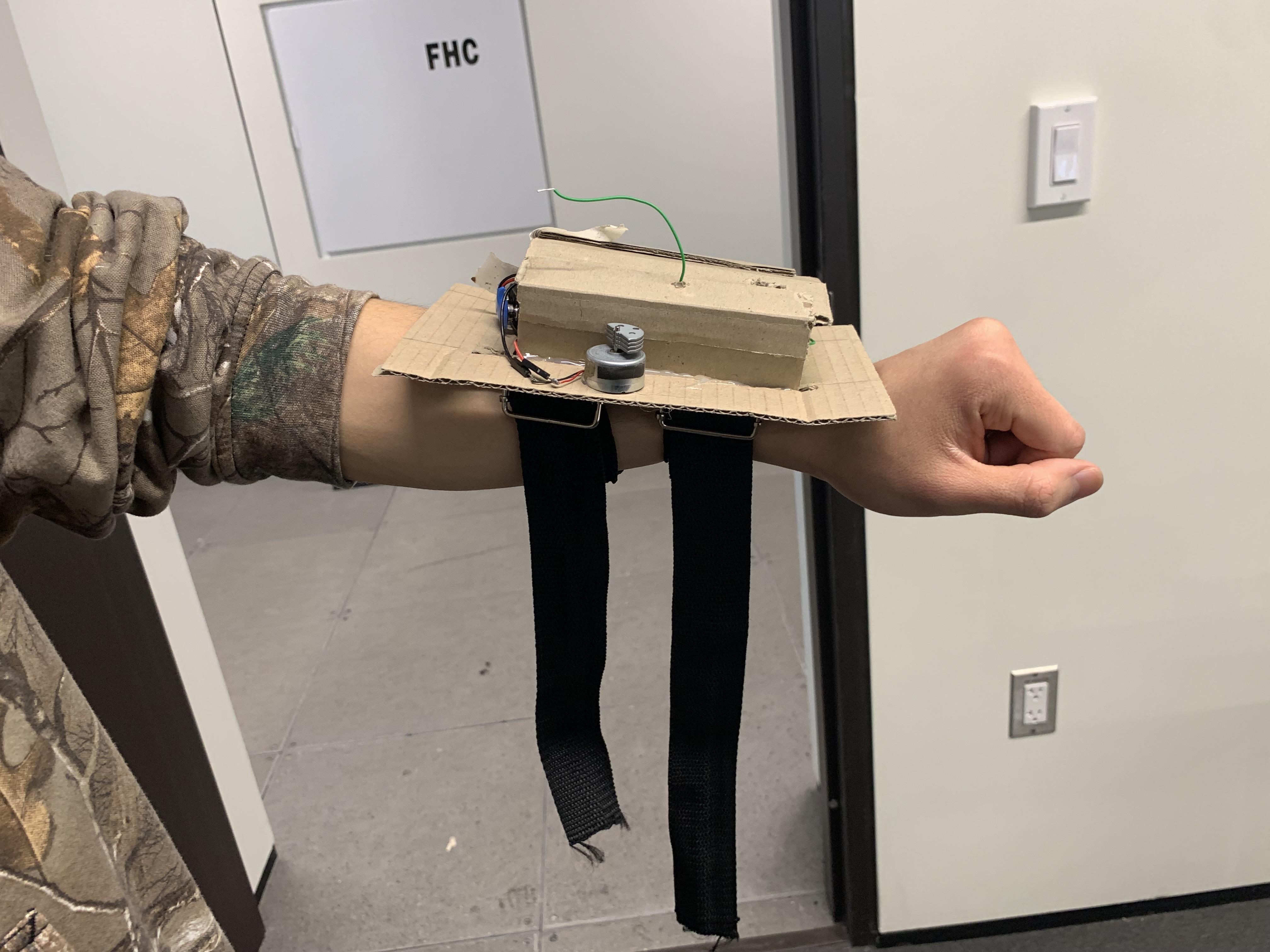
Side view of prototype, the arm straps are what keeps the design secure. Protruding green wire is used for capacitive touch.
-
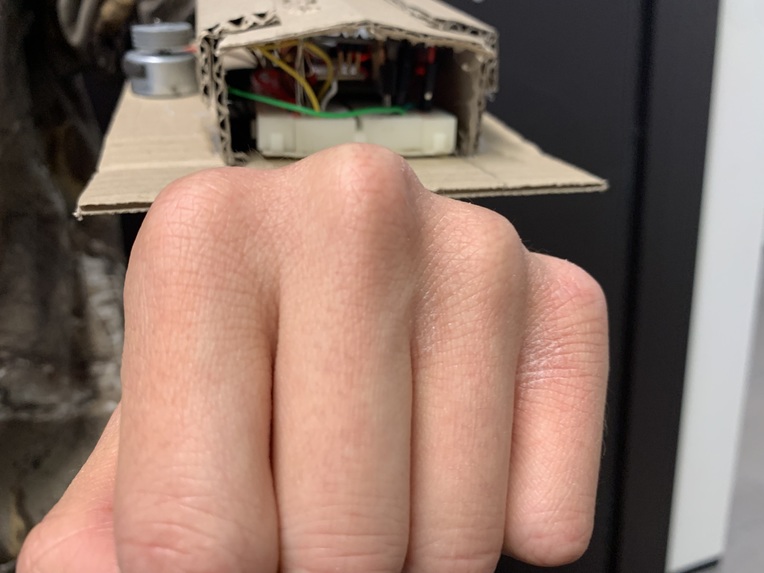
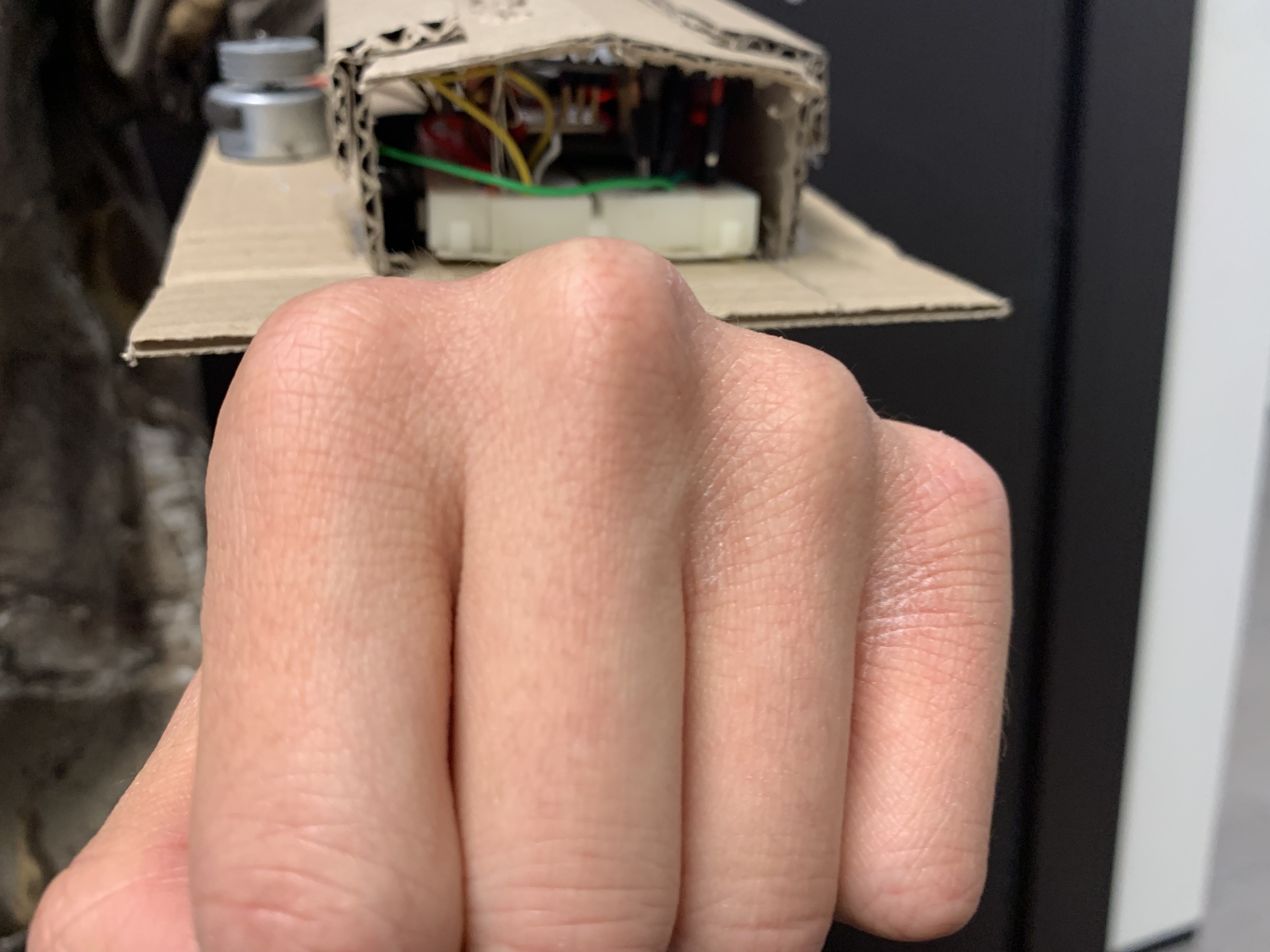
Front view of prototype on wearer.
Inspiration
Upon watching Spiderman No Way Home we were inspired to recreate Spiderman’s spidey sense in a way we’ve never seen before.
What it does
The Peter Tingle is a device which alerts a user through vibrations and LEDs when a friend is nearby. A flashing green LED and intermittent vibrations indicates a friend is nearby, and a red led indicates a pairing request, or a friend has left your vicinity.
How we built it
Device implements an ESP32 microcontroller with bluetooth capabilities to handle the pairing of a friend’s device and detection of said device via bluetooth discovery. An Arduino acts as both a voltage regulator to the ESP32, and output to the transistor which acts as a switch. The Arduino also handles the power delivery to the motor for the vibration generator, while the ESP32 handles LED power delivery. Code written in C++ handles the storage of the registered friends’ devices into a database, and the logic behind alerting the various user alerts. For the hardware component, we developed the pieces in small stages using a breadboard and digital multimeter to ensure each component worked properly such as pin mappings on the ESP32 and mosfet power requirements. For the prototype, cardboard and other second-hand materials were fashioned into a wearable arm bracer which held the hardware and power supply, making the design fully portable.
Challenges we ran into
The bluetooth serial library for Arduino was poorly documented, making the bluetooth detection and pairing functionalities of our design difficult to implement. The ESP32 microcontroller’s documentation and pinouts were unclear, causing confusion during the hardware design portion. Bluetooth technology in of itself is limited due to privacy concerns, meaning sensing capabilities are limited to devices either in discovery mode or previously paired devices, this forced our solution space to be fairly narrow. Lack of a 3D printer or access to a hardware store during the main crunch time of our project meant additional creativity was required to successfully implement our prototype. We had to get creative and be as resourceful as possible, using second-hand items and fashioning cardboard to build our wearable prototype. This led to having wires come out unexpectedly since the frame was not rigid enough.
Accomplishments that we're proud of
We are very proud of the working prototype we were able to come up with despite the limited resources and time. With both the hardware and software components executing exactly what we intended them to do.
What we learned
How to create a program that interfaces with the real world. We implement both an input from the real world, the bluetooth signals, and give outputs to the real world via the vibration generator and indicator LEDs. How to handle dynamic data structures which add or remove data nodes from themselves based on parsed bluetooth inputs. And how to parse bluetooth inputs such as constructing MAC addresses from raw inputs from the ESP32 to be processed by our logic. How to prototype using second-hand materials and changing the physical design on the fly while maintaining the same core functionality depending on the materials we have on hand. Creating a practical circuit that implements a transistor (the switch for the motor control). How to debug a hardware circuit that implements an arduino, this required software for reading and writing to the arduino pins and hardware for reading and analyzing the outputs for different circuit conditions.
What's next for Peter Tingle
Creating a smartphone application so that the friends feature does not require going to the bluetooth settings page. Also so that alerts can be sent from the device to the user’s phone. Using a custom PCB so the device can be shrunk to fit into a wearable ring. Add iOS support using low energy bluetooth technology.


Log in or sign up for Devpost to join the conversation.