-
-
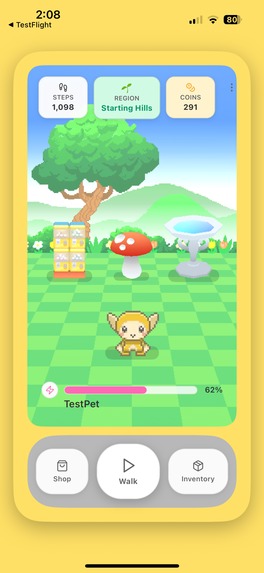
Main screen: the pet garden
-
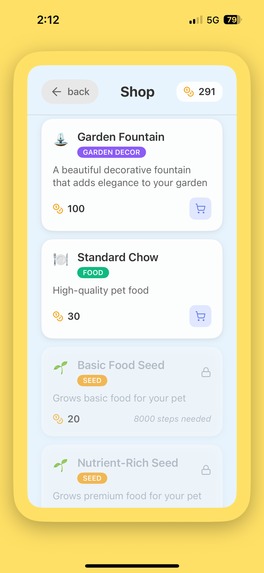
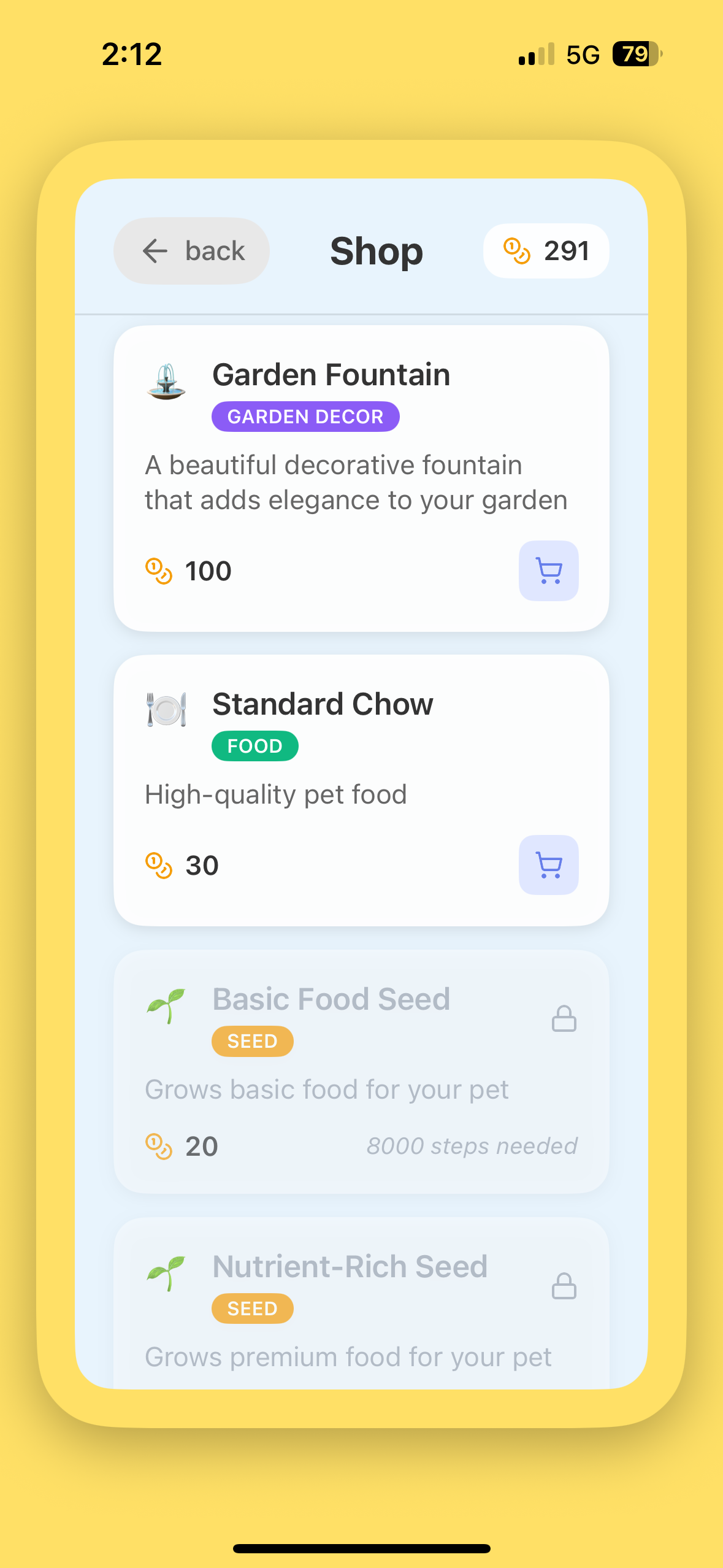
Purchase items with the Stride Coins you earn
-
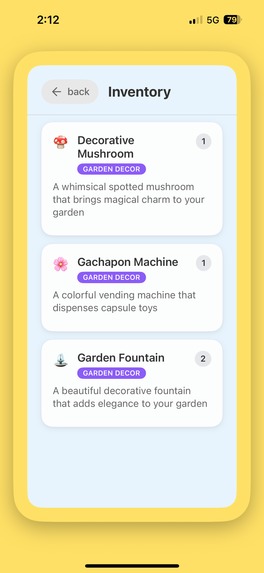
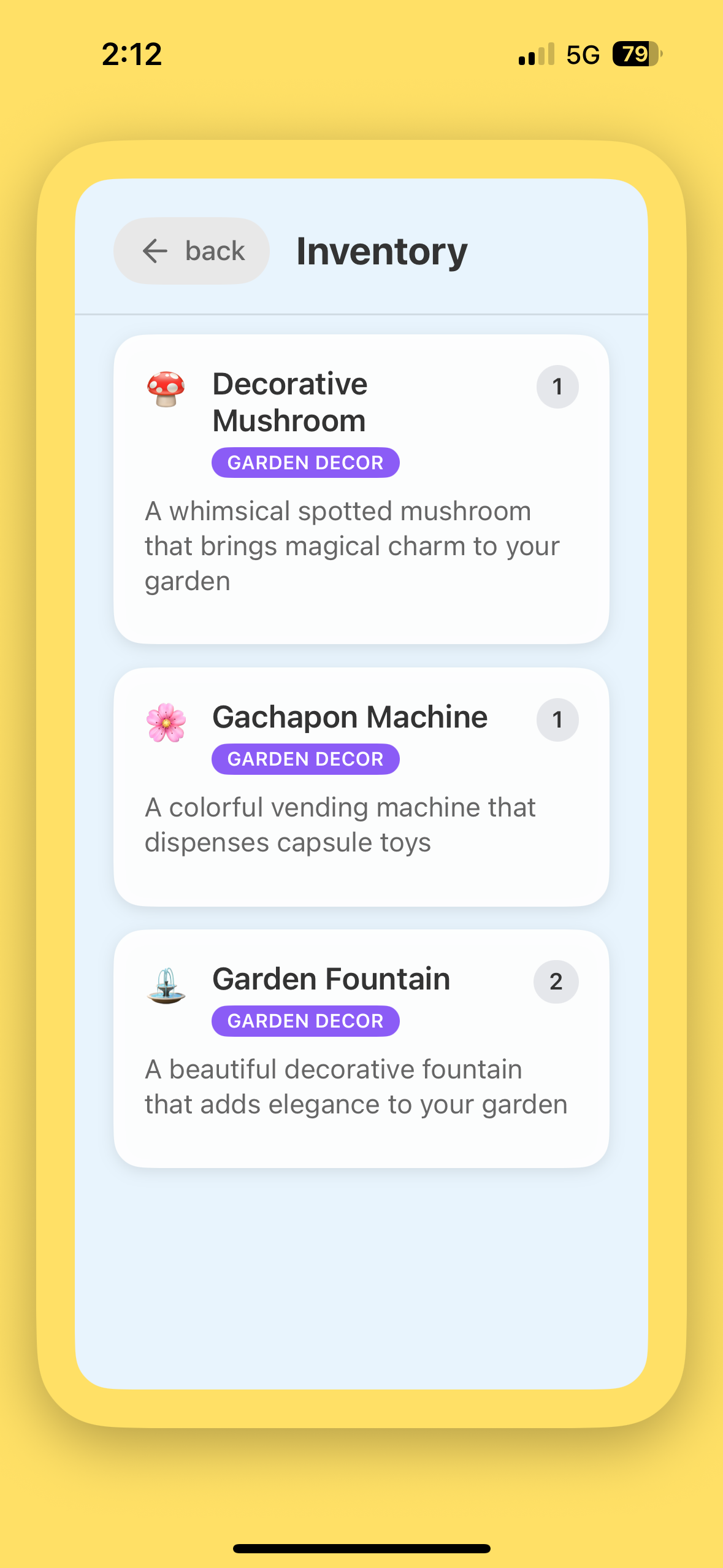
View your inventory
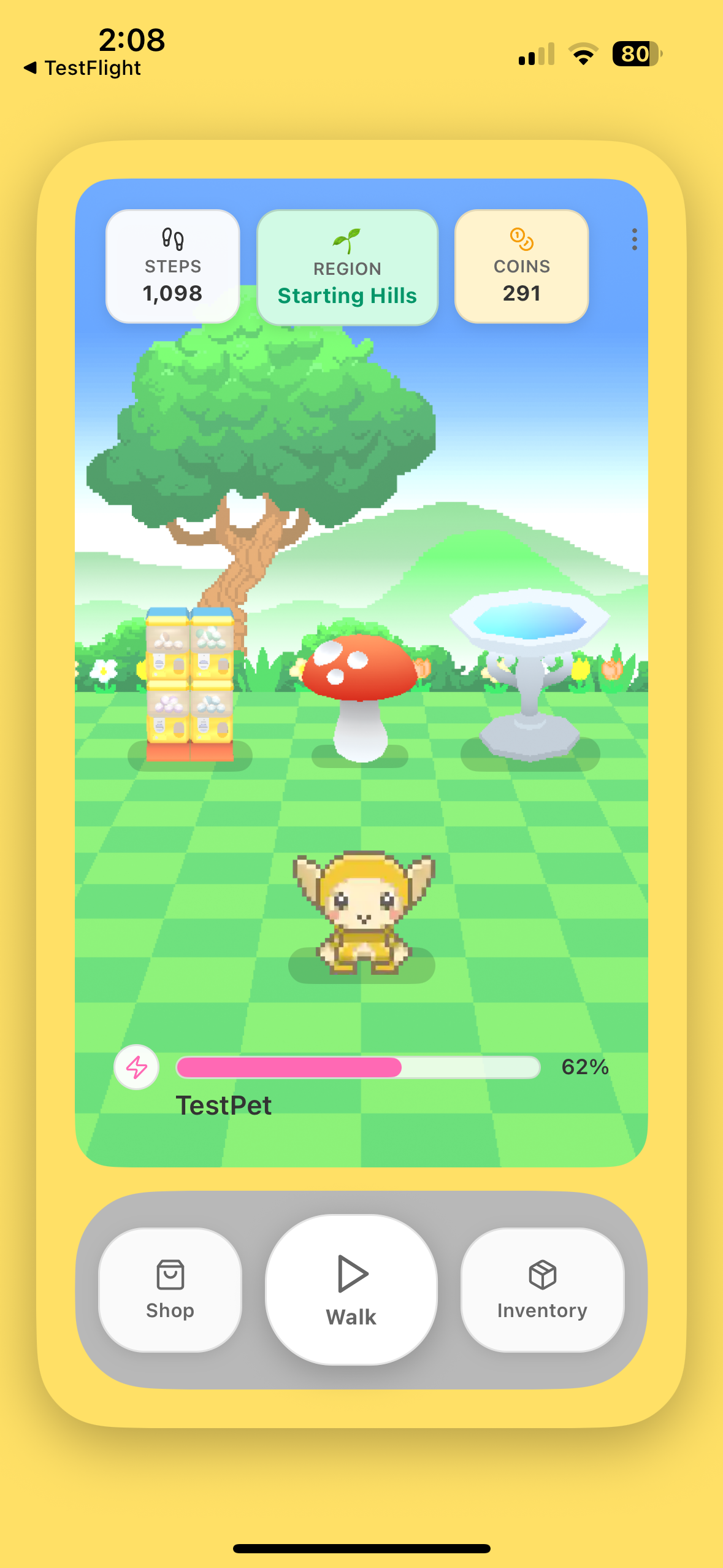
Inspiration
Our project was inspired by a desire to create something wholesome, nostalgic, and genuinely helpful for mental and physical well-being. Like many others, we’ve felt the toll of sedentary routines and endless doom-scrolling - and wanted to build something that gently encourages people to step outside and reconnect with the real world.
Rather than designing another fitness tracker or productivity tool, we set out to create a delightful, emotionally engaging game that motivates users through joy, not pressure.
We drew inspiration from:
- Tamagotchi: for its emotional bonding and simple care mechanics. The act of nurturing a pet taps into a powerful intrinsic motivator - a desire to care for something - and can be a meaningful driver of real-world behavior change.
- Pokémon Go: for proving that digital games can inspire millions to go outside, explore, and connect with others. It validated the idea that gameplay doesn’t have to be confined to screens - it can spill into the physical world in rewarding ways.
Most importantly, the heart of the project is shaped by our teammate Nam Mac’s nostalgic, retro game-inspired art style (think Nintendo pixel art meets modern charm). Nam (@LordStingRay on Instagram) is an independent graphic artist and animator whose past collaborators include Nike and Balenciaga. His original artwork and animations bring warmth, personality, and emotional depth to the pet - making it something players want to care for, one step at a time.
What it does
PetalLink is a mobile virtual pet game that transforms your real-world steps into care, growth, and adventure for your digital companion. By integrating with the iOS pedometer, the game uses your daily movement to power a gentle, rewarding gameplay loop.
Here’s how it works:
- Every step you take earns in-game currency and contributes to unlocking new regions, items, and customization options.
- You use that currency to feed and care for your pet, keeping its Energy stat high and helping it grow.
- The game includes a passive energy decay system, thoughtfully calibrated over ~30 days, to gently encourage ongoing engagement without punishing inactivity.
PetalLink is designed for players who are more motivated by nurturing, collection, and self-expression than by traditional fitness goals. It offers a cozy, non-competitive way to build healthier habits.
How we built it
App Development
We took an iOS-first approach for the MVP, building with Bolt, Expo, Supabase, and Apple’s Motion & Fitness tracking pedometer API for real-time step tracking.
Before writing a single line of code, we invested heavily in pre-development planning to streamline the build process and align our creative and technical goals. This included:
- A detailed Game Design Document outlining the core mechanics, player loop, and MVP requirements
- A lightweight storyline to guide mood, progression, and art direction
- A database schema to support user profiles, step data, pet stats, and inventory
- UX flow maps to define the user journey across key screens
- A full visual UI mockup of the app’s main interface, created by Nam
With these in hand, we used Bolt to generate the initial app structure. From there, we iterated quickly: debugging issues, tuning game logic, and integrating Nam’s art assets and animations to bring the experience to life.
Art & Animation
All pet and animation assets were originally designed and illustrated by Nam Mac using Blender, infused with his signature pixel-inspired style. Nam’s aesthetic (nostalgic, expressive, and character-driven) is a central part of PetalLink’s emotional appeal and was crafted to resonate strongly with our Gen Z and Millennial target audience.
To bridge technical constraints for the MVP, we transformed the Blender-based animations into 2D sprite sequences and Lottie files, allowing us to implement responsive animations that perform smoothly in a mobile environment.
Challenges we ran into
Implementing animations in a mobile app:
Our biggest challenge was around animation and art asset implementation. Nam specializes in 3D animation using Blender, but iOS development doesn’t natively support importing Blender’s 3D assets into mobile apps. We considered using tools like Rive, a popular 2d vector animation framework, and Spline, a 3d graphics framework, for the project. However, their learning curve was too steep to ramp up during the Hackathon build window.
To work around this, we scoped our MVP to leverage 2D sprite animations. In order to give a pseudo-3D feel, we layered background elements to create a parallax effect and also implemented shadows on UI elements. For the pet animations, GIFs weren’t viable because they’re hard to control or transition between states (e.g., idle to interaction). Instead, we converted GIFs into Lottie files, giving us more precise control in code for smoother transitions between animations.
Mobile step tracking & debugging:
This was our first time integrating pedometer functionality in a mobile app, and it came with some unexpected hurdles. We initially struggled with debugging the pedometer sensor because our build tool (Bolt) hallucinated the version number for the expo-sensors library. This led to a “logical bug” in that the code compiled, but the pedometer wasn’t working as expected due to a version mismatch. Tracking this down and resolving it took valuable time and forced us to rethink our debugging strategy for third-party library issues.
Despite these challenges, both issues pushed us to be more creative with scope and resilient in the face of unfamiliar tools.
Accomplishments that we're proud of
Despite juggling full-time jobs - and none of us being software engineers - we took a moonshot idea and turned it into a functional mobile game MVP in just one month. Thanks to tools like Bolt and Expo, we were able to move fast, learn on the fly, and bring our vision to life.
We also launched a waitlist and saw strong early interest, gathering nearly 200 sign-ups in under 24 hours. On top of that, we kicked off a closed beta test with 5 real-world users, giving us valuable feedback that’s already shaping our next iteration.
What we learned
Mobile animation workflows: We learned how to import and control animations in iOS apps using Lottie files, which gave us far more flexibility than GIFs and allowed for smoother, state-based transitions (like idle → interaction).
Game design balance: Designing for just the right amount of challenge in a game was trickier than expected. We had to carefully tune the energy decay rate, item pricing, and progression tied to step counts, aiming for a baseline of ~500 daily steps since we felt this was an achievable goal for our target user base. If it was too punishing, users felt stressed. If it was too easy, the game lost urgency. Striking that "forgiving but meaningful" balance was a major design milestone.
Debugging discipline: We gained a real appreciation for the importance of console logging and step-by-step debugging, especially when working with unfamiliar libraries and SDKs. It helped us troubleshoot invisible issues, like version mismatches and silent pedometer failures, that otherwise would have gone undetected.
What's next for PetalLink
We’re incredibly excited about PetalLink’s future and have a clear path forward. Following our closed beta, our immediate focus is to gather feedback, iterate on the core gameplay loop, and prepare for a broader launch to our growing waitlist.
Our goal is to build on the strong emotional foundation of the MVP and create a mobile experience that feels like the next Pokémon Go - one that encourages people to gently shift away from sedentary routines and discover the joy of being outdoors, one step at a time.
In the near term, we’re focused on:
- Validating the core loop by testing gameplay mechanics, pacing, art, and user retention during the beta.
- Expanding social features, including joint walks, pet visits, gifting, and community step goals, so users can build healthy habits together.
- Enriching the PetalLink world by introducing more of Nam’s original artwork: new pet types, themed regions, collectible items, and evolving environments.
- Improving customization by allowing players to personalize their pet and garden, making their experience truly feel like their own.
- Building a scalable animation pipeline by exploring tools like Rive or Spline to more seamlessly integrate high-quality, expressive animations into the iOS app.
To fuel organic growth, we plan to introduce a referral system, and explore partnerships with wellness brands, nature organizations, and mental health communities aligned with our mission.
At its heart, PetalLink is about nurturing - not just your virtual pet, but your real self. And this is just the beginning.
Built With
- blender
- bolt
- expo.io
- gemini
- ios
- lottie
- react-native
- supabase
- typescript


Log in or sign up for Devpost to join the conversation.