-
-
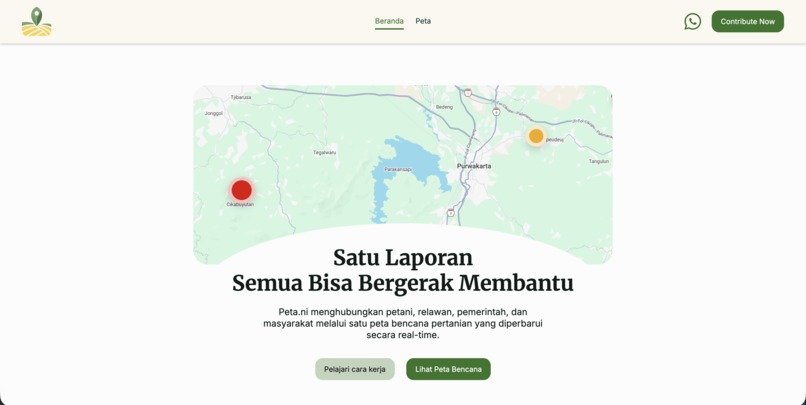
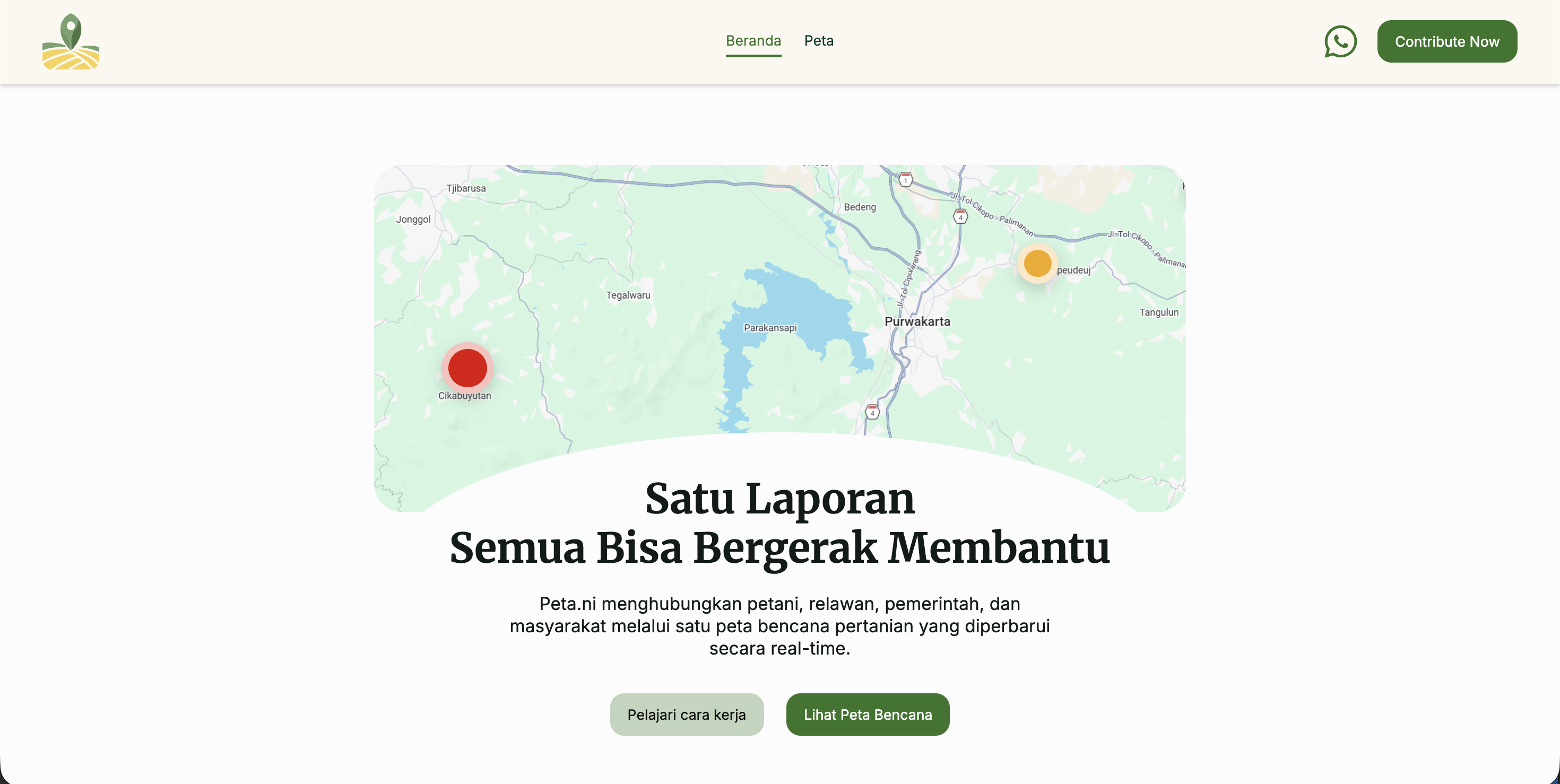
Landing Page
-
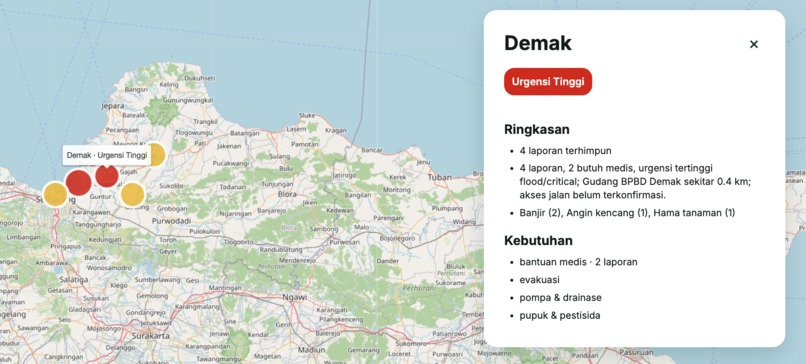
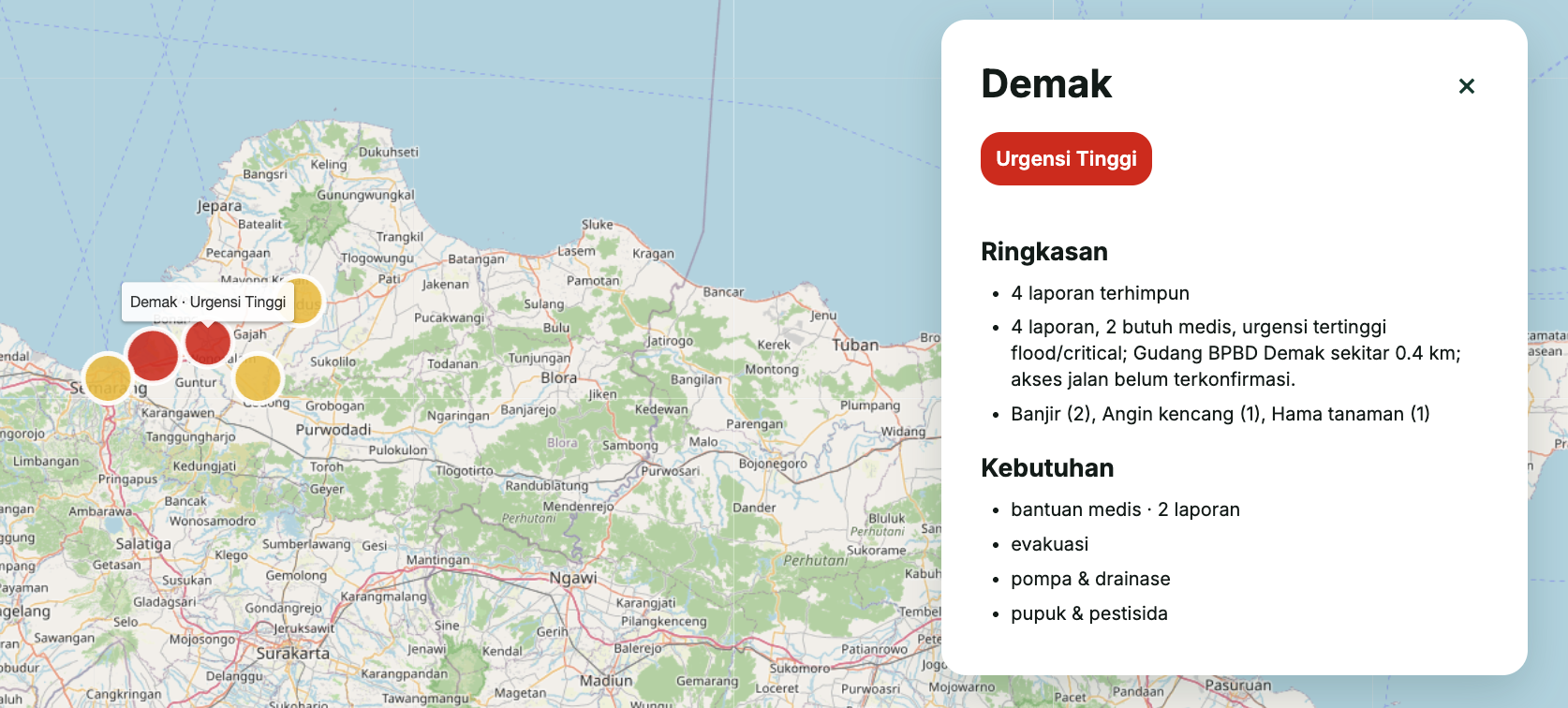
Report Detail
-
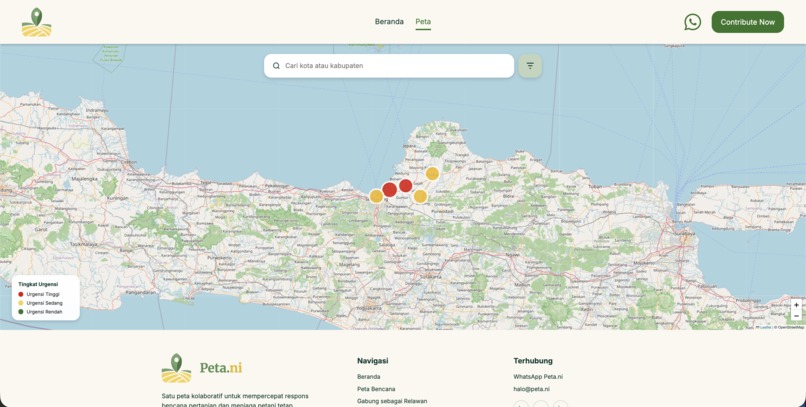
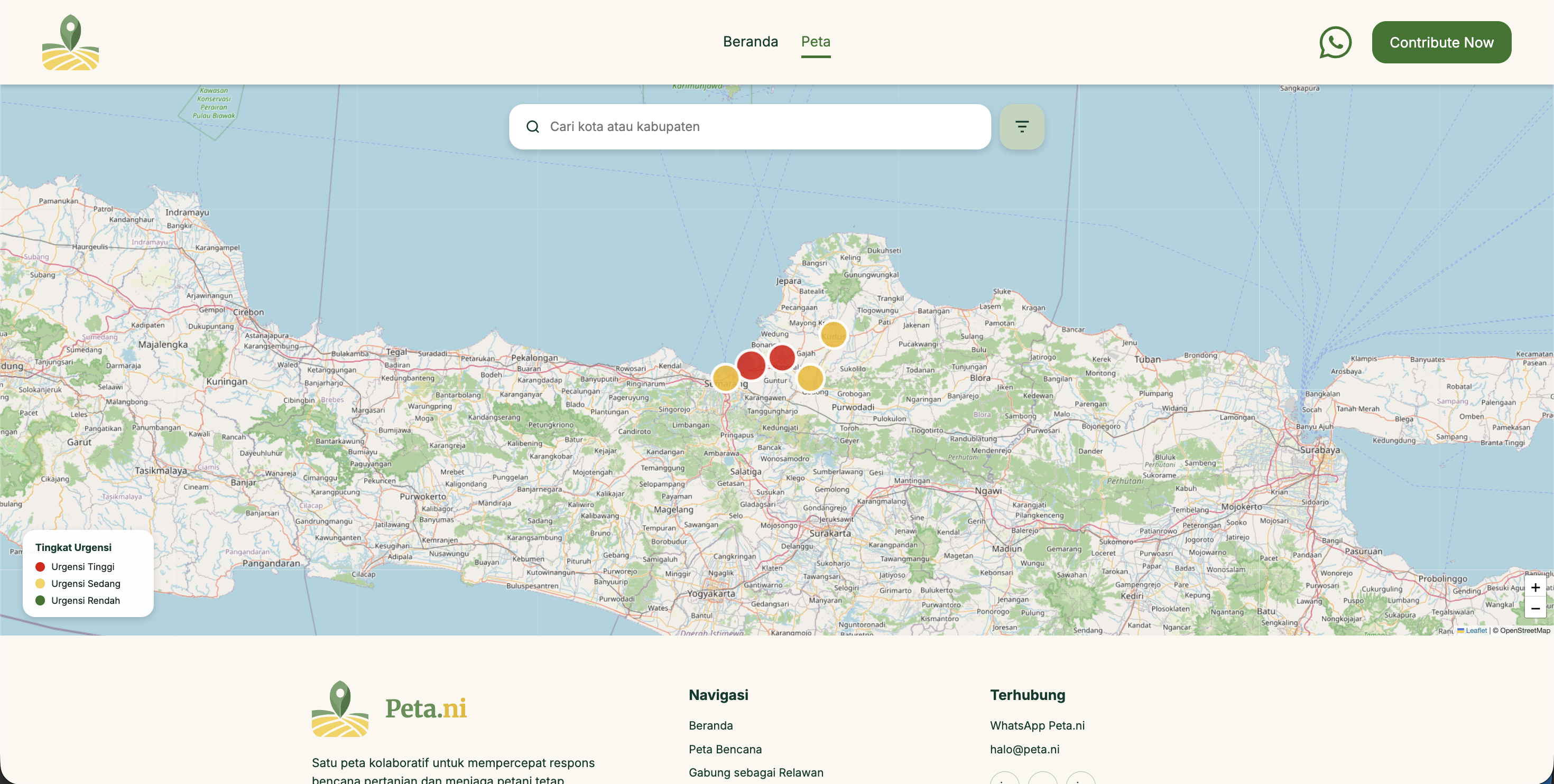
Map Page
-
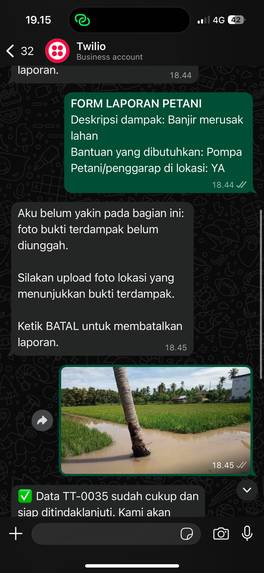
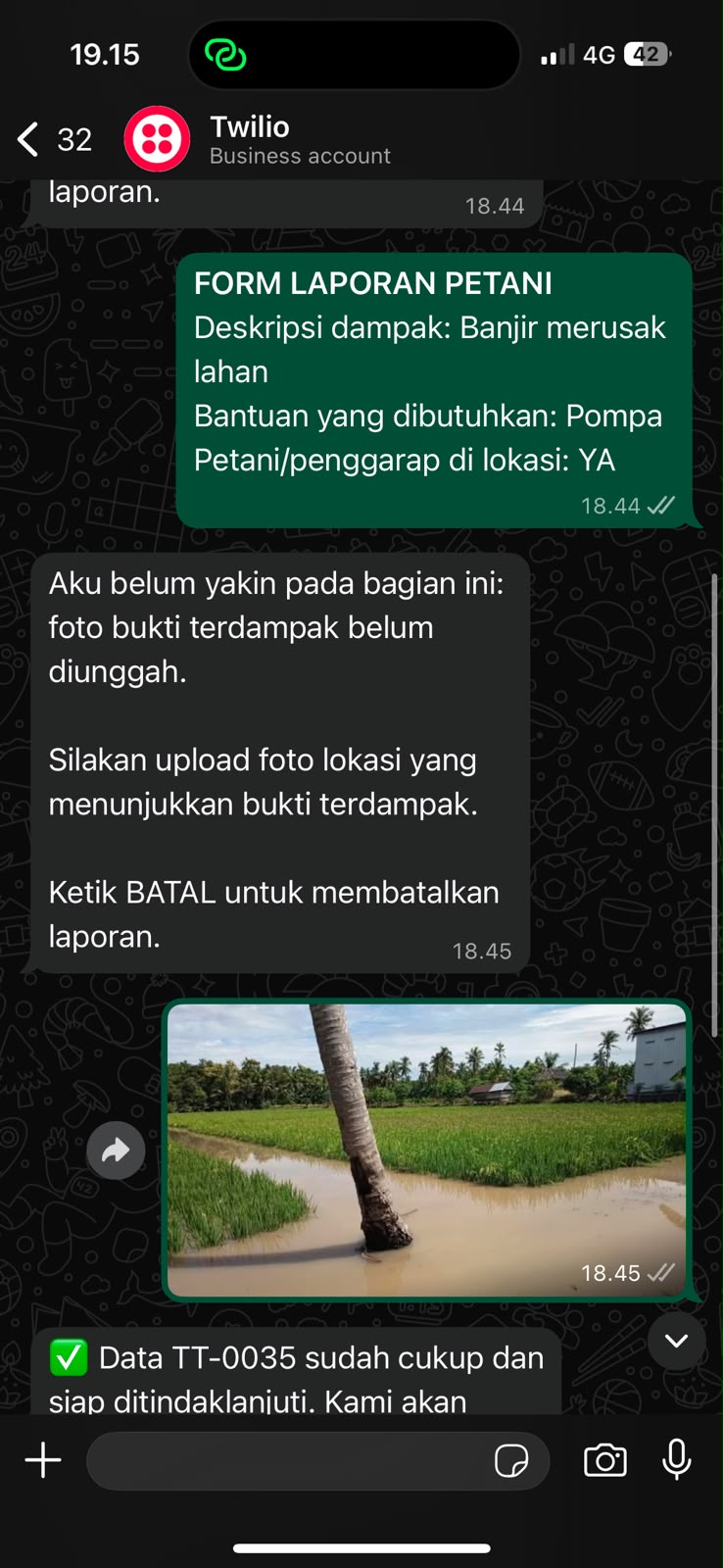
Whatsapp Reporting Damage
-
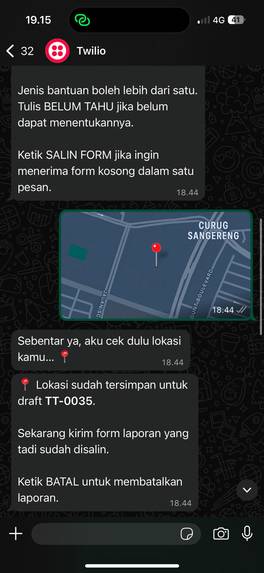
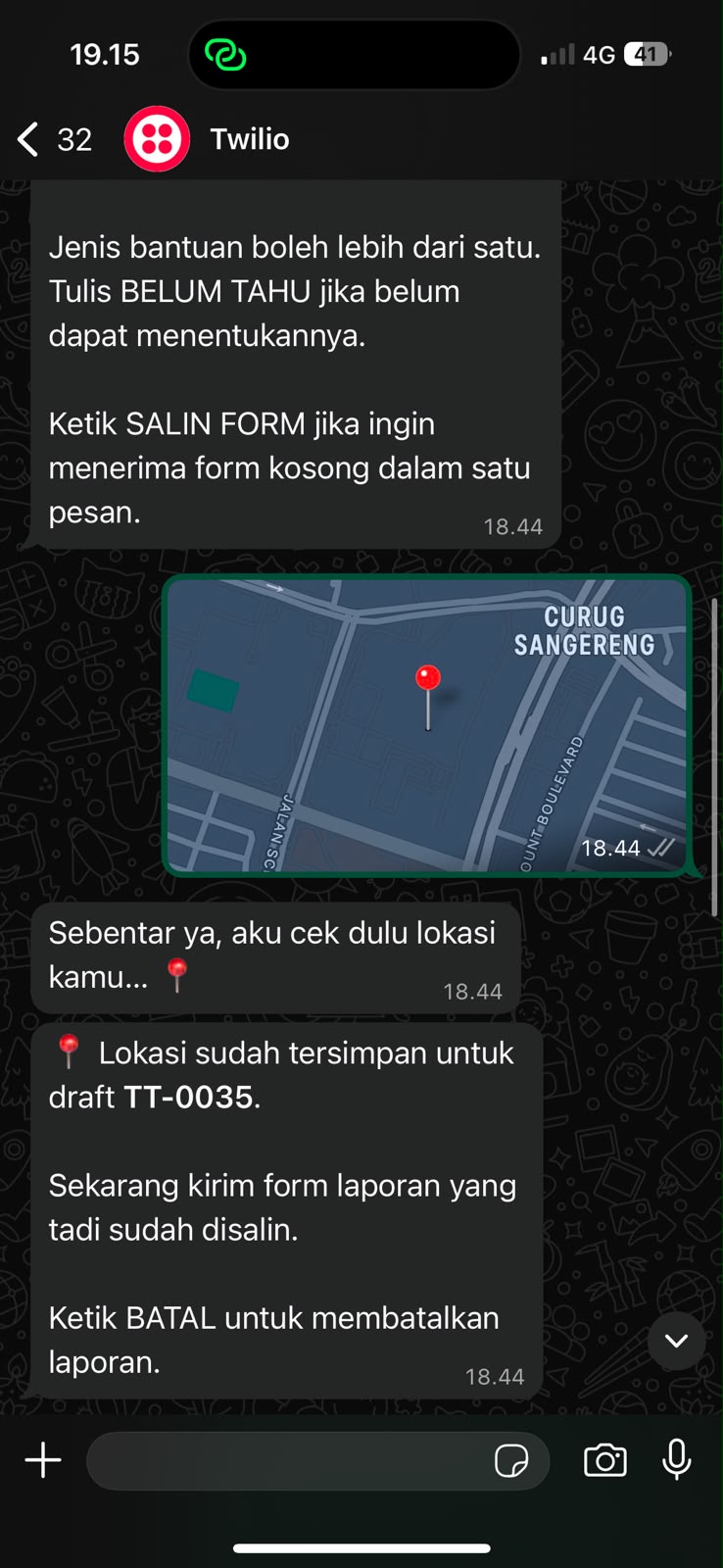
Whatsapp Reporting Location
-
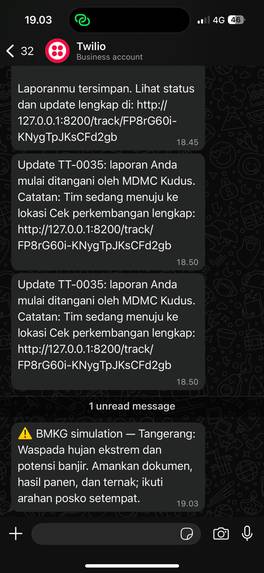
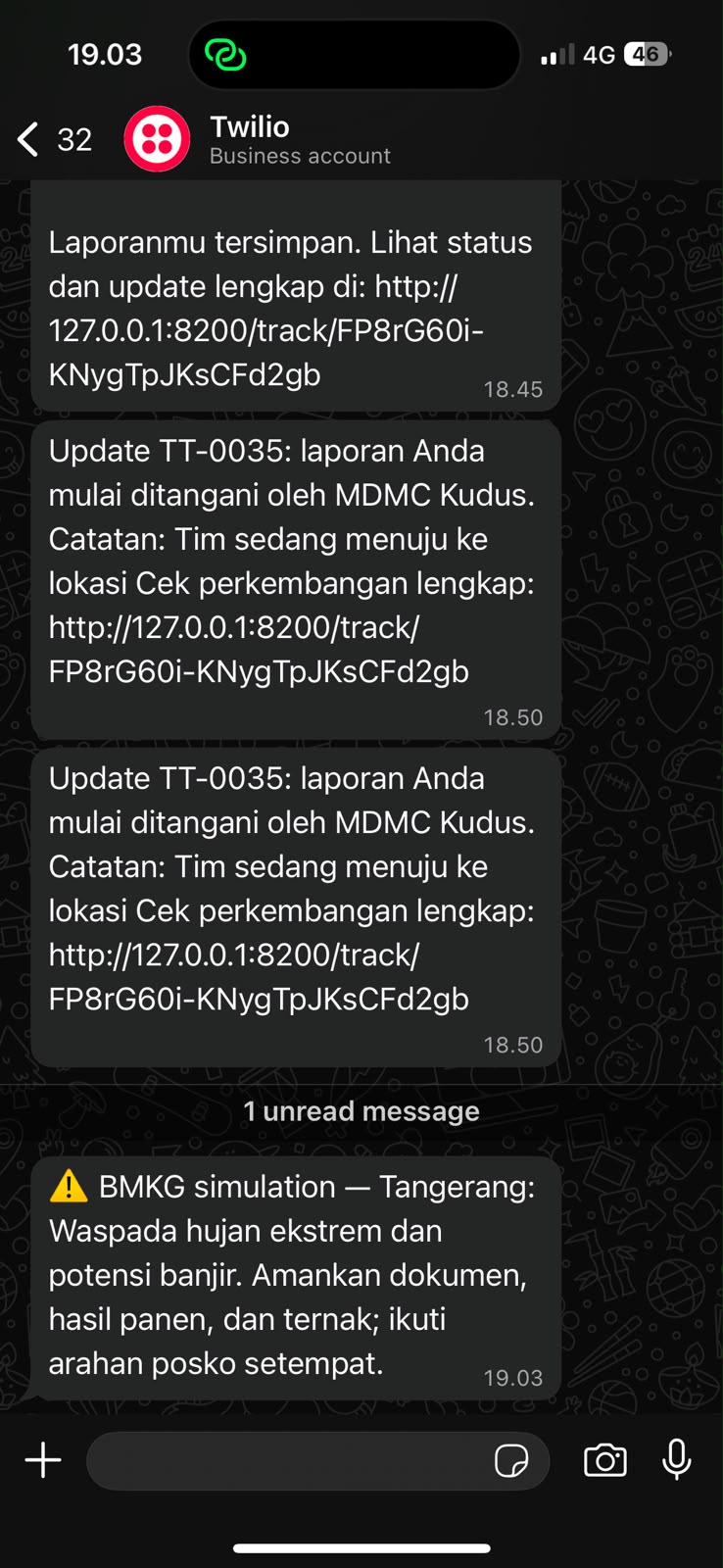
Whatsapp Early Warning Notifications
Inspiration
Over 110,000 hectares of Indonesian farmland fail annually due to floods, affecting millions of agricultural workers. Yet, emergency aid arrives late because reporting relies on paper trails and multi-layered bureaucracy (RT → Lurah → BPBD). Inspired by BNPB’s pentahelix doctrine, we built a disaster information layer that makes field data instantly visible to everyone who wants to help: volunteers, village officials, and BPBD alike.
What it does
Peta.ni connects rural farmers with relief networks:
- WhatsApp Intake: Farmers send photos, location pins, and text. The bot automatically manages privacy consent, verifies evidence, and calculates a Readiness Score from 0 to 100 to ensure reports are actionable.
- Tiered Access Model: The Public view shows aggregate regional risk clusters to build trust, while the Responder view reveals precise GPS pins, damage photos, and nearest village office/posko contacts, all while keeping the reporter’s phone number masked.
- Closed Loop Notifications: When a responder updates a status, the farmer is notified naming the specific organization (e.g. "laporan Anda diverifikasi oleh PMI Demak").
- Radius Warning Alerts & AUTP Reminders: Administrators can broadcast simulated BMKG weather warnings to farmers in a specific radius. When a flood is verified, the system auto-sends crop insurance (AUTP) reminders, helping farmers claim up to Rp6,000,000/ha within the 7-day filing window.
How we built it
- Backend: FastAPI (Python) for asynchronous webhook intake and background task processing.
- Database: SQLite with SQLAlchemy ORM
- AI & Geocoding: OpenRouter Vision + Strict JSON Schema extraction, paired with OpenStreetMap's Nominatim API for dynamic location lookup.
- Frontend: Vanilla CSS and Leaflet.js
- Integration: Twilio WhatsApp gateway
What we're proud of
The "One report works 4×" concept: a single farmer WhatsApp message leads to responder triage, volunteer coordination, AUTP claim evidence, and village official aid paperwork.
What we learned
We learned the importance of matching the user experience to the local environment. By meeting farmers where they already are (WhatsApp) and responders where they work (dashboards), we hope to achieve high usability without forcing users to adopt unfamiliar tools.
What's next for Peta.ni
Possible updates:
- Allow volunteer organizations to claim specific needs on the map (e.g. "PMI is bringing 50 seed packages") to prevent duplication of aid.
- Government Integration: Auto generate official village aid documents directly from verified report data.
Built With
- fastapi
- leaflet.js
- openrouter
- sqlite
- twilio

Log in or sign up for Devpost to join the conversation.