-
-
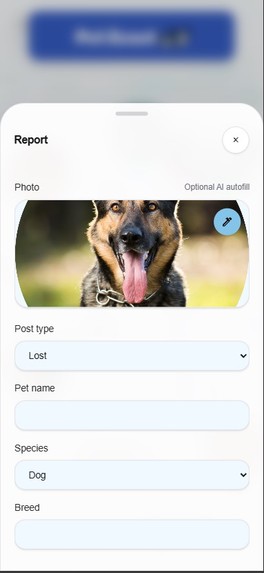
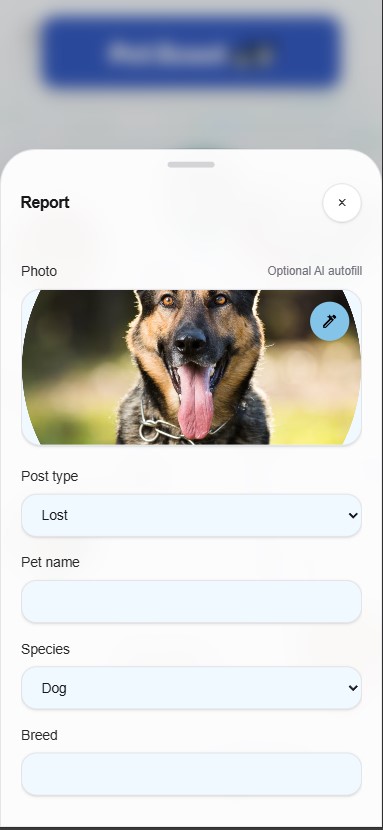
Form component in mobile view
-
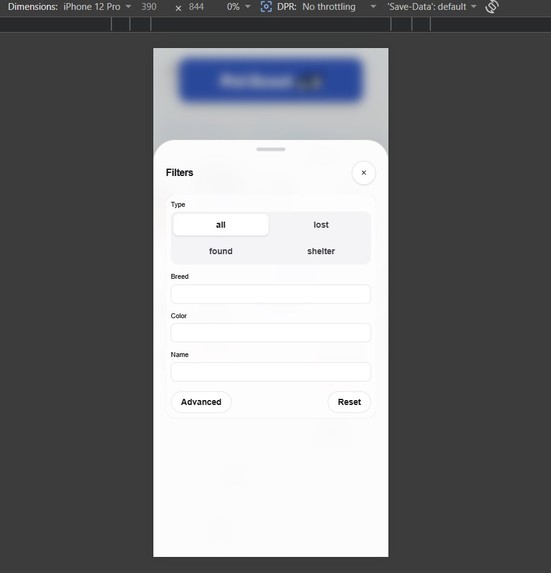
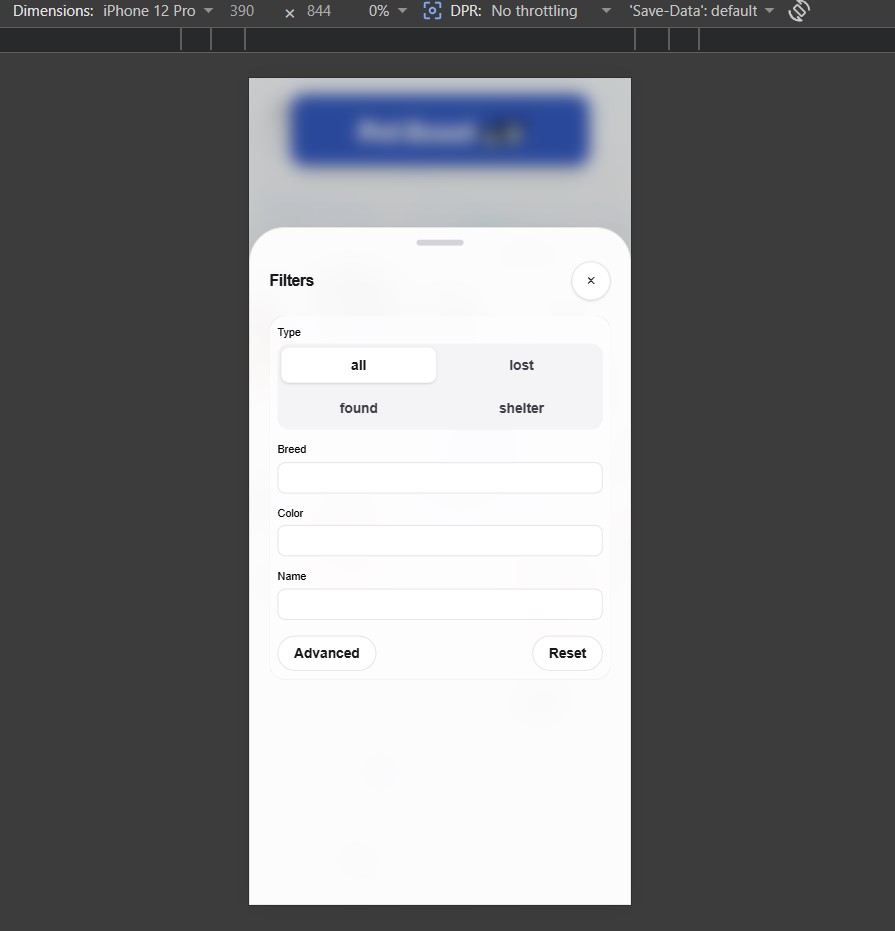
Filter component in mobile view
-
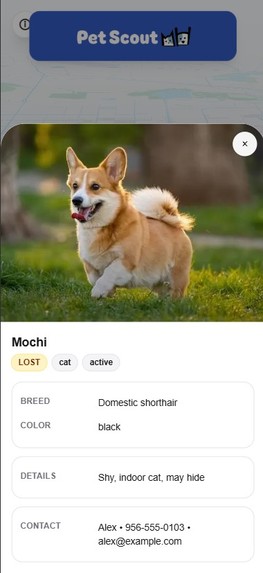
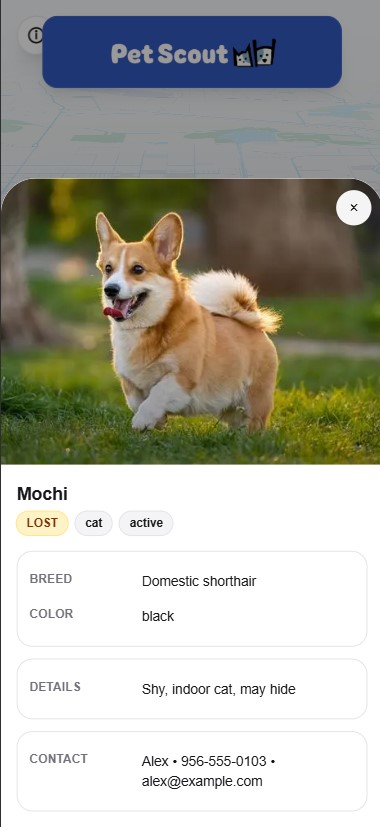
Pet post in mobile view
-
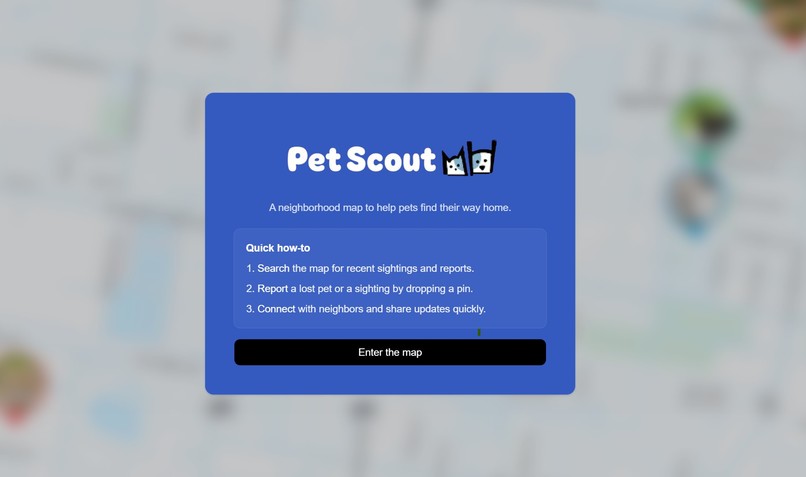
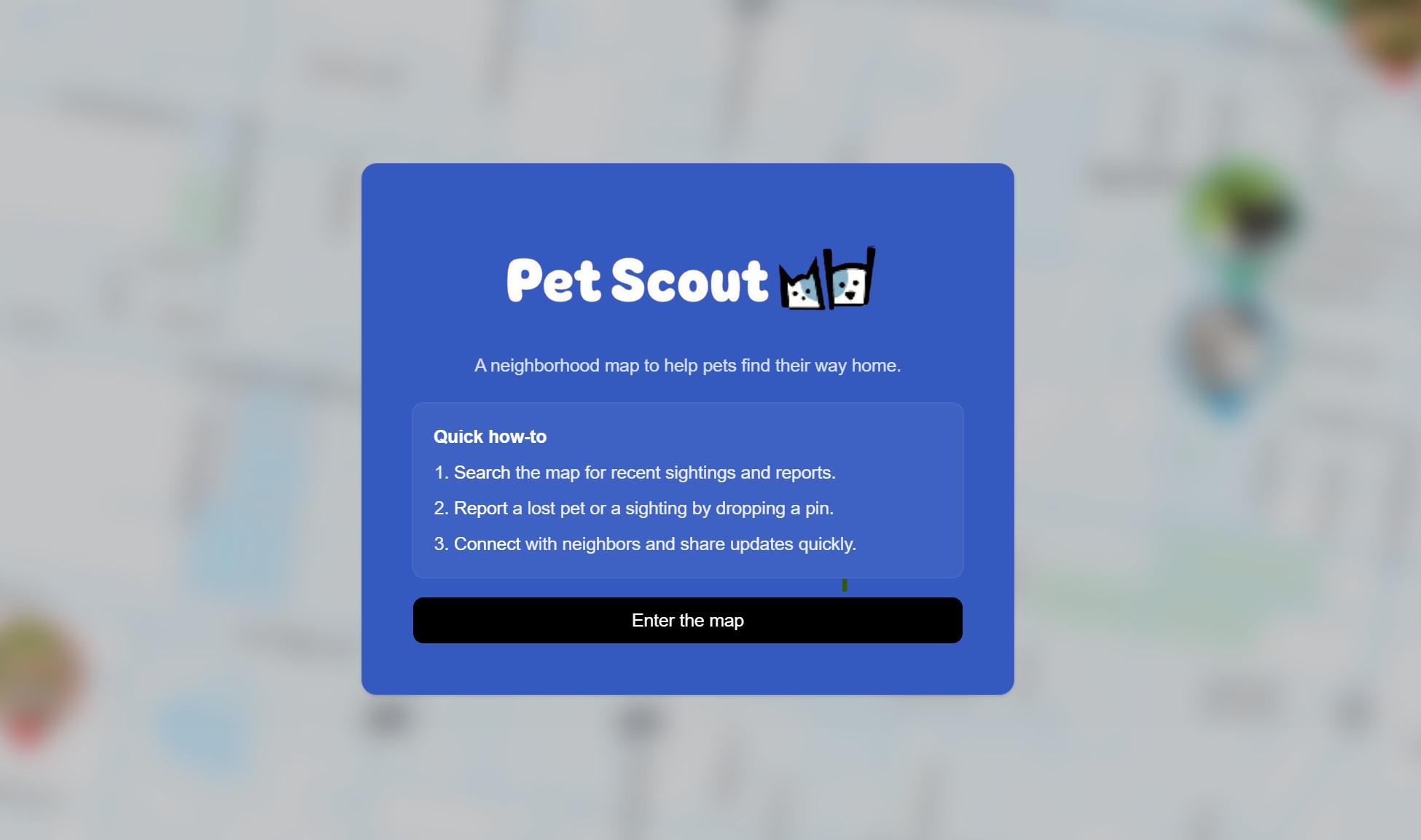
Intro page
-
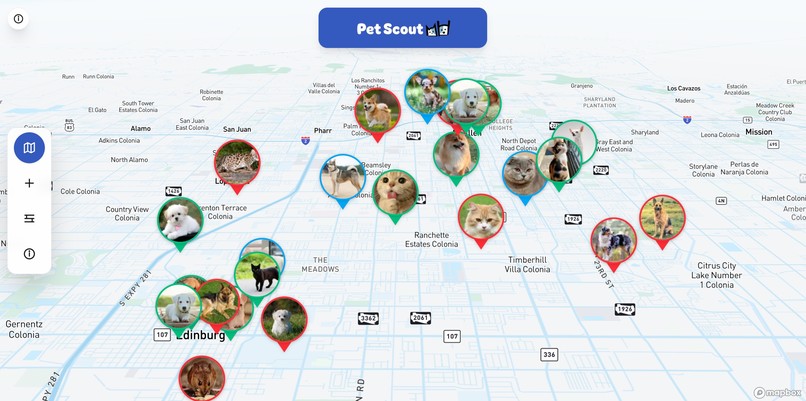
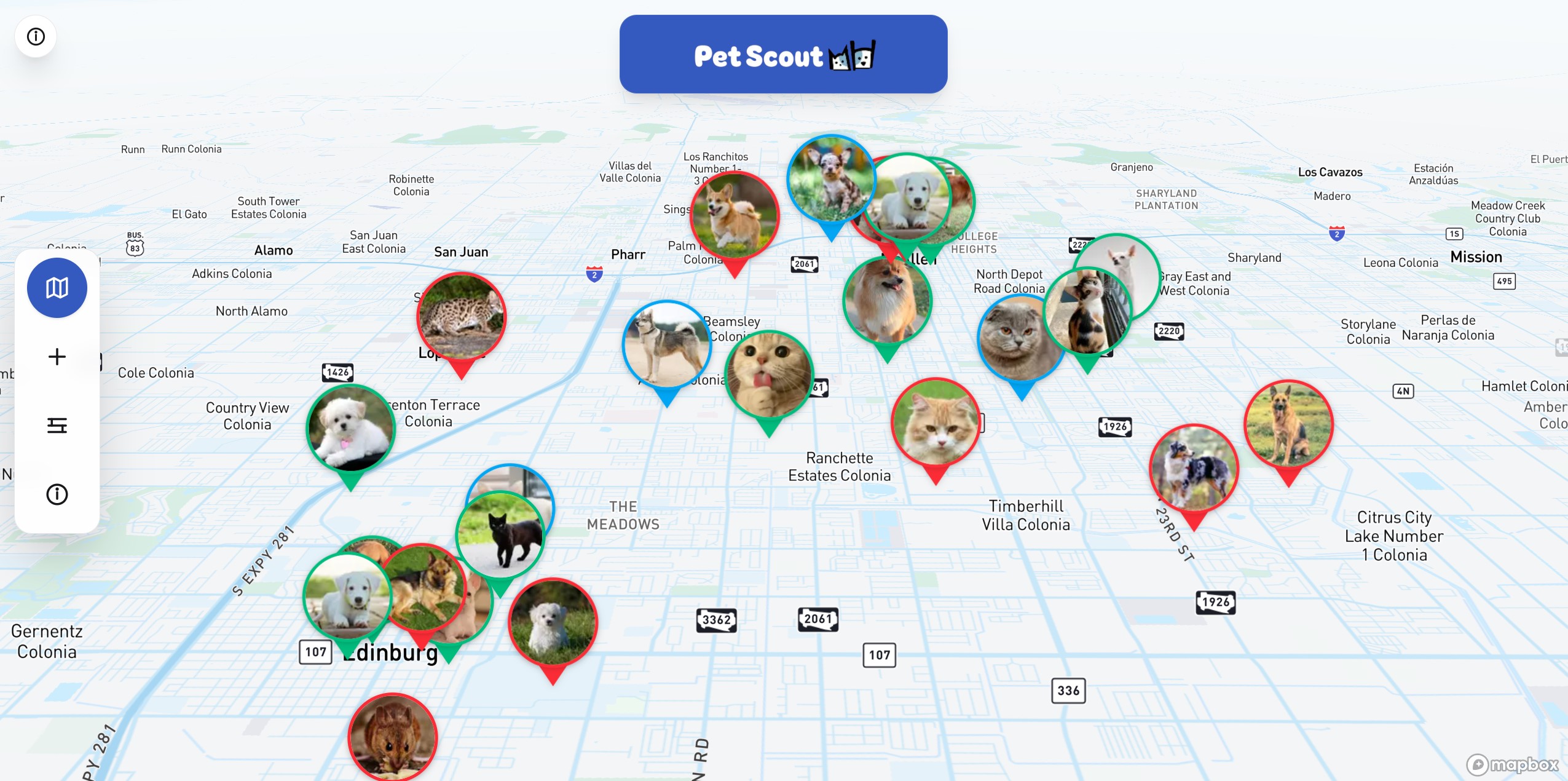
Map view
Inspiration
When a pet goes missing, information spreads fast—but not in one place. We’ve both seen how stressful it is to search through scattered posts, group chats, and flyers while time keeps passing. We wanted a simple tool that helps people communicate quickly and visually: “Where was this pet last seen?” and “Where was this pet found?”
What it does
Pet Scout is a map-first lost-and-found for pets.
- People can post a Lost or Found report with a photo, details, and a location pin.
- Everyone can view reports on a shared map and filter them to find what matters nearby.
- New posts appear in real time so the map stays current.
At a high level, it’s about turning a stressful search into a coordinated community effort. Even a small increase in visibility can improve outcomes, think of it like improving the chances from (p) to (p + \Delta p) just by getting the right eyes on the right area.
How we built it
- We built the UI with Next.js + React + TypeScript, focusing on a full-screen map experience.
- We used Mapbox to render the map and place pins for each report.
- We used Supabase for the backend:
- A Postgres table for pet posts
- Storage for uploaded photos
- Realtime updates so new reports show up without refreshing
- We also added an optional AI helper endpoint that can infer basic pet attributes (like species/breed/color) from a photo to speed up reporting.
Challenges we ran into
- Getting location right: deciding when to use device GPS vs. letting users pick a point on the map, and handling cases where location access is denied.
- Realtime + filtering: making sure new posts appear instantly while still respecting the user’s filters.
- Photo uploads: reliably uploading images and storing paths/URLs in a way the frontend can display.
- Hackathon constraints: balancing polish vs. core functionality and keeping the flow simple enough to demo well.
Accomplishments that we're proud of
- A clean, map-first experience that feels fast and focused.
- A full reporting flow (photo + pin + details) that saves to a real backend.
- Realtime updates so the app feels “alive” during a demo.
- A clear foundation to grow into a production-ready tool.
What we learned
- How much UX matters in crisis-style workflows: fewer steps and clearer defaults make a big difference.
- Practical integration experience with Mapbox + Supabase (database, storage, and realtime).
- How to ship a working end-to-end product under time pressure by keeping scope tight and prioritizing the core loop: post → see on map → act.
What's next for Pet Scout
- User accounts and stronger privacy controls for contact info
- Post verification and moderation tools (to reduce spam and increase trust)
- Better search and alerts (e.g., “notify me if a matching pet is posted within (r) miles”)
- Expiration / status updates (reunited, expired) and improved data quality
- Mobile-first refinements and accessibility improvements
Built With
- css
- gl
- mapbox
- next.js
- openai
- postgresql
- react
- react-map-gl
- realtime
- tailwind
- typescript


Log in or sign up for Devpost to join the conversation.