-
-

App Icon
-
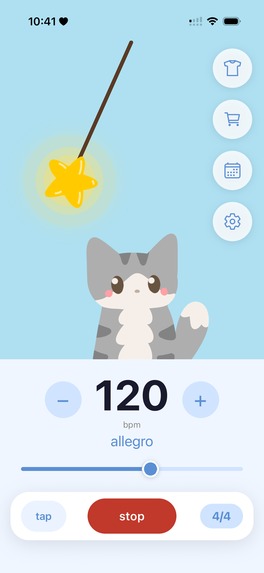
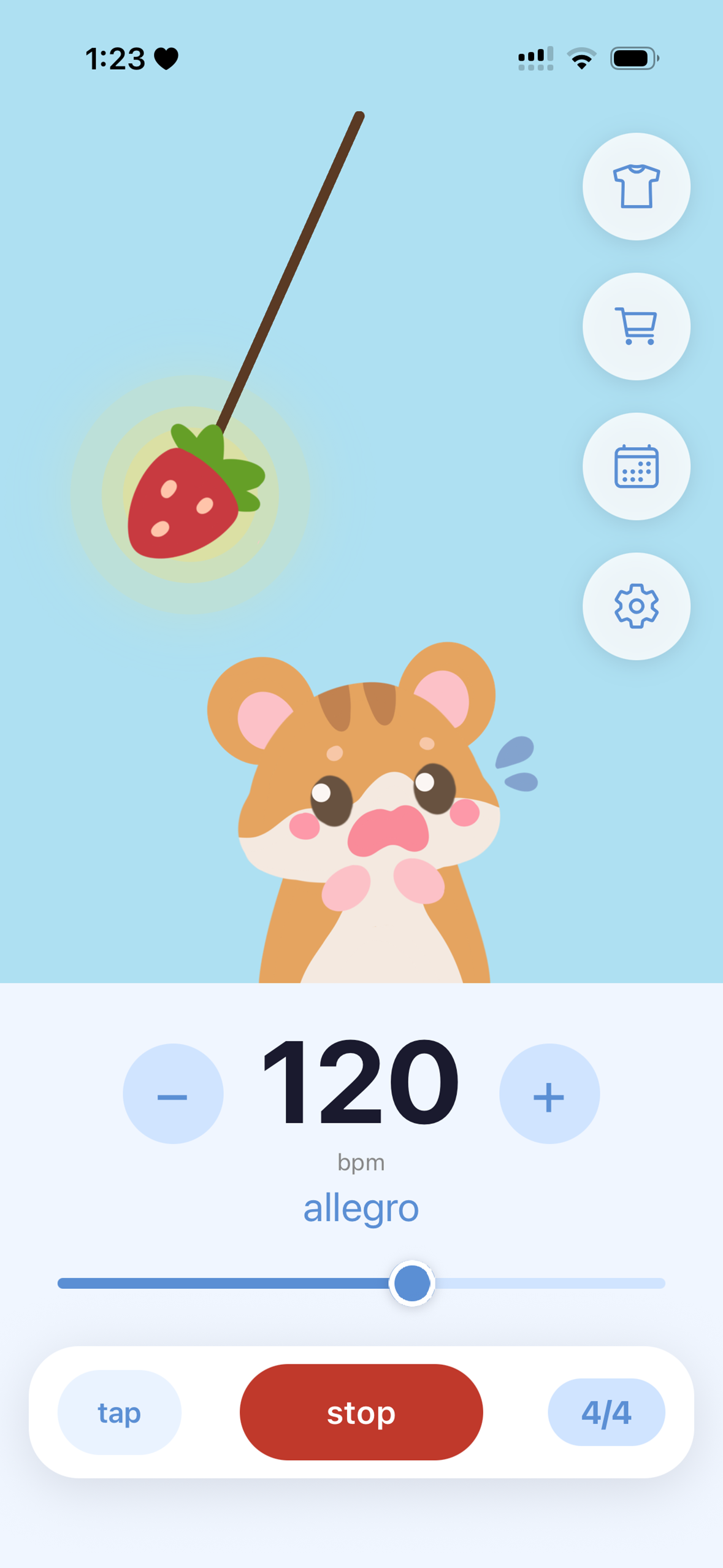
Metronome in motion!
-
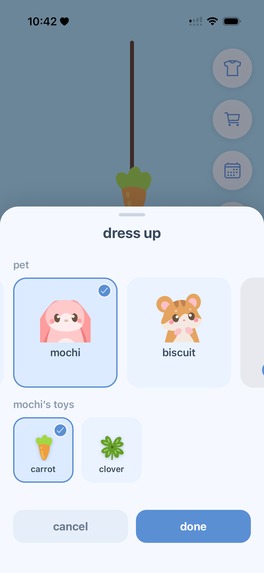
Choose your pet and its toy
-
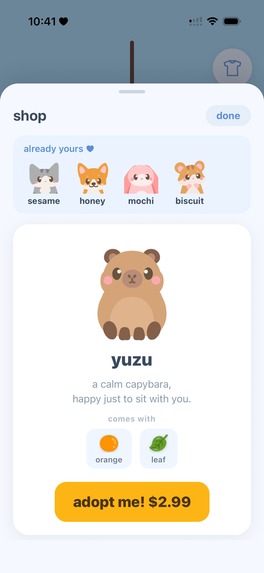
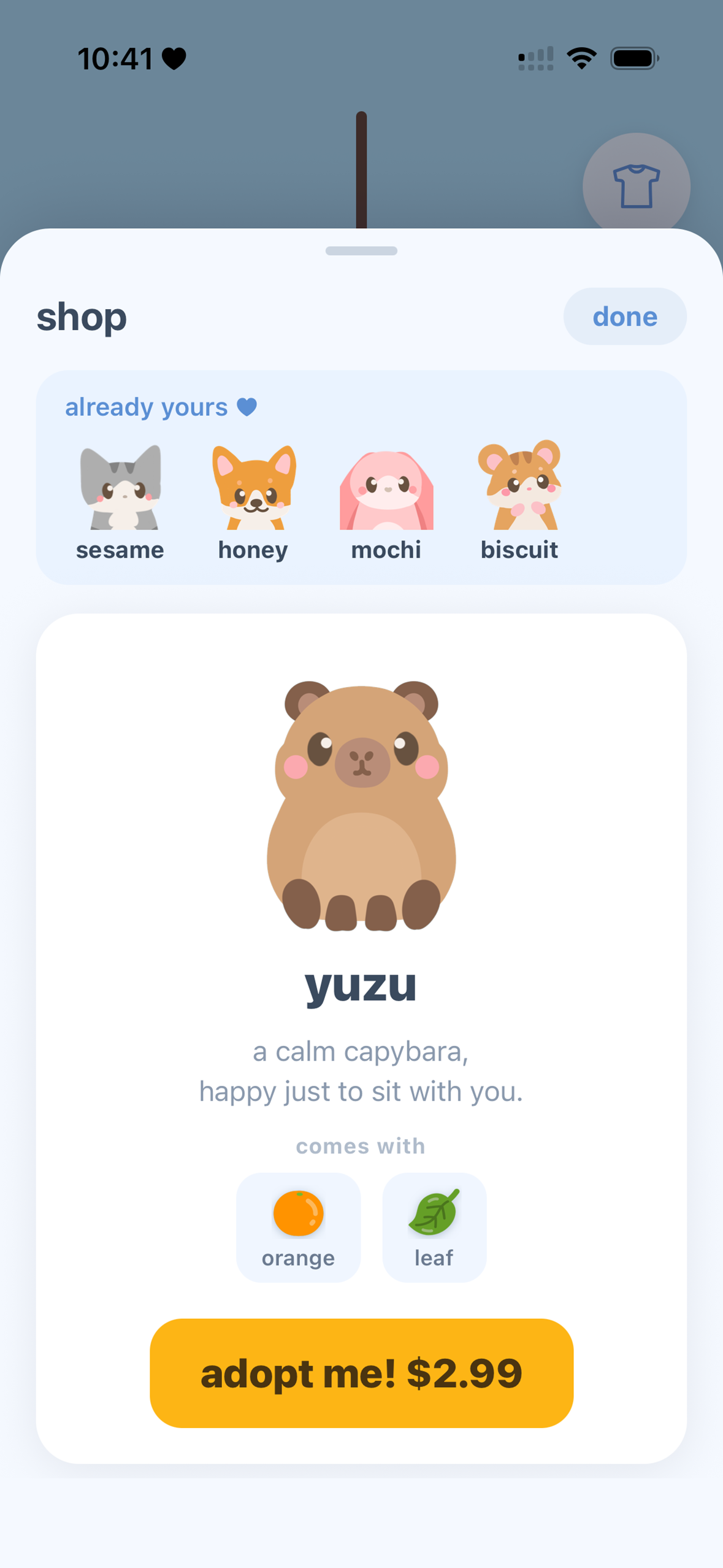
Adopt new pets
-
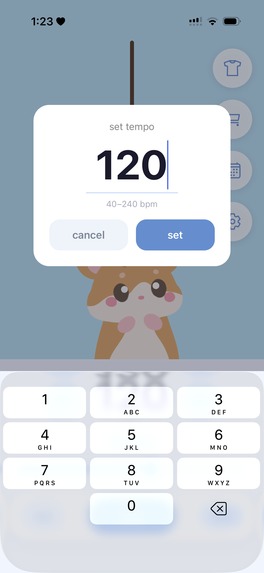
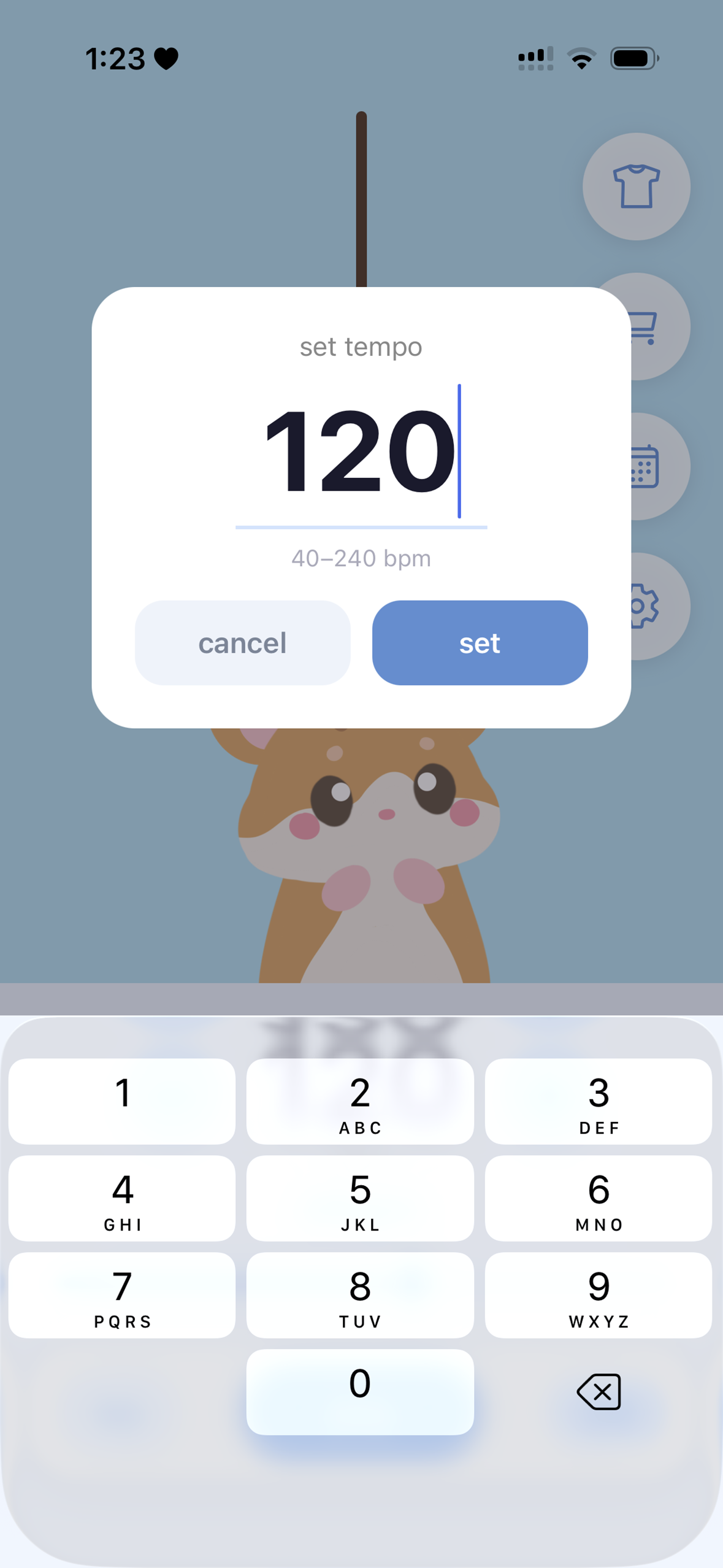
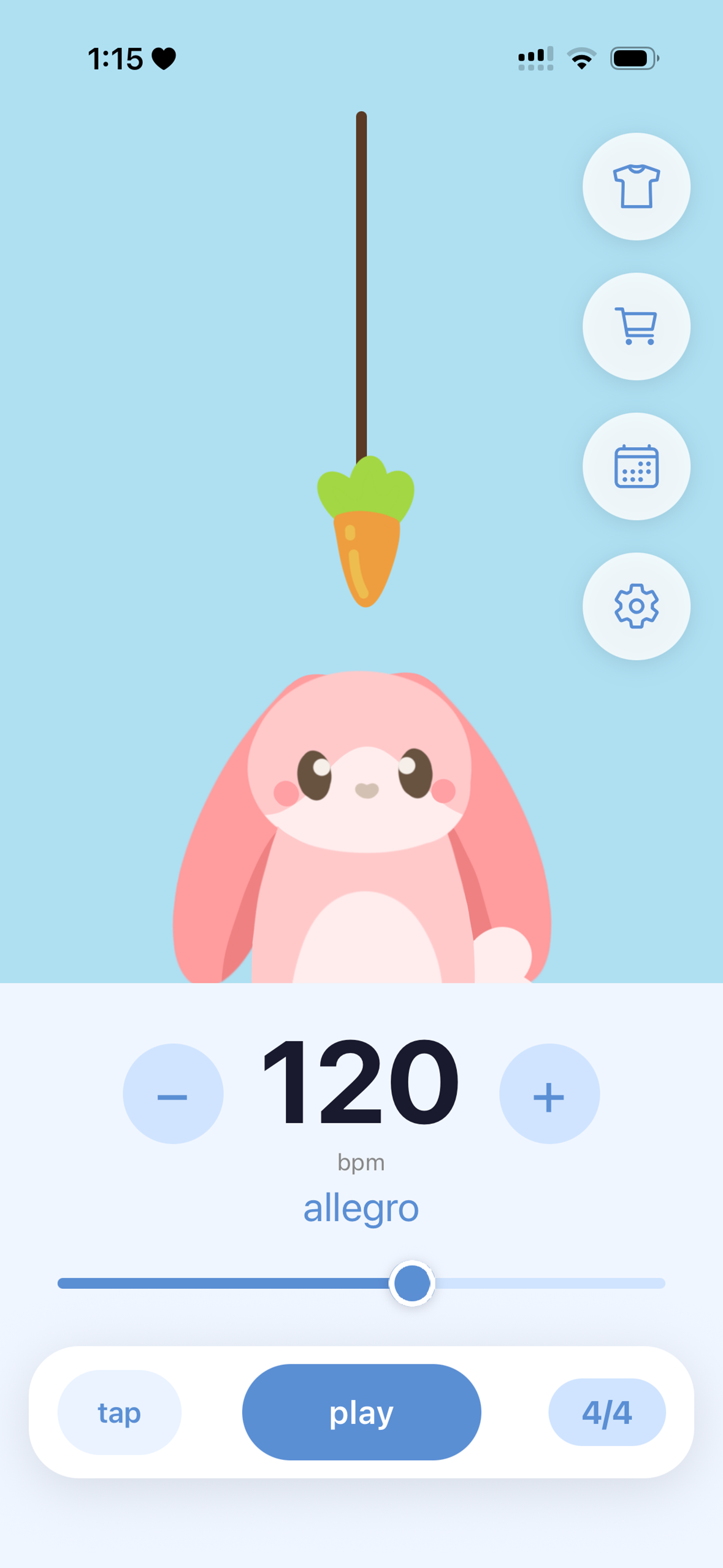
Adjust your tempo
-
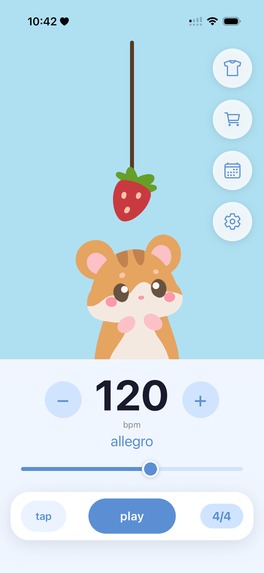
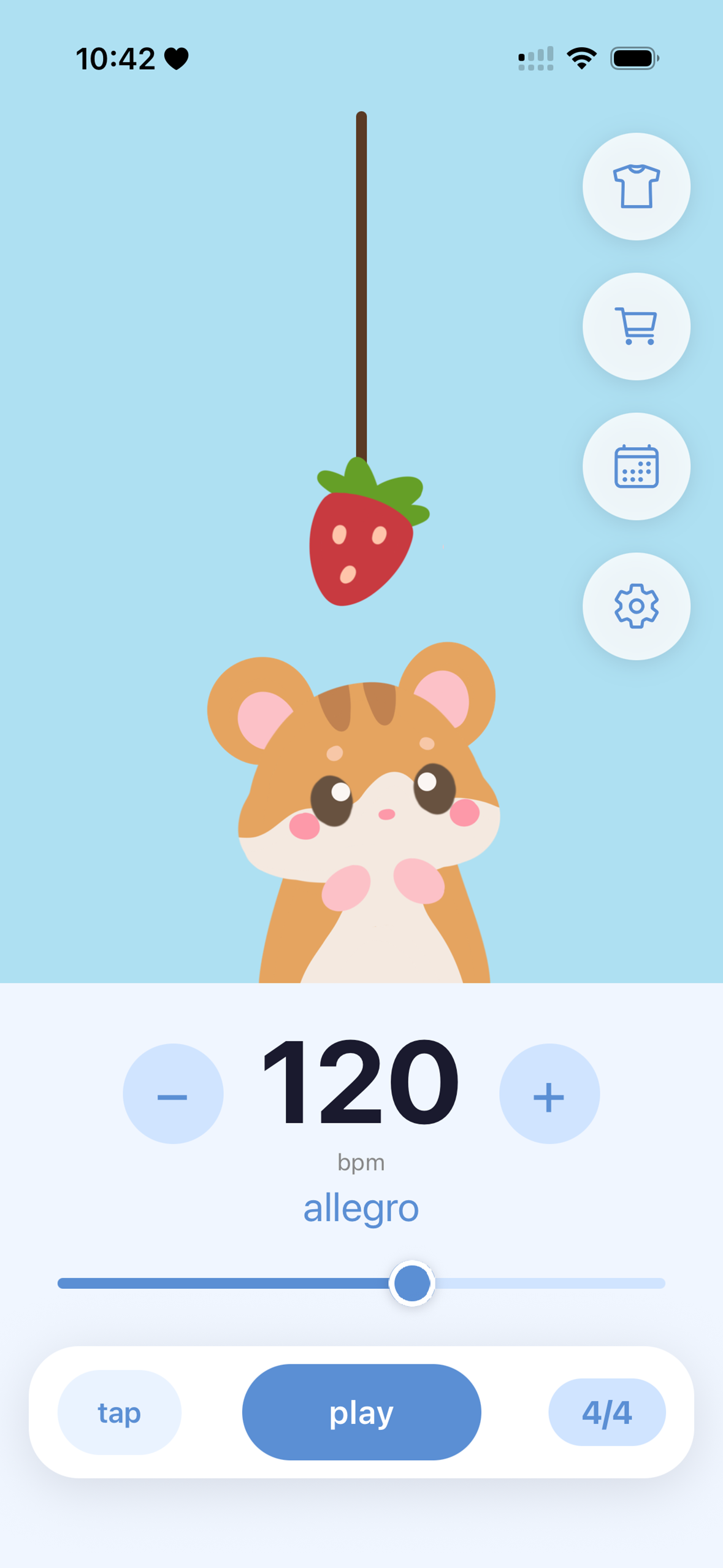
Biscuit the hamster, playing with the strawberry
-
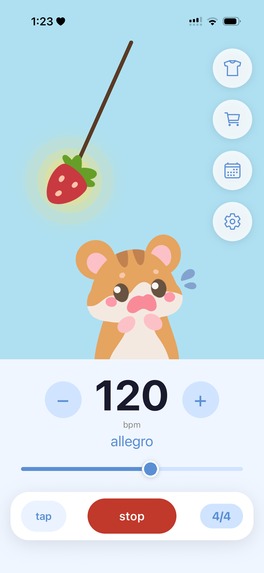
Biscuit the hamster while the metronome is in motion
-
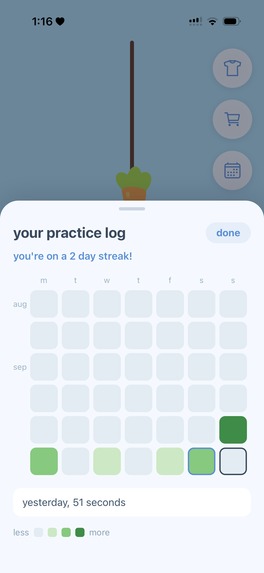
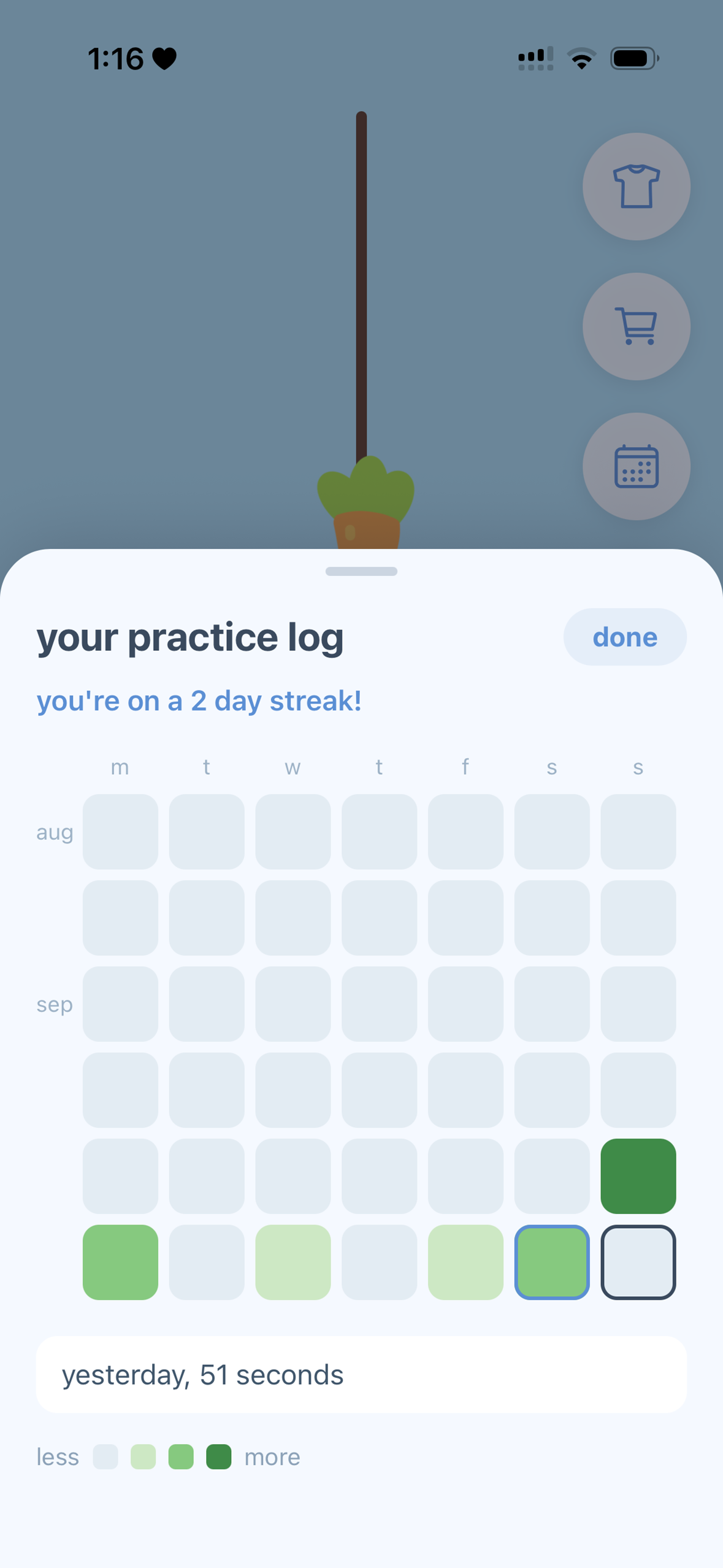
View your tracked practice sessions in the Practice Log
-
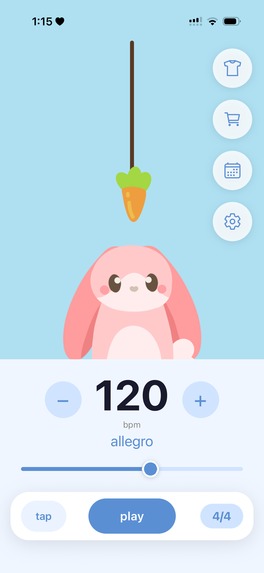
Mochi the bunny, playing with the carrot
-
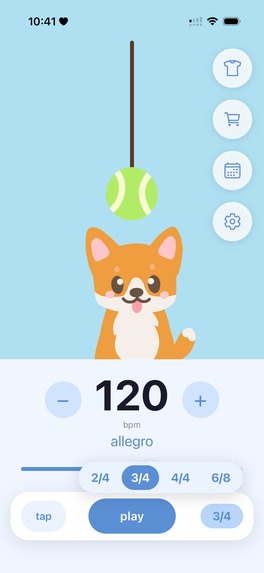
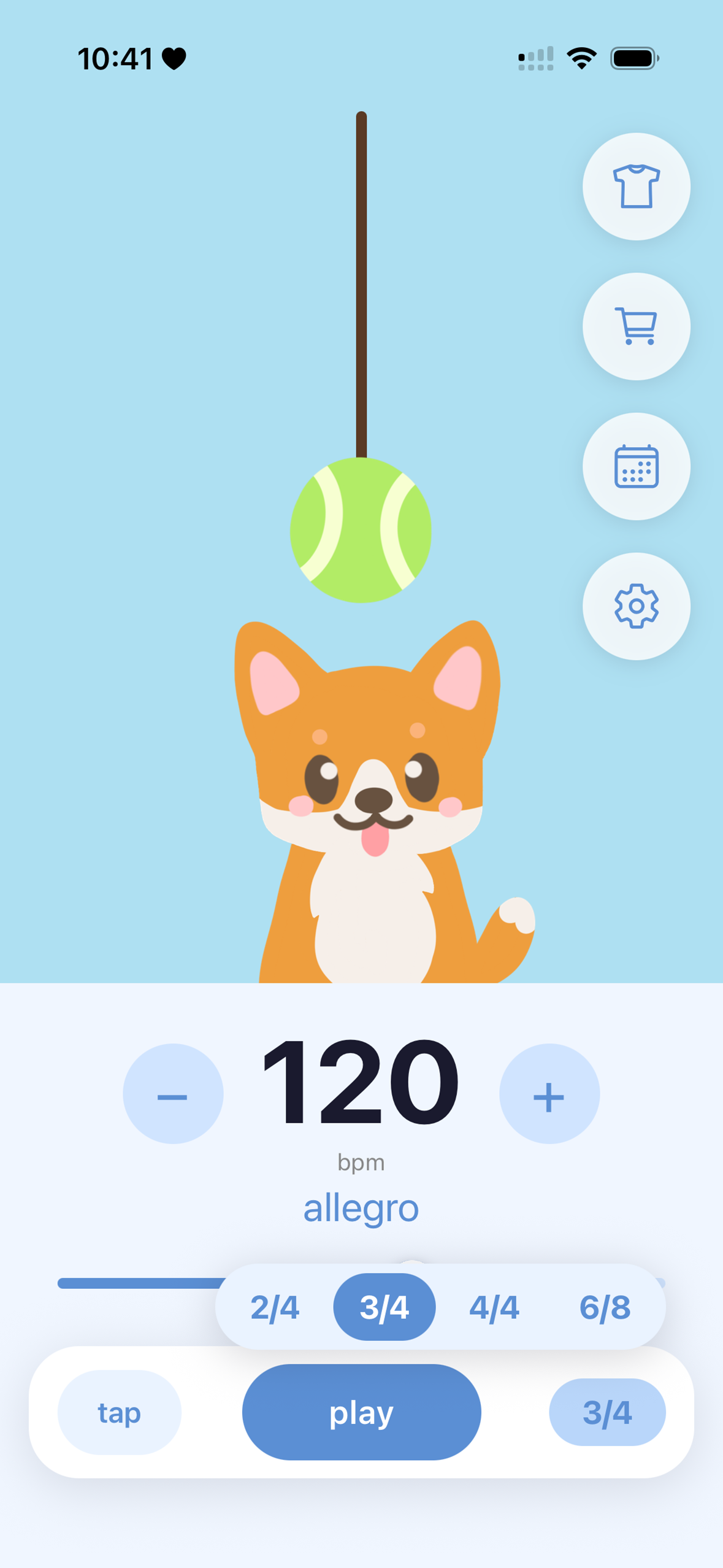
Honey the corgi, playing with the tennis ball, and time signature picker opened
-
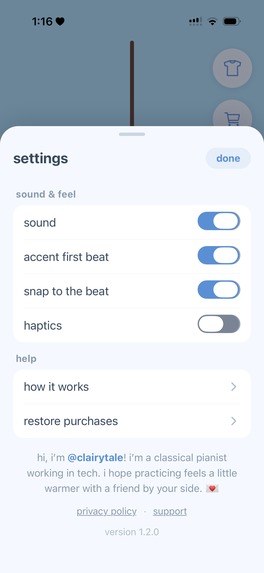
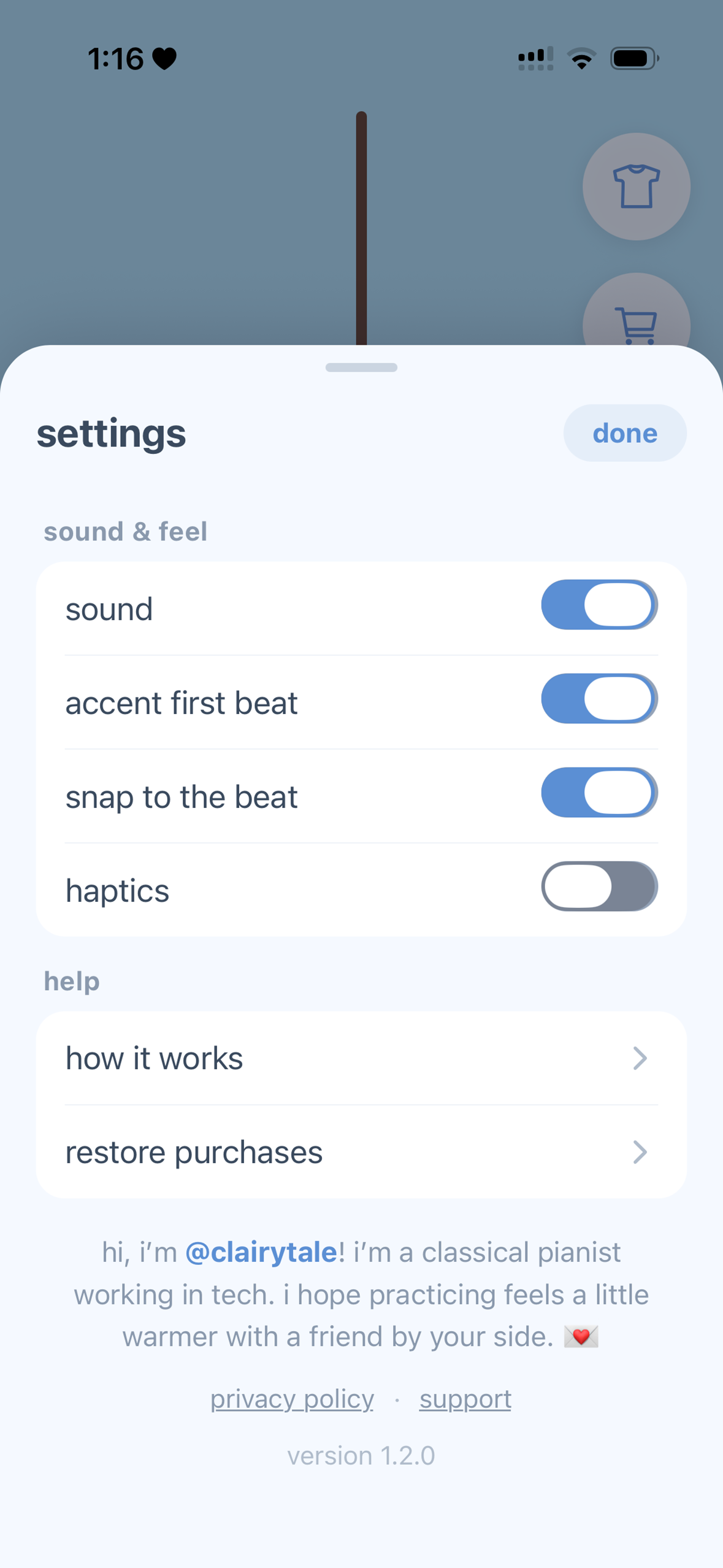
Settings are designed for accessibility to toggle audio/visual/haptic cues

Hi, I’m Claire!
I’m a classical pianist working in tech, and I build cute apps that make learning music feel more fun. Pet Metronome is a cute metronome app where a pet watches a toy swing from the pendulum to keep your beat steady, for music students of all ages.
Inspiration
During COVID, I performed cozy piano covers on Twitch for people to unwind to, and became a Twitch Partner. I learned how much people valued having a warm space to return to. Many of my viewers were adults who loved music but quit as kids because practicing felt boring, and a lot of them told me they still regret it.
Almost every music student is told to use a metronome to keep their rhythm steady, and many of them hate it. Traditional metronomes are basic tools with a harsh, rigid click. Because musicians spend most of their time practicing alone, I wanted to make practice feel like a warm experience. So I turned the metronome, a common friction point, into a companion called Pet Metronome. My goal is to help students look forward to practicing instead of dreading it, so that more people keep learning music as a lifelong gift.
What it does
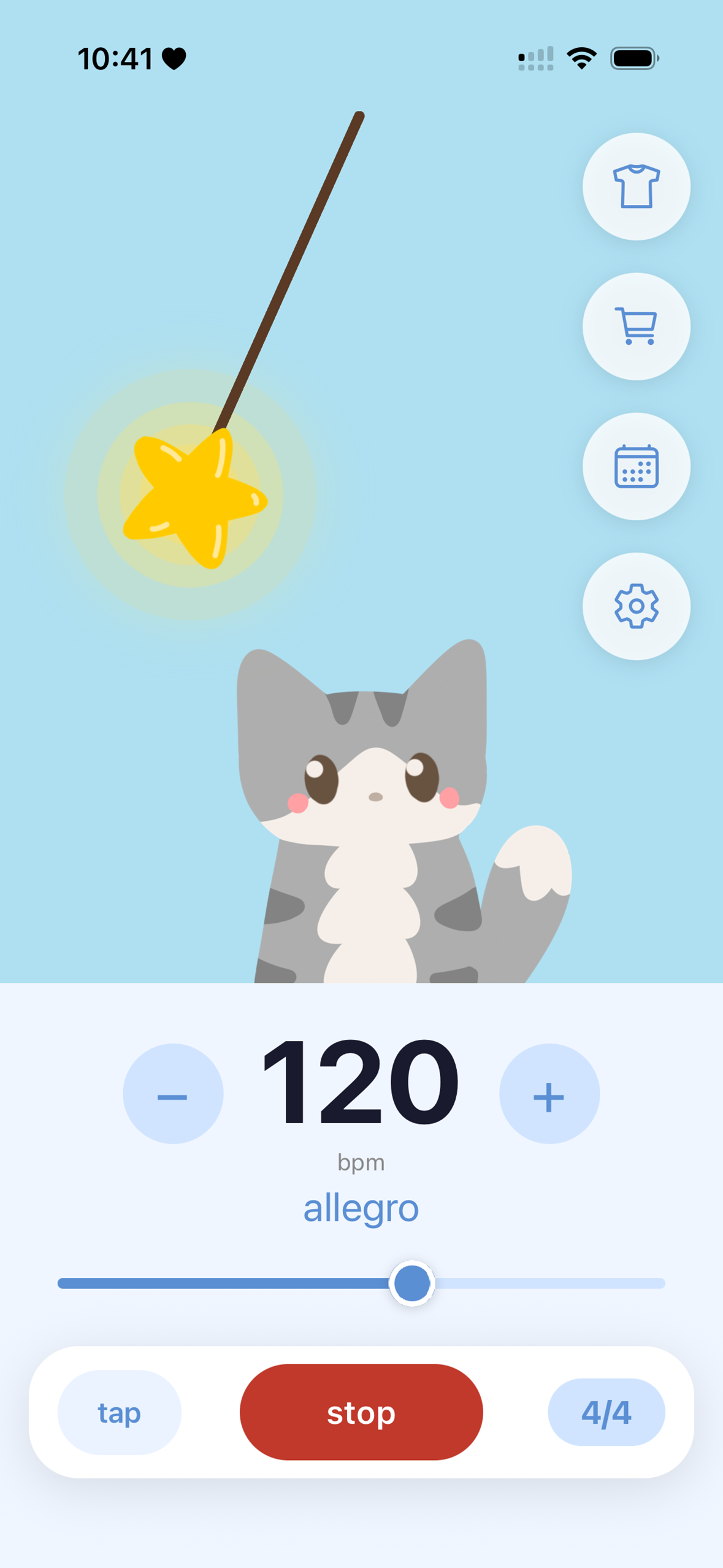
Pet Metronome is a metronome app for music students of all ages, where a cute pet keeps the beat steady with you. Sesame the cat watches her ball of yarn swing on the pendulum, so students can see, hear, and feel the beat.
Behind the cute design is a precise metronome that’s easier to use than a physical one. Students can set the tempo with a slider, buttons, or typing, and Tap Tempo finds the speed of any song they hear by averaging their last four taps. The app is free to download and lives on their phone, which means they don’t have to pack an extra device for the practice room or on the road to a gig.
The Practice Log tracks how long students use the metronome. It records each session, even with frequent starts and stops, and fills a heatmap with a green square for each day they practice. Parents and teachers can see real numbers for the practice time and watch consistency build over time, which traditional metronomes cannot do.
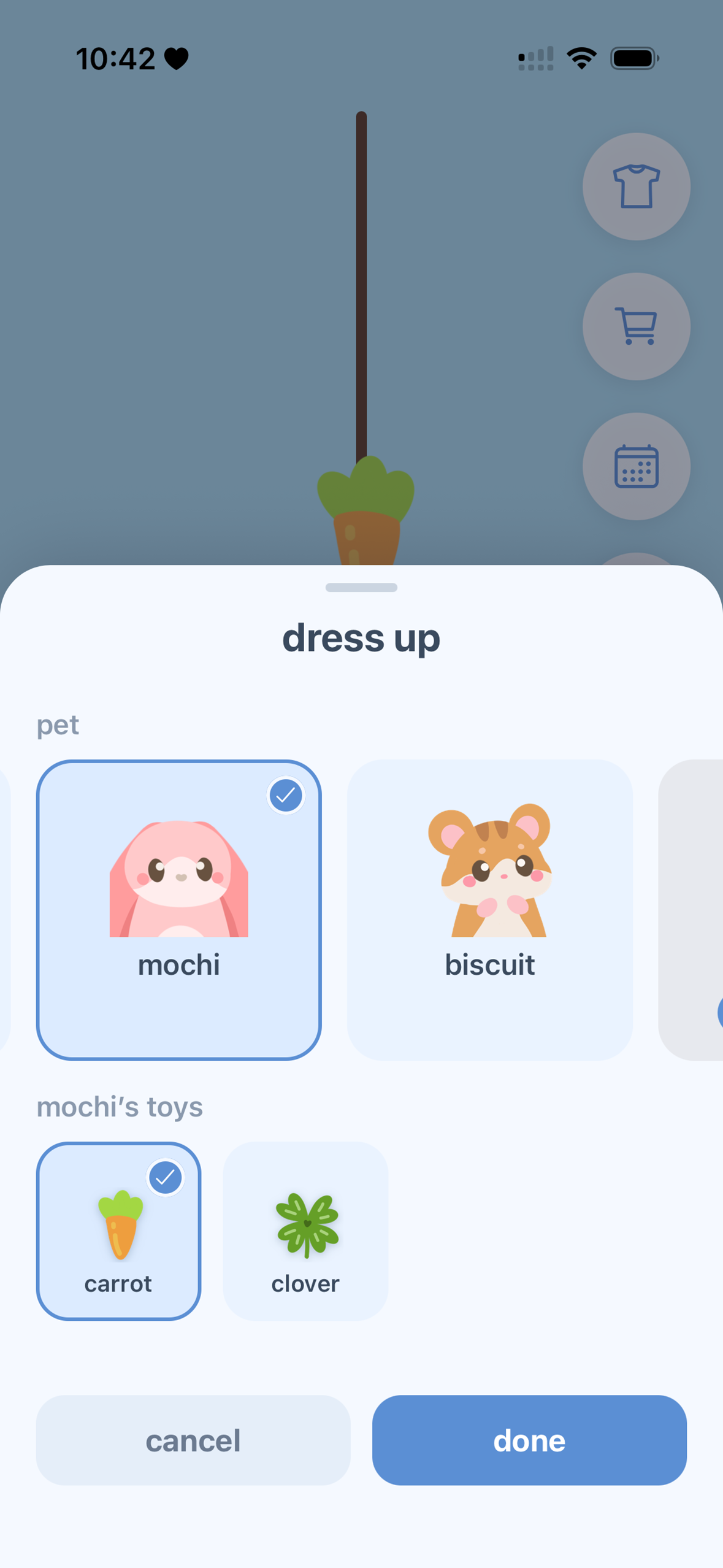
New pets give students more friends to practice with. Each pet in the shop comes with its own set of unique hand-drawn toys. They are one-time unlocks powered by RevenueCat.
How we built it
- Pet Metronome runs on React Native and Expo so that it can eventually serve both iOS and Android.
- I drew the artwork for the pets and toys using Procreate on iPad.
- I used Claude Code for development, writing a detailed spec and overseeing agents working on each module.
- I shipped for iOS from a Windows laptop using EAS for cloud builds and testing with TestFlight.
- RevenueCat handles in-app purchases and entitlements for the pet packs.
- OneSignal handles notifications, which are timed around each student’s practice cadence.
Challenges we ran into
Building a precise audio engine: A metronome must be precise in timing for musicians to trust it. JavaScript’s built-in timers are the standard way to schedule with a clock, but they share a thread with the screen and touch controls, so each beat fires a little late whenever the phone gets busy. Since on JS, every beat is timed by calculating from the previous beat, the delay adds up and the tempo will fall behind over time. The fix was to schedule clicks ahead on the audio hardware’s own clock, which runs separately from everything else. That click is now the anchor that the animation and haptics follow.
Developing on Windows for iOS added friction. Without a Mac, I could not test changes on a simulator, so every check had to go through a cloud build on my phone. This slowed me down most on the audio engine and in-app purchases, which I needed to test in a native build.
Sharing my work before it felt ready. As a classical musician, I was trained to perform a piece only after it was polished, so posting a work in progress pushed me out of my comfort zone.
Accomplishments that we're proud of
I’m a pianist with no engineering experience, and I built Pet Metronome from conception to launch on my own. It was my first time coding with AI, drawing the pets and toys, choosing sound design, developing and testing for mobile, submitting to App Store review, and filming my own marketing content. It was so fulfilling to see my notebook sketches finally become a real product with real users. Thank you for being the inspiration to ship my work!
I turned user feedback into shipped features within days. In the first week of launch, I drew three new pets that users asked for, fixed an eye-tracking animation, and built a practice log module that a new connection on X requested. A user later told me that the log would have made him practice more as a kid.
Early results show real organic demand. In its first two weeks, without any paid marketing, Pet Metronome reached 341 downloads and $36 in revenue, and its App Store page converts at 8.21%. My launch video and two Instagram stories alone brought in 230+ downloads in the first three days. Users keep coming back, too: 67% of devices that opened the app since I integrated OneSignal returned to it, and one user has even spent over 12 hours in the app across 49 sessions. All 10 ratings so far are 5 stars, and I'm excited to see what's possible with more marketing aimed at the app's target audience.
What we learned
I scoped ruthlessly so that I could learn the full process of shipping an app, end to end. As a new developer, I wanted to go through every stage once to get my reps in and understand what to do better next time. I kept the core metronome as my north star and launched with two pets, even though I would have happily stayed in my room drawing 20. With Claude Code, adding new features was easy, so I also had to curate the product’s focus by cutting anything that would distract a student from practicing. That tight scope got me through development, App Store review, launch, user feedback, and content creation.
What’s popular on social media doesn’t always reflect your real users. When I posted a poll asking what to name the pets, most people voted for music puns like Meowzart and Woofgang. However, the question invited funny answers, and the voters weren't necessarily my users. Students, parents, and teachers need names that are simple to say, and composer jokes mostly land with classical musicians. I had to distill real user signals from social media engagement, and even from my own love of puns and jokes. It was a hard call to go against the majority, but I trusted my read on the audience and kept cozy names like Sesame and Mochi.
When anyone can build an app, distribution and conversion are the hard part. AI tools make development really fast and the App Store is flooded with new apps, so the scarce resource is people’s attention. Even for a free app, every step of conversion was harder than I expected. A like on an Instagram story doesn’t mean a download, and a download doesn’t mean a purchase. I’m learning to give marketing the same focus as building and to make content for different parts of the funnel.
What's next for Pet Metronome
- Pet Metronome is the first app from Clairytale Studios, where I’m building music education apps that make learning feel warmer. My next projects are already scoped, and I look forward to building them.
- A metronome and a tuner are the two tools almost every musician uses. When people saw my launch video, many asked for a tuner because they couldn’t find a cute one. I may build it as a separate app to keep Pet Metronome focused.
- For Pet Metronome itself, I’ll keep releasing new pets and features while I shift focus to marketing and launching on Android.
Which award categories is Pet Metronome targeting?
Design Award: Pet Metronome transforms the metronome, a tool almost all musicians use and dread, into a cute practice companion, designing with whimsy and accessibility in mind.
BuildInPublic Award: Building in public shaped every update since launch. I gathered feedback on Instagram, Discord, X, and Threads, which taught me which pets people wanted the most (I shipped 3 new characters since launch), led me to build the Practice Log module, and helped me prioritize smoothing the eye animation.
OneSignal Keep Them Coming Back Award: Pet Metronome uses notifications to bring students back without guilt or nagging. Using tags, each reminder comes from the student’s favorite pet and is timed to their natural practice schedule. The frequency is capped on purpose to not overwhelm students and turn them away from practicing.
Peace Prize: Pet Metronome promotes music education and appreciation for the arts by making practice something students enjoy, so they stay with music long enough to love it. Piano teachers have messaged me that their students were really happy playing with the pets. Accessibility settings (Reduce Motion, VoiceOver, and Larger Text) make it comfortable for more students to use.
Built With
- apple
- appstore
- claude
- expo.io
- ios
- onesignal
- react
- revenuecat
- testflight
- thinkpad


Log in or sign up for Devpost to join the conversation.