-
-
Pet-Memo
-
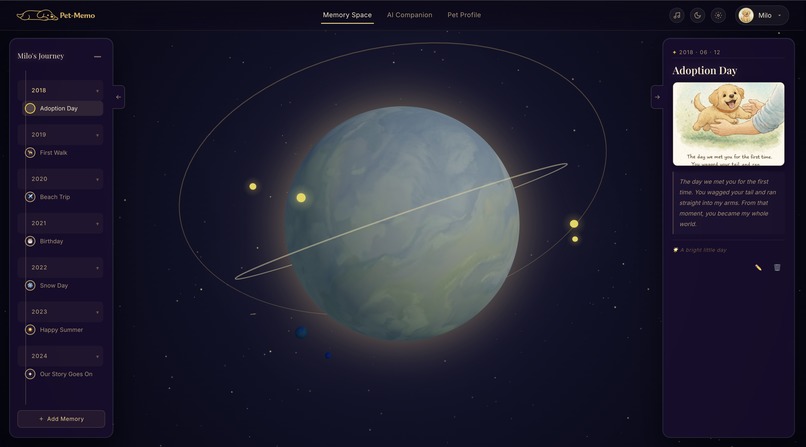
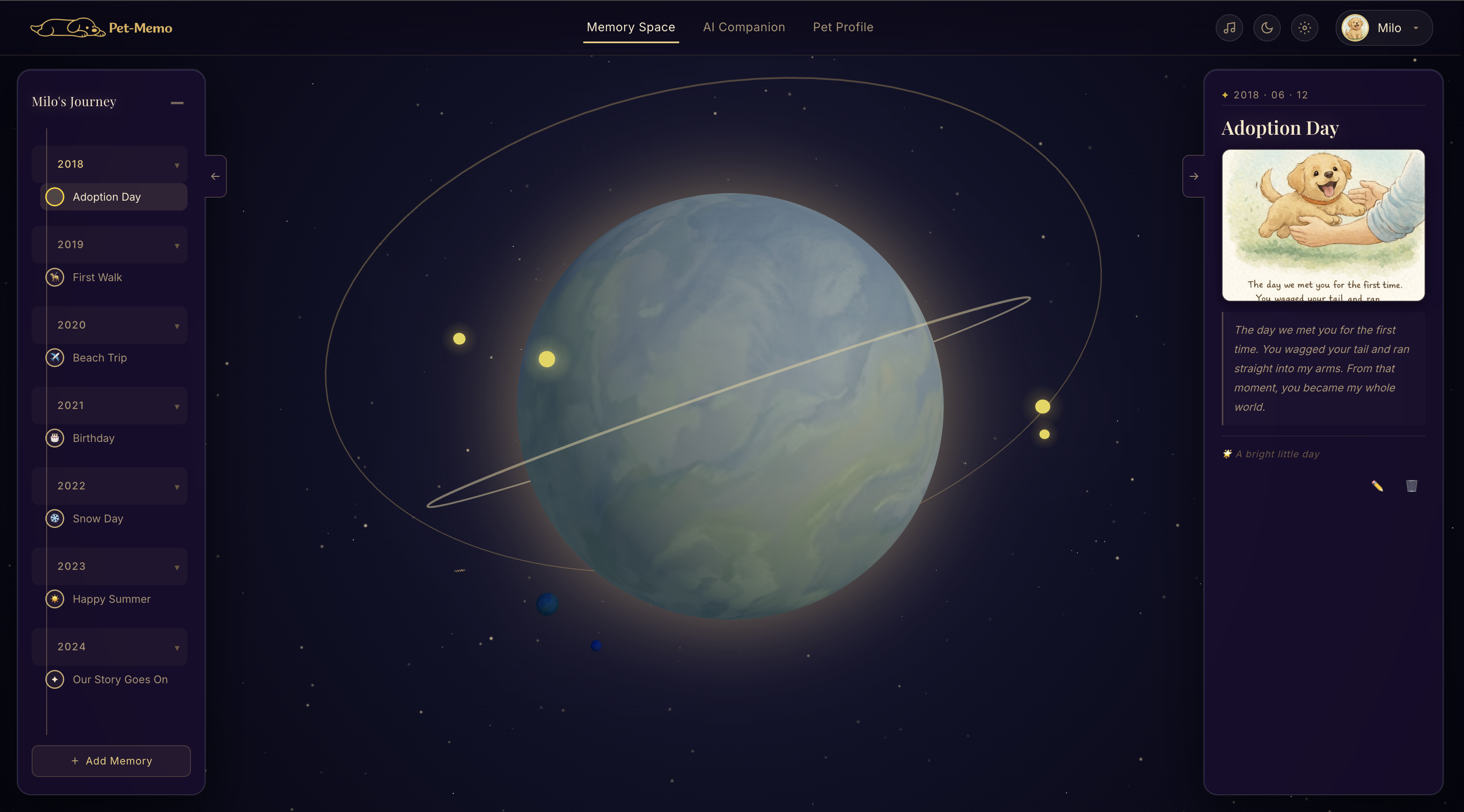
Memory-moon
-
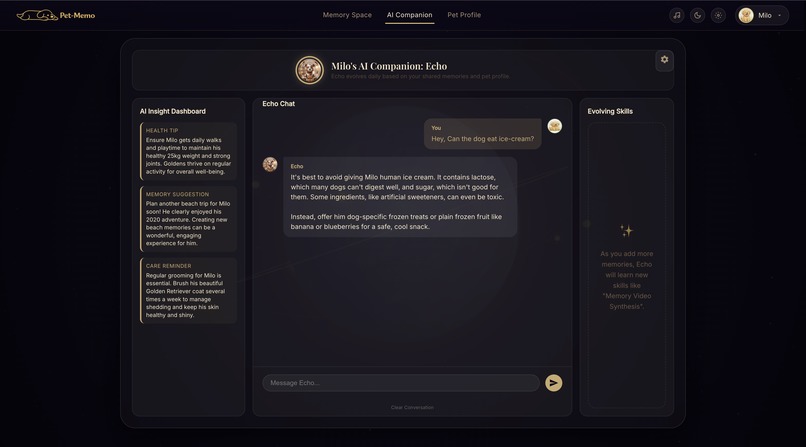
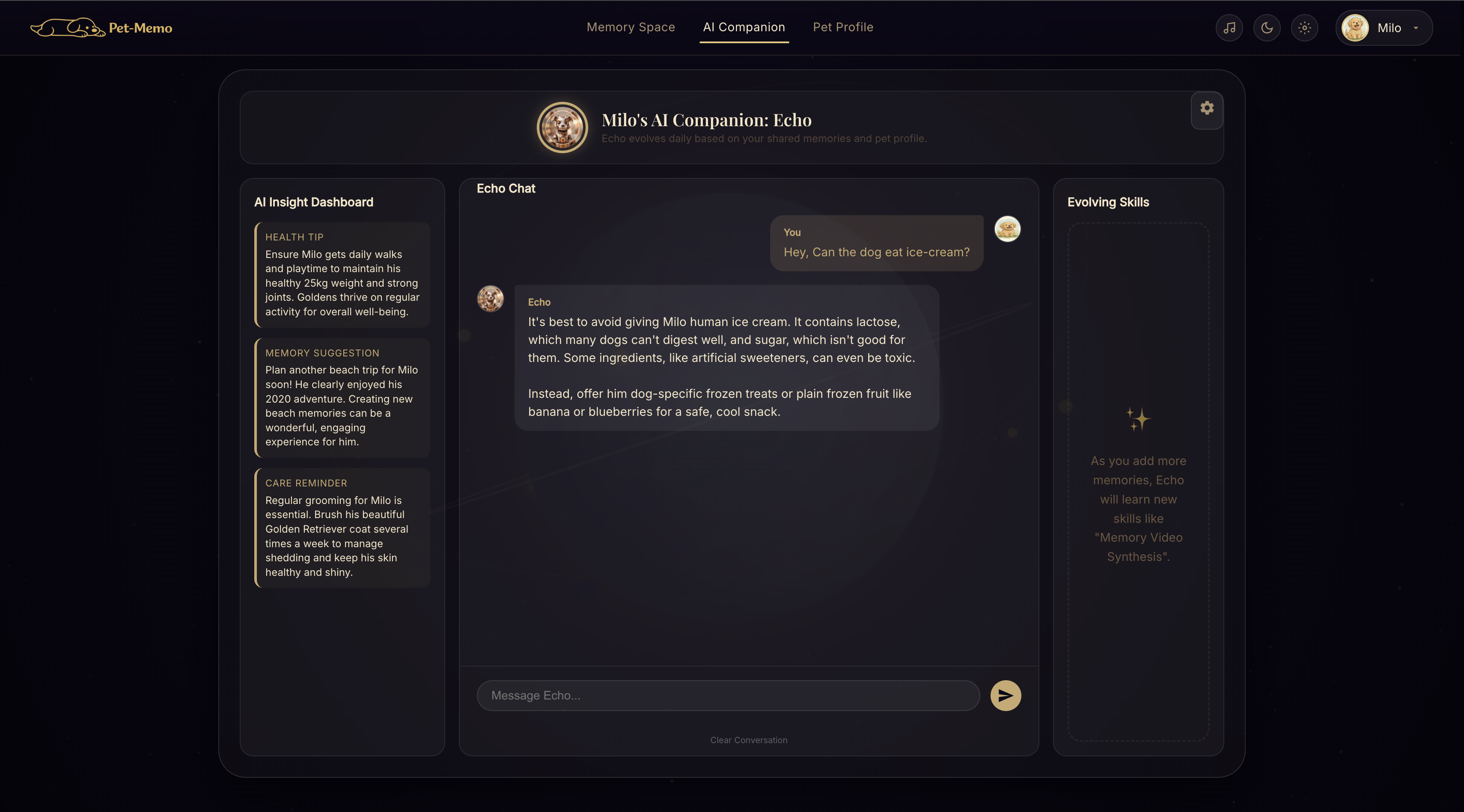
AI Companion
-
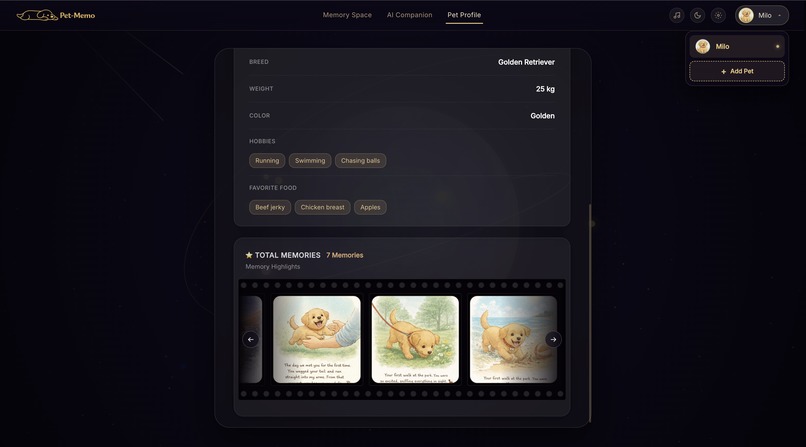
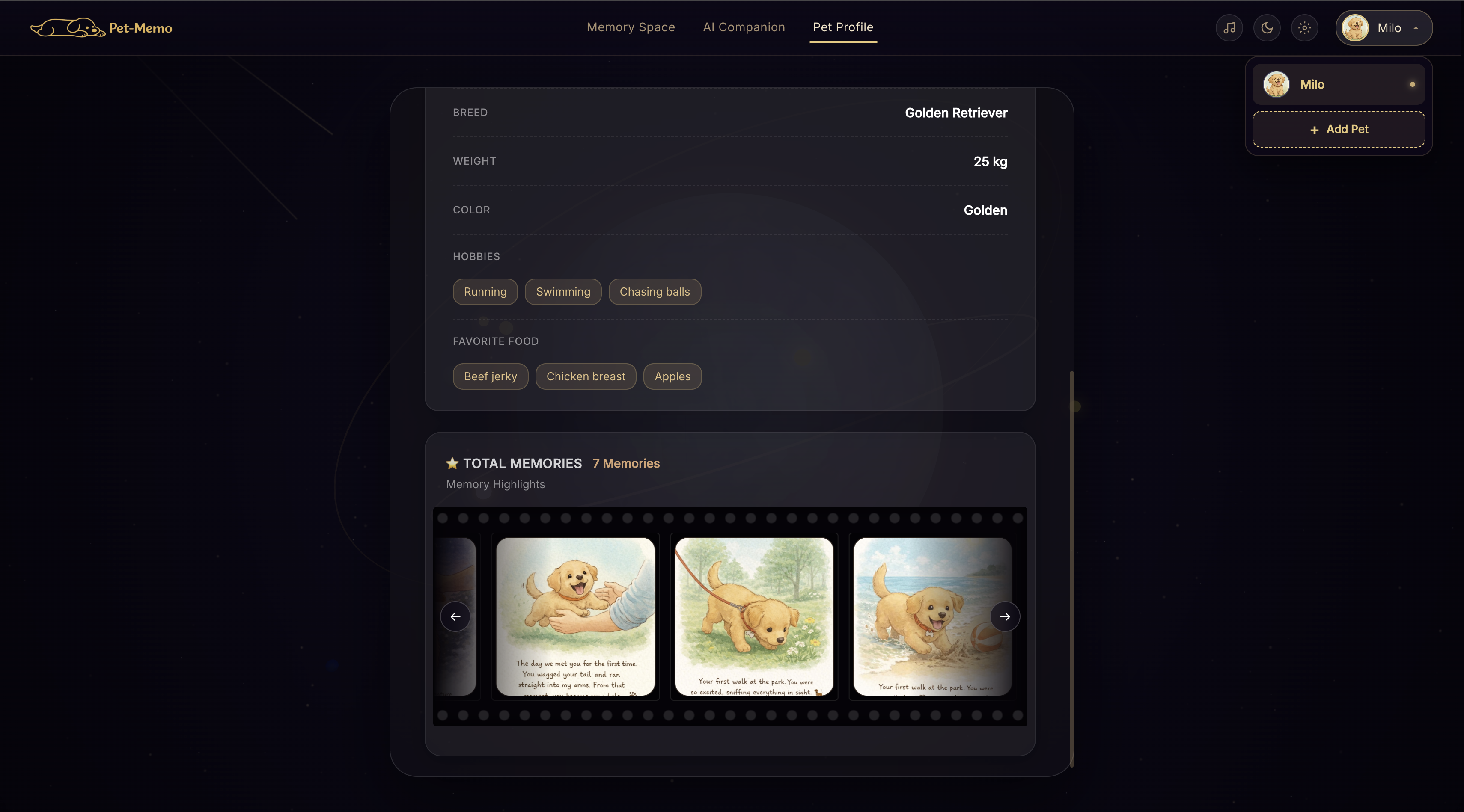
Profile
Inspiration
For many pet owners, the love they share with a pet does not end when the pet is gone. What remains are photos, videos, routines, small habits, and countless quiet memories — but these are often scattered across phones, albums, and chat histories, with no dedicated space to preserve them meaningfully.
We wanted to build something more thoughtful than a simple memorial page. Pet Memo was inspired by the idea that remembrance can be gentle, personal, and interactive. Instead of treating memory as something static, we imagined a digital space where people can revisit moments, organise emotions, and continue a sense of connection with a beloved pet in a way that feels comforting rather than overwhelming.
At the same time, this project is also our attempt to practice vibe coding (intent-based development) — transforming emotional ideas into a working prototype with the help of modern AI tools.
What it does
Pet Memo is a digital memory and memorial experience designed for pet owners.
It gives users a warm, personalised space to:
- create a memorial profile for a beloved pet
- preserve stories, milestones, and everyday memories
- revisit memories through a gentle timeline-based experience
- express remembrance in a way that feels intimate and personal
- lay the foundation for a more interactive companion experience
Rather than focusing only on loss, Pet Memo focuses on connection. It is designed to help memory feel alive, organised, and emotionally supportive.
How we built it
We developed Pet Memo as a modern web prototype with a focus on creating an emotionally resonant user experience. The front end is built with React, TypeScript, and Vite, allowing us to rapidly create modular interfaces and continuously iterate interaction designs throughout the hackathon. The project is structured around reusable components, enabling features such as pet profiles, memory records, and future personalized interactions to expand as the product evolves.
During development, we also experimented with vibe coding (intent-based development). Although we do not have complete full-stack development experience, our team collaborated by clearly expressing design intentions and leveraging modern AI tools. Tools such as Antigravity, Gemini Pro, and Nano Banana assisted with brainstorming, requirement articulation, feature ideation, and generating certain visual assets.
Beyond functionality, we devoted significant effort to shaping the visual and emotional language of the product. Our goal was to create an interface that feels soft, calm, and companion-like, allowing users to revisit memories in a comforting and reflective environment.
Challenges we ran into
Our biggest challenge was scope. The original vision included many emotionally rich ideas: personalised companion behaviour, interactive memory spaces, collaborative remembrance, and deeper customisation. In the high-pressure background of UniHack, we had to make difficult choices about what was essential for the MVP and what should remain part of the future roadmap.
We also faced workflow disruption during development. At the moon on March 14, our GitHub workflow was interrupted, so we created a new repository and reorganised our progress there. This meant we had to quickly rebuild momentum, align team collaboration again, and keep implementation moving under time pressure.
A more subtle challenge was emotional design itself. It is surprisingly difficult to design for grief and remembrance in a way that feels sincere. We wanted Pet Memo to feel warm and healing, not heavy or performative. Achieving that balance became one of the most important design problems in the project.
Accomplishments that we're proud of
We are proud that Pet Memo goes beyond being just a sentimental idea. It became a clearly structured product concept with both emotional depth and practical design direction.
What we are particularly proud of is:
- transform sensitive and profound emotional needs into well-considered digital product concepts,
- a calm, friendly and uniquely recognisable visual style has been constructed,
- a clear minimum viable product has been defined around "memory preservation" and "personalised commemoration",
- build a platform that enables pets that have passed away in real life to continue accompanying their owners in another form,
- at the starting point of the hackathon, lay the foundation for the future development of the project to provide a richer and more lasting companion experience.
Most importantly, we built something that people can immediately understand on a human level. The problem is deeply personal, and we are proud that our solution reflects that.
What we learned
This project has made us understand that designing technology with emotional significance requires both empathy and structure. Just having a good idea is not enough - the user experience must also be coherent, meaningful, and respect the user.
In the project, we realised how important it is to clearly define the project scope. Some of our wisest decisions have come from narrowing the focus and carefully crafting a smaller but complete experience rather than attempting to implement all the ambitious features at once.
Meanwhile, in the process of completing a full project within a limited time, we learned how to allocate tasks reasonably, clarify team division of labour, and collaborate efficiently. A clear division of responsibilities and continuous communication enable us to advance design and development quickly and gradually turn ideas into tangible results.
Finally, we realised that the product's tone is vital. In such projects, visual choices, wording and interaction processes are not insignificant details - they directly determine whether the product can give people a sense of trust and reassurance.
What's next for Pet Memo
We believe that pet memos are the beginning of a broader emotional technology experience - a technology aimed at preserving memories and maintaining the connection between pets and their owners.
Looking ahead, we hope to expand this platform through the following new features:
- Richer memory upload, including photos, videos and audio recordings;
- Customizable companion avatars that reflect each user's pet;
- Provide a shared memory space for family members and loved ones;
- The anniversary of the ritual function and meaningful dates;
- More adaptive emotional interaction and situational response;
- As memory grows, partners can also evolve - learning new abilities, such as memory video synthesis and other meaningful ways to bring memories into life.
Our long-term vision is to create a digital space where people can continue to express their love for their pets through memory, companionship and care.


Log in or sign up for Devpost to join the conversation.