-
-
-
-
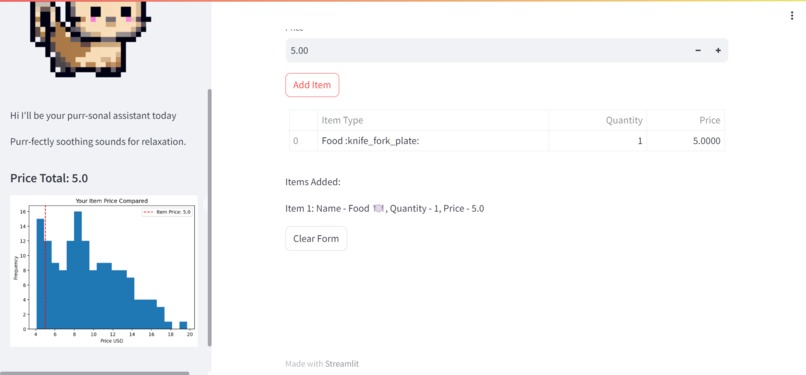
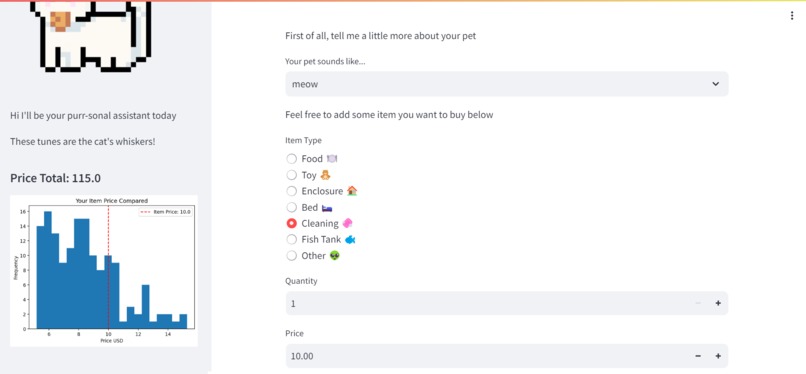
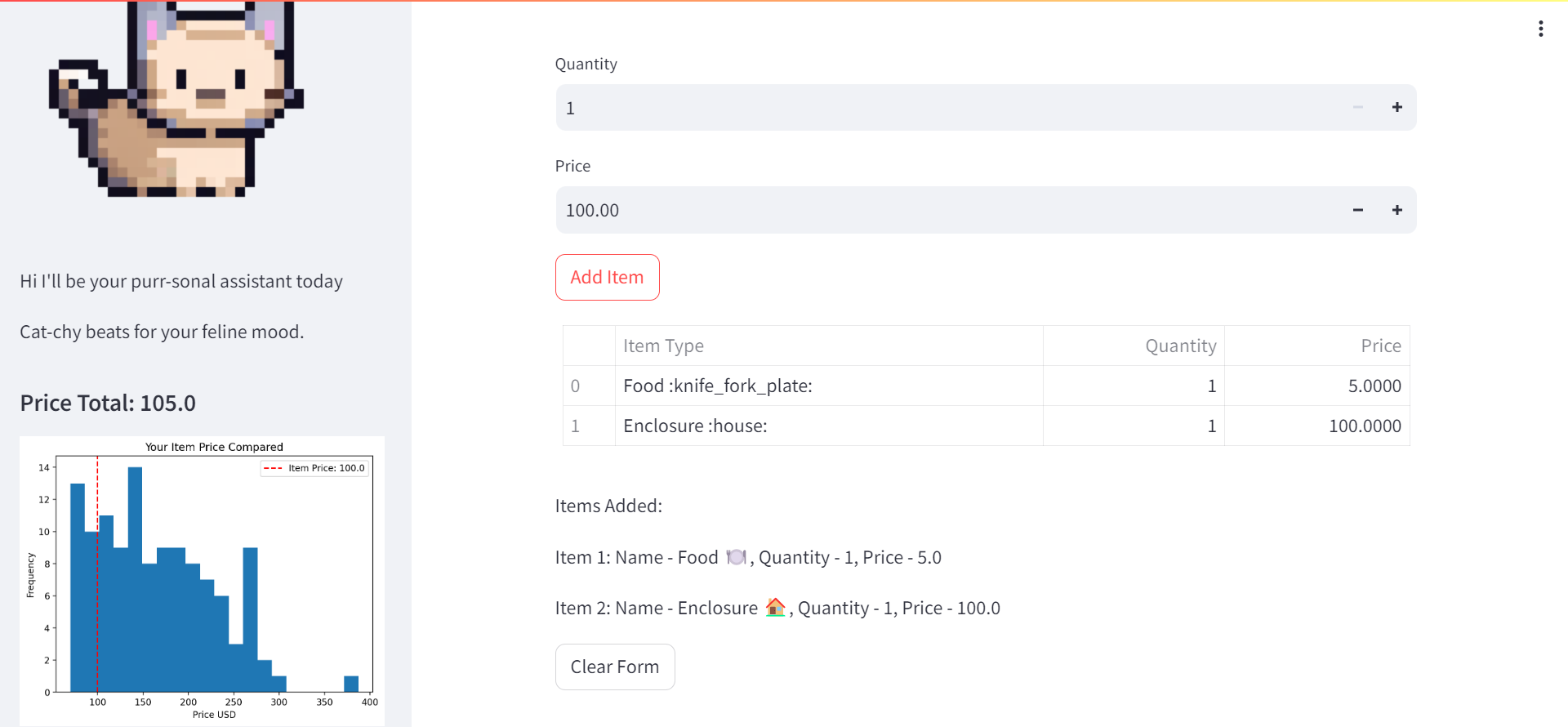
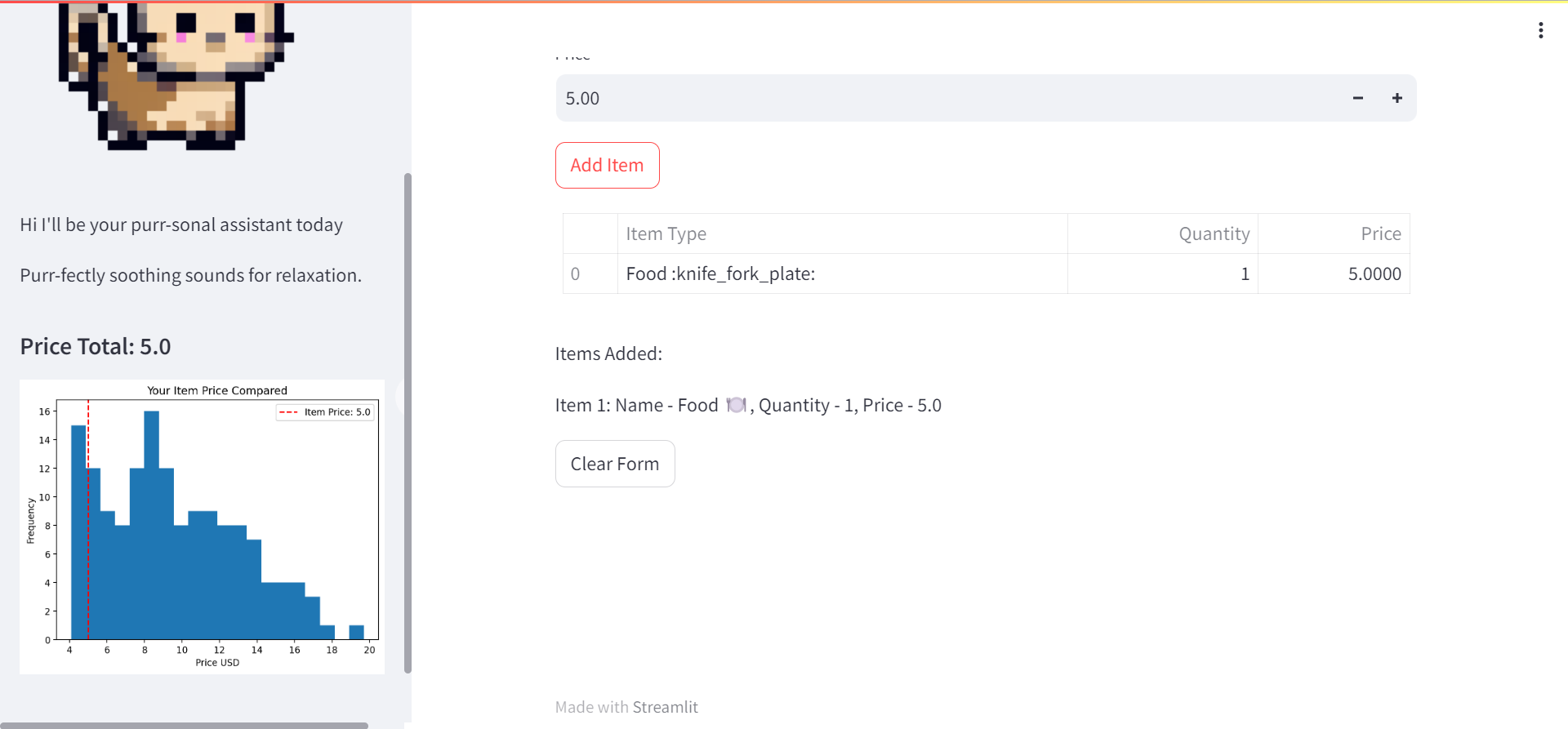
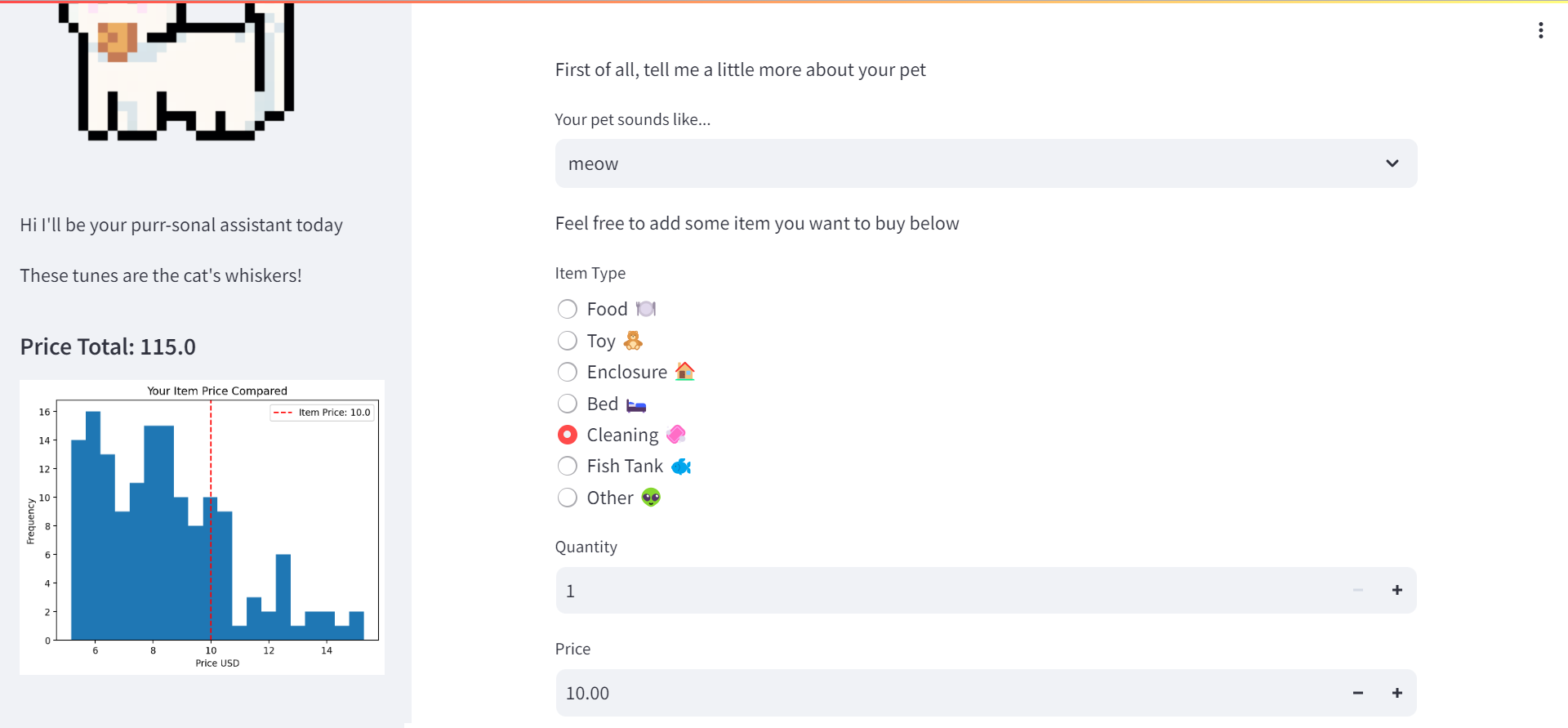
compares the given food price to our dataset (display on left)
-
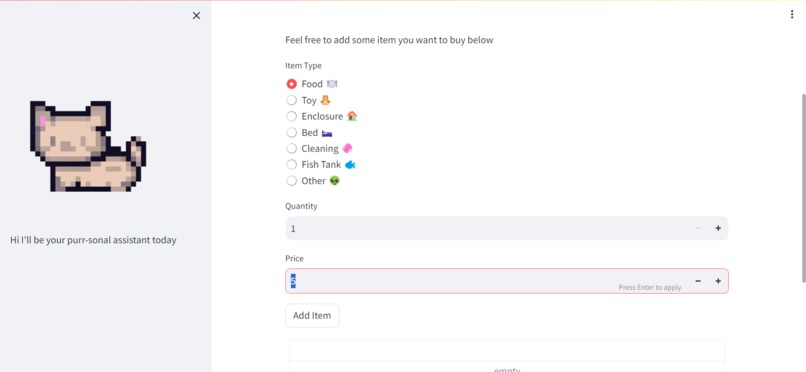
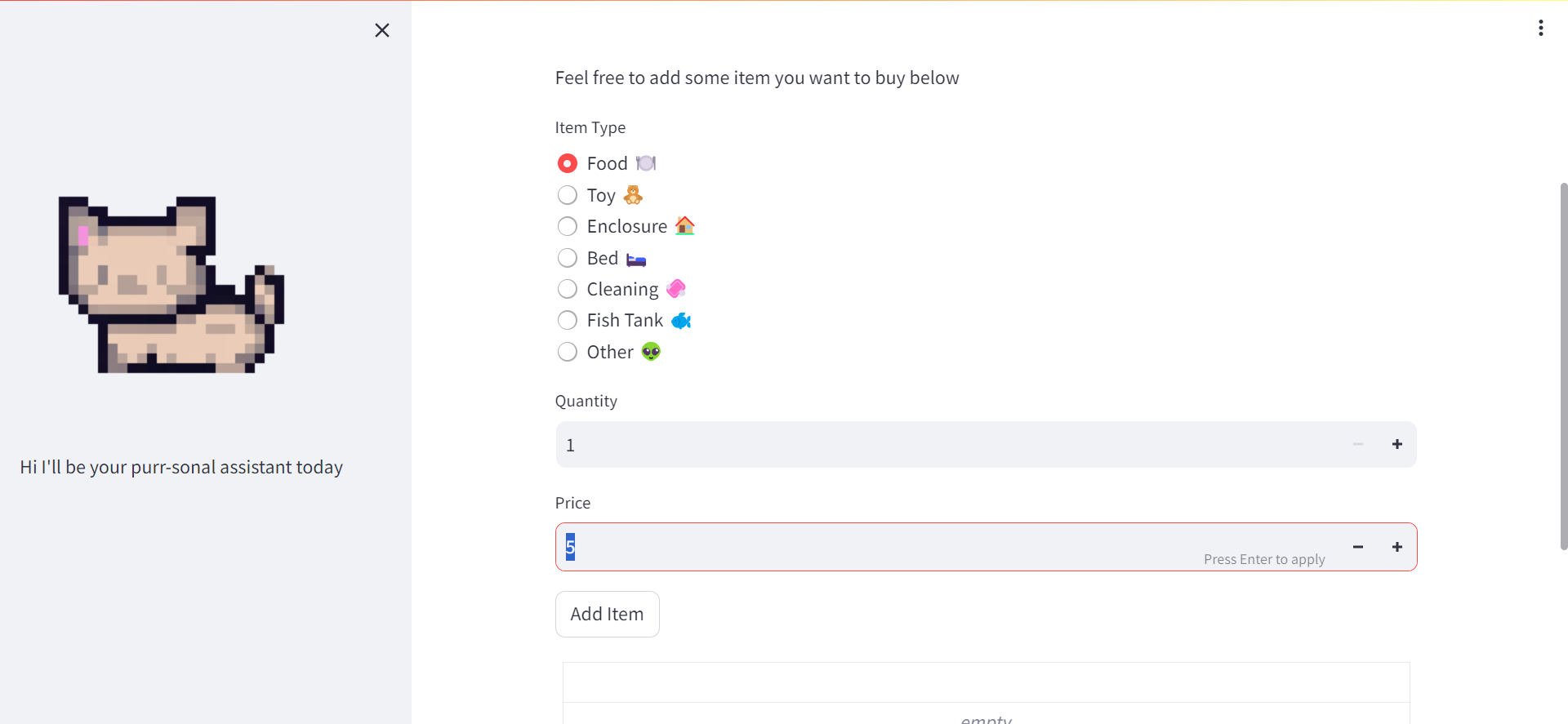
add food with price 5
-

Inspiration
Pet Budget Simulator was inspired by Capital One's challenge of Best Financial Hack combined with our love for our pets. David and Aidan are brothers who have an extremely cute cat named Yogurt!
What it does
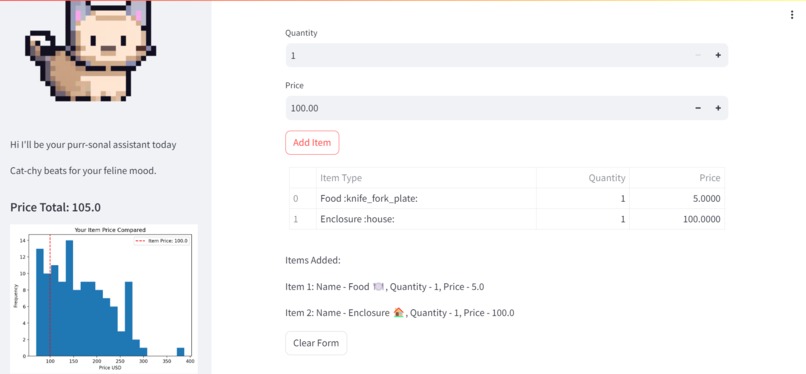
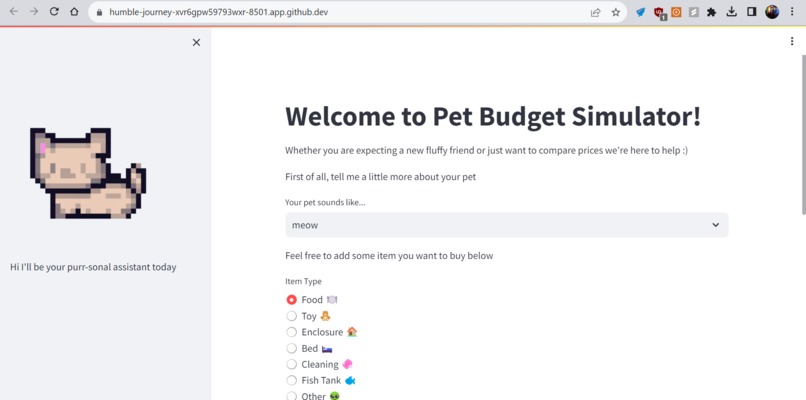
Our project aims to provide a intuitive and easy way to keep track of pet spending across different categories. Furthermore, users will be able to compare product prices and see how relatively expensive their product is compared to other products in the same category.
How we built it
We built our product using Streamlit. Streamlit is a Python library that allowed us to rapidly develop a web application with a user-friendly interface. It made the process of creating interactive data apps and dashboards incredibly efficient. With Streamlit, we were able to focus on building the features and functionality of our product while the framework took care of the web development aspects. This not only saved us time but also ensured a smooth user experience. Streamlit is not inherently stateful (user input would disapear upon page refresh). Therefore we used session_state API to add statefullness. Session_state allows us to directly create, access, change variables as opposed to RESTful API’s ‘GET’, ‘POST’, etc. During the development process, we used Github codespaces connected with Streamlit. This allowed us to see live coding changes, vastly speeding up the prototyping/frontend development process. To allow the user to compare product prices, Pet Budget Simulator uses a dataset downloaded from Kaggle called "Amazon pet supplies data". To visualize this data, we used Matplotlib to display budgeting results.
Challenges we ran into
We initially wanted to develop and add an html component to separate front and back end development. However, after some experimenting we learned that Streamlit is primarily designed for data apps, and it does not handle external CSS and assets in the same way a traditional web server or framework does. We had to pivot into developing frontend features entirely in Streamlit. The "Amazon pet supplies data" we downloaded only provided certain fields such as the product name, price, product ID, etc. but did not have a category column. We needed each product to be sorted into a category in order to compare their prices. Therefore (by the suggestion of a mentor Cole), we developed a procedure to curate the data to extract the product category from the product name.
Accomplishments that we're proud of
At the hackathon, our team embarked on the exciting challenge of building a Pet Budget Simulator at our first ever hackathon. We not only successfully developed a user-friendly, interactive tool that empowers pet owners to manage their finances better, but we also incorporated innovative features like real-time expense tracking, personalized recommendations, and even a gamified element to keep users engaged. What sets our simulator apart is its seamless integration of data from various sources to offer accurate and dynamic budgeting suggestions. Our accomplishment doesn't just lie in the code we wrote but in the potential to make a positive impact on the lives of pet owners, helping them provide the best care for their furry friends while maintaining financial stability. We're excited about the future possibilities of Pet Budget Simulator.
What we learned
Throughout this project, we embarked on a journey of learning and innovation, particularly in the realms of Streamlit. Using Streamlit, we discovered the immense power of rapid prototyping and deployment. The ability to transform data-driven Python scripts into interactive web applications with minimal effort was truly eye-opening. Streamlit allowed us to create a dynamic and user-friendly interface with components like sliders, input widgets, and charts, enabling seamless interaction with our Pet Budget Simulator. This project demonstrated that, with the right tools and the willingness to learn, the possibilities for innovation are limitless.
What's next for Pet Budget Simulator
The journey of our Pet Budget Simulator is far from over; in fact, it's just beginning. Our next steps include refining the user experience and incorporating user feedback to make it even more intuitive and comprehensive. We plan to expand its functionality by integrating external APIs for real-time pricing information and possibly collaborating with financial institutions for pet-specific financial services. We'll also explore the potential for a mobile app version, enabling pet owners to manage their budgets on the go. Ultimately, our vision is to create a community around responsible pet ownership, sharing tips and resources, and helping pet lovers worldwide provide the best care for their companions without financial stress. The future is bright for the Pet Budget Simulator, and we're excited to see it evolve and make a meaningful impact.

Log in or sign up for Devpost to join the conversation.