-
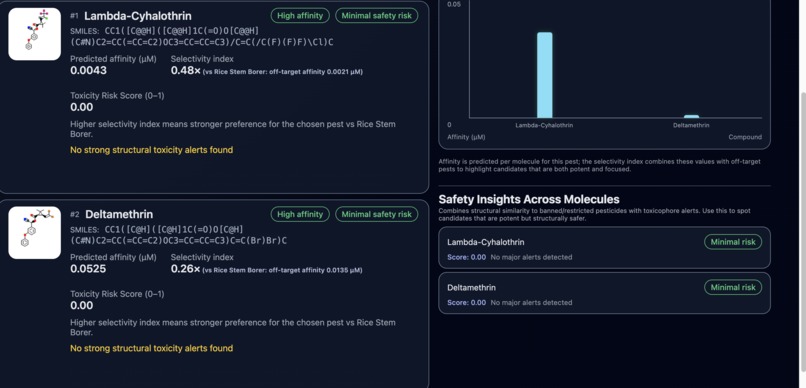
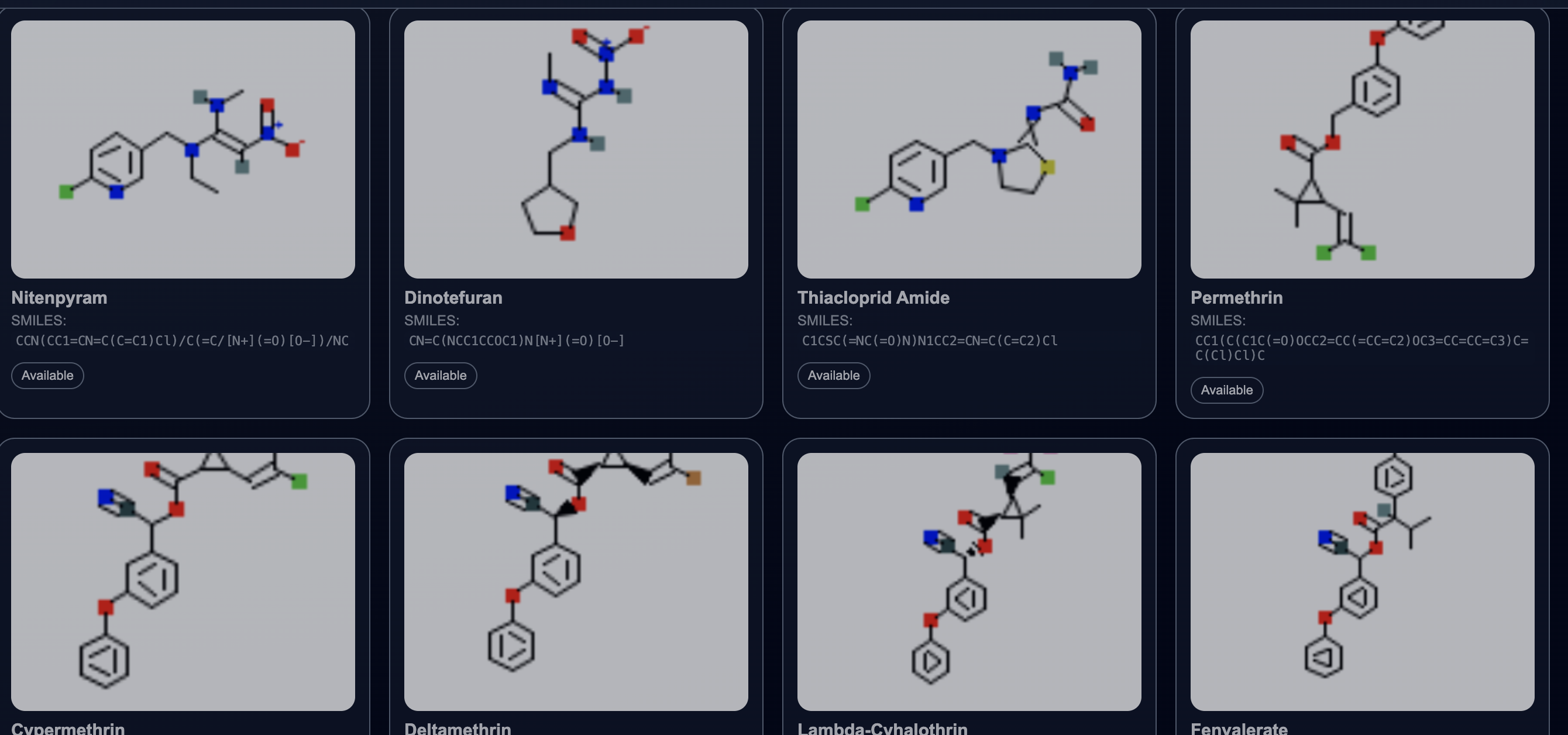
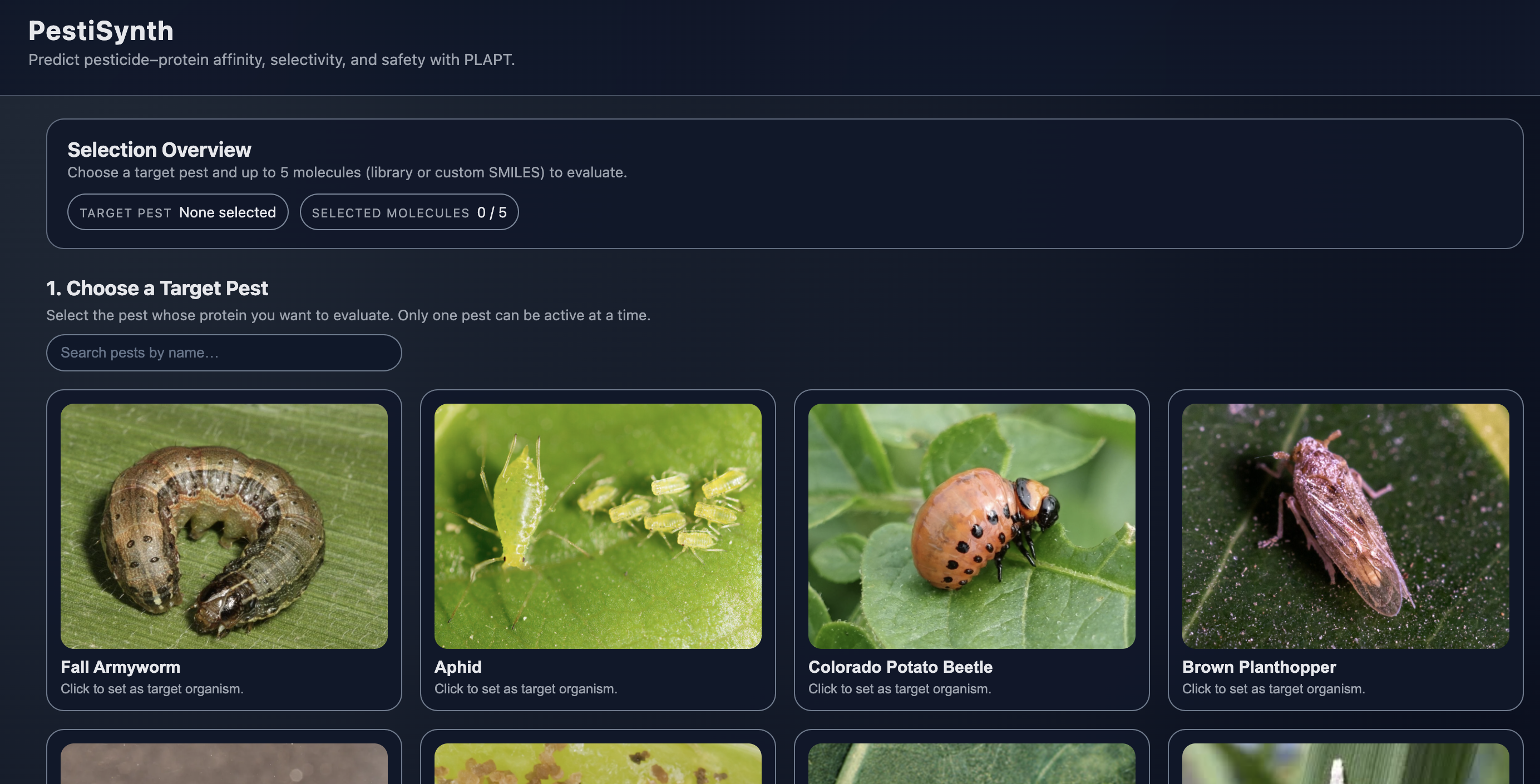
dashboard
-
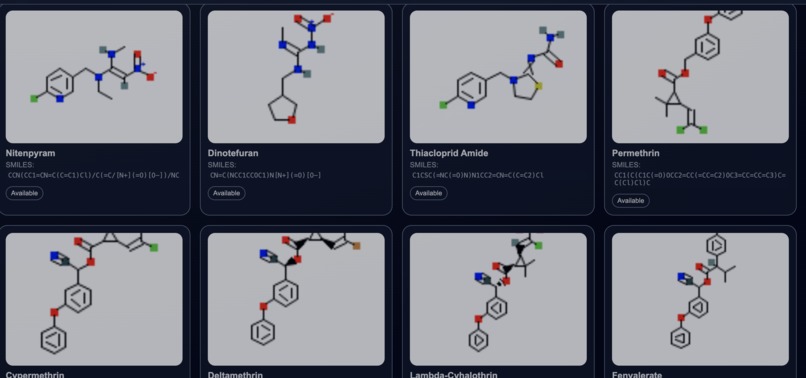
UI
-
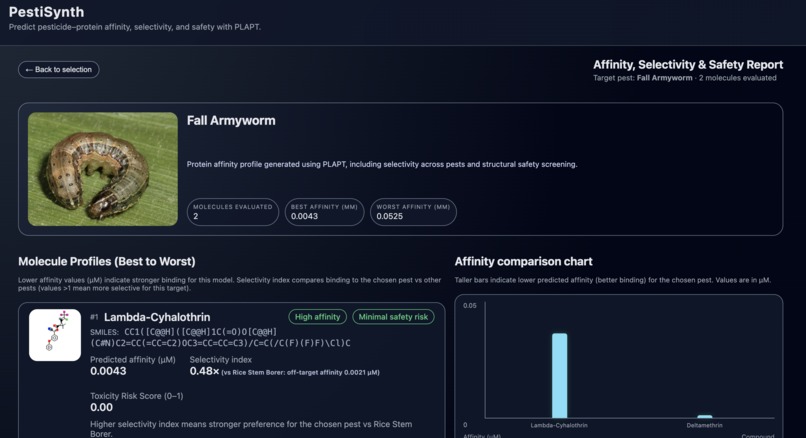
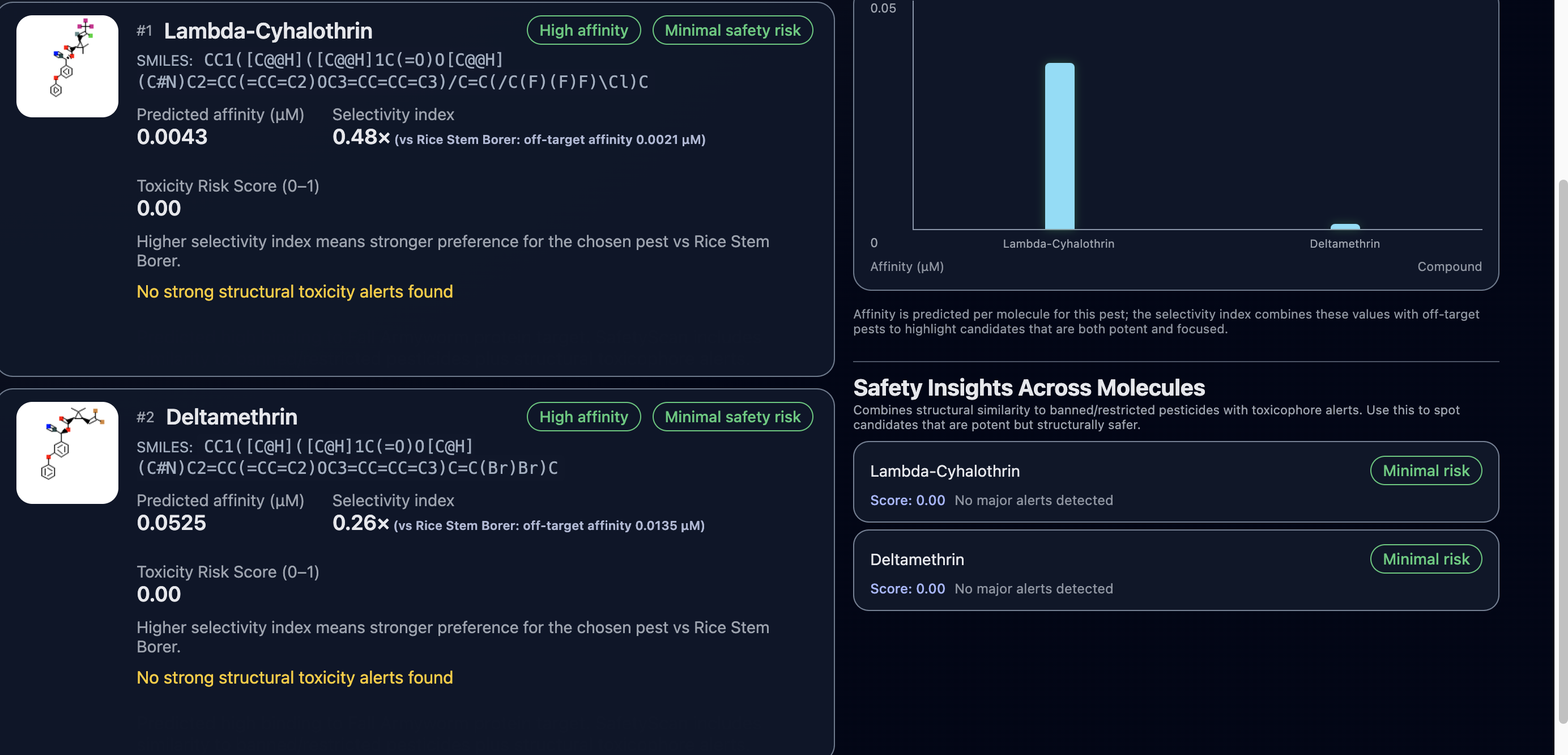
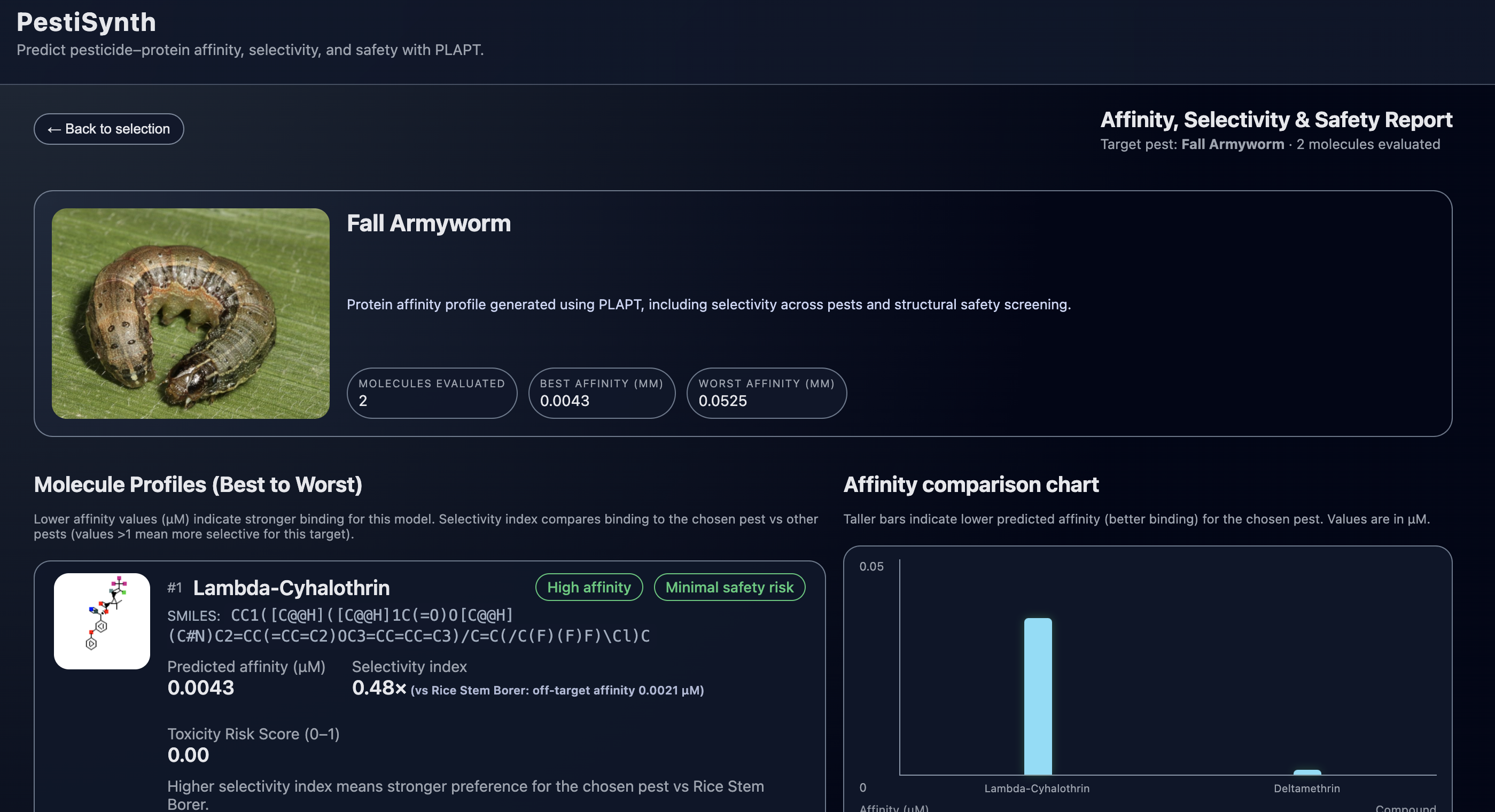
report
-
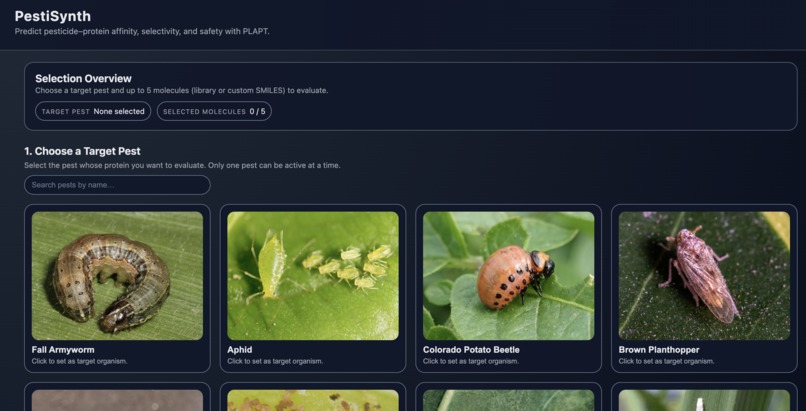
UI
-
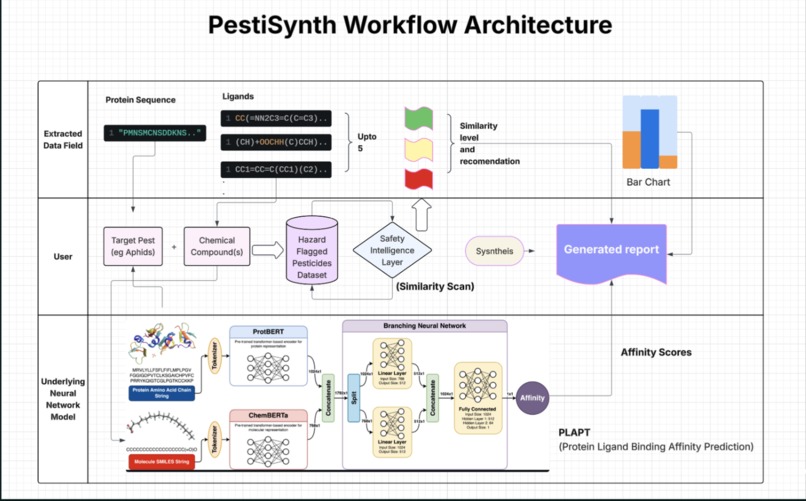
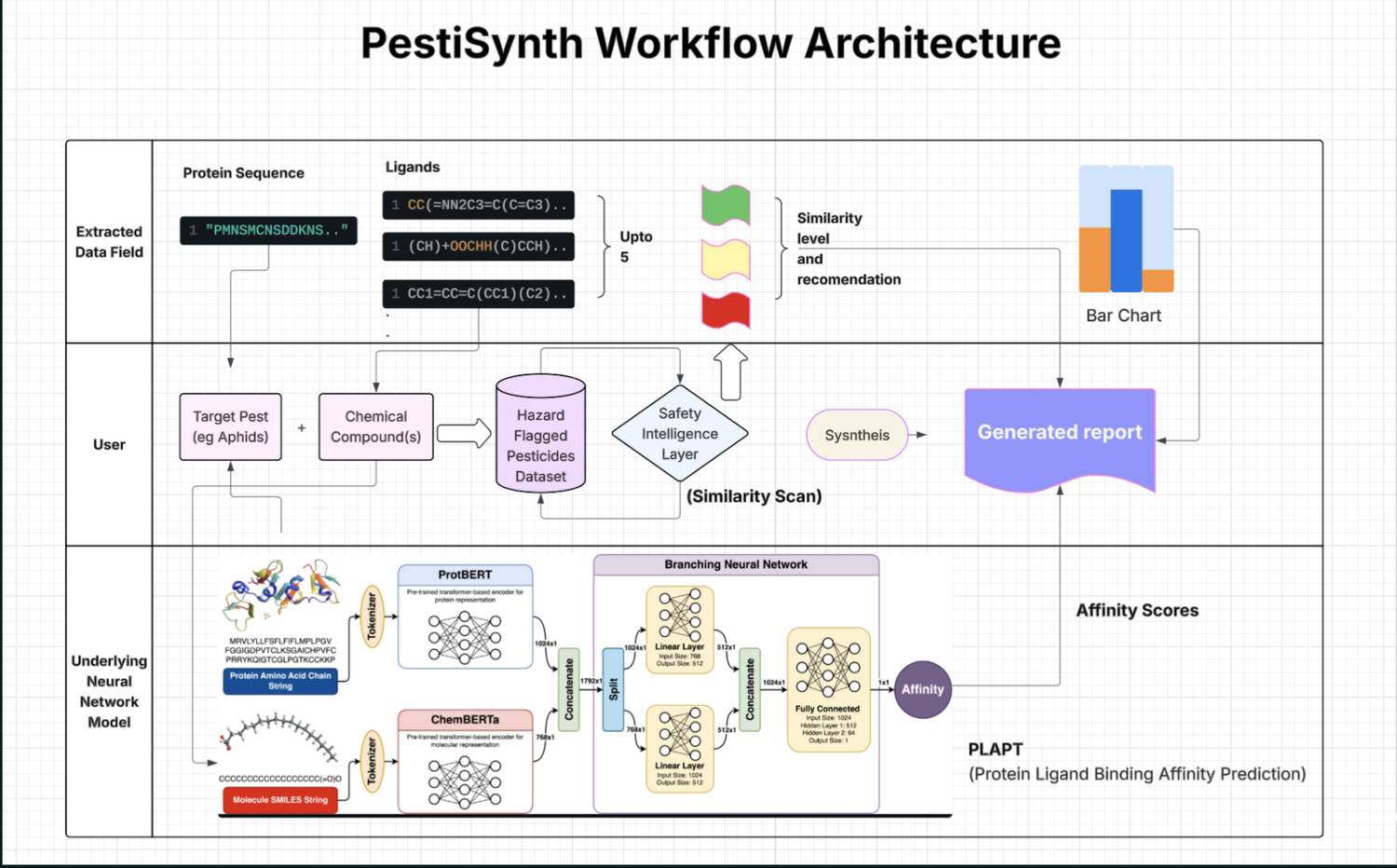
architecture workflow
Inspiration
Modern drug discovery has been transformed by machine learning , yet pesticide discovery, which is essentially drug discovery for pests, still relies heavily on slow, expensive wet-lab trials. We saw a gap: researchers, agritech startups, and even students lack accessible computational tools to rapidly test protein–ligand affinity without needing deep biotech expertise.
So we asked: “What if a small student team with no biology background could build a mini computational wet-lab powered entirely by AI?”
This was our “aha” moment , and PestiSynth was born.
What it does
PestiSynth is an AI-driven protein–ligand affinity predictor that helps users:
- Select a target pest
- Evaluate up to 5 pesticide molecules
- Get predicted binding affinity using the PLAPT transformer model
- Run a toxicity safety scan using chemical similarity
- View a complete Affinity + Safety report with charts & interpretation
simply - It predicts how well a pesticide binds to a pest’s protein and whether it's similar to banned or harmful chemicals. What normally takes wet-labs days or weeks is now accessible in seconds.
How we built it
We combined multiple domains : biology, chemistry, ML, and UI/UX - into one coherent system:
Backend
- FastAPI server in Python
- Integrated PLAPT (Protein-Ligand Affinity Prediction Transformer)
- Custom pipeline for canonical SMILES handling and validation
- Safety module using RDKit molecular fingerprints
- Local database of banned/hazardous pesticides for similarity matching
- Batched scoring endpoint for multi-molecule evaluation
Frontend
- React + modern UI styling
- Dynamic pest & pesticide selection grids
- Beautiful report generation
- Bar charts + scatter plots for affinity visualization
- Image gallery for molecular and pest icons
- Smooth state management and fast interactions
Data Engineering
Compiled FASTA sequences for 8+ pests from NCBI Canonicalized 20+ pesticide SMILES from PubChem ( supports all chemical compunds input) Created a structured JSON library for quick API access
Challenges we ran into
Zero biology background
We had to learn:
- FASTA sequences
- Protein structure relevance
- Ligand SMILES representations
- Pesticide chemical classes
- How affinity (µM) relates to binding strength
This was both the hardest and most rewarding part.
- Working with a research-grade ML model
PLAPT has specific expectations for:
- Input sequence formatting
- Canonical SMILES
- File paths and ONNX inference
Interfacing everything smoothly took careful debugging.
- Making science visually intuitive
We wanted PestiSynth to feel like a real mini drug-discovery app:
- clean affinity charts
- pest hero section
- molecular cards with SMILES tags
- accessible explanations for non-experts
Achieving this polish in limited time was a major UI/UX challenge.
Accomplishments that we're proud of
In just one weekend, we integrated real protein FASTA data, SMILES chemistry, and a transformer model to simulate a virtual wet lab. We’re proud that we turned unfamiliar biotech concepts into a functional, end-to-end system that actually works.
We designed a clean UI with molecule cards, rankings, charts, and safety flags so even non-experts can run affinity predictions. Making advanced computational chemistry accessible and intuitive is our biggest accomplishment.
What we learned
Integrating ML models with real biological data
Parsing FASTA protein sequences
Working with SMILES and cheminformatics libraries
Full-stack engineering under time pressure
Designing for clarity in a domain most people find intimidating
How wet-lab and web-lab workflows connect in real research
Communicating complex science in simple visuals
Most importantly: you don’t need a biology degree to build biotech tools , just curiosity and persistence.
What's next for PestiSynth
We plan to extend PestiSynth into a fully QSPR-enabled molecular design platform:
De novo molecule generation (design optimized pesticides)
ADMET prediction pipeline (toxicity, stability, solubility)
3D docking visualization
Custom protein uploads for any organism
Larger safety database (EPA, REACH, FAO datasets)
Enterprise dashboard for agritech companies
Integration with wet-lab robotics for automated testing
Our vision is to help bridge the gap between computational prediction and experimental validation — empowering researchers, students, and agritech innovators.
Built With
- cors
- fastapi
- html/css
- javascript
- machine-learning
- numpy
- product
- pydantic
- python
- pytoch
- rdkit
- react
- transformer
- uvicorn
- vite


Log in or sign up for Devpost to join the conversation.