Personify
Make every profile fit the platform without making it stop sounding like you.
Inspiration
Whether it be having a generic profile where their personality doesn't shine through or not being able to focus their profile through a certain type of lens, many students very often have trouble with curating their digital identities. Run of the mill online profile advice usually may either give them meaningless general advice (like "add these keywords") or encourage them to inflate statistics and numbers. With Personify, they now have a tool that can curate your profile on a multitude of apps through many different perspectives all in one place. Reshape your digital identity without changing who you are with Personify.
What it does
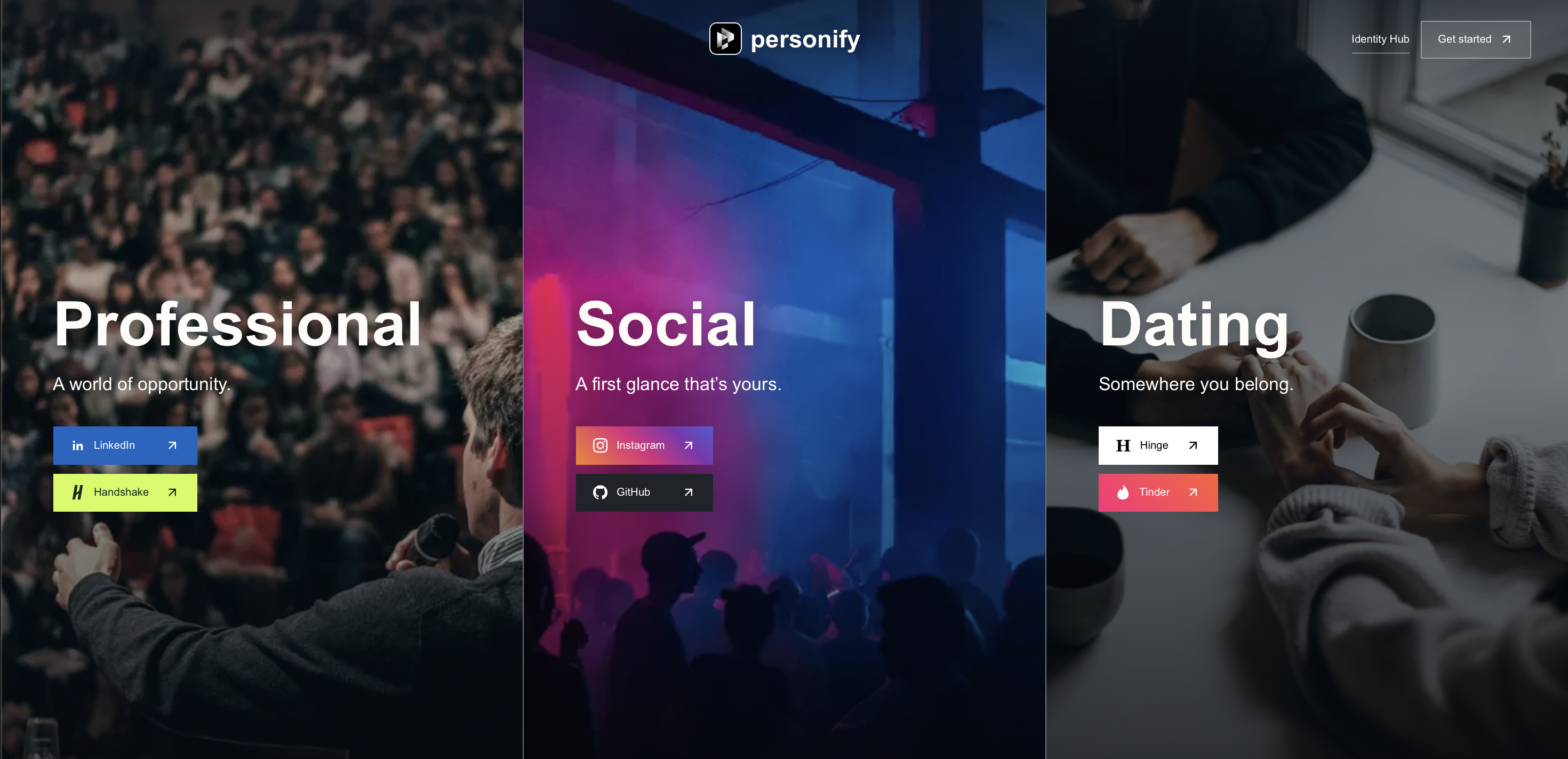
Personify helps people improve profiles for LinkedIn, Handshake, Instagram, Facebook, X, Hinge, and Tinder.
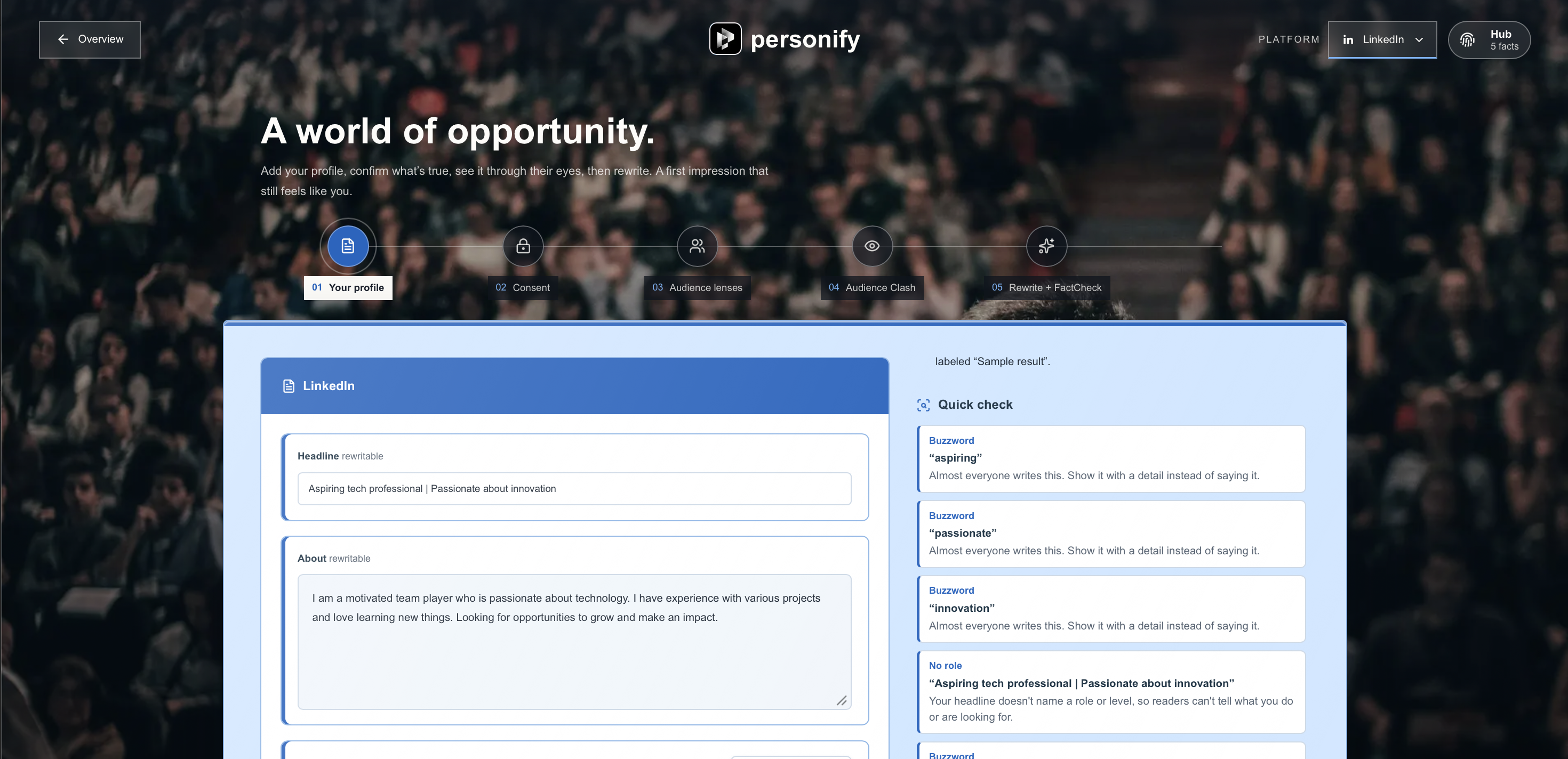
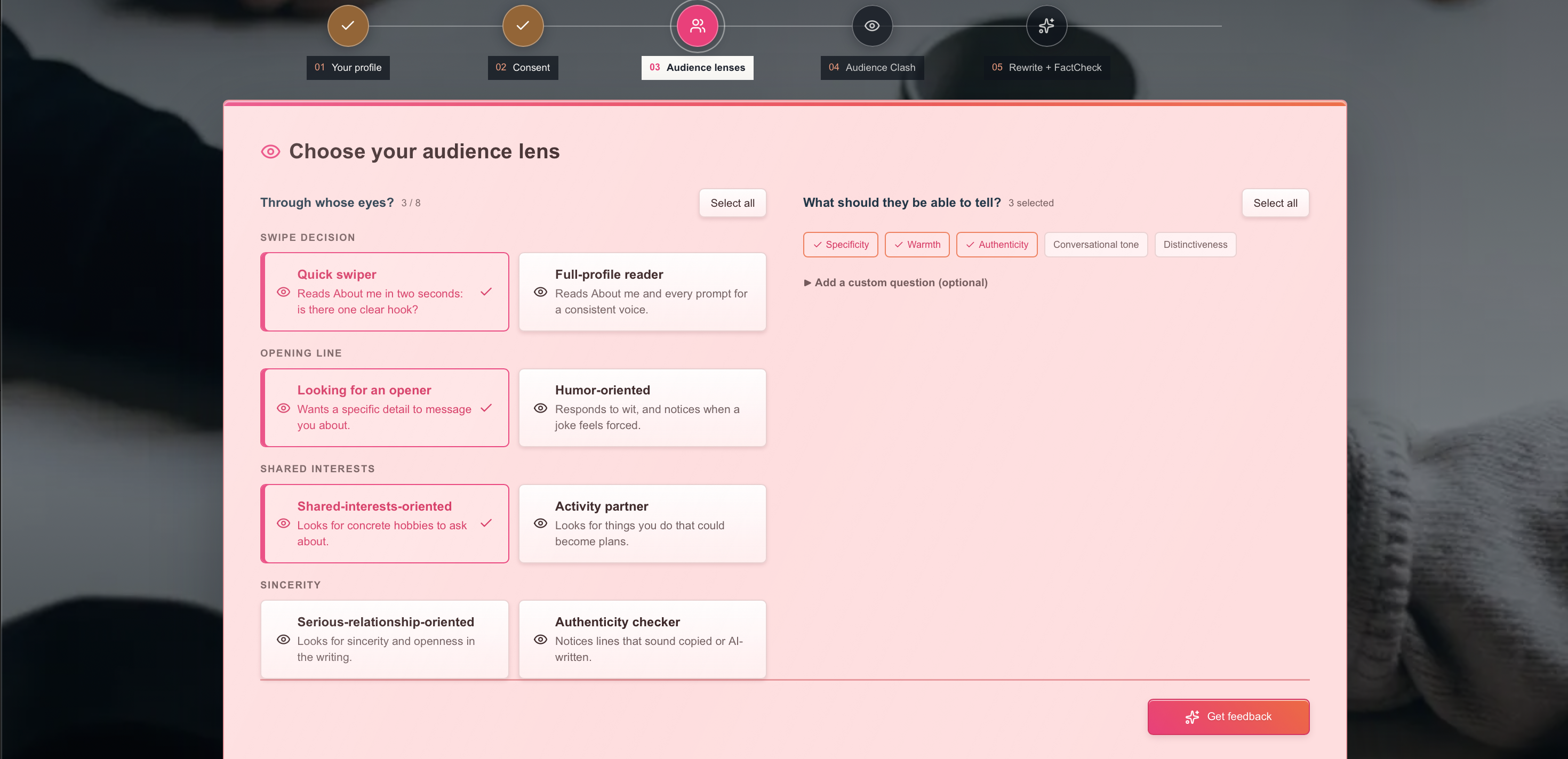
A user chooses a platform, enters profile details (or imports a LinkedIn PDF), confirms which suggested facts are actually true, and picks the audience perspectives and profile traits they want feedback on. Personify then:
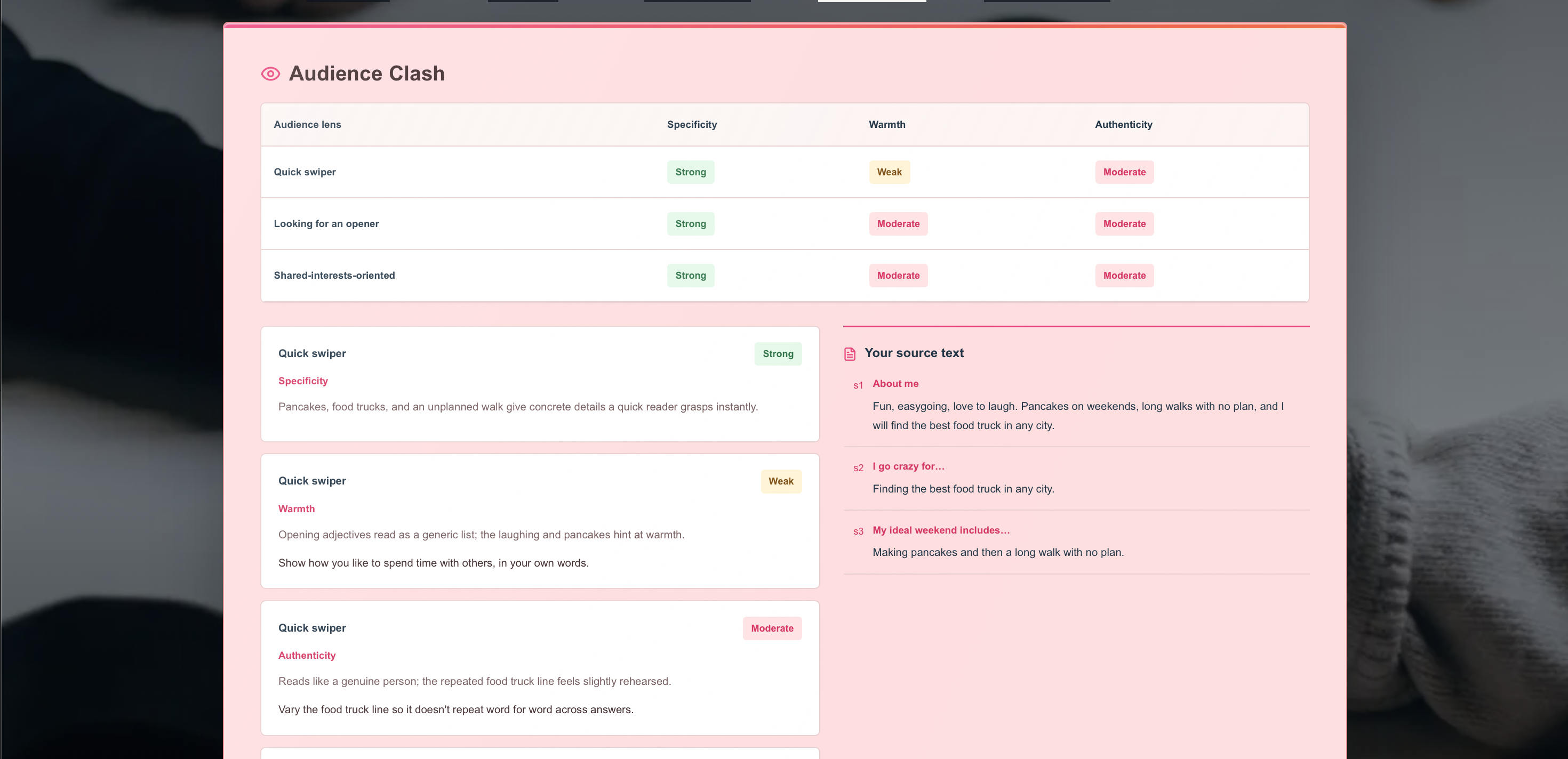
- Gives short feedback tied to the exact profile text it refers to.
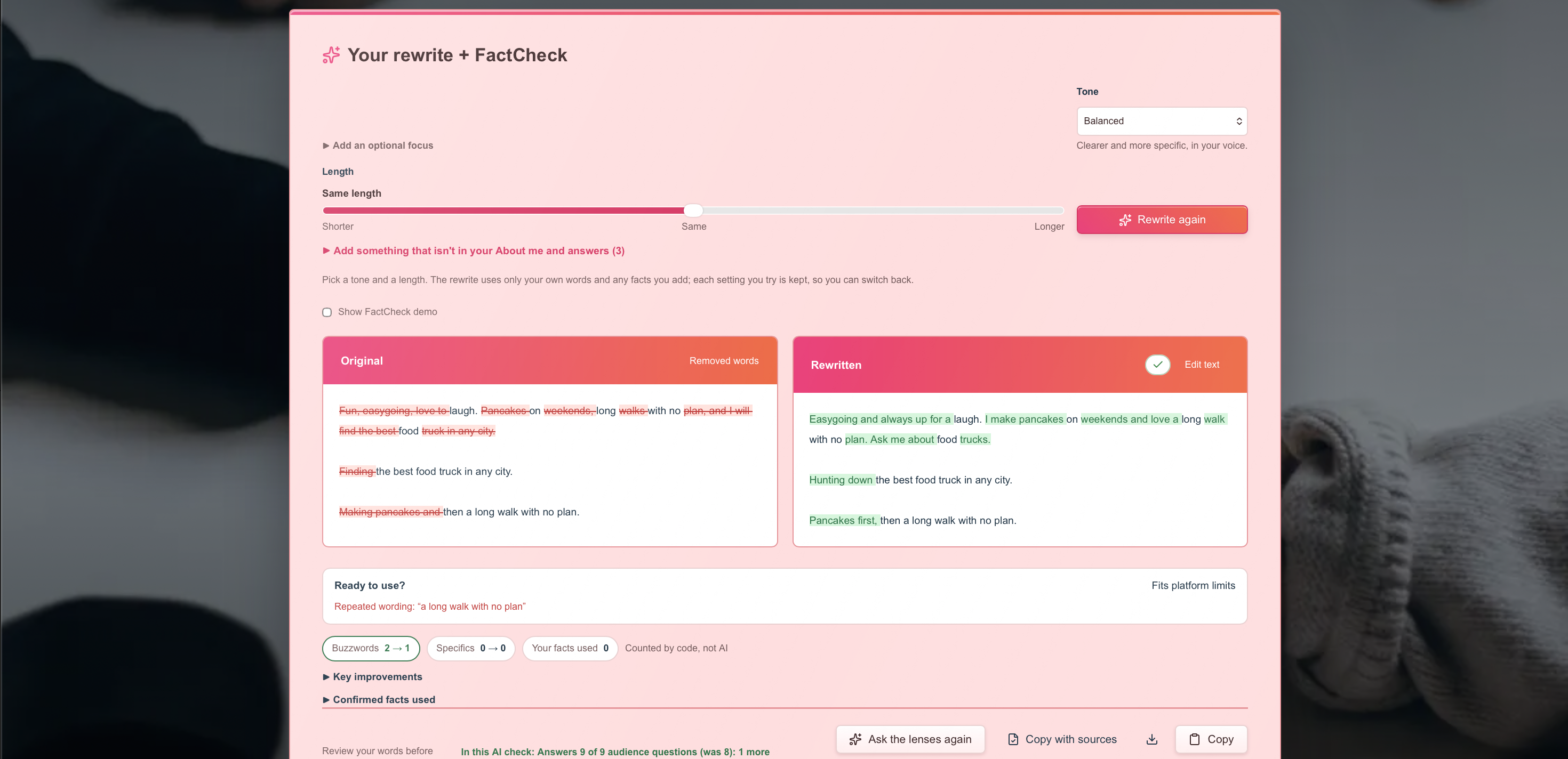
- Rewrites the profile in a style and format suited to the chosen platform.
- Compares original and rewrite ratings for the selected traits.
- Checks the rewrite for concrete claims that may not be supported by the supplied profile and confirmed facts.
- Lets the user edit and copy the result, and apply or undo supported LinkedIn section rewrites.
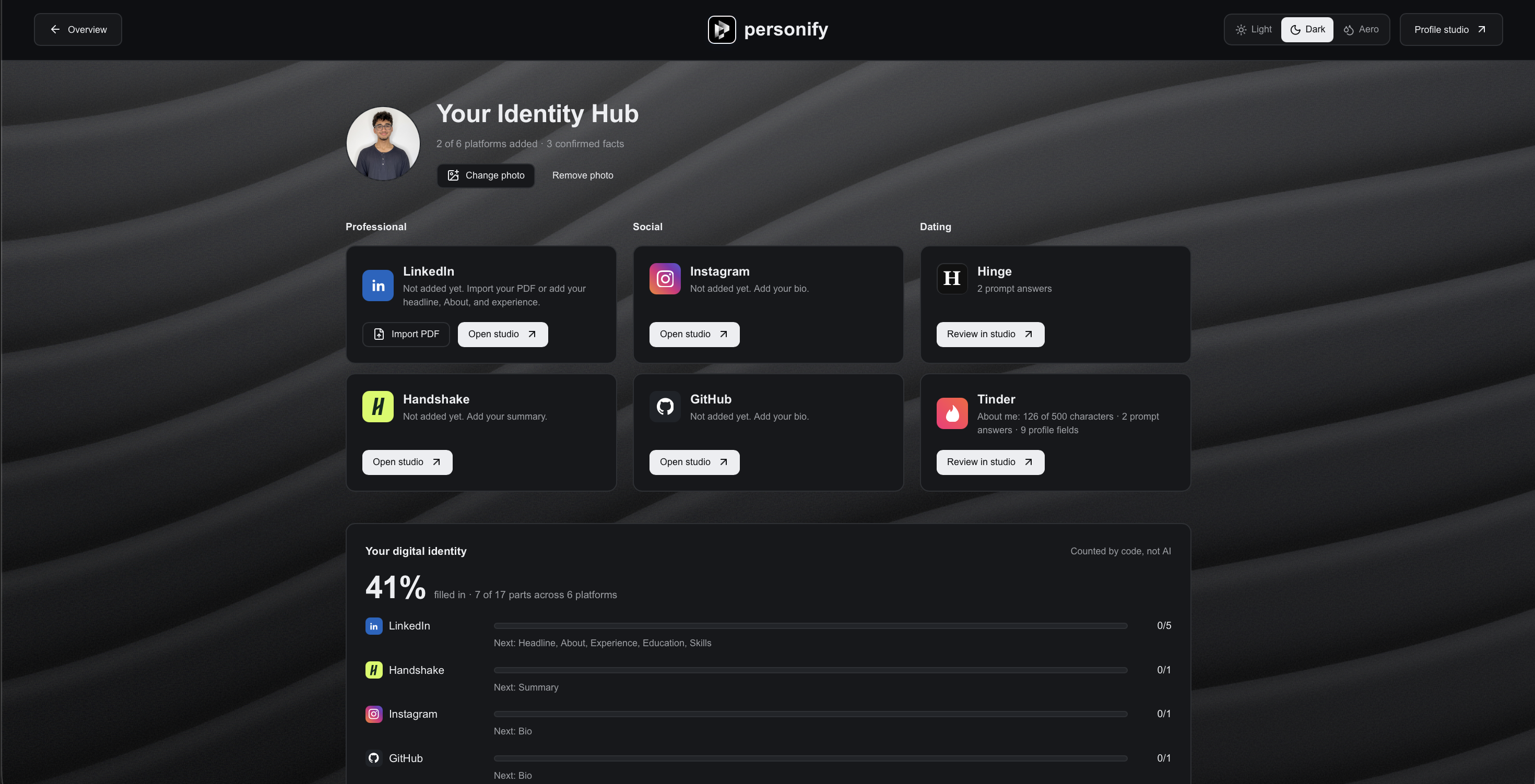
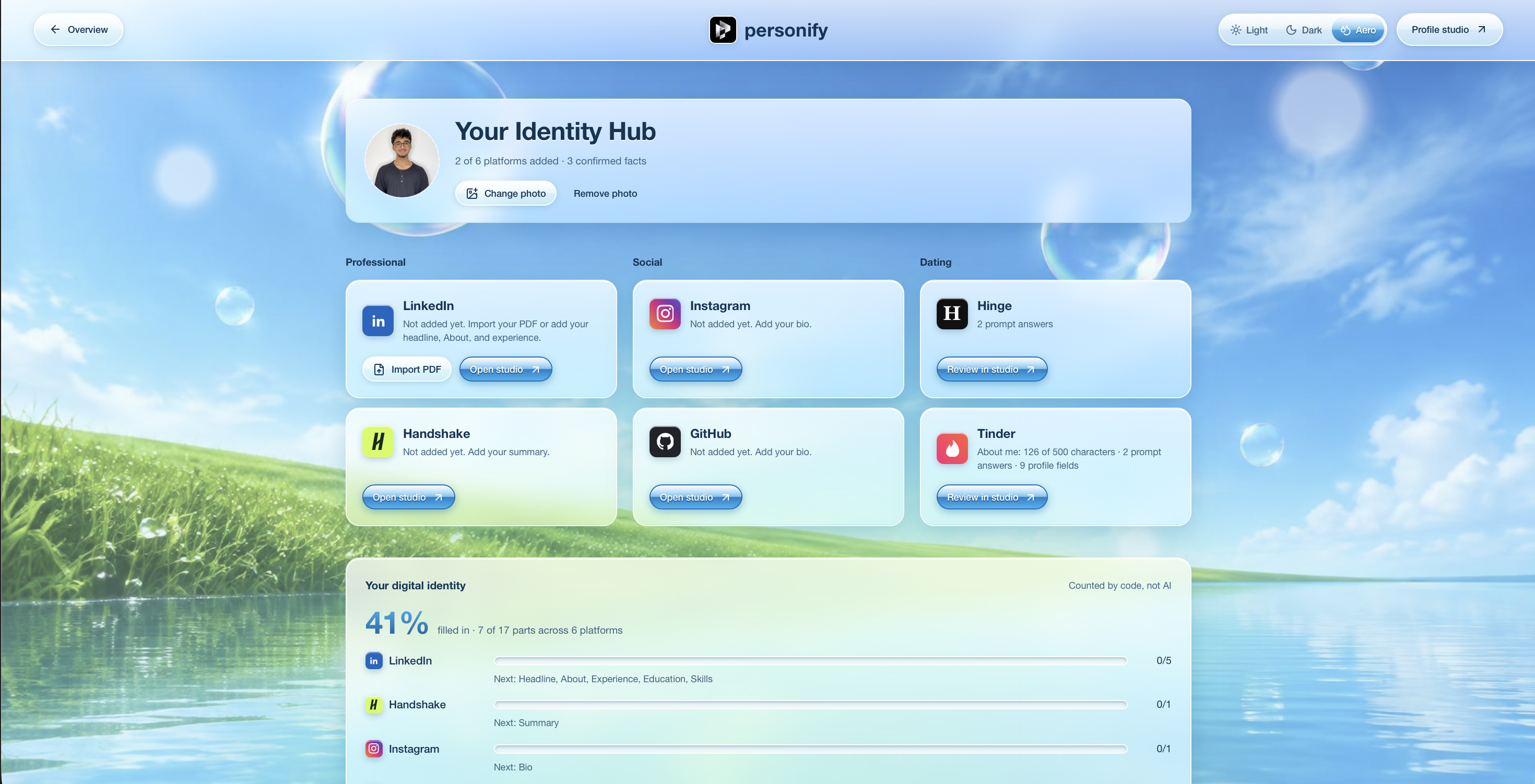
- Keeps confirmed facts in an Identity Hub so users can choose which platforms may use them.
The app also has quick local checks for character limits and repeated wording. LinkedIn PDF parsing happens in the browser. Personify does not sign in to social accounts or post on the user's behalf.
How we built it
Personify is built with Claude Code, Codex, Next.js 16, React 19, TypeScript, and Tailwind CSS. Its server-side API routes call Anthropic Claude Haiku 5.5 for profile analysis and Claude Sonnet 5.5 for rewrites through OpenRouter, using the OpenAI SDK. Zod validates requests and structured model responses. pdfjs-dist parses LinkedIn PDF exports in the browser, and Vitest runs the automated test suite.
Each platform has its own input shape, audience lenses, writing guidance, and character limits. The rewrite prompts use the platform and section the user selected, while the app's deterministic checks look for unsupported numbers, names, credentials, stronger claims, and invalid source references. The AI suggests language; the checks and the user help keep that language grounded.
Profile text is sent to the AI provider only after the user consents. The app keeps profile work in a browser memory session rather than storing it in an account or cloud profile database.
Challenges we ran into
The biggest challenge was improving a profile without quietly changing the person's story. AI can make an unsupported detail sound completely believable, so a prompt alone was not enough. We built FactCheck as a separate code-based review step and made users confirm extracted facts before rewrites can rely on them.
A second challenge was that "shorter" and "longer" mean different things for a headline, an experience entry, a social bio, and a dating prompt. We had to treat each field according to its own shape and limits, and make the length controls guide the rewrite without encouraging filler.
We also had to make feedback useful without presenting simulated audience reactions as real-world predictions. The score bars are a readable comparison, but they are labeled as guidance because separate AI evaluations can vary.
Accomplishments we're proud of
- Supporting seven platforms across professional, social, and dating profiles in one app.
- Building sentence-level feedback and rewrite receipts that let users see which parts of their profile support the output.
- Keeping factual checks separate from AI-generated advice.
- Creating a reusable Identity Hub for confirmed facts and platform-specific sharing.
- Importing LinkedIn PDF profiles in the browser.
- Adding before-and-after trait comparisons, per-section LinkedIn length controls, and a focused Tinder flow that does not require filling out a long questionnaire.
- Passing 421 automated tests in the current test suite.
What we learned
We learned that profile writing is not just about making sentences sound polished. The right format, amount of detail, and tone depend on the platform, and good personalization still has to sound natural.
We also learned that AI works better as one part of a product than as the whole product. Clear constraints, user confirmation, visible evidence, deterministic checks, and easy editing all matter just as much as the generated rewrite.
What's next for Personify
- Test the full experience with more students, job seekers, and people using social and dating apps.
- Improve consistency checks by comparing feedback across repeated runs and reviewing where the ratings disagree.
- Add end-to-end checks for the complete mobile and keyboard-accessible user journey.
- Expand profile import and export options while keeping consent and privacy clear.
- Continue refining each platform's guidance based on user feedback, not assumptions about what every audience wants.
Built with
Next.js, React, TypeScript, Tailwind CSS, OpenRouter, Claude Haiku 5.5, Claude Sonnet 5.5, OpenAI SDK, Zod, pdfjs-dist, Vitest
Built With
- claude
- codex
- loveable
- next.js
- openrouter
- pdfjs-dist
- react
- shadcn-ui
- tailwind
- typescript
- vercel
- zod

Log in or sign up for Devpost to join the conversation.