-
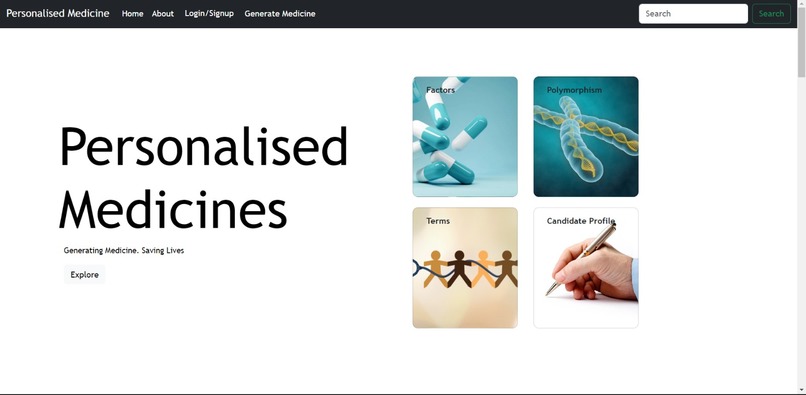
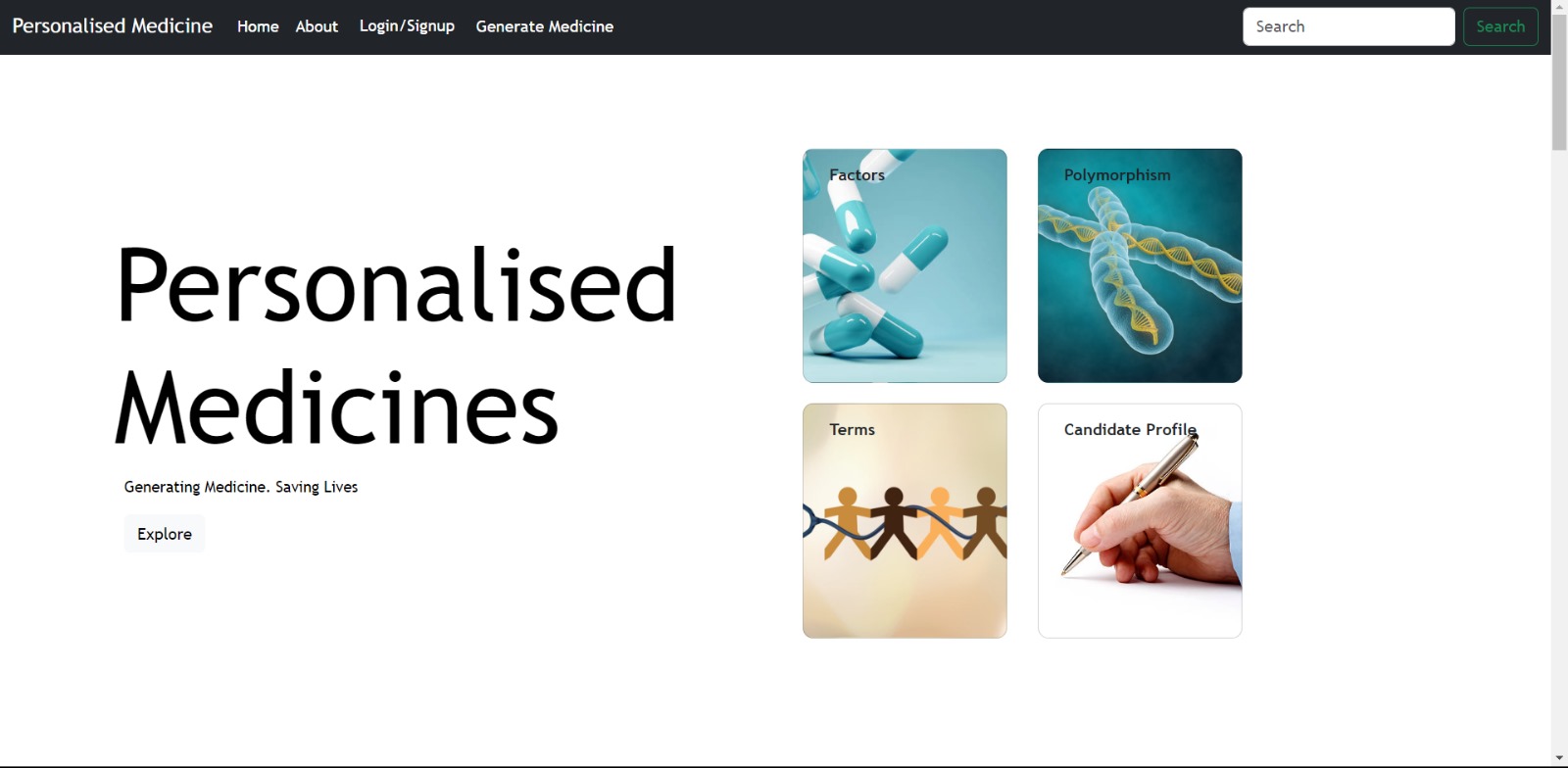
home page of website
-
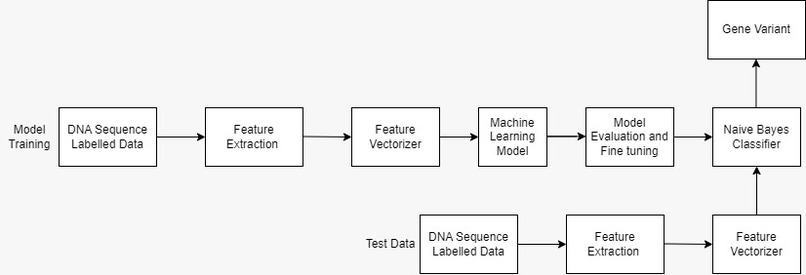
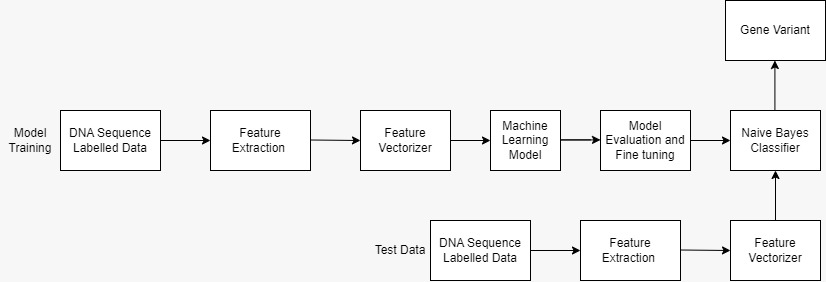
architecture of ML model
Inspiration
Seeing the negative consequences of one-size-fits-all medicine—slow, delayed effects, high side effects, and even death—motivated us to research the issue and develop a solution. We recognize that everyone is unique and that our genes and environment make our bodies even more unique. Therefore, the same drug may not be effective for everyone.
What it does
Our model aims to give the personalized drugs and the most efficient dose that is best suited to a person's disease treatment. These suggestions are based on the gene variant, SNP present in your DNA, and gender, and also considering the current external factors. We also have tried creating a tailored drug and drug dosage suggestion for people whose gene data is not available by matching them with the group of people that resembles them best based on certain inputs. The extension of this project also aims to predict the probability of a person catching a disease in the future, by mapping their profile to the profile of people way similar to them. This would help people in early disease detection and taking accurate precautions against it or early treatment.
Our model prescribes personalized drugs and doses that are best suited to each individual's disease treatment. It does this by considering the gene variants (SNPs) present in the person's DNA, gender, and current external factors. Even if a person's gene data is not available, the model can still provide tailored drug and dose suggestions by matching the person to a group of people with similar profiles.
The project can also expand to predict the probability of a person catching a disease in the future by mapping their profile to the profiles of people similar to them. This would help people detect diseases early and take appropriate precautions or early treatment.
How we built it
We first collected a large dataset of patient records, including genetic data, demographics, and medical history. We then collected the nucleotide sequence of the genes relevant to the disease and their variant. We then create the 2 linked ML models.
- Our first ML model : friend to identify the variants of genes present in the person and profile them for reference in the 2nd model.
- The second ML model : this input all the variants of genes detected from model 1 with all the self-reported parameters like race, gender, drinking and smoking habits, disease detected, and current location of the person to predict the best drug and the efficient drug dose for their treatment. Model 2 is also trained on data when we don't have any gene variant input. In this case, the model provides tailored drug and dose suggestions by matching the person to a group of people with similar profiles based on certain inputs, such as age, sex, and disease diagnosis.
Challenges we ran into
For this project, our biggest challenge was to collect data and the privacy concerns linked to it. Basically, all this data complies with the data protection regulations of HIPAA. There were some software bugs as well while creating the models. Lastly, we weren't getting results displayed based on information provided by the users due to a lack of knowledge of web development.
Accomplishments that we're proud of
We are proud of our problem-solving skills, as we had so many difficulties; yet we were able to complete the project. Moreover, providing innovative healthcare solutions that ultimately result in improved health outcomes we are really proud of.
What we learned
While researching this particular project, we got to learn so many factors that impact the effectiveness of medicines. We learned about how different gene variants would also impact the effect of medicines. We also learned that the same prescription drugs might be helpful for someone, and not helpful at all for someone else or fatal for some third person which is all based on genes, demographic location, age, and gender
What's next for Personalized Medicines
Our model is trained on very small data and we have very small data to test on. We need to find more useful datasets for training and testing the model again and again to make the system such that it provides best-suited medicines
Built With
- angular.js
- git
- github
- python
- statistical-modelling
- typescript


Log in or sign up for Devpost to join the conversation.