-
-
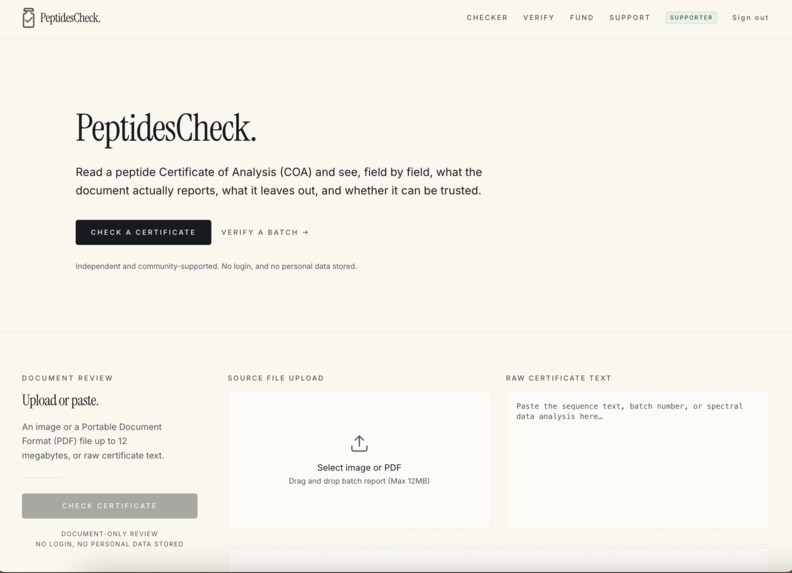
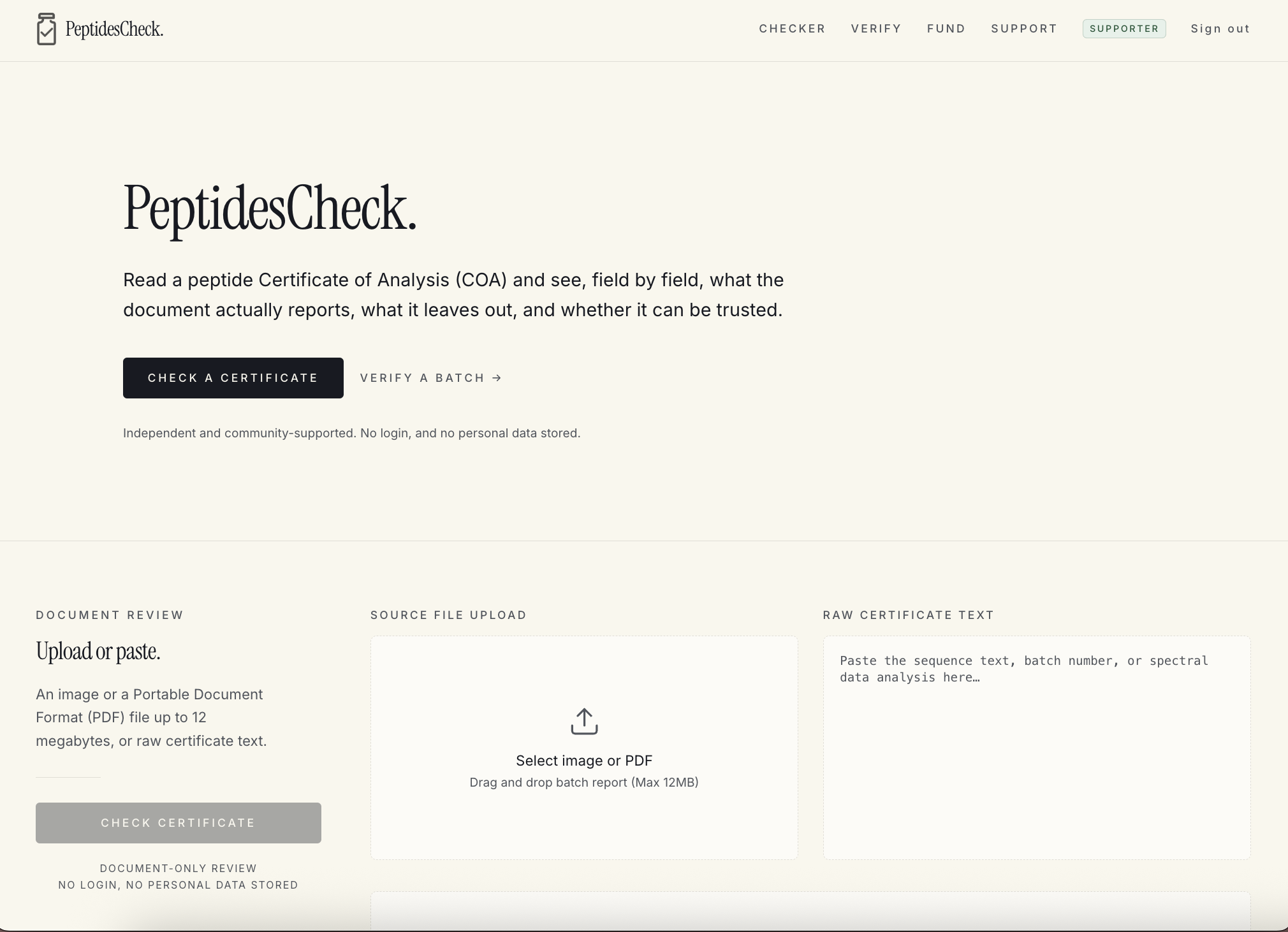
Home Page
-
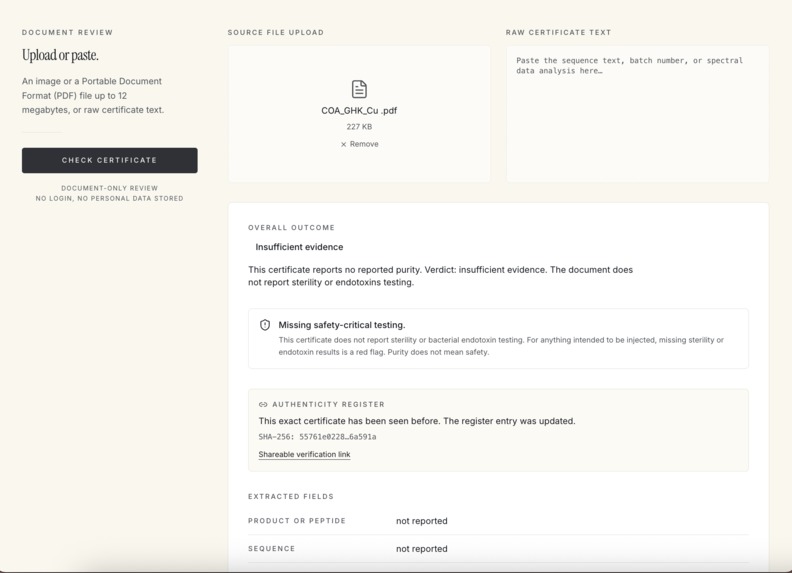
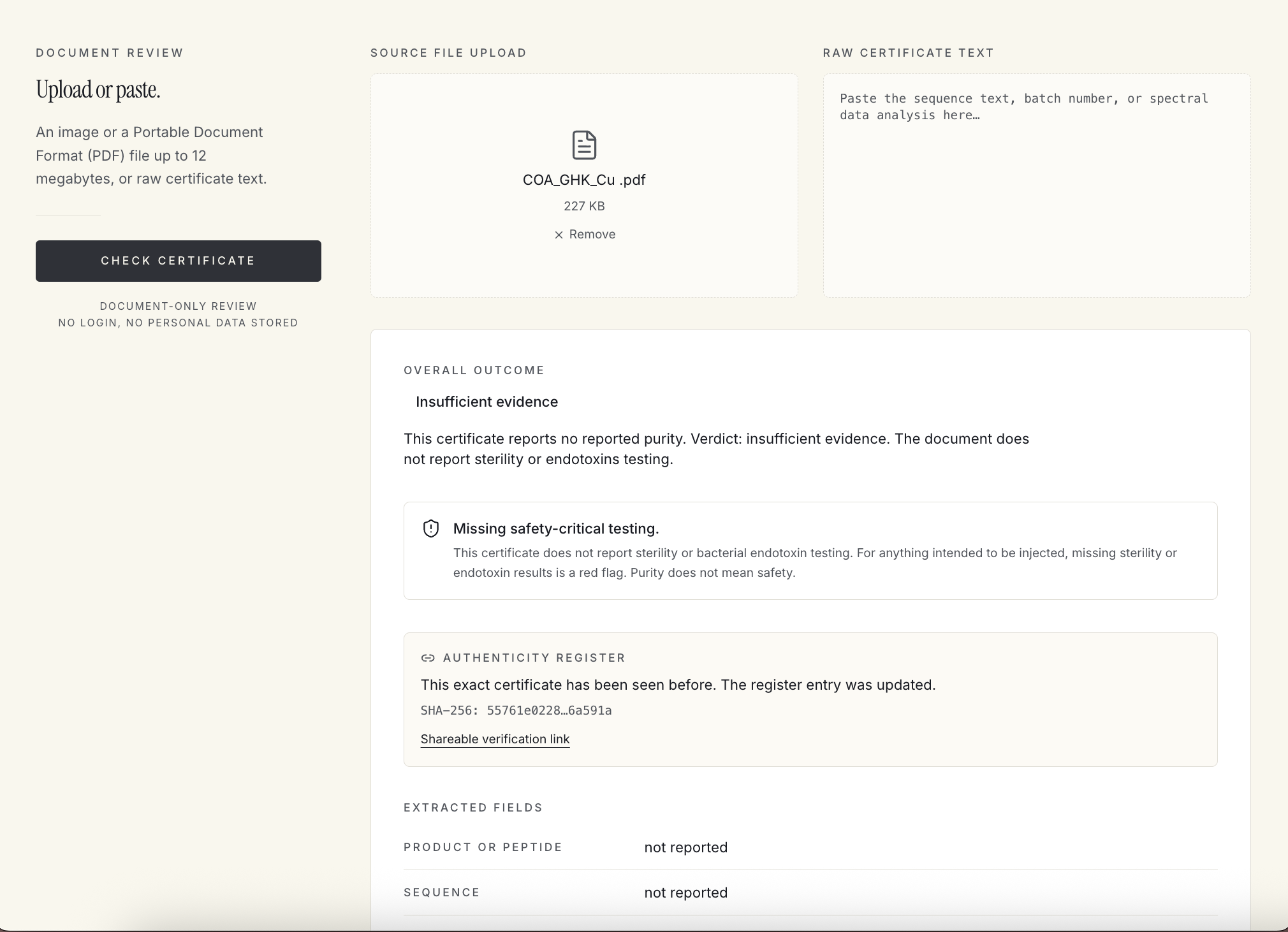
uploading a CoA
-
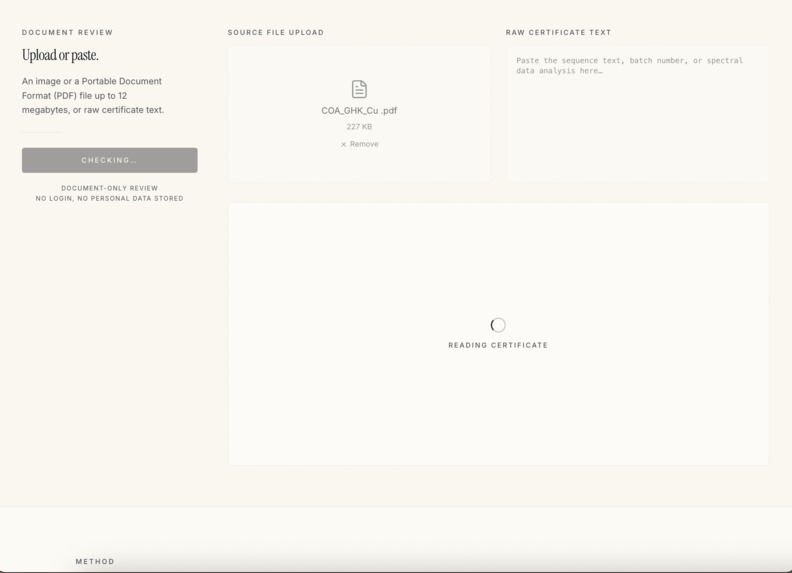
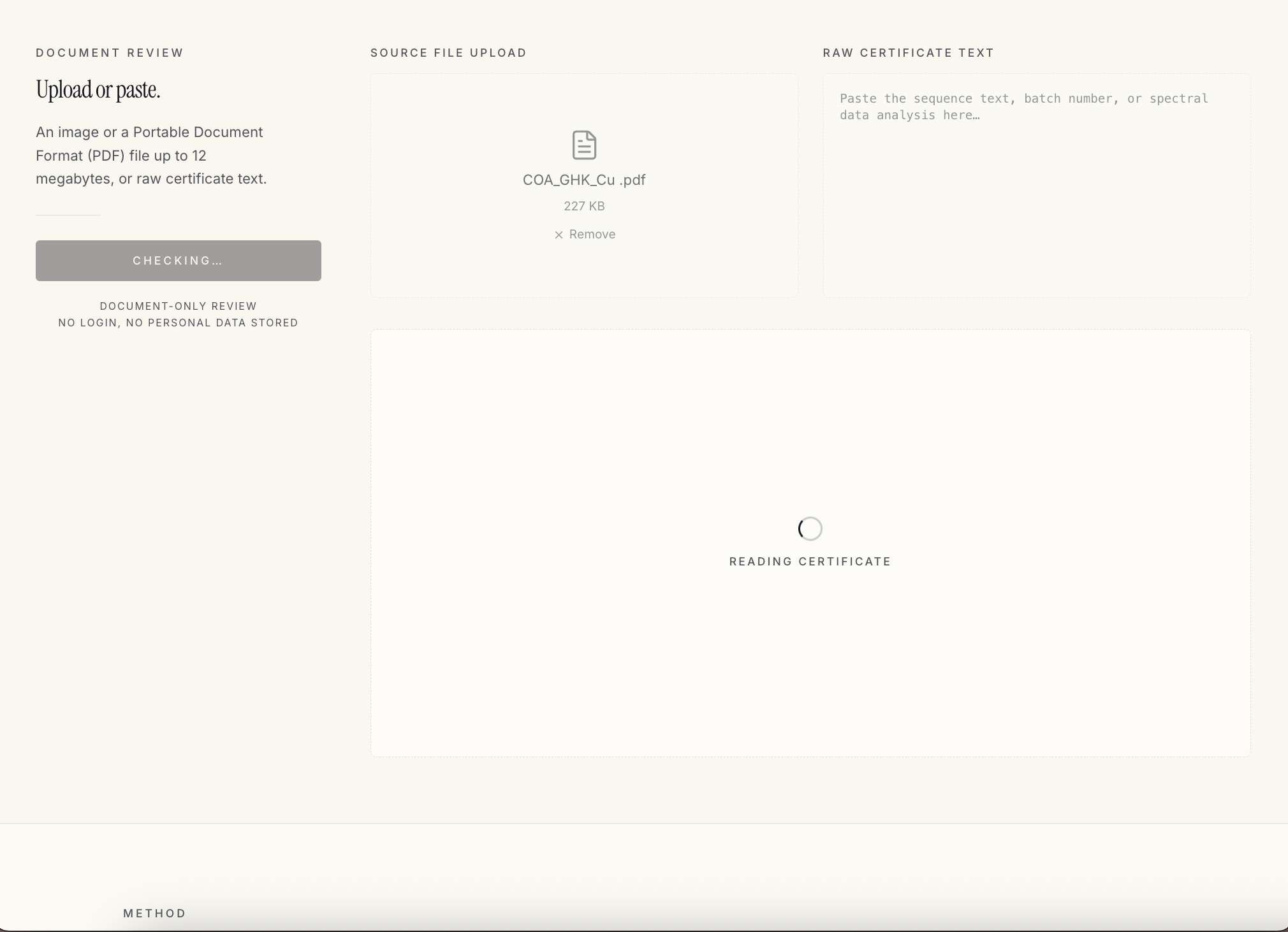
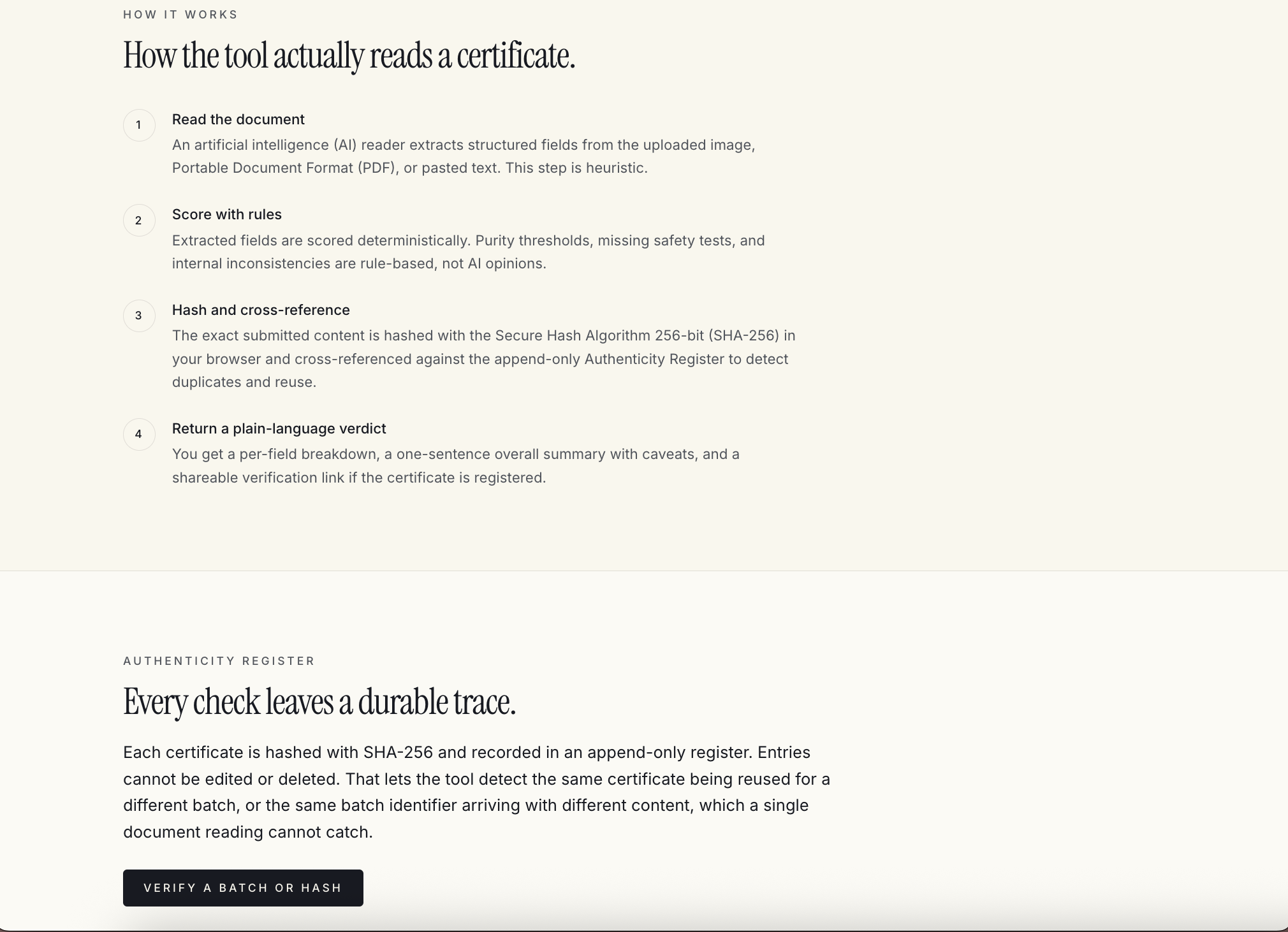
reading an uploaded CoA
-
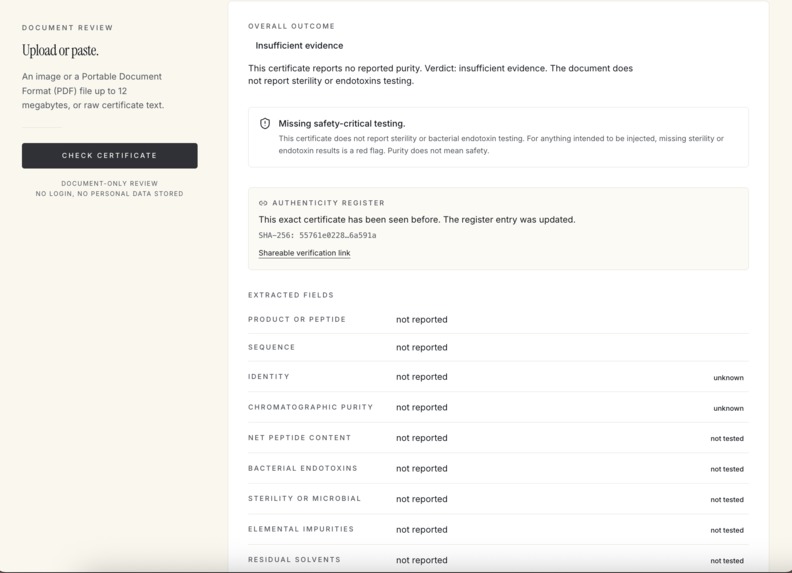
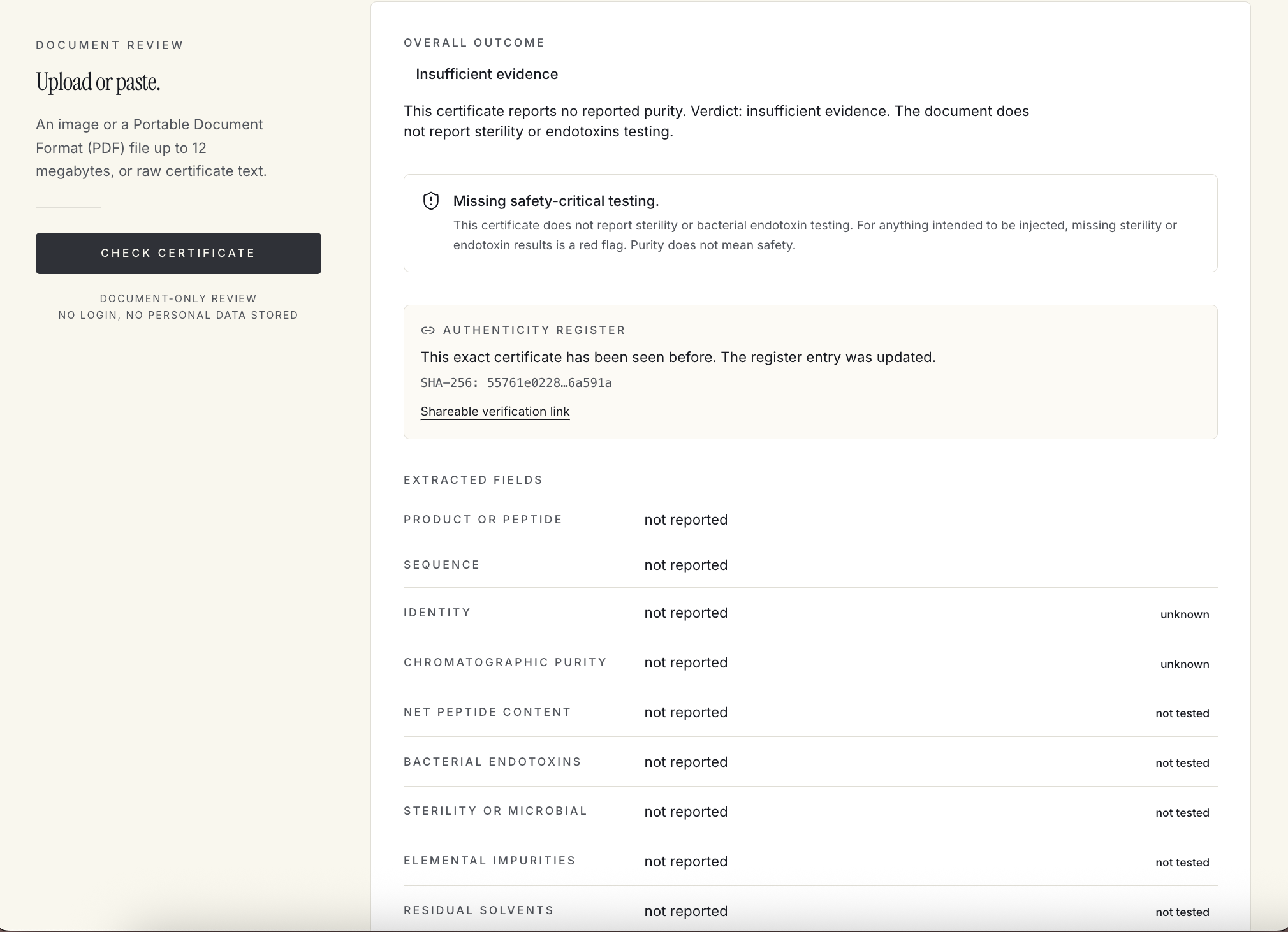
site displays CoA content - purity, sterility, endotoxins and more
-
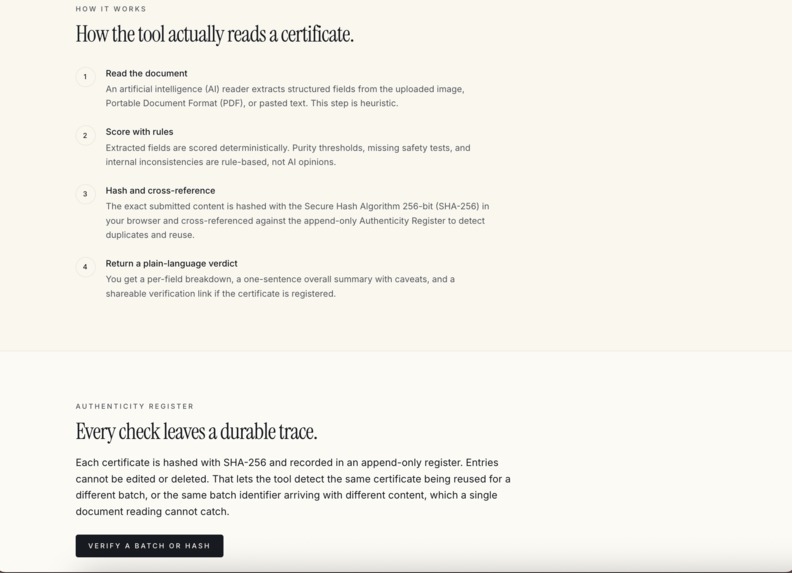
details on how a good CoA should look like for user
-
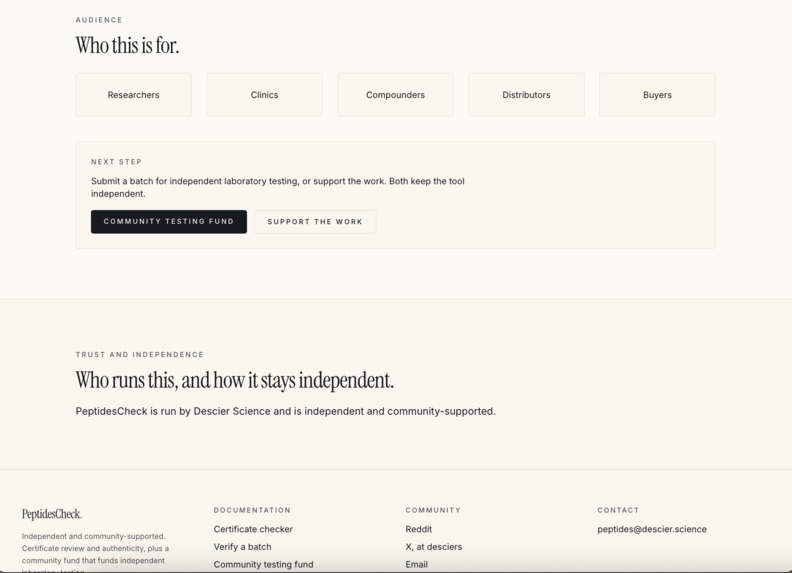
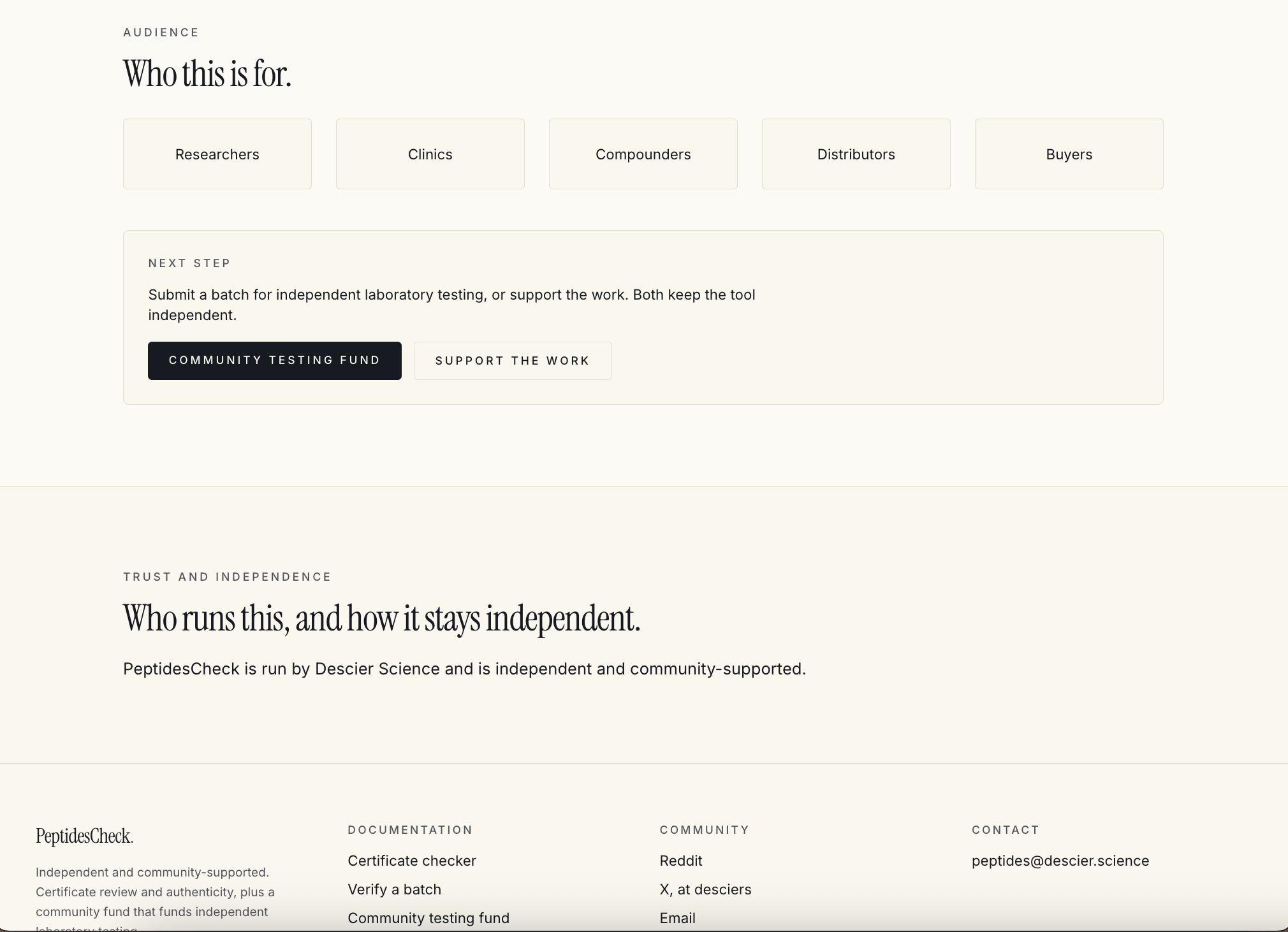
User Types that can be benefitted from this project
-
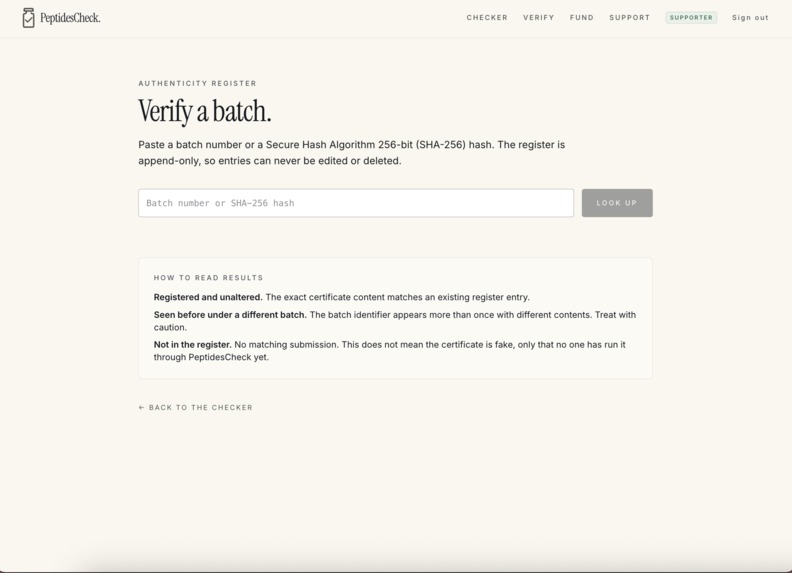
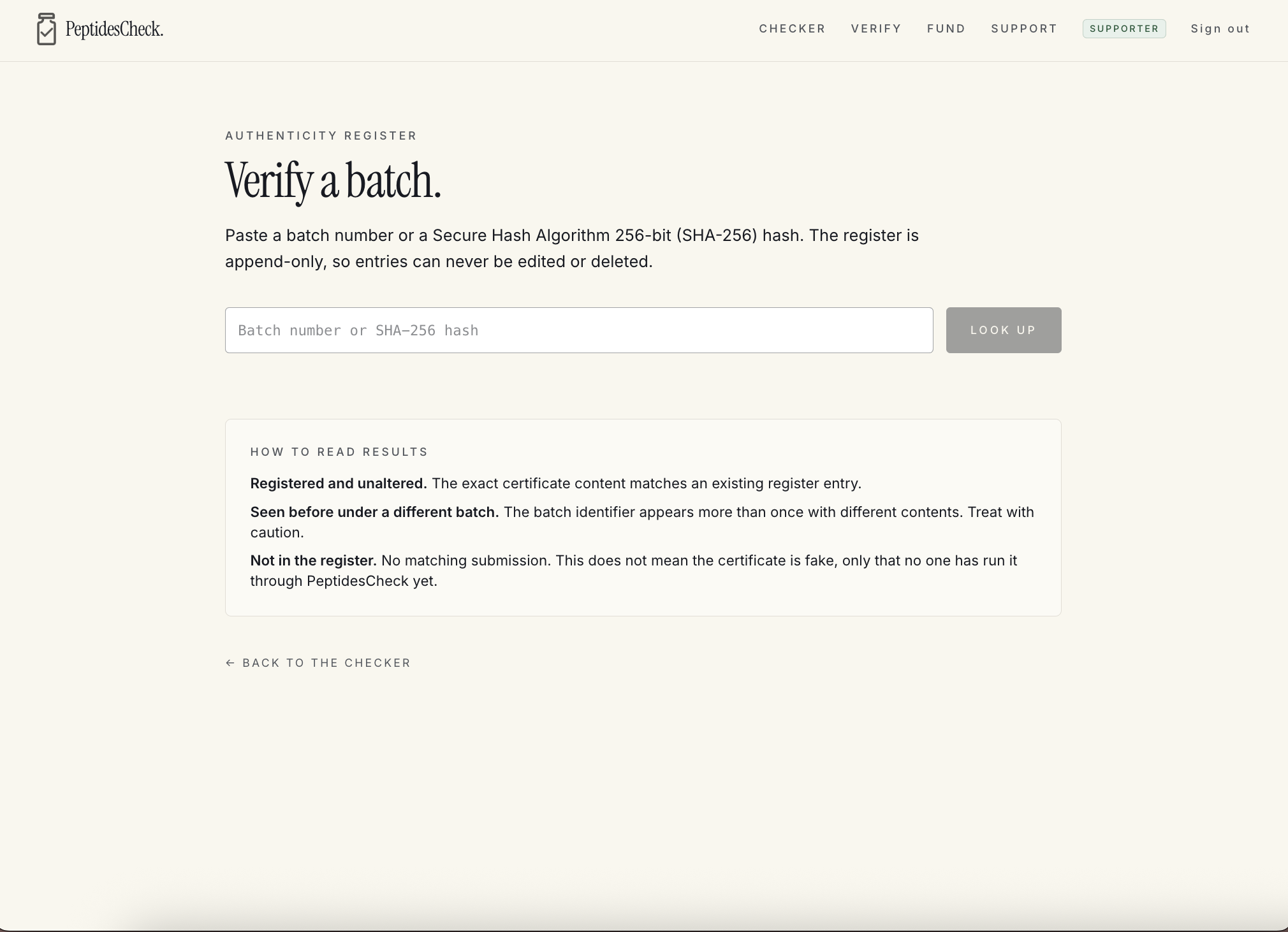
Peptide Verification through batch number Page
-
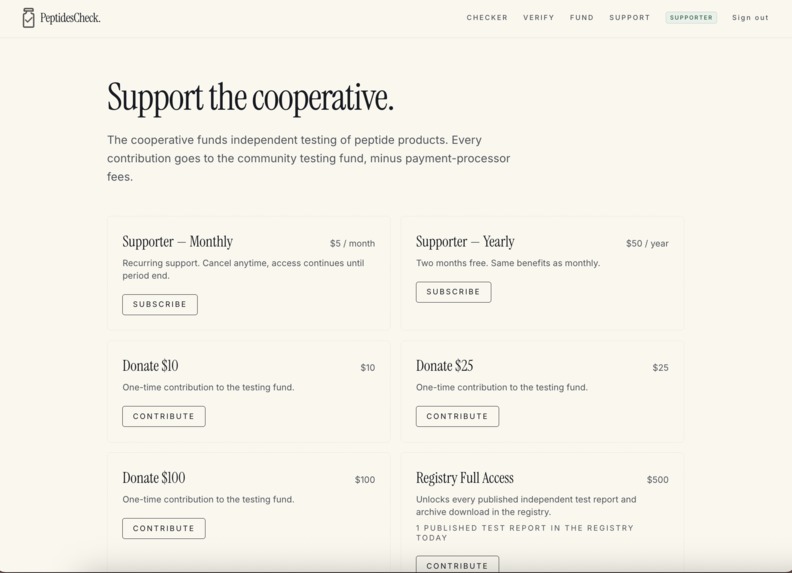
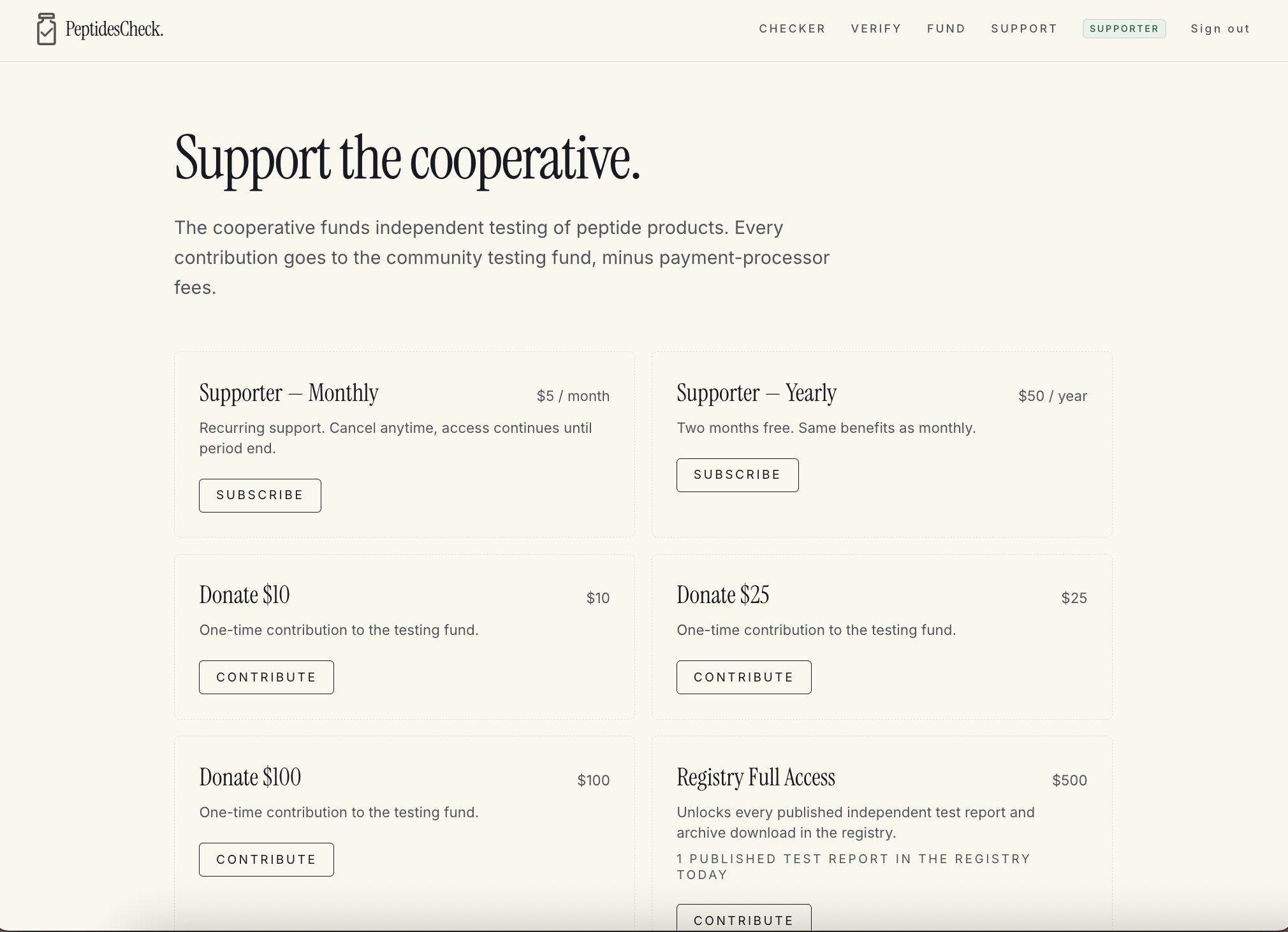
Supporter Funding Page
-
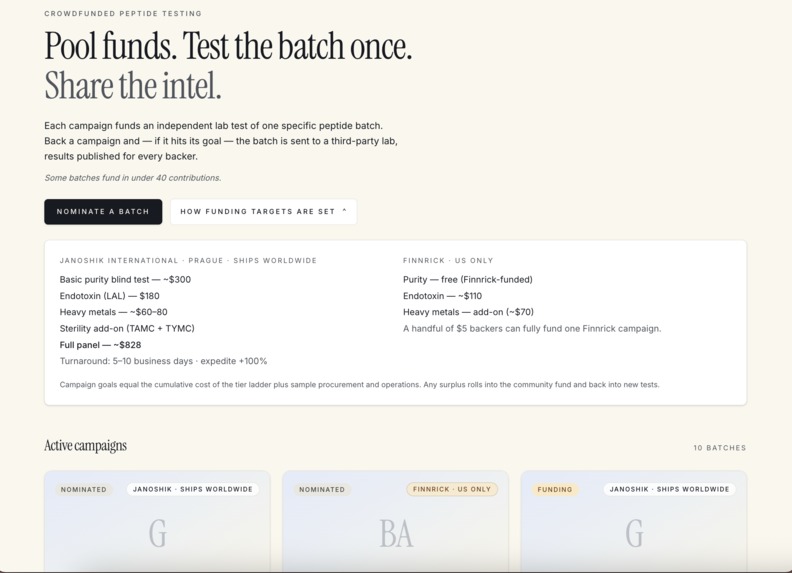
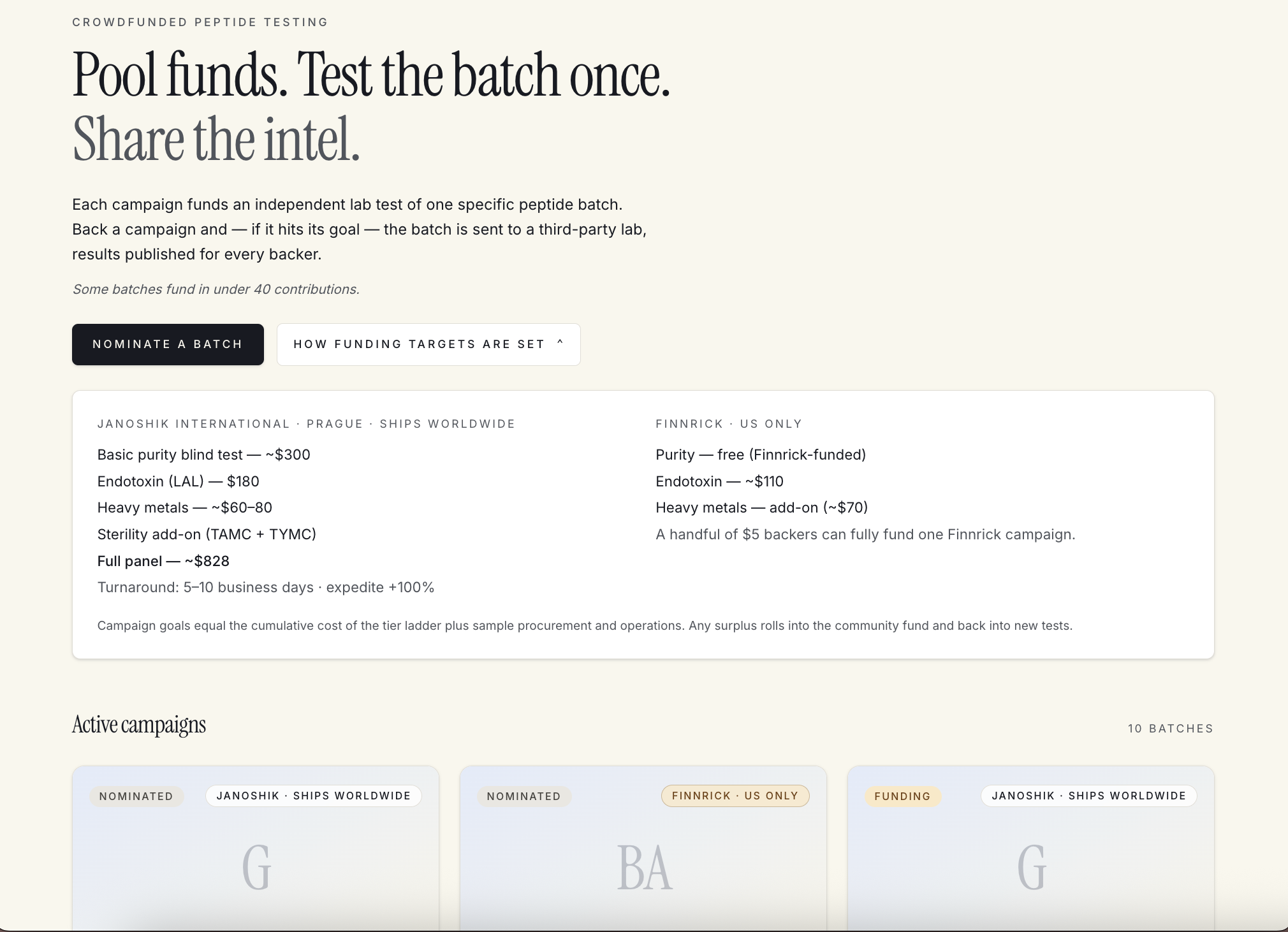
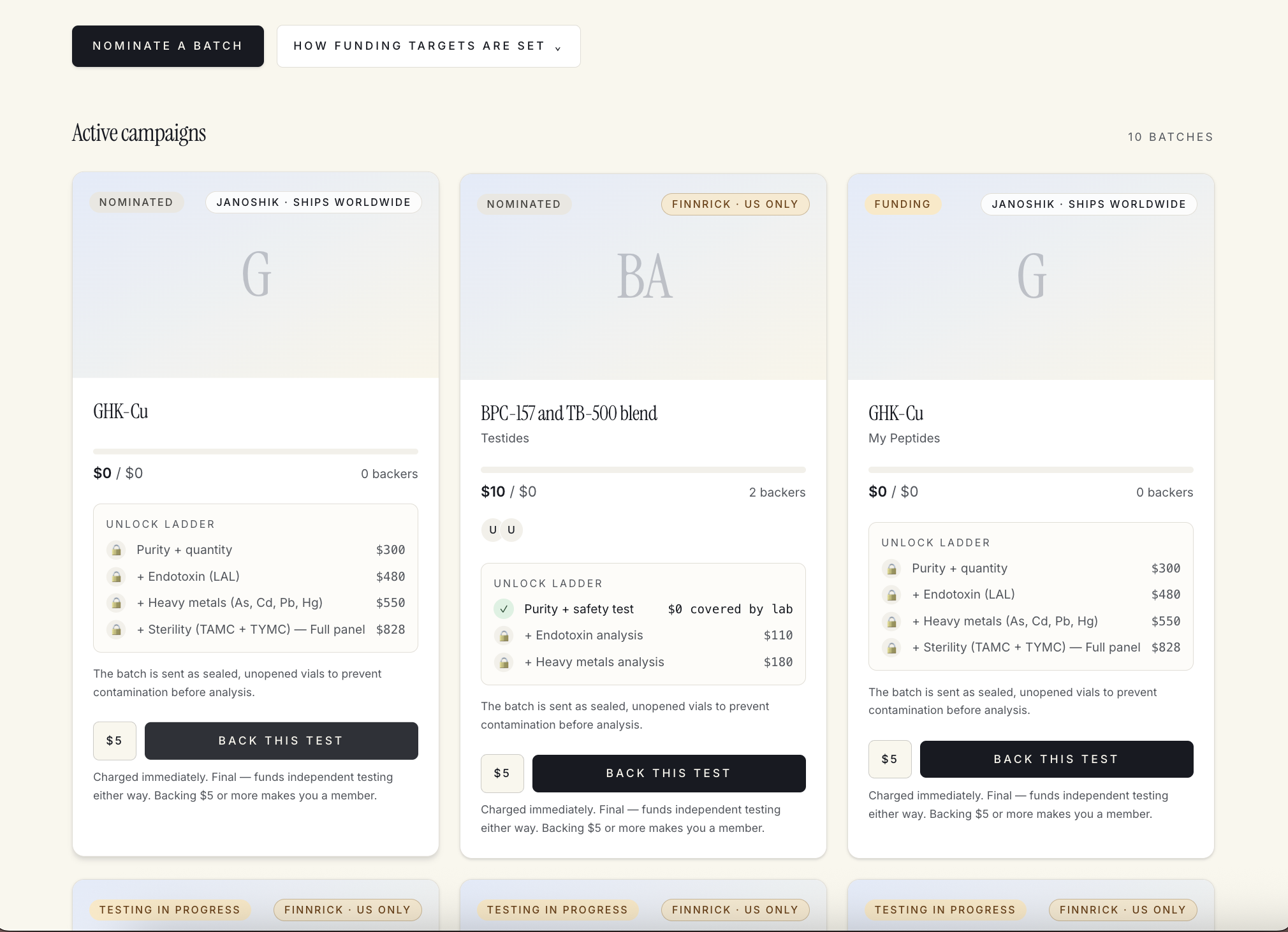
Crowdfunding Peptide Verification Page
-
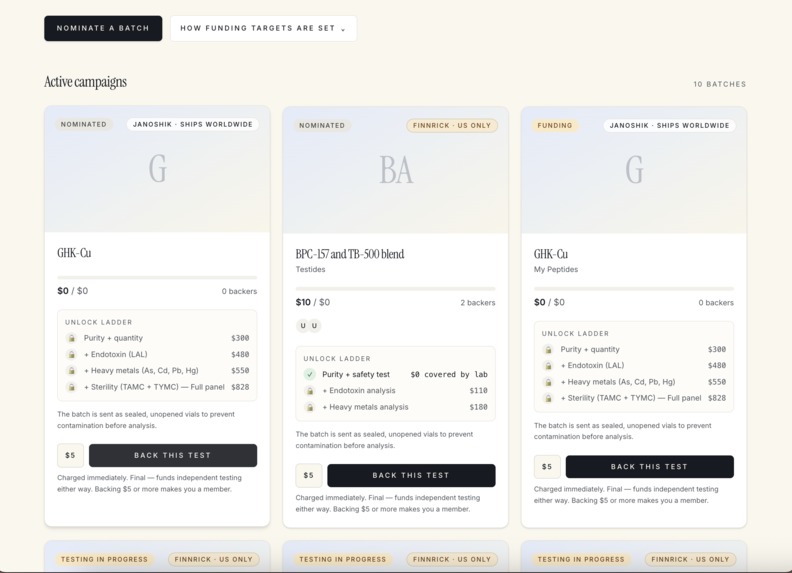
user can browse through diff crowdfunded peptide verification pools to contribute and get results for
-
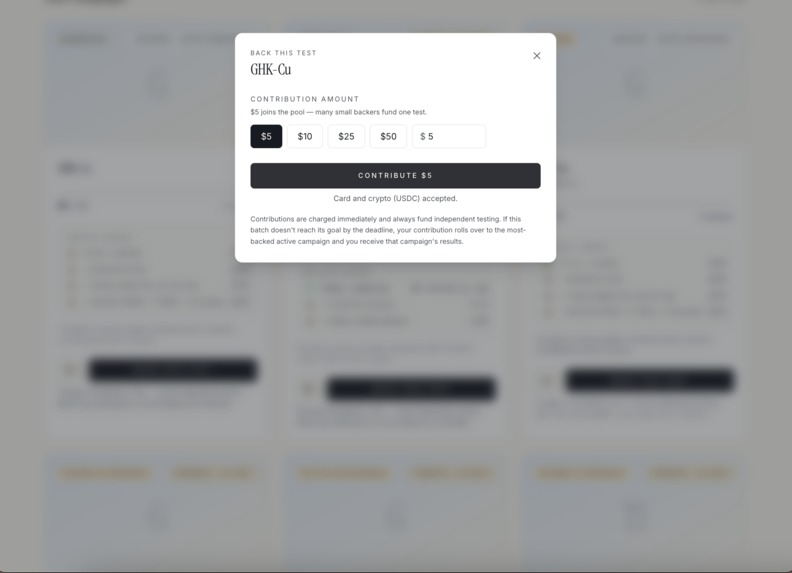
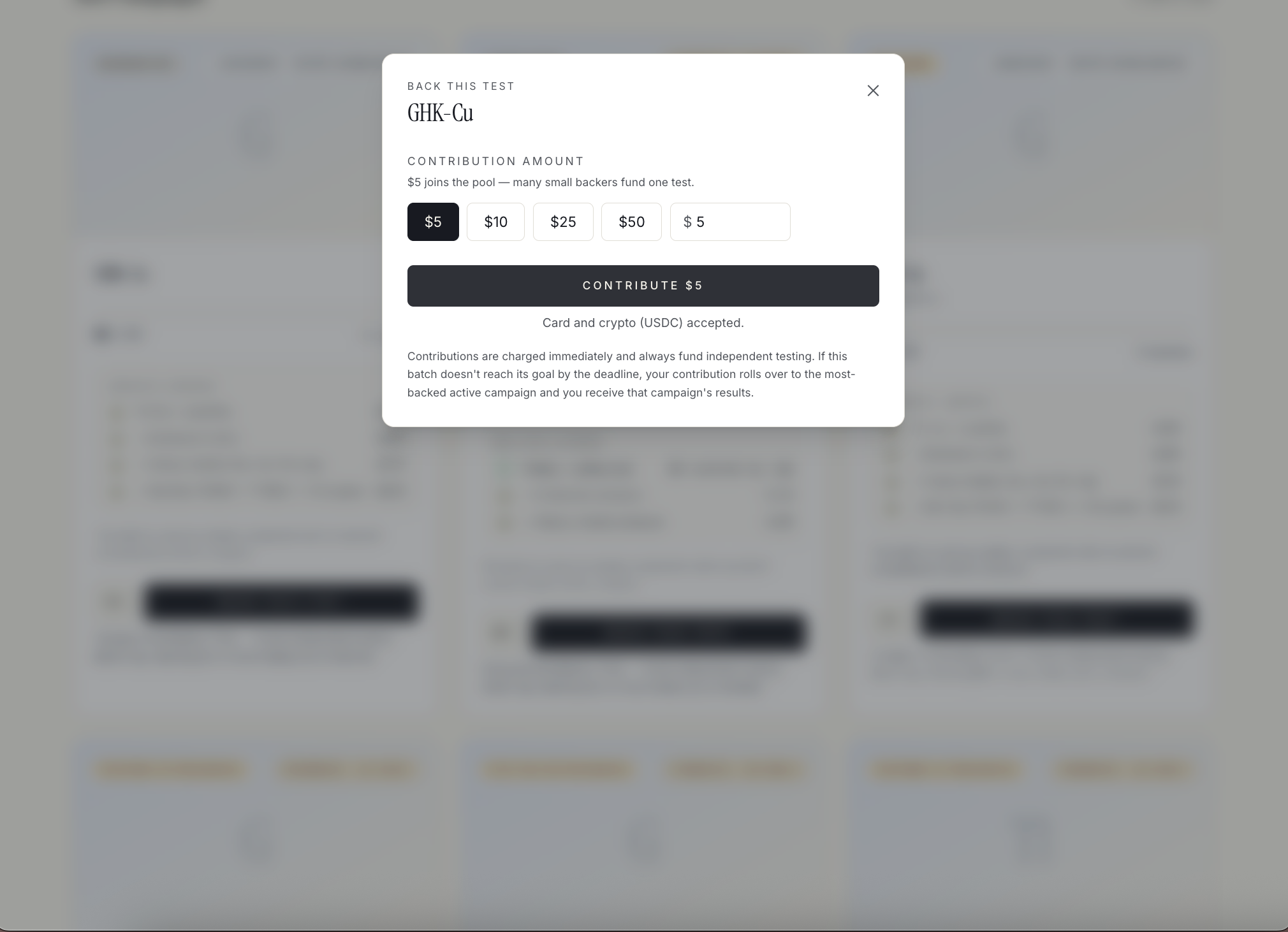
user chooses funding amount $5-$100
-
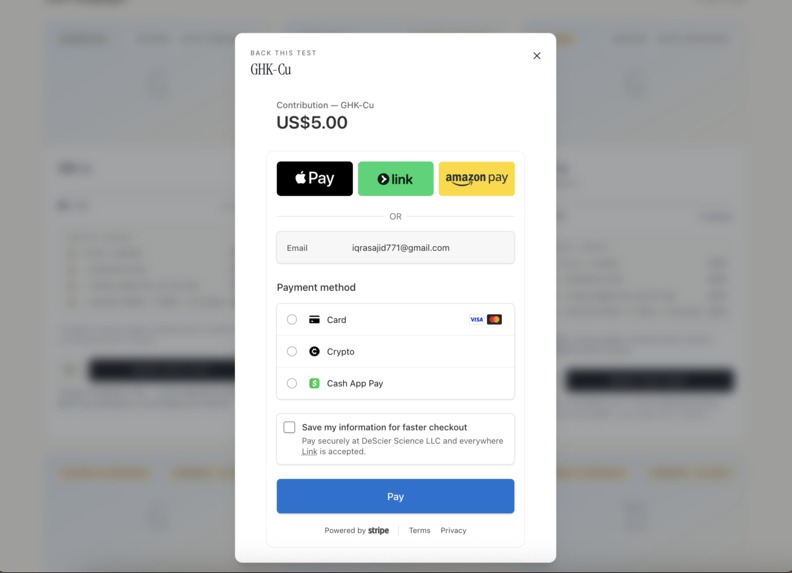
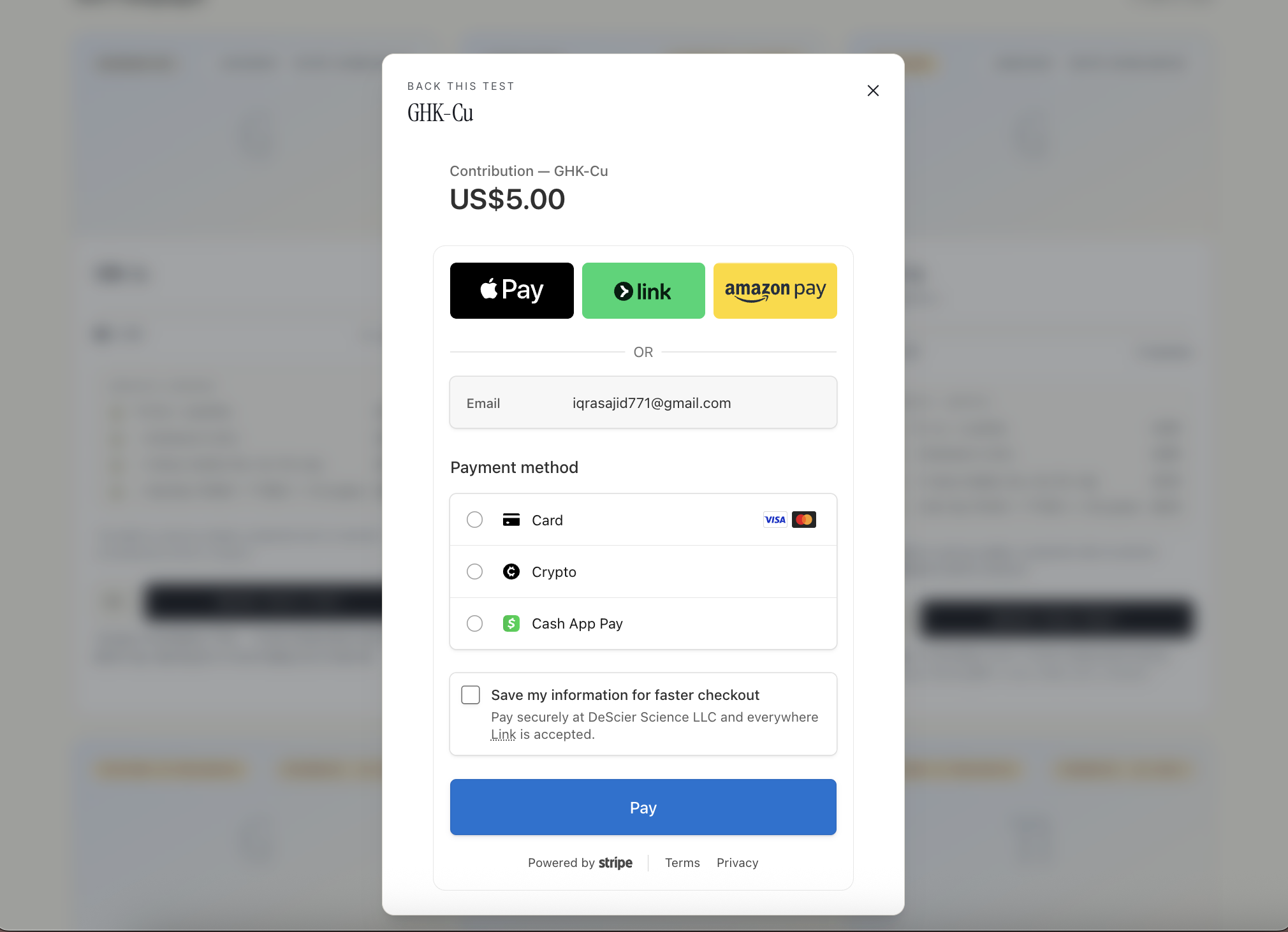
payment gateway
-

logo

Inspiration
Every week, tens of thousands of people inject peptides they bought online in pursuit of better health and longevity, trusting a certificate they can't read and a purity number that doesn't mean what they think it means. I'm a pharmacist and molecular biologist, and when I looked at the independent testing data on this market I was alarmed: roughly a third of consumer products contain the wrong molecule, and about two-thirds carry bacterial contaminants above the level considered safe to inject. Personalized longevity is meaningless if you don't actually know what's in the compound you're taking. That gap between what people believe they're using and what's really in the vial is what we set out to close.
What it does
The platform gives people access to expert-grade quality assessment they could never commission alone. You upload or photograph a seller's certificate of analysis and an artificial-intelligence agent reads it, explains in plain language exactly what it does and does not prove, and scores it against a published verification standard. Alongside it runs a community testing board: people pool small pledges toward independently testing a specific product; when funded, we buy that batch anonymously, test it at an independent lab, and publish the full result, pass or fail, for everyone.
How we built it
We built it in Google AI Studio using Gemini on Vertex. The design principle that shaped everything: Gemini reads and extracts, but fixed code scores. Gemini's multimodal reading handles the certificates that circulate as photos and scans; it transcribes the values into structured data. Then deterministic, coded rules, the thresholds from our verification standard, decide pass, concern, or fail, so identical certificates always produce identical, defensible verdicts rather than a model's shifting opinion. The registry and data run on Google Cloud; the agent runs the day-to-day reading, monitoring, and drafting, while a human sets the standard and signs off on any adverse finding.
What we learned
Two things. First, that the community already values independently funded testing above every other signal, so we weren't creating demand, we were becoming its trusted source. Second, and more technical: that the right division of labor with a language model is to let it do the reading and explaining and to never let it do the judging. Separating perception from scoring is what turned a clever demo into something a challenged vendor couldn't dismiss.
Challenges we faced
The hardest problem wasn't technical, it was integrity. A verification service is only worth as much as its independence, so we had to design against our own incentives: samples are always bought anonymously rather than seller-supplied, failing results are always published and can never be suppressed by payment, and we certify only what a product contains, never that it is safe to inject or consume. Holding that last line, precision about exactly what we do and don't know, is both the legal firewall and, in a community that respects rigor, the entire reason to trust us.

Log in or sign up for Devpost to join the conversation.