

Project Story: VougueMate AI
About the Project
The Inspiration: The 7:45 AM Crisis
Every product begins with a problem. Ours began with a statistic we observed during market analysis: the average urban woman spends 17 minutes every morning staring at a closet full of clothes, feeling like she has nothing to wear.
This isn't laziness; it is a cognitive overload. It is the intersection of fluctuating weather, changing body confidence, and the pressure of social presentation.
I spoke to women who had closets full of clothes but wore the same three "safe" outfits on rotation. I saw the anxiety of "I have nothing to wear" on a Monday morning, and the specific pain of planning for a vacation—trying to predict the weather and the aesthetic of a location thousands of miles away.
Most "virtual try-on" tools solve the shopping problem. We wanted to solve the "Getting Dressed" problem. We built VougueMate AI to be a personal stylist, a weather analyst, and a confidence coach rolled into one interface.
What it Does
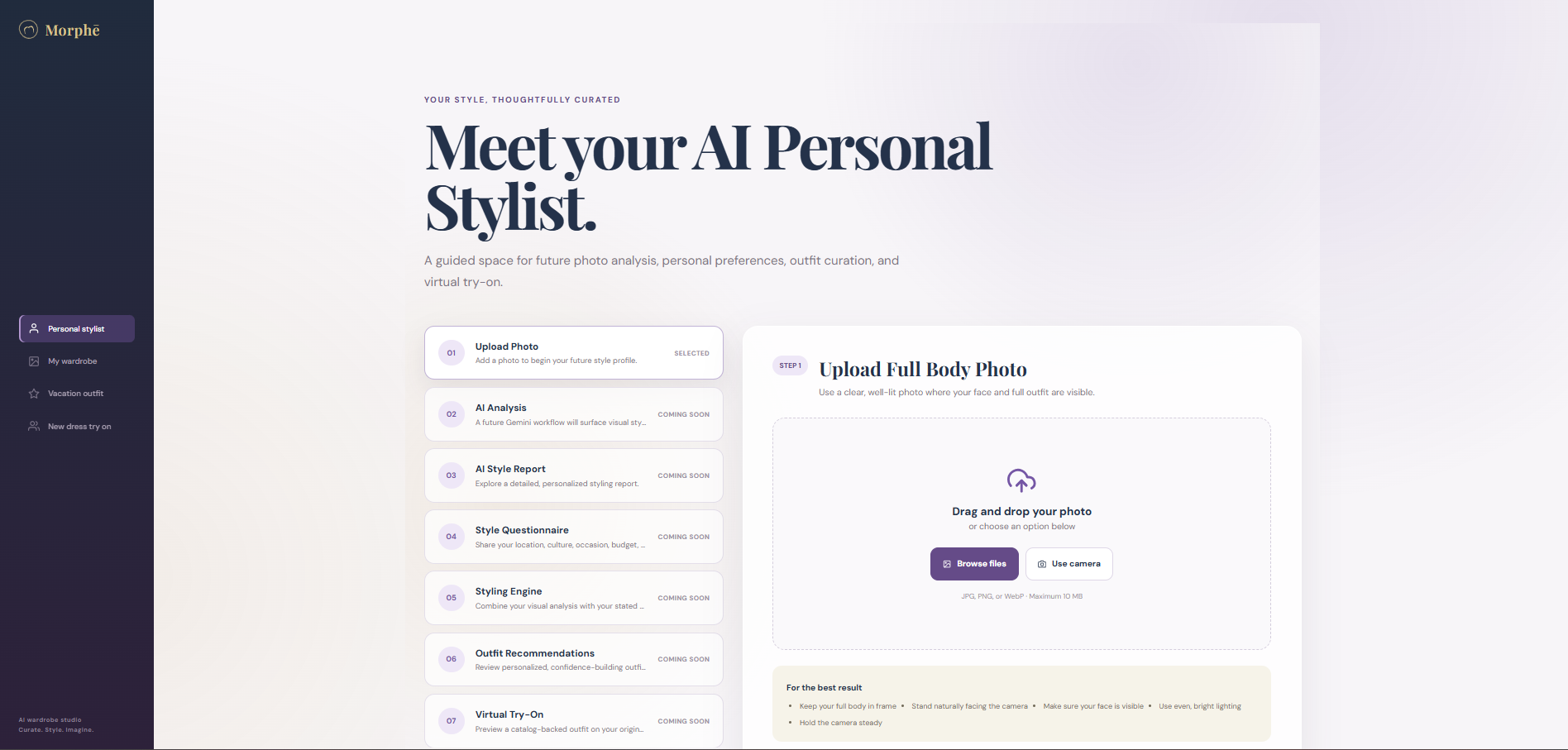
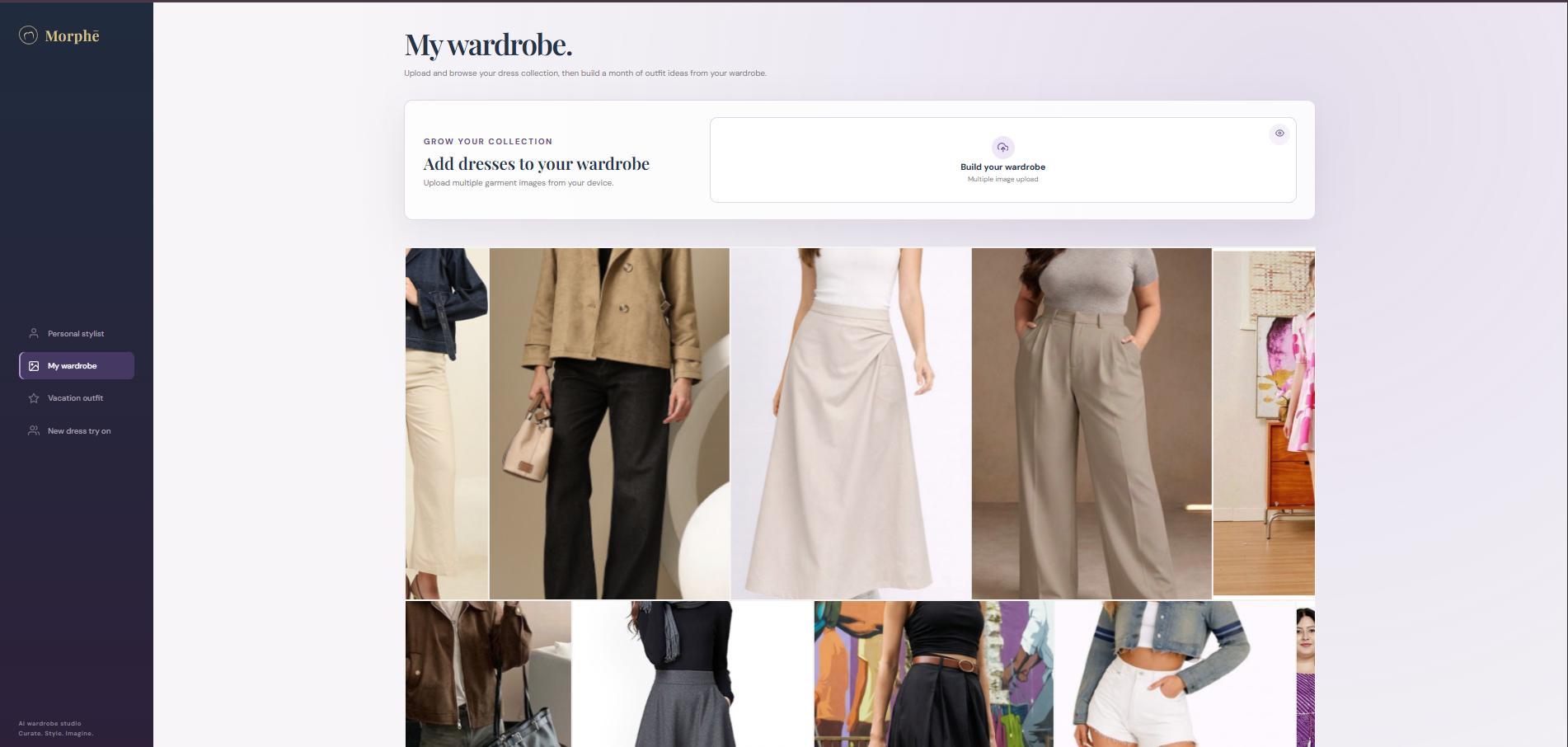
VougueMate AI is a full-stack wardrobe intelligence platform. It doesn't just digitize your closet; it understands you.
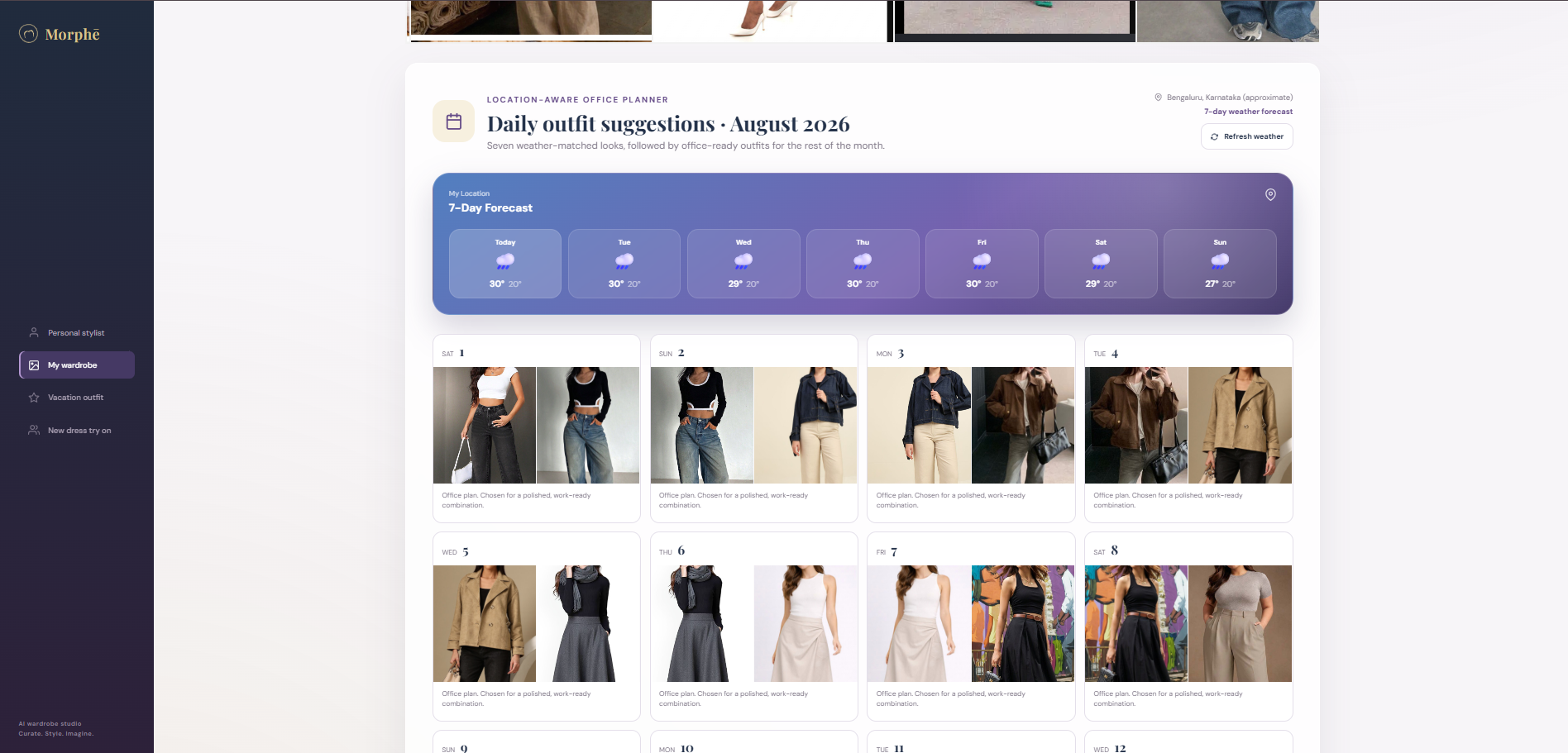
- The Daily Stylist: Users upload a photo of their body type or input measurements. VougueMate AI integrates with live weather APIs for their location. It then uses Gemini to select an outfit from the user's uploaded wardrobe that matches the temperature, the user's body shape geometry, and the context (e.g., "Office," "Casual Friday").
- The Virtual Dressing Room: Before buying anything online, users can overlay their digital clothes onto their uploaded body scan to see the fit and drape, preventing returns and disappointment.
- The Confidence Engine: This is our pride and joy. Our market research showed that 90% of women avoid certain styles due to insecurity (e.g., arms, waist, height). In this mode, the user uploads a full-body photo. The Style Engine analyzes body proportions (Shoulder-to-Hip ratio, Torso length) and allows the user to input their "insecurities" or features they want to downplay/accentuate. Gemini then acts as a personal stylist, generating outfits that manipulate the eye through color blocking and silhouette math.
- The Vacation Packer: Input your destination and dates. The engine pulls the global weather forecast and curates a packing list from the user's existing wardrobe, prioritizing "Instagrammable" aesthetics based on the destination's cultural vibe.
How We Built It (The Tech Stack)
Building a system that understands human bodies and fashion required a multi-modal approach.
- The Frontend: A responsive web app built with React and Tailwind CSS for a seamless, mobile-first experience (since most users curate wardrobes on their phones).
- The Brain (Backend): Python (FastAPI) handles the complex logic. We use OpenCV for image segmentation to detect body landmarks and crop garment images.
- The Reasoner (AI): We integrated the Gemini API for natural language understanding and generative reasoning. Gemini maps user preferences against the
Color_TheoryandBody_Typematrices. - The Data Layer: We use PostgreSQL to store wardrobe metadata and vector embeddings for similarity search (to match the "texture" of clothes).
The Deep Dive: The Math of the "Confidence Engine"
One of the most challenging parts was removing the "black box" nature of AI styling. We didn't want Gemini to just say "Wear a dark top." We wanted to explain why.
We developed a rule-based scoring system augmented by the LLM. For example, if a user is "Pear Shaped" (Hip Width $W_{hip} > W_{shoulder}$ by a factor $> 1.15$), the system adjusts the Volume_Score.
The styling logic balances proportion using the "Rule of Thirds." If a user wants to appear taller, the engine calculates the outfit's break point: $$ \text{Golden Ratio} = \frac{\text{Length of Top} + \text{Rise of Bottom}}{\text{Total Height}} $$
If this ratio is close to $\phi \approx 0.618$, the outfit is flagged as "High Confidence." If the ratio is off (e.g., a long tunic cutting the legs short), the AI suggests tucking in the shirt or adding high-waist pants to adjust the formula.
By combining mathematical scoring with Gemini's emotional intelligence, VougueMate AI provides advice like: "Based on your inverted triangle shape, this structured peplum jacket adds volume at the hips to balance your shoulders. Since you mentioned you're self-conscious about height, we selected high-waist trousers to lengthen the leg line by 15%."
Challenges We Faced
This was not an easy build.
- The "Garbage In, Garbage Out" Problem: Users often upload blurry photos of clothes on hangers or crumpled on beds. For the Virtual Dressing Room to work, the AI needed clean PNG cutouts. We solved this by training a U-Net model for background removal specifically fine-tuned on fabric textures to handle complex edges (like lace or fur).
- Body Positivity vs. Reality: We had to be incredibly careful with the language model.
- Challenge: If a user says, "I hate my arms," the AI must not say, "Here is how to hide them," which reinforces negativity. It must say, "Here is how we will draw attention to your elegant neckline."
- Solution: We implemented a "Safety Layer" that intercepts prompts and redirects the LLM to use "accentuation" rather than "concealment."
- The "Black Dress" Conundrum: Differentiating between a black blazer and a black t-shirt using only pixels is hard for a computer. We implemented a "Manual Tag" loop in the onboarding flow where Gemini asks the user 3 quick questions about each garment to classify its fabric weight and structure, solving the ambiguity.
What We Learned
We learned that AI cannot replace the human desire to feel good. It can only facilitate it. Users do not want a robot telling them to wear a trench coat; they want a reason to feel confident walking out the door.
We also learned that Latency kills fashion. If the outfit suggestion takes 10 seconds to load, the user has already grabbed a hoodie and left. We optimized our caching so that morning suggestions load in under 1.2 seconds.
The Future of VougueMate AI
We are currently working on a "Smart Calendar" integration where VougueMate AI scans your work schedule. If you have a "Board Meeting" on your calendar, it knows to suggest a "Power Suit" silhouette based on your wardrobe and the color psychology of the attendees (if integrated). We are also training the model to suggest shopping lists based on "Wardrobe Gaps"—identifying that you have 10 pairs of jeans but zero breathable linen shirts for the summer heatwave.
VougueMate AI isn't just about trying on clothes, it is about trying on confidence.
Built With
- api
- css
- fastapi
- gemini
- llm
- node.js
- opencv
- postgresql
- python
- react
- rest
- tailwind
- typescript


Log in or sign up for Devpost to join the conversation.